
Artificial intelligence (AI) has become a key technology in the 21st Century. Businesses use AI systems to analyse data, automate routine tasks, improve customer service, write software, create content and even assist with decision-making. As AI improves and becomes even more capable, governments, economists, businesses and society are debating its effects on productivity, employment and economic growth – and also its potentially extreme dangers.
Some commentators compare AI to earlier technological revolutions such as the steam engine, electricity and the Internet. They argue that AI will continue to increase productivity, create new industries and improve living standards. Others worry that AI may eliminate a large numbers of jobs, increase inequality, concentrate economic power in a few firms and, in the most extreme scenarios, pose a threat to humanity itself.
These debates raise important questions including how society should evaluate the potential risks of a technology whose benefits may be enormous but whose long-term consequences remain uncertain.
AI and the labour market
 Historically, technological change has had both positive and negative effects on employment. Automation reduced the demand for many agricultural workers, while creating jobs in manufacturing. Computers automated clerical tasks but generated entirely new industries in software, telecommunications and digital services.
AI appears likely to follow a similar pattern. According to the World Economic Forum, advances in AI, robotics and information-processing technologies are expected to transform labour markets significantly during the second half of the 2020s, creating demand for new skills while reducing demand for others. The fastest-growing skills are expected to include AI and big data, technological literacy and cybersecurity.
The potential benefits
AI may benefit labour markets in several ways:
- Higher productivity: Workers can complete tasks more quickly with AI assistance.
- New occupations: Demand has emerged for AI engineers, prompt specialists, data scientists and AI governance professionals.
- Better decision-making: Firms can use AI to improve forecasting, inventory management and customer service.
- Complementing human skills: AI may perform repetitive tasks, allowing employees to focus on creativity, problem-solving and interpersonal activities.
- Economic growth: Higher productivity can increase profits, wages and living standards over time.
Many economists argue that AI will not simply replace workers but will change the tasks they perform. Research from the OECD suggests that even highly AI-exposed occupations continue to require management, communication, collaboration and social skills that technologies struggle to replicate.
The potential costs
 At the same time, AI may create significant labour-market challenges. Many white-collar occupations previously considered relatively safe from automation are becoming vulnerable. Generative AI systems can draft reports, analyse legal documents, write computer code and create marketing content. This means that some professional and administrative roles may face considerable disruption.
The World Economic Forum reports that business leaders have differing expectations about the effects of AI. In a 2026 survey (see link below), around 54 per cent expected AI to displace existing jobs, while only 24 per cent expected it to create new jobs within their organisations. Economists have identified several potential problems:
- Structural unemployment: workers in industries that are in decline may struggle to find employment requiring their existing skills.
- Increased income inequality: there may be a growing income disparity between highly skilled and less-skilled workers.
- Growing market power: the largest technology firms that own the most advanced AI systems may see their market power grow further creating dominance in certain areas.
- Regional inequalities: AI-related investment may become concentrated in particular cities and countries, exacerbating regional inequalities within and between countries.
- Pressure on governments: to address issues of structural unemployment and increasing inequality, governments may be forced to expand retraining and social-support programmes.
AI and catastrophic risk
 Most economic discussion around AI focuses on employment and productivity. However, some researchers argue that the most significant risks from AI may be much broader.
Economists distinguish between ordinary risks and catastrophic risks. Catastrophic risks involve events with a very low probability of occurring but potentially enormous consequences. Examples include nuclear accidents, pandemics and certain climate-related disasters.
AI raises similar concerns. Advanced AI systems could potentially be used to conduct cyberattacks, spread misinformation, disrupt critical infrastructure or support the development of dangerous technologies. Some researchers have even suggested that highly advanced AI systems could pose an existential risk to humanity if they become sufficiently powerful and are not properly controlled.
This became a widely discussed topic in the media in September 2026 following the resignation of an employee, Jacob Coxon, from AI firm, Anthropic. He said that people working on AI were ‘genuinely frightened’ about how quickly AI was advancing and what it might mean for the future of humanity. He said:
I believe that if we don’t slow down at the current rate of progress, there is a strong chance that we could all die in the immediate future.
Other researchers have raised similar concerns and there have since been calls from some of the biggest AI companies for regulation of AI to prevent this.
The policy debate and CBA
 All of this creates a challenge for cost-benefit analysis. Suppose AI generates trillions of pounds of economic benefits. But, if there is also a very small probability of catastrophic harm, how should policymakers weigh up the two?
Traditional cost-benefit analysis values risk by multiplying the size of a potential outcome by its probability. However, this approach becomes problematic when both the probability and the consequences are highly uncertain. The risks may be extremely difficult to estimate, while the potential costs could be vast and affect future generations. For this reason, governments and firms increasingly use scenario analysis, stress testing and AI safety assessments to evaluate potential risks. These approaches attempt to prepare for extreme outcomes rather than relying solely on probability calculations.
Supporters of AI argue that technological progress has historically improved living standards and that restricting AI too heavily could reduce innovation and economic growth. Critics argue that uncertainty about potentially catastrophic outcomes justifies a more cautious approach.
The debate therefore extends beyond labour economics to the wider issue of managing catastrophic risk. As with nuclear power or climate change, policymakers must decide how much risk society is willing to accept in exchange for potentially large economic benefits.
Articles
- Why are there concerns AI could threaten humanity, and how real are they?
BBC News, Liv McMahon (17/9/26)
- Two dire warnings, one from Terence Tao, the other from someone who just quit Anthropic
Marcus on AI, Gary Marcus (9/9/26)
- AI insiders fear extinction. Security experts see a familiar fight
Scientific American, Peter Hall (11/9/26)
- US rejects pleas from OpenAI, Anthropic for global AI standards
BBC News, Kali Hays (24/9/26)
- How would AI actually kill all humans? Here are the top 5 scenarios
The Conversation, Toby Walsh (22/9/26)
- Who’s Who In The Fight Over Whether AI Will Kill Us
Forbes, Andréa Morris (24/9/26)
- Why this AI doomsday warning from former Anthropic researcher broke through
The Guardian, Blake Montgomery (15/9/26)
 As AI behavior raises concerns, ex-researcher Jacob Coxon warns what may lie ahead
PBS News
- ‘A setup’: Elon Musk fuels wild theory about Anthropic whistleblower Jacob Coxon
ABC News, Harrison Christian (11/9/26)
- Sam Altman, Dario Amodei urge UN Security Council to adopt international AI standards
CNN, Hadas Gold (24/9/26)
- Not everyone thinks AI will kill us all
CNN, Hadas Gold and Clare Duffy (24/9/26)
- The turbulent AI era is here. The choices we make now are critical.
Gates Notes, Bill Gates (26/8/26)
Reports
Questions
- How might AI increase productivity while also causing unemployment in some sectors? Which sectors are likely to be affected the most?
- Why is it difficult to estimate the costs and benefits of advanced AI?
- Assume that a disaster is estimated to cost society £1000 billion (£1 000 000 000 000). The chances of the disaster occurring are said to be minute, however. Estimates vary from a probability of one in a million to one in a billion. What estimate of this cost would you include in a cost–benefit analysis?
- Why are many low-income countries apparently prepared to accept riskier projects than are high-income ones?
- Discuss whether the greatest economic challenge posed by AI is (a) job displacement; (b) increased inequality; (c) market concentration and the power of large technology firms; or (d) catastrophic long-term risks.
- Read the article by Bill Gates, The turbulent AI era is here. The choices we make now are critical. According to him, what steps should the world take to ensure that ‘AI will be a force for good and leave everyone better off’?

Andy Burnham is set to become UK Prime Minister on 20 July if no-one else stands to replace Keir Starmer. In a speech on 29 June, he outlined his economic vision. Central to this is devolution, where a greater number of economic decisions would be taken locally rather than by central government. This approach has been dubbed ‘Manchesterism’, in reference to his time as Mayor of Greater Manchester from 2017 to earlier this year. Under his mayoralty, Greater Manchester (GM) achieved faster economic growth than other regions or cities in the UK. From 2017 to 2023, GM’s gross value added grew by an average of 6.6% per annum and the city of Manchester’s by 8.4% – the highest of any city in the UK. The UK average was 4.9% and London’s was 4.6%.
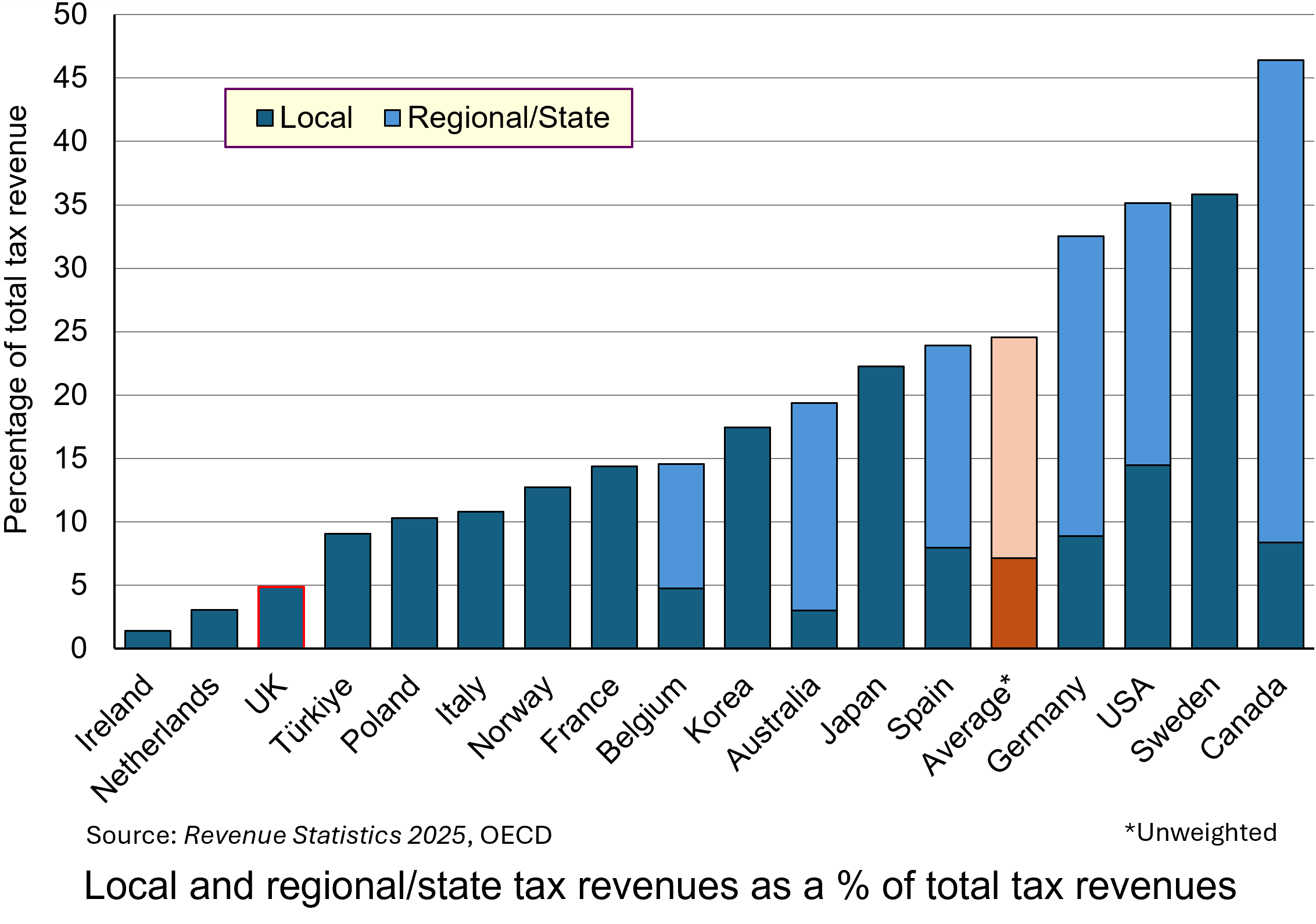 The UK, especially England, is one of the least devolved of the OECD countries. One aspect of this is taxation. The chart shows local taxes and, in the case of federal countries, state/regional/provincial taxes too. (Click here for a PowerPoint.)
Only 4.9% of UK tax revenue is in the form of local taxes (council tax and 50% of business rates) and the amount that can be raised in council tax is capped by the central government. The remainder of UK tax revenue goes to central government in the form of income taxes, social security taxes (national insurance), VAT, excise duties, etc. This compares with an average of 7.1% local taxes and 24.5% local plus regional taxes across the 17 OECD countries shown in the chart.
Andy Burnham plans to shift some of the spending and tax-raising powers from Whitehall to metro mayors and local councils. The aim is to stimulate productivity and economic growth at a regional and local level by tailoring support and incentives to local needs and strengths. Local leaders will be best positioned to understand these needs and strengths and will be able to customise spending and support appropriately.
 Examples of the types of greater autonomy over decision making would include:
- Control over adult education budgets to allow them to be tailored to provide training and apprenticeships to meet the skills requirements of existing and emerging industries in the area;
- Forming partnerships with local universities to support research and development that complements regional economic growth;
- Providing greater funding for and control over local transport infrastructure, including roads, buses, trams, trains, etc., with local consultation to make them fit for the local population and businesses;
- Tailoring business incentives to local needs and to the needs of the businesses themselves so as to attract an increase in investment;
- Greatly expanding council house building, which has virtually dried up in recent years, with mayors and/or local authorities empowered to develop local housing strategies, including affordable housing programmes, and to direct housing investment funding to particular housing developments in areas of greatest need.
Andy Burnham has pledged to stick to the government’s two existing fiscal rules:
a) The Stability Rule (Fiscal Mandate): the current (day-to-day) budget must be in balance or surplus. In other words the provision of salaries, public services, state pensions, welfare, etc. must be covered by government revenues (largely taxation). The government should borrow only to fund long-term investment.
b) The Debt Rule (Stock Mandate): each year, public-sector net financial liabilities (PSNFL) must be forecast by the OBR to be falling as a share of GDP compared to the previous year in three years’ time. This acts as a break on the amount of borrowing for long-term investment.
It is likely, therefore, that there will be little extra government money for investment. Rather, the policy involves a redistribution of public-sector investment from central government to mayoral/local authorities.
 In theory, such a policy of devolution need not see a redistribution from richer to poorer regions, but that might be part of the policy when the details are published. The UK has a bigger gap in productivity (GDP per worker) between its capital city and other large cities than in do other countries. Birmingham, Sheffield, Leeds, Newcastle, etc., as well as Cardiff, Glasgow, Edinburgh and Belfast, lag further behind London in output per head and economic growth than do other European countries lag behind their capital city. Thus the gap between Paris and Lyon, Toulouse and Marseille is narrower; as is that between Belin and Munich, Hamburg and Frankfurt. It is a similar picture in Spain and Italy. In the USA, some cities, such as San Francisco, outperform Washington DC and New York. A redistribution of government funding from London to the regions could see their incomes rise faster without having too much impact on London, which would still continue to attract large amounts of private investment.
Overall, there would be little increase in government funding. ‘Manchesterism’ is not, therefore, a demand-side policy. It is a supply-side policy – directing funds to areas where, combined with local incentives and local knowledge, the funding could yield greater returns and thereby increase potential GDP.
But this is not to say that there is no effect on aggregate demand. The hope is that devolution along the lines outlined by Andy Burnham will attract increased private investment, thereby increasing actual GDP as well as further increasing potential GDP.
We wait to see the details over the coming weeks.
Articles
- Will Andy Burnham’s devolution plan raise economic growth?
BBC Verify, Ben Chu (29/6/26)
- Burnham’s ‘Manchesterism’ could change the UK, but is not yet a full economic plan
BBC News, Faisal Islam (29/6/26)
- Burnham’s ‘Manchesterism’ got him to No 10 – but will it work for the UK?
BBC News, Faisal Islam (17/7/26)
- Burnham says there is some room for movement on tax
BBC News, Kate Wannel and Joshua Nevett (3/7/26)
- England’s mayors should be given sweeping new powers, says devolution expert
The Guardian, Kiran Stacey (2/7/26)
- What is Andy Burnham’s economic and political blueprint for Britain?
The Guardian, Richard Partington and Jessica Elgot (29/6/26)
- Why Andy Burnham’s radical plan relies on the Treasury being a friend of devolution
The Conversation, Dave Richards and Sam Warner (26/6/26)
- How Andy Burnham may try to give the UK economy a boost in his ‘10‑year plan’
The Conversation, Steve Schifferes (29/6/26)
- Could Andy Burnham let mayors raise more taxes?
House of Commons Research Briefing, Mark Sandford (2/7/26)
- Andy Burnham sets out policy plans in first major speech in PM leadership bid: Legal comments
Browne Jacobson, Dan Robinson (29/6/26)
- What does Andy Burnham think ‘Good Growth’ is?
Centre for Cities, Jess Tulasiewicz (30/6/26)
- Manchester’s digital transformation could be a blueprint for other parts of the UK
The Conversation, Richard Whittle (21/7/26)
Videos
Data
Questions
- Use an aggregate demand and supply diagram (simple or dynamic) to illustrate the effects on real GDP of a successful devolution strategy.
- Find out the details of the last Conservative government’s ‘levelling up’ policy. Was it similar in aims to that of ‘Manchesterism’?
- How could a policy of devolution as outlined by Andy Burnham affect income distribution within regions?
- Find out about the approach to regional policy in the EU. Is it similar to that being advocated by Andy Burnham?
- What is meant by ‘regional multipliers’? Why might they differ from the national multiplier?
 It is 10 years since the Brexit referendum. From an electorate of 46,501,251 people, 17,410,742 (37.4%) voted to leave, 16,141,241 (34.7%) voted to remain and 12,949,258 (27.8%) did not vote. The UK left the EU on 31 January 2020 at 11:00 pm, but remained in the single market and customs union during a transition period lasting for a further 11 months until December 31 2020.
To mark the 10th anniversary of the vote a number of articles have been written assessing the effects of Brexit. Here we look at the economic effects, as do the articles linked below. This blog updates the analysis of an earlier one, The costs of Brexit: a clearer picture.
Trade
After the referendum, extensive negotiations took place on the trading arrangements between the UK and EU that would exist once Brexit was finalised.
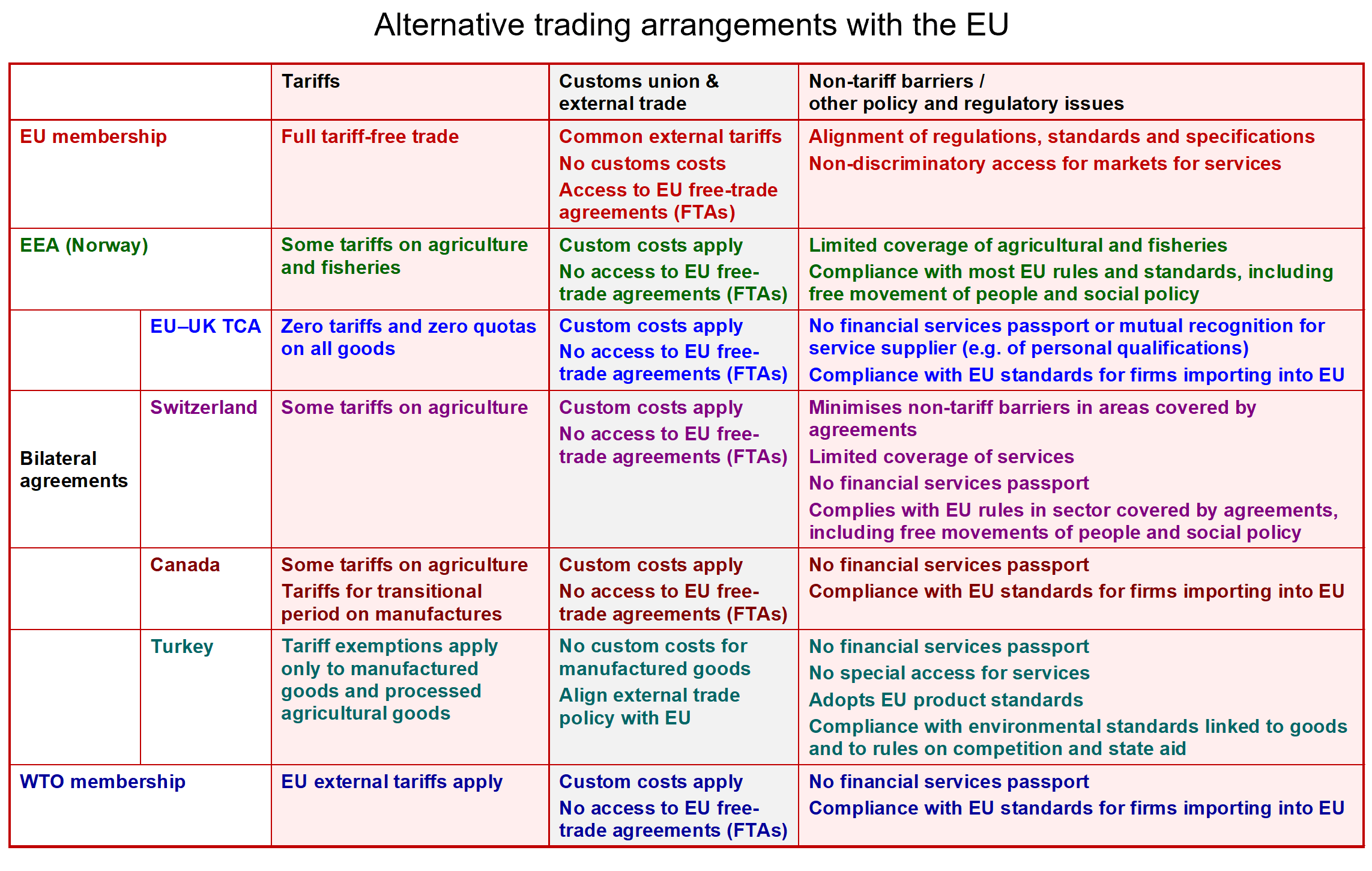
One possibility was ‘The Norwegian model’, which would have seen the UK join the European Economic Area (EEA), giving it access to the single market, but removing regulation in some key areas, such as fisheries and home affairs. This was ruled out in favour of a bilateral trade agreement. Three main types were available:
- Swiss model, where the UK would negotiate a series of bilateral agreements with the EU, including selective or general access to the single market.
- Canadian model, where the UK would form a comprehensive trade agreement with the EU to lower customs tariffs and other barriers to trade.
- Turkish model, where the UK would form a customs union with the EU. In Turkey’s case the agreement relates principally to manufactured goods.
The agreement reached, the Trade and Cooperation Agreement (TCA) was a version of the Canadian model. The UK would leave the single market and customs union, but there would be tariff-free and quota-free trade in goods between the UK and the EU. However, to ensure that it was EU and UK business that would benefit from these ‘trade preferences’, businesses must show that their products fulfil ‘rules of origin’ requirements.
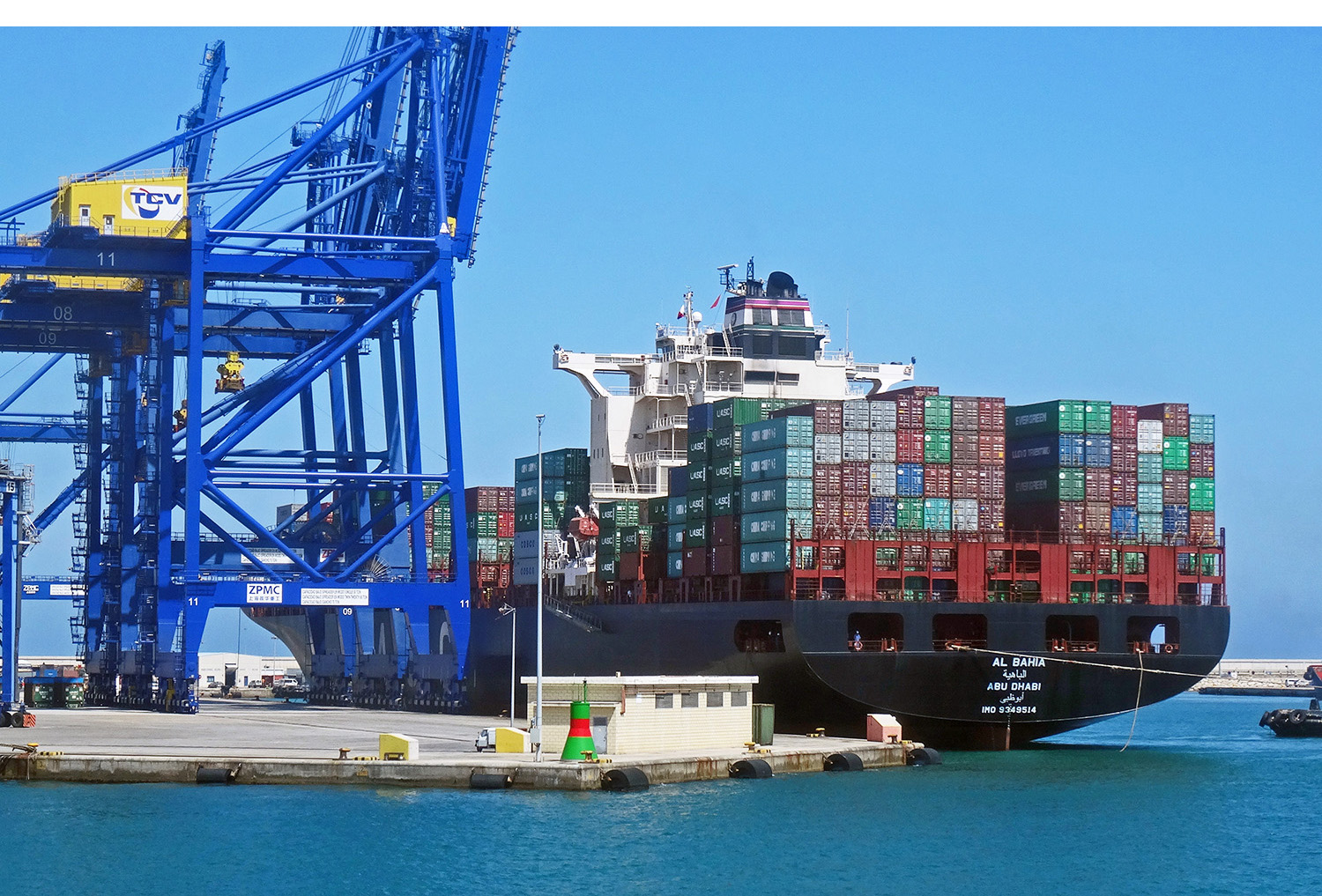 Rules of origin. Under rules of origin requirements, when a good is imported into the UK from outside the EU and then has value added to it by processing, packaging, cleaning, remixing, preserving, refashioning, etc., it can only count as a UK good if sufficient value or weight is added. The proportions vary by product, but generally goods must have approximately 50% UK content (or 80% of the weight of foodstuffs) to qualify for tariff-free access to the EU. For example, in the case of a petrol car, 55% of its value must have been created in either the EU or UK.
Meeting rules of origin has created a large amount of paperwork for businesses and this has created a significant barrier to trade. What is more, exporters are required to complete import/export declarations. Also, agri-food goods are subject to strict physical border controls. These barriers have increased the costs of trade and reduced its volume.
Services. Free trade in services is not provided by the TCA. Instead, services exporters face various barriers, such as certain professional qualifications no longer being recognised in EU countries and a loss of ‘passporting’ rights that previously allowed cross-border financial operations with minimal extra permissions.
Brexit impact. Despite new barriers to trade in services, they are generally less significant than the barriers for trade in goods, particularly in a digital age. Indeed, UK services exports have held up well. Although they fell in 2020, they have grown significantly since. According to House of Commons Library Statistics on UK-EU trade (see link below):
In 2025, UK exports of services to the EU were 28% above their 2019 level in real terms. Exports to non-EU countries were 26% above their 2019 level.
UK exports of goods to the EU, however, have fared less well. In 2025 they were 14% below their 2019 level in real terms. This is partly the effect of COVID and the Ukraine war, but exports to non-EU countries were only 8% lower than 2019. According to research by economists John Springford and Anton Spisak for the Centre for European Reform (see link below), Brexit has depressed UK goods exports to the EU by 16%. According to the Office for Budget Responsibility, (see link below) both exports and imports in the long run will be around 15% lower than they would have been if the UK had remained in the EU. What is more, the growth of goods trade (exports plus imports) has fallen well behind the average of the rest of the G7. And according to British Chambers of Commerce research (see link below), 54% of UK exporters think the TCA is making it harder to export and the need for change is urgent.
The new barriers reduce market access, while lower export volumes reduce competition and economies of scale. There is less competition too from imports, with many EU firms no longer exporting to the UK because of the costs. The barriers lead to a misallocation of resources, with highly productive UK firms exporting less, with less productive firms in the UK and EU focusing purely on their domestic markets. The barriers thus impose an impediment to the exploitation of comparative advantage
Investment
 Both domestic and foreign direct investment (FDI) in the UK have been adversely affected by Brexit. Bloom et al., in their paper for the NBER (see link below), estimate that by 2025, investment was 12–18% lower than it would have been without Brexit.
In the early years after the referendum, lower capital investment was mainly the result of uncertainty and devoting significant resources to administrative Brexit preparations. Later it was largely the result of the trade barriers themselves. Not surprisingly, firms in the UK with high exposure to EU markets experienced a sharper decline in investment than less-exposed ones.
The end of the single market and customs union reduced the attractiveness of the UK as a hub for FDI relative to competitor countries. And UK firms were encouraged to invest in the EU to create hubs for selling within the EU, thereby allowing them to avoid the trade barriers.
According to the Bloom et al. analysis, the effect of lower investment and less competition has been a fall in UK productivity of around 3% to 4% compared to remaining in the EU. The Office For Budget Responsibility argues that the post-Brexit trading relationship will reduce long-run productivity by 4% relative to remaining in the EU.
Growth in GDP
Lower investment, lower productivity and trade barriers have had a negative impact on economic growth. According to analysis by the National Institute of Economic and Social Research (NIESR) (see link below), by the end of 2023, UK real GDP was some 2–3% lower solely as a result of Brexit – in other words, after having taken into account the effects of COVID-19 and the Russia-Ukraine war. This corresponds to a per capita income loss of approximately £850. The NIESR analysis predicts that this will rise to some 5–6% of GDP, or about £2,300 per capita, by 2035.
Bank of England data, based on surveys of chief financial officers of over 2000 firms (small, medium and large), suggest that the UK economy is some 6% smaller than it would have been without Brexit. The Office for Budget Responsibility estimates that Brexit has caused a long-run reduction in GDP of 4% as a result of a similar percentage reduction in productivity.
The growth of small and medium-sized enterprises (SMEs) has been disproportionately dampened by the compliance costs of trade with the EU. Some SMEs, especially in the food and drink sector, have ceased exporting to the EU altogether.
Labour supply and migration
Halting the right of EU workers to move freely to the UK for work created acute labour shortages in specific sectors such as hospitality, health and social care, logistics, construction and agriculture. However, while immigration from the EU fell dramatically, this was more than offset by increased immigration from non-EU countries. But this was unable to fill shortfalls in some sectors.
 The loss of free movement of labour means that UK workers now face restrictions on working in the EU. These include obtaining a work visa, which requires a formal job offer, sponsorship and meeting strict salary thresholds. While business trips for meetings, conferences, trade fairs, etc. are generally exempt, if the work involves remuneration, then normally a work visa will be required. The terms of work visas vary between member states. This has created a considerable barrier for touring bands and other artists. Short-term self-employed or freelance work is highly restricted, with virtually no work permit options available for visiting UK nationals.
Because employing UK nationals now imposes extra administrative and time-consuming burdens on local EU employers, many now prioritize applicants from EU nations who can start immediately.
Articles
- Ten years on, Brexit’s economic impact is becoming clearer
BBC News, Faisal Islam (24/6/26)
- How Brexit is estimated to have hit the UK economy
Reuters, David Milliken (17/6/26)
- Ten years on, Britain counts the cost of Brexit
CNN, Hanna Ziady (22/6/26)
- Brexit at 10: The economy
Institute for Government: Comment, Giles Wilkes (16/6/26)
- Brexit has been an economic failure
LSE Blogs, Thomas Sampsos (16/6/26)
- Ten years after the referendum, how Brexit could have been done differently
The Conversation, Renaud Foucart (22/6/26)
- How Brexit has made Britain poorer – in charts
The Guardian, Richard Partington (14/6/26)
- The cost of Brexit, ten years on: The impact of leaving the customs union and single market on UK trade
Centre for European Reform, John Springford and Anton Spisak (18/6/26)
- Rejoining customs union would not fix damage caused by Brexit, research finds
The Guardian, Heather Stewart (18/6/26)
- The Economic Impact of Brexit
National Bureau of Economic Research , Nicholas Bloom, Philip Bunn, Paul Mizen, Pawel Smietanka, Gregory Thwaites and Sasha Abrahams (revised June 2026)
- Brexit’s impact on the UK economy
UK in a Changing Europe: blog, Gregory Thwaites, Nicholas Bloom, Paul Mizen, Pawel Smietanka and Philip Bunn (4/12/25)
- What the NBER gets wrong on the ‘Economic Impact of Brexit’
Julian Jessop (24/11/25)
- Brexit burden must be cut
British Chambers of Commerce (22/6/26)
- Brexit impact will be negative ‘for the foreseeable future,’ Bank of England governor warns
Business Matters, Jamie Young (19/10/25)
- Brexit knocked 6% off the UK economy, Bank of England company data suggests
Business Matters, Jamie Young (22/6/26)
- Brexit ten years on: the economy
UK in a Changing Europe: blog, Jonathan Portes (2/6/26)
- Brexit 10 years later: How the UK economy and politics changed, in charts
CNBC, Joseph Wilkins and Chloe Taylor (23/6/26)
- Ten Years of Brexit: An Assessment of the Macroeconomic, Regional, and Sectoral Impacts
NIESR blog (19/6/26)
- Brexit was supposed to limit immigration – it did the opposite
LSE blogs, Alan Manning (22/6/26)
Videos
Reports, Research, Analysis and Data
- Brexit analysis
OBR
- Brexit: research and analysis
UK Parliament
- Brexit analyses
Centre for Economic Performance (LSE)
- Trading relationship with the EU
House of Commons Library, Ilze Jozepa, Dominic Webb and Matthew Ward (25/4/25)
- Statistics on UK-EU trade
House of Commons Library, Matthew Ward and Dominic Webb (12/6/26)
- How are our Brexit trade forecast assumptions performing?
Office for Budget Responsibility, Economic and fiscal outlook – March 2024, Box 2.4
- Revisiting the Effect of Brexit
National Institute of Economic and Social Research, Ahmet Ihsan Kaya, Iana Liadze, Hailey Low, Patricia Sánchez Juanino and Stephen Millard (16/11/23)
- Net migration to the UK
The Migration Observatory, Madeleine Sumption, Ben Brindle and Peter William Walsh (27/5/26)
Questions
- Summarise the negative effects of Brexit on the UK economy.
- Why is it difficult to quantify these effects?
- How have UK firms attempted to reduce the costs of exporting to the EU?
- Why have goods exports been worse affected by Brexit than services exports?
- What difficulties would lie in the way of the UK negotiating a Turkish or Swiss model of trading relations with the EU?
- Have there been any economic benefits from Brexit and, if so, what?
 With businesses increasing their use of AI, this is likely to have significant effects on employment. But how will this affect the distribution of income, both within countries and between countries?
In some ways, AI is likely to increase inequality within countries as it displaces low-skilled workers and enhances the productivity of higher-skilled workers. In other ways, it could reduce inequality by allowing lower-skilled workers to increase their productivity, while displacing some higher-skilled workers and managers through the increased adoption of automated processes.
The effect of AI on the distribution of income between countries will depend crucially on its accessibility. If it is widely available to low-income countries, it could significantly enhance the productivity of small businesses and workers in such countries and help to reduce the income gap with the richer world. If the gains in such countries, however, are largely experienced by multinational companies, whether in mines and plantations, or in labour-intensive industries, such as garment production, few of the gains may accrue to workers and global inequality may increase.
Redistribution within a country
 The deployment of AI may result in labour displacement. AI is likely to replace both manual and white-collar jobs that involve straightforward and repetitive tasks. These include: routine clerical work, such as data entry, filing and scheduling; paralegal work, contract drafting and legal research; consulting, business research and market analysis; accounting and bookkeeping; financial trading; proofreading, copy mark-up and translation; graphic design; machine operation; warehouse work, where AI-enabled warehouse robots do many receiving, sorting, stacking, retrieval, carrying and loading tasks (e.g. Amazon’s Sequoia robotic system); basic coding or document sifting; market research and advertising design; call-centre work, such as enquiry handling, sales, telemarketing and customer service; hospitality reception; sales cashiers in supermarkets and stores; analysis of health data and diagnosis. Such jobs can all be performed by AI assistants, AI assisted robots or chat bots.
Women are likely to be disproportionately affected because they perform a higher share of the administrative and service roles most exposed to AI.
Workers displaced by AI may find that they can find employment only in lower-paid jobs. Examples include direct customer-facing roles, such as bar staff, shop assistants, hairdressers and nail and beauty consultants.
Such job displacement by AI is likely to redistribute income from relatively low-skilled labour to capital: a redistribution from wages to profits. This will tend to lead to greater inequality.
AI is also likely to lead to a redistribution of income towards certain types of high-skilled labour that are difficult to replace with AI but which could be enhanced by it. Take the case of skilled traders, such as plumbers, electricians and carpenters. They might be able to use AI in their work to enhance their productivity, through diagnosis, planning, problem-solving, measurement, etc. but the AI would not displace them. Instead, it could increase their incomes by allowing them to do their work more efficiently or effectively and thus increase their output per hour and enhance their hourly reward. Another example is architecture, where AI can automate repetitive tasks and open up new design possibilities, allowing architects to focus on creativity, flexibility, aesthetics, empathy with clients and ethical decision-making.
An important distinction is between disembodied and embodied AI investment. Disembodied AI investment could include AI ‘assistants’, such as ChatGPT and other software that can be used in existing jobs to enhance productivity. Such investment can usually be rolled out relatively quickly. Although the extra productivity may allow some reduction in the number of workers, disembodied AI investment is likely to be less disruptive than embodied AI investment. The latter includes robotics and automation, where workers are replaced by machines. This would require more investment and may be slower to be adopted.
Then there are jobs that will be created by AI. These include prompt engineers, who develop questions and prompt techniques to optimise AI output; health tech experts, who help organisations implement new medical AI products; AI educators, who train people in the uses of AI in the workplace; ethics advisors, who help companies ensure that their uses of AI are aligned with their values, responsibilities and goals; and cybersecurity experts who put systems in place to prevent AI stealing sensitive information. Such jobs may be relatively highly paid.
 In other cases, the gains from AI in employment are likely to accrue mainly to the consumer, with probably little change in the incomes of the workers themselves. This is particularly the case in parts of the public sector where wages/salaries are only very loosely related to productivity and where a large part of the work involves providing a personal service. For example, health professionals’ productivity could be enhanced by AI, which could allow faster and more accurate diagnosis, more efficient monitoring and greater accuracy in surgery. The main gainers would be the patients, with probably little change in the incomes of the health professionals themselves. Teachers’ productivity could be improved by allowing more rapid and efficient marking, preparation of materials and record keeping, allowing more time to be spent with students. Again, the main gainers would be the students, with little change in teachers’ incomes. Other jobs in this category include social workers, therapists, solicitors and barristers, HR specialists, senior managers and musicians.
Thus there is likely to be a distribution away from lower-skilled workers to both capital and higher-skilled workers who can use AI, to people who work in new jobs created by AI and to the consumers of certain services.
AI will accelerate productivity growth and, with it, GDP growth, but will probably displace workers faster than new roles emerge. This is likely to increase inequality and be a major challenge for society. Can the labour market adapt? Could the effects be modified if people moved to a four- or three-day week? Will governments introduce statutory limits to weekly working hours? Will training and education adapt to the new demands of employers?
Redistribution between countries
 AI threatens to widen the global rich–poor divide. It will give wealthier nations a productivity and innovation edge, which could displace low-skilled jobs in low-income nations. Labour-intensive production could be replaced by automated production, with the capital owned by the multinational companies of just a few countries, such as the USA and China, which between them account for 40% of global corporate AI R&D spending. For some companies, it would make sense to relocate production to rich countries, or certain wealthier developing countries, with better digital infrastructure, advanced data systems and more reliable power supply.
For other companies, however, production might still be based in low-income countries to take advantage of low-cost local materials. But there would still be a redistribution from wages in such countries to the profits of multinationals.
But it is not just in manufacturing where low-income countries are vulnerable to the integration of AI. Several countries, such as India, the Philippines, Mexico and Egypt have seen considerable investment in call centres and IT services for business process outsourcing and customer services. AI now poses a threat to employment in this industry as it has the potential to replace large numbers of workers.
AI-related job losses could exacerbate unemployment and deepen poverty in poorer countries, which, with limited resources, limited training and underdeveloped social protection systems, are less equipped to absorb economic and social shocks. This will further widen the global divide. In the case of embodied AI investment, it may only be possible in low-income countries through multinational investment and could displace many traditional jobs, with much of the benefit going in additional multinational profit.
But it is not all bad news for low-income countries. AI-driven innovations in healthcare, education, and agriculture, if adopted in poor countries, can make a significant contribution to raising living standards and can slow, or even reverse, the widening gap between rich and poor nations. Some of the greatest potential is in small-scale agriculture. Smallholders can boost crop yields though precision farming powered by AI; AI tools can help farmers buy seeds, fertilisers and animals and sell their produce at optimum times and prices; AI-enabled education tools can help farmers learn new techniques.
Articles
- New Skills and AI Are Reshaping the Future of Work
IMF Blog, Kristalina Georgieva (14/1/26)
- Generative AI: degenerative for jobs?
Bank Underground, Bank of England blog, Edward Egan (22/1/26)
- Artificial intelligence (AI) and employment
UK Parliament Research Briefing Lydia Harriss and Sam Money-Kyrle (23/12/25)
- Is Your Job AI-Proof? What to Know About AI Taking Over Jobs
Built In, Matthew Urwin (27/8/25)
- AI likely to displace jobs, says Bank of England governor
BBC News, Michael Race (19/12/25)
- These Jobs Will Fall First as AI Takes Over the Workplace
Forbes, Jack Kelly (30/4/25)
- Disrupted or displaced? How AI is shaking up jobs
exec-appointments.com, Anjli Raval (9/7/25)
- Navigate the economic risks and challenges of generative AI
EY-Parthenon, Lydia Boussour (25/6/24)
- AI Isn’t Increasing Inequality; It’s Revealing the Gaps We Haven’t Wanted to See
HR News, Mark Abbott (18/12/25)
- AI promises efficiency, but it’s also amplifying labour inequality
The Conversation, Mehnaz Rafi (3/12/25)
- 10 Jobs AI Will Replace in 2025
Live Career, Marta Bongilaj (29/12/25)
- From steam to Silicon: Why inequality persists
Aik News HD (Pakistan), Ahmed Fawad Farooq (27/12/25)
- Rethinking AI’s role in income inequality
PwC: The Leadership Agenda (4/9/25)
- How Europe Can Capture the AI Growth Dividend
IMF Blog, Florian Misch, Ben Park, Carlo Pizzinelli and Galen Sher (20/11/25)
- The Next Great Divergence
UNDP: Asia and the Pacific (2/12/25)
- AI risks sparking a new era of divergence as development gaps between countries widen, UNDP report finds
UNDP Press Release (2/12/25)
- AI threatens to widen inequality among states: UN
Aljazeera (2/12/25)
- AI risks deepening inequality, says head of world’s largest SWF
Financial Times, James Fontanella-Khan and Sun Yu (23/11/25)
- Three Reasons Why AI May Widen Global Inequality
Center for Global Development, Philip Schellekens and David Skilling (17/10/24)
- AI Will Transform the Global Economy. Let’s Make Sure It Benefits Humanity
IMF Blog, Kristalina Georgieva (14/1/24)
- AI’s $4.8 trillion future: UN Trade and Development alerts on divides, urges action
UNCTAD Press Release (7/4/25)
- AI could affect 40% of jobs and widen inequality between nations, UN warns
CNBC, Dylan Butts (4/4/25)
Questions
- What types of job are most vulnerable to AI?
- How will AI change the comparative advantage of low-income countries and what effect will it be likely to have on the pattern of global trade?
- Assess alternative policies that governments in high-income countries can adopt to offset the growth in inequality caused by the increasing use of AI.
- What policies can governments in low-income countries or aid agencies adopt to offset the growth in inequality within low-income countries and between high- and low-income countries?
- How might the growth of AI affect your own approach to career development?
- Is AI likely to increase or decrease economic power? Explain.
For a while now, debate has raged over how to revive the fortunes of the London Stock Exchange (LSE). Since the 2008 financial crisis, the market has suffered a lack of investment, poor liquidity and low performance. This has produced a moribund financial market which has become unattractive to both investors and companies. Returns from the UK market lag international competitors, particularly the USA (see the chart).
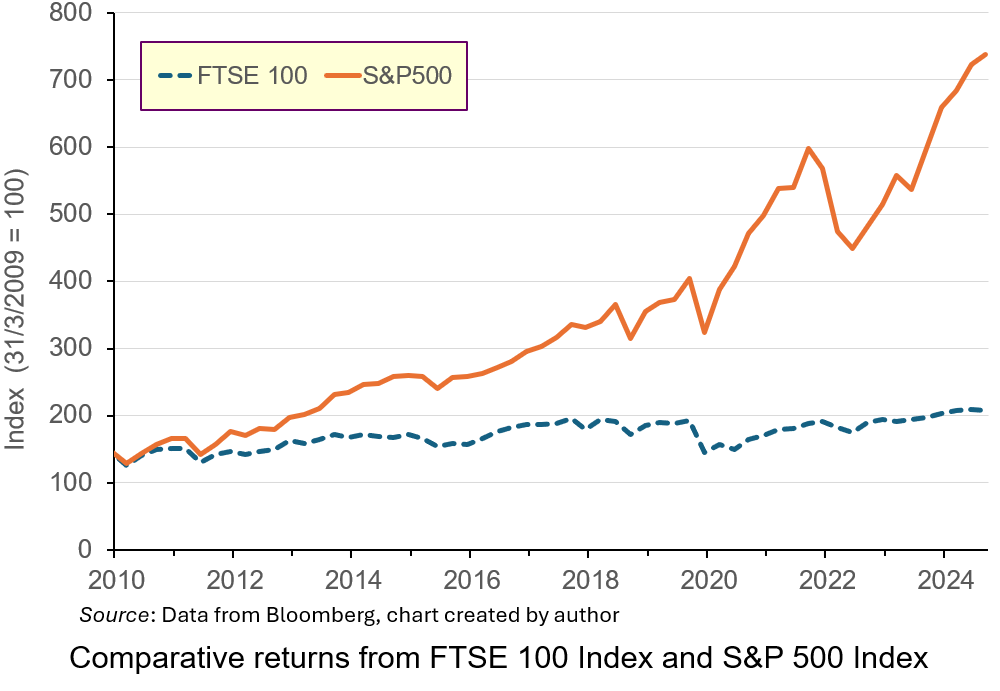
Investment in the S&P 500 Index over the period would have produced annualised rates of return of 14.35%, more than double that from the FTSE 100 Index. Part of this underperformance is due to the industrial mix of the listed companies: low-growth energy and mining compared to the high-growth technology sectors in the USA. This has led to the perception that London is not a place for firms to list, particularly those in high-growth sectors.
In 2024, 88 companies choose to delist or transfer their primary listing elsewhere. Only 18 took their place. Several big companies from a range of industries, including Ashtead, Flutter and CRH have transferred their primary listing to New York or have plans to do so.
 The new Labour government views stimulating higher levels of investment though the London market as an important element in its drive to boost productivity and growth in the UK. Recently, it has been reported that investment institutions have been lobbying the UK government to reduce significantly the tax-free allowance for Cash Individual Savings Accounts (ISAs) as a way to encourage more of UK households’ savings to be channelled through the UK stock market.
Currently, UK savers can save up to £20 000 annually into ISAs without paying tax on the interest earned. This can be held solely in Cash ISAs, or in a combination of Cash plus Stocks and Shares ISAs. The tax-free instruments which were introduced by a Labour government in 1999 to encourage higher savings have proved immensely popular. Data from Paragon Bank indicate that over £350 billion are held in these accounts. However, under the new proposals, the amount which would be allowed to be saved as cash has been rumoured to be cut to £4000 per year, with the hope that some of it will be invested in the UK stock market.
The proposals have proved controversial, with high-profile figures voicing opposition. In this blog, we’ll analyse the reasons behind the proposal and discuss whether it will have the desired effect of stimulating higher levels of investment. We’ll also discuss other proposed policies for making the LSE a more effective channel for investment flows to boost economic growth.
Stock markets and the saving and investment channel
 The main reason for the proposed ISA change is to encourage more investment in the UK stock market. By reducing the amount which can be saved in Cash ISAs, the government hopes to encourage savers to invest in Stocks and Shares ISAs instead, particularly ones linked to the UK market. This would increase the amount of finance capital in the market, thereby boosting its liquidity. This would then make it an attractive place for young, vibrant UK and foreign companies to list.
An active, liquid secondary market in shares is important to attract firms to list on stock exchanges by issuing shares to outside investors. Traditionally, this channel has been important to the growth and development of firms.
Existing savings in Cash ISAs are deposited with financial institutions such as banks and building societies. Through the credit-creation process such funds can be used to finance productive investment. In countries like the UK, lending by financial institutions is an important way that investment is financed, particularly for small and medium-sized enterprises. However, scale limits, regulatory restrictions and the need to diversify lending properly means that there are limits to the financing available for company investment through these institutions.
Capital markets like the LSE are intended to meet these larger-scale requirements. Financial claims, such as debt and equity, are divided into atomised instruments and sold to outside investors to fund investment and business growth.
Further, the desire for a capital injection to finance growth is not the only reason that firms seek stock market listings. Founders of companies may have a lot of wealth invested in the equity of their firms. Selling some of their equity to outside investors through a stock market listing is a way of diversifying their wealth. However, if they are to maximise the potential sale price, there must be an active, liquid secondary market to encourage investors to buy shares in the primary market.
Proponents of reform want to encourage a greater appetite for risk among UK investors, which will produce more savings being channelled through the LSE.
One issue is whether savers will respond in the way anticipated and channel more funds through the UK stock market. Many savers like the security of Cash ISAs. Such vehicles offer a low-risk/low-return combination, which savers like because the tax benefits boost returns. A survey by the Nottingham Building Society found that a substantial number of Cash ISA savers are concerned that the proposed changes could affect their ability to save for important financial goals, such as buying a house or building an emergency fund. Higher-risk Stocks and Shares ISAs are not suitable for such savings because of the potential to lose the initial amount invested. Many may not be prepared to do so and one-third suggested they would save less overall.
According to the survey, only 38% of Cash ISA holders said they would consider investing in Stocks and Shares ISAs if the Cash ISA allowance were reduced. It may be difficult to alter such risk-averse preferences given the average amount saved through ISAs and demographics. In 2022/23, the average amount subscribed to ISAs was £5000. This does not suggest that average households have a significant surplus of cash that they may want to investment at a high risk through the stock market. Indeed, many may want to have access to the cash at short notice and so are not prepared to forgo liquidity for the time needed to accrue the benefits of compounding which stock market investing produces.
 Demographics may also play a role in this. Many of those who save more are now retired, or near retirement. They are less likely to see the appeal of compounding returns over long periods through investment in shares. Instead, with shorter investment horizons, they may only see the potential for losses associated with Stocks and Shares ISAs. Indeed, they will be starting to liquidate their long-term positions to draw income in retirement. Therefore, they may save less.
For others, who may be prepared to accept the additional risk, with the prospect of higher returns in the way that advocates of the reform hope for, the reduction in the Cash ISA allowance does not necessarily mean that they will invest in Stocks and Shares ISAs linked to the UK market. Since returns from the UK market have lagged international competitors, it may be that savers will channel their savings to those international markets, particularly in the USA, where the risk–return relationship has been more rewarding. Doing so has been made much easier and cheaper through a combination of economic forces including technological advances, regulatory changes and increased competition. This makes it much easier for UK savers to channel investment funds to wherever potential return is highest. At the moment, this is unlikely to be the UK, meaning that the anticipated boost to investment funds may not be as much as anticipated.
Critics of the proposal also question the motives of investment fund managers who have been lobbying government. They argue that the reforms will mean that many people who do now choose to save in Stocks and Shares ISAs will buy funds managed by fund managers who will receive fees for doing so. Critics argue that it is the prospect of higher fees which is the real motive behind the lobbying, not any desire to boost investment and growth.
What alternatives are available to boost the London Stock Exchange
 The low valuations of LSE-listed companies compared to their international counterparts, particularly those in the USA, has discouraged growing firms from listing in London. To address this, there have been calls to enhance corporate governance standards and reduce regulatory burdens for listed companies.
This has already been recognised by the authorities. In 2024, UK regulators approved the biggest overhaul of rules regulating London-listed companies. The new listing rules will hand more power to company bosses to make decisions without shareholder votes. They will give companies more flexibility to adopt dual-class share structures used by founders and venture capital firms to give themselves stronger voting rights than other investors. This is particularly popular for founders who want to diversify their wealth without sacrificing control and is used frequently by tech companies and venture capitalists when listing in the USA. Such reforms may attract more companies in high-growth sectors to list in London.
Tax policies which provide the right incentives to buy and sell shares could also encourage more investment in the LSE. For instance, the repeal in the mid-1990s of the preferential tax treatment of dividend income for UK pension funds and insurance companies is seen as a major factor in discouraging those institutions from investing more funds in the London market. Since tax on capital gains is only liable when they are realised, this reduces their present value versus the equivalent amount on dividends.
As the following table illustrates, given the significantly higher percentage of total returns derived from dividends in the LSE compared to other exchanges, the equal tax treatment of dividend and capital gains provides an incentive to seek jurisdictions where capital gains predominate. This is what UK pension funds have done. Data from the Office of National Statistics show that in 2024, 77% of UK occupational pensions equity investments were overseas.
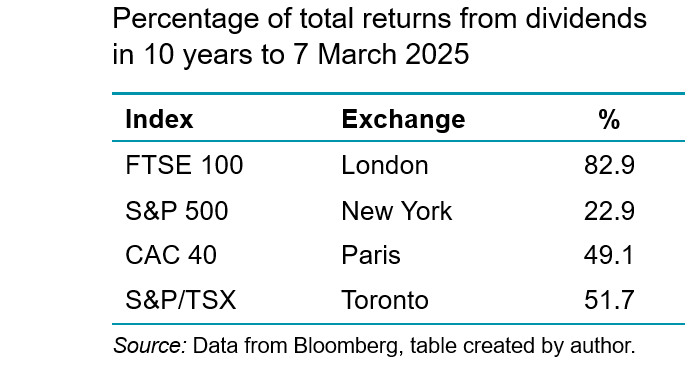
Reinstating this tax benefit could stimulate greater demand for UK equity from this significant sector, boosting liquidity in the London market. Allied to this are proposals from the UK government to consolidate the fragmented UK pension industry to achieve greater scale economies in that channel for investment. This can reduce financing costs, boosting the marginal return from UK investments for these funds, encouraging greater investment in the UK market (ceteris paribus).
Further, the 2.5% stamp duty on share purchases has been viewed as another disincentive for both retail and institutional investors to engage in security trading on the London Stock Exchange. The duty, which is much higher than in peer economies, effectively raises the expected rate of return on UK equites which depresses perceptions of their values and prices. Its removal may raise trading volumes, improving the liquidity of the market and be offset by increased tax revenues in the future. However, the Treasury suggests that the removal of stamp duty is doubtful, since it would create a significant hole in the UK government’s budget.
 Ultimately, many of these reforms may have limited impact on investment. Efforts to boost confidence in the stock market will depend on improving the overall economic environment in the UK. Therefore, it will be the wider policies promoting growth in general which will increase the rates of return offered by London-listed firms and be more significant to attracting capital to London.
However, many of these are controversial themselves, such as relaxing laws around planning permissions and addressing business uncertainties around post-Brexit trading arrangements with the European Union. These broader economic measures could help make the UK generally, and the LSE specifically, more appealing to both domestic and international investors.
Conclusion
The UK government’s proposal to reduce the Cash ISA allowance is part of a broader strategy to boost investment in the stock market and stimulate economic growth. While this change could lead to more capital being directed towards productive investments, it also poses challenges for savers who like the security and simplicity of Cash ISAs.
The ultimate impact will depend on how savers respond to these changes. The potential reduction in overall savings rates could counteract some of the intended benefits. Further, the extent to which they are prepared to channel their savings into UK-listed companies will be important. If many seek higher returns elsewhere, the impact on the UK stock market may be limited. In any case, policies to address the problems of the UK stock market will only work if the wider issues associated with UK productivity and growth are addressed.
Articles
Data
Questions
- Explain how banks use cash ISAs to finance investment through credit creation.
- What do stock markets offer which may boost investment and economic growth?
- What are the issues with the London Stock Exchange which is making it unattractive for raising finance?
- How is the rumoured ISA reform intended to help address these issues?
- Analyse the extent to which it will do so.
- How might some of the broader reforms proposed by the UK government influence rate of return on UK equities and attract capital?
