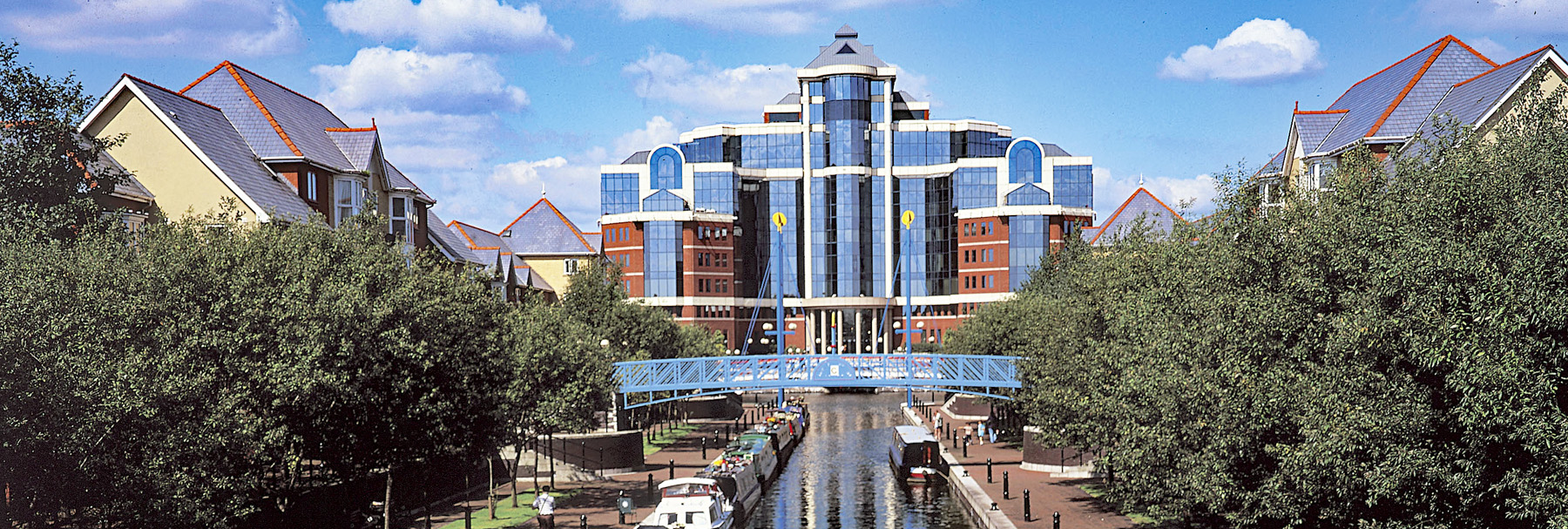
Andy Burnham is set to become UK Prime Minister on 20 July if no-one else stands to replace Keir Starmer. In a speech on 29 June, he outlined his economic vision. Central to this is devolution, where a greater number of economic decisions would be taken locally rather than by central government. This approach has been dubbed ‘Manchesterism’, in reference to his time as Mayor of Greater Manchester from 2017 to earlier this year. Under his mayoralty, Greater Manchester (GM) achieved faster economic growth than other regions or cities in the UK. From 2017 to 2023, GM’s gross value added grew by an average of 6.6% per annum and the city of Manchester’s by 8.4% – the highest of any city in the UK. The UK average was 4.9% and London’s was 4.6%.
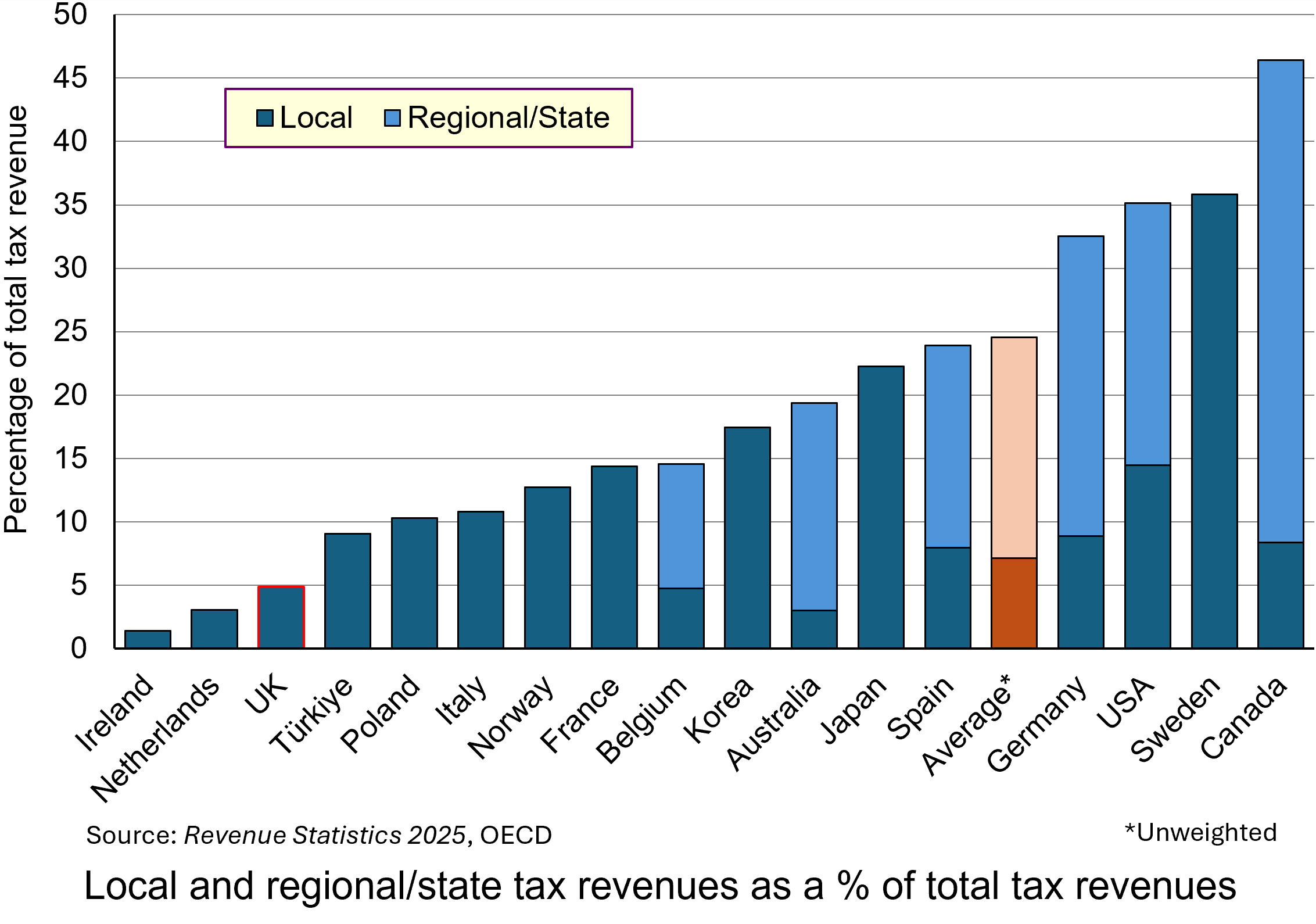 The UK, especially England, is one of the least devolved of the OECD countries. One aspect of this is taxation. The chart shows local taxes and, in the case of federal countries, state/regional/provincial taxes too. (Click here for a PowerPoint.)
Only 4.9% of UK tax revenue is in the form of local taxes (council tax and 50% of business rates) and the amount that can be raised in council tax is capped by the central government. The remainder of UK tax revenue goes to central government in the form of income taxes, social security taxes (national insurance), VAT, excise duties, etc. This compares with an average of 7.1% local taxes and 24.5% local plus regional taxes across the 17 OECD countries shown in the chart.
Andy Burnham plans to shift some of the spending and tax-raising powers from Whitehall to metro mayors and local councils. The aim is to stimulate productivity and economic growth at a regional and local level by tailoring support and incentives to local needs and strengths. Local leaders will be best positioned to understand these needs and strengths and will be able to customise spending and support appropriately.
 Examples of the types of greater autonomy over decision making would include:
- Control over adult education budgets to allow them to be tailored to provide training and apprenticeships to meet the skills requirements of existing and emerging industries in the area;
- Forming partnerships with local universities to support research and development that complements regional economic growth;
- Providing greater funding for and control over local transport infrastructure, including roads, buses, trams, trains, etc., with local consultation to make them fit for the local population and businesses;
- Tailoring business incentives to local needs and to the needs of the businesses themselves so as to attract an increase in investment;
- Greatly expanding council house building, which has virtually dried up in recent years, with mayors and/or local authorities empowered to develop local housing strategies, including affordable housing programmes, and to direct housing investment funding to particular housing developments in areas of greatest need.
Andy Burnham has pledged to stick to the government’s two existing fiscal rules:
a) The Stability Rule (Fiscal Mandate): the current (day-to-day) budget must be in balance or surplus. In other words the provision of salaries, public services, state pensions, welfare, etc. must be covered by government revenues (largely taxation). The government should borrow only to fund long-term investment.
b) The Debt Rule (Stock Mandate): each year, public-sector net financial liabilities (PSNFL) must be forecast by the OBR to be falling as a share of GDP compared to the previous year in three years’ time. This acts as a break on the amount of borrowing for long-term investment.
It is likely, therefore, that there will be little extra government money for investment. Rather, the policy involves a redistribution of public-sector investment from central government to mayoral/local authorities.
 In theory, such a policy of devolution need not see a redistribution from richer to poorer regions, but that might be part of the policy when the details are published. The UK has a bigger gap in productivity (GDP per worker) between its capital city and other large cities than in do other countries. Birmingham, Sheffield, Leeds, Newcastle, etc., as well as Cardiff, Glasgow, Edinburgh and Belfast, lag further behind London in output per head and economic growth than do other European countries lag behind their capital city. Thus the gap between Paris and Lyon, Toulouse and Marseille is narrower; as is that between Belin and Munich, Hamburg and Frankfurt. It is a similar picture in Spain and Italy. In the USA, some cities, such as San Francisco, outperform Washington DC and New York. A redistribution of government funding from London to the regions could see their incomes rise faster without having too much impact on London, which would still continue to attract large amounts of private investment.
Overall, there would be little increase in government funding. ‘Manchesterism’ is not, therefore, a demand-side policy. It is a supply-side policy – directing funds to areas where, combined with local incentives and local knowledge, the funding could yield greater returns and thereby increase potential GDP.
But this is not to say that there is no effect on aggregate demand. The hope is that devolution along the lines outlined by Andy Burnham will attract increased private investment, thereby increasing actual GDP as well as further increasing potential GDP.
We wait to see the details over the coming weeks.
Articles
- Will Andy Burnham’s devolution plan raise economic growth?
- Burnham’s ‘Manchesterism’ could change the UK, but is not yet a full economic plan
- Burnham’s ‘Manchesterism’ got him to No 10 – but will it work for the UK?
- Burnham says there is some room for movement on tax
- England’s mayors should be given sweeping new powers, says devolution expert
- What is Andy Burnham’s economic and political blueprint for Britain?
- Why Andy Burnham’s radical plan relies on the Treasury being a friend of devolution
- How Andy Burnham may try to give the UK economy a boost in his ‘10‑year plan’
- Could Andy Burnham let mayors raise more taxes?
- Andy Burnham sets out policy plans in first major speech in PM leadership bid: Legal comments
- What does Andy Burnham think ‘Good Growth’ is?
- Manchester’s digital transformation could be a blueprint for other parts of the UK
BBC Verify, Ben Chu (29/6/26)
BBC News, Faisal Islam (29/6/26)
BBC News, Faisal Islam (17/7/26)
BBC News, Kate Wannel and Joshua Nevett (3/7/26)
The Guardian, Kiran Stacey (2/7/26)
The Guardian, Richard Partington and Jessica Elgot (29/6/26)
The Conversation, Dave Richards and Sam Warner (26/6/26)
The Conversation, Steve Schifferes (29/6/26)
House of Commons Research Briefing, Mark Sandford (2/7/26)
Browne Jacobson, Dan Robinson (29/6/26)
Centre for Cities, Jess Tulasiewicz (30/6/26)
The Conversation, Richard Whittle (21/7/26)
Videos
 Can Andy Burnham deliver on his promise to rewire Britain’s economy?
- Can Andy Burnham tackle Britain’s regional inequality crisis with Manchester’s growth model?
- The numbers behind Andy Burnham’s big promises – expert explains
- Inside Manchester: How Andy Burnham’s city was transformed
- Why Andy Burnham Probably Won’t Increase Taxes | Former Treasury Advisor Explains
- ‘Manchesterism’
- “What Andy Burnham should do…” | ‘Rock star’ economist Mariana Mazzucato’s “warning to Burnham”
Sky News on YouTube, Ed Conway (29/6/26), Beth Rigby (29/6/26)
Sky News on YouTube, Ed Conway (29/6/26)
Channel 4 News, Helia Ebrahimi and Tracy Brabin (29/6/26)
Sky News, Sam Coates (19/6/26)
Times Radio on YouTube, Michael Jacobs (3/7/26)
BBC Newsnight, panel discussion (30/6/26)
BBC Newsnight on YouTube, Mariana Mazzucato (1/7/26)
Data
Questions
- Use an aggregate demand and supply diagram (simple or dynamic) to illustrate the effects on real GDP of a successful devolution strategy.
- Find out the details of the last Conservative government’s ‘levelling up’ policy. Was it similar in aims to that of ‘Manchesterism’?
- How could a policy of devolution as outlined by Andy Burnham affect income distribution within regions?
- Find out about the approach to regional policy in the EU. Is it similar to that being advocated by Andy Burnham?
- What is meant by ‘regional multipliers’? Why might they differ from the national multiplier?