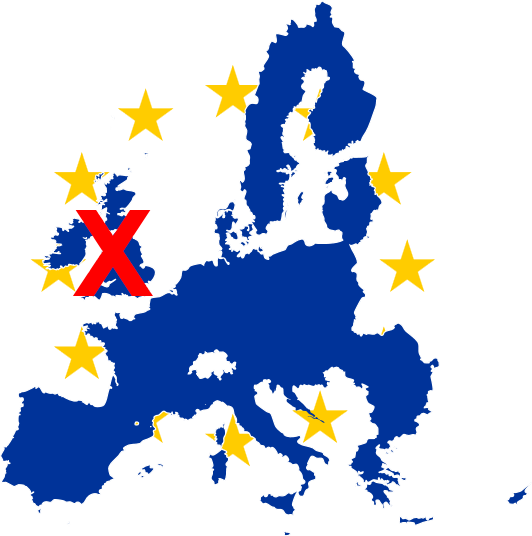
 It is 10 years since the Brexit referendum. From an electorate of 46,501,251 people, 17,410,742 (37.4%) voted to leave, 16,141,241 (34.7%) voted to remain and 12,949,258 (27.8%) did not vote. The UK left the EU on 31 January 2020 at 11:00 pm, but remained in the single market and customs union during a transition period lasting for a further 11 months until December 31 2020.
To mark the 10th anniversary of the vote a number of articles have been written assessing the effects of Brexit. Here we look at the economic effects, as do the articles linked below. This blog updates the analysis of an earlier one, The costs of Brexit: a clearer picture.
Trade
After the referendum, extensive negotiations took place on the trading arrangements between the UK and EU that would exist once Brexit was finalised.
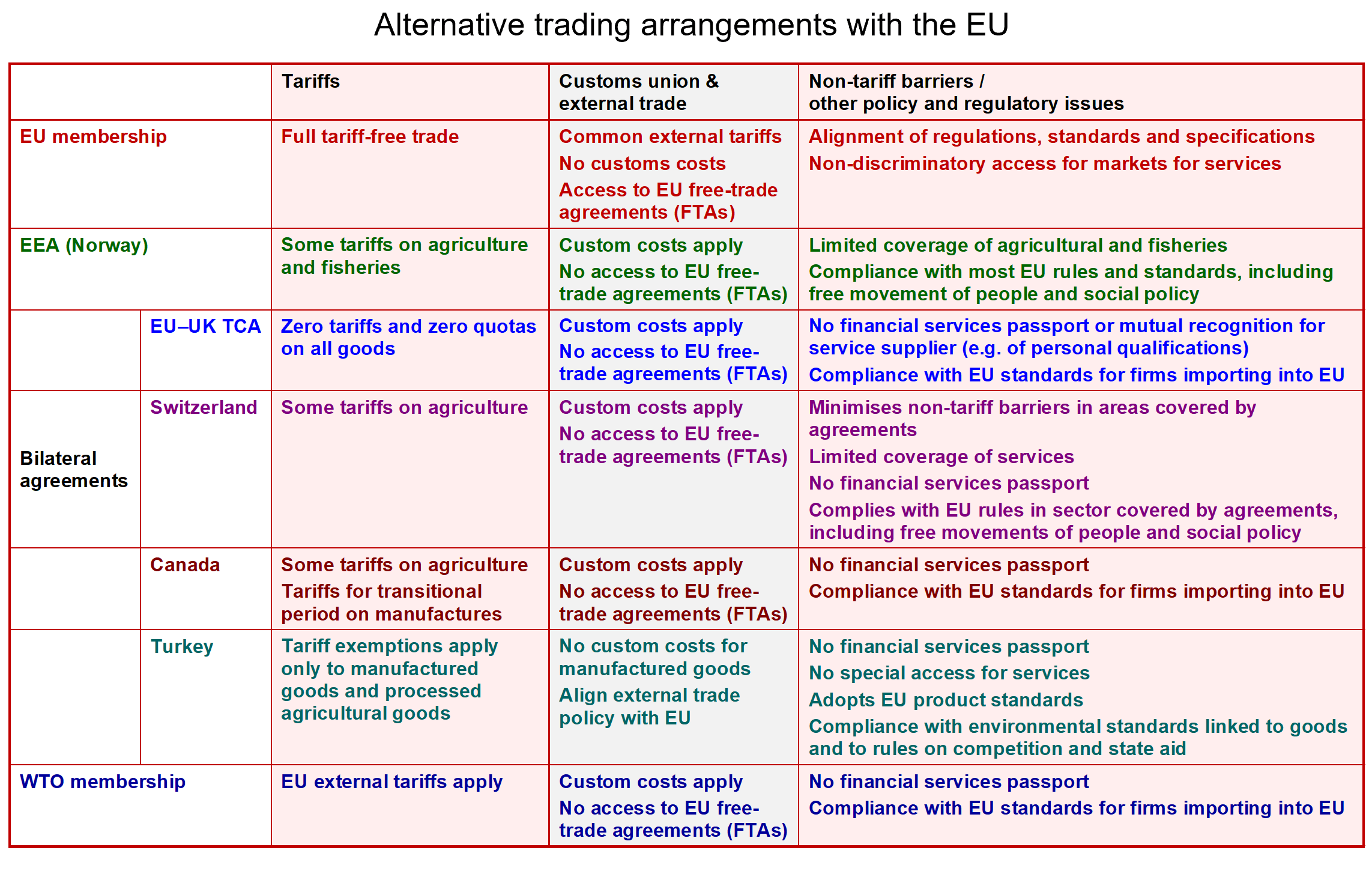
One possibility was ‘The Norwegian model’, which would have seen the UK join the European Economic Area (EEA), giving it access to the single market, but removing regulation in some key areas, such as fisheries and home affairs. This was ruled out in favour of a bilateral trade agreement. Three main types were available:
- Swiss model, where the UK would negotiate a series of bilateral agreements with the EU, including selective or general access to the single market.
- Canadian model, where the UK would form a comprehensive trade agreement with the EU to lower customs tariffs and other barriers to trade.
- Turkish model, where the UK would form a customs union with the EU. In Turkey’s case the agreement relates principally to manufactured goods.
The agreement reached, the Trade and Cooperation Agreement (TCA) was a version of the Canadian model. The UK would leave the single market and customs union, but there would be tariff-free and quota-free trade in goods between the UK and the EU. However, to ensure that it was EU and UK business that would benefit from these ‘trade preferences’, businesses must show that their products fulfil ‘rules of origin’ requirements.
 Rules of origin. Under rules of origin requirements, when a good is imported into the UK from outside the EU and then has value added to it by processing, packaging, cleaning, remixing, preserving, refashioning, etc., it can only count as a UK good if sufficient value or weight is added. The proportions vary by product, but generally goods must have approximately 50% UK content (or 80% of the weight of foodstuffs) to qualify for tariff-free access to the EU. For example, in the case of a petrol car, 55% of its value must have been created in either the EU or UK.
Meeting rules of origin has created a large amount of paperwork for businesses and this has created a significant barrier to trade. What is more, exporters are required to complete import/export declarations. Also, agri-food goods are subject to strict physical border controls. These barriers have increased the costs of trade and reduced its volume.
Services. Free trade in services is not provided by the TCA. Instead, services exporters face various barriers, such as certain professional qualifications no longer being recognised in EU countries and a loss of ‘passporting’ rights that previously allowed cross-border financial operations with minimal extra permissions.
Brexit impact. Despite new barriers to trade in services, they are generally less significant than the barriers for trade in goods, particularly in a digital age. Indeed, UK services exports have held up well. Although they fell in 2020, they have grown significantly since. According to House of Commons Library Statistics on UK-EU trade (see link below):
In 2025, UK exports of services to the EU were 28% above their 2019 level in real terms. Exports to non-EU countries were 26% above their 2019 level.
UK exports of goods to the EU, however, have fared less well. In 2025 they were 14% below their 2019 level in real terms. This is partly the effect of COVID and the Ukraine war, but exports to non-EU countries were only 8% lower than 2019. According to research by economists John Springford and Anton Spisak for the Centre for European Reform (see link below), Brexit has depressed UK goods exports to the EU by 16%. According to the Office for Budget Responsibility, (see link below) both exports and imports in the long run will be around 15% lower than they would have been if the UK had remained in the EU. What is more, the growth of goods trade (exports plus imports) has fallen well behind the average of the rest of the G7. And according to British Chambers of Commerce research (see link below), 54% of UK exporters think the TCA is making it harder to export and the need for change is urgent.
The new barriers reduce market access, while lower export volumes reduce competition and economies of scale. There is less competition too from imports, with many EU firms no longer exporting to the UK because of the costs. The barriers lead to a misallocation of resources, with highly productive UK firms exporting less, with less productive firms in the UK and EU focusing purely on their domestic markets. The barriers thus impose an impediment to the exploitation of comparative advantage
Investment
 Both domestic and foreign direct investment (FDI) in the UK have been adversely affected by Brexit. Bloom et al., in their paper for the NBER (see link below), estimate that by 2025, investment was 12–18% lower than it would have been without Brexit.
In the early years after the referendum, lower capital investment was mainly the result of uncertainty and devoting significant resources to administrative Brexit preparations. Later it was largely the result of the trade barriers themselves. Not surprisingly, firms in the UK with high exposure to EU markets experienced a sharper decline in investment than less-exposed ones.
The end of the single market and customs union reduced the attractiveness of the UK as a hub for FDI relative to competitor countries. And UK firms were encouraged to invest in the EU to create hubs for selling within the EU, thereby allowing them to avoid the trade barriers.
According to the Bloom et al. analysis, the effect of lower investment and less competition has been a fall in UK productivity of around 3% to 4% compared to remaining in the EU. The Office For Budget Responsibility argues that the post-Brexit trading relationship will reduce long-run productivity by 4% relative to remaining in the EU.
Growth in GDP
Lower investment, lower productivity and trade barriers have had a negative impact on economic growth. According to analysis by the National Institute of Economic and Social Research (NIESR) (see link below), by the end of 2023, UK real GDP was some 2–3% lower solely as a result of Brexit – in other words, after having taken into account the effects of COVID-19 and the Russia-Ukraine war. This corresponds to a per capita income loss of approximately £850. The NIESR analysis predicts that this will rise to some 5–6% of GDP, or about £2,300 per capita, by 2035.
Bank of England data, based on surveys of chief financial officers of over 2000 firms (small, medium and large), suggest that the UK economy is some 6% smaller than it would have been without Brexit. The Office for Budget Responsibility estimates that Brexit has caused a long-run reduction in GDP of 4% as a result of a similar percentage reduction in productivity.
The growth of small and medium-sized enterprises (SMEs) has been disproportionately dampened by the compliance costs of trade with the EU. Some SMEs, especially in the food and drink sector, have ceased exporting to the EU altogether.
Labour supply and migration
Halting the right of EU workers to move freely to the UK for work created acute labour shortages in specific sectors such as hospitality, health and social care, logistics, construction and agriculture. However, while immigration from the EU fell dramatically, this was more than offset by increased immigration from non-EU countries. But this was unable to fill shortfalls in some sectors.
 The loss of free movement of labour means that UK workers now face restrictions on working in the EU. These include obtaining a work visa, which requires a formal job offer, sponsorship and meeting strict salary thresholds. While business trips for meetings, conferences, trade fairs, etc. are generally exempt, if the work involves remuneration, then normally a work visa will be required. The terms of work visas vary between member states. This has created a considerable barrier for touring bands and other artists. Short-term self-employed or freelance work is highly restricted, with virtually no work permit options available for visiting UK nationals.
Because employing UK nationals now imposes extra administrative and time-consuming burdens on local EU employers, many now prioritize applicants from EU nations who can start immediately.
Articles
- Ten years on, Brexit’s economic impact is becoming clearer
BBC News, Faisal Islam (24/6/26)
- How Brexit is estimated to have hit the UK economy
Reuters, David Milliken (17/6/26)
- Ten years on, Britain counts the cost of Brexit
CNN, Hanna Ziady (22/6/26)
- Brexit at 10: The economy
Institute for Government: Comment, Giles Wilkes (16/6/26)
- Brexit has been an economic failure
LSE Blogs, Thomas Sampsos (16/6/26)
- Ten years after the referendum, how Brexit could have been done differently
The Conversation, Renaud Foucart (22/6/26)
- How Brexit has made Britain poorer – in charts
The Guardian, Richard Partington (14/6/26)
- The cost of Brexit, ten years on: The impact of leaving the customs union and single market on UK trade
Centre for European Reform, John Springford and Anton Spisak (18/6/26)
- Rejoining customs union would not fix damage caused by Brexit, research finds
The Guardian, Heather Stewart (18/6/26)
- The Economic Impact of Brexit
National Bureau of Economic Research , Nicholas Bloom, Philip Bunn, Paul Mizen, Pawel Smietanka, Gregory Thwaites and Sasha Abrahams (revised June 2026)
- Brexit’s impact on the UK economy
UK in a Changing Europe: blog, Gregory Thwaites, Nicholas Bloom, Paul Mizen, Pawel Smietanka and Philip Bunn (4/12/25)
- What the NBER gets wrong on the ‘Economic Impact of Brexit’
Julian Jessop (24/11/25)
- Brexit burden must be cut
British Chambers of Commerce (22/6/26)
- Brexit impact will be negative ‘for the foreseeable future,’ Bank of England governor warns
Business Matters, Jamie Young (19/10/25)
- Brexit knocked 6% off the UK economy, Bank of England company data suggests
Business Matters, Jamie Young (22/6/26)
- Brexit ten years on: the economy
UK in a Changing Europe: blog, Jonathan Portes (2/6/26)
- Brexit 10 years later: How the UK economy and politics changed, in charts
CNBC, Joseph Wilkins and Chloe Taylor (23/6/26)
- Ten Years of Brexit: An Assessment of the Macroeconomic, Regional, and Sectoral Impacts
NIESR blog (19/6/26)
- Brexit was supposed to limit immigration – it did the opposite
LSE blogs, Alan Manning (22/6/26)
Videos
Reports, Research, Analysis and Data
- Brexit analysis
OBR
- Brexit: research and analysis
UK Parliament
- Brexit analyses
Centre for Economic Performance (LSE)
- Trading relationship with the EU
House of Commons Library, Ilze Jozepa, Dominic Webb and Matthew Ward (25/4/25)
- Statistics on UK-EU trade
House of Commons Library, Matthew Ward and Dominic Webb (12/6/26)
- How are our Brexit trade forecast assumptions performing?
Office for Budget Responsibility, Economic and fiscal outlook – March 2024, Box 2.4
- Revisiting the Effect of Brexit
National Institute of Economic and Social Research, Ahmet Ihsan Kaya, Iana Liadze, Hailey Low, Patricia Sánchez Juanino and Stephen Millard (16/11/23)
- Net migration to the UK
The Migration Observatory, Madeleine Sumption, Ben Brindle and Peter William Walsh (27/5/26)
Questions
- Summarise the negative effects of Brexit on the UK economy.
- Why is it difficult to quantify these effects?
- How have UK firms attempted to reduce the costs of exporting to the EU?
- Why have goods exports been worse affected by Brexit than services exports?
- What difficulties would lie in the way of the UK negotiating a Turkish or Swiss model of trading relations with the EU?
- Have there been any economic benefits from Brexit and, if so, what?
The UK left the EU on 31 January 2020 and entered an 11-month transition phase during which previous arrangements largely applied. On 30 December 2020, the UK and the EU signed the Trade and Cooperation Agreement (TCA) (see also), which set out the details of the post-Brexit trading arrangements between the UK and the EU after the ending of the transition period on 31 December 2020. The new arrangements have been implemented in stages so as to minimise disruption.
A major change was implemented on 1 January 2022, when full customs controls came into effect on imports into the UK from the EU. Later in the year a range of safety and security measures will be introduced, such as physical checks on live animals.
Not surprisingly, the anniversary of the TCA has been marked by many articles on Brexit: assessing its effects so far and looking into the future. Most of the articles see Brexit as having imposed net costs on the UK and the EU. They reflect the views of economists generally. As the first FT article linked below states, “The debate among economists on Brexit has rarely been about whether there would be a hit to growth and living standards, but rather how big a hit”.
The trade and GDP costs of Brexit
The Office for Budget Responsibility in October 2021 attempted to measure these costs in terms of the loss in trade and GDP. In October 2021, it stated:
Since our first post-EU referendum Economic and Fiscal Outlook in November 2016, our forecasts have assumed that total UK imports and exports will eventually both be 15 per cent lower than had we stayed in the EU. This reduction in trade intensity drives the 4 per cent reduction in long-run potential productivity we assume will eventually result from our departure from the EU.
…the evidence so far suggests that both import and export intensity have been reduced by Brexit, with developments still consistent with our initial assumption of a 15 per cent reduction in each.
This analysis is supported by evidence from John Springford, deputy director of the Centre for European Reform think-tank. He compares the UK’s actual performance with a ‘doppelgänger’ UK, which is an imaginary UK that has not left the EU. The doppelgänger used “is a subset of countries selected from a larger group of 22 advanced economies by an algorithm. The algorithm finds the countries that, when combined, create a doppelgänger UK that has the smallest possible deviation from the real UK data until December 2019, before the pandemic struck.” According to Springford, the shortfall in trade in October 2021 was 15.7 per cent – very much in line with the OBR’s forecasts.
Explanations of the costs
 Why, then, have have been and will continue to be net economic costs from Brexit?
The main reason is that the UK has moved from being in the EU Single Market, a system of virtually friction-free trade and factor movements, to a trade agreement (the TCA) which, while being tariff and quota free for goods produced in the UK and the EU, involves considerable frictions. These frictions include greatly increased paperwork, which adds to the cost of trade. This has affected small businesses particularly, for whom the increased administrative costs generally represent a larger proportion of total costs than for large businesses.
Although EU tariffs are not imposed on goods wholly originating in the UK, they are imposed on many goods that are not. Under ‘rules of origin’ regulations, an item can only count as a British good if sufficient value or weight is added. If insufficient value is added, then customs charges are imposed. Similar rules apply from 1 January 2022 on goods imported into the Great Britain from the EU which are only partially made in the EU. The issue of rules of origin was examined in the blog A free-trade deal? Not really. Goods being moved between Great Britain and the EU are checked at ports and can only be released into the market if they have a valid customs declaration and have received customs clearance. This involves considerable paperwork for businesses. As the article below from Internet Retailing states:
UK and EU importers need to be able to state the origin of the goods they trade between the UK and EU. For some goods, exporters need to hold supplier declarations to show where they were made and where materials came from. From January 1, those issuing statements of origin for goods exported to the EU will need to hold the supplier declarations at the time that they export their goods, whereas up till now the those declarations could be supplied later.
Brexit has had considerable effects on the labour market. Many EU citizens returned to their home countries both before and after Brexit, creating labour shortages in many sectors. Also, it has become more difficult for UK citizens to work in the EU, with work permits required in most cases. This has had a major effect on some UK workers. For example, British touring musicians and performers find it difficult to tour, given the lack of an EU-wide visa waiver, ‘cabotage’ rules that ban large UK tour vehicles from making more than two stops before returning to the UK and new paperwork needed to take certain musical instruments into the EU.
Another issue concerns investment. Will greater restrictions in trade between the EU and the UK reduce inward investment to the UK, with international companies preferring to locate factories producing for Europe in the EU rather than the UK as the EU market is bigger than the UK market? So far, fears have not been realised as inward investment has held up well, partly because of the rapid bounce-back from the pandemic and the successful roll-out of the vaccine. Nevertheless, the UK’s dominance as a recipient of inward investment to Europe has been replaced by a three-way dominance of the UK, France and Germany, with France being the biggest recipient of the three in 2019 and 2020. It will be some years before the extent to which Brexit has damaged inward investment to the UK, if at all, becomes clear.
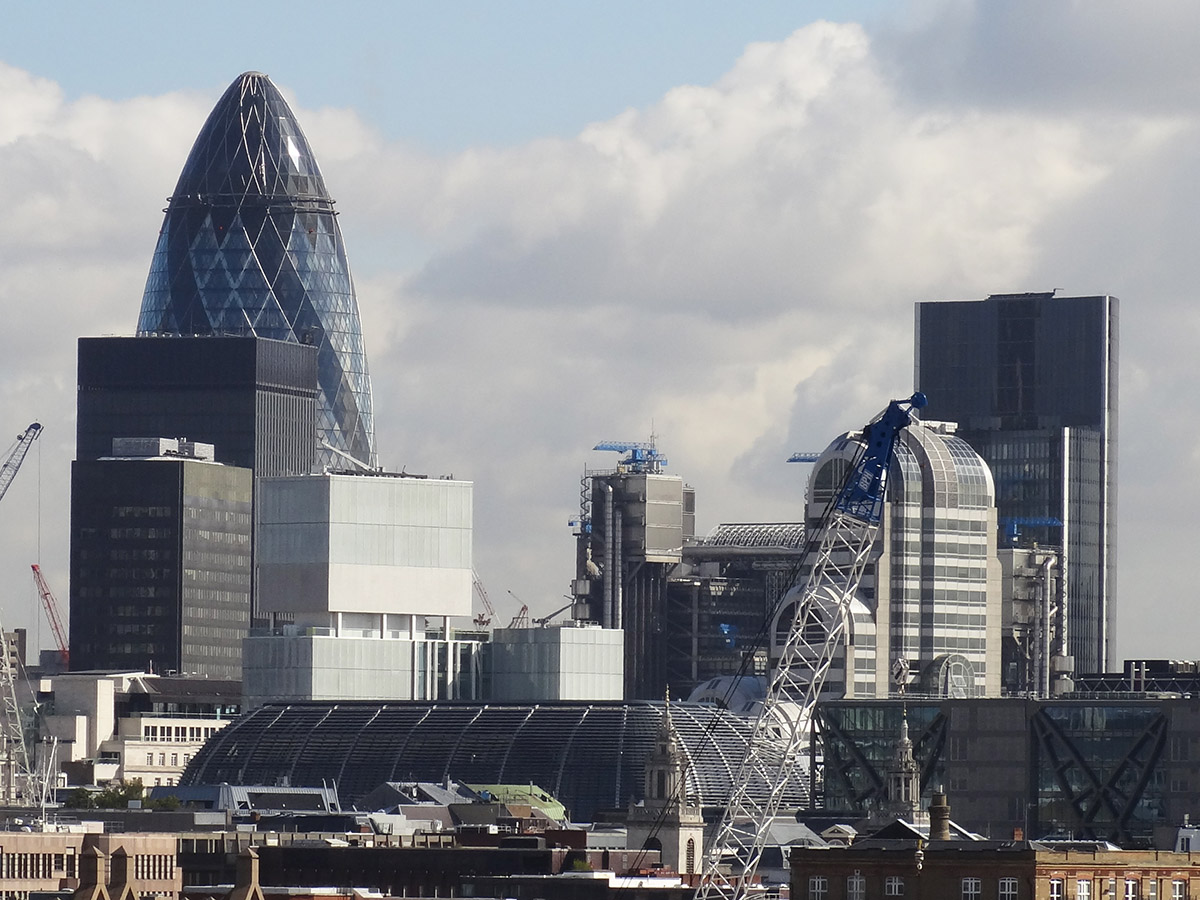 The TCA applies to goods, not services. One of the major concerns has been the implications of Brexit for financial services and the City of London. Before Brexit, financial institutions based in the UK had ‘passporting rights’. These allowed them to offer financial services across EU borders and to set up branches in EU countries easily. With the ending of the transition period in December 2020, these passporting rights have ceased. The EU has granted temporary ‘equivalence’ to such institutions until June 2022, but then it comes to an end and there is no prospect of deal on financial services in the near future. Indeed, the EU is actively trying to encourage more financial activity to move from the UK to the EU. Several financial institutions have already relocated all or part of their business from London to the EU.
The articles below examine these costs and many give examples of specific firms and how Brexit has impacted on them. As you will see, there are quite a lot of articles and you might just want to select a few. Or if this blog is being used for classes, the articles could be assigned to different students and used as the basis for discussion.
The future
Whilst the additional costs in terms of trade restrictions and paperwork are clear, it is too soon to know how well firms will be able to overcome them. Many of those who support Brexit argue that the UK now has freedom to impose lighter UK regulations on firms and that this could encourage economic growth. Other supporters of Brexit, however, argue that Brexit gives the UK government the opportunity to impose tougher environmental, safety and employment protection regulations. Again, it is too soon to know what direction the current and future governments will move.
 Then there is the question of trade deals with non-EU countries. How many will there be? When will they be signed? What will their terms be? So far, the deals signed have largely been just a roll-over of the deals the UK previously had with these countries as a member of the EU. The one exception is the deal with Australia. But the gains from that are tiny – an estimated gain of between 0.02 and 0.08 per cent of GDP from 2035 (compared with the estimated 4 per cent loss from leaving the EU’s Single Market). Also there are fears by the UK agricultural sector that cheaper food from Australia, produced under lower standards, could undercut UK farmers, especially after the end of a 15-year transitional period. So far, a trade deal with the USA seems a long way off.
Then there are uncertainties about the Northern Ireland Protocol, under which there is an effective border between Great Britain and the EU down the Irish Sea, with free trade across the Northern Ireland–Republic of Ireland border. Will it be rewritten? Will the UK renege on its treaty commitments to impose checks on goods flowing between Northern Ireland and Great Britain?
Difficulties with the Northern Ireland Protocol, highlight another uncertainty and that is the political relationships between the UK and the EU, which have come under considerable strain with various post-Brexit disputes. Could these difficulties damage trade further and, if so, by how much?
What is clear is that there is considerable uncertainty about the future, a future that for some time is likely to be affected by the pandemic and its aftermath in both the UK and the EU. As the OBR states:
It is too early to reach definitive conclusions because:
- The terms of the TCA are yet to be implemented in full, meaning trade barriers will rise further as more of the deal comes into force. For example, the introduction of full checks on UK imports has recently been delayed until 2022.
- The full effect of the referendum outcome and higher trade barriers will probably take several years to come through, with businesses needing considerable time to adjust.
- The pandemic has delivered a large shock to UK and global trade volumes over the past 18 months, making it difficult to disentangle the separate effect of leaving the EU.
- Finally, trade data tend to be relatively volatile and are revised frequently, rendering any initial conclusions subject to change as the data are revised.
Analysis
Articles
 Analysis shows Brexit caused £12 billion of lost trade in October
ITV News, Joel Hills (10/12/21)
- Brexit: One year on, the economic impact is starting to show
BBC News, Faisal Islam (24/12/21)
- Brexit: The economic impact a year on
BBC News, Douglas Fraser (21/12/21)
- Brexit: what the UK/EU customs changes mean for businesses from January 1
The Conversation, Karen Jackson (21/12/21)
- Prices could rise even more as Brexit import rules are toughened up in New Year
i, David Parsley (23/12/21)
- Brexit one year on: the impact on the UK economy
Financial Times, Chris Giles (23/12/21)
- Businesses struggle to prepare for UK’s post-Brexit import controls
Financial Times, Peter Foster, Marton Dunai and James Shotter (29/12/21)
- How the post-Brexit rules for EU trade are set to change at New Year
Internet Retailing, Chloe Rigby (17/12/21)
- Post-Brexit Guide: Five years since UK vote, where are we now – and how did we get here?
Euronews, Alasdair Sandford (20/12/21)
- A year since Brexit: Will new UK import controls complicate trade further?
Euronews, Alasdair Sandford (31/12/21)
- Brexit passporting: Little appetite among EU finance firms to stay in London as FCA applications disappoint
City A.M., Michiel Willems (30/12/21)
- Brexit red tape: More disruption to food supplies looming as EU is ‘not prepared’ for new UK import rules that take effect on 1 January
City A.M., Michiel Willems (30/12/21)
- Just a Year of Brexit Has Thumped U.K.’s Economy and Businesses
Bloomberg, Joe Mayes (22/12/21)
- Frosty Resignation Leaves Boris Johnson With Brexit Meltdown
Bloomberg, Therese Raphael (20/12/21)
- What a Year of Brexit Brought U.K. Companies: Higher Costs and Endless Forms
New York Times, Eshe Nelson (29/12/21)
- The anniversary of ‘getting Brexit done’ is more a wake than a celebration
Independent, Vince Cable (28/12/21)
- Brexit customs controls coming in January ‘disastrous’ for UK traders, business chiefs warn
Independent, Adam Forrest (24/12/21)
- Brexit: ‘the biggest disaster any government has ever negotiated’
The Guardian, Lisa O’Carroll (27/12/21)
- What the UK and hauliers can expect from long-delayed Brexit controls
The Guardian, Lisa O’Carroll (29/12/21)
- Brexit one year on: so how’s it going?
The Observer, Toby Helm (25/12/21)
Survey
Questions
- Summarise the reasons why the volume of trade between the UK and the EU is likely to be below the level it would have been if the UK had remained in the Single Market.
- How can economists disentangle the effects of Brexit from the effects of Covid? How is the ‘doppelgänger UK’ model used for this purpose?
- Are there any economic advantages of the UK’s exit from the EU? If so, what are they and how significant are they?
- The OBR forecasts that there will be a long-term reduction of 15 per cent in both UK imports from the EU and UK exports to the EU. What might cause this figure to be (a) greater than 15 per cent; (b) less than 15 per cent?
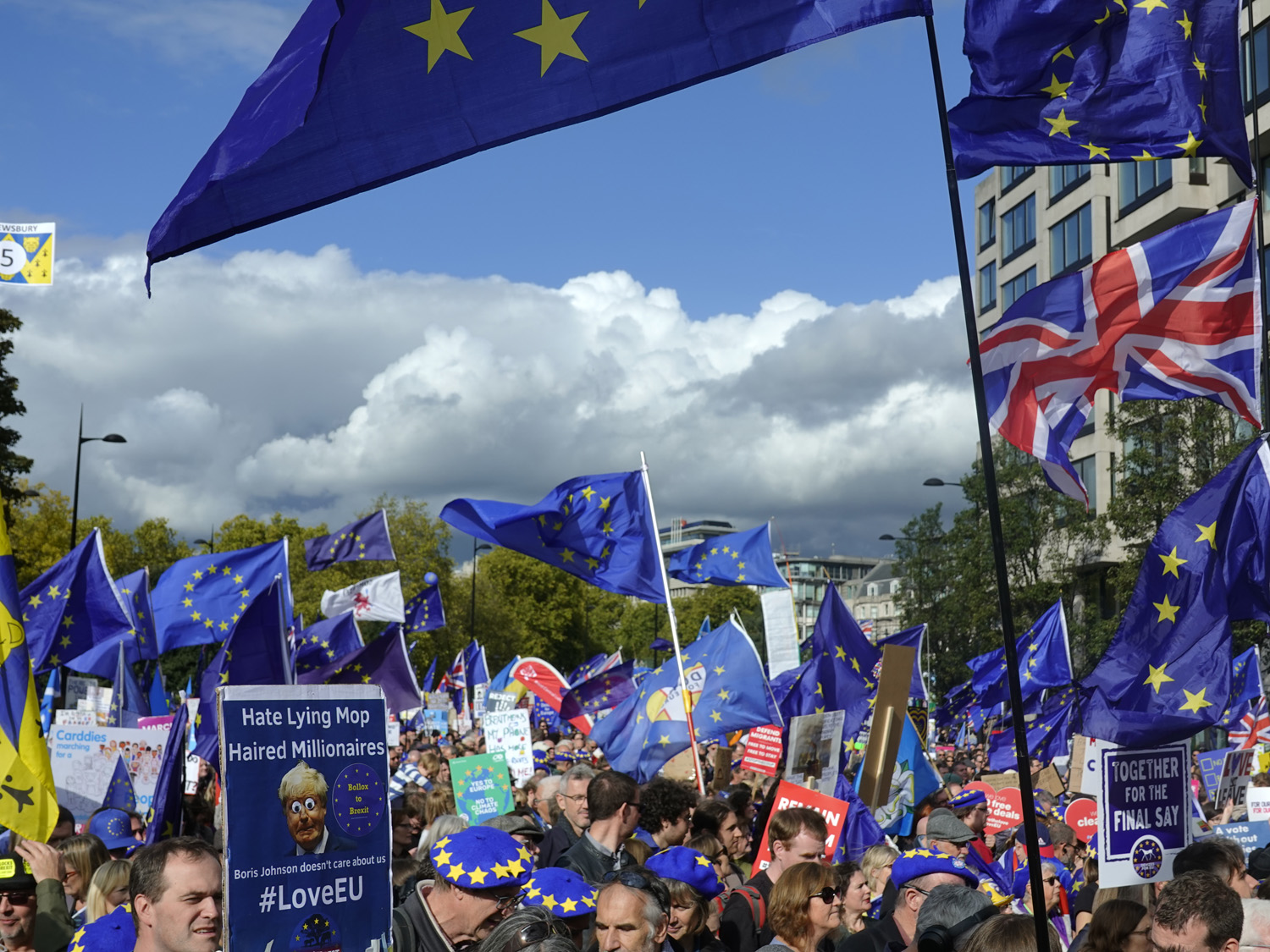 A general election has been called in the UK for 12 December. Central to the debates between the parties will be their policy on Brexit.
They range from the Liberal Democrats’, Plaid Cymru’s and Sinn Féin’s policy of cancelling Brexit and remaining in the EU, to the Scottish Nationalists’ and Greens’ policy of halting Brexit while a People’s Vote (another referendum) is held, with the parties campaigning to stay in the EU, to the Conservative Party’s policy of supporting the Withdrawal Agreement and Political Declaration negotiated between the Boris Johnson government and the EU, to the DUP which supports Brexit but not a version which creates a border between Great Britain and Northern Ireland, to the Brexit Party and UKIP which support leaving the EU with no deal (what they call a ‘clean break’) and then negotiating individual trade deals on a country-by-country basis.
The Labour Party also supports a People’s Vote, but only after renegotiating the Withdrawal Agreement and Political Declaration, so that if Brexit took place, the UK would have a close relationship with the single market and remain in a customs union. Also, various laws and regulations on environmental protection and workers’ rights would be retained. The referendum would take place within six months of the election and would be a choice between this new deal and remain.
But what are the economic costs and benefits of these various alternatives? Prior to the June 2016 referendum, the Treasury costed various scenarios. After 15 years, a deal would make UK GDP between 3.4% and 7.8% lower than if it remained in the EU, depending on the nature of the deal. No deal would make GDP between 5.4% and 9.5% lower.
Then in November 2018, the Treasury published analysis of the original deal negotiated by Theresa May in July 2018 (the ‘Chequers deal’). It estimated that GDP would be up to 3.9% lower after 15 years than it would have been if the UK had remained in the EU. In the case of a no-deal Brexit, GDP would be up to 9.3% lower after 15 years.
When asked for Treasury forecasts of the effects of Boris Johnson’s deal, the Chancellor, Sajid Javid, said that the Treasury had not been asked to provide forecasts as the deal was “self-evidently in our economic interest“.
Other forecasters, however, have analysed the effects of the Johnson deal. The National Institute for Economic and Social Research (NIESR), the UK’s longest established independent economic research institute, has estimated the costs of various scenarios, including the Johnson deal, the May deal, a no-deal scenario and also a scenario of continuing uncertainty with no agreement over Brexit. The NIESR estimates that, under the Johnson deal, with a successful free-trade agreement with the EU, in 10 years’ time UK GDP will be 3.5% lower than it would be by remaining in the EU. This represents a cost of £70 billion. The costs would arise from less trade with the EU, lower inward investment, slower growth in productivity and labour shortages from lower migration. These would be offset somewhat by savings on budget contributions to the EU.
Under Theresa May’s deal UK GDP would be 3.0% lower (and thus slightly less costly than Boris Johnson’s deal). Continuing in the current situation with chronic uncertainty about whether the UK would leave or remain would leave the UK 2% worse off after 10 years. In other words, uncertainty would be less damaging than leaving. The costs from the various scenarios would be in addition to the costs that have already occurred – the NIESR estimates that GDP is already 2.5% smaller than it would have been as a result of the 2016 Brexit vote.
Another report also costs the various scenarios. In ‘The economic impact of Boris Johnson’s Brexit proposals’, Professors Anand Menon and Jonathan Portes and a team at The UK in a Changing Europe estimate the effects of a decline in trade, migration and productivity from the various scenarios – again, 10 years after new trading arrangements are in place.  According to their analysis, UK GDP would be 4.9%, 6.4% and 8.1% lower with the May deal, the Johnson deal and no deal respectively than it would have been from remaining in the EU.
But how much reliance should we put on such forecasts? How realistic are their assumptions? What other factors could they have taken into account? Look at the two reports and at the articles discussing them and then consider the questions below which are concerned with the nature of economic forecasting.
Articles
- UK’s new Brexit deal worse than continued uncertainty – NIESR
Reuters, David Milliken (30/10/19)
- Brexit deal means ‘£70bn hit to UK by 2029′
BBC News, Faisal Islam (30/10/19)
- Boris Johnson’s Brexit deal worse for economy than Theresa May’s, new analysis shows
Politics Home, Matt Honeycombe-Foster (30/10/19)
- Boris Johnson’s Brexit deal ‘would cost UK economy £70bn’
The Guardian, Richard Partington (30/10/19)
- UK economy suffers ‘slow puncture’ as general election is called
ITV News, Joel Hills (30/10/19)
- Boris Johnson’s Brexit deal ‘would deliver £70bn hit to economy by 2029’
Sky News, Ed Conway (30/10/19)
- Boris Johnson’s Brexit deal won’t cost Britain £70bn by 2029
The Spectator, Ross Clark (30/10/19)
- Boris Johnson’s Brexit deal would make people worse off than Theresa May’s
The Guardian, Anand Menon and Jonathan Portes (13/10/19)
- How Boris Johnson’s hard Brexit would hit the UK economy
Financial Times, Chris Giles (13/10/19)
- Boris Johnson’s Brexit deal is worse for the UK economy than Theresa May’s, research suggests
CNBC, Elliot Smith (19/10/19)
Reports
Questions
- What are the arguments in favour of the assumptions and analysis of the two recent reports considered in this blog?
- What are the arguments against the assumptions and analysis of the two reports?
- How useful are forecasts like these, given the inevitable uncertainty surrounding (a) the outcome of negotiations post Brexit and (b) the strength of the global economy?
- If it could be demonstrated beyond doubt to everyone that each of the Brexit scenarios meant that UK GDP would be lower than if it remained in the EU, would this prove that the UK should remain in the EU? Explain.
- If economic forecasts turn out to be inaccurate, does this mean that economists should abandon forecasting?
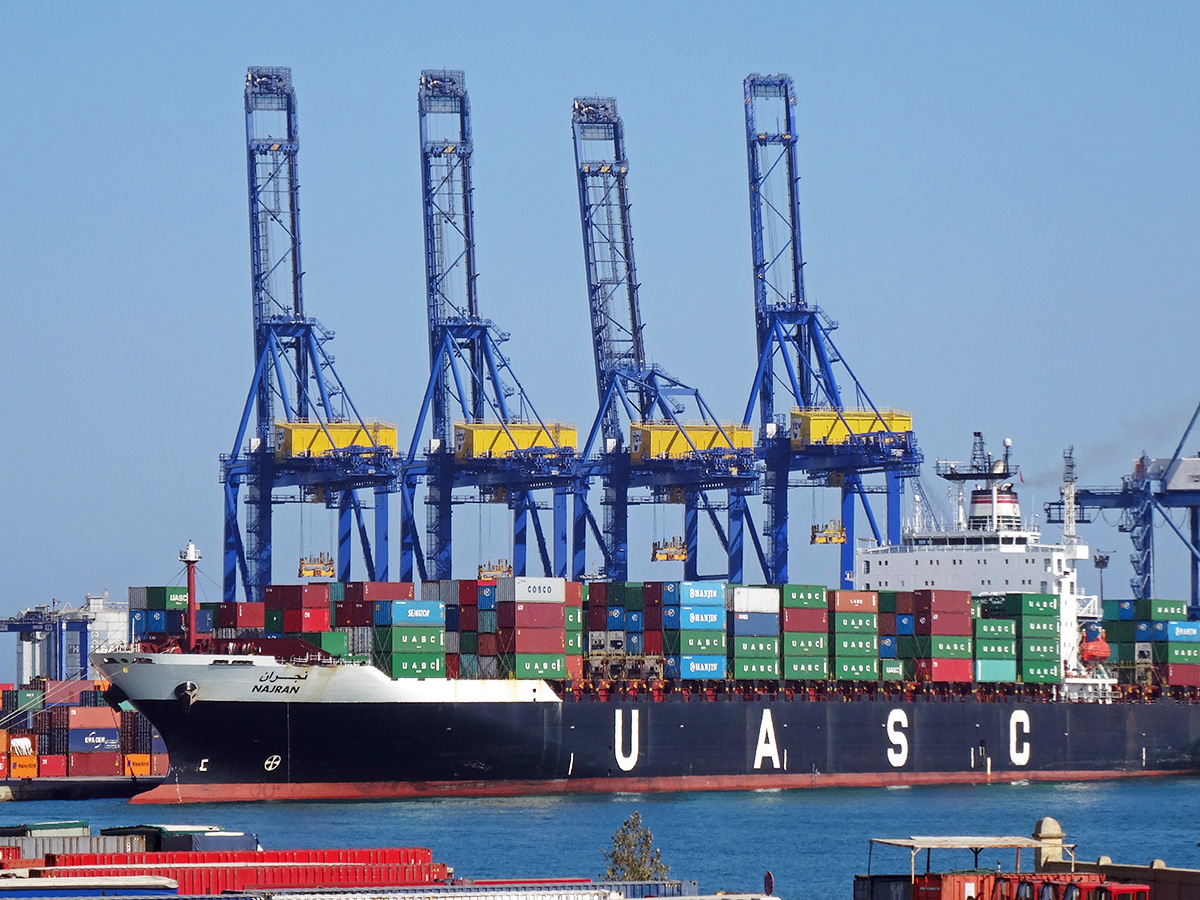 On 21st February 2019, the Department for International Trade (DIT) published a document outlining the UK’s progress in negotiating new free trade agreements (FTAs) with a number of non-EU countries. It advises UK firms that FTAs with Turkey and Japan will not be finalised before the official exit day from the European Union – 29th March 2019. Many business groups expressed concern at this news.
The EU has successfully negotiated a number of FTAs. These deals enable all 28 states in the European Union Custom Union (EU-CU), including the UK, to trade at preferential (i.e. lower) tariffs with over 70 non-EU countries. These include Canada, South Korea, Mexico, Israel, Norway, South Africa and Turkey. Research by the CBI estimates that UK exports to these countries were approximately £41bn in 2017 – approximately 13 per cent of all UK exports. In July 2018, the EU signed its largest ever FTA – with Japan. This deal covers 635 million people.
If the UK leaves the European Union without a deal on the 29th March, then it immediately loses membership of the EU-CU. Preferential tariffs will no longer apply to trade between the UK and the non-EU countries which signed the FTAs. Without any new arrangements in place, tariffs and quotas will revert to the non-preferential (i.e. higher) rates outlined in registered schedules with the World Trade Organization.
Given the economic significance of this trade, the UK government has spent the past two years trying to negotiate new FTAs to replace those previously agreed by the EU. For example, on February 11th, the government announced that it had signed a ‘continuity agreement’ with Switzerland covering trade worth £32bn per year. Deals have also been finalised with Chile, Israel, and the Faroe Islands that replicate the terms of the EU agreements. However, government officials informed 30 business groups in early February that it was highly unlikely that most of the new replacement FTAs would be concluded in time for March 29th.
The document published by the DIT on the 21st February confirms this position and describes the current status of most of the new FTAs as:
Engagement ongoing
For both Japan and Turkey, the outlook is more negative. The guidance states:
We will not transition this agreement for exit day.
The head of EU negotiations at the CBI commented that:
We are really concerned that firms could be blindsided by this.
The government stated that it would significantly increase the resources devoted to the trade negotiations and expected to sign more deals over the next couple of weeks.
If the UK leaves the EU on the 29th March with a deal, then it remains in the EU-CU during the 21-month transition period. Trade will still be covered by the 40 existing EU deals. This gives UK officials until the end of December 2020 to conclude a new set of FTAs.
Articles
Government information
Questions
- Using a demand and supply diagram, illustrate the impact of tariffs on imported goods.
- The EU is perhaps the most famous example of a customs union. Find out some other examples.
- Discuss some of the potential disadvantages of free trade.
- Discuss some of the advantages and disadvantages of the UK remaining in the European Union Custom Union.
- What is a ‘registered schedule’ at the World Trade Organization?
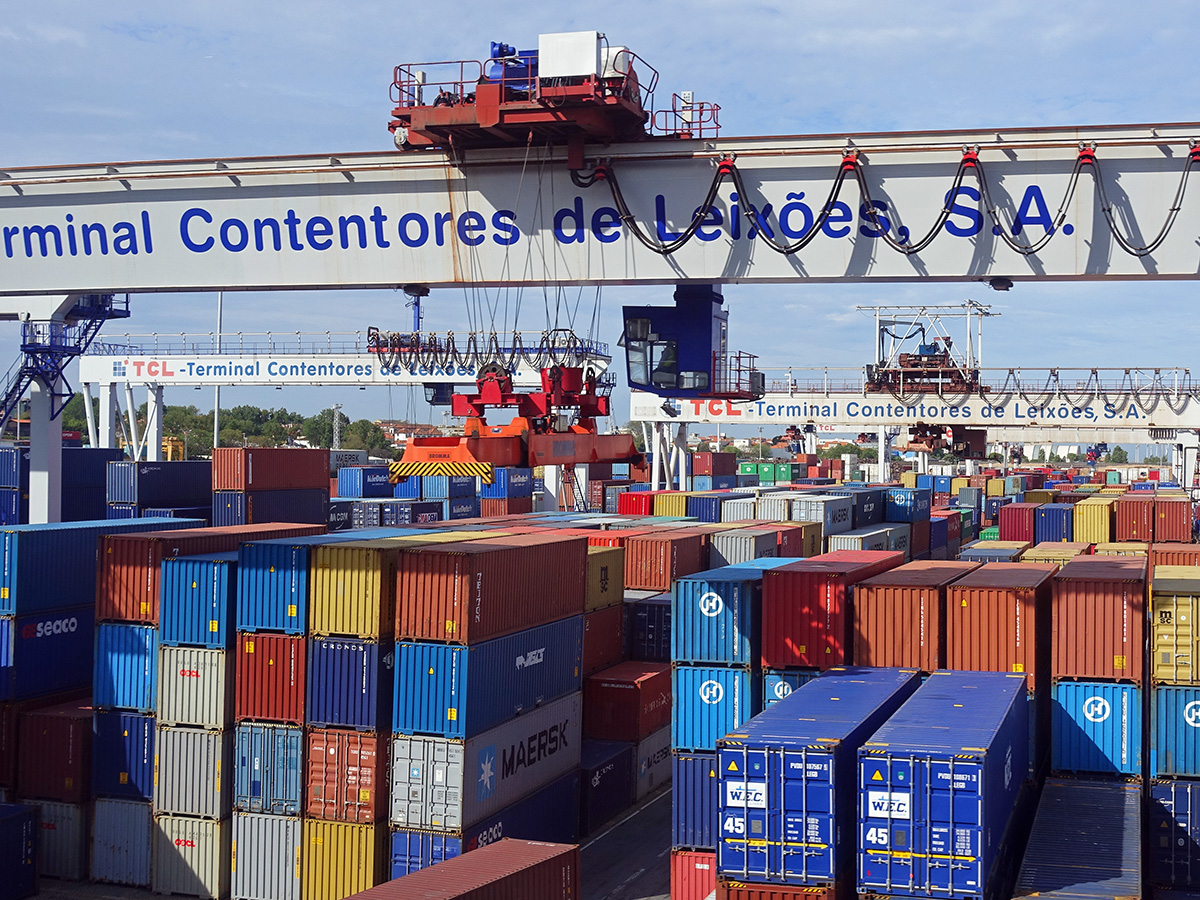 One of the key questions about Brexit is its effect on UK trade and cross-border investment. Once outside the customs union, will the freedom to negotiate trade deals lead to an increase in UK exports and GDP, as many who support Brexit claim; or will the increased frictions in trade with the EU, and the need to negotiate new trade deals with those non-EU countries which already have trade deals with the EU, lead to a fall in exports and in GDP?
Also, how will trade restrictions or new trade deals affect capital flows? Will there be an increase in inward investment or a flight of investment to the EU or elsewhere? Will many companies relocate away from the UK – or to it?
Although there has been a cost up to now from the Brexit vote, in terms of a depreciation in sterling and a fall in inward investment (see the first article below), the future effects have been hard to predict as the terms on which the UK will leave the EU have been unclear. However, with a draft withdrawal agreement between the EU and the UK government having been reached, the costs and benefits are becoming clearer. But there is still uncertainty about just what the effects on trade and investment will be.
- First, the 585-page draft withdrawal agreement is not a trade deal. It contains details of UK payments to the EU, commitments on the rights of EU and UK citizens and confirmation of the transition period – initially until 31 December 2020, but possibly extended with mutual agreement. During the transition agreement, the UK would remain a member of the customs union and single market and remain subject to rulings of the European Court of Justice. The withdrawal agreement also provides for a continuation of the customs union beyond the transition period, if no long-term trade agreement is in place. This is to prevent he need for a hard border between Ireland and Northern Ireland.
- Second, there is merely a 26-page ‘political declaration‘ about future trade relations. Negotiations on the details of these can only begin once the UK has left the EU, scheduled for 29 March 2019. So it’s still unclear about just how free trade in both goods and services will be between the UK and the EU and how freely capital and labour will move between them. But with the UK outside the single market, there will be some limitations on trade and factor movements – some frictions.
- Third, it is not clear whether the UK Parliament will agree to the withdrawal agreement. Currently, it seems as if a majority of MPs is in favour of rejecting it. If this happens, will the UK leave without an agreement, with trade based on WTO terms? Or will the EU be prepared to renegotiate it – something it currently says it will not do? Or will the issue be put back to the electorate in the form of a People’s vote (see also), which might contain the option of seeking to remain in the EU?
So, without knowing just what the UK’s future trade relations will be with (a) the EU, (b) non-EU countries which have negotiated trade deals with the EU, (c) other countries without trade deals with the EU, it is impossible to quantify the costs and benefits from the effects on trade and investment. However, the consensus among economists is still that there will be a net cost in terms of lost trade and inward investment.
Such as view is backed by a government analysis of various Brexit scenarios, released in time for the House of Commons vote on 11 December. This concludes that the UK will be worse off under all Brexit alternatives compared with staying in the EU. The main brake on growth will be frictions in trade from tariff and non-tariff barriers.
This analysis was supported by a Bank of England paper which modelled various scenarios based on assumptions about different types of Brexit deal. While recognising the inherent uncertainty in some of the empirical relationships, it still concluded that Brexit would be likely to have a net negative effect. The size of this negative effect would depend on the closeness of the new relationship between the UK and EU, the degree of preparedness across firms and critical infrastructure, and how other policies respond.
Articles
Reports
Documents
Questions
- Identify the main economic advantages and disadvantages for the UK from leaving the EU?
- How does the law of comparative advantage relate to the question of the relative trade gains from leaving and remaining in the EU?
- What is the difference between the following models of relationship with the EU: the Switzerland model; the Norway model; the Turkey model; the Canada (plus or plus, plus) model; trading on WTO terms?
- Why is the consensus among economists that there will be a net economic cost from leaving the EU, no matter on what terms?
- Is the UK likely to achieve more favourable trade deals with non-EU countries as an independent country or as a member of the EU benefiting from EU-negotiated trade deals with such countries?