Inflation has been rising around the world. The main reason has been the supply shock of rising oil, fertiliser and commodity prices caused by the Iran war and the disruption to global supply chains from conflicts in the Middle East and Russia (see the blog, Why have diesel prices risen more than petrol prices?). Central banks, including the US Federal Reserve Bank, the European Central Bank and the Bank of Japan, have responded to this cost-push inflationary shock by raising interest rates. The Bank of England is likely to raise Bank rate at its next meeting on 5 November 2026.
Similar supply shocks have been experienced in recent years (see the May 2026 blog, Supply shocks – long-term gain from the short-term pain?).
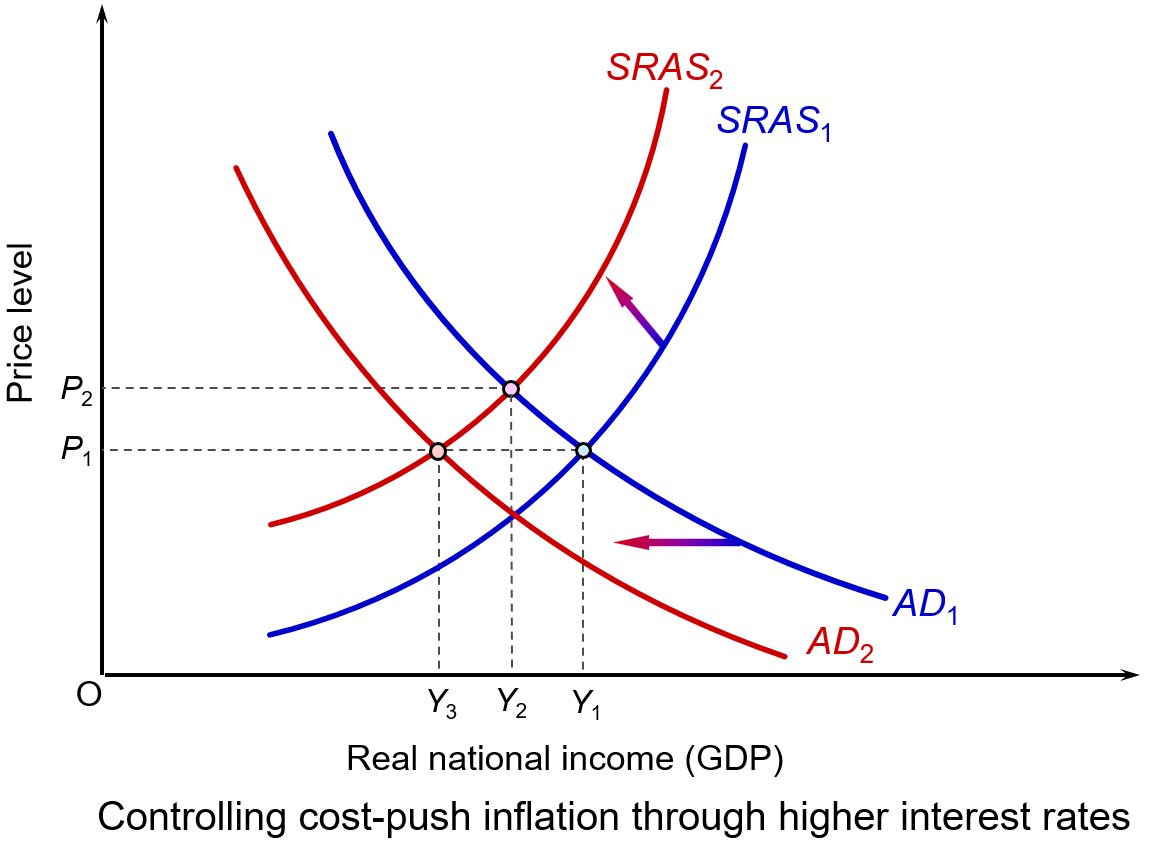 Raising interest rates reduces aggregate demand, or at least its rate of growth. This puts downward pressure on prices, or at least on the rate of inflation. This can be illustrated in the diagram. (Click here for a PowerPoint.)
It shows a country’s initial short-run aggregate supply curve (SRAS1) and initial aggregate demand curve (AD1). The price index is P1 and real GDP is Y1.
The higher costs shift the SRAS curve upwards to the left, say to SRAS2. The price index rises to P2 and real GDP falls to Y2. If, in response to the higher prices, the central bank raises the interest rate, this shifts the aggregate demand curve to the left, say to AD2. As a result, the price index falls back to P1, but the fall in demand causes real GDP to fall further, to Y3.
Policy alternatives
 So, is a rise in interest rates the appropriate response to higher costs that push inflation above, or further above, its target, which for most countries is 2%?
If the cause of inflation was excessive increases in aggregate demand from, say, large government budget deficits or a large increase in consumer demand, then a rise in interest rates would have helped reduce this unsustainable rise in demand. But if the cause of the inflation is a supply shock, is curbing aggregate demand the correct solution?
Ideally, the solution would be to tackle the cost increases directly. A rise in productivity, for example, would help to increase aggregate supply and counter the effect of rising commodity prices. But productivity increases take place over the longer term and are not a solution to a short-term supply shock. Better still, if the increase in commodity prices could be reversed, by finding a political solution that reopened the Strait of Hormuz and other choke points, then higher interest rates would not be needed.
Alternatively, some countries might be able to resort to price controls. These could be targeted at specific sectors such as energy, rent or construction. For example, the UK government has used energy price caps to limit household energy bills.
But even though this may control inflation in the short term, price controls create shortages because demand exceeds the reduced supply. This could lead to higher prices in unofficial markets as people sought to avoid the price controls. It could also create considerable problems for firms planning their logistics when supplies may simply not be available.
Alternatively, subsidies could be used to support output or prices in similar areas. Or they could be targeted at low-income households. These, however, could be costly for governments and may distort markets.
If price controls and subsidies are rejected, and in the absence of short-term increases in aggregate supply, the only solution to inflation is curbing aggregate demand to match the reduced aggregate supply. This could be achieved through fiscal policy by raising taxes or reducing government expenditure, but would prove unpopular and would probably be rejected by governments. Generally, they would prefer to pass the burden to central banks through the use of monetary policy.
The blunt instrument of monetary policy
But, raising interest rates is, indeed, a blunt instrument. Tighter monetary policy cannot increase the global supply of fuel, fix broken supply chains or lower insurance and construction costs. In other words, it cannot directly fix supply shocks, only limit their effect on prices.
 Also, by making borrowing more expensive, higher interest rates may suppress business investment and house building. This adverse supply-side effect may worsen inflation over the longer term.
The hope is that such effects will be avoided by suppressing inflation and helping thereby to maintain business confidence. It is a delicate balancing act for central bankers, who want to constrain inflation but do not want to plunge their economies into recession and damage longer-term increases in potential real GDP.
Most of all, the hope is that by suppressing nominal demand, second-round effects will be avoided. These are where higher prices encourage workers to demand higher wages to compensate for higher prices and businesses to raise prices to cover those wage increases, knowing that they can pass these price increases on to consumers as their competitors are doing the same. This risks creating a damaging wage-price spiral and embedding inflation. By raising interest rates and signalling that they will bring inflation back down to the target rate, central banks hope to anchor long-term inflation expectations. They hope that this will ensure that temporary price shocks do not become permanently embedded in the economy.
Distributional consequences
 However, the burden of higher interest rates will not be shouldered equally. They predominantly penalise a minority of the population, especially younger households with consumer debt and/or large variable-rate mortgages relative to their income or fixed rate mortgages coming the end of their term and requiring renewing. They also penalise businesses which rely on short-term debt.
Meanwhile, people who own their homes outright or wealthy savers may be largely unaffected or even benefit from higher yields on their savings deposits. Similarly, firms with low debt may hardly be affected.
Consequences for servicing public debt
Higher interest rates increase governments’ debt-servicing costs. More has to be paid on new borrowing, either to finance budget deficits or to replace government bonds and bills that are maturing. This consumes a larger share of public spending and limits the fiscal room to support vulnerable households suffering from the price and interest increases.
We examined such costs in the US context in the blog US national debt reaches $40 trillion: but does it matter?.
Fingers crossed!
By being cautious about raising interest rates, central banks hope that geopolitical developments will be favourable and that the supply constraints will diminish. For example, the hope is that there will be a settlement between the USA and Iran that allows oil to flow once more through the Strait of Hormuz. That is why, despite inflation being well above target, central banks have been raising interest rates by just a quarter of a percentage point.
Articles
- US interest rates raised for first time in three years
BBC News, Michael Race (17/9/26)
- What the Fed interest rate hike likely means for borrowers and savers
NBC4 New York, Paul Wiseman (16/9/26)
- How increasing interest rates could reduce inflation, but potentially cause a recession
CNBC, Trina Paul (21/9/26)
- Interest rates held but Bank signals rise if energy prices stay high
BBC News, Dearbail Jordan and Kevin Peachey (17/9/26)
- Bank of England defies Fed’s rate-hike lead, leaving rates unchanged
CNBC, Chloe Taylor (17/9/26)
- ECB hikes rates to 2.5% as energy shock pushes eurozone inflation higher
Euronews, Quirino Mealha (10/9/26)
- Japan raises interest rates to 31-year high to curb impact of rising prices
The Guardian, Mark Sweney (18/9/26)
- What exactly is inflation, and are interest rates the only option for dealing with it?
The Conversation, Luke Hartigan (10/2/26)
- US consumers and businesses are now facing a future of more expensive borrowing
The Conversation, John W Diamond (16/9/26)
- Inflation: raising interest rates was never the right medicine – here’s why central bankers did it anyway
The Conversation, Robert Gausden (20/10/23)
- There are three main reasons inflation is rising. Higher rates won’t fix them
ABC (Australia), Michael Janda (15/9/26)
- Higher interest rates are meant to lower inflation. US economist John Cochrane says there’s only ‘shaky’ evidence it works
ABC (Australia), Michael Janda and Alicia Barry(15/3/24)
- How Governments Fight Inflation with Monetary Policies
Investopedia, Leslie Kramer (11/3/26)
- Interest rates are not the tool to solve the inflation caused by the US’s war with Iran
The Guardian, Josh Ryan-Collins (18/3/26)
- Are higher interest rates the only tool for managing inflation?
Rethinking Economics, Tim Thornton (3/8/23)
Videos
Information
Questions
- What policies have central banks pursued during the Iran war?
- Paint an optimistic scenario for the global economy five years hence.
- Paint a pessimistic scenario for the global economy five years hence.
- Compare the reasons given by the Federal Reserve and ECB for raising interest rates with those given by the Bank of England for not raising them.
- Donald Trump argues for cutting interest rates as a stimulus to the US economy. Provide a critique of this policy.
 Following the controversary over the sale of tickets for popular live events such as Taylor Swift’s Eras tour and the Oasis Live ’25 Tour, the government launched a consultation exercise in January 2025 on the resale of tickets. Titled, ‘putting fans first’, the exercise sought the views of individuals and organisations on a range of policy proposals. One of these was the implementation of a cap on the resale price of tickets.
The government is not only considering whether to implement a cap but also the level at which it might be set. The following question was included in the consultation exercise.
What is the maximum uplift that you think should be applied if ticket resales were to be subject to a price cap? Please state the reason for your selection.
• no uplift at all
• 10% or less
• between 10 and 20%
• between 20 and 30%
• other – please state
Some platforms such as Twickets and Ticketswap already cap resale prices on their platforms at between 5 and 10 per cent above the face value of the ticket. They are, therefore, less likely to be affected by any new price regulation unless the ‘no uplift at all’ option is chosen. On other platforms, such as Viagogo and Stubhub, resellers are free to list tickets at whatever price they choose. This is often referred to as the uncapped market, and tickets for the Oasis tour with a face value of £150 were listed on these websites for £14 000. The implementation of a price cap is likely to have a big impact on this part of the resale market. The chief executive of StubHub stated in June 2025 that the business would probably have to exit the UK if a cap was introduced.
 Although many fans dislike the uncapped secondary ticketing market, most economists take a more positive view. They see them as a way of facilitating mutually beneficial trade and helping to reallocate tickets to those with the highest willingness to pay. This reduces levels of allocative inefficiency/deadweight welfare loss in the market.
Economists also tend to argue against the use of price controls in competitive markets because of their negative impact on supply. If price controls reduce the available returns to sellers, they have an incentive to do something else with their time/resources i.e. switch to supplying other goods and services in markets not subject to price controls. This reduces supply in the regulated market and so could have a negative impact on consumer surplus.
What are the issues with the secondary market?
 Given the benefits outlined by economists of having an uncapped secondary ticketing, why is the government considering the implementation of a price cap? One potential issue of having an uncapped secondary ticketing market is that developments in technology make it easier for professional resellers to buy very large quantities of tickets. This makes it increasingly difficult for fans who want to attend the event from being able to purchase a ticket.
Reports also suggest that professional resellers use illegal methods to both mass purchase and resell tickets. For example, to overcome any limits on sales imposed by the sellers in the primary market, some use automated software, fake IDs and multiple credit cards. Two people convicted of fraudulent trading in 2024 were found to have bought 47 000 tickets over a 212-year period, using 127 names and 187 different e-mail addresses.
Some resellers have also acted in ways that do not comply with consumer law when advertising tickets for sale. For example, not providing information such as the ticket number and other details about where the seat is located i.e. the block/area and row.
These rent seeking activities by professional resellers could outweigh the positive impact of uncapped secondary market on allocative efficiency.
Implementing a resale price cap would reduce the incentives for professional resellers to purchase large quantities of tickets and engage in these rent-seeking activities. However, in the consultation document the government recognises that the implementation of a resale price cap would be a ‘significant and complex intervention’.
An important implementation issue
To calculate the resale price cap for any live event, the original price of the ticket in the primary market needs to be known. This raises an interesting question – should the cap apply to the initial face value of the ticket or the total price the customer pays?
The face value of the ticket may only represent a proportion of the actual cost of buying a ticket because of the widespread use of drip pricing. This is the practice of applying additional fees as the consumer proceeds through the online purchasing process. These fees can sometimes add around 25 per cent and more to the price of a ticket. In the consultation document, the government suggested that the cap should apply to the face value of the ticket plus all compulsory fees.
 One issue raised in the response to the consultation by the Competition and Markets Authority is that these fees are not always made clear by sellers in the primary market in a clear and transparent way. Therefore, for the policy to be effective, primary market sellers would have to make information on both ticket prices and any fees clearly and easily available. Recent changes to the law that prohibit drip pricing might help to address this issue.
The potential impact of a resale price cap on fraud
 To avoid the price cap, there is a danger that increasing numbers of buyers and sellers stop using capped secondary ticket platforms, where activity is easier to observe/regulate, and switch to other non-specialist platforms where detection of illegal behaviour and enforcement of consumer law is more difficult. Examples of non-specialist platforms where sales might increasingly take place include Facebook Marketplace, Instagram Shop, X (formerly Twitter) and internet forums. With lower levels of consumer protection and the greater difficulty of detecting illegal behaviour, sales via these non-specialist platforms are more vulnerable to scams and fraud.
When referring to the impact of a resale price cap, the chief executive of StubHub argued that:
It will have a massive negative impact on consumers. It’s not like the demand is going to go away, it’s just going to move somewhere else, and that somewhere else is going to be the black market [where] consumers aren’t protected.
To test the hypothesis that price controls lead to greater incidences of fraud, one study used polling data to compare ticket fraud rates in the UK with Victoria, Australia and Ireland. In 2009, the state government of Victoria made it illegal for tickets to be resold for more than 10 per cent of their face, while the Irish government introduced the Sale of Ticket Act in 2021 that prohibited the resale of tickets above their original price. The study found that the proportion of respondents who reported being victims of ticket fraud over the previous two years was around four times higher in Victoria and Ireland than the UK. The most common sales channel where consumers experienced ticket fraud in all three countries were social media platforms.
Another example of the potential impact of the price cap in Ireland on fraud relates to the first ever regular-season NFL game that is being played in Dublin on 28 September 2025 between the Pittsburgh Steelers and the Minnesota Vikings. The online bank, Revolut, reported an 80 per cent increase in the number of ticket scams when tickets for this game went on sale.
In response to the consultation exercise, the Competition and Markets Authority backed the implementation of a resale price. It will be interesting to see if the government goes through with the measure in the next few months.
Consultation
Articles
Blogs on this site
Questions
- Why might event organisers set ticket prices below the market clearing rate? Illustrate the impact of setting prices below market clearing rates on consumer, producer and total surplus in the primary market for tickets.
- Using a demand and supply diagram, explain how the uncapped secondary ticket market could reduce deadweight welfare loss. Discuss any assumptions you have made about the allocation of tickets among potential buyers in the primary market (i.e. sorting).
- Is it possible for professional resellers to continue making a profit if tickets are sold at market clearing rates in the primary market? Explain your answer.
- Under what circumstances would a maximum price set below the market clearing rate in a competitive market have a negative impact on consumer surplus? Draw a diagram to illustrate your answer.
- Using examples, explain what is meant by ‘rent seeking’ in economic theory.
Outline some of the recent updates to the law on pricing information that businesses must show customers.
- What policies, other than a resale price cap, could the government introduce to try to address some of the issues with the ticketing market for live events?
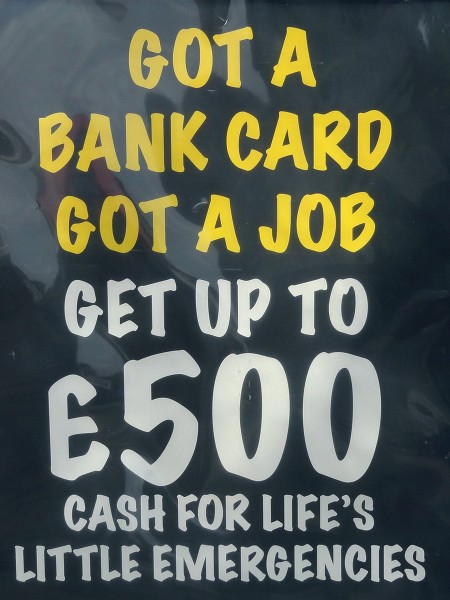 In an apparent U-turn, the Chancellor, George Osborne, has decided to cap the interest rates and other charges on payday loans and other short-term credit. As we have seen in previous news items, the sky-high interest rates which some of the poorest people in the UK are being forced to pay on these loans have caused outrage in many quarters: see A payday enquiry and Kostas Economides and the Archbishop of Canterbury. Indeed, the payday loan industry has been referred by the OFT to the Competition Commission (CC). The CC is required to report by 26 June 2015, although it will aim to complete the investigation in a shorter period.
It was becoming increasingly clear, however, that the government would not wait until the CC reports. It has been under intense pressure to take action. But the announcement on 25 November 2013 that the government would cap the costs of payday loans took many people by surprise. In fact, the new body, the Financial Conduct Authority, which is due to start regulating the industry in April 2014, only a month ago said that capping was very intrusive, arguing that it could make it harder for many people to borrow and push them into the hands of loan sharks. According to paragraph 6.71 of its consultation paper, Detailed proposals for the FCA regime for consumer credit:
The benefits of a total cost of credit cap has been looked at by the Personal Finance Research Centre at the University of Bristol. This report highlighted that 17 EU member states have some form of price restriction. Their research was ambiguous, on the one hand suggesting possible improved lending criteria and risk assessments. On the other, prices may drift towards a cap, which could lead to prices increasing or lead to a significant reduction in lenders exercising forbearance. Neither of these latter outcomes would be beneficial for consumers. Clearly this is a very intrusive proposition and to ensure we fully understand the implications we have committed to undertake further research once we begin regulating credit firms and therefore have access to regulatory data.
The government announcement has raised questions of how imperfections in markets should be dealt with. Many on the centre right argue that price controls should not be used as they can further distort the market.  Indeed, the Chancellor has criticised the Labour Party’s proposal to freeze gas and electricity prices for 20 months if it wins the next election, arguing that the energy companies will simply get around the freeze by substantially raising their prices before and after the 20 months.
Instead, those on the centre right argue that intervention should aim to make markets more competitive. In other words, you should attempt not to replace markets, but to make them work better.
So what is the reasoning of the government in capping payday loan charges? Does it feel that, in this case, there is no other way? Or is the reasoning political? Does it feel that this is the most electorally advantageous way of answering the critics of the payday loan industry?
Webcasts and podcasts
 Payday Loans To Be Capped By Government Sky News (25/11/13)
New law to cap cost of payday loans BBC News, Robert Hall (25/11/13)
Osborne: ‘Overall cost’ of payday loans to be capped BBC Today Programme (25/11/13)
George Osborne announces cap on payday loan charges amid concerns ITV News (25/11/13)
Articles
UK to cap payday lenders’ interest charges Reuters, Steve Slater, Paul Sandle, Kate Holton and William James (25/11/13)
Capping payday loans: from light touch to strong arm Channel 4 News, Faisal Islam (25/11/13)
Payday loans: New law to cap costs BBC News (25/11/13)
Payday loan ‘risk to mortgage applications’ BBC News (26/11/13)
Q&A: Payday loans BBC News (25/11/13)
George Osborne is playing social democratic catch-up on payday loans The Guardian, Larry Elliott (25/11/13_
Payday loans cap: George Osborne caves in following intervention led by Archbishop of Canterbury Independent, Oliver Wright (25/11/13)
The principle, the practice and the politics of fixing payday loan prices: why? And why now? Conservative Home, Mark Wallace (25/11/13)
George Osborne and the risky politics of chutzpah New Statesman, Rafael Behr (26/11/13)
Chancellor too quick off the mark on payday lending cap The Telegraph, James Quinn (25/11/13)
Crap and courage of convictions: the political problem with Osborne’s payday loan plan Spectator, Isabel Hardman (26/11/13)
Payday loan calculator
Payday loan calculator: how monthly interest can spiral BBC Consumer (7/11/13)
Questions
- What types of market failing exist in the payday loan industry?
- What types of controls of the industry are being proposed by George Osborne?
- What is the experience of Australia in introducing such controls?
- What alternative forms of intervention could be used to tackle the market imperfections in the industry?
- What were the proposals of the FCA? (See paragraph 6.6 in its document, Detailed proposals for the FCA regime for consumer credit.)
- According to a representative example on Wonga’s website, a loan of £150 for 18 days would result in charges of £33.49 (interest of £27.99 and a fee of £5.50). This would equate to an annual APR of 5853%. Explain how this APR is calculated.
- The proposal is to allow a relatively large upfront fee and to cap interest rates at a relatively low level, such as 4% per month, as is the case in Australia. Explain the following comment about this in the Faisal Islam article above: “The upfront fee, in theory, should change the behavioural finance of consumers around taking the loan in the first place (there are ways around this though). So this is an intervention based not on lack of competition, but asymmetries of information in consumer finance.”
- Comment on the following statement by Mark Wallace in the Conservative Home article above: “If overpriced payday loans should be capped, why not overpriced DVDs, sandwiches or, er, energy bills?”
- Compare the relative advantages and disadvantages of George Osborne’s proposal with that of Justin Welby, the Archbishop of Canterbury (see the news item, Kostas Economides and the Archbishop of Canterbury).
 A remarkable event took place in Venezuela on Friday 8th November. Soldiers, on the orders of the president, temporarily occupied a chain of shops run by a leading electrical retailer called Dakar. The shops were forced to cut the prices of their electrical appliances and five managers were arrested and accused of ‘hiking up’ prices.
Unsurprisingly, news of these lower prices spread very quickly and long queues rapidly appeared outside the stores as people hoped to buy plasma televisions, fridges and washing machines at bargain prices. On Sunday 9th November, the president, Nicolas Maduro, gave a televised address in which he condemned the owners of the stores and announced that he was going to ask the National Assembly to grant him extra powers so that he could extend price controls to all consumer goods. He stated that he would next turn his attention to stores selling toys, cars, textiles and shoes.
The use of price controls in Venezuela is not new and dates back to 2003 when they were first introduced by the then president Hugo Chavez. Initially the regulations were imposed on various foods and basic goods. For example, by 2009 maximum prices had been set for cooking oil, white rice, sugar, coffee, flour, margarine, pasta and cheese. Businesses often complained that the maximum prices set by the government were below the costs of production. For example after a maximum price of 2.15 Bolivares was placed on a kilo of rice, producers argued that the cost of producing a kilo of rice was 4.41 Bolivares.
 The impact of the maximum prices in Venezuela appears to have been exactly what the theories in the economics textbooks would have predicted – shortages, long queues of people waiting outside shops and a flourishing black market. An article on the shortage of toilet rolls has been discussed in a previous article on this news site: Shortages in Venezuela- what’s the solution? However this has not stopped the Venezuelan government extending the scheme and increasing the number of products that have maximum prices imposed on them. In 2011 Hugo Chavez argued that the policy was required because:
The market has…become a perverse mechanism where big monopolies, the big trans-nationals and the bourgeoise dominate and ransack the people.
Economics textbooks often include some analysis of the impact of price ceilings on a competitive market. The effects on consumer surplus, producer surplus and deadweight welfare are usually discussed. However the potential administrative costs are rarely considered. The Venezuelan case helps to illustrate how in practise these costs could be quite significant.
For example, in April 2012 price controls in Venezuela were extended to a range of 19 products including fruit juice, toilet paper, nappies, soap, detergent, deodorant, toothpaste, baby food, floor polish, mineral water and razor blades. This caused a reduction in prices of between 4% and 25%. However this did not simply mean setting 19 different maximum prices because the goods were all sold in different quantities or different package sizes. For example a tube of toothpaste could be purchased in 4 different sizes – 50ml, 75ml, 100ml and 150 ml. Therefore officials had to set 4 different figures. Nappies were sold in 12 different package sizes ranging from10 nappies/packet to78 nappies/packet. Once again this meant that the administrators had to set 10 different maximum prices just for nappies. In total across the 19 products government officials had to set prices for 616 different individual items!! Companies were given just one month to adjust to the new legislation.
Whenever maximum prices are imposed on a competitive market both frustrated buyers and sellers have an incentive to evade them and trade illegally. Therefore the government established a number of organisations in an attempt to make sure the prices were enforced. One agency is called The National Superintendency of Fair Costs and Prices or Sundecop. Officials from this agency were sent out to 82 retail outlets in April 2012 to try to make sure that firms were sticking to the new regulated prices. They also printed and handed out leaflets to the public informing them of the changes. Another agency is called ‘The Institute for the Defense of People’s Access to Goods and Services’ or ‘Indepabis’. This organisation launched a new strategy in June 2012 in order to monitor compliance. This included the creation of a network called the Friends of Indepabis which would act as an information point for members of the public to report illegal pricing. A new complaints phone line was also introduced.
If president Maduro is granted the power to extend maximum prices to all consumer products, then one can only begin to imagine the extra administrative costs involved with implementing the policy.
Venezuelan president Maduro ‘to expand price controls’ BBC News (11/11/13)
Venezuela sends in troops to force electronics chain to charge ‘fair’ prices NBC News (13/11/13)
Venezuela appliances crackdown spurs uncertainty ABC news (13/11/13)
Venezuela’s government seizes electronic goods shops BBC News (9/11/13)
Venezuelan government sends TROOPS into electronics chain to force them to sell goods at a “fair price” DailyMirror (10/11/13)
Shocher: Price Controls Lead to Shortages in Venezuela Free Advice, Robert Murphy (2/10/13)
Venezuelan Government Action against Overpricing Welcomed by Citizens, Manipulated by Media venezuelanalysis (12/11/13).
Questions
- Explain why a maximum price imposed on a competitive market might generate a shortage. Draw a diagram to illustrate and explain your answer.
- Are there any circumstances when a maximum price would not cause a shortage in a competitive market?
- Analyse the impact of a maximum price on consumer surplus, producer surplus and deadweight welfare loss. Assume the market is competitive and clearly state any other assumptions you have made in your analysis. Comment on the impact of the price ceiling on economic efficiency.
- Illustrate and explain what would happen to consumer surplus and deadweight welfare loss if the available goods for sale were only purchased by the consumers with the lowest willingness to pay.
- Why might a maximum price lead to a flourishing black market?
- The former president, Hugo Chavez, argued that the price regulations were required because “big monopolies… ransack the people”. Using economic theory discuss this statement. Examine the impact of a maximum price on a pure monopoly.
 No matter the product or service, price is always a key factor and never more so than in tough economic times. In most cases, prices are allowed to be determined by the forces of demand and supply, which gives the equilibrium price. However, in some cases, the government may choose to intervene with a price control, for example rent controls and the national minimum wage. Another market where there is also regulation is the airline industry and the Civil Aviation Authority have recently been criticized by Heathrow Airport for its price control plan.
Whenever we go on holiday, the price we pay for an airline ticket will depend in part on the airport we are taking off from and landing at, as they will charge the airline for landing fees, security, terminals etc. 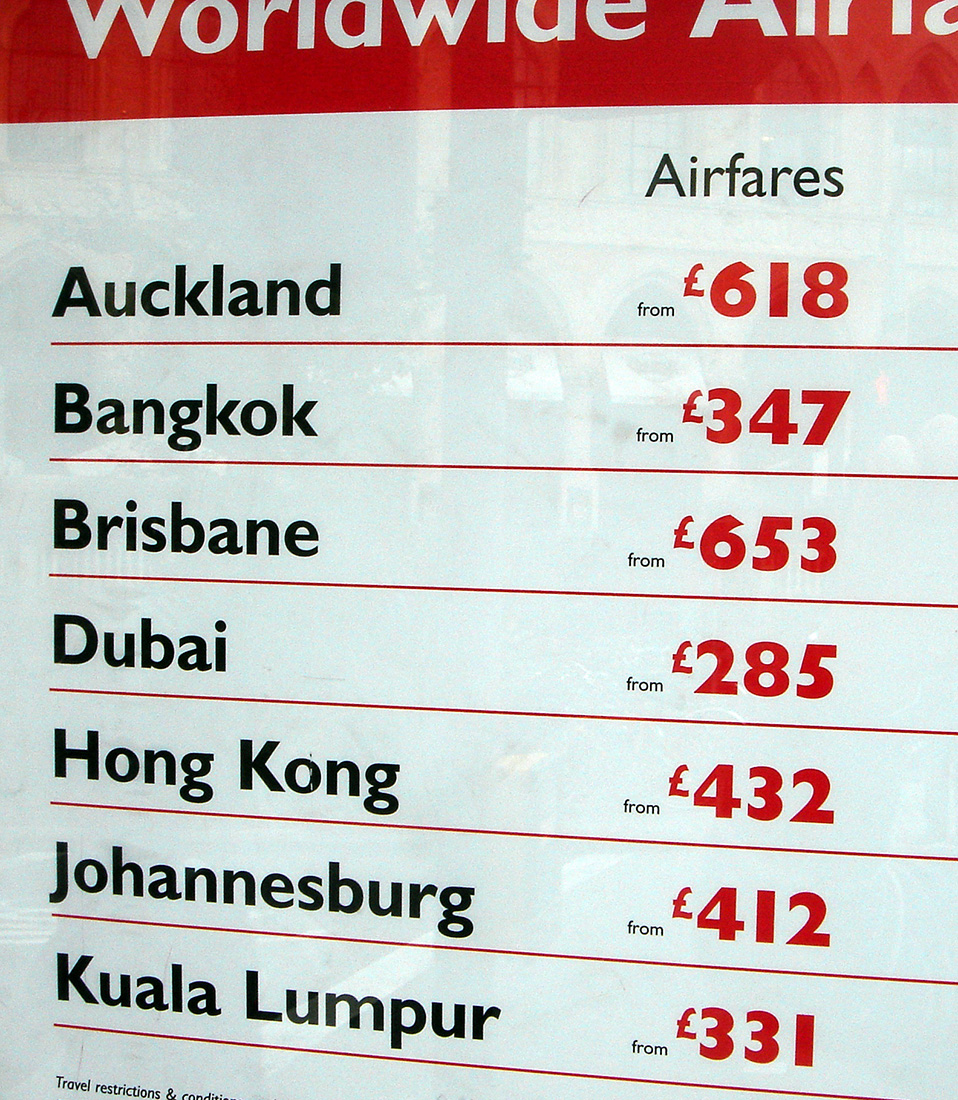 Heathrow airport had proposed that annual rises to its tariffs charged to airlines would increase by 4.6% above RPI inflation. However, this plan has been rejected by the CAA, which has said that the annual tariff rise between 2014 and 2018 should not be above the RPI. Though Heathrow are criticizing the CAA about this restriction, it is an improvement from the initial proposal which would have capped price rises at the RPI minus 1.3%.
Controversy has naturally been created, with the CAA arguing that such price controls are needed to keep prices down and thus benefit consumers and retain the competitiveness of Heathrow airport. But, in contrast, Heathrow has argued that such a cap will put its competitive position under pressure and will risk future investment in the UK. But this isn’t the only criticism of the CAA. Airlines aren’t happy with the ruling either, arguing that the CAA has bowed to the pressure of Heathrow. The contrasting positions of the CAA, Heathrow and airlines are evident in the following quotes, firstly from the Chairwoman of the CAA:
The proposals will put an end to over a decade of prices rising faster than inflation at Heathrow. Tackling the upward drift in Heathrow’s prices is essential to safeguard its globally competitive position. The challenge for Heathrow is to maintain high levels of customer service while reducing costs. We are confident this is possible and that our proposals create a positive climate for further capital investment, in the passenger interest.
Secondly, from Heathrow’s Chief Executive:
This proposal is the toughest Heathrow has ever faced. The CAA’s settlement could have serious and far-reaching consequences for passengers and airlines at Heathrow … We want to continue to improve Heathrow for passengers. Instead, the CAA’s proposals risk not only Heathrow’s competitive position but the attractiveness of the UK as a centre for international investment. We will now carefully consider our investment plans before responding fully to the CAA.
And finally from the IAG Chief Executive, who said:
[The CAA] neglected its new primary statutory duty to further the interests of passengers by endorsing a settlement that allows the UK’s monopoly hub to ignore its inefficiencies and over-reward investors by imposing excessive charges … It is a bad day for customers who have been let down by the CAA.
Any price rise from the airports will be passed on to airlines and these in turn will translate into higher prices for customers. However, is there any truth to Heathrow’s claims that investment will be adversely impacted? As costs rise, profit margins and profit will fall, unless the revenue generated can increase. Price controls restrict the amount that prices can rise and thus unless demand increases by a significant margin, profits will decline. With lower profits, there will be less money for investment and arguably the service that customers face will also decline. However, the CAA suggests that Heathrow will be able to cut its costs and thus protect investment into the future, while retaining its competitive position globally by charging lower prices to airlines. This is unlikely to be the end of the journey, but for the moment, the CAA appears to have put its foot down. The following articles consider the battleground between the CAA and Heathrow.
Regulation in the passenger’s interest, support investment and driving competition The Civil Aviation Authority (3/10/13)
Passengers at Heathrow ‘face £1bn fares hike’ Independent, Matthew Beard (4/10/13)
Heathrow airport attacks regulator’s price control plan BBC News (3/10/13)
CAA proposed Heathrow charges rise in line with inflation The Telegraph, Rebecca Clancy (13/10/13)
Passengers face fare increases as Heathrow and Gatwick are allowed to up landing fees Mail Online (3/10/13)
Heathrow and airlines enraged by CAA price proposals The Telegraph, Alistair Osborne (3/10/13)
Heathrow attacks Civil Aviation Authority over airport charges Financial Times, Andrew Parker (3/10/13)
BAA considers life outside Heathrow as CAA backtracks on charges The Guardian, Gwyn Topham (3/10/13)
Heathrow charge plan disappoints all round Wall Street Journal, Peter Evans (3/10/13)
Questions
- What is the role of a regulator?
- Explain how the price control outlined by the CAA will affect Heathrow.
- If Heathrow is unable to cut costs, what is the likely effect? Using a diagram illustrate the impact on profitability if costs (a) can be reduced and (b) cannot be reduced.
- Why are the CAA being criticised by airlines and airports?
- How will customers be affected by Heathrow’s planned price rises and the CAA’s proposal?
- ‘Regulation in the airlines industry is essential to retain competitiveness.’ Evaluate the validity of this statement.
 US hikes interest rates as fears grow of global oil shock over Iran War