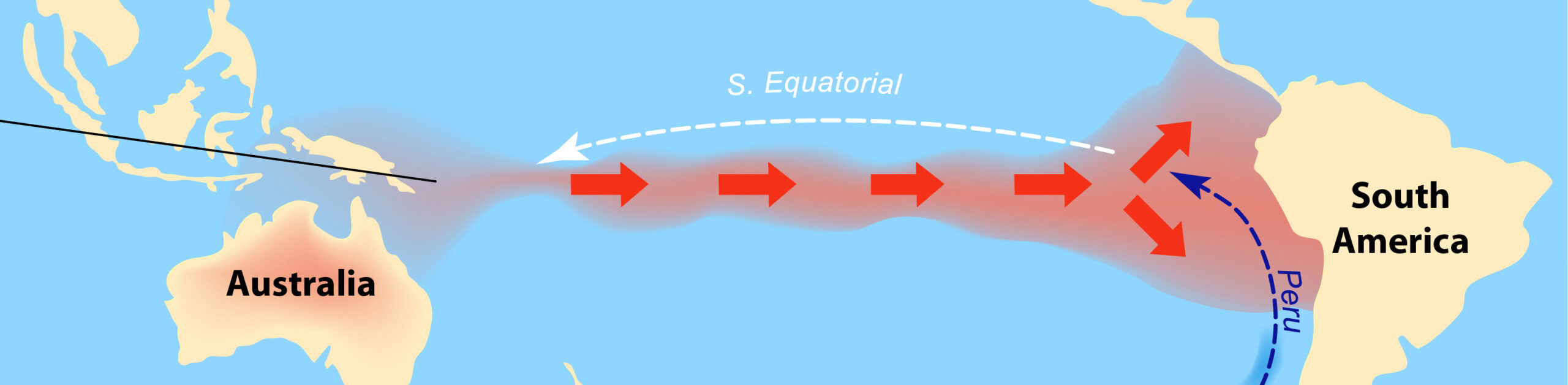
The World Meteorological Organization predicts that a ‘super El Niño’ is building. This has been nicknamed ‘Godzilla’. If forecasts are correct, this will be the most extreme El Niño in 1000 years.
El Niño is a natural phenomenon. It occurs when the surface temperatures in the central and eastern tropical Pacific Ocean warm and cause the trade winds that typically blow from east to west across the Pacific Ocean to weaken or even reverse direction. As well as increasing global temperatures and causing intense heatwaves, it can result in droughts in some parts of the world, such as eastern Australia, south-east Asia and southern Africa, and intense rain and flooding in parts of South America, eastern Africa and south-western North America.
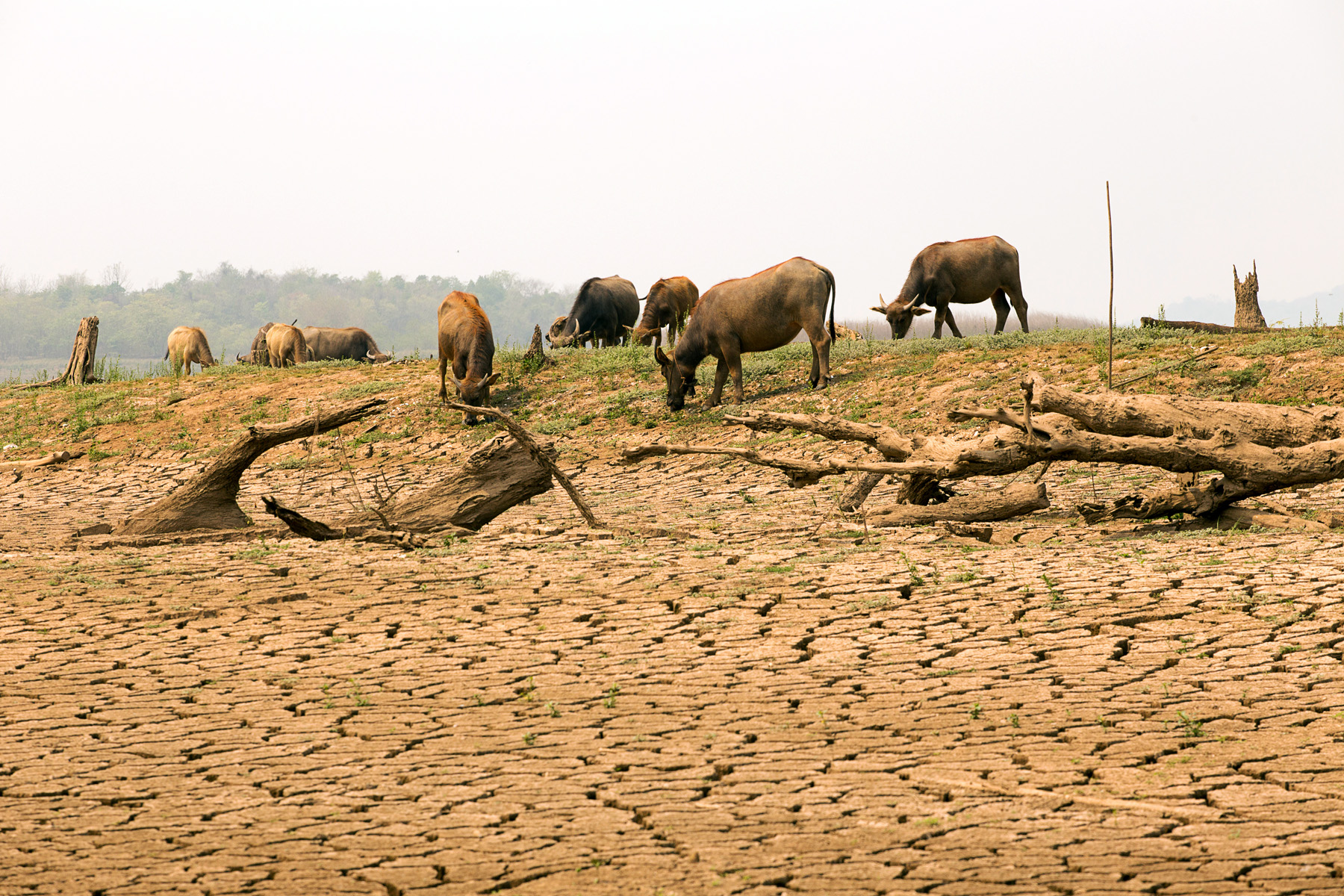
Typically, in an El-Niño event, the surface temperature of the central-eastern equatorial Pacific Ocean rises by 1°C to 1.5°C above the average. In the current El Niño, it is forecast to rise by up to 4°C by the end of 2026 and into 2027. It is already between 2.2°C and 2.6°C above the average. The effects could be catastrophic and hence the term ‘Godzilla’.
Although El Niño is a natural phenomenon, its severity is a direct result of climate change. This in turn is a direct result of economic decisions, and the effects will have severe economic consequences.
The economic causes
Climate change is an external cost of private economic decisions. When people or organisations burn fossil fuels, the climate costs of the CO2 emissions are not borne by the emitter. They are an external cost. This is illustrated in the diagram below, which shows the costs and benefits of electricity production from fossil fuels. (Click here for a PowerPoint.)
In this example, to make things simple, we assume that the external climate costs begin with the first unit of electricity generated and increase at a constant rate. The marginal social cost (MSC) of electricity generation equals the marginal private costs (MPC) to the generating company plus the marginal external cost in production MECP.
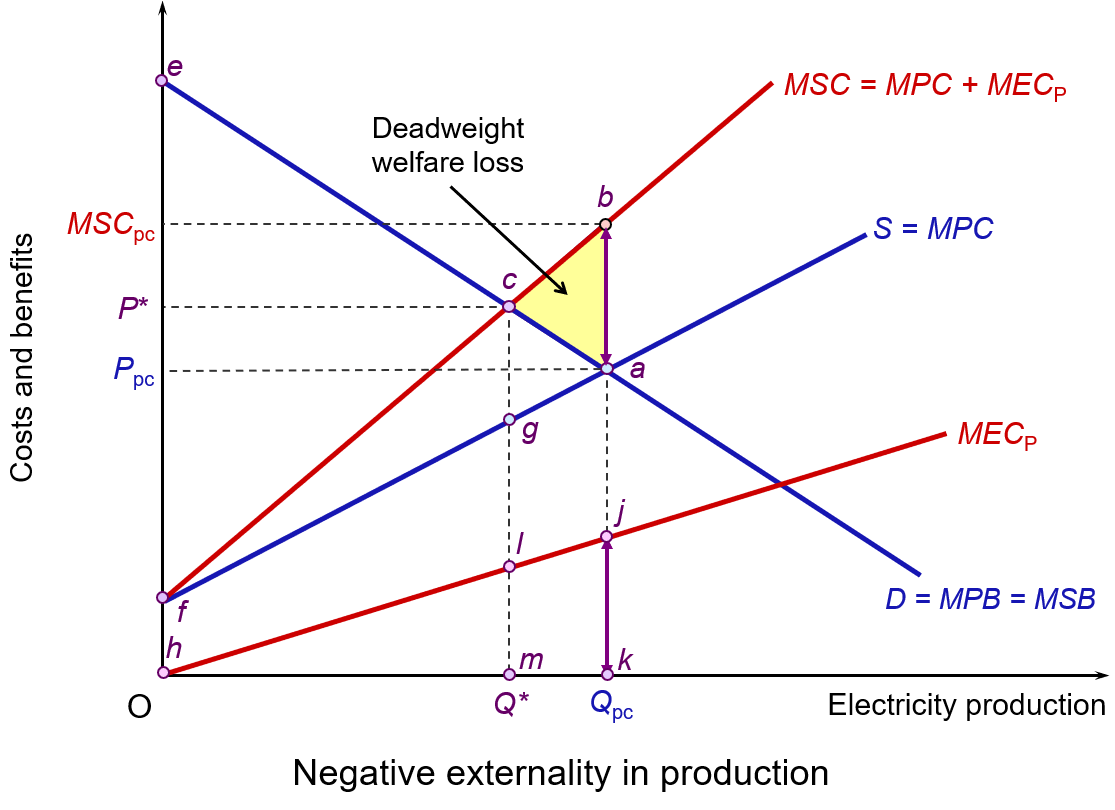 As you can see, the MSC curve is above the MPC curve. The vertical distance between them is equal to the MECP. It is also assumed that there are no externalities in consumption, which means that the marginal social benefit (MSB) curve is the same as the marginal private benefit (MPB) curve.
Competitive market forces, with producers and consumers responding only to private costs and benefits, will result in a market equilibrium at point a: i.e. where demand equals supply. The market equilibrium price is Ppc, while the market equilibrium quantity is Qpc. At Ppc, with no externalities on the consumption side, MPB is equal to MSB. The market price reflects both the private and social benefits from the last unit consumed. However, the presence of external costs in production means that MSC > MPC.
The socially optimal output would be Q*, where P = MSB = MSC, achieved at the socially optimal price of P*. This is illustrated at point c and clearly shows how external costs of production in a perfectly competitive market result in overproduction: i.e. Qpc > Q*. From society’s point of view, too much electricity is being produced from fossil fuels.
Total social surplus equals consumer surplus plus producer surplus minus the external costs. At the market equilibrium (Qpc) this is areas eaPpc+ Ppcaf – fba (or hjk, as it is the same size). At the socially optimal level of output (Q*) total social surplus is areas ecP* + P*cgf – fcg (or hlm).
Although consumer-plus-producer surplus is higher at the market equilibrium (Qpc) than at the socially optimum output (Q*) by the area cag, the external costs are higher still by the area cbag (or ljkm). Therefore, total social surplus at the market equilibrium is smaller than at the socially optimal point by area abc. This is a deadweight welfare loss and represents the excess of social costs over social benefits at all outputs above Q*. Put another way, moving from Qpc to Q* would represent a gain in social surplus of the area abc, as the fall in external costs outweighs the fall in consumer-plus-producer surplus.
One of the reasons why external environmental costs cause problems in a free-market economy is that no one has legal ownership of the atmosphere. Therefore, nobody has the ability either to prevent or to charge for their use as a ‘dumping ground’ for CO2. Such a ‘market’ is missing. Control must, therefore, be left to the government, international organisations, local authorities or regulators.
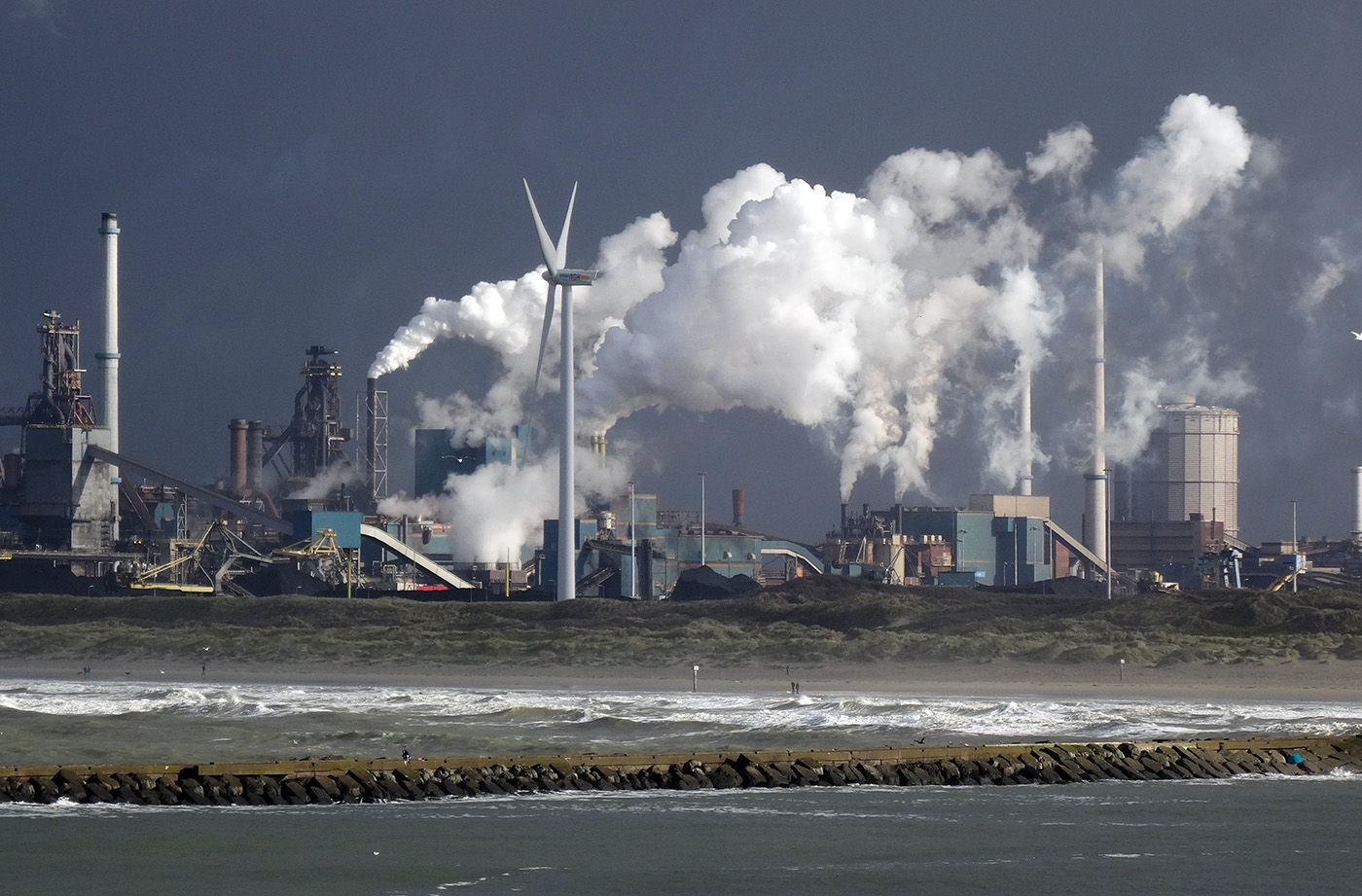 But such control is often too little. For example, when President Trump came to office in January 2025, he announced that the USA would withdraw from the UN’s Paris Agreement on climate change and that his policy towards oil production would be to ‘drill, baby, drill’. Indeed, governments globally spend hundreds of billions of dollars a year in subsidising oil, gas and coal production and its use, partly from pressure from the fossil fuel industry and partly to reduce the cost of living for consumers. This embeds fossil fuel dependence.
Game theory can help to explain the slow process of carbon reduction. For an individual country, such as the USA, it might argue that its optimum solution would be for other countries to cut their emissions, while maintaining its own levels. This approach would yield most of the benefits to the USA and none of the costs. However, when all countries argue like this, no progress is made. It’s a prisoners’ dilemma. Only if countries believe that the other countries will (a) ratify an agreement to cut emissions and (b) stick to the approved terms, is the agreement likely to succeed. This requires trust on all sides as well as the ability to monitor the outcomes.
Another major problem area concerns equity. Most countries will feel that they are being asked to do too much and that others are being asked to do too little. High-income countries will want to adopt a grandfathering approach. The starting point with this approach would be current levels of pollution. Every country would then be required to make the same percentage cut. Low-income countries, on the other hand, will want the bulk of the cuts, if not all of them, to be made by the rich countries. After all, the rich countries produce much higher levels of pollutants per capita than do the poor countries, and curbing growth in low-income countries would have a far more serious impact on levels of absolute poverty.
But will a supersized El Niño persuade countries to make deeper cuts in carbon emissions? In recent months commitments to achieving net zero emissions have waned. But the following economic consequences may encourage some countries to make deeper emissions cuts.
Economic consequences of a Godzilla El Niño
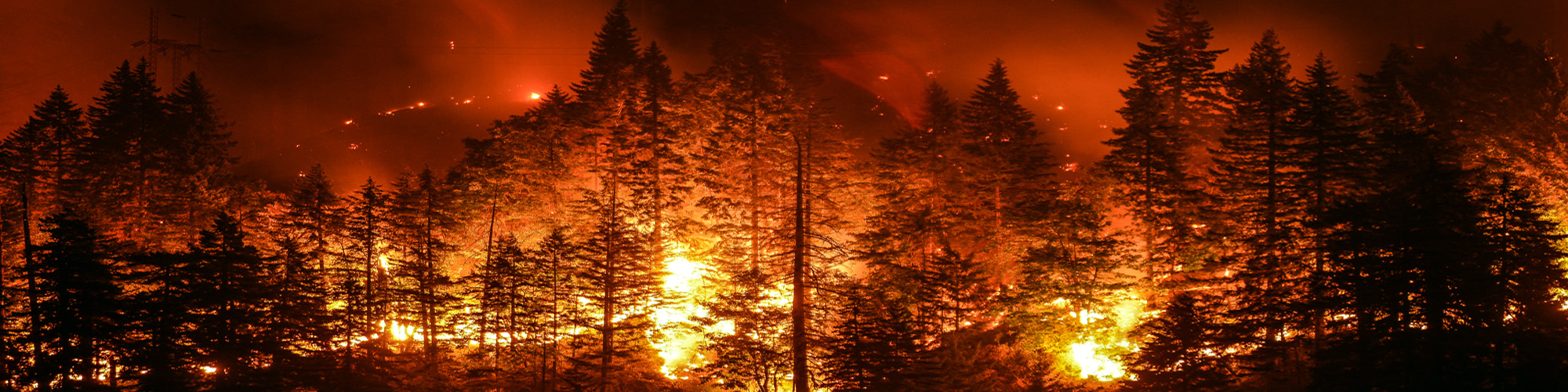
Extreme droughts, heat, wildfires and harvest failures in some areas and extreme rainfall and flooding in others will have severe economic consequences, often for the poorest people. There will be reductions in crop yields and loss of livelihood. Food prices will rise globally. This will add to the inflationary pressures from higher oil prices caused by the Iran war.
Droughts and wildfires in south-east Asia and Australia could have disastrous effects on harvests of palm oil, coffee, cocoa, rice, maize, wheat and various tropical fruits. Droughts and heat reduce output from hydropower and possibly wind energy, and industrial production may slow as a result of extreme heat in workplaces.
In Europe, warmer winters and unusually wet springs promote rapid plant growth. When this is followed by summer heatwaves, the undergrowth dries out and provides fuel for the wildfires. A super El Niño will amplify this. France and Spain have experienced massive wildfires these past few months. In the UK, the 2026 summer has been the hottest on record. The costs in Europe of the heat and wildfires in terms of lost crops and animals have been immense.
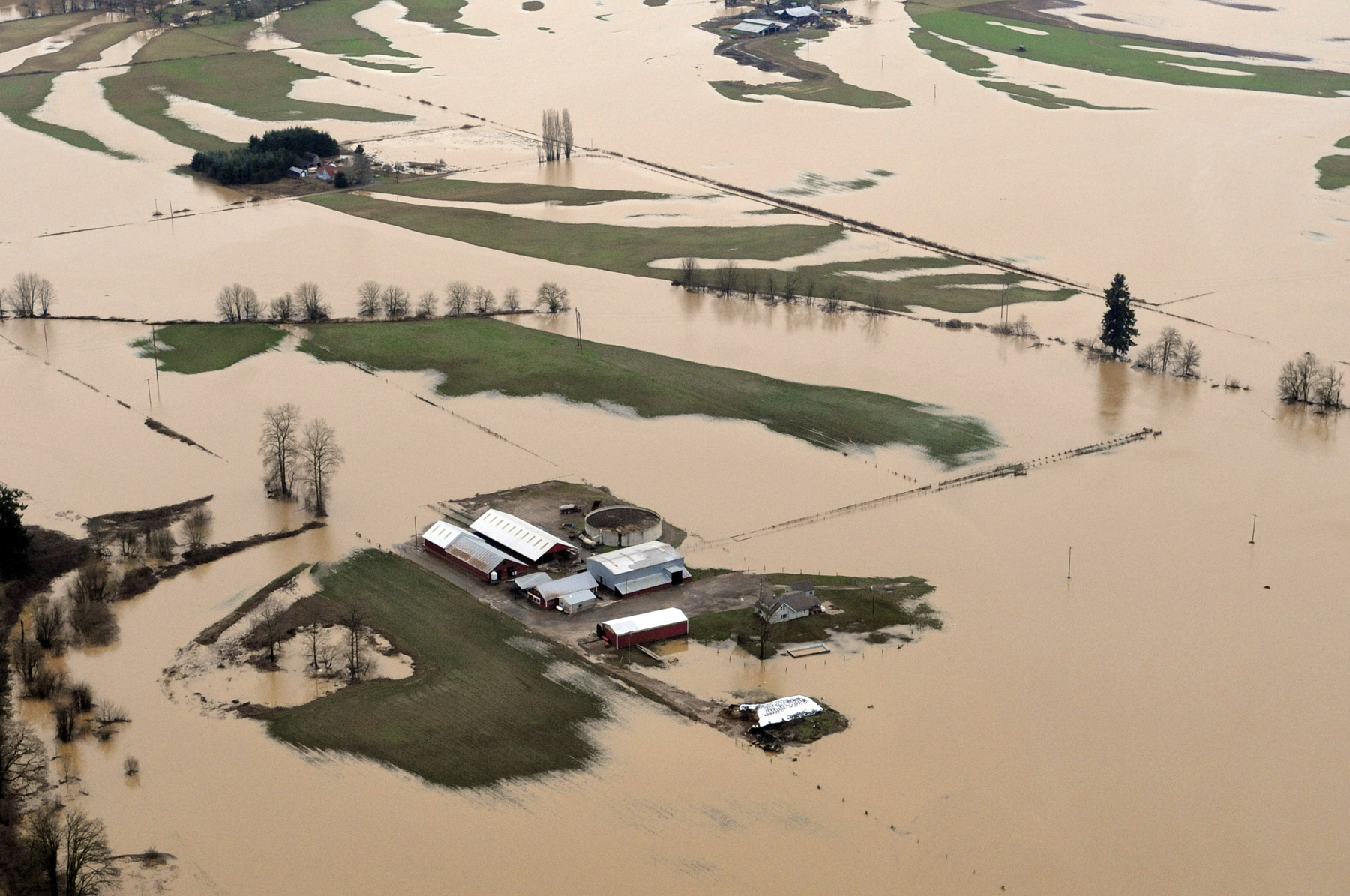 Floods and storms damage roads, power grids, railways and buildings. This forces governments to spend money on repairs instead of long-term investments. People are displaced and many are likely to lose their lives.
Fortunately, El Niños fade after a few months to be replaced by the cooler La Niña. The problem is that, with global warming, the next El Niño in a few years could be even more extreme with even more serious economic consequences.
The hope is that governments wake up to the pressing need to reduce carbon emissions.
Videos and podcast
Information
Articles
- Building climate-resilient agriculture in Europe: an economic perspective
European Environment Agency (17/3/26)
- What Super El Niño Means For Business Supply Chains And The Economy
Forbes, Chloe Demrovsky (25/8/26)
- A summer of extremes: Weathering a hotter world
CBS News, Jonathan Vigliotti (16/8/26)
- Area in Europe affected by wildfires could triple due to climate change
The National (UAE), Tariq Tahir (20/8/26)
- El Niño could drag down the global economy by almost $1 trillion or at least $7 trillion—and the choice is ours
Peterson Institute for International Economics, Cullen S Hendrix (26/7/26)
- UN warns of ‘supersized’ El Niño as countries prepare for impact
BBC News, Esme Stallard, Mark Poynting, Becky Dale, Yvette Tan, Tiffanie Turnbull and Nikita Yadav (3/9/26)
- Toxic haze from wildfires spreads across South East Asia as ‘super’ El Niño intensifies
BBC News (2/9/26)
- A Super El Niño is coming: 5 hard‑won lessons the world can learn from Africa
The Conversation, Tafadzwanashe Mabhaudhi and Mendy Ndlovu (5/7/26)
- ‘Supersizing before our eyes’: UN warns of record El Niño approaching
The Guardian, Damian Carrington (3/9/26)
- ‘Super’ El Niño could cause global food price shock lasting into 2028, analysts say
The Guardian, Richard Partington (12/7/26)
- Without action wildfires in Europe will increase 39% even in best-case climate scenario, study finds
The Guardian, Ajit Niranjan (20/8/26)
- From classrooms to climate action: ICSE 2026 charts new path for sustainability
Economic Times (Times of India) (2/9/26)
Questions
- What is the current state of progress towards meeting the goals of the UN Paris Climate Agreement?
- Are there any externalities in consumption that affect global warming?
- How might technological progress make it privately profitable to reduce carbon emissions?
- How might global supply chains and shipping be affected by a super El Niño?
- What role can education play in tackling climate change and its effects?
 Every year, world leaders gather to find ways of limiting global warming. The latest of these ‘COP’ meetings, COP30, is in Belém, Brazil from 10 to 20 November 2025. COP stands for ‘Conference of the Parties’, the decision-making body of the United Nations Framework Convention on Climate Change (UNFCCC).
Perhaps the best-known of these meetings was in Paris in 2015. This resulted in the Paris Agreement. This is a legally-binding international treaty to limit global warming to well below 2°C and preferably to 1.5°C above pre-industrial levels. This would involve reducing greenhouse gas emissions and/or taking carbon absorbing measures. All UN countries except for Iran, Libya and Yemen are signatories to the agreement.
However, on coming to office in January 2025, President Trump announced that the USA will withdraw from the agreement in January 2026. Instead, he would prioritise fossil fuel production, under the mantra, ‘drill, baby, drill’. Previously he had claimed that global warming is a hoax concocted by China designed to undermine the competitive power of the USA.
Progress in reducing emissions and mitigating climate change
 Since 2020, each country has been required to submit its own emissions-reduction targets, known as ‘nationally determined contributions’ (NDCs), and the actions it will take to meet them. Every five years each country must submit a new NDC more ambitious than the last. New NDCs are due this year. As of 12 November, 112 of the 197 countries had submitted a new NDC (including the USA, China, the EU and the UK). These 112 countries account for around 71 per cent of global emissions.
Implementing all new NDCs would reduce global CO2 emissions by between 15 and 25 per cent from current levels by 2035. But this would merely reduce global warming to around 2.6°C above pre-industrial levels. Approximately 35 per cent emissions reductions by 2035 would be required to restrict global warming to 2°C and 55 per cent to restrict it to 1.5°C.
But implementing the Paris Agreement has still had a high degree of success. Without the action taken and being taken over the past 10 years, it is predicted that global temperatures by 2050 would rise by 3–3.5°C.
Rich countries are expected to provide finance to low-income countries. This is required to help such countries adopt green technologies and to adapt to the harmful effects of climate change (e.g. through irrigation schemes and flood defences). At COP29 in Azerbaijan, the ‘Baku Finance Goal’ was agreed. This is an agreement to provide climate finance of $1.3 trillion per year by 2035 to developing countries from all public and private sources.
The subsequent ‘Baku to Belém Roadmap’ provides a set of suggested actions for governments, financial institutions and the private sector to bridge the gap between current climate finance flows and the $1.3 trillion agreed to meet global climate goals. The roadmap is a central focus of the COP30 conference in Belém, with discussions between countries on how to translate the Baku finance goal into concrete, tangible actions and integrate it into formal decisions.
The role of Donald Trump
 As well as announcing that the USA will withdraw from the Paris Agreement in January 2026, since coming to office in 2025, President Trump has given billions of dollars of tax cuts to fossil fuel firms and allowed drilling for oil and gas on federal lands. At the same time, he has described renewable energy as ‘a joke’ that will bankrupt countries and has slashed subsidies and tax breaks for solar and wind power, withdrawn permits for wind and solar farms, and cut funding for green energy research.
He wants the USA to be world leader in fossil fuel energy, calling on governments to buy US oil and gas, threatening some countries with tariffs if they do not. Already, Japan, South Korea and several European countries have agreed to buy huge quantities of US oil and liquefied natural gas (LNG). A worry is that other similarly inclined governments, such as Argentina, may roll back on their commitments to a green transition and instead boost their fossil fuel industries.
This gives added urgency to the Belém talks. It is crucial for the rest of the world to stick together in pushing ahead to combat global warming and in adopting and sticking to tough NDCs. It is also crucial for rich countries to support dlow-income countries in adopting climate-friendly investment and in measures to mitigate the effects of global warming.
The economics of climate change
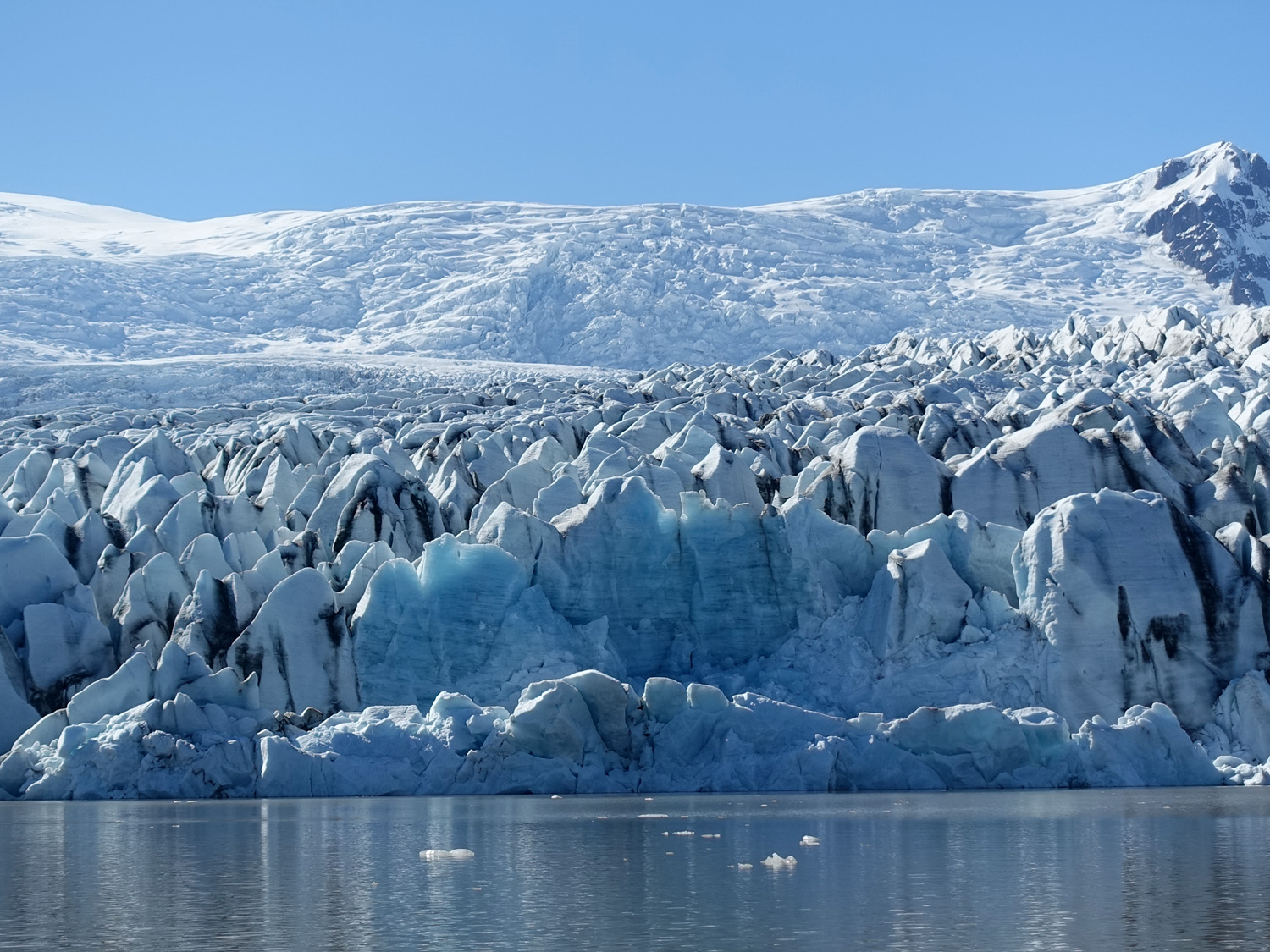 Climate change is directly caused by market failures. One of the most important of these is that the atmosphere is a common resource: it is not privately owned; it is a global ‘commons’. Individuals and firms use it at a zero price. If the price of any good or service to the user is zero, there is no incentive to economise on its use. Thus for the emitter there are no private costs of using the atmosphere in this way as a ‘dump’ for their emissions and, in a free market, no incentive to reduce the climate costs.
And yet when firms emit greenhouse gases into the atmosphere there are costs to other people. To the extent that they contribute to global warming, part of these costs will be borne by the residents of that country; but a large part will be borne by inhabitants of other countries.
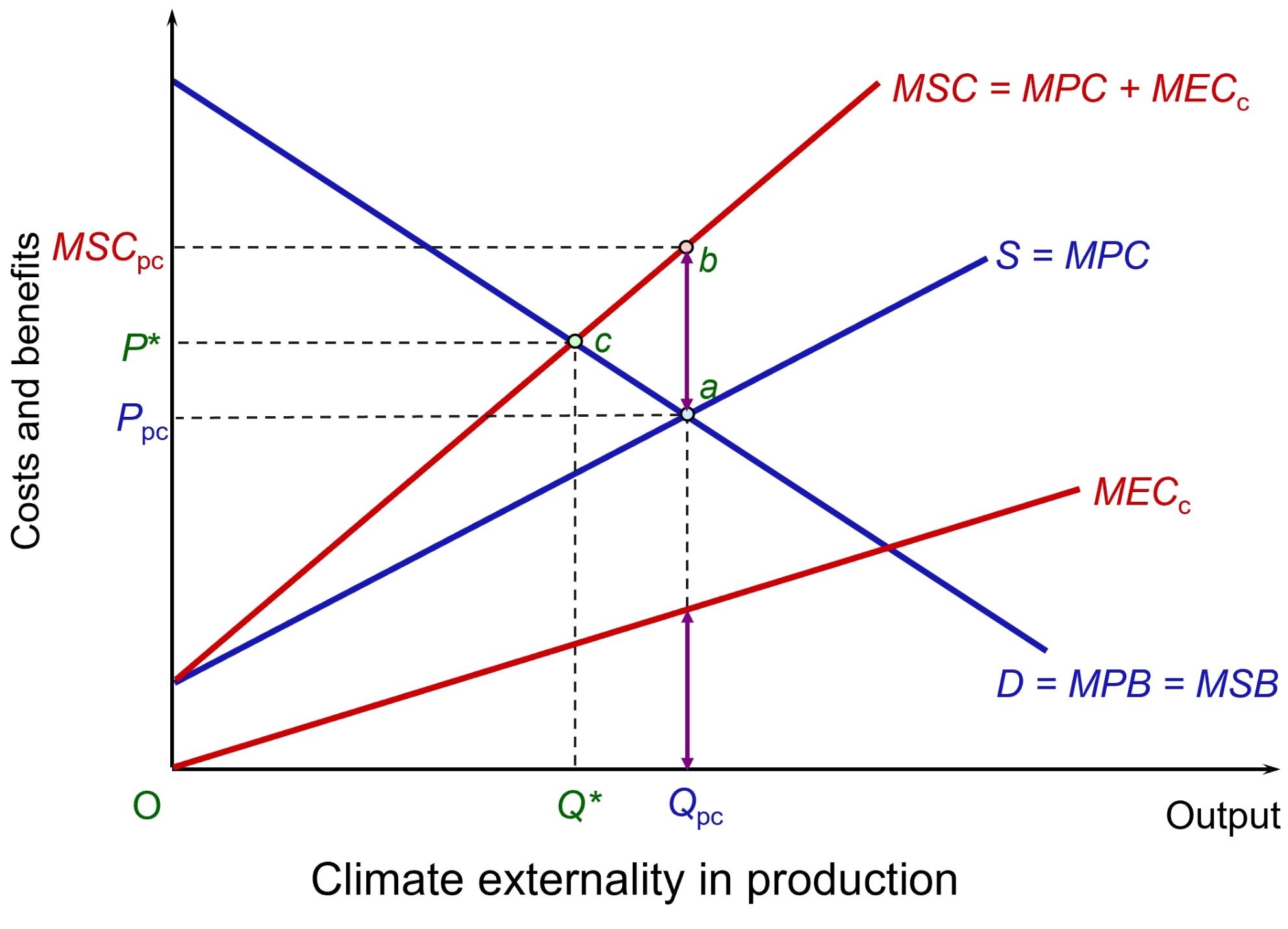 These climate costs are external costs to the firm and are illustrated in the figure. It shows an industry that emits CO2. To keep the analysis simple, assume that it is a perfectly competitive industry with demand and supply given by curves D and S, which are equal to the marginal private benefits (MPB) and marginal private costs (MPC), respectively. There are no externalities on the demand side and hence MPB equals the marginal social cost (MSB). Market equilibrium is at point a, with output at Qpc and price at Ppc. (Click here for a PowerPoint.)
Assume that the emissions create a marginal cost to society equal to MECc. Assume that the MEC increases as output and total emissions increase. The MECc line is thus upward sloping. At the market price of Qpc, these external climate costs are equal to the purple vertical line. When these external climate costs are added to private costs, this gives a marginal social cost given by MSC = MPC + MECc. The gives a socially optimal level of output of the product of Q* at a price of P*, with the optimum point of c.
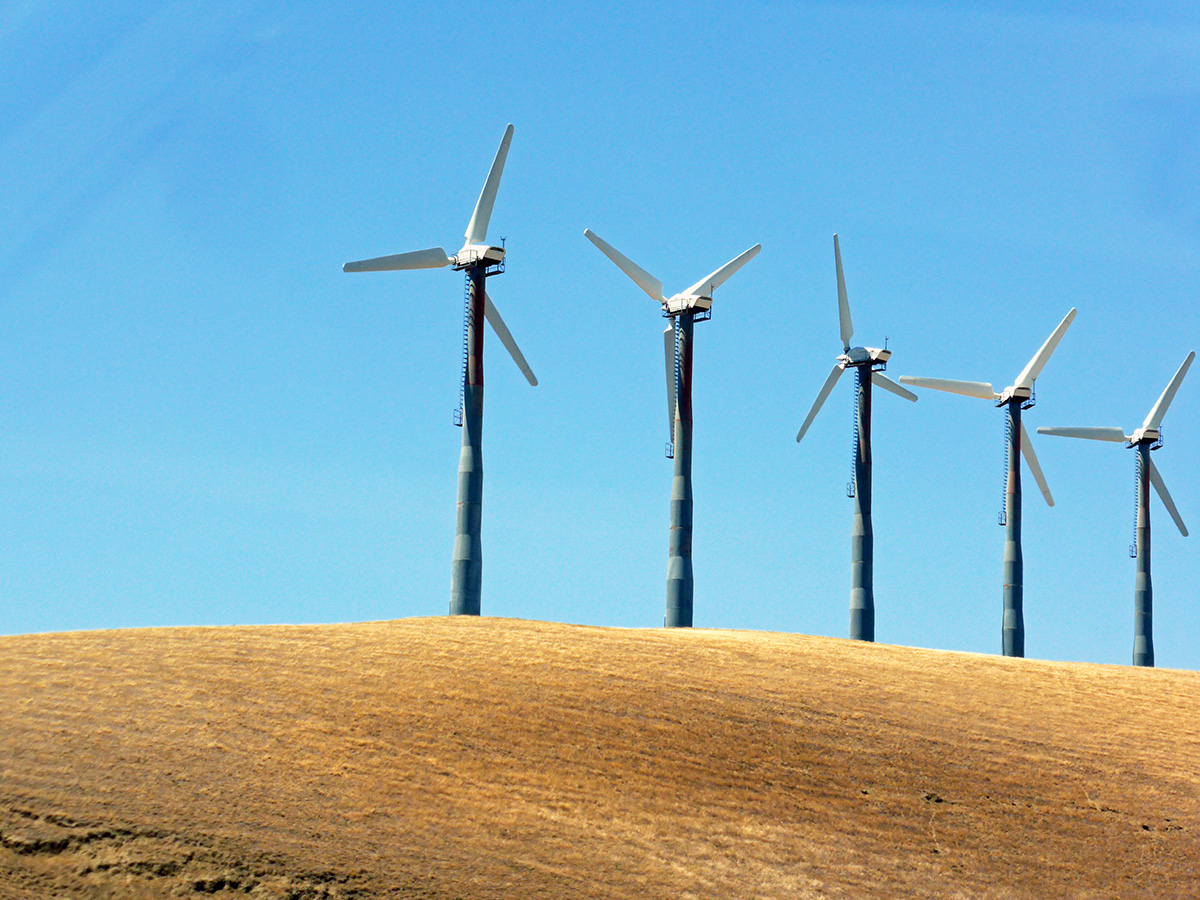 In other words, other things being equal, the free market overproduces products with climate externalities. If the output is to be reduced to the social optimum of Q*, then the government will need to take measures such as those advocated in the Paris Agreement. These could include imposing taxes on products, such as electricity generated by fossil fuels, or on the emissions themselves. Or green alternatives, such as wind power, could be subsidised.
Alternatively, regulations could be used to cap the production of products creating emissions, or caps on the emissions themselves could be imposed. Emissions permits could be issued or auctioned. Only firms in possession of the permits would be allowed to emit and the permits would cap emissions below free-market levels. These permits could be traded under a cap-and-trade scheme, such as the EU’s Emissions Trading Scheme. Again, such schemes are advocated under the Paris Agreement.
COP30 and progress in tackling climate change
 The USA is not attending COP30 in Brazil. Nor is the Chinese leader, Xi Jinping. However, there are growing opportunities for translating aims into practical policies for specific sectors, such as energy, transport and carbon-intensive industries. These policies may require some degree of government action – taxes, subsidies or regulation – to internalise climate externalities. But increasingly, green alternatives are becoming economically viable without subsidies or with just initial government funding to ‘crowd in’ private investment, which will then attract further private capital as external economies of scale kick in. Increasingly investors will find profitable opportunities in climate-friendly projects.
At the same time, while the USA is moving away from climate-friendly investment (as least for the term of the Trump Presidency), China is moving in the opposite direction, with massive investment in solar panels, wind turbines, EVs and batteries – investment that is bringing down their cost and thereby encouraging their adoption around the world. Such technologies create huge opportunities for low-income countries to provide affordable energy and to create local jobs, both skilled and unskilled. It also helps them achieve much greater energy security by reducing their reliance on fossil fuel imports
Chinese advances in green technology are also providing a stimulus to other countries to invest in renewable industries to prevent Chinese dominance. The danger, however, of Chinese dominance in the renewable sector in high-income countries is that it may encourage them to impose tariffs on Chinese imports of EVs, solar panels, etc. to protect their own industries.
But despite the growing opportunities for profitable adoption of green technologies without government support, there is still much that governments need to do to encourage the process. COP meetings are an important forum for discussing such policies and holding governments to account for meeting or not meeting their targets.
The agreement
The agreement reached at the end of the conference marked relatively small progress. There was agreement to increase finance from developed to developing countries to help them adapt to climate change. This would triple to $120bn per year, up from the previously agreed doubling, but the target date was pushed back to 2035 from the previously agreed 2030.
By the end of the conference, 122 of the 197 countries had submitted a new NDC – still 75 countries short, although others are expected.
The conference also agreed to establish a ‘just transition mechanism (JTM)’ to ‘enhance international cooperation, technical assistance, capacity-building and knowledge-sharing, and enable equitable, inclusive just transitions’. However, this is voluntary and no funding was attached, but it could act as the basis for future funding.
The biggest failure of the conference was probably the lack of agreement on phasing out of fossil fuels. This is not surprising given the opposition of the major oil producers. The hope is that the reduction in costs of renewable energy will drive the process anyway – a process that China is keen to accelerate with its investment in solar power and other renewable energy. One hopeful development, however, was the pledging of more than $9bn to halt deforestation, a major source of global warming. (See the Travers Smith article at the end of the Articles list below for a very useful summary of the outcome.)
Articles
- What is COP30 and why does it matter for the climate?
Chatham House, Anna Åberg (5/9/25)
- COP30 in Brazil: What is at stake for global collaboration on climate and nature?
World Economic Forum, Pim Valdre (5/11/25)
- What is COP30 and why does it matter?
CNN, Laura Paddison (11/11/25)
- Why COP 30 in Brazil Matters for a Thriving Economy and a Safe, Livable Planet
Union of Concerned Scientists (UCS),Rachel Cleetus (7/11/25)
- Nationally Determined Contributions: The Action Plans Behind Global Efforts To Fight the Climate Crisis
Center for American Progress (CAP, Kalina Gibson and Courtney Federico (22/9/25)
- New climate pledges only slightly lower dangerous global warming projections
UN Environment Programme, Press Release (4/11/25)
- COP30: Trump and many leaders are skipping it, so does the summit still have a point?
BBC News, Justin Rowlatt (10/11/25)
- Trump dismisses clean energy as ‘a joke.’ But Americans deserve facts, not fear
USA Today, Mark McNees (23/9/25)
- The surprising countries pulling off stunningly fast clean energy transitions
CNN, Ella Nilsen and Samuel Hart (7/11/25)
 Could the world’s biggest polluter be its savior against climate change?
CNN, Simone McCarthy (17/11/25)
- COP 2025: Outlook and Implications for Investors
RankiaPro, Joanna Piwko, Allegra Ianiri, Marie Lassegnore and Jean-Philippe Desmartin (10/11/25)
Post-agreement
- Belém: yet another cop out
Zero Hour, Allan Gray (25/11/25)
- Cop30’s watered-down agreements will do little for an ecosystem at tipping point
The Guardian, Fiona Harvey, Jonathan Watts, Damien Gayle and Damian Carrington (22/11/25)
- COP30: Five key takeaways from a deeply divisive climate summit
BBC News, Justin Rowlatt and Matt McGrath, (25/11/25)
- COP30: What were the key outcomes?
Travers Smith (1/12/25)
Information and Data
Questions
- Summarise the Paris Agreement.
- Summarise the Baku to Belém Roadmap to 1.3T.
- What incentives are there for countries to stick to their NCDs?
- Using a diagram similar to that above, illustrate how the free market will produce a sub-optimal amount of solar power because the marginal social benefit exceeds the marginal private benefit. How might the calculation be changing?
- How might game theory be used to analyse possible international decision making at COP conferences? How might this be affected by the attitudes of the Trump administration?
- Is it in America’s interests to cease investing in green energy and green production methods?
On the day he came to office, President Trump signed a series of executive orders. One of these was to set in motion the process of withdrawing from the UN Paris climate agreement. Section 3(a) of the order reads:
The United States Ambassador to the United Nations shall immediately submit formal written notification of the United States’ withdrawal from the Paris Agreement under the United Nations Framework Convention on Climate Change.
The Paris Agreement is an international treaty on climate change. It was adopted on 12 December 2015 and came into force on 4 November 2016, 30 days after the point was reached when at least 55 countries accounting for at least 55% of global emissions had ratified the treaty.
Currently, all UN countries are signatories to the agreement and only Iran, Libya and Yemen are yet to ratify it. The agreement commits countries to limiting global warming to well under 2°C above pre-industrial levels and preferably to no more than 1.5°C. This would involve reducing greenhouse gas emissions and/or taking carbon absorbing measures.
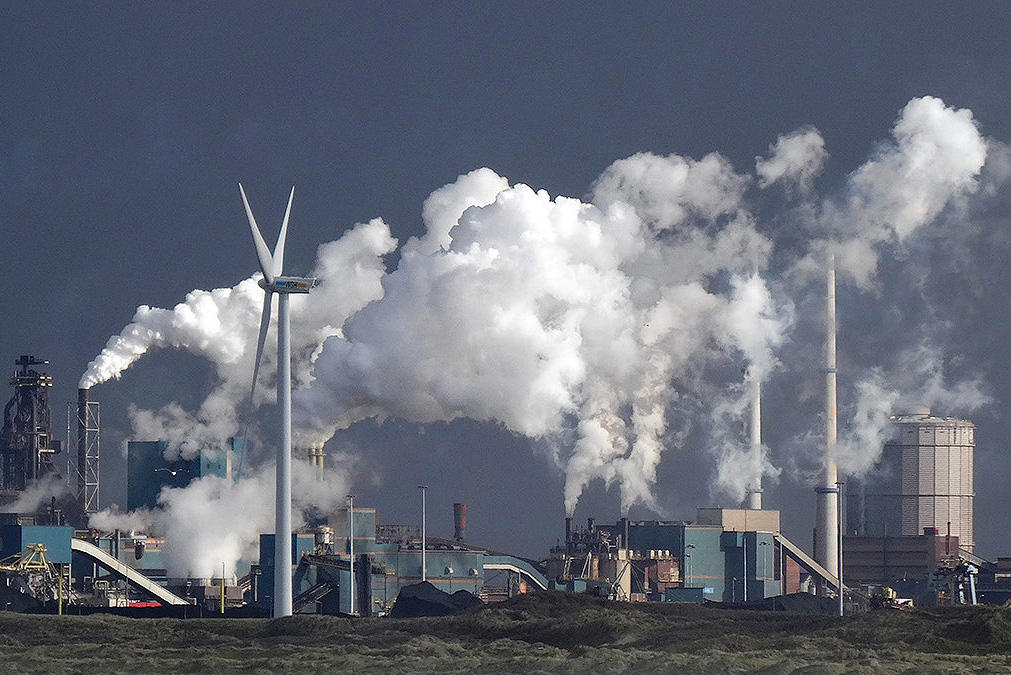 Since 2020, each country has been required to submit its own emission-reduction targets, known as ‘nationally determined contributions’ (NDCs), and the actions it will take to meet them. Every five years each country must submit a new NDC more ambitious than the last.
Rich countries are expected to provide finance to low-income countries. This is required to help poor countries adopt green technologies and to adapt to the harmful effects of climate change (e.g. through irrigation schemes and flood defences).
Countries set target dates by which emissions would be fully offset by carbon absorption measures (‘net zero’). The UN’s goal is to reach global net zero by 2050. According to the UN Climate Action site:
As of June 2024, 107 countries, responsible for approximately 82 per cent of global greenhouse gas emissions, had adopted net-zero pledges either in law, in a policy document such as an national climate action plan or a long-term strategy, or in an announcement by a high-level government official. More than 9000 companies, over 1000 cities, more than 1000 educational institutions, and over 600 financial institutions have joined the Race to Zero, pledging to take rigorous, immediate action to halve global emissions by 2030.
The Paris Agreement has helped to cut emissions or slow their rate of growth in most countries. Although net zero by 2050 may be unlikely, warming will be less than without the agreement.
The USA and the Paris Agreement
 In April 2016 the USA signed the Paris Agreement. As stated above, the Paris Agreement came into effect on 4 November 2016.
President Trump came to office for the first time in January 2017. In June 2017, he signed an executive order in which he announced that the USA would withdraw from the agreement, arguing that it undermined the US economy and put it at a competitive disadvantage. He claimed that global warming is a hoax concocted by China designed to undermine the competitive power of the USA.
However, despite Trump’s intention to withdraw from the agreement, its terms did not allow a country to begin a withdrawal procedure for at least three years after the agreement was ratified (i.e. not before 4 November 2019) and then a year’s notice has to be given. This notice was given on 4 November 2019. In the meantime, the USA had to abide by the terms of the treaty. During this period, US representatives at COP meetings used the opportunity to promote fossil fuels. Withdrawal took place on 1 November 2020, just one day after the presidential election and just over two months before the end of Trump’s first term of office.
On 20 January 2021, his first day in office, President Biden signed an executive order to rejoin the agreement, which took place on 19 February 2021. He committed to cutting total greenhouse gas emissions by at least 50% by 2030. To achieve this, his administration adopted a number of emissions-reducing measures, for example requiring all new passenger vehicles sold after 2035 to be emissions free, giving tax credits for clean electricity generation, providing federal funds for smart agriculture and setting greener appliance and equipment standards.
But, as we have seen, newly elected President Trump for the second time announced that the USA would withdraw from the Paris agreement and would prioritise fossil fuel production, under the mantra, ‘drill, baby, drill’.
The economics of climate change
Climate change is directly caused by market failures. One of the most important of these is that the atmosphere is a common resource: it is not privately owned; it is a global ‘commons’. Individuals and firms use it at a zero price. If the price of any good or service to the user is zero, there is no incentive to economise on its use. Thus for the emitter there are no private costs of using the atmosphere in this way as a ‘dump’ for their emissions and, in a free market, no incentive to reduce the climate costs.
And yet when firms emit greenhouse gases into the atmosphere there are costs to other people. To the extent that they contribute to global warming, part of these costs will be borne by the residents of that country; but a large part will be borne by inhabitants of other countries.
These climate costs are external costs to the firm and are illustrated in the figure. It shows an industry that emits CO2. To keep the analysis simple, assume that it is a perfectly competitive industry with demand and supply given by curves D and S, which are equal to the marginal private benefits (MPB) and marginal private costs (MPC), respectively. There are no externalities on the demand side and hence MPB equals the marginal social cost (MSB). Market equilibrium is at point a, with output at Qpc and price at Ppc. (Click here for a PowerPoint.)
Assume that the emissions create a marginal cost to society equal to MECc. Assume that the MEC increases as output and total emissions increase. The MECc line is thus upward sloping. At the market price of Qpc, these external climate costs are equal to the purple vertical line. When these external climate costs are added to private costs, this gives a marginal social cost given by MSC = MPC + MECc. The gives a socially optimal level of output of the product of Q* at a price of P*, with the optimum point of c.
In other words, other things being equal, the free market overproduces products with climate externalities. If the output is to be reduced to the social optimum of Q*, then the government will need to take measures such as those advocated in the Paris Agreement. These could include imposing taxes on products, such as electricity generated by fossil fuels, or on the emissions themselves. Or green alternatives, such as wind power, could be subsidised.
Alternatively, regulations could be used to cap the production of products creating emissions, or caps on the emissions themselves could be imposed. Emissions permits could be issued or auctioned. Only firms in possession of the permits would be allowed to emit and the permits would cap emissions below free-market levels. These permits could be traded under a cap-and-trade scheme, such as the EU’s Emissions Trading Scheme. Again, such schemes are advocated under the Paris Agreement.
Effect of the USA’s withdrawal from the Paris Agreement
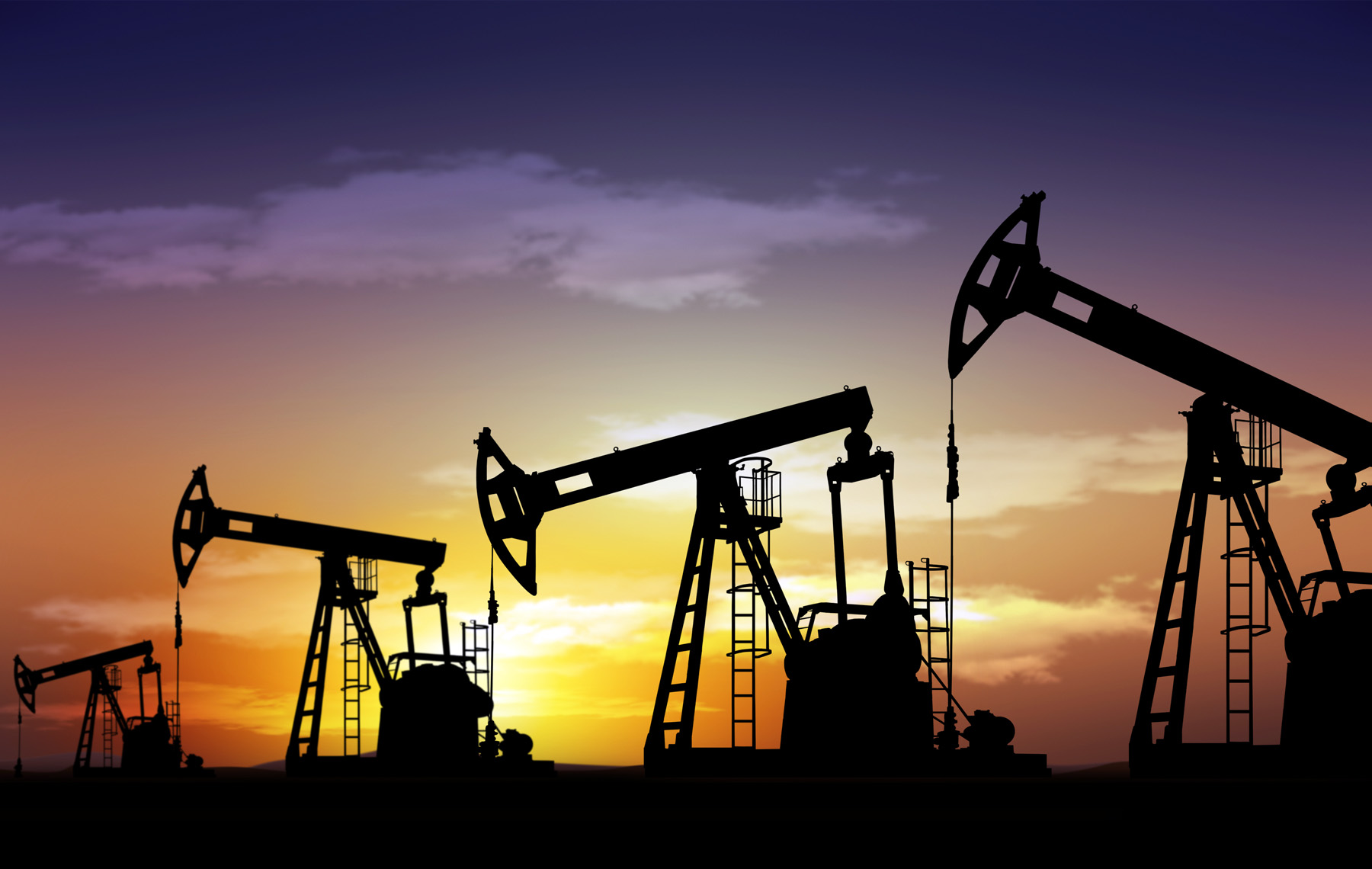 Withdrawal from the Paris Agreement and promoting fossil fuels will increase US emissions. Scientific consensus is that this will have a negative effect on climate change. Only part of these climate costs will be borne by the USA, although the severity of recent fires in California, fanned by strong Santa Ana winds, and more violent hurricanes are two examples of costs of climate change to the USA itself.
A bigger worry is whether the USA’s withdrawal will encourage other countries, such as Argentina, to do likewise. Then the climate costs of US withdrawal will be greater.
But all is not bad news. The transition to green energy is well advanced and the costs of solar and wind power are decreasing. Global investment in clean energy has increased by 60% since 2015. China is investing heavily in renewable energy technology, which is giving it a significant trade advantage. The EU has taken significant actions to promote green energy and technology. Similarly, industrial processes that economise on emissions are developing apace and it is becoming increasingly profitable for private companies to make climate-friendly investments without subsidies. In the USA itself, many Democratic states and local governments, and even some Republican ones, will continue to adopt climate-friendly policies.
In this environment, the Trump administration does not want to fall behind in the development of new technologies and markets. And with Elon Musk having a significant influence on Donald Trump, the USA’s investment in EVs and battery technology is likely to continue. This will help to reduce the price of green energy and transport.
Videos
Articles
- Trump vows to leave Paris climate agreement and ‘drill, baby, drill’
BBC News, Matt McGrath (20/1/25)
- What is the Paris climate agreement and why has Trump withdrawn?
BBC News, Esme Stallard and Mark Poynting (21/1/25)
- Six Trump executive orders to watch
BBC News (21/1/25)
- The real message behind Trump’s withdrawal of US from the Paris climate agreement
Sky News, Tom Clarke (21/1/25)
- Trump signs order to withdraw US from Paris climate agreement for second time
The Guardian, Dharna Noor (20/1/25)
- Explained: how Trump’s day one orders reveal a White House for big oi
The Guardian, Oliver Milman and Dharna Noor (22/1/25)
- Donald Trump can’t stop global climate action. If we stick together, it’s the US that will lose out
The Guardian, Bill Hare (6/11/24)
 Trump to pull US from Paris climate agreement: What could this mean for the environment?
ITV News, Martin Stew (21/1/25)
- 10 reasons why US president-elect Donald Trump can’t derail global climate action
The Conversation, Wesley Morgan and Ben Newell (8/11/24)
- Trump has rejected the Paris agreement again, but game theory shows how other countries can still lead by example
The Conversation, Renaud Foucart (27/1/25)
Information
Questions
- Summarise the Paris Agreement.
- Using a diagram similar to that above, illustrate how the free market will produce a sub-optimal amount of solar power because the marginal social benefit exceeds the marginal private benefit.
- How might game theory be used to analyse possible international decision making in the context of US climate policy?
- Is it in America’s interests to cease investing in green energy and green production methods?
- Go through each of the reasons (not specific to Australia) given in The Conversation article linked above why ‘Donald Trump can’t derail global climate action’. To what extent do you agree with each one?
 Back in November, when Joe Biden had just been elected, we considered some of his proposed policies to tackle climate change (see A new era for climate change policy?). On 20th January, the day of his inauguration, he signed 17 executive orders overturning a range of policies of the Trump presidency. Further executive orders followed. Some of these related directly to climate change.
The first was to cancel the Keystone XL oil pipeline project. If it had gone ahead, it would have transported 830 000 barrels of oil per day from the Alberta tar sands in Canada to refineries on the Gulf Coast of Texas. It would have involved building a new pipeline from Alberta to Nebraska, where it would have linked to an existing pipeline to Texas. Extracting oil from tar sands is a particularly dirty process, involves cutting down large areas of forest (a carbon sink) and total emissions are around 20% greater per barrel than from conventional crude.
 The pipeline would have cut across First Nations land and any spills would have been highly toxic to the local environment. In terms of profitability, returns on tar sands oil extraction and transportation are very low. This is likely to remain the case as oil prices are likely to remain low, with greater global energy efficiency and the switch to renewables.
Critics of Biden’s decision argue that the pipeline project would have created some 5000 to 6000 temporary jobs in the USA during the two-year construction phase. Also they claim that it would have contributed to greater energy security for the USA.
 The second executive order was to rejoin the Paris Climate Agreement, a process that will take 30 days. Rejoining will involve commitments to cut greenhouse gas emissions and the adoption of various measures to bring this about. During the election campaign, Biden pledged to achieve economy-wide net-zero emissions no later than 2050. As we saw in the previous blog, under Biden the USA will play a leading role in the November 2021 UN COP26 climate change conference in Glasgow.
At present, the Paris agreement is for countries to aim to reach a peak of greenhouse gas emissions as soon as possible to achieve a climate neutral world by mid-century. Many countries have have made commitments about when they aim to achieve carbon neutrality, although concrete action is much more limited. It is hoped that the COP26 conference will lead to stronger commitments and actions and that the USA under Biden will play a leading part in driving this forward.
 In addition, to cancelling the Keystone XL pipeline and rejoining the Paris Agreement, the executive orders reversed more than 100 other decisions with negative environmental effects taken by the Trump administration – many overturning environmental measures introduced by previous administrations, especially the Obama administration.
These orders included reversing the easing of vehicle emissions standards; stopping reductions in the area of two major national monuments (parks) in Utah; enforcing a temporary moratorium on oil and natural gas leases in Alaska’s Arctic National Wildlife Refuge; and re-establishing a working group on the social costs of greenhouse gasses.
Then there will be new measures, such as adopting strict fuel economy standards and investment in clean public transport. But it remains to be seen how far and fast the Biden administration can move to green the US economy. With the desire for bipartisanship and seeking an end to the divisive policies of Trump, there may be limits to what the new President can achieve in terms of new legislation, especially with a Senate divided 50:50 and only the casting vote of the chair (Kamala Harris as Vice-President) being in Democrat hands.
The articles below consider the various green policies and how likely they are to succeed in their objectives.
Articles
- Climate change: Biden’s first act sets tone for ambitious approach
BBC News, Matt McGrath (20/1/21)
- Biden nixes Keystone XL permit, halts Arctic refuge leasing
The Hill, Rachel Frazin (20/1/21)
- Biden’s return to Paris pact just a first step for U.S. climate action
Reuters, Megan Rowling (20/1/21)
- Court Decision Lets Biden Set New Emissions Rules To Meet Paris Agreement Climate Goals
Forbes, Allan Marks (20/1/21)
- Biden to ‘hit ground running’ as he rejoins Paris climate accords
The Guardian, Oliver Milman (19/1/21)
- What could a Biden-Harris administration mean for the planet?
Euronews, Marthe de Ferrer (20/1/21)
- Ask a Scientist: What Should the Biden Administration and Congress Do to Address the Climate Crisis?
ecoWatch, Elliott Negin (18/1/21)
- Biden marks Day One with burst of orders reversing Trump policies on climate and health
Science Business, Éanna Kelly (21/1/21)
- What Is the Paris Climate Agreement That Joe Biden Will Rejoin, Why Did Donald Trump Leave?
Newsweek, Kashmira Gander (18/1/21)
Questions
- Find out what other environmental policies are being pursued by President Biden and assess their likely effectiveness in achieving their environmental objectives.
- Would policies to reduce carbon emissions necessarily be desirable? How would you assess their desirability?
- When is it best to use the ‘precautionary principle’ when devising environmental policies?
- To what extent is game theory relevant in understanding the difficulties and opportunities of developing internationally agreed policies on carbon reduction?
- If the objective is to tackle global warming, is it better to seek international agreement on limiting the extent of global warming or international agreement on carbon reduction? Explain.
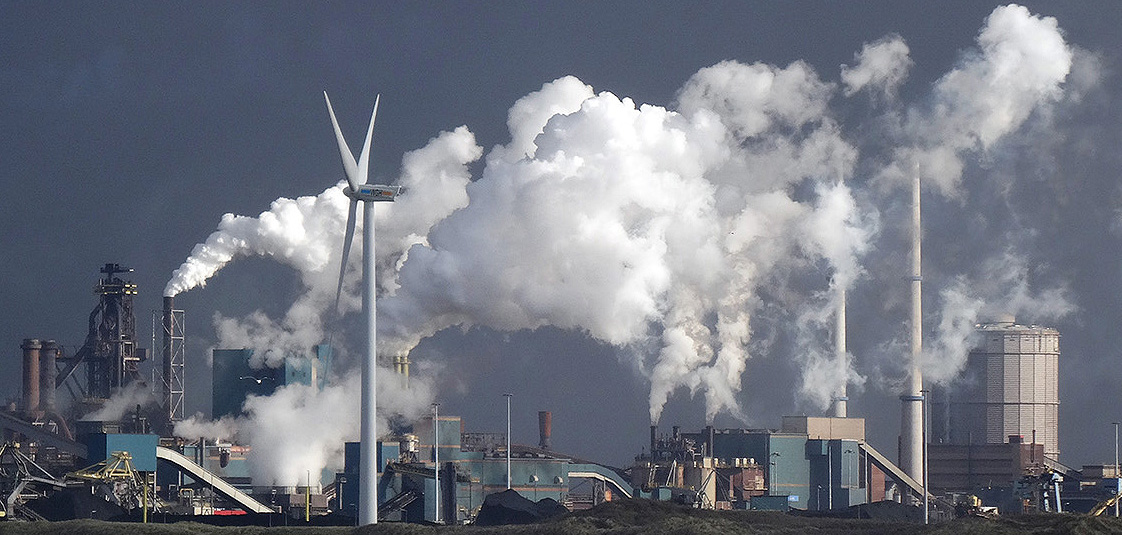
With the election of Joe Biden, the USA will have a president committed to tackling climate change. This is in stark contrast to Donald Trump, who has been publicly sceptical about the link between human action and climate change and has actively supported the coal, oil and gas industries and has rolled back environmental protection legislation and regulation.
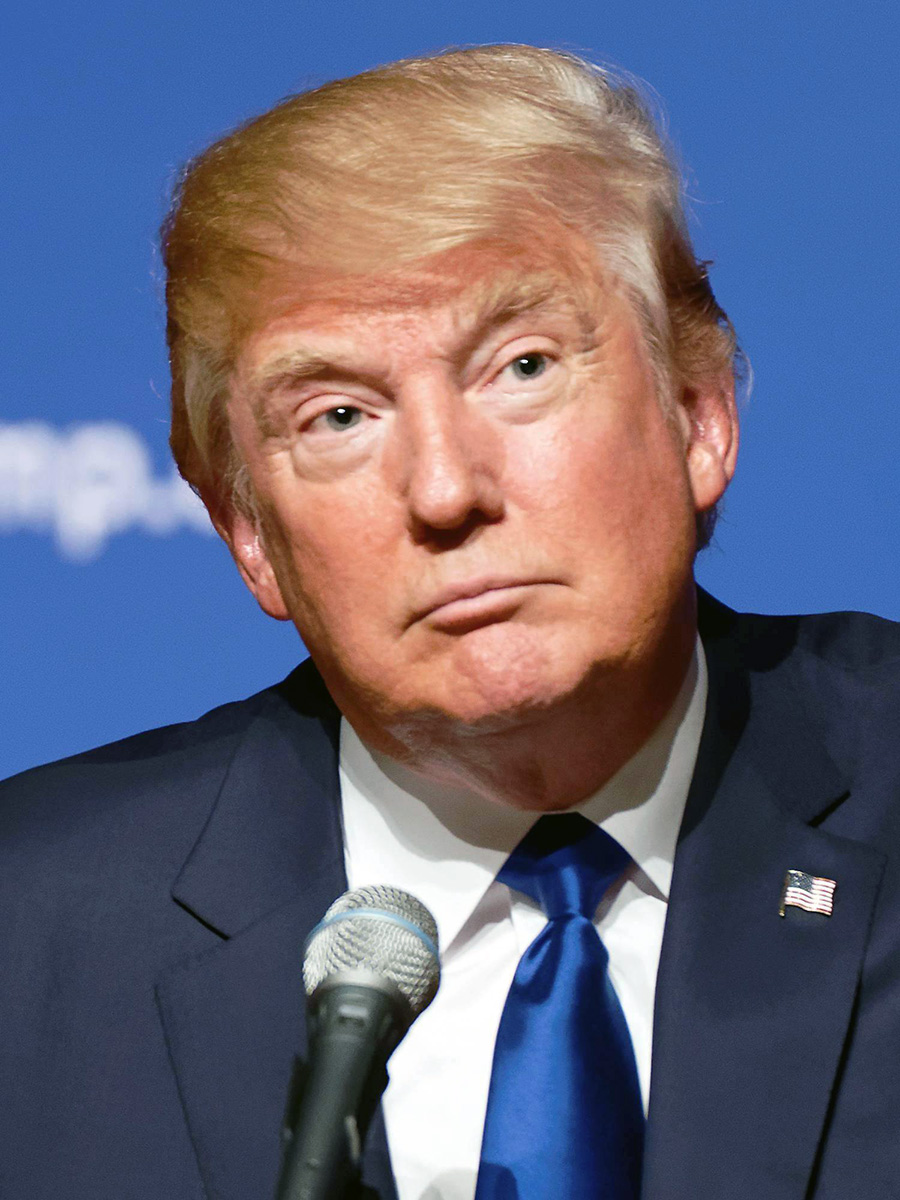 What is more, in June 2017, he announced that the USA would withdraw from the UN Paris Accord, the international agreement to cut greenhouse gas emissions so as to limit global warming to ‘well below’ 2°C above pre-industrial levels with efforts to limit it to 1.5°C. The USA’s withdrawal was finalised on 4 November 2020, a day after the US election. Joe Biden, however, pledged to rejoin the accord.
A growing number of countries are pledging to achieve carbon neutrality by mid-century or earlier. The EU is planning to achieve a 55% cut in greenhouse gas emissions by 2030 so as to reach neutrality by 2050. This will involve various taxes, subsidies and public investment. Similar pledges to achieve net zero emissions by 2050 have been made by Japan and South Korea and by 2060 by China. In the UK, legislation was passed requiring the government to reduce the UK’s net emissions 100% relative to 1990 levels by 2050 and thereby achieve net zero emissions.
Constraints on action
Short-termism. One of the problems with setting targets a long time in the future is that they take away the urgency to act now. There are huge time lags between introducing policies to curb carbon emissions and their impact on the climate. The costs of such policies for business and consumers, however, are felt immediately in terms of higher taxes and/or higher prices. Thus politicians may be quick to make long-term pledges but reluctant to take firm measures today. Instead they may prefer to appease various pressure groups, such as motoring organisations, and cut fuel taxes, or, at least, not raise them. Politically, then, it may be easier to focus policy on the short term and just make pledges without action for the future.
Externalities. Various activities that cause carbon emissions, whether directly, such as heavy industry, dairy farming, aviation and shipping, or indirectly, such as oil and coal production, thereby impose environmental costs on society, both at home and abroad. These costs are negative externalities and, by their nature, are not borne by those who produce them. There are often powerful lobbies objecting to any attempt to internalise these externalities through taxes, subsidising green alternatives or regulation. Take the case of the USA. Fossil fuel producers, energy-intensive industries and farmers all claim that green policies will damage their businesses, leading to a loss of profits and jobs. These groups were courted by Donald Trump.
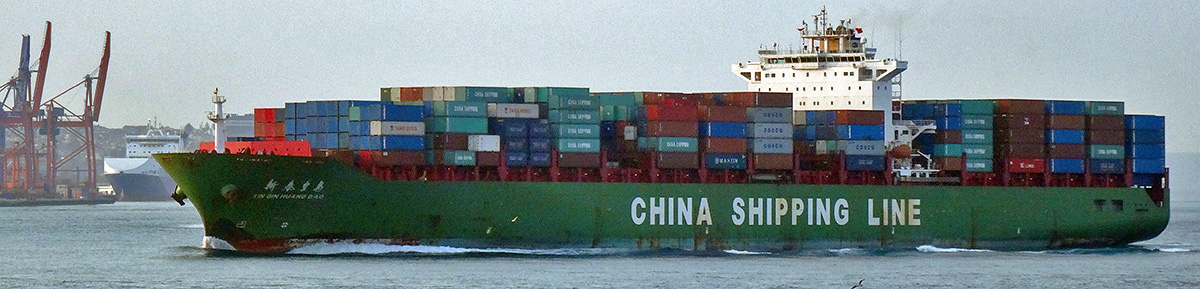
International competition. Countries may well be reluctant to impose green taxes or tough environmental regulation on producers, when competitors abroad do not face such constraints. Indeed, some countries are actively promoting dirty industries as part of their policies to stimulate economic recovery from the Covid-induced recession. Such countries include China, Russia and Turkey. This again was a major argument used in the Trump campaign that US industries should not be hobbled by environmental constraints but should be free to compete.
Misinformation. Politicians, knowing that taking tough environmental measures will be unpopular with large numbers of people, may well downplay the dangers of inaction. Some, such as Trump in America and Bolsonaro in Brazil deliberately appeal to climate change deniers or say that technology will sort things out. This makes it hard for other politicians to promote green policies, knowing that they will face scepticism about the science and the efficacy of their proposed policies.
Biden’s climate change policy
 Although it will be difficult to persuade some Americans of the need for tougher policies to tackle climate change, Joe Biden has already made a number of pledges. He has stated that under his administration, the USA will rejoin the Paris Climate Agreement and will play a leading role in the November 2021 UN COP26 climate change conference summit in Glasgow. He has also pledged a Clean Energy Revolution to put the USA on an ‘irreversible path to achieve economy-wide net-zero emissions no later than 2050’.
But readopting the pledges under the Paris Agreement and advocating a clean energy revolution are not enough on their own. Specific measures will need to be taken. So, what can be done that is practical and likely to meet with the approval of the majority of Americans or, at least, of Biden’s supporters?
For a start, he can reintroduce many of the regulations that were overturned by the Trump administration, such as preventing oil and gas companies from flaring methane on public lands. He could introduce funding for the development of green technology. He could require public buildings to use green energy.
According to the Clean Energy Revolution, the US government will develop ‘rigorous new fuel economy standards aimed at ensuring 100% of new sales for light- and medium-duty vehicles will be zero emissions and annual improvements for heavy duty vehicles’.
One of the biggest commitments is to tackle external costs directly by enacting ‘legislation requiring polluters to bear the full cost of their climate pollution’. This may be met with considerable resistance from US corporations. It is thus politically important for Biden to stress the short-term benefits of his policies, not just the long-term ones.
Given the damage done to the economy by the spread of the pandemic, perhaps the main thing that Biden can do to persuade people of the benefits to them of his policies is to focus on green investment and green jobs. Building a green energy infrastructure of wind, solar and hydro and investing in zero-emissions vehicles and charging infrastructure will provide jobs and lead to multiplier effects throughout the economy.
Articles
- Trump Administration Removes Scientist in Charge of Assessing Climate Change
The New York Times, Christopher Flavelle, Lisa Friedman and Coral Davenport (9/11/20)
- As U.S. leaves Paris accord, climate policy hangs on election outcome
The Washington Post, Brady Dennis, Juliet Eilperin and Dino Grandoni (5/11/20)
- Where next for US action on Climate Change?
British Foreign Policy Group, Evie Aspinall (11/11/20)
- Media reaction: What Joe Biden’s US election victory means for climate change
Carbon Brief, Josh Gabbatiss (10/11/20)
- Joe Biden: How the president-elect plans to tackle climate change
BBC News, Matt McGrath (10/11/20)
- Biden victory ushers in ‘race to the top’ on climate change
Lexology, Baker McKenzie, David P Hackett and Ilona Millar (13/11/20)
- Climate heroes: the countries pioneering a green future
The Guardian, Jonathan Watts (11/11/20)
- ‘Hypocrites and greenwash’: Greta Thunberg blasts leaders over climate crisis
The Guardian, Damian Carrington (9/11/20)
- Five post-Trump obstacles to a global green recovery
The Guardian, Jonathan Watts (11/11/20)
- Biden’s climate change plans can quickly raise the bar, but can they be transformative?
The Conversation, Edward R Carr (10/11/20)
- Jana Shea/Shutterstock Climate change: Joe Biden could ride a wave of international momentum to break deadlock in US
The Conversation, Richard Beardsworth and Olaf Corry (10/11/20)
- Climate change after COVID-19: Harder to defeat politically, easier to tackle economically
VoxEU, Franziska Funke and David Klenert (17/8/20)
Questions
- Identify three specific climate change policies of Joe Biden and assess whether each one is likely to succeed.
- Draw a diagram to illustrate why a free market will lead to over production of a good which produces negative externalities.
- To what extent can education internalise the positive externalities of green consumption and production?
- What was agreed at the Paris climate change conference in December 2015 and what mechanisms were put in place to incentivise countries to meet the targets?
- Will the coronavirus pandemic have had any lasting effects on emissions? Explain.
- How may carbon trading lead to a reduction in carbon emissions? What determines the size of such reductions?