The prices of many species of fish have risen in recent months. Coastal pelagic fish, such as mackerel, herring and sardines have risen especially rapidly. Mackerel, once seen as a cheap source of protein, is no longer quite such a ‘bargain’.
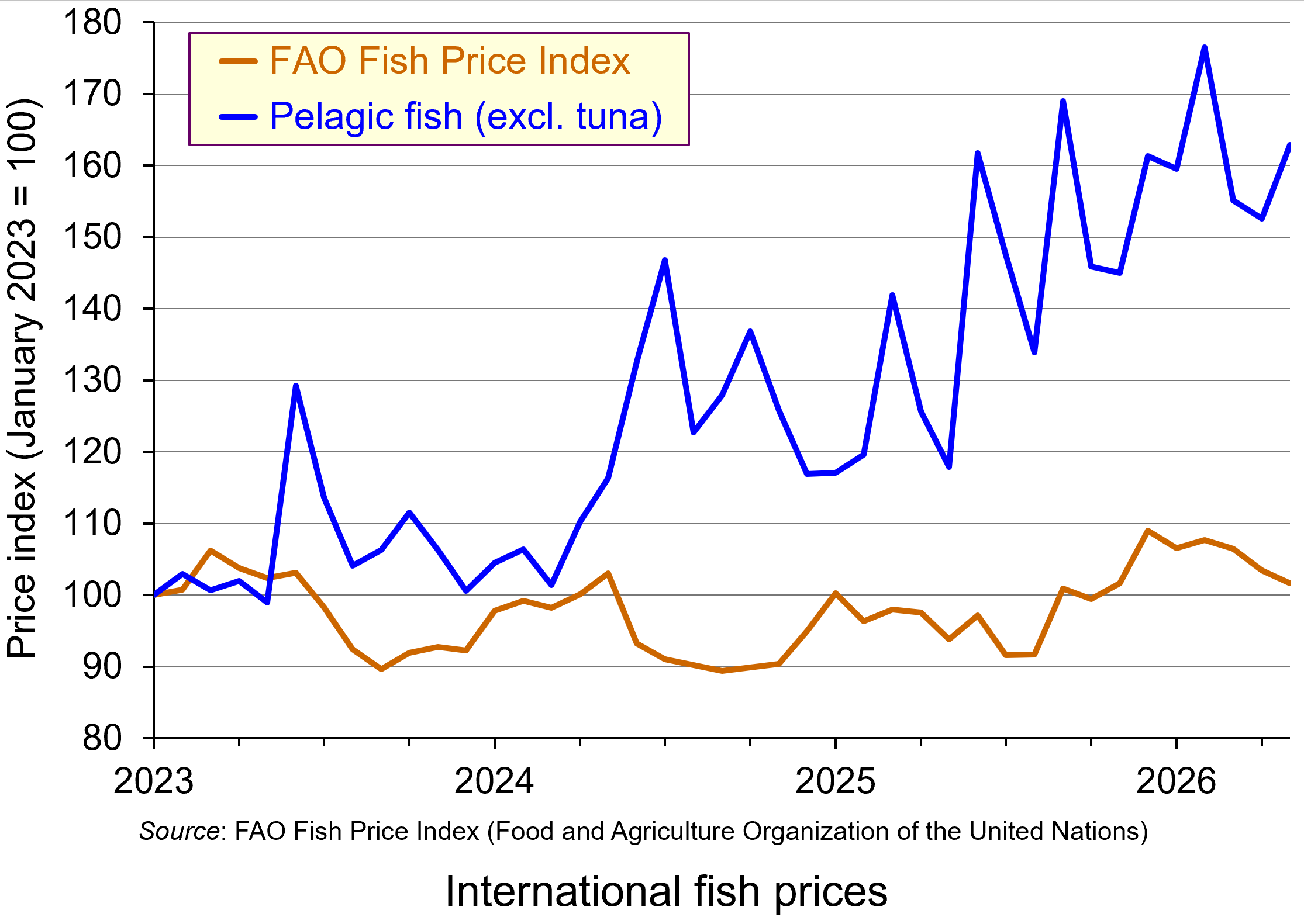 From January 2023 to May 2026, the international price index of pelagic fish rose by 69%. In 2025, UK supermarket fresh, chilled smoked and tinned mackerel prices rose by an average of 25%; and over the first part of 2026, some tinned mackerel product lines have increased by as much 55%. In February 2026, Waitrose announced that it would suspend sales of fresh and chilled mackerel and tinned mackerel once current stocks had been cleared. It cited overfishing and sustainability concerns.
Supply and demand
But why have mackerel prices risen so much? The price of fish is determined by demand and supply. So what has changed? The main changes have been on the supply side.
Supply. Most of the world’s supply of mackerel comes from the Northeast Atlantic. These waters have been overfished for many years, thereby depleting the stock of the fish and reducing the amount of mackerel caught.
 To arrest the decline and allow stocks to rebuild, the International Council for the Exploration of the Sea (ICES) recommended a quota of 174,357 tonnes for 2026. This would represent a 70% cut from 2025. The main fishing countries – Norway, the UK, the Faroe Islands and Iceland – eventually agreed to a quota of 299,010 tonnes: a cut of 48%. After a series of bilateral agreements between the four countries over access to each other’s waters, this resulted in the following quota shares: UK 30.55%, Norway 26.4%, Faroes 12% and Iceland 10.5%. The remaining 20.55% would be for the EU, Greenland and Russia.
Despite these other countries not being part of the deal, in May 2026 the EU agreed to reduce its catch by 48% too. Russia, however, set its own quota of 67,548 tonnes, which is 22.6% of the total 299,010 quota, above the 20.55% set aside for the EU, Russia and Greenland combined and almost almost five times Russia’s historic quota share! The UK, EU and Iceland responded by agreeing to bar Russian vessels carrying mackerel from entering their ports.
The quotas have added to the decline in supply, even though the aim is to increase supply in the future as stocks are rebuilt. In May this year, the Norwegian catch was down nearly 85% – well below the 48% reduction in the quota.
 Demand. Despite higher prices, demand has remained strong. Part of the reason is that demand is relatively inelastic. This is because, despite its increase in price, mackerel remains a relatively cheap fish and thus there is little option to switch to cheaper alternative fish. Indeed, with other fish going up in price, and meat too, some people may even switch to mackerel.
Another reason for strong demand is the growing market outside Europe, especially in southeast Asia, China, South Korea and Japan. In some of these countries, mackerel is seen as a luxury fish and people are prepared to pay higher prices, making demand relatively inelastic but at the other end of the market. In 2025, imports of frozen whole mackerel into the region rose by nearly 9%, despite rising prices.
However, Norwegian exports to the region have been falling, reflecting lower quotas in 2025 and lower still in 2026. This has further exacerbated the rise in price and intensified competition between Asian importers. For example, in July 2026, Korea sent a ‘mackerel envoy’ to Norway and other major exporters to seek to secure additional supplies.
The future
With supply restricted by declining stocks and tighter quotas, and with a price inelastic and growing demand, the high prices of mackerel in all forms look set to last – at least until stocks rebuild and quotas can be relaxed. But, with total quotas well above the level suggested by the ICES, rebuilding could take a long time.
Articles
- Norwegian Mackerel Prices Drive Record Pelagic Values in 2025
The Fishing Daily, Oliver McBride (25/5/26)
- Mackerel prices soar as demand and supply pressures take hold
The Grocer, Charles Elliman (23/1/26)
- Mackerel Prices Have Broken Historical Highs And May See Another Surge in 2026
Caharbor Import and Export Co., Ltd, China (12/1/26)
- Waitrose to suspend mackerel sales due to overfishing concerns
BBC News, Emer Moreau (27/2/26)
- Holy mackerel! The fish Waitrose removed from its shelves
Epigram (University of Bristol student newspaper), Grace Golby (6/6/26)
- Four Northeast Atlantic coastal parties agree on 2026 mackerel quotas, shares; EU left out again
SeafoodSource, Regin Winther Poulsen (17/12/25)
- EU Raises Mackerel Quotas despite Scientific Overfishing Warnings
The Fishing Daily, Oliver McBride (30/3/26)
- High Mackerel Prices Reshape Asian Small Pelagic Trade
The Fishing Daily, Oliver McBride (2/6/26)
- Korea dispatches ‘mackerel envoy’ to Norway as prices spike
Korea JoongAng Daily, Ahn Hyo-Seong (6/7/26)
- Norwegian Mackerel Supply Plunges, Korean Catch Regains Price Edge
Seoul Economic Daily, Nam Yoon-jung (28/6/26)
- Geopolitical unrest, currency effects and quota cuts led to a decline in the value of Norwegian seafood exports in the first half of the year
Norwegian Seafood Council, Press Release (3/7/26)
- Norwegian Seafood Exports: Frozen Mackerel and Herring Prices Surge in Week 26 of 2026
IndexBox (1/7/26)
- New sanctions on Russia following huge unilateral increase in mackerel quota
Fishing News, Steve Mackinson (9/7/26)
Data
Questions
- Draw a supply and demand diagram to illustrate what has happened to mackerel prices.
- What is the effective price elasticity of supply of mackerel?
- Why is demand for mackerel relatively price inelastic in the UK, except when prices rise above a certain level?
- Why is demand for mackerel relatively price inelastic in certain Asian countries, such as Japan and South Korea?
- In which country is demand for mackerel likely to be more income elastic: the UK or Japan?
- Under what circumstances might the price of mackerel in five years’ time be (a) higher than now; (b) lower than now? What will determine which is more likely?
- Should other supermarkets follow Waitrose’s lead in stopping the sale of mackerel?
- What is the ‘tragedy of the commons’? Why is a common resource such as fish in the open seas likely to result in the tragedy?
 Every year, world leaders gather to find ways of limiting global warming. The latest of these ‘COP’ meetings, COP30, is in Belém, Brazil from 10 to 20 November 2025. COP stands for ‘Conference of the Parties’, the decision-making body of the United Nations Framework Convention on Climate Change (UNFCCC).
Perhaps the best-known of these meetings was in Paris in 2015. This resulted in the Paris Agreement. This is a legally-binding international treaty to limit global warming to well below 2°C and preferably to 1.5°C above pre-industrial levels. This would involve reducing greenhouse gas emissions and/or taking carbon absorbing measures. All UN countries except for Iran, Libya and Yemen are signatories to the agreement.
However, on coming to office in January 2025, President Trump announced that the USA will withdraw from the agreement in January 2026. Instead, he would prioritise fossil fuel production, under the mantra, ‘drill, baby, drill’. Previously he had claimed that global warming is a hoax concocted by China designed to undermine the competitive power of the USA.
Progress in reducing emissions and mitigating climate change
 Since 2020, each country has been required to submit its own emissions-reduction targets, known as ‘nationally determined contributions’ (NDCs), and the actions it will take to meet them. Every five years each country must submit a new NDC more ambitious than the last. New NDCs are due this year. As of 12 November, 112 of the 197 countries had submitted a new NDC (including the USA, China, the EU and the UK). These 112 countries account for around 71 per cent of global emissions.
Implementing all new NDCs would reduce global CO2 emissions by between 15 and 25 per cent from current levels by 2035. But this would merely reduce global warming to around 2.6°C above pre-industrial levels. Approximately 35 per cent emissions reductions by 2035 would be required to restrict global warming to 2°C and 55 per cent to restrict it to 1.5°C.
But implementing the Paris Agreement has still had a high degree of success. Without the action taken and being taken over the past 10 years, it is predicted that global temperatures by 2050 would rise by 3–3.5°C.
Rich countries are expected to provide finance to low-income countries. This is required to help such countries adopt green technologies and to adapt to the harmful effects of climate change (e.g. through irrigation schemes and flood defences). At COP29 in Azerbaijan, the ‘Baku Finance Goal’ was agreed. This is an agreement to provide climate finance of $1.3 trillion per year by 2035 to developing countries from all public and private sources.
The subsequent ‘Baku to Belém Roadmap’ provides a set of suggested actions for governments, financial institutions and the private sector to bridge the gap between current climate finance flows and the $1.3 trillion agreed to meet global climate goals. The roadmap is a central focus of the COP30 conference in Belém, with discussions between countries on how to translate the Baku finance goal into concrete, tangible actions and integrate it into formal decisions.
The role of Donald Trump
 As well as announcing that the USA will withdraw from the Paris Agreement in January 2026, since coming to office in 2025, President Trump has given billions of dollars of tax cuts to fossil fuel firms and allowed drilling for oil and gas on federal lands. At the same time, he has described renewable energy as ‘a joke’ that will bankrupt countries and has slashed subsidies and tax breaks for solar and wind power, withdrawn permits for wind and solar farms, and cut funding for green energy research.
He wants the USA to be world leader in fossil fuel energy, calling on governments to buy US oil and gas, threatening some countries with tariffs if they do not. Already, Japan, South Korea and several European countries have agreed to buy huge quantities of US oil and liquefied natural gas (LNG). A worry is that other similarly inclined governments, such as Argentina, may roll back on their commitments to a green transition and instead boost their fossil fuel industries.
This gives added urgency to the Belém talks. It is crucial for the rest of the world to stick together in pushing ahead to combat global warming and in adopting and sticking to tough NDCs. It is also crucial for rich countries to support dlow-income countries in adopting climate-friendly investment and in measures to mitigate the effects of global warming.
The economics of climate change
 Climate change is directly caused by market failures. One of the most important of these is that the atmosphere is a common resource: it is not privately owned; it is a global ‘commons’. Individuals and firms use it at a zero price. If the price of any good or service to the user is zero, there is no incentive to economise on its use. Thus for the emitter there are no private costs of using the atmosphere in this way as a ‘dump’ for their emissions and, in a free market, no incentive to reduce the climate costs.
And yet when firms emit greenhouse gases into the atmosphere there are costs to other people. To the extent that they contribute to global warming, part of these costs will be borne by the residents of that country; but a large part will be borne by inhabitants of other countries.
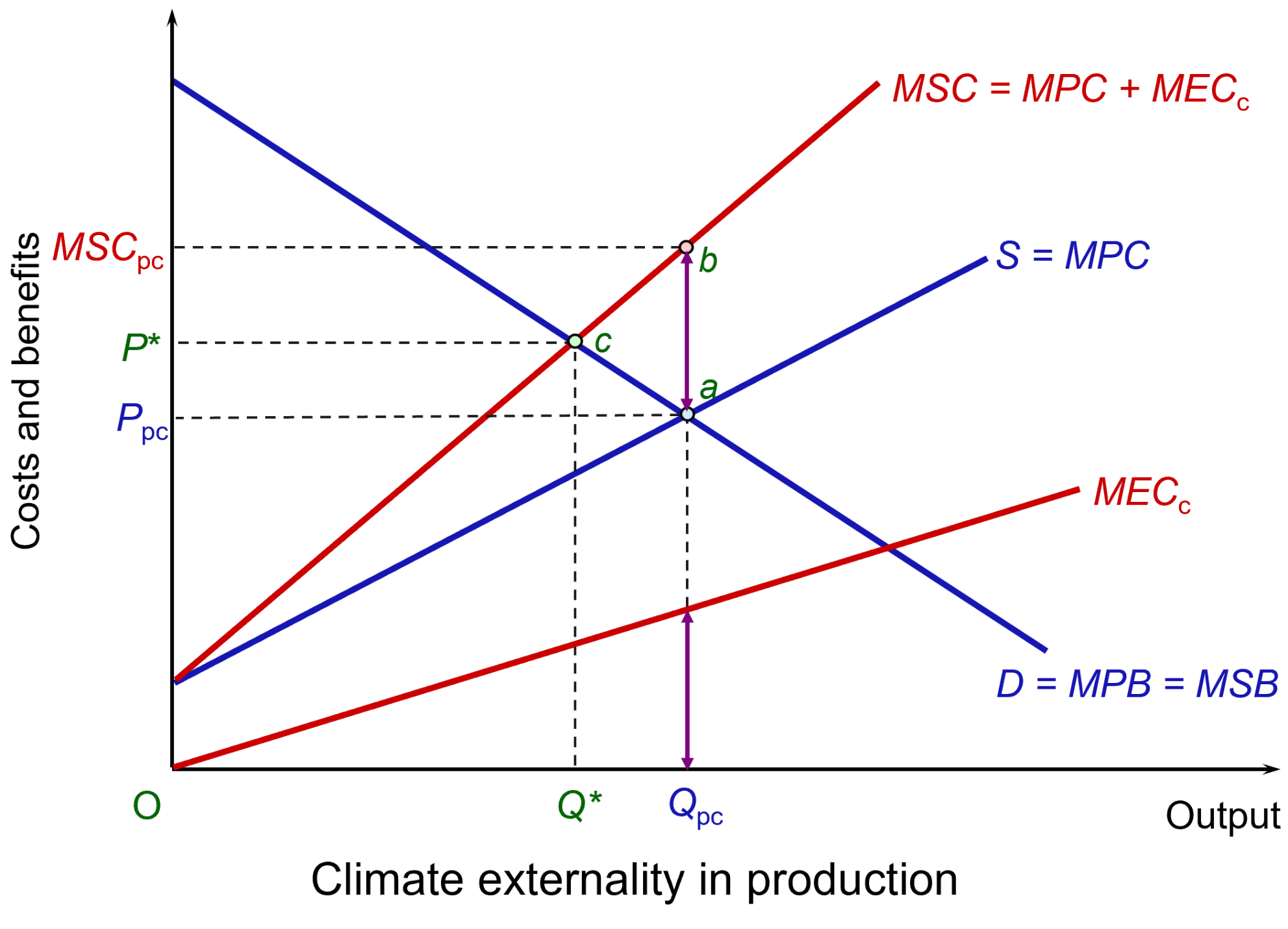 These climate costs are external costs to the firm and are illustrated in the figure. It shows an industry that emits CO2. To keep the analysis simple, assume that it is a perfectly competitive industry with demand and supply given by curves D and S, which are equal to the marginal private benefits (MPB) and marginal private costs (MPC), respectively. There are no externalities on the demand side and hence MPB equals the marginal social cost (MSB). Market equilibrium is at point a, with output at Qpc and price at Ppc. (Click here for a PowerPoint.)
Assume that the emissions create a marginal cost to society equal to MECc. Assume that the MEC increases as output and total emissions increase. The MECc line is thus upward sloping. At the market price of Qpc, these external climate costs are equal to the purple vertical line. When these external climate costs are added to private costs, this gives a marginal social cost given by MSC = MPC + MECc. The gives a socially optimal level of output of the product of Q* at a price of P*, with the optimum point of c.
 In other words, other things being equal, the free market overproduces products with climate externalities. If the output is to be reduced to the social optimum of Q*, then the government will need to take measures such as those advocated in the Paris Agreement. These could include imposing taxes on products, such as electricity generated by fossil fuels, or on the emissions themselves. Or green alternatives, such as wind power, could be subsidised.
Alternatively, regulations could be used to cap the production of products creating emissions, or caps on the emissions themselves could be imposed. Emissions permits could be issued or auctioned. Only firms in possession of the permits would be allowed to emit and the permits would cap emissions below free-market levels. These permits could be traded under a cap-and-trade scheme, such as the EU’s Emissions Trading Scheme. Again, such schemes are advocated under the Paris Agreement.
COP30 and progress in tackling climate change
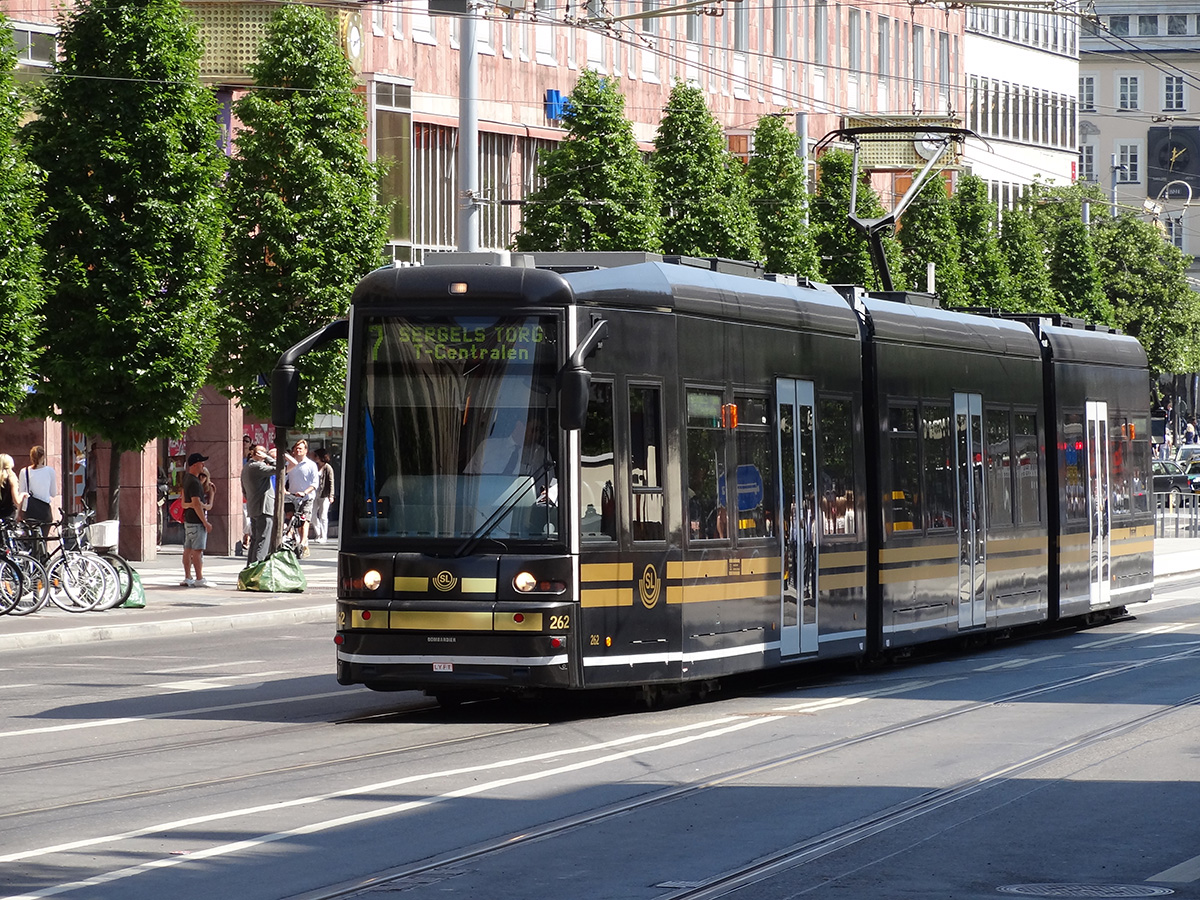 The USA is not attending COP30 in Brazil. Nor is the Chinese leader, Xi Jinping. However, there are growing opportunities for translating aims into practical policies for specific sectors, such as energy, transport and carbon-intensive industries. These policies may require some degree of government action – taxes, subsidies or regulation – to internalise climate externalities. But increasingly, green alternatives are becoming economically viable without subsidies or with just initial government funding to ‘crowd in’ private investment, which will then attract further private capital as external economies of scale kick in. Increasingly investors will find profitable opportunities in climate-friendly projects.
At the same time, while the USA is moving away from climate-friendly investment (as least for the term of the Trump Presidency), China is moving in the opposite direction, with massive investment in solar panels, wind turbines, EVs and batteries – investment that is bringing down their cost and thereby encouraging their adoption around the world. Such technologies create huge opportunities for low-income countries to provide affordable energy and to create local jobs, both skilled and unskilled. It also helps them achieve much greater energy security by reducing their reliance on fossil fuel imports
Chinese advances in green technology are also providing a stimulus to other countries to invest in renewable industries to prevent Chinese dominance. The danger, however, of Chinese dominance in the renewable sector in high-income countries is that it may encourage them to impose tariffs on Chinese imports of EVs, solar panels, etc. to protect their own industries.
But despite the growing opportunities for profitable adoption of green technologies without government support, there is still much that governments need to do to encourage the process. COP meetings are an important forum for discussing such policies and holding governments to account for meeting or not meeting their targets.
The agreement
The agreement reached at the end of the conference marked relatively small progress. There was agreement to increase finance from developed to developing countries to help them adapt to climate change. This would triple to $120bn per year, up from the previously agreed doubling, but the target date was pushed back to 2035 from the previously agreed 2030.
By the end of the conference, 122 of the 197 countries had submitted a new NDC – still 75 countries short, although others are expected.
The conference also agreed to establish a ‘just transition mechanism (JTM)’ to ‘enhance international cooperation, technical assistance, capacity-building and knowledge-sharing, and enable equitable, inclusive just transitions’. However, this is voluntary and no funding was attached, but it could act as the basis for future funding.
The biggest failure of the conference was probably the lack of agreement on phasing out of fossil fuels. This is not surprising given the opposition of the major oil producers. The hope is that the reduction in costs of renewable energy will drive the process anyway – a process that China is keen to accelerate with its investment in solar power and other renewable energy. One hopeful development, however, was the pledging of more than $9bn to halt deforestation, a major source of global warming. (See the Travers Smith article at the end of the Articles list below for a very useful summary of the outcome.)
Articles
- What is COP30 and why does it matter for the climate?
Chatham House, Anna Åberg (5/9/25)
- COP30 in Brazil: What is at stake for global collaboration on climate and nature?
World Economic Forum, Pim Valdre (5/11/25)
- What is COP30 and why does it matter?
CNN, Laura Paddison (11/11/25)
- Why COP 30 in Brazil Matters for a Thriving Economy and a Safe, Livable Planet
Union of Concerned Scientists (UCS),Rachel Cleetus (7/11/25)
- Nationally Determined Contributions: The Action Plans Behind Global Efforts To Fight the Climate Crisis
Center for American Progress (CAP, Kalina Gibson and Courtney Federico (22/9/25)
- New climate pledges only slightly lower dangerous global warming projections
UN Environment Programme, Press Release (4/11/25)
- COP30: Trump and many leaders are skipping it, so does the summit still have a point?
BBC News, Justin Rowlatt (10/11/25)
- Trump dismisses clean energy as ‘a joke.’ But Americans deserve facts, not fear
USA Today, Mark McNees (23/9/25)
- The surprising countries pulling off stunningly fast clean energy transitions
CNN, Ella Nilsen and Samuel Hart (7/11/25)
 Could the world’s biggest polluter be its savior against climate change?
CNN, Simone McCarthy (17/11/25)
- COP 2025: Outlook and Implications for Investors
RankiaPro, Joanna Piwko, Allegra Ianiri, Marie Lassegnore and Jean-Philippe Desmartin (10/11/25)
Post-agreement
- Belém: yet another cop out
Zero Hour, Allan Gray (25/11/25)
- Cop30’s watered-down agreements will do little for an ecosystem at tipping point
The Guardian, Fiona Harvey, Jonathan Watts, Damien Gayle and Damian Carrington (22/11/25)
- COP30: Five key takeaways from a deeply divisive climate summit
BBC News, Justin Rowlatt and Matt McGrath, (25/11/25)
- COP30: What were the key outcomes?
Travers Smith (1/12/25)
Information and Data
Questions
- Summarise the Paris Agreement.
- Summarise the Baku to Belém Roadmap to 1.3T.
- What incentives are there for countries to stick to their NCDs?
- Using a diagram similar to that above, illustrate how the free market will produce a sub-optimal amount of solar power because the marginal social benefit exceeds the marginal private benefit. How might the calculation be changing?
- How might game theory be used to analyse possible international decision making at COP conferences? How might this be affected by the attitudes of the Trump administration?
- Is it in America’s interests to cease investing in green energy and green production methods?
On the day he came to office, President Trump signed a series of executive orders. One of these was to set in motion the process of withdrawing from the UN Paris climate agreement. Section 3(a) of the order reads:
The United States Ambassador to the United Nations shall immediately submit formal written notification of the United States’ withdrawal from the Paris Agreement under the United Nations Framework Convention on Climate Change.
The Paris Agreement is an international treaty on climate change. It was adopted on 12 December 2015 and came into force on 4 November 2016, 30 days after the point was reached when at least 55 countries accounting for at least 55% of global emissions had ratified the treaty.
Currently, all UN countries are signatories to the agreement and only Iran, Libya and Yemen are yet to ratify it. The agreement commits countries to limiting global warming to well under 2°C above pre-industrial levels and preferably to no more than 1.5°C. This would involve reducing greenhouse gas emissions and/or taking carbon absorbing measures.
 Since 2020, each country has been required to submit its own emission-reduction targets, known as ‘nationally determined contributions’ (NDCs), and the actions it will take to meet them. Every five years each country must submit a new NDC more ambitious than the last.
Rich countries are expected to provide finance to low-income countries. This is required to help poor countries adopt green technologies and to adapt to the harmful effects of climate change (e.g. through irrigation schemes and flood defences).
Countries set target dates by which emissions would be fully offset by carbon absorption measures (‘net zero’). The UN’s goal is to reach global net zero by 2050. According to the UN Climate Action site:
As of June 2024, 107 countries, responsible for approximately 82 per cent of global greenhouse gas emissions, had adopted net-zero pledges either in law, in a policy document such as an national climate action plan or a long-term strategy, or in an announcement by a high-level government official. More than 9000 companies, over 1000 cities, more than 1000 educational institutions, and over 600 financial institutions have joined the Race to Zero, pledging to take rigorous, immediate action to halve global emissions by 2030.
The Paris Agreement has helped to cut emissions or slow their rate of growth in most countries. Although net zero by 2050 may be unlikely, warming will be less than without the agreement.
The USA and the Paris Agreement
 In April 2016 the USA signed the Paris Agreement. As stated above, the Paris Agreement came into effect on 4 November 2016.
President Trump came to office for the first time in January 2017. In June 2017, he signed an executive order in which he announced that the USA would withdraw from the agreement, arguing that it undermined the US economy and put it at a competitive disadvantage. He claimed that global warming is a hoax concocted by China designed to undermine the competitive power of the USA.
However, despite Trump’s intention to withdraw from the agreement, its terms did not allow a country to begin a withdrawal procedure for at least three years after the agreement was ratified (i.e. not before 4 November 2019) and then a year’s notice has to be given. This notice was given on 4 November 2019. In the meantime, the USA had to abide by the terms of the treaty. During this period, US representatives at COP meetings used the opportunity to promote fossil fuels. Withdrawal took place on 1 November 2020, just one day after the presidential election and just over two months before the end of Trump’s first term of office.
On 20 January 2021, his first day in office, President Biden signed an executive order to rejoin the agreement, which took place on 19 February 2021. He committed to cutting total greenhouse gas emissions by at least 50% by 2030. To achieve this, his administration adopted a number of emissions-reducing measures, for example requiring all new passenger vehicles sold after 2035 to be emissions free, giving tax credits for clean electricity generation, providing federal funds for smart agriculture and setting greener appliance and equipment standards.
But, as we have seen, newly elected President Trump for the second time announced that the USA would withdraw from the Paris agreement and would prioritise fossil fuel production, under the mantra, ‘drill, baby, drill’.
The economics of climate change
Climate change is directly caused by market failures. One of the most important of these is that the atmosphere is a common resource: it is not privately owned; it is a global ‘commons’. Individuals and firms use it at a zero price. If the price of any good or service to the user is zero, there is no incentive to economise on its use. Thus for the emitter there are no private costs of using the atmosphere in this way as a ‘dump’ for their emissions and, in a free market, no incentive to reduce the climate costs.
And yet when firms emit greenhouse gases into the atmosphere there are costs to other people. To the extent that they contribute to global warming, part of these costs will be borne by the residents of that country; but a large part will be borne by inhabitants of other countries.
These climate costs are external costs to the firm and are illustrated in the figure. It shows an industry that emits CO2. To keep the analysis simple, assume that it is a perfectly competitive industry with demand and supply given by curves D and S, which are equal to the marginal private benefits (MPB) and marginal private costs (MPC), respectively. There are no externalities on the demand side and hence MPB equals the marginal social cost (MSB). Market equilibrium is at point a, with output at Qpc and price at Ppc. (Click here for a PowerPoint.)
Assume that the emissions create a marginal cost to society equal to MECc. Assume that the MEC increases as output and total emissions increase. The MECc line is thus upward sloping. At the market price of Qpc, these external climate costs are equal to the purple vertical line. When these external climate costs are added to private costs, this gives a marginal social cost given by MSC = MPC + MECc. The gives a socially optimal level of output of the product of Q* at a price of P*, with the optimum point of c.
In other words, other things being equal, the free market overproduces products with climate externalities. If the output is to be reduced to the social optimum of Q*, then the government will need to take measures such as those advocated in the Paris Agreement. These could include imposing taxes on products, such as electricity generated by fossil fuels, or on the emissions themselves. Or green alternatives, such as wind power, could be subsidised.
Alternatively, regulations could be used to cap the production of products creating emissions, or caps on the emissions themselves could be imposed. Emissions permits could be issued or auctioned. Only firms in possession of the permits would be allowed to emit and the permits would cap emissions below free-market levels. These permits could be traded under a cap-and-trade scheme, such as the EU’s Emissions Trading Scheme. Again, such schemes are advocated under the Paris Agreement.
Effect of the USA’s withdrawal from the Paris Agreement
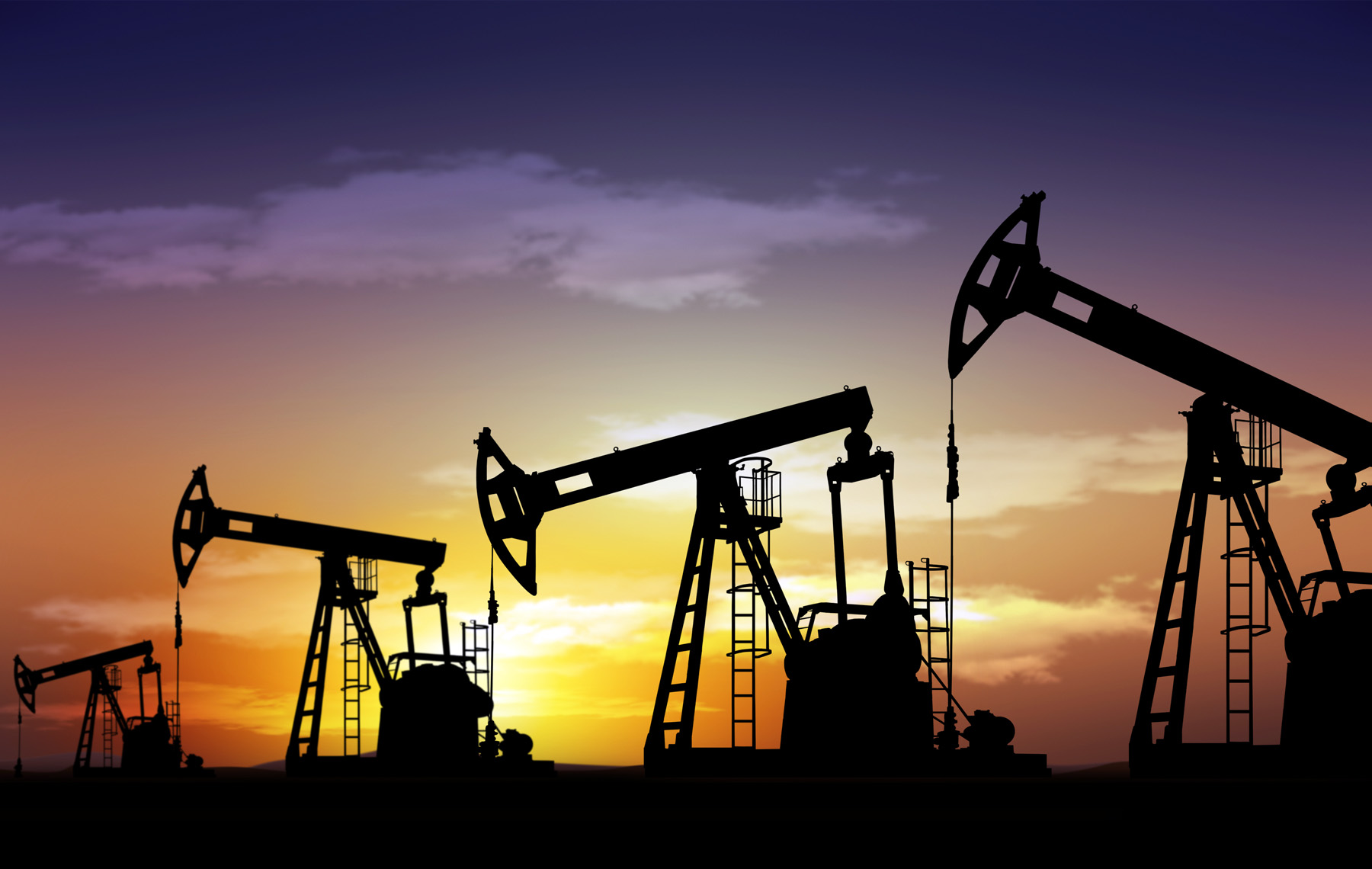 Withdrawal from the Paris Agreement and promoting fossil fuels will increase US emissions. Scientific consensus is that this will have a negative effect on climate change. Only part of these climate costs will be borne by the USA, although the severity of recent fires in California, fanned by strong Santa Ana winds, and more violent hurricanes are two examples of costs of climate change to the USA itself.
A bigger worry is whether the USA’s withdrawal will encourage other countries, such as Argentina, to do likewise. Then the climate costs of US withdrawal will be greater.
But all is not bad news. The transition to green energy is well advanced and the costs of solar and wind power are decreasing. Global investment in clean energy has increased by 60% since 2015. China is investing heavily in renewable energy technology, which is giving it a significant trade advantage. The EU has taken significant actions to promote green energy and technology. Similarly, industrial processes that economise on emissions are developing apace and it is becoming increasingly profitable for private companies to make climate-friendly investments without subsidies. In the USA itself, many Democratic states and local governments, and even some Republican ones, will continue to adopt climate-friendly policies.
In this environment, the Trump administration does not want to fall behind in the development of new technologies and markets. And with Elon Musk having a significant influence on Donald Trump, the USA’s investment in EVs and battery technology is likely to continue. This will help to reduce the price of green energy and transport.
Videos
Articles
- Trump vows to leave Paris climate agreement and ‘drill, baby, drill’
BBC News, Matt McGrath (20/1/25)
- What is the Paris climate agreement and why has Trump withdrawn?
BBC News, Esme Stallard and Mark Poynting (21/1/25)
- Six Trump executive orders to watch
BBC News (21/1/25)
- The real message behind Trump’s withdrawal of US from the Paris climate agreement
Sky News, Tom Clarke (21/1/25)
- Trump signs order to withdraw US from Paris climate agreement for second time
The Guardian, Dharna Noor (20/1/25)
- Explained: how Trump’s day one orders reveal a White House for big oi
The Guardian, Oliver Milman and Dharna Noor (22/1/25)
- Donald Trump can’t stop global climate action. If we stick together, it’s the US that will lose out
The Guardian, Bill Hare (6/11/24)
 Trump to pull US from Paris climate agreement: What could this mean for the environment?
ITV News, Martin Stew (21/1/25)
- 10 reasons why US president-elect Donald Trump can’t derail global climate action
The Conversation, Wesley Morgan and Ben Newell (8/11/24)
- Trump has rejected the Paris agreement again, but game theory shows how other countries can still lead by example
The Conversation, Renaud Foucart (27/1/25)
Information
Questions
- Summarise the Paris Agreement.
- Using a diagram similar to that above, illustrate how the free market will produce a sub-optimal amount of solar power because the marginal social benefit exceeds the marginal private benefit.
- How might game theory be used to analyse possible international decision making in the context of US climate policy?
- Is it in America’s interests to cease investing in green energy and green production methods?
- Go through each of the reasons (not specific to Australia) given in The Conversation article linked above why ‘Donald Trump can’t derail global climate action’. To what extent do you agree with each one?
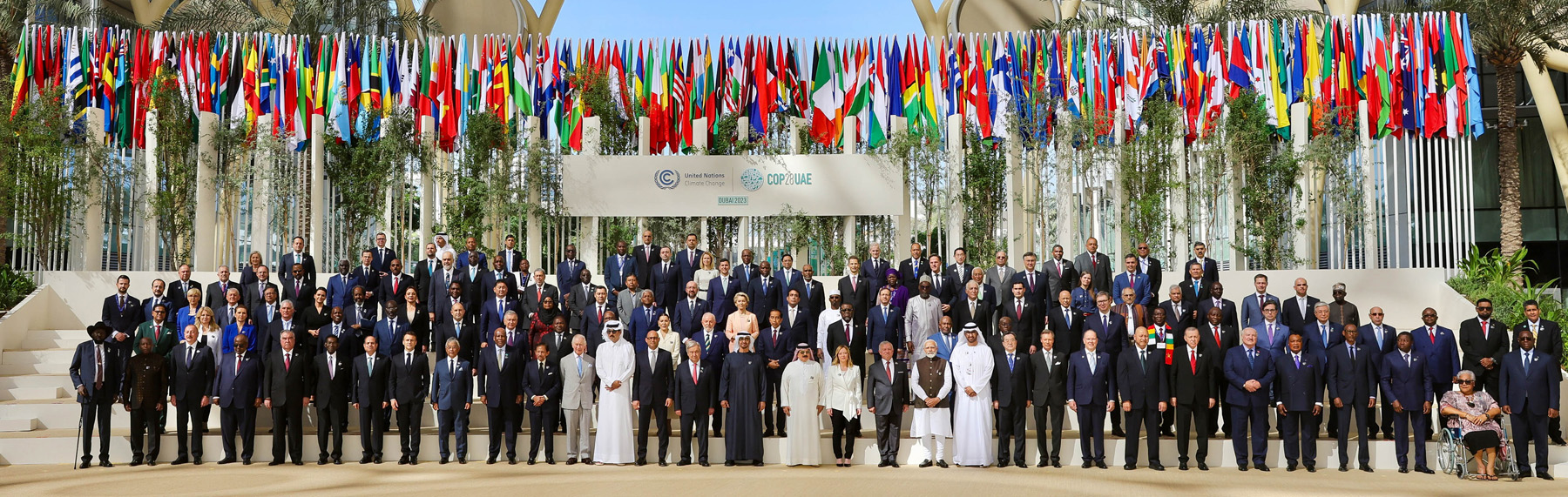
Politicians, business leaders, climate scientists, interest groups and journalists from across the world have been meeting in Dubai at the COP28 climate summit (the 28th annual meeting of the Conference of the Parties (COP) to the United Nations Framework Convention on Climate Change (UNFCCC)). The meeting comes at a time when various climate tipping points are being reached or approached – some bad, but some good. Understanding these tipping points and their implications for society and policy requires understanding not only the science, but also the various economic incentives affecting individuals, businesses, politicians and societies.
Tipping points
A recent report (see first reference in articles section below) identified various climate tipping points. These are when global temperatures rise to a point where various domino effects occur. These are adverse changes to the environment that gather pace and have major effects on ecosystems and the ability to grow food and support populations. These, in turn, will have large effects on economies, migration and political stability.
According to the report, five tipping points are imminent with the current degree of global warming (1.2oC). These are:
- Melting of the Greenland ice sheet;
- Melting of the West Antarctic ice sheet;
- Death of warm-water coral reefs;
- Collapse of the North Atlantic Subpolar Gyre circulation, which helps to drive the warm current that benefits Western Europe;
- Widespread rapid thawing of permafrost, where tundra without snow cover rapidly absorbs heat and releases methane (a much more powerful source of global warming than CO2).
With global warming of 1.5oC, three more tipping points are likely: the destruction of seagrass meadows, mangrove swamps and the southern part of the boreal forests that cover much of northern Eurasia. As the temperature warms further, other tipping points can interact in ways that drive one another, resulting in tipping ‘cascades’.
But the report also strikes an optimistic note, arguing that positive tipping points are also possible, which will help to slow global warming in the near future and possibly reverse it further in the future.
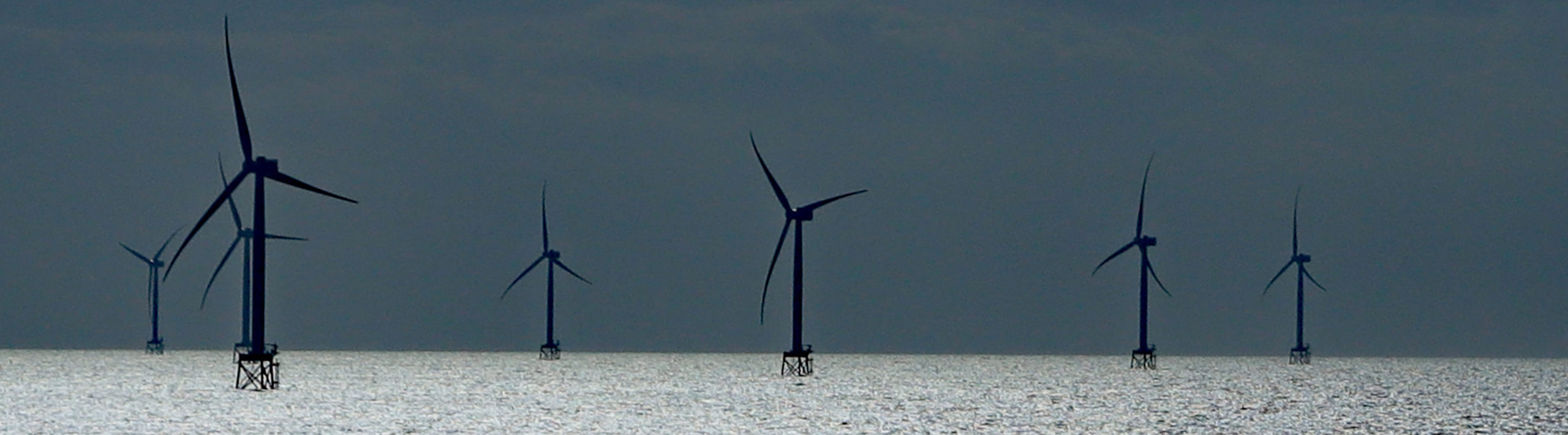
The most obvious one is in renewable energy. Renewable power generation in many countries is now cheaper than generation from fossil fuels. Indeed, in 2022, over 80% of new electricity generation was from solar and wind. And as it becomes cheaper, so this will drive investment in new renewable plants, including in small-scale production suitable for use in developing countries in parts not connected to a grid. In the vehicle sector, improved battery technology, the growth in charging infrastructure and cheaper renewable sources of electricity are creating a tipping point in EV take-up.
Positive tipping points can take place as a result of changing attitudes, such as moving away from a meat-intensive diet, avoiding food waste, greater use of recycling and a growth in second-hand markets.
But these positive tipping points are so far not strong enough or quick enough. Part of the problem is with economic incentives in market systems and part is with political systems.
Market failures
Economic decisions around the world of both individuals and firms are made largely within a market environment. But the market fails to take into account the full climate costs and benefits of such decisions. There are various reasons why.
Externalities. Both the production and consumption of many goods, especially energy and transport, but also much of agriculture and manufacturing, involve the production of CO2. But the costs of the resulting global warming are not born directly by the producer or consumer. Instead they are external costs born by society worldwide – with some countries and individuals bearing a higher cost than others. The result is an overproduction or consumption of such goods from the point of view of the world.
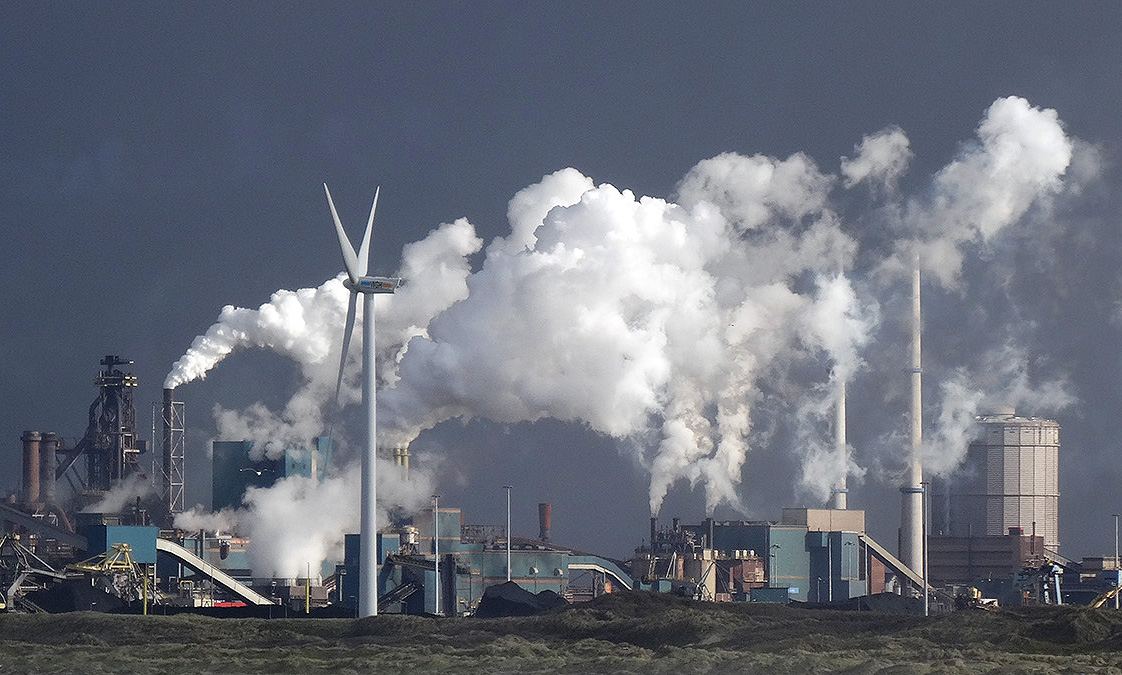 The environment as a common resource. The air, the seas and many other parts of the environment are not privately owned. They are a global ‘commons’. As such, it is extremely difficult to exclude non-payers from consuming the benefits they provide. Because of this property of ‘non-excludability’, it is often possible to consume the benefits of the environment at a zero price. If the price of any good or service to the user is zero, there is no incentive to economise on its use. In the case of the atmosphere as a ‘dump’ for greenhouse gases, this results in its overuse. Many parts of the environment, however, including the atmosphere, are scarce: there is rivalry in their use. As people increase their use of the atmosphere as a dump for carbon, so the resulting global warming adversely affects the lives of others. This is an example of the tragedy of the commons – where a free resource (such as common land) is overused.
Inter-generational problems. The effect of the growth in carbon emissions is long term, whereas the benefits are immediate. Thus consumers and firms are frequently prepared to continue with various practices, such as driving, flying and using fossil fuels for production, and leave future generations to worry about their environmental consequences. The problem, then, is a reflection of the importance that people attach to the present relative to the future.
Ignorance. People may be contributing to global warming without realising it. They may be unaware of which of the goods they buy involve the release of carbon in their production or how much carbon they release when consumed.
Political failures
Governments, whether democratic or dictatorships, face incentives not to reduce carbon emissions – or to minimise their reduction, especially if they are oil producing countries. Reducing carbon involves short-term costs to consumers and this can make them unpopular. It could cost them the next election or, in the case of dictatorships, make them vulnerable to overthrow. What is more, the oil, coal and gas industries have a vested interest in continuing the use of fossil fuels. Such industries wield considerable political power.
 Even if governments want the world to reduce carbon emissions, they would rather that the cost of doing so is born less by their own country and more by other countries. This creates a prisoner’s dilemma, where the optimum may be for a large global reduction in carbon emissions, but the optimum is not achieved because countries individually are only prepared to reduce a little, expecting other countries to reduce more. Getting a deal that is deemed ‘fair’ by all countries is very difficult. An example is where developing countries, may feel that it is fair that the bulk of any cuts, if not all of them, should be made by developed countries, while developed countries feel that fixed percentage cuts should be made by all countries.
Policy options
If the goal is to tackle climate change, then the means is to reduce the amount of carbon in the atmosphere (or at the least to stop its increase – the net zero target). There are two possibilities here. The first is to reduce the amount of carbon emissions. The second is to use carbon capture and storage or carbon sequestration (e.g. through increased forestation).
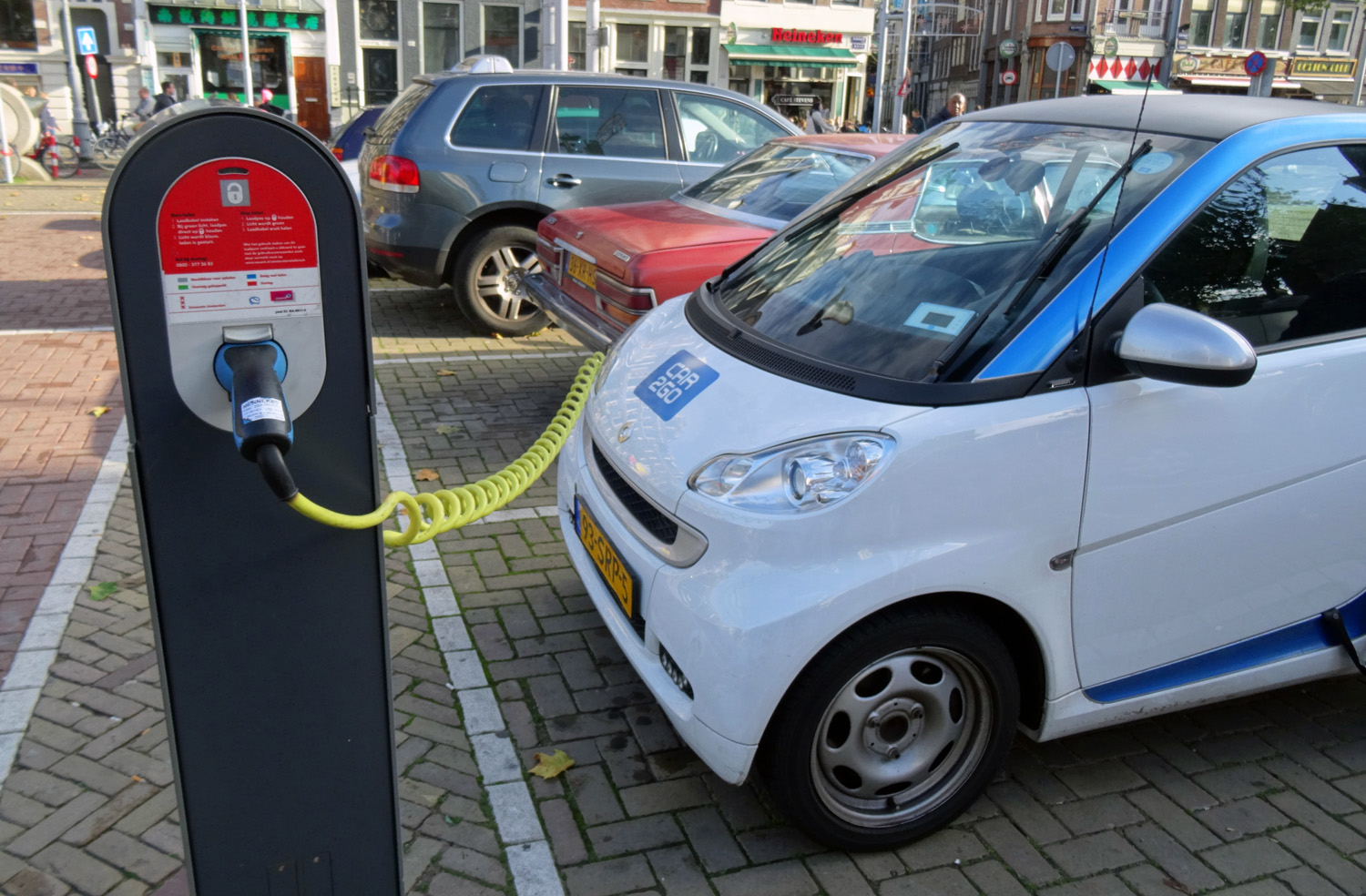 In terms of reducing carbon emissions, the key is reducing the consumption of carbon-producing activities and products that involve emissions in their production. This can be achieved through taxes on such products and/or subsidies on green alternatives (see the blog ‘Are carbon taxes a solution to the climate emergency?‘). Alternatively carbon-intensive consumption can be banned or phased out by law. For example, the purchase of new petrol or diesel cars cold be banned beyond a certain date. Or some combination of taxation and regulation can be used, such as in a cap-and-trade system – for example, the EU Emissions Trading System (EU ETS) (see the blog ‘Carbon pricing in the UK‘). Then there is government investment in zero carbon technologies and infrastructure (e.g. electrifying railways). In practice, a range of policy instruments are needed (see the blog ‘Tackling climate change: “Everything, everywhere, all at once”‘).
With carbon capture, again, solutions can involve a mixture of market mechanisms and regulation. Market mechanisms include subsidies for using carbon capture systems or for afforestation. Regulation includes policies such as requiring filters to be installed on chimneys or banning the felling of forests for grazing land.
The main issue with such policies is persuading governments to adopt them. As we saw above, governments may be unwilling to bear the short-term costs to consumers and the resulting loss in popularity. Winning the next election or simple political survival may be their number-one priority.
COP28
The COP28 summit concluded with a draft agreement which called for the:
transitioning away from fossil fuels in energy systems, in a just, orderly and equitable manner, accelerating action in this critical decade, so as to achieve net zero by 2050 in keeping with the science.
This was the first COP summit that called on all nations to transition away from fossil fuels for energy generation. It was thus hailed as the biggest step forward on tackling climate change since the 2015 Paris agreement. However, there was no explicit commitment to phase out or even ‘phase down’ fossil fuels. Many scientists, climate interest groups and even governments had called for such a commitment. What is more, there was no agreement to transition away from fossil fuels for transport, agriculture or the production of plastics.
If the agreement is to be anything more than words, the commitment must now be translated into specific policy actions by governments. This is where the real test will come. It’s easy to make commitments; it’s much harder to put them into practice with policy measures that are bound to impose costs on various groups of people. What is more, there are powerful lobbies, such as the oil, coal and steel industries, which want to slow any transition away from fossil fuels – and many governments of oil producing countries which gain substantial revenues from oil production.
One test will come in two years’ time at the COP30 summit in the Amazonian city of Belém, Brazil. At that summit, countries must present new nationally determined commitments that are economy-wide, cover all greenhouse gases and are fully aligned with the 1.5°C temperature limit. This will require specific targets to be announced and the measures required to achieve them. Also, it is hoped that by then there will be an agreement to phase out fossil fuels and not just to ‘transition away’ from them.
Reasons for hope
 Despite the unwillingness of many countries, especially the oil and coal producing countries, to phase out fossil fuels, there are reasons for hope that global warming may be halted and eventually even reversed. Damage will have been done and some tipping points may have been reached, but further tipping points may be averted.
The first reason is technological advance. Research, development and investment in zero carbon technologies is advancing rapidly. As we have seen, power generation from wind and solar is now cheaper than from fossil fuels. And this cost difference is likely to grow as technology advances further. This positive tipping point is becoming more rapid. Other technological advances in transport and industry will further the shift towards renewables and other advances will economise on the use of power.
The second is changing attitudes. With the environment being increasingly included in educational syllabuses around the world and with greater stress on the problems of climate change in the media, with frequent items in the news and with programmes such as the three series of Planet Earth, people are becoming more aware of the implications of climate change and how their actions contribute towards the problem. People are likely to put increasing pressure on businesses and governments to take action. Growing awareness of the environmental impact of their actions is also affecting people’s choices. The negative externalities are thus being reduced and may even become positive ones.
Articles
- Global Tipping Points
University of Exeter, Global Systems Institute, Timothy M. Lenton et al. (6/12/23)
- Report: Pivotal moment for humanity as tipping point threats and opportunities accelerate
Phys.org (6/12/23)
- Earth is closing in on catastrophic climate ‘tipping points’, over 200 scientists warn
Independent, Vishwam Sankaran (6/12/23)
- Earth on verge of five catastrophic climate tipping points, scientists warn
The Guardian, Ajit Niranjan (6/12/23)
- Cop28: King Charles warns of ‘vast, frightening experiment’ on natural world
The Guardian, Fiona Harvey, Nina Lakhani, Aletha Adu, Damian Carrington, Patrick Greenfield and Oliver Milman (1/12/23)
- UK likely to miss Paris climate targets by wide margin, analysis shows
The Guardian, Fiona Harvey (5/12/23)
- Water and the High Price of Bad Economics
Project Syndicate, Mariana Mazzucato , Partha Dasgupta, Nicholas Stern, and Johan Rockström (1/12/23)
- Fossil fuels: Can humanity really kick its addiction?
BBC News, Justin Rowlatt (10/12/23)
- Five climate change solutions under the spotlight at COP28
BBC News, Mark Poynting (6/12/23)
- COP28: Five reasons for optimism on climate
BBC News, Matt McGrath (8/12/23)
- COP28 Agreement Signals “Beginning of the End” of the Fossil Fuel Era
UN Climate Press Release (13/12/23)
- COP28 climate summit ends with deal to transition away from fossil fuels
CNBC, Ruxandra Iordache and Sam Meredith (13/12/23)
- Cop28 landmark deal agreed to ‘transition away’ from fossil fuels
The Guardian, Adam Morton, Fiona Harvey and Patrick Greenfield (13/12/23)
- COP28 draft agreement drops phaseout of fossil fuels
Financial Times, Attracta Mooney, Aime Williams and Alice Hancock (13/12/23)
- Examining COP28’s potential impact on climate change
BBC News, Matt McGrath (13/12/23)
- Cop28 failed to halt fossil fuels’ deadly expansion plans – so what now?
The Guardian, Damian Carrington (14/12/23)
- The momentum of the solar energy transition
Nature Communications, Femke Nijsse, Jean-Francois Mercure, Nadia Ameli, Francesca Larosa, Sumit Kothari, Jamie Rickman, Pim Vercoulen and Hector Pollitt (17/10/23)
- COP28: Bill Gates on climate optimism, wealth and the human condition
BBC News on YouTube, Bill Gates (2/12/23)
- From the Paris agreement to COP28, how oil and gas giants try to influence the global climate agenda
The Conversation, Alain Naef (8/12/23)
- COP28: Phasedown or Phaseout, Fossil Fuels Must be Addressed to Meet 1.5C Goal
Forbes, Felicia Jackson (5/12/23)
Questions
- Use a diagram to demonstrate the effects of negative externalities in production on the level of output and how this differs from the optimum level.
- Use another diagram to demonstrate the effects of negative externalities in consumption on the level of consumption and how this differs from the optimum level.
- What was agreed at COP28?
- What incentives were included in the agreement to ensure countries stick to the agreement? Were they likely to be sufficient?
- What can governments do to encourage positive environmental tipping points?
- How may carbon taxes be used to tackle global warming? Are they an efficient policy instrument?
- What can be done to change people’s attitudes towards their own carbon emissions?
 The United Nations International Panel on Climate Change (IPCC) has just published its most comprehensive report so far. It finds that ‘human activities, principally through emissions of greenhouse gases, have unequivocally caused global warming’. This has led to widespread and rapid changes in climate and biodiversity and to more extreme weather patterns, such as droughts, floods and hurricanes. What is more, the distribution of these effects is uneven, with communities who have contributed the least to current climate change being disproportionately affected.
At the 2015 COP21 climate change conference in Paris (see also), it was agreed to adopt policies to limit the increase in global temperatures to ‘well below’ 2°C above pre-industrial levels and to make an effort to limit it to 1.5°C. Global temperatures have already risen 1.1°C above 1850–1900 levels and are set to reach 1.5°C in the early 2030s. Every increment of global warming will intensify ‘multiple and concurrent hazards’.
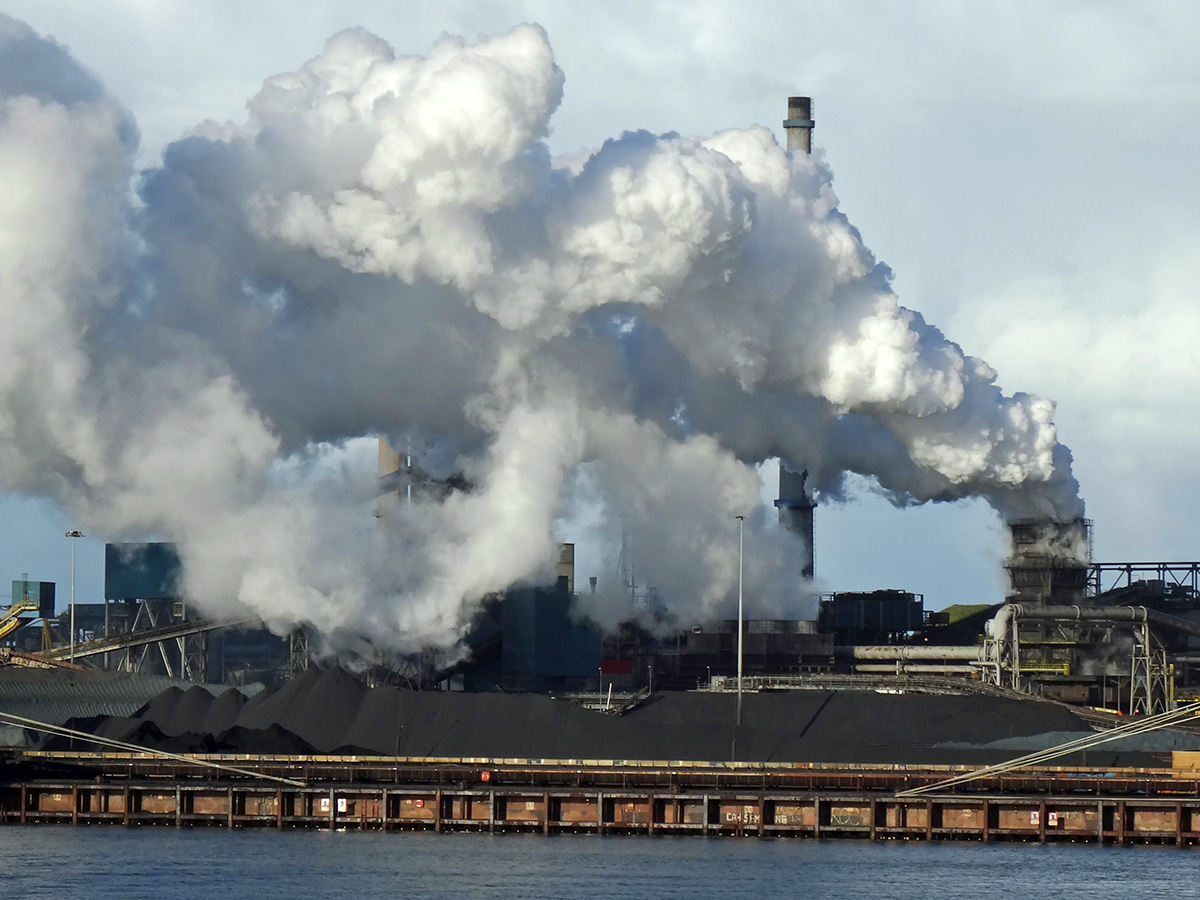 Deep, rapid and sustained reductions in emissions would slow down the rise in global temperatures, but even with such reductions, temperatures will still exceed 1.5°C in the next few years and, even under the best-case scenario, would not fall below 1.5°C again until the end of the 21st century. Under more pessimistic scenarios, global temperatures could rise to 2.7°C above pre-industrial levels by the end of the century under an intermediate greenhouse gas emissions scenario and to 4.4°C under a very high emissions scenario. Anything above 2°C would be likely to have catastrophic effects. The longer countries wait to take action, the greater the rise in global temperatures and hence the greater the damage and the more costly it will be to rectify it.
‘For any given future warming level… projected long-term impacts are up to multiple times higher than currently observed (high confidence). Risks and projected adverse impacts and related losses and damages from climate change escalate with every increment of global warming (very high confidence). Climatic and non-climatic risks will increasingly interact, creating compound and cascading risks that are more complex and difficult to manage (high confidence).’ (Paragraph B2)
But the report is not all ‘doom and gloom’. It is possible to limit global warming to 1.5°C or only a little over by making rapid, deep and, in most cases, immediate greenhouse gas emissions reductions in all sectors and reaching net zero emissions in the early 2050s. Science and technology have the answers – answers that are now much cheaper and more available than back in 2015 when the 1.5°C target was agreed. But what it does require is doing ‘everything, everywhere, all at once’. And that requires political will and the right economic incentives.
The politics and economics of achieving net zero
In terms of the politics, there is general global agreement by governments about the likely effects of climate change. And most governments agree that action needs to be taken. However, there are three key political problems.
The first is that the costs of action will be borne now, while the benefits of action will accrue over a much longer period of time. This links to the second problem – the mismatch between the lives of governments and the long-term effects of climate change. If governments put off doing anything now and merely promise that something will be done in the future, they will not have to take unpopular actions, such as raising taxes on energy, private transport and certain goods or banning various activities. Future governments will have to sort things out, by when, although the problems will be greater, the existing politicians will no longer be in power.
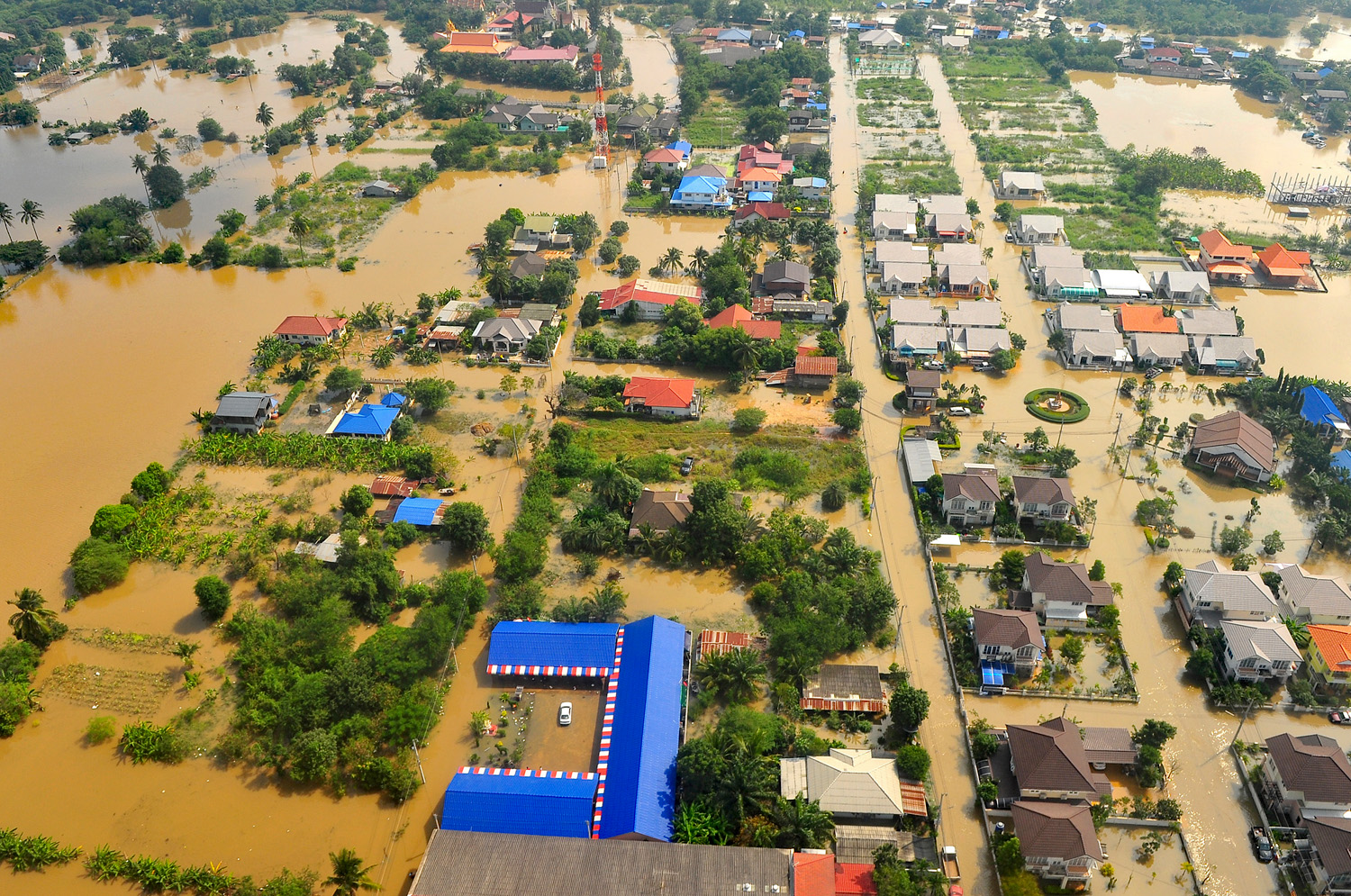 The third problem concerns the distribution of the costs and benefits of action. The major emitters of carbon are the rich countries, while the major sufferers are poor people in countries subject to drought, flooding and rising sea levels. Not surprisingly, who should cut down on emissions and pay for the mitigation necessary in many of the poorer countries is a difficult political issue, which is why it’s much easier to say what needs to be achieved overall than precisely what measures should be taken by which countries.
These problems reflect the fact that many, if not most, of the environmental costs of production and consumption are external costs – costs borne, not by the direct producer or consumer, but by other people at other places and/or in the future.
Nevertheless, the relative costs of moving to greener production and consumption are falling. The costs of renewable energy, including solar power, onshore and offshore wind and hydroelectric power are falling relative to that generated from fossil fuels. At the same time, the take up of electric cars is likely to continue rising as battery technology improves. This does, of course, require an increase in charging infrastructure. Domestic heat pump technology is improving and home insulation methods are becoming more efficient.
Persuading consumers and firms to take account of environmental externalities could in part be achieved by education. It makes it much easier for politicians to take appropriate action now if their populations are on board. There has been increasing awareness over the years of the environmental impact of people’s actions. People have become more willing to take responsibility for the world that future generations will inherit. This is helped both by education in schools and colleges and by frequent items in the media.
But incentives also have a major part to play. To internalise environmental externalities, external costs could be taxed and external benefits subsidised.
The effect of a carbon tax on production
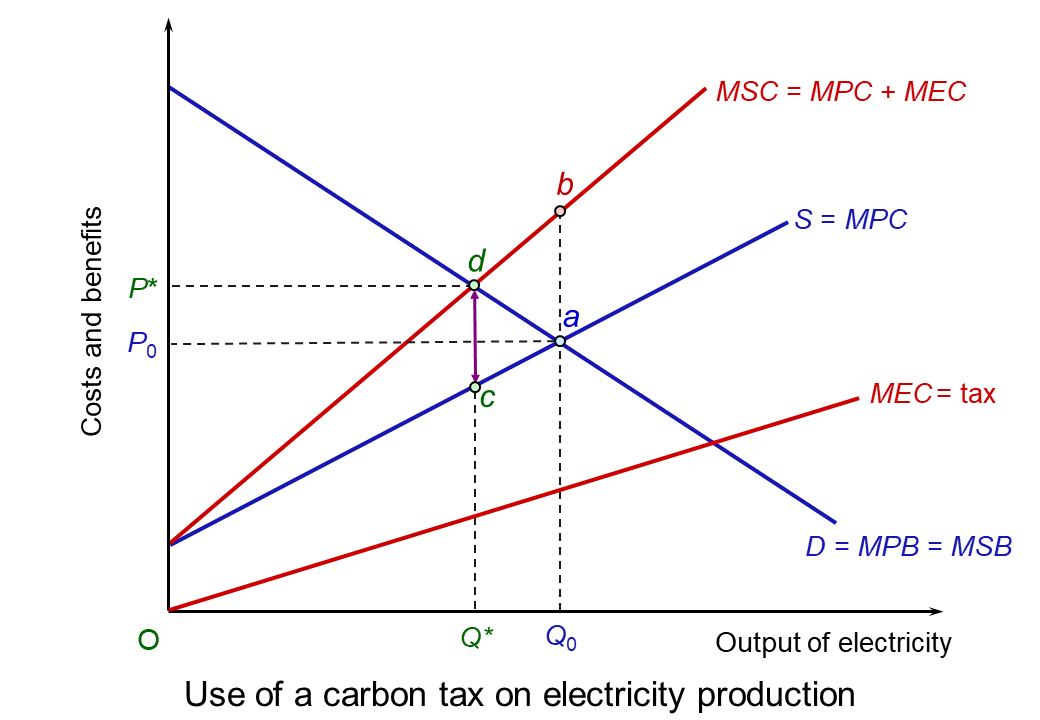 The use of taxes to reduce activities with negative environmental externalities is illustrated in the diagram (click here for a PowerPoint). It takes the case of carbon emissions from coal-fired electricity generation in a large country. To keep the analysis simple, it is assumed that all electricity in the country is generated from coal-fired power stations and that there are many such power stations, making the market perfectly competitive.
It is assumed that all the benefits from electricity production accrue solely to the consumers of electricity (i.e. there are no external benefits from consumption). Marginal private and marginal social benefits of the production of electricity are thus the same (MPB = MSB). The curve slopes downwards because, with a downward-sloping demand for electricity, higher output results in a lower marginal benefit (diminishing marginal utility).
Competitive market forces, with producers and consumers responding only to private costs and benefits, will result in a market equilibrium at point a in the diagram: i.e. where demand equals supply. The market equilibrium price is P0 while the market equilibrium quantity is Q0. However the presence of external costs in production means that MSC > MPC. In other words, MEC = b – a.
The socially optimal output would be Q* where P = MSB = MSC, achieved at the socially optimal price of P*. This is illustrated at point d and clearly shows how external costs of production in a perfectly competitive market result in overproduction: i.e. Q0 > Q*. From society’s point of view, too much electricity is being produced and consumed.
If a carbon tax of d – c is imposed on the electricity producers, it will now be in producers’ interests to produce at Q*, where their new private marginal costs (including tax) equals their marginal private benefit.
But this brings us back to the politics of measures to reduce emissions. People do not like paying higher taxes. In his latest Budget, the UK Chancellor, Jeremy Hunt, decided not to raise fuel duties by the 12p that had been previously planned, despite fuel prices having recently fallen. Meanwhile, charging prices for electric cars have risen.
Other economic measures
A simpler method for dealing with environmental externalities is ban certain activities that omit CO2. For example, in the UK there will be a ban on the sale of new petrol and diesel cars and vans from 2030 (with the exception of some low-emission hybrids until 2035). In the EU there will be a similar ban from 2035. Clearly, such measures are only suitable when there are non-emitting alternatives.
Another alternative is a cap-and-trade system, such as the European Emissions Trading Scheme. It involves setting quotas for emissions and allowing firms which manage to cut emissions to sell their surplus permits to less efficient firms. This puts a price pressure on firms to be more efficient. But the quotas (the ‘cap’) must be sufficiently tight if emissions are going to be cut to desired levels. Nevertheless, it is an efficient way of cutting emissions as it gives a competitive advantage to low-emission producers.
Conclusion
If the problem of global warming is to be limited to 1.5°C, or only very little above, multiple solutions will need to be found and there must be a combination of political will, economic incentives and the mobilisation of scientific and technical know-how. As the Secretary-General of the United Nations, António Guterres, stated in launching the new report:
This report is a clarion call to massively fast-track climate efforts by every country and every sector and on every timeframe. In short, our world needs climate action on all fronts – everything, everywhere, all at once.
Report
Videos
Articles
- Climate damage is worsening faster than expected, but there’s still reason for optimism – 4 essential reads on the IPCC report
The Conversation, Stacy Morford at al (20/3/23)
- UN climate scientists are running out of ways to warn us
Vox, Rebecca Leber and Umair Irfan (20/3/23)
- Expert reaction to the AR6 synthesis report, as published by the IPCC
Science Media Centre (20/3/23)
- ‘The climate time-bomb is ticking’: The world is running out of time to avoid catastrophe, new UN report warns
CNN, Laura Paddison (20/3/23)
- UN climate report: Scientists release ‘survival guide’ to avert climate disaster
BBC News, Matt McGrath and Georgina Rannard (20/3/23)
- Five things we’ve learned from UN climate report
BBC News, Matt McGrath (20/3/23)
- Climate change: Can we really take CO2 back out the air?
BBC Future, Jocelyn Timperley (21/3/23)
- Scientists deliver ‘final warning’ on climate crisis: act now or it’s too late
The Guardian, Fiona Harvey (20/3/23)
- From climate change ‘certainty’ to rapid decline: a timeline of IPCC reports
The Guardian, Damian Carrington (20/3/23)
- Humanity at the climate crossroads: highway to hell or a livable future?
The Guardian, Damian Carrington (20/3/23)
- IPCC report: Here’s how we can defuse the ‘ticking time bomb’ of climate change
Euronews, Rosie Frost (21/3/23)
- Now or never: One of the biggest climate reports ever shows time is running out
NBC News, Evan Bush and Denise Chow (20/3/23)
Questions
- Why might countries not do ‘everything, everywhere, all at once’ to avert climate change?
- What might an optimist conclude from the ICC report?
- To what extent is climate change an economic problem?
- On a diagram similar to the one above, show how a subsidy could be used to internalise positive externalities.
- How might countries reduce the consumption of fossil fuels in the most efficient way? Are they likely to want to do this? Explain.
- Is a ‘cap-and-trade’ (tradable permits) system (a) an effective means of reducing emissions; (b) an efficient system?