 The articles below examine the rise of the sharing economy and how technology might allow it to develop. A sharing economy is where owners of property, equipment, vehicles, tools, etc. rent them out for periods of time, perhaps very short periods. The point about such a system is that the renter deals directly with the property owner – although sometimes initially through an agency. Airbnb and Uber are two examples.
So far the sharing economy has not developed very far. But the development of smart technology will soon make a whole range of short-term renting contracts possible. It will allow the contracts to be enforced without the need for administrators, lawyers, accountants, bankers or the police. Payments will be made electronically and automatically, and penalties, too, could be applied automatically for not abiding by the contract.
 One development that will aid this process is a secure electronic way of keeping records and processing payments without the need for a central authority, such as a government, a bank or a company. It involves the use of ‘blockchains‘ (see also). The technology, used in Bitcoin, involves storing data widely across networks, which allows the data to be shared. The data are secure and access is via individuals having a ‘private key’ to parts of the database relevant to them. The database builds in blocks, where each block records a set of transactions. The blocks build over time and are linked to each other in a logical order (i.e. in ‘chains’) to allow tracking back to previous blocks.
Blockchain technology could help the sharing economy to grow substantially. It could significantly cut down the cost of sharing information about possible rental opportunities and demands, and allow minimal-cost secure transactions between owner and renter. As the IBM developerWorks article states:
Rather than use Uber, Airbnb or eBay to connect with other people, blockchain services allow individuals to connect, share, and transact directly, ushering in the real sharing economy. Blockchain is the platform that enables real peer-to-peer transactions and a true ‘sharing economy’.
Article
New technology may soon resurrect the sharing economy in a very radical form The Guardian, Ben Tarnoff (17/10/16)
Blockchain and the sharing economy 2.0 IBM developerWorks, Lawrence Lundy (12/5/16)
2016 is set to become the most interesting year yet in the life story of the sharing economy Nesta, Helen Goulden (Dec 2015)
Blockchain Explained Business Insider, Tina Wadhwa and Dan Bobkoff (16/10/16)
A parliament without a parliamentarian Interfluidity, Steve Randy Waldman (19/6/16)
Blockchain and open innovation: What does the future hold Tech City News, Jamie QIU (17/10/16)
Banks will not adopt blockchain fast Financial Times, Oliver Bussmann (14/10/16)
Blockchain-based IoT project does drone deliveries using Ethereum International Business Times, Ian Allison (14/10/16)
Questions
- What do you understand by the ‘sharing economy’?
- Give some current examples of the sharing economy? What other goods or services might be suitable for sharing if the technology allowed?
- How could blockchain technology be used to cut out the co-ordinating role carried out by companies such as Uber, eBay and Airbnb and make their respective services a pure sharing economy?
- Where could blockchain technology be used other than in the sharing economy?
- How can blockchain technology not only record property rights but also enforce them?
- What are the implications of blockchain technology for employment and unemployment? Explain.
- How might attitudes towards using the sharing economy develop over time and why?
- Referring to the first article above, what do you think of Toyota’s use of blockchain to punish people who fall behind on their car payments? Explain your thinking.
- Would the use of blockchain technology in the sharing economy make markets more competitive? Could it make them perfectly competitive? Explain.
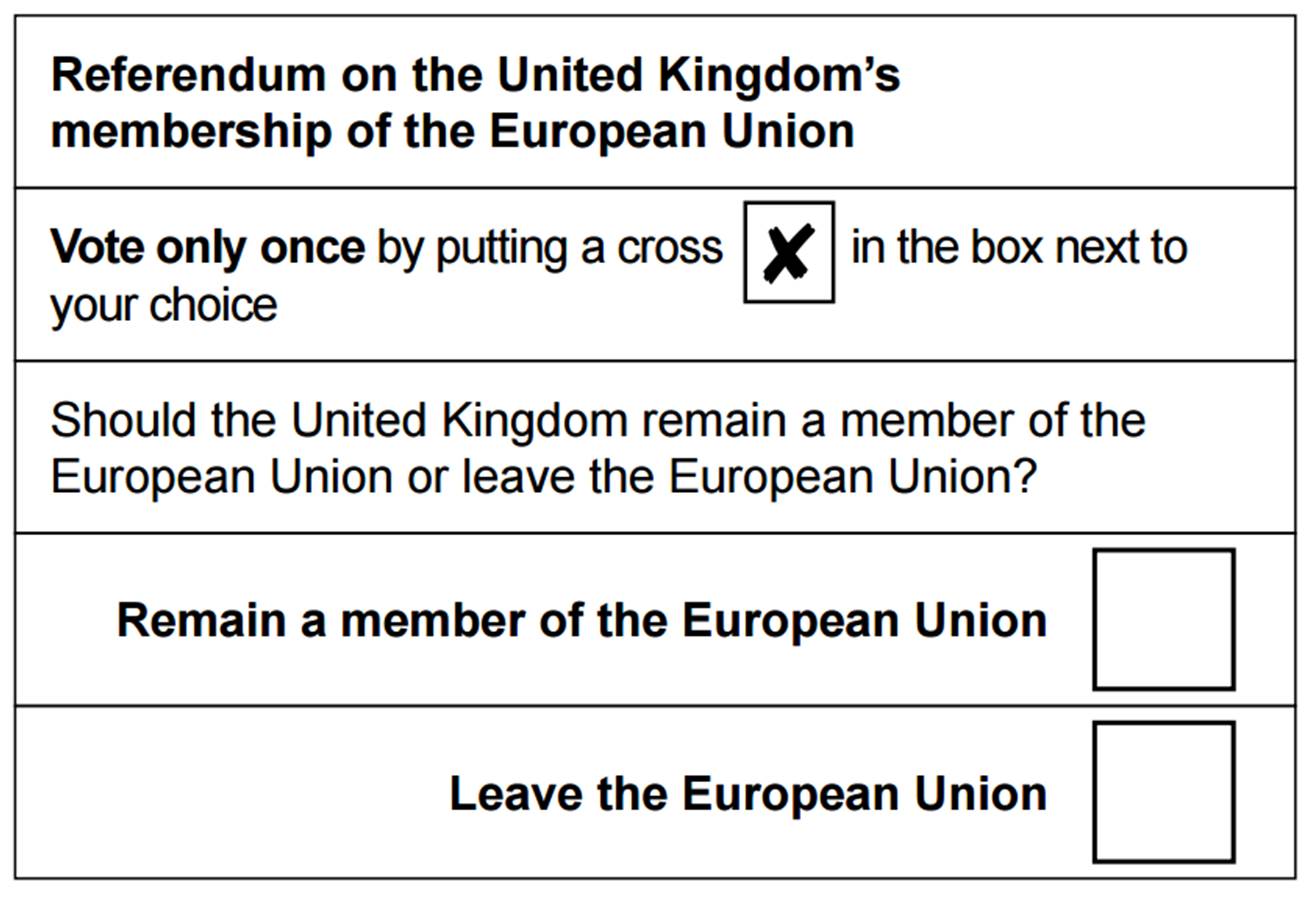
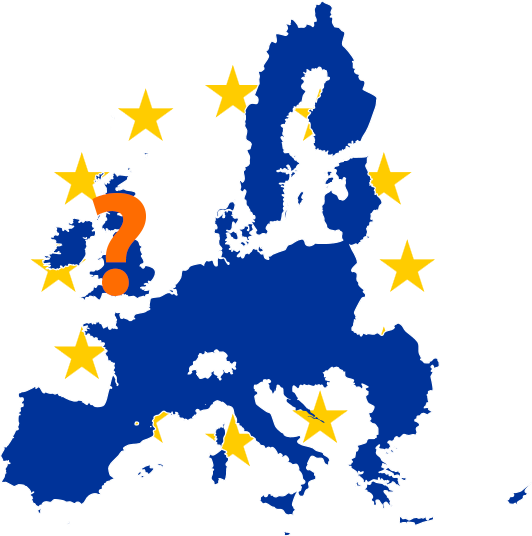 Before the referendum, economists overwhelmingly argued that the economic case for the UK remaining in the EU was much stronger than that for leaving. They warned of serious economic consequences, both short term and long term, of a Brexit vote. And yet, by a majority of 51.9% to 48.1% of the 72.1% of the electorate who voted, the UK voted to leave the EU.
Does this mean that economists failed to communicate to the electorate? Were the arguments presented poorly or in too academic a way?
Or did people simply not believe the economists’ forecasts, being cynical about the ability of economists to forecast? During the campaign, on several occasions I heard people repeating the joke that economists had successfully predicted five out of the last two recessions!
 Did they not believe the data that immigrants from other EU countries to the UK contribute more in taxes they draw in benefits and that overall they make a net positive contribution to output per head? Or perhaps they believed the claims that immigrants imposed a net cost on the economy.
Or were there ‘non-economic’ issues that people found more persuasive, such as questions of sovereignty or national identity? Or was the strain on local resources, such as health services, schools and housing, blamed on immigration itself rather than on a lack of spending on additional resources – the funding for which could have come from the extra GDP generated by the immigration?
Or were there so many lies told by politicians and those with vested interests that people simply didn’t know whom to believe?
Economists will, no doubt, do a lot of soul searching over the coming months. One such economist is Paul Johnson, Director of the Institute for Fiscal Studies, whose article is linked below.
Article
We economists must face the plain truth that the referendum showed our failings Institute for Fiscal Studies newspaper articles. Paul Johnson (28/6/16)
Questions
- In what ways could economists have communicated better to the general public during the referendum campaign?
- For what reasons may people distrust economists?
- Were economists hampered in delivering their message by ‘balanced reporting’?
- Comment on Paul Johnson’s statement that, ‘The most politically engaged of us spend decades working out how to tweak tax policy, or labour market policy, or competition policy to deliver small benefits. How many times over would our work have been repaid if we had simply convinced a few more people of the basics?’
- Do economists, or at least some of them, need to become more ‘media savvy’?
- How could institutions, such as the Royal Economic Society and the Society of Business Economists, do more to help economists collectively to communicate with the general public?
- Give some examples of the terminology/jargon we use which might be inappropriate for communicating with the general public. Suggest some alternative terms to the examples you’ve given.
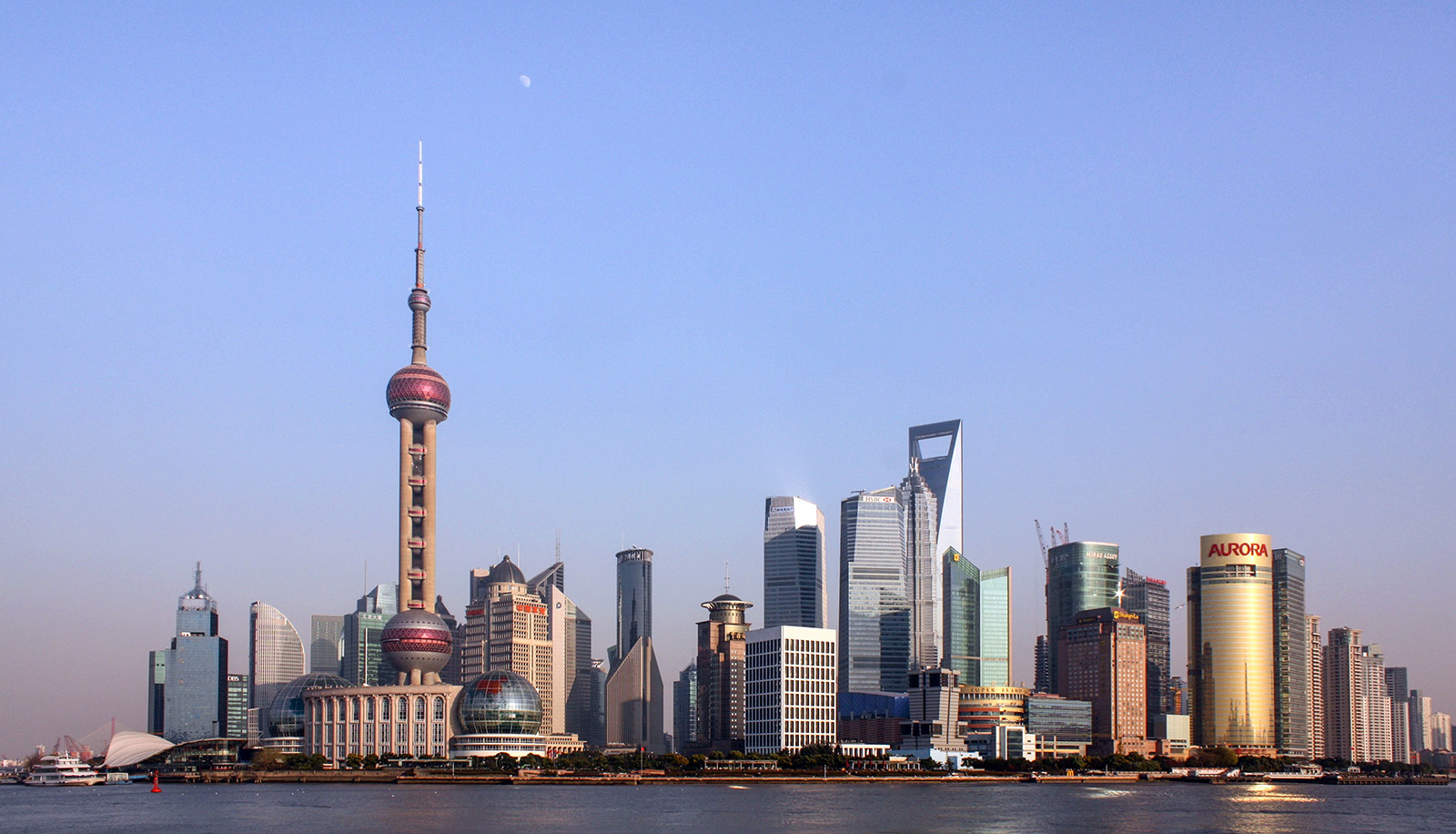
 The Chinese economy was, for some time, the beacon of the world economy, posting strong growth and giving a much needed boost to demand in other countries. However, the weakening Chinese economy is now causing serious concerns around the world and not least in China itself.
China’s stock market on Monday 11th January closed down 5.3%, with the Hong Kong Index down by 2.8%. These falls suggest a continuing downward trajectory this week, following the 10% decline on Chinese markets last week. Today, further falls were caused, at least in part, by uncertainty over the direction of the Chinese currency, the yuan. Volatility in the currency is expected to continue with ongoing depreciation pressures and adding to this is continuing concerns about deflation.
The barrage of bad news on key economic indicators may well mean significant intervention by Chinese authorities to try to avoid its slowest growth in 25 years. However, there are also concerns about China’s ability to manage its economic policy, given recent events. IG’s Angus Nicholson said:
“Global markets are still in the grips of China fears, and it is uncertain whether the Chinese government can do enough to reassure global investors.”
Similar sentiments were echoed by Paul Mackel, head of emerging markets FX research at HSBC:
“Different signals about foreign exchange policy have wrong-footed market participants and we are wary in believing that an immediate calmness will soon emerge.”
Perhaps key to turning this downward trend on its head, will be the Chinese consumers. With a traditionally larger saving ratio than  many Western economies, it may be that this ‘cushion’ will give growth a boost, through the contribution of consumer spending. As we know, aggregate demand comprises consumption, investment, government spending and net exports (AD = C + I + G + X – M). Consumer spending (C) increased from 50.2% in 2014 to 58.4% in 2015, according to HIS Global Insight. A similar increase for 2016 would certainly be welcome.
As oil prices continue to fall and concerns remain over China’s weak economic data, we may well soon begin to see just how interdependent the world has become. Many economists suggest that we are now closer to the start of the next recession than we are to the end of the last one and this latest turmoil on Chinese stock markets may do little to allay the fears that the world economy may once again be heading for a crash. The following articles consider the Chinese turmoil.
Free lunch: China’s weakest link Financial Times, Martin Sandbu (11/01/16)
China’s stocks start the week with sharp losses BBC News (11/01/16)
China shares fall 5% to hit-three-month low The Guardian (11/01/16)
China’s resilient shoppers face fresh test from market headwinds Bloomberg (11/01/16)
China shares head lower again on price data Sky News (11/01/16)
U.S., European shares slip as China, oil woes continue Reuters, Lewis Krauskopf (11/01/16)
U.S. stocks drop as oil tumbles again Wall Street Journal (11/01/16)
China escalates emergency stock market intervention The Telegraph, Mehreen Kahn (05/01/16)
Questions
- How are prices and values determined on the stock market?
- Share prices in China have been falling significantly since the start of 2016. Has it been caused by demand or supply-side factors? Use a demand and supply diagram to illustrate this.
- Why has the volatility of the Chinese currency added further downward pressure to Chinese stock markets?
- With the expected increase in consumer spending in China, how will this affect AD? Use a diagram to explain your answer and using this, outline what we might expect to happen to economic growth and unemployment in China.
- Why are there serious concerns about the weak level of inflation in China? Surely low prices are good for exports.
- Should the world economy be concerned if China’s economy does continue to slow?
- To what extent are oil prices an important factor in determining the future trajectory of the world economy?
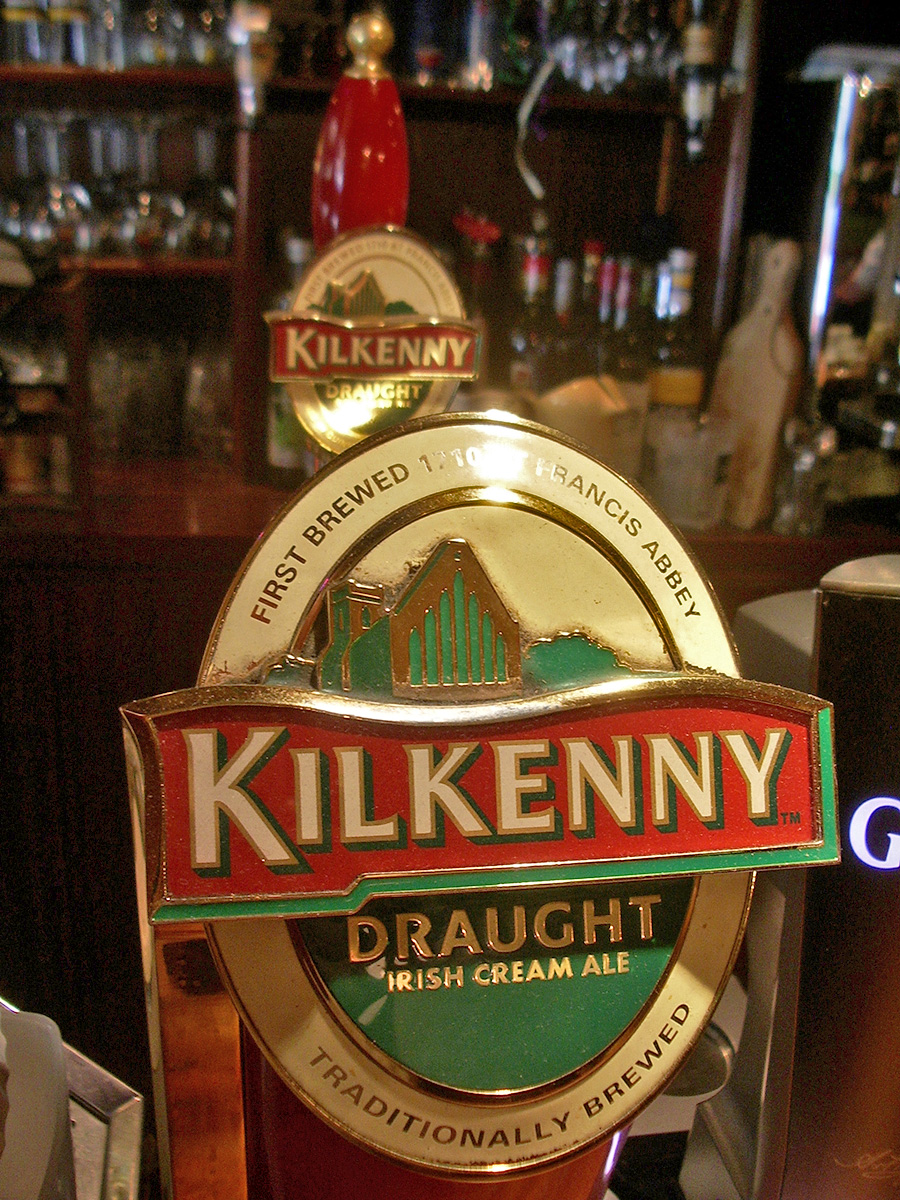
 The town of Kilkenny in Ireland has just hosted the sixth annual Kilkenomics festival (Nov 5–8) where economics and comedy meet. The festival brought together comedians and economists to take a look at some of the most pressing economic and social issues, such as the refugee crisis, economic recovery, banking and finance, the growth in inequality, the future of the EU, economic power, the environment and personal behaviour.
With stand-up comedians taking a sideways look at economic issues and top economists having their ideas lampooned, or lampooning them themselves, the festival provided a fun, but useful, reality check for the discipline of economics.
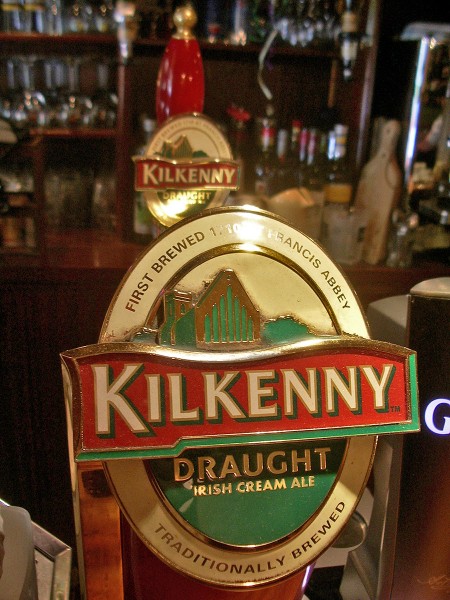 The festival attracted some major names in the field of comedy, economics, journalism and politics. Perhaps the biggest draw was the former finance minister of Greece, Yanis Varoufakis (see also), who opened the festival with a withering attack on the economic model being pursued by Greece’s creditors (the European Commission, the IMF and the ECB).
Much of the comedy was really aimed, not so much at economics and economists, but more at how politicians pursue economic policies and interpret economic models in ways that suit their own political agenda. But still there was no escape for economists. Much of the humour was directed at unrealistic assumptions and unrealistic visions of how economies function.
Thanks to JokEc for the following:
|
|
| • |
Economics is the only field in which two people can get a Nobel Prize for saying exactly the opposite thing. |
| • |
If you rearrange the letters in “ECONOMICS”, you get “COMIC NOSE”. |
| • |
Economics has got so rigorous we’ve all got rigor mortis. |
| • |
How many economists does it take to change a light bulb? |
I’ll leave you to work out the best answer to that last one – there could be many depending on the school of thought.
Videos and podcasts
 Kilkenomics Promo – 2015 Kilkenomics on YouTube (23/10/15)
Kilkenomics: Highlights 1 Kilkenomics on YouTube (27/10/15)
Kilkenomics: Highlights 2 Kilkenomics on YouTube (30/10/15)
Kilkenomics 2014 BBC ‘In the Balance’ (9/11/14)
Articles
Kilkenomics launches biggest programme to date Meath Chronicle (1/10/15)
The subversive wonders of Kilkenomics – where economics meets stand-up The Spectator, Liam Halligan (15/11/14)
Guilty as charged: Irish standup festival puts economics in the dock The Guardian, Larry Elliott (8/11/15)
Ireland no paradigm of successful austerity – Varoufakis The Irish Times, Eoin Burke Kennedy (5/11/15)
Economy of sex … how much are your orgasms costing you? Irish Independent, Niamh Horan (8/11/15)
Questions
- What is it about economics that gives so much material to comedians?
- ‘The worse it gets the funnier it seems because comedy exists with tragedy.’ To what extent is this true of economics as a discipline or simply of the state of the world economists are studying at any one time?
- Should assumptions in economics always be realistic? Explain why or why not.
- For what types of reason might economists disagree?
- Make up an economics joke and test it on your fellow students. Perhaps there ought to be a vote for the funniest and a prize for the winner. What was it about the winning joke that made it the funniest?
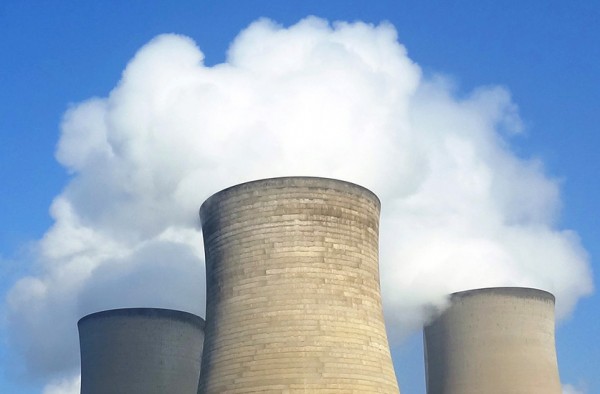 At the G7 conference in Bavaria on 7 and 8 June 2015, it was agreed to phase out the use of fossil fuels by the end of the century. But despite this significant objective, there were no short-term measures put in place to start on the process of achieving this goal. Nevertheless, the agreement contained commitments to further developments in carbon markets, elimination of fossil fuel subsidies, incentives for the development of green energy and support for developing countries in reducing hydrofluorocarbons.
The agreement also sent a strong message to the 21st United Nations International Climate Change conference scheduled to meet in Paris from 30 November to 11 December 2015. The G7 communiqué states that binding rules would be required if the target was to be met.
The agreement should enhance transparency and accountability including through binding rules at its core to track progress towards achieving targets, which should promote increased ambition over time. This should enable all countries to follow a low-carbon and resilient development pathway in line with the global goal to hold the increase in global average temperature below 2°C.
But many environmentalists argue that a more fundamental approach is needed. This requires a change in the way the environment is perceived – by both individuals and politicians. The simple  selfish model of consumption to maximise consumer surplus and production to maximise profit should be rejected. Instead, the environment should be internalised into decision making.
What is more, there should be an integral ecology which brings together a wide range of disciplines, including economics, in analysing the functioning of societies and economies. Rather than being seen merely as a resource to be exploited, respect and care for the environment should be incorporated into our whole decision-making process, along with protecting societies and cultures, and rejecting economic systems that result in a growing divide between rich and poor.
In his latest encyclical, On care for our common home, Pope Francis considers integral ecology, not just in terms of a multidiciplinary approach to the environment but as an approach that integrates the objectives of social justice and care for the environment into an overarching approach to the functioning of societies and economies. And central to his message is the need to change the way human action is perceived at a personal level. Decision making should be focused on care for others and the environment not on the selfish pursuit of individual gain.
 With a change in heart towards other people and the environment, what would be seen as externalities in simple economic models based on rational self-interested behaviour become internal costs or benefits. Care and compassion become the drivers for action, rather than crude self interest.
A key question, of course, is how we get here to there; how society can achieve a mass change of heart. For religious leaders, such as the Pope, the approach centres on spiritual guidance. For the secular, the approach would probably centre on education and the encouragement for people to consider others in their decision making. But, of course, there is still a major role for economic instruments, such as taxes and subsidies, rules and regulations, and public investment.
Articles
G7 leaders agree to phase out fossil fuels by end of centuryEU Observer, Peter Teffer (8/6/15)
Integral Ecology Approach Links ‘Welfare of God’s People and God’s Creation’ Catholic Register (11/6/15)
President’s Corner Teilhard Perspective, John Grim (May 2015)
In his encyclical on climate change Pope Francis reveals himself to be a master of scientific detail Washington Post, Anthony Faiola, Michelle Boorstein and Chris Mooney (18/6/15)
Pope Francis Calls for Climate Action in Draft of Encyclical New York Times, Jim Yardley (15/6/15)
Pope Francis letter on climate change leaked: Draft Vatican encyclical released three days early Independent, Kashmira Gander and Michael Day (15/6/15)
The Pope is finally addressing the gaping hole in the Judaeo-Christian moral tradition Independent, Michael McCarthy (15/6/15)
Pope Francis warns of destruction of Earth’s ecosystem in leaked encyclical The Guardian, Stephanie Kirchgaessner and John Hooper (16/6/15)
Explosive intervention by Pope Francis set to transform climate change debate The Observer, John Vidal (13/6/15)
Pope Francis’ Leaked Encyclical Draft Attributes Climate Change To Human Activity Huffington Post, Antonia Blumberg (15/6/15)
Pope Francis’ Integral Ecology Huffington Post, Dave Pruett (28/5/15)
Videos
Pope Francis: Climate change mostly man-made BBC News, Caroline Wyatt (18/6/15)
Pope urges action on global warming in leaked document BBC News, Chris Cook (16/6/15)
Questions
- What do you understand by ‘integral ecology’?
- Is an integrated approach to the environment and society consistent with ‘rational’ behaviour (a) in the narrow sense of ‘rational’ as used in consumer and producer theory; (b) in a broader sense of making actions consistent with goals?
- Can cost–benefit analysis be used in the context of an integrated and cross-disciplinary approach to the environment and society?
- What types of incentives would be useful in achieving the approach proposed by Pope Francis?
- Why do many companies publicly state that they pursue a policy of corporate responsibiliy?
- To what extent does it make sense to set targets for the end of this century?
- In what crucial ways might GDP need to be adjusted if it is to be used as a measure of the success of the approach to society, the economy and the environment as advocated by Pope Francis?
 The articles below examine the rise of the sharing economy and how technology might allow it to develop. A sharing economy is where owners of property, equipment, vehicles, tools, etc. rent them out for periods of time, perhaps very short periods. The point about such a system is that the renter deals directly with the property owner – although sometimes initially through an agency. Airbnb and Uber are two examples.
 One development that will aid this process is a secure electronic way of keeping records and processing payments without the need for a central authority, such as a government, a bank or a company. It involves the use of ‘blockchains‘ (see also). The technology, used in Bitcoin, involves storing data widely across networks, which allows the data to be shared. The data are secure and access is via individuals having a ‘private key’ to parts of the database relevant to them. The database builds in blocks, where each block records a set of transactions. The blocks build over time and are linked to each other in a logical order (i.e. in ‘chains’) to allow tracking back to previous blocks.