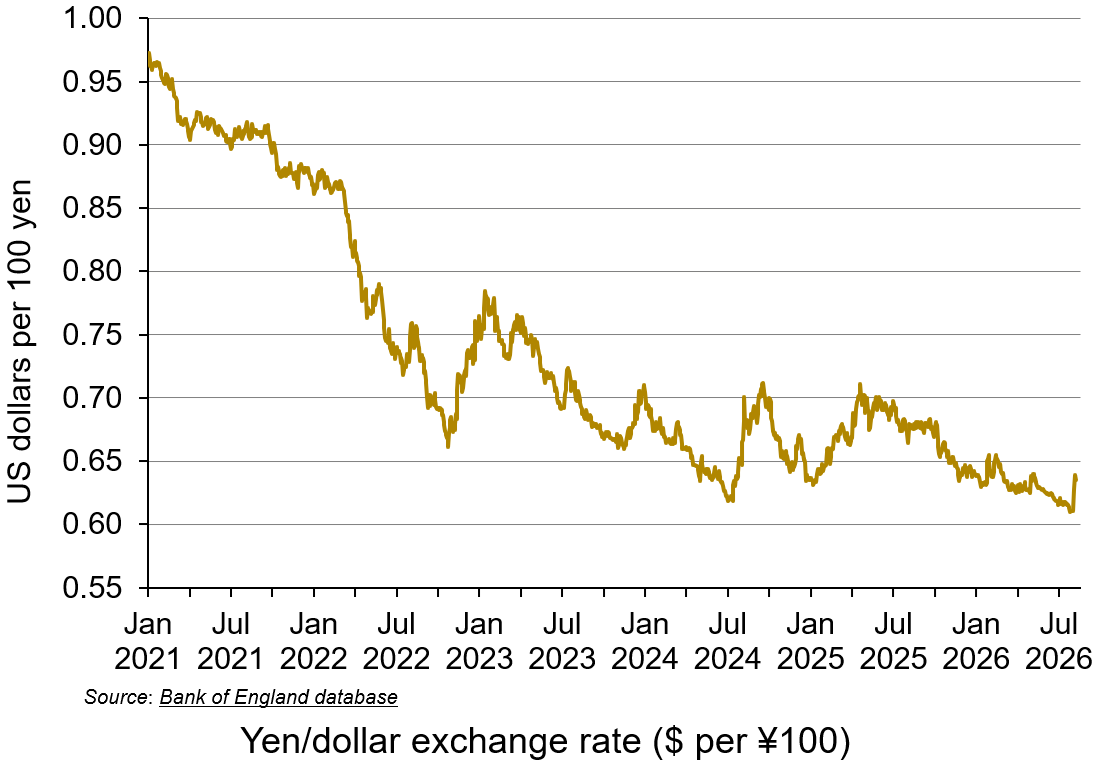
The yen has been depreciating against the dollar and other currencies for several months. It fell from 100 yen = $0.97 in January 2021 to $0.61 by the end of July 2026 – a fall of 37%. This marked a 40-year low. But then, at the end of July it rallied and by 3 August the rate was 100 yen = $0.64 – a rise of nearly 5%. But why did this happen and what will be the implications for Japan and the wider world economy?
Why has the yen fallen so much since 2021?
 There have been two main drivers.
The first is fiscal policy. For many years, Japan has been pursuing expansionary fiscal policy in an attempt to stimulate the sluggish economy. This has led to large budget deficits and public-sector debt. Since 2020, general government gross debt has been around 255% of GDP, the largest of any high-income economy.
Recently, the Japanese government has adopted aggressive supplementary budgets to fund, among other things, fuel subsidies and public-private investment initiatives. This has involved the issuance of more government bonds to fund the necessary borrowing.
 Fiscal pressures have also increased becase of demography. A rapidly aging population and declining birth rates have required substantial public spending on healthcare, social security and pensions. Meanwhile, the tax-paying working-age population has declined as a proportion of total population.
On the plus side, unlike most highly indebted nations, over 90% of Japan’s debt is held domestically by Japanese residents, Japanese institutional investors, banks and the Bank of Japan (BoJ). This lowers the risk of default and hence the risk premium on Japanese bonds.
 The second driver is monetary policy. Interest rates have been kept low over many years, including periods of negative rates, as the BoJ has attempted to stimulate the economy. Low interest rates have sometimes been backed up with quantitative easing to increase money supply.
Since March 2024, however, there have been four interest rate increases. The latest was in June 2026 when the BoJ raised the short-term policy rate from 0.75% to 1.0% – the highest level since 1995. Despite this, interest rates have remained below those in other countries, and this contributed to the continuing fall of the yen.
A falling yen has helped to increase Japanese exports by making them more competitive, but more expensive imports have contributed to rising Japanese inflation.
Low interest rates have also stimulated the yen-dollar carry trade. This is where investors borrow money in yen at low interest rates, convert it into US dollars and invest it in higher-yielding US assets, typically US government bonds (‘Treasury bonds’). This borrowing in yen to buy dollars further contributed to the depreciation of the yen against the dollar.
Co-ordinated intervention
 In an attempt to raise the value of the yen, the Bank of Japan and the US Federal Reserve acted together – their first joint currency rescue operation since 2011. The BoJ spent tens of billions of dollars to buy yen; the US Treasury bought yen by selling euros. Prior to the intervention, global hedge funds held near-record short positions against the yen, meaning that they sold yen at a current price, agreeing to buy them back at a particular later date, hoping that the yen would fall in the meantime and that they would therefore make a profit. The sudden joint intervention forced these traders to buy back the yen to cut their losses before the rate rose further. This accelerated the yen’s appreciation.
But why did the USA join Japan in intervening? Japan is the largest foreign holder of US Treasuries ($1.1 trillion). The USA intervened to discourage Japanese investors from selling US Treasuries in order to raise cash, thereby pushing up US borrowing costs.
The rise in the yen was also encouraged by speculators who are expecting further interest rate rises from the BoJ to counter inflation and support public finances, driving domestic bond yields higher. This will lead to a narrowing of interest rates between Japan and other countries.
Effects on the Japanese economy
 If the yen continues to appreciate, this will help to reduce inflation by making imports cheaper and will help to ease cost-of-living pressures on Japanese consumers. Japan is heavily reliant on imported energy and raw materials.
However, the decline in the yen over recent years has provided a large boost to Japanese exports. A sharp reversal in this could severely affect exporters’ profits and have a serious negative impact on economic growth.
If the appreciation continues, it would lead to an unwinding of the carry trade. To prevent mounting currency losses, highly leveraged institutional investors would be forced to sell assets, such as US and other countries’ shares and bonds to buy back yen and pay off their debts. This potentially massive unwinding would be likely to create global market volatility and drive up interest rates.
Articles
- Yen holds gains after Japan, US confirm joint intervention, signal more action
Reuters, Makiko Yamazaki and Leika Kihara (3/8/26)
- Yen surges to three-month peak, dollar pares losses after intervention
Reuters, Chibuike Oguh (3/8/26)
- US dollar weakens sharply against the Japanese yen after officials intervene in markets
ABC7 Eyewitness News, Mayuko Ono and Elaine Kurtenbach (3/8/26)
- Yen hits three-month high after Trump helps prop up currency
The Guardian, Graeme Wearden (3/8/26)
- Why has Trump stepped in to prop up Japan’s currency?
The Guardian, Jonathan Yerushalmy (3/8/26)
- Why the U.S. stepped in after decades to prop up Japan’s yen — and what’s at stake
CNBC, Lee Ying Shan (3/8/26)
- Politics & Policy Analysis: How Bessent is pushing Warsh’s Fed to expand backstop for Japan’s yen defense
CNBC, Matt Peterson (3/8/26)
- Why Japan is propping up the yen – and why the US helped
The Straits Times (4/8/26)
- The Pros and Cons of a Strong Dollar
Johnston Investment Counsel (3/8/26)
- Why the U.S. Stepped In to Prop Up Japan’s Yen Currency
Yahoo!Finance, Tiago Ventura (3/8/26)
- Why the U.S. Is Helping Prop Up Japan’s Weak Currency
The New York Times, Eshe Nelson (3/8/26)
- U.S.-Japan Intervention Triggers Yen Carry Trade Fears
The Chosun Daily, Lee Hai-woon (3/8/26)
- What top minds in markets are saying about the US intervention to prop up Japan’s currency
Business Insider, Jennifer Sor (3/8/26)
Data
Questions
- What have been the benefits and costs to Japan of a depreciating exchange rate?
- Explain the carry trade.
- Why might the yen-dollar carry trade unwind and what would be the consequences for Japan and the USA?
- Find out what has happened to the exchange rate between the yen and the euro. Has this been driven by the carry trade?
- For what reasons might the yen (a) now continue rising; (b) resume depreciating?
- Find out what has happened to the yen/dollar exchange rate since this blog was written. Explain your findings.
A common practice of international investors is to take part in the so-called ‘carry trade’. This involves taking advantage of nominal interest rate differences between countries. For example, assume that interest rates are low in Japan and high in the USA. It is thus profitable to borrow yen in Japan at the low interest rate, exchange it into US dollars and deposit the money at the higher interest rate available in the USA. If there is no change in the exchange rate between the dollar and the yen, the investor makes a profit equal to the difference in the interest rates.
Rather than depositing the money in a US bank account, an alternative is to purchase US bonds or other assets in the USA, where the return is again higher than that in Japan.
If, however, interest-rate differentials narrow, there is the possibility of the carry trade ‘unwinding’. Not only may the carry trade prove unprofitable (or less so), but investors may withdraw their deposits and pay back the loans. This, as we shall, can have adverse consequences on exchange rates.
The problem of an unwinding of the carry trade is not new. It worsened the underlying problems of the financial crisis in 2008. The question today is whether history is about to repeat itself with a new round of unwinding of the carry trade threatening economic growth and recovery around the world.
We start by looking at what happened in 2008.
The carry trade and the 2008 financial crisis
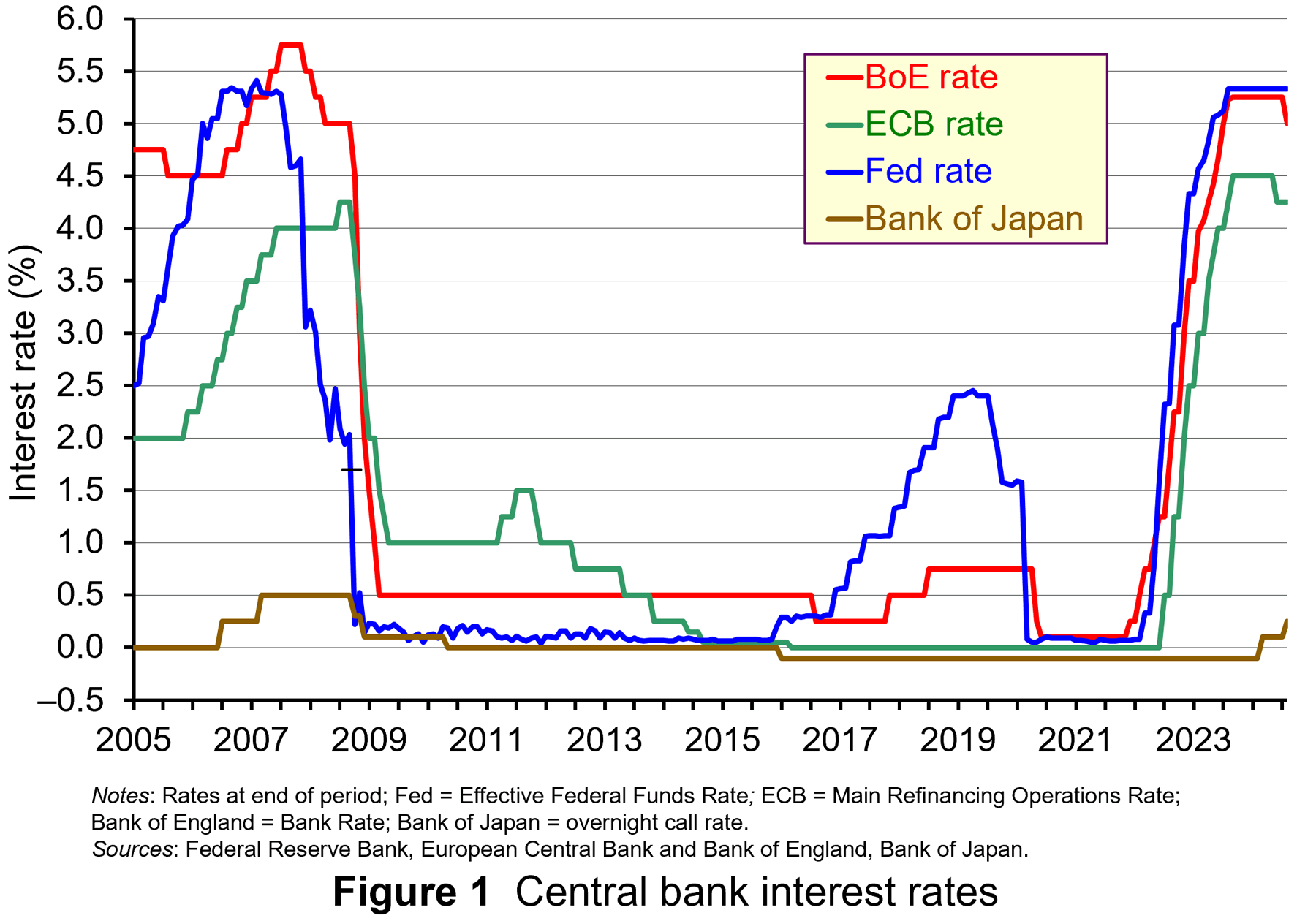 Prior to the financial crisis of 2008, current account deficit countries, such as the UK, USA and Australia, typically had relatively high interest rates, while current account surplus countries such as Japan and Switzerland had relatively low ones. Figure 1 shows central bank interest rates from 2005 to the current day (click here for a PowerPoint).
The carry trade saw investors borrowing money in Japan and Switzerland, exchanging it on the foreign exchange market, with the currency then deposited in the UK, USA and Australia. Hundreds of billions worth of dollars were involved in this carry trade.
If, however, the higher interest rates in the UK and other deficit countries were simply to compensate investors for the risk of currency depreciation, then there would be no excessive inflow of finance. The benefit of the higher interest rate would be offset by a depreciating currency. But the carry trade had the effect of making deficit currencies appreciate, thereby further boosting the carry trade by speculation of further exchange rate rises.
Thus the currencies of deficit countries appreciated, making their goods less competitive and worsening their current account deficit. Between 1996 and 2006, the average current account deficits as a percentage of GDP for Australia, the USA and the UK were close to 4½, 4 and 2, respectively. Between January 1996 and December 2006, the broad-based real exchange rate index of the Australian dollar appreciated by 17%, of the US dollar by 4% and of sterling by some 23%.
 Currencies of surplus countries depreciated, making their goods more competitive and further boosting their current account surpluses. For example, between 2004 and 2006 the average current account surpluses as a percentage of GDP for Japan and Switzerland were 3½ and 13, respectively. Their short-term interest rates averaged a mere 0.1% and 1.0% respectively (compared with 3.4%, 4.7% and 5.7% for the USA, the UK and Australia). Yet between January 2004 and December 2006, the real exchange rate index of the yen depreciated by 21%, while that of the Swiss franc depreciated by 6%.
With the credit crunch of 2007/8, the carry trade unwound. Much of the money deposited in the USA had been in highly risky assets, such as sub-prime mortgages. Investors scrambled to sell their assets in the USA, UK and the EU. Loans from Japan and Switzerland were repaid and these countries, seen as ‘safe havens’, attracted deposits. The currencies of deficit countries, such as the UK and USA, began to depreciate and those of surplus countries, such as Japan and Switzerland, began to appreciate. Between September 2007 and September 2008, the real exchange rate indices of the US dollar and sterling depreciated by 2% and 13% respectively; the yen and the Swiss franc appreciated by 3% and 2¾%.
This represented a ‘double whammy’ for Japanese exporters. Not only did its currency appreciate, making its exports more expensive in dollars, euros, pounds, etc., but the global recession saw consumers around the world buying less. As a result, the Japanese economy suffered the worst recession of the G7 economies.
The carry trade in recent months
Since 2016, there has been a re-emergence of the carry trade as the Fed began raising interest rates while the Bank of Japan kept rates at the ultra low level of –0.1% (see Figure 1). The process slowed down when the USA lowered interest rates in 2020 in response to the pandemic and fears of recession. But when the USA, the EU and the UK began raising rates at the beginning of 2022 in response to global inflationary pressures, while Japan kept its main rate at –0.1%, so the carry trade resumed in earnest. Cross-border loans originating in Japan (not all of it from the carry trade) had risen to ¥157tn ($1tn) by March 2024 – a rise of 21% from 2021.
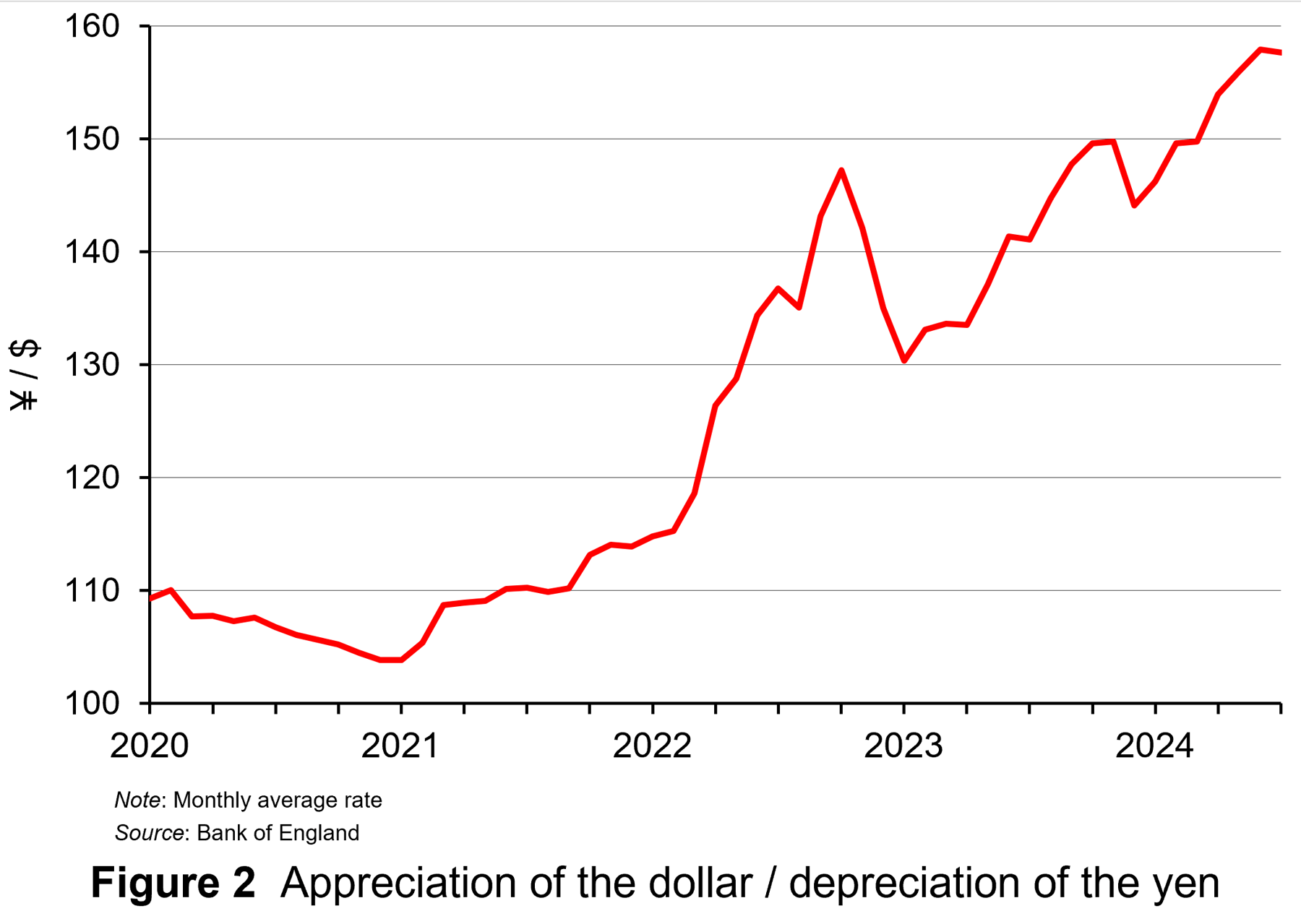 The process boosted US stock markets and contributed to the dollar appreciating against the yen (see Figure 2: click here for a PowerPoint).
Although this depreciation of the yen helped Japanese exports, it also led to rising prices. Japanese inflation rose steadily throughout 2022. In the 12 months to January 2022 the inflation rate was 0.5% (having been negative from October 2020 to August 2021). By January 2023, the annual rate had risen to 4.3% – a rate not seen since 1981. The Bank of Japan was cautious about raising interest rates to suppress this inflation, however, for fear of damaging growth and causing the exchange rate to appreciate and thereby damaging exports. Indeed, quarterly economic growth fell from 1.3% in 2023 Q1 to –1.0% in 2023 Q3.
But then, with growth rebounding and the yen depreciating further, in March 2024 the Bank of Japan decided to raise its key rate from –0.1% to 0.1%. This initially had the effect of stabilising the exchange rate. But then with the yen depreciating further and inflation rising from 2.5% to 2.8% in May and staying at this level in June, the Bank of Japan increased the key rate again at the end of July – this time to 0.25% – and there were expectations that there would be another rise before the end of the year.
At the same time, there were expectations that the Fed would soon lower its main rate (the Federal Funds Rate) from its level of 5.33%. The ECB and the Bank of England had already begun lowering their main rates in response to lower inflation. The carry trade rapidly unwound. Investors sold US, EU and UK assets and began repaying yen loans.
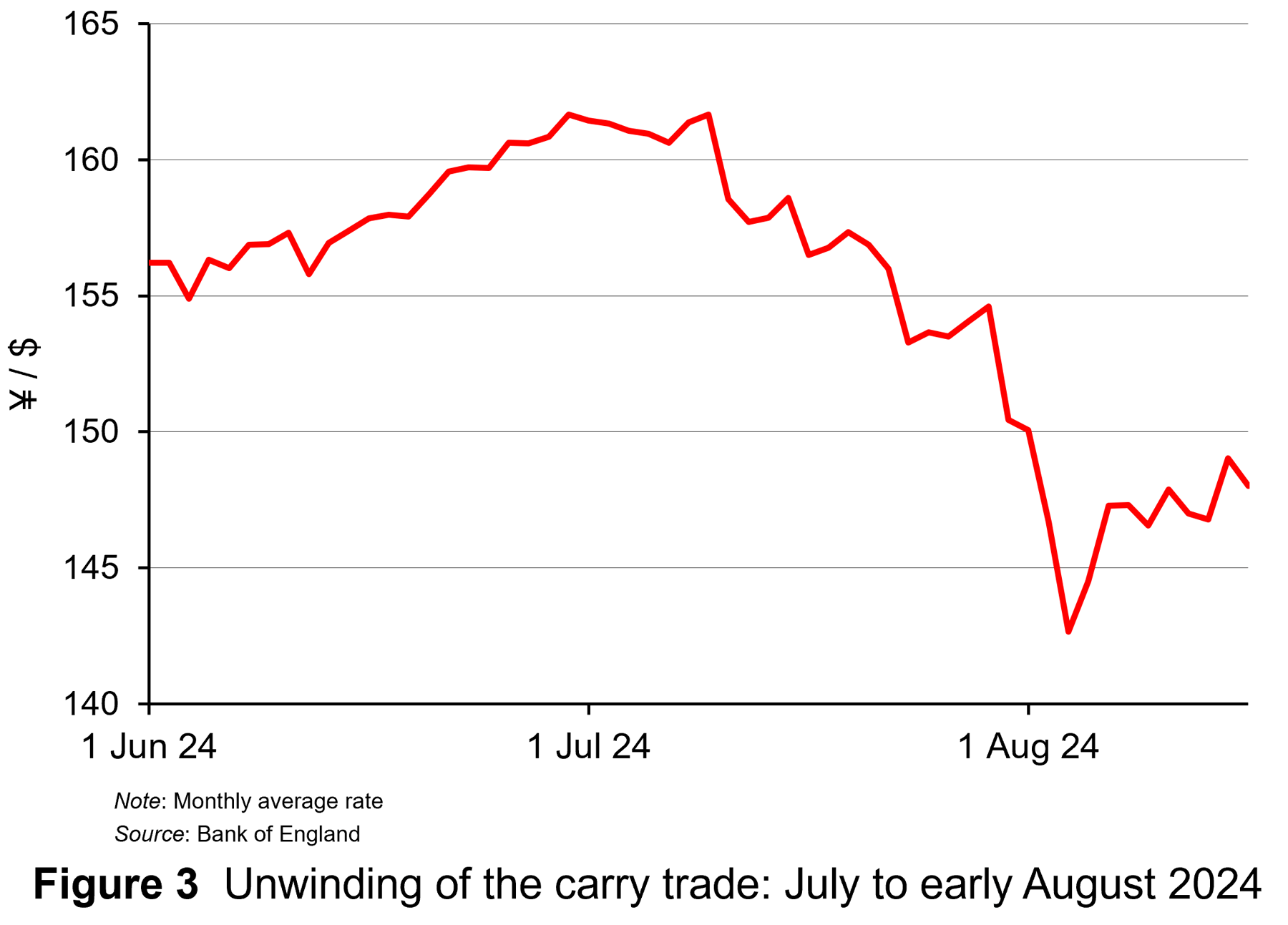 The result was a rapid appreciation of the yen as Figure 3 shows (click here for a PowerPoint). Between 31 July (the date the Bank of Japan raised interest rates the second time) and 5 August, the dollar depreciated against the yen from ¥150.4 to ¥142.7. In other words, the value of 100 yen appreciated from $0.66 to $0.70 – an appreciation of the yen of 6.1%.
Fears about the unwinding of the carry trade led to falls in stock markets around the world. Not only were investors selling shares to pay back the loans, but fears of the continuing process put further downward pressure on shares. From 31 July to 5 August, the US S&P 500 fell by 6.1% and the tech-heavy Nasdaq by 8.0%.
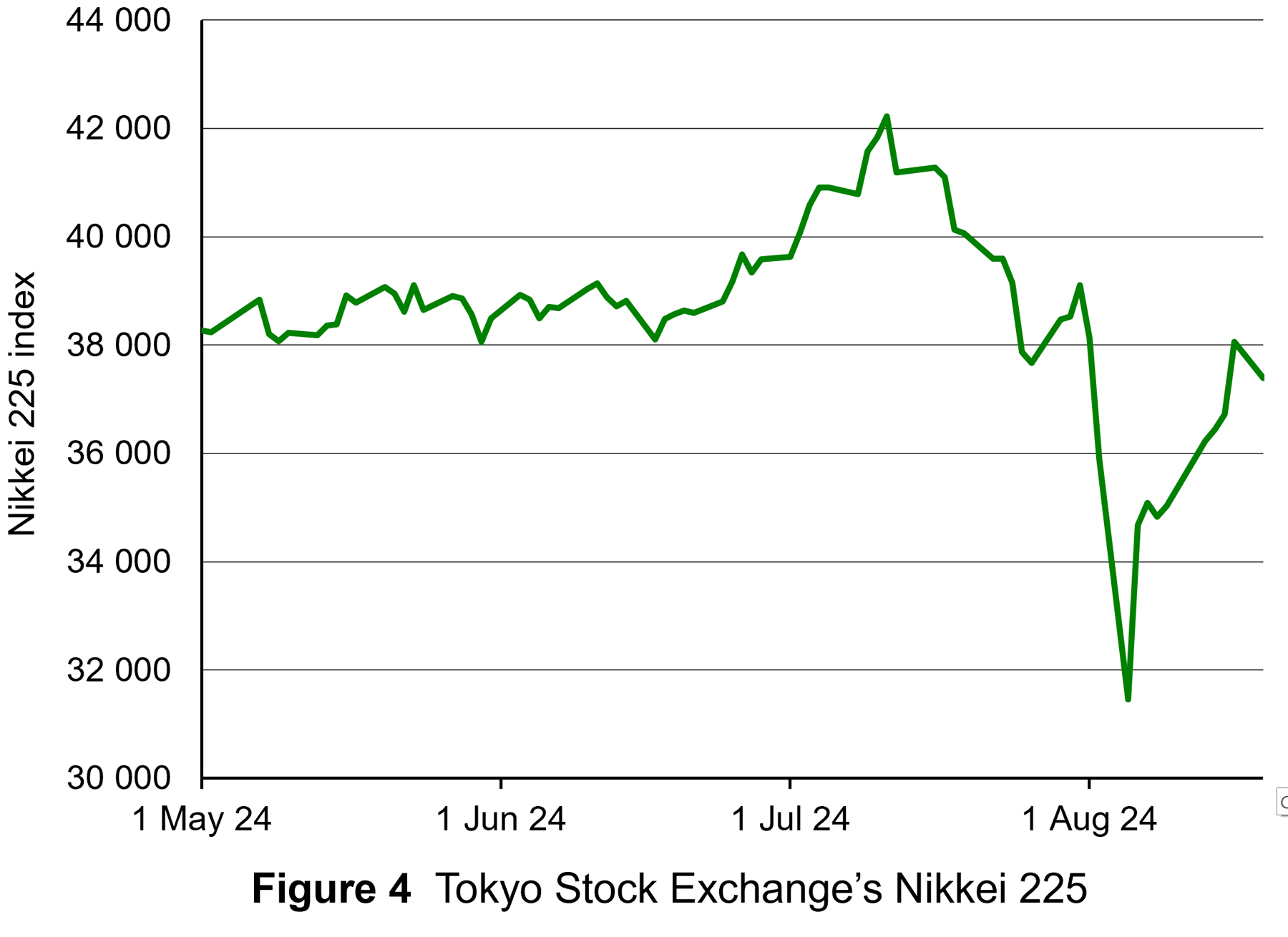 As far as the Tokyo stock market was concerned, the appreciation of the yen sparked fears that the large Japanese export sector would be damaged. Investors rushed to sell shares. Between 31 July and 5 August, the Nikkei 225 (the main Japanese stock market index) fell by 19.5% – its biggest short-term fall ever (see Figure 4: click here for a PowerPoint).
Although the yen has since depreciated slightly (a rise in the yen/dollar rate) and stock markets have recovered somewhat, expectations of many investors are that the unwinding of the yen carry trade has some way to go. This could result in a further appreciation of the yen from current levels of around ¥100 = $0.67 to around $0.86 in a couple of years’ time.
There are also fears about the carry trade in the Chinese currency, the yuan. Some $500 billion of foreign currency holdings have been acquired with yuan since 2022. As with the Japanese carry trade, this has been encouraged by low Chinese interest rates and a depreciating yuan. Not only are Chinese companies investing abroad, but foreign companies operating in China have been using their yuan earnings from their Chinese operations to invest abroad rather than in China. The Chinese carry trade, however, has been restricted by the limited convertibility of the yuan. If the Chinese carry trade begins to unwind when the Chinese economy begins to recover and interest rates begin to rise, the effect will probably be more limited than with the yen.
Articles
- A popular trading strategy just blew up in investors’ faces
CNN, Allison Morrow (7/8/24)
- The big ‘carry trade’ unwind is far from over, strategists warn
CNBC, Sam Meredith (13/8/24)
- Unwinding of yen ‘carry trade’ still threatens markets, say analysts
Financial Times, Leo Lewis and David Keohane (7/8/24)
- The yen carry trade sell-off marks a step change in the business cycle
Financial Times, John Plender (10/8/24)
- Forbes Money Markets Global Markets React To The Japanese Yen Carry Trade Unwind
Forbes, Frank Holmes (12/8/24)
- 7 unwinding carry trades that crashed the markets
Alt21 (26/1/23)
- A carry crash also kicked off the global financial crisis 17 years ago — here’s why it’s unlikely to get as bad this time
The Conversation, Charles Read (9/8/24)
- What is the Chinese yuan carry trade and how is it different from the yen’s?
Reuters, Winni Zhou and Summer Zhen (13/8/24)
- Carry Trade That Blew Up Markets Is Attracting Hedge Funds Again
Yahoo Finance/Bloomberg, David Finnerty and Ruth Carson (16/8/24)
- Currency Carry Trades 101
Investopedia, Kathy Lien (9/8/24)
- Carry Trades Torpedoed The Market. They’re Still Everywhere.
Finimize, Stéphane Renevier (13/8/24)
Questions
- What factors drive the currency carry trade?
- Is the carry trade a form of arbitrage?
- Find out and explain what has happened to the Japanese yen since this blog was written.
- Find out and explain some other examples of carry trades.
- Why are expectations so important in determining the extent and timing of the unwinding of carry trades?
 Last year was far from the picture of economic stability that all governments would hope for. Instead, the overarching theme of 2022 was uncertainty, which overshadowed many economic predictions throughout the year. The Collins English Dictionary announced that their word of the year for 2022 is ‘permacrisis’, which is defined as ‘an extended period of instability and insecurity’.
For the UK, 2022 was an eventful year, seeing two changes in prime minister, economic stagnation, financial turmoil, rampant inflation and a cost of living crisis. However, the UK was not alone in its economic struggles. Many believe that it is a minor miracle that the world did not experience a systemic financial crisis in 2022.
Russia’s invasion of Ukraine has led to the biggest land war in Europe since 1945, the most serious risk of nuclear escalation since the Cuban missile crisis and the most far-reaching sanctions regime since the 1930s. Soaring food and energy costs have fuelled the highest rates of inflation since the 1980s and the biggest macroeconomic challenge in the modern era of central banking (with the possible exception of the financial crisis of 2007–8 and its aftermath). For decades we have lived with the assumptions that nuclear war was never going to happen, inflation will be kept low and rich countries will not experience an energy crisis. In 2022 all of these assumptions and more have been shaken.
With the combination of rising interest rates and a massive increase in geopolitical risk, the world economy did well to survive as robustly as it did. However, with public and private debt having risen to record levels during the now-bygone era of ultra-low interest rates and with recession risks high, the global financial system faces a huge stress test.
Government pledges
 Rishi Sunak, the UK Prime Minister, started 2023 by setting out five pledges: to halve inflation, boost economic growth, cut national debt as a percentage of GDP, and to address NHS waiting lists and the issue of immigrants arriving in small boats. Whilst most would agree that meeting these pledges is desirable, a reduction in inflation is forecast to happen anyway, given the monetary policy being pursued by the Bank of England and an easing of commodity prices; and public-sector debt as a percentage of GDP is forecast to fall from 2024/25.
Success in meeting the first four pledges will partly depend on the effects of the current industrial action by workers across the UK. How soon will the various disputes be settled and on what terms? What will be the implications for service levels and for inflation?
A weak global economy
 Success will also depend on the state of the global economy, which is currently very fragile. In fact, it is predicted that a third of the global economy will be hit by recession this year. The head of the IMF has warned that the world faces a ‘tougher’ year in 2023 than in the previous 12 months. Such comments suggest the IMF is likely soon to cut its economic forecasts for 2023 again. The IMF already cut its 2023 outlook for global economic growth in October, citing the continuing drag from the war in Ukraine, as well as inflationary pressures and interest rate rises by major central banks.
The World Bank has also described the global economy as being ‘on a razor’s edge’ and warns that it risks falling into recession this year. The organisation expects the world economy to grow by just 1.7% this year, which is a sharp fall from an estimated 2.9% in 2022 according to the Global Economic Prospects report (see link below). It has warned that if financial conditions tighten, then the world’s economy could easily fall into a recession. If this becomes a reality, then the current decade would become the first since the 1930s to include two global recessions. Growth forecasts have been lowered for 95% of advanced economies and for more than 70% of emerging market and developing economies compared with six months ago. Given the global outlook, it is no surprise that the UK economy is expected to face a prolonged recession with declining growth and increased unemployment.
The current state of the UK economy
Despite all the concerns, official figures show that, even though households have been squeezed by rising prices, UK real GDP unexpectedly grew in November, by 0.1%. This has been explained by a boost to bars and restaurants from the World Cup as people went out to watch the football and also by demand for services in the tech sector.
At first sight, the UK’s cost of living crisis might look fairly mild compared to other countries. Its inflation rate was 10.7% in November 2022, compared to 12.6% in Italy, 16% in Poland and over 20% in Hungary and Estonia. But UK inflation is still way above the Bank of England’s 2% target. The Bank went on to tighten monetary policy further, by increasing interest rates to 3.5% in December. Further rate rises are expected in 2023. In fact, the markets and the Bank both expect the main rate to reach 5.2% by the end of this year. With the consequent squeeze on real incomes, the Bank of England expects a recession in the UK this year – possibly lasting until mid-2024.
 The UK is also affected by global interest rates, which affect global growth. Global interest rates average 5%. A 1 percentage point increase would reduce global growth this year from 1.7% to 0.6%, with per capita output contracting by 0.3%, once changes in population are taken into account. This would then meet the technical definition of a global recession. This means that the Bank’s November economic forecast, which was based on a Bank Rate of 3%, may worsen due to an even larger contraction than previously expected. The resulting drop in spending and investment by people and businesses could then cause inflation to come down faster than the Bank had predicted when rates were at 3%.
There could be some positive news however, that may help bring down inflation in addition to rate rises. There has been some appreciation in the pound since the huge drop caused by the September mini-budget that had brought its value to a nearly 40-year low. This will help to reduce inflation by reducing the price of imports.
As far as workers are concerned, pay increases have been broadly contained, with 2022 being one of the worst years in decades for UK real wage growth. Limiting pay rises can have a deflationary effect because people have less to spend, but it also weighs on economic growth and productivity. Despite the impact on inflation, there is a lot of unrest across the UK, with strike action continuing to be at the forefront of the news. Strikes over pay and conditions continue in various sectors in 2023, including transport, health, education and the postal service. Strikes and industrial action have a negative effect on the wider economy. If wages are stagnating and the economy is not performing well, productivity will suffer as workers are less motivated and less investment in new equipment takes place.
Financial stresses
 The UK economy is also under threat of a prolonged recession due to the proportion of households that lack insulation against financial setbacks. This proportion is unusually large for a wealthy economy. A survey conducted prior to the pandemic, found that 3 million people in the UK would fall into poverty if they missed one pay cheque, with the country’s high housing costs being a key source of vulnerability. Another survey recently suggested that one-third of UK adults would struggle if their costs rose by just £20 a month.
The pandemic itself meant that over 4 million households have taken on additional debt, with many now falling behind on repaying it. This, combined with recent jumps in energy and food bills, could push many over the edge, especially if heating costs remain high when the present government cap on energy prices ends in April.
However, there could be some better news for households with the easing of COVID restrictions in China. This could have a positive impact on the UK economy if it helps ease supply-chain disruptions occurring since the height of the global pandemic. It could reduce inflationary pressure in the UK and other countries that trade with China by making it easier – and therefore less costly – for people to get hold of goods.
Articles
Reports
Questions
- Define the term ‘deflation’.
- Explain how an appreciation of the pound is good for inflation.
- Discuss the wider economic impacts of industrial strike action.
- Why is it important for the government to keep wages contained?
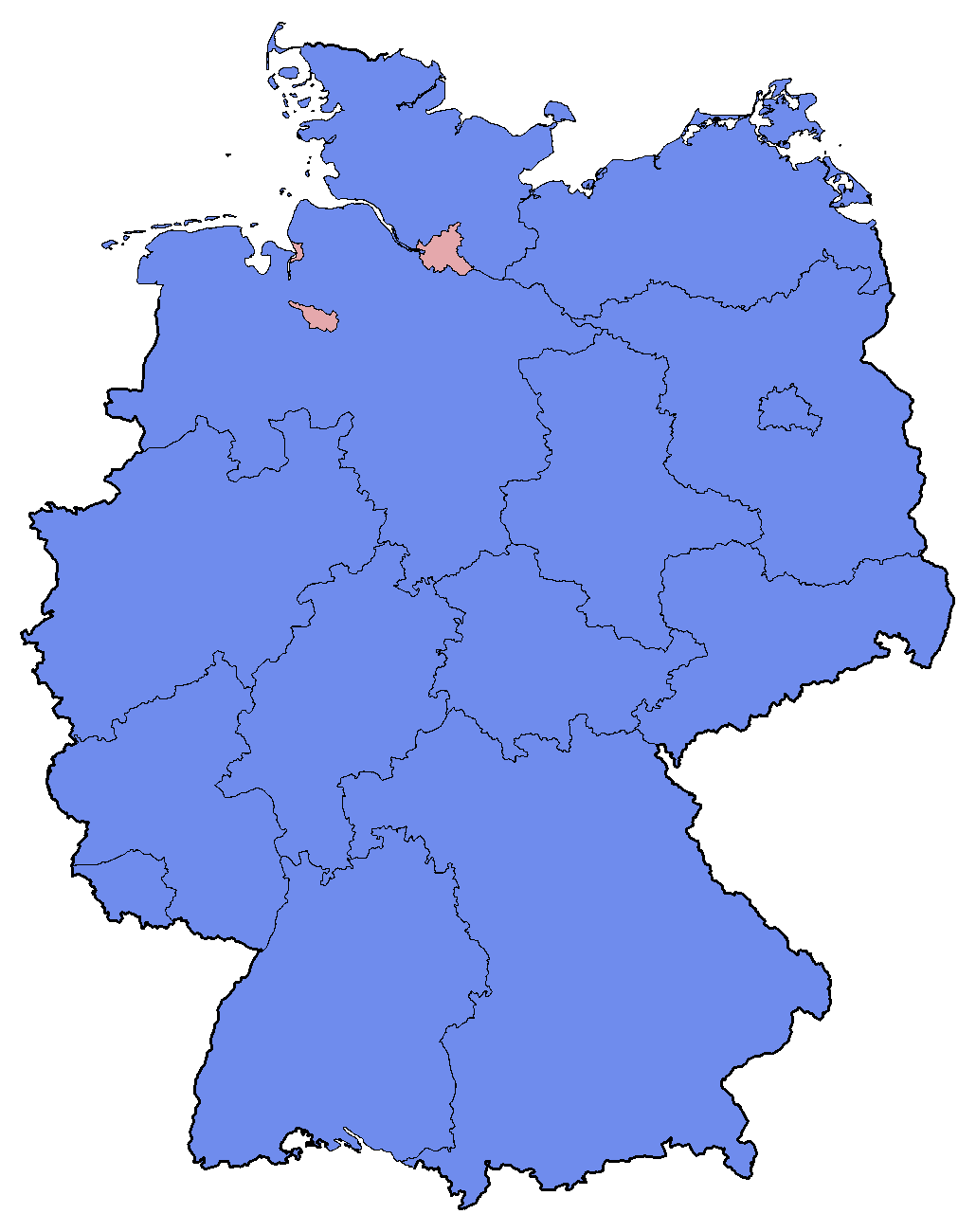
 One of President Trump’s main policy slogans has been ‘America first’. As Trump sees it, a manifestation of a country’s economic strength is its current account balance. He would love the USA to have a current account surplus. As it is, it has the largest current account deficit in the world (in absolute terms) of $481 billion in 2016 or 2.6% of GDP. This compares with the UK’s $115bn or 4.4% of GDP. Germany, by contrast, had a surplus in 2016 of $294bn or 8.5% of GDP.
However, he looks at other countries’ current account surpluses suspiciously – they may be a sign, he suspects, of ‘unfair play’. Germany’s surplus of over $50bn with the USA is particularly in his sights. Back in January, as President-elect, he threatened to put a 35% tariff on imports of German cars.
In practice, Germany is governed by eurozone rules, which prevent it from subsidising exports. And it does not have its own currency to manipulate. What is more, it is relatively open to imports from the USA. The EU imposes an average tariff of just 3% on US imports and importers also have to add VAT (19% in the case of Germany) to make them comparably priced with goods produced within the EU.
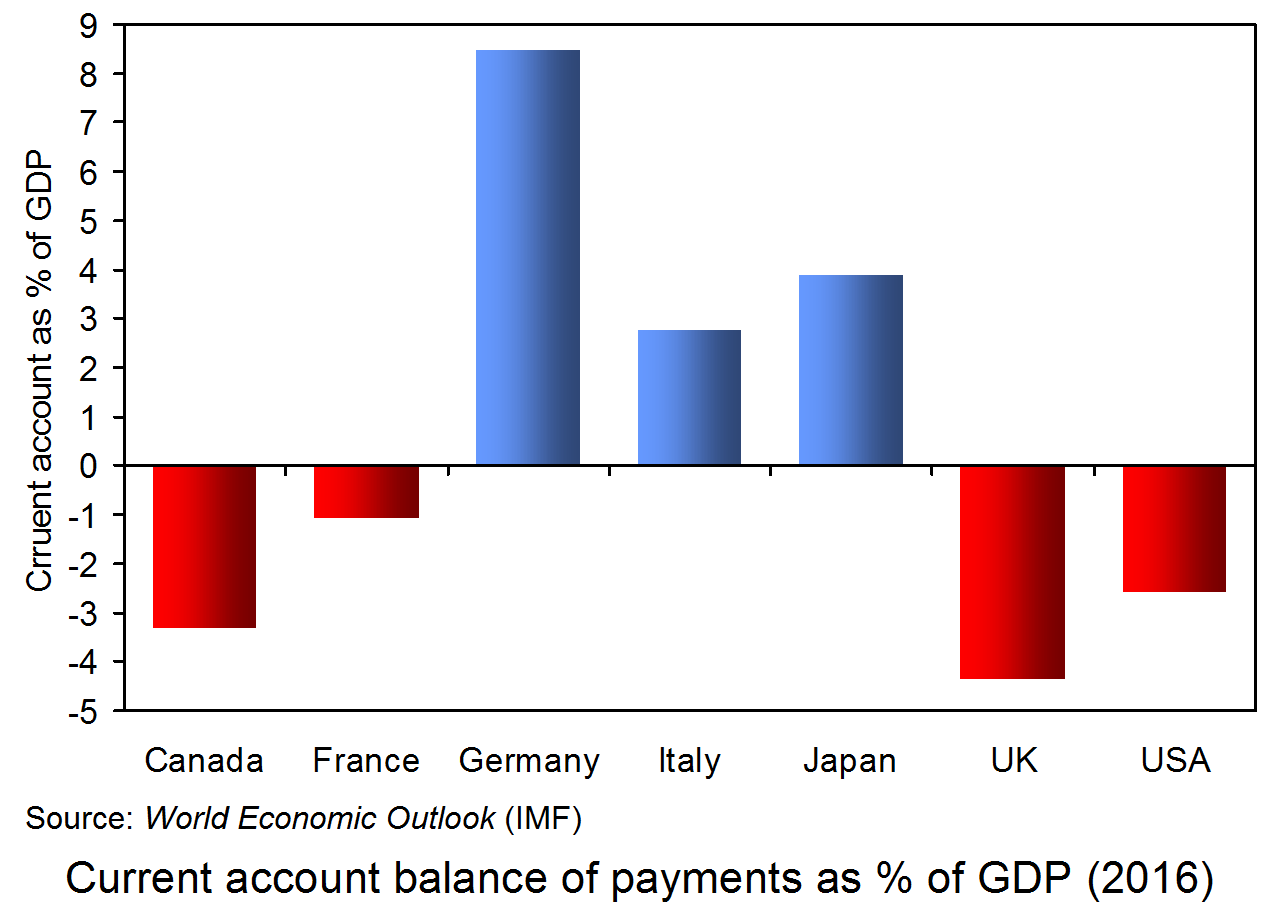 So why does Germany have such a large current account surplus? The article below explores the question and dismisses the claim that it’s the result of currency manipulation or discrimination against imports. The article states that the reason for the German surplus is that:
… it saves more than it invests. The correspondence of savings minus investment with exports minus imports is not an economic theory; it’s an accounting identity. Germans collectively spend less than they produce, and the difference necessarily shows up as net exports.
But why do the Germans save so much? The answer given is that, with an aging population, Germans are sensibly saving now to support themselves in old age. If Germany were to reduce its current account surplus, this would entail either the government reducing its budget surplus, or people reducing the amount they save, or some combination of the two. This is because a current account surplus, which consists of exports and other incomes from abroad (X) minus imports and any other income flowing abroad (M), must equal the surplus of saving (S) plus taxation (T) over investment (I) plus government expenditure (G). In terms of withdrawals and injections, given that:
I + G + X = S + T + M
 then, rearranging the terms,
X – M = (S + T) – (I + G).
If German people are reluctant to reduce the amount they save, then an alternative is for the German government to reduce taxation or increase government expenditure. In the run-up to the forthcoming election on 24 September, Chancellor Merkel’s centre-right CDU party advocates cutting taxes, while the main opposition party, the SPD, advocates increasing government expenditure, especially on infrastructure. The article considers the arguments for these two approaches.
Article
The German economy is unbalanced – but Trump has the wrong answer The Guardian, Barry Eichengreen (12/5/17)
Data
German economic data (in English) Statistisches Bundesamt (Federal Statistical Office)
World Economic Outlook Databases IMF
Questions
- Why does Germany have such a large current account surplus?
- What are the costs and benefits to Germany of having a large current account surplus?
- What is meant by ‘mercantilism’? Why is its justification fallacious?
- If Germany had its own currency, would it be a good idea for it to let that currency appreciate?
- What are meant by ‘resource crowding out’ and ‘financial crowding out’? Why might the policies of tax cuts advocated by the CDU result in crowding out? What form would it take and why?
- Compare the relative benefits of the policies advocated by the CDU and SPD to reduce Germany’s budget surplus.
- Would other countries, such as the USA, benefit from a reduction in Germany’s current account surplus?
- Is what ways would the USA gain and lose from restricting imports from Germany? Would it be a net gain or loss? Explain.
 On 14 December, the US Federal Reserve announced that its 10-person Federal Open Market Committee (FOMC) had unanimously decided to raise the Fed’s benchmark interest rate by 25 basis points to a range of between 0.5% and 0.75%. This is the first rise since this time last year, which was the first rise for nearly 10 years.
The reasons for the rise are two-fold. The first is that the US economy continues to grow quite strongly, with unemployment edging downwards and confidence edging upwards. Although the rate of inflation is currently still below the 2% target, the FOMC expects inflation to rise to the target by 2018, even with the rate rise. As the Fed’s press release states:
Inflation is expected to rise to 2% over the medium term as the transitory effects of past declines in energy and import prices dissipate and the labor market strengthens further.
The second reason for the rate rise is the possible fiscal policy stance of the new Trump administration. 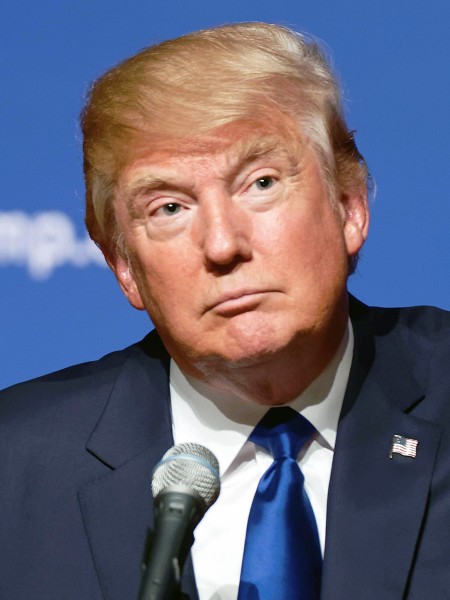 If, as expected, the new president adopts an expansionary fiscal policy, with tax cuts and increased government spending on infrastructure projects, this will stimulate the economy and put upward pressure on inflation. It could also mean that the Fed will raise interest rates again more quickly. Indeed, the FOMC indicated that it expects three rate rises in 2017 rather than the two it predicted in September.
However, just how much and when the Fed will raise interest rates again is highly uncertain. Future monetary policy measures will only become more predictable when Trump’s policies and their likely effects become clearer.
Articles
US Federal Reserve raises interest rates and flags quicker pace of tightening in 2017 Independent, Ben Chu (14/12/16)
US Federal Reserve raises interest rates: what happens next? The Telegraph, Szu Ping Chan (15/12/16)
Holiday traditions: The Fed finally manages to lift rates in 2016 The Economist (14/12/16)
US raises key interest rate by 0.25% on strengthening economy BBC News (14/12/16)
Fed Raises Key Interest Rate, Citing Strengthening Economy The New York Times, Binyamin Appelbaum (14/12/16)
US dollar surges to 14-year high as Fed hints at three rate hikes in 2017 The Guardian, Martin Farrer and agencies (15/12/16)
Questions
- What determines the stance of US monetary policy?
- How does fiscal policy impact on market interest rates and monetary policy?
- What effect does a rise in interest rates have on exchange rates and the various parts of the balance of payments?
- What effect is a rise in US interest rates likely to have on other countries?
- What is meant by ‘forward guidance’ in the context of monetary policy? What are the benefits of providing forward guidance?
- What were the likely effects on the US stock market of the announcement by the FOMC?
- Following the FOMC announcement, two-year US Treasury bond yields rose to 1.231%, the highest since August 2009. Explain why.
- For what reason does the FOMC believe that the US economy is already expanding at roughly the maximum sustainable pace?