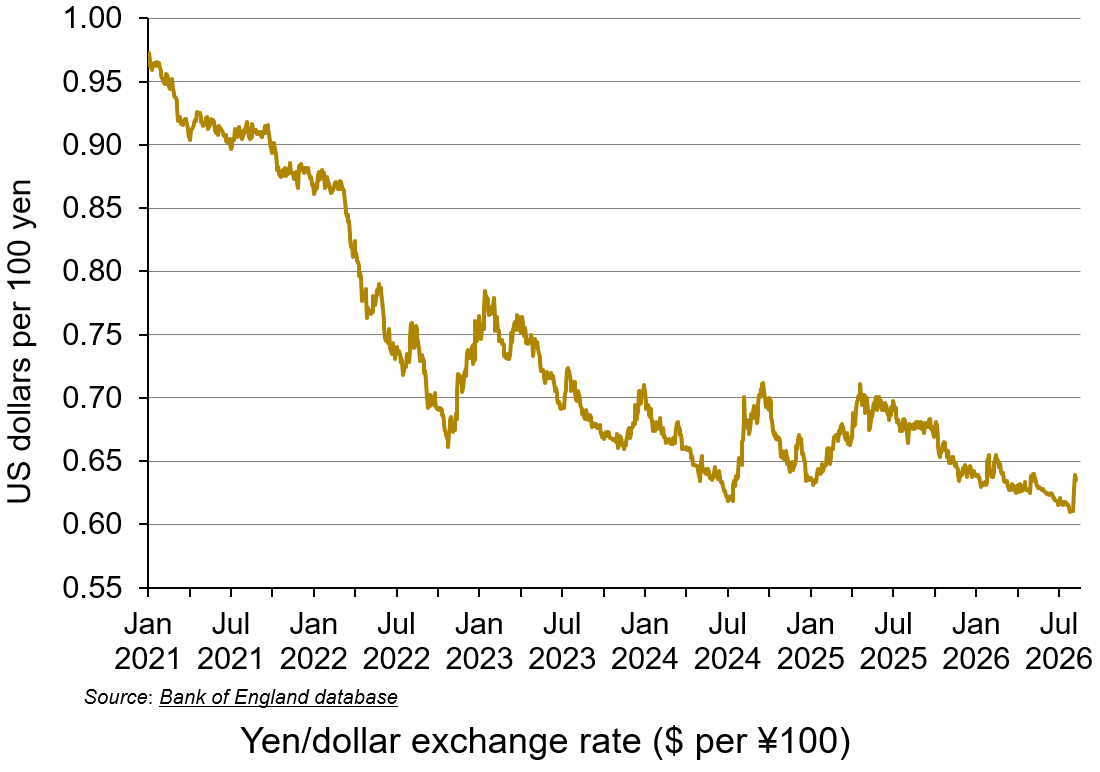
The yen has been depreciating against the dollar and other currencies for several months. It fell from 100 yen = $0.97 in January 2021 to $0.61 by the end of July 2026 – a fall of 37%. This marked a 40-year low. But then, at the end of July it rallied and by 3 August the rate was 100 yen = $0.64 – a rise of nearly 5%. But why did this happen and what will be the implications for Japan and the wider world economy?
Why has the yen fallen so much since 2021?
 There have been two main drivers.
The first is fiscal policy. For many years, Japan has been pursuing expansionary fiscal policy in an attempt to stimulate the sluggish economy. This has led to large budget deficits and public-sector debt. Since 2020, general government gross debt has been around 255% of GDP, the largest of any high-income economy.
Recently, the Japanese government has adopted aggressive supplementary budgets to fund, among other things, fuel subsidies and public-private investment initiatives. This has involved the issuance of more government bonds to fund the necessary borrowing.
 Fiscal pressures have also increased becase of demography. A rapidly aging population and declining birth rates have required substantial public spending on healthcare, social security and pensions. Meanwhile, the tax-paying working-age population has declined as a proportion of total population.
On the plus side, unlike most highly indebted nations, over 90% of Japan’s debt is held domestically by Japanese residents, Japanese institutional investors, banks and the Bank of Japan (BoJ). This lowers the risk of default and hence the risk premium on Japanese bonds.
 The second driver is monetary policy. Interest rates have been kept low over many years, including periods of negative rates, as the BoJ has attempted to stimulate the economy. Low interest rates have sometimes been backed up with quantitative easing to increase money supply.
Since March 2024, however, there have been four interest rate increases. The latest was in June 2026 when the BoJ raised the short-term policy rate from 0.75% to 1.0% – the highest level since 1995. Despite this, interest rates have remained below those in other countries, and this contributed to the continuing fall of the yen.
A falling yen has helped to increase Japanese exports by making them more competitive, but more expensive imports have contributed to rising Japanese inflation.
Low interest rates have also stimulated the yen-dollar carry trade. This is where investors borrow money in yen at low interest rates, convert it into US dollars and invest it in higher-yielding US assets, typically US government bonds (‘Treasury bonds’). This borrowing in yen to buy dollars further contributed to the depreciation of the yen against the dollar.
Co-ordinated intervention
 In an attempt to raise the value of the yen, the Bank of Japan and the US Federal Reserve acted together – their first joint currency rescue operation since 2011. The BoJ spent tens of billions of dollars to buy yen; the US Treasury bought yen by selling euros. Prior to the intervention, global hedge funds held near-record short positions against the yen, meaning that they sold yen at a current price, agreeing to buy them back at a particular later date, hoping that the yen would fall in the meantime and that they would therefore make a profit. The sudden joint intervention forced these traders to buy back the yen to cut their losses before the rate rose further. This accelerated the yen’s appreciation.
But why did the USA join Japan in intervening? Japan is the largest foreign holder of US Treasuries ($1.1 trillion). The USA intervened to discourage Japanese investors from selling US Treasuries in order to raise cash, thereby pushing up US borrowing costs.
The rise in the yen was also encouraged by speculators who are expecting further interest rate rises from the BoJ to counter inflation and support public finances, driving domestic bond yields higher. This will lead to a narrowing of interest rates between Japan and other countries.
Effects on the Japanese economy
 If the yen continues to appreciate, this will help to reduce inflation by making imports cheaper and will help to ease cost-of-living pressures on Japanese consumers. Japan is heavily reliant on imported energy and raw materials.
However, the decline in the yen over recent years has provided a large boost to Japanese exports. A sharp reversal in this could severely affect exporters’ profits and have a serious negative impact on economic growth.
If the appreciation continues, it would lead to an unwinding of the carry trade. To prevent mounting currency losses, highly leveraged institutional investors would be forced to sell assets, such as US and other countries’ shares and bonds to buy back yen and pay off their debts. This potentially massive unwinding would be likely to create global market volatility and drive up interest rates.
Articles
- Yen holds gains after Japan, US confirm joint intervention, signal more action
Reuters, Makiko Yamazaki and Leika Kihara (3/8/26)
- Yen surges to three-month peak, dollar pares losses after intervention
Reuters, Chibuike Oguh (3/8/26)
- US dollar weakens sharply against the Japanese yen after officials intervene in markets
ABC7 Eyewitness News, Mayuko Ono and Elaine Kurtenbach (3/8/26)
- Yen hits three-month high after Trump helps prop up currency
The Guardian, Graeme Wearden (3/8/26)
- Why has Trump stepped in to prop up Japan’s currency?
The Guardian, Jonathan Yerushalmy (3/8/26)
- Why the U.S. stepped in after decades to prop up Japan’s yen — and what’s at stake
CNBC, Lee Ying Shan (3/8/26)
- Politics & Policy Analysis: How Bessent is pushing Warsh’s Fed to expand backstop for Japan’s yen defense
CNBC, Matt Peterson (3/8/26)
- Why Japan is propping up the yen – and why the US helped
The Straits Times (4/8/26)
- The Pros and Cons of a Strong Dollar
Johnston Investment Counsel (3/8/26)
- Why the U.S. Stepped In to Prop Up Japan’s Yen Currency
Yahoo!Finance, Tiago Ventura (3/8/26)
- Why the U.S. Is Helping Prop Up Japan’s Weak Currency
The New York Times, Eshe Nelson (3/8/26)
- U.S.-Japan Intervention Triggers Yen Carry Trade Fears
The Chosun Daily, Lee Hai-woon (3/8/26)
- What top minds in markets are saying about the US intervention to prop up Japan’s currency
Business Insider, Jennifer Sor (3/8/26)
Data
Questions
- What have been the benefits and costs to Japan of a depreciating exchange rate?
- Explain the carry trade.
- Why might the yen-dollar carry trade unwind and what would be the consequences for Japan and the USA?
- Find out what has happened to the exchange rate between the yen and the euro. Has this been driven by the carry trade?
- For what reasons might the yen (a) now continue rising; (b) resume depreciating?
- Find out what has happened to the yen/dollar exchange rate since this blog was written. Explain your findings.
A common practice of international investors is to take part in the so-called ‘carry trade’. This involves taking advantage of nominal interest rate differences between countries. For example, assume that interest rates are low in Japan and high in the USA. It is thus profitable to borrow yen in Japan at the low interest rate, exchange it into US dollars and deposit the money at the higher interest rate available in the USA. If there is no change in the exchange rate between the dollar and the yen, the investor makes a profit equal to the difference in the interest rates.
Rather than depositing the money in a US bank account, an alternative is to purchase US bonds or other assets in the USA, where the return is again higher than that in Japan.
If, however, interest-rate differentials narrow, there is the possibility of the carry trade ‘unwinding’. Not only may the carry trade prove unprofitable (or less so), but investors may withdraw their deposits and pay back the loans. This, as we shall, can have adverse consequences on exchange rates.
The problem of an unwinding of the carry trade is not new. It worsened the underlying problems of the financial crisis in 2008. The question today is whether history is about to repeat itself with a new round of unwinding of the carry trade threatening economic growth and recovery around the world.
We start by looking at what happened in 2008.
The carry trade and the 2008 financial crisis
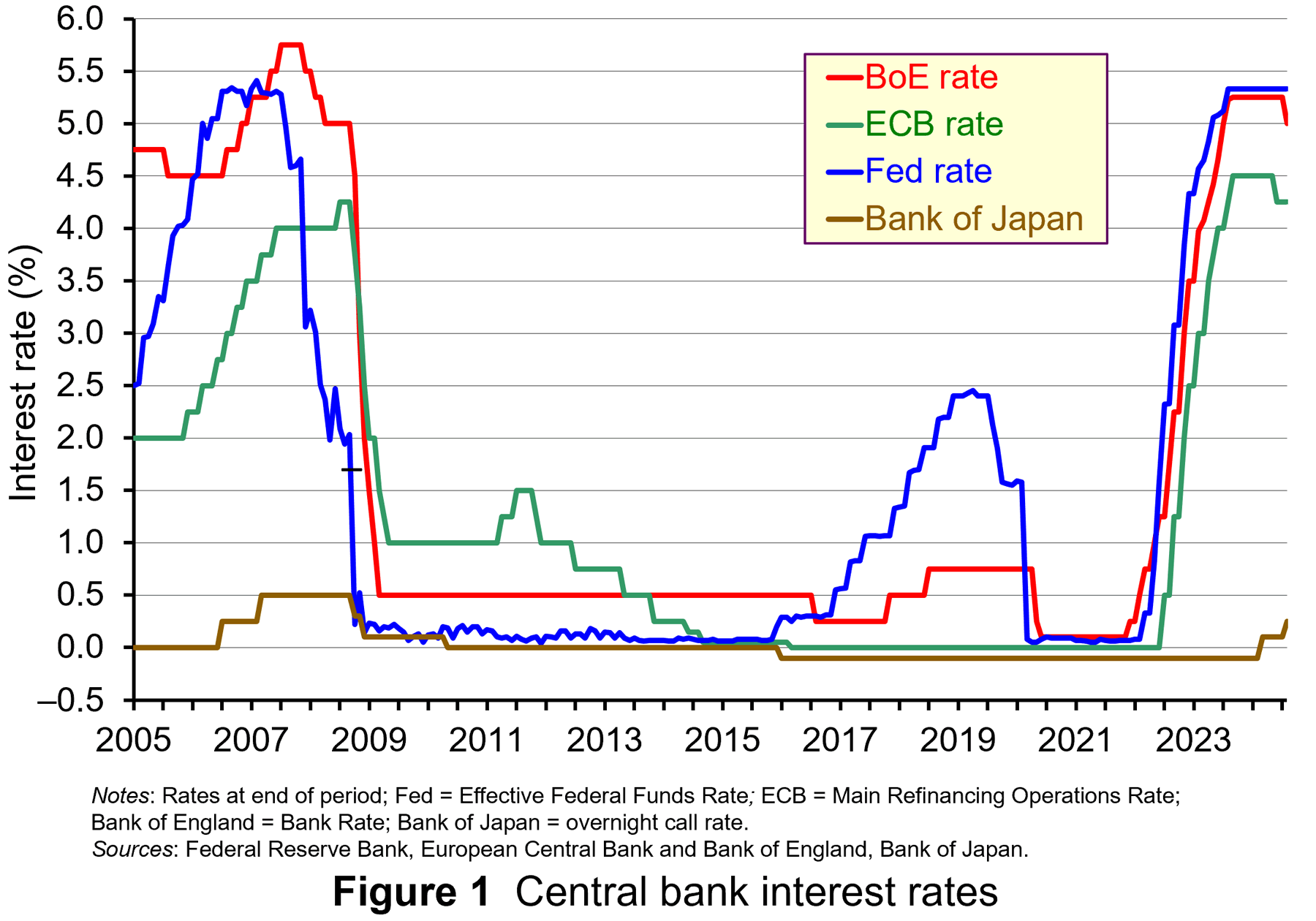 Prior to the financial crisis of 2008, current account deficit countries, such as the UK, USA and Australia, typically had relatively high interest rates, while current account surplus countries such as Japan and Switzerland had relatively low ones. Figure 1 shows central bank interest rates from 2005 to the current day (click here for a PowerPoint).
The carry trade saw investors borrowing money in Japan and Switzerland, exchanging it on the foreign exchange market, with the currency then deposited in the UK, USA and Australia. Hundreds of billions worth of dollars were involved in this carry trade.
If, however, the higher interest rates in the UK and other deficit countries were simply to compensate investors for the risk of currency depreciation, then there would be no excessive inflow of finance. The benefit of the higher interest rate would be offset by a depreciating currency. But the carry trade had the effect of making deficit currencies appreciate, thereby further boosting the carry trade by speculation of further exchange rate rises.
Thus the currencies of deficit countries appreciated, making their goods less competitive and worsening their current account deficit. Between 1996 and 2006, the average current account deficits as a percentage of GDP for Australia, the USA and the UK were close to 4½, 4 and 2, respectively. Between January 1996 and December 2006, the broad-based real exchange rate index of the Australian dollar appreciated by 17%, of the US dollar by 4% and of sterling by some 23%.
 Currencies of surplus countries depreciated, making their goods more competitive and further boosting their current account surpluses. For example, between 2004 and 2006 the average current account surpluses as a percentage of GDP for Japan and Switzerland were 3½ and 13, respectively. Their short-term interest rates averaged a mere 0.1% and 1.0% respectively (compared with 3.4%, 4.7% and 5.7% for the USA, the UK and Australia). Yet between January 2004 and December 2006, the real exchange rate index of the yen depreciated by 21%, while that of the Swiss franc depreciated by 6%.
With the credit crunch of 2007/8, the carry trade unwound. Much of the money deposited in the USA had been in highly risky assets, such as sub-prime mortgages. Investors scrambled to sell their assets in the USA, UK and the EU. Loans from Japan and Switzerland were repaid and these countries, seen as ‘safe havens’, attracted deposits. The currencies of deficit countries, such as the UK and USA, began to depreciate and those of surplus countries, such as Japan and Switzerland, began to appreciate. Between September 2007 and September 2008, the real exchange rate indices of the US dollar and sterling depreciated by 2% and 13% respectively; the yen and the Swiss franc appreciated by 3% and 2¾%.
This represented a ‘double whammy’ for Japanese exporters. Not only did its currency appreciate, making its exports more expensive in dollars, euros, pounds, etc., but the global recession saw consumers around the world buying less. As a result, the Japanese economy suffered the worst recession of the G7 economies.
The carry trade in recent months
Since 2016, there has been a re-emergence of the carry trade as the Fed began raising interest rates while the Bank of Japan kept rates at the ultra low level of –0.1% (see Figure 1). The process slowed down when the USA lowered interest rates in 2020 in response to the pandemic and fears of recession. But when the USA, the EU and the UK began raising rates at the beginning of 2022 in response to global inflationary pressures, while Japan kept its main rate at –0.1%, so the carry trade resumed in earnest. Cross-border loans originating in Japan (not all of it from the carry trade) had risen to ¥157tn ($1tn) by March 2024 – a rise of 21% from 2021.
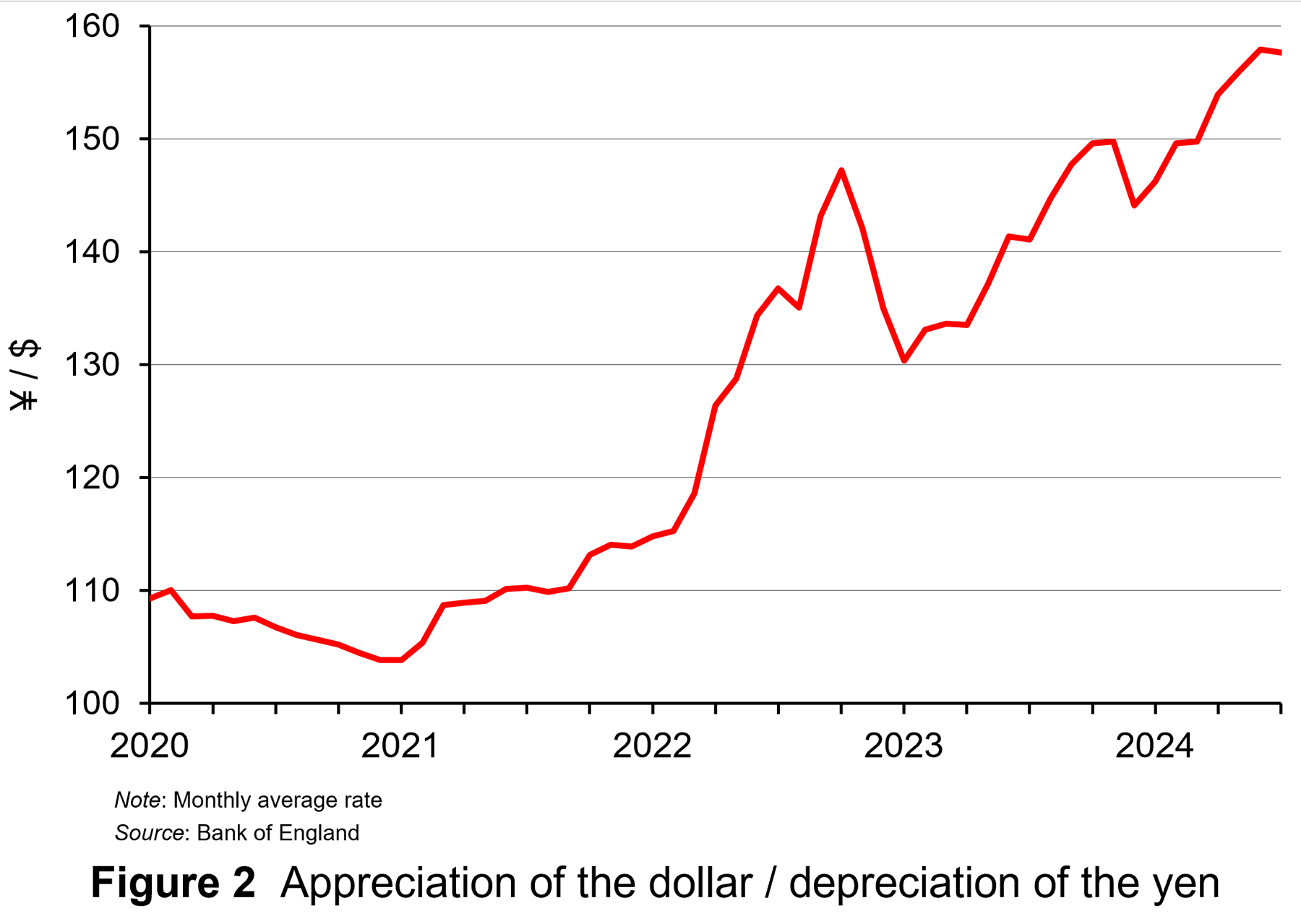 The process boosted US stock markets and contributed to the dollar appreciating against the yen (see Figure 2: click here for a PowerPoint).
Although this depreciation of the yen helped Japanese exports, it also led to rising prices. Japanese inflation rose steadily throughout 2022. In the 12 months to January 2022 the inflation rate was 0.5% (having been negative from October 2020 to August 2021). By January 2023, the annual rate had risen to 4.3% – a rate not seen since 1981. The Bank of Japan was cautious about raising interest rates to suppress this inflation, however, for fear of damaging growth and causing the exchange rate to appreciate and thereby damaging exports. Indeed, quarterly economic growth fell from 1.3% in 2023 Q1 to –1.0% in 2023 Q3.
But then, with growth rebounding and the yen depreciating further, in March 2024 the Bank of Japan decided to raise its key rate from –0.1% to 0.1%. This initially had the effect of stabilising the exchange rate. But then with the yen depreciating further and inflation rising from 2.5% to 2.8% in May and staying at this level in June, the Bank of Japan increased the key rate again at the end of July – this time to 0.25% – and there were expectations that there would be another rise before the end of the year.
At the same time, there were expectations that the Fed would soon lower its main rate (the Federal Funds Rate) from its level of 5.33%. The ECB and the Bank of England had already begun lowering their main rates in response to lower inflation. The carry trade rapidly unwound. Investors sold US, EU and UK assets and began repaying yen loans.
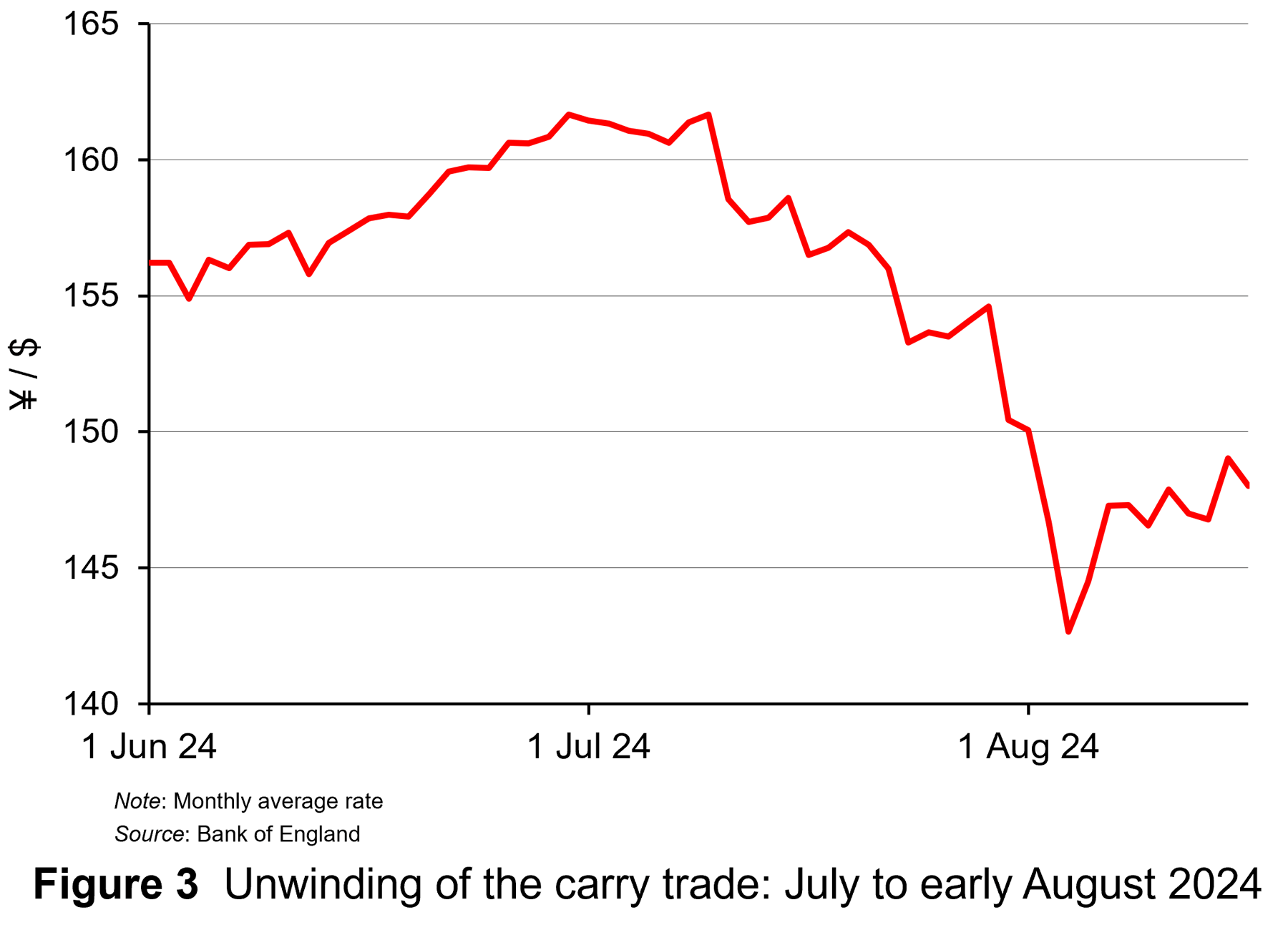 The result was a rapid appreciation of the yen as Figure 3 shows (click here for a PowerPoint). Between 31 July (the date the Bank of Japan raised interest rates the second time) and 5 August, the dollar depreciated against the yen from ¥150.4 to ¥142.7. In other words, the value of 100 yen appreciated from $0.66 to $0.70 – an appreciation of the yen of 6.1%.
Fears about the unwinding of the carry trade led to falls in stock markets around the world. Not only were investors selling shares to pay back the loans, but fears of the continuing process put further downward pressure on shares. From 31 July to 5 August, the US S&P 500 fell by 6.1% and the tech-heavy Nasdaq by 8.0%.
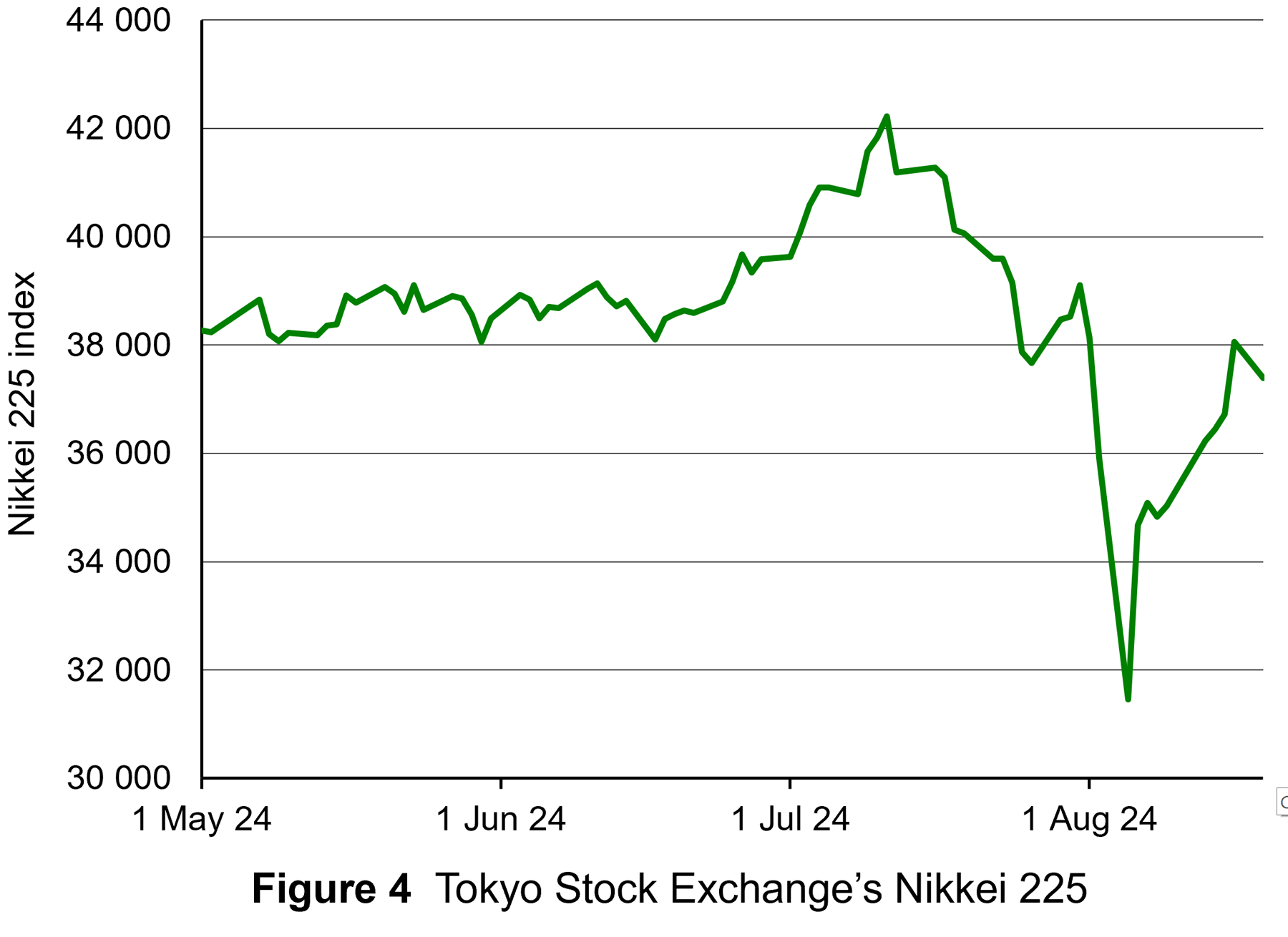 As far as the Tokyo stock market was concerned, the appreciation of the yen sparked fears that the large Japanese export sector would be damaged. Investors rushed to sell shares. Between 31 July and 5 August, the Nikkei 225 (the main Japanese stock market index) fell by 19.5% – its biggest short-term fall ever (see Figure 4: click here for a PowerPoint).
Although the yen has since depreciated slightly (a rise in the yen/dollar rate) and stock markets have recovered somewhat, expectations of many investors are that the unwinding of the yen carry trade has some way to go. This could result in a further appreciation of the yen from current levels of around ¥100 = $0.67 to around $0.86 in a couple of years’ time.
There are also fears about the carry trade in the Chinese currency, the yuan. Some $500 billion of foreign currency holdings have been acquired with yuan since 2022. As with the Japanese carry trade, this has been encouraged by low Chinese interest rates and a depreciating yuan. Not only are Chinese companies investing abroad, but foreign companies operating in China have been using their yuan earnings from their Chinese operations to invest abroad rather than in China. The Chinese carry trade, however, has been restricted by the limited convertibility of the yuan. If the Chinese carry trade begins to unwind when the Chinese economy begins to recover and interest rates begin to rise, the effect will probably be more limited than with the yen.
Articles
- A popular trading strategy just blew up in investors’ faces
CNN, Allison Morrow (7/8/24)
- The big ‘carry trade’ unwind is far from over, strategists warn
CNBC, Sam Meredith (13/8/24)
- Unwinding of yen ‘carry trade’ still threatens markets, say analysts
Financial Times, Leo Lewis and David Keohane (7/8/24)
- The yen carry trade sell-off marks a step change in the business cycle
Financial Times, John Plender (10/8/24)
- Forbes Money Markets Global Markets React To The Japanese Yen Carry Trade Unwind
Forbes, Frank Holmes (12/8/24)
- 7 unwinding carry trades that crashed the markets
Alt21 (26/1/23)
- A carry crash also kicked off the global financial crisis 17 years ago — here’s why it’s unlikely to get as bad this time
The Conversation, Charles Read (9/8/24)
- What is the Chinese yuan carry trade and how is it different from the yen’s?
Reuters, Winni Zhou and Summer Zhen (13/8/24)
- Carry Trade That Blew Up Markets Is Attracting Hedge Funds Again
Yahoo Finance/Bloomberg, David Finnerty and Ruth Carson (16/8/24)
- Currency Carry Trades 101
Investopedia, Kathy Lien (9/8/24)
- Carry Trades Torpedoed The Market. They’re Still Everywhere.
Finimize, Stéphane Renevier (13/8/24)
Questions
- What factors drive the currency carry trade?
- Is the carry trade a form of arbitrage?
- Find out and explain what has happened to the Japanese yen since this blog was written.
- Find out and explain some other examples of carry trades.
- Why are expectations so important in determining the extent and timing of the unwinding of carry trades?
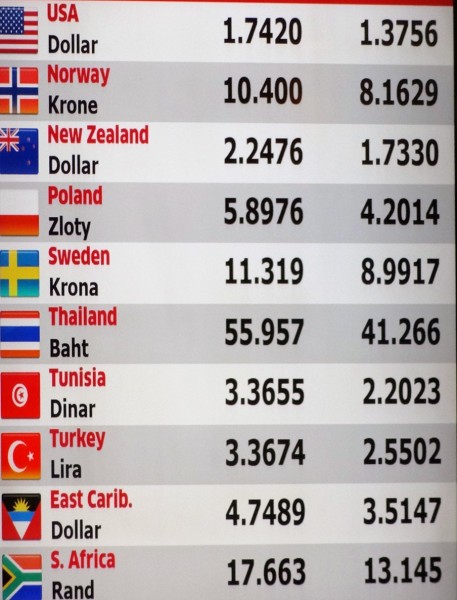 According to latest evidence from the Bank for International Settlements, in April 2013 some £3.2 trillion ($5.3 trillion) of foreign exchange was traded daily on global foreign exchange (forex) markets. About 40% of forex dealing goes through trading rooms in London. This market is highly profitable for the UK economy. But all is not well with the way people trade. There is a scandal about rate fixing.
Exchange rates on the forex market are freely determined by demand and supply and fluctuate second by second, 24 hours a day, except for weekends. Nevertheless, once a day rates are fixed for certain trades. At 4pm GMT a set of reference rates is set for corporate customers by banks and other traders. The rates are set at the free market average over the one minute from 16:00 to 16:01. The allegation is that banks have been colluding, through text messaging and chat rooms, to manipulate the market over that one minute.
Since the early summer of 2013, the Financial Conduct Authority (FCA) in the UK, along with counterparts in the USA, Switzerland, Hong Kong and elsewhere, has been looking into these allegations. Last week (4/3/14), the Bank of England suspended a member of its staff as part of its own investigation into potential rigging of the foreign exchange market. The allegation is not that the staff member(s) were involved in the rigging but that they might have known about it.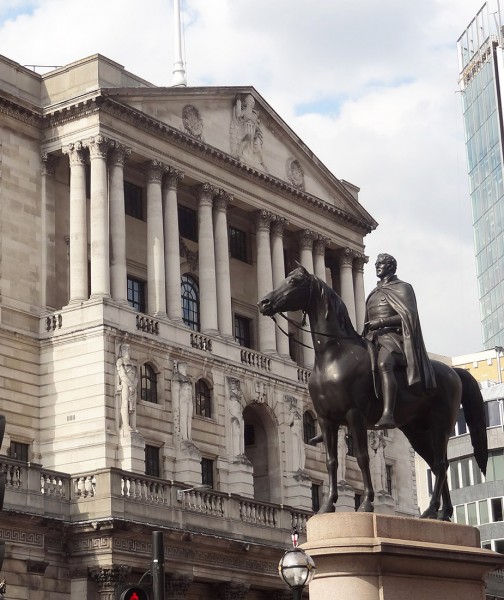 The Bank said that, “An oversight committee will lead further investigations into whether bank officials were involved in forex market manipulation or were aware of manipulation, or at least the potential for such manipulation.”
Meanwhile, the House of Commons Treasury Select Committee has been questioning Bank of England staff, including the governor, Mark Carney, about the scandal. Speaking to the Committee, Martin Wheatley, head of the FCA said that the investigation over rigging had been extended to 10 banks and that the allegations are every bit as bad as they have been with Libor.
Forex rigging ‘as serious as’ Libor scandal: Carney Yahoo News, Roland Jackson (11/2/14)
Forex manipulation: How it worked HITC (Here Is The City), Catherine Boyle (11/3/14)
Bank of England Chief Grilled Over Forex Scandal ABC News, Danica Kirka (11/3/14)
Carney Faces Grilling as Currency Scandal Snares BOE Bloomberg, Scott Hamilton and Suzi Ring (10/3/14)
UK financial body urges quick action over foreign exchange ‘fixing’ Reuters, Huw Jones (11/3/14)
Timeline -The FX “fixing” scandal Reuters, Jamie McGeever (11/3/14)
Forex in the spotlight Financial Times (16/2/14)
Forex scandal: What is that all about? BBC News (11/3/14)
 Bank of England in shake-up after rate manipulation criticism BBC News (11/3/14)
Mark Carney faces Forex questions from MPs BBC News, Hugh Pym (11/3/14)
Bank of England’s Paul Fisher: ‘It’s not our job to go hunting for market wrongdoing’ Independent, Russell Lynch , Ben Chu (11/3/14)
Questions
- For what reasons would sterling appreciate against the dollar?
- Most of forex trading is for speculative purposes, rather than for financing trade or investment. Why is this and does it benefit international trade?
- If foreign exchange rates fluctuate, is it not a good thing that banks collude to agree the 4pm fixed rate? Explain.
- What was the Libor scandal? Why are some people arguing that the current forex scandal is worse?
- What can the FCA do to prevent collusion over exchange rates?