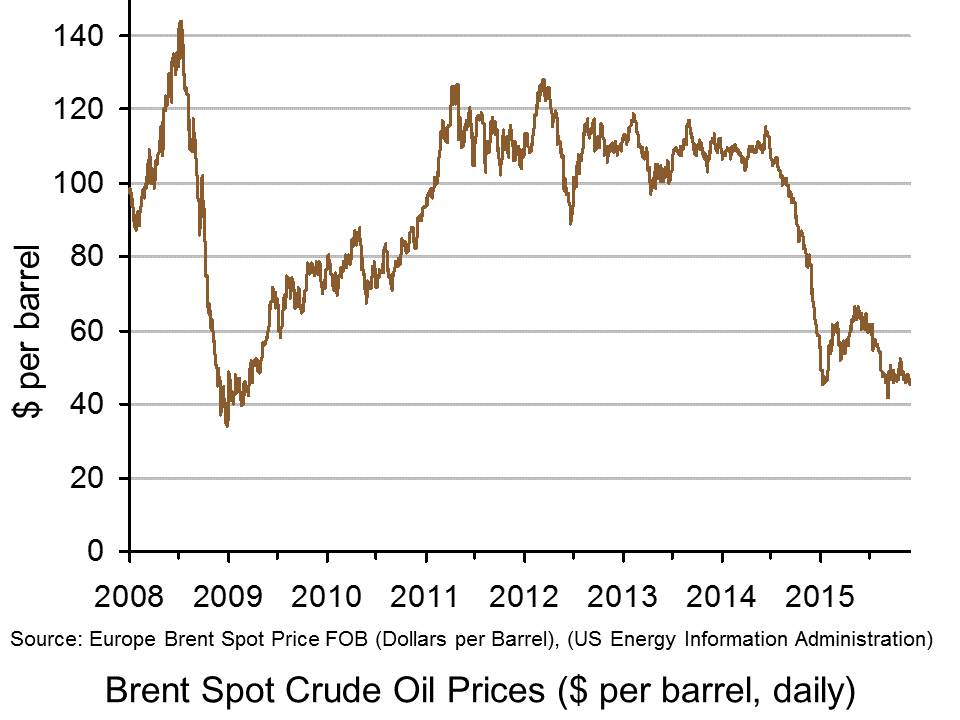
 The demand for oil is growing and yet the price of oil, at around $46 per barrel over the past few weeks, remains at less than half that of the period from 2011 to mid 2014. The reason is that supply has been much larger than demand. The result has been a large production surplus and a growth in oil stocks. Supply did fall somewhat in October, which reduced the surplus in 2015 Q3 below than of the record level in Q2 – but the surplus was still the second highest on record.
What is more, the modest growth in demand is forecast to slow in 2016. Supply, however, is expected to decrease through the first three quarters of 2016, before rising again at the end of 2016. The result will be a modest rise in price into 2016, to around $56 per barrel, compared with an average of just over $54 per barrel so far for 2015 (click here for a PowerPoint of the chart below).
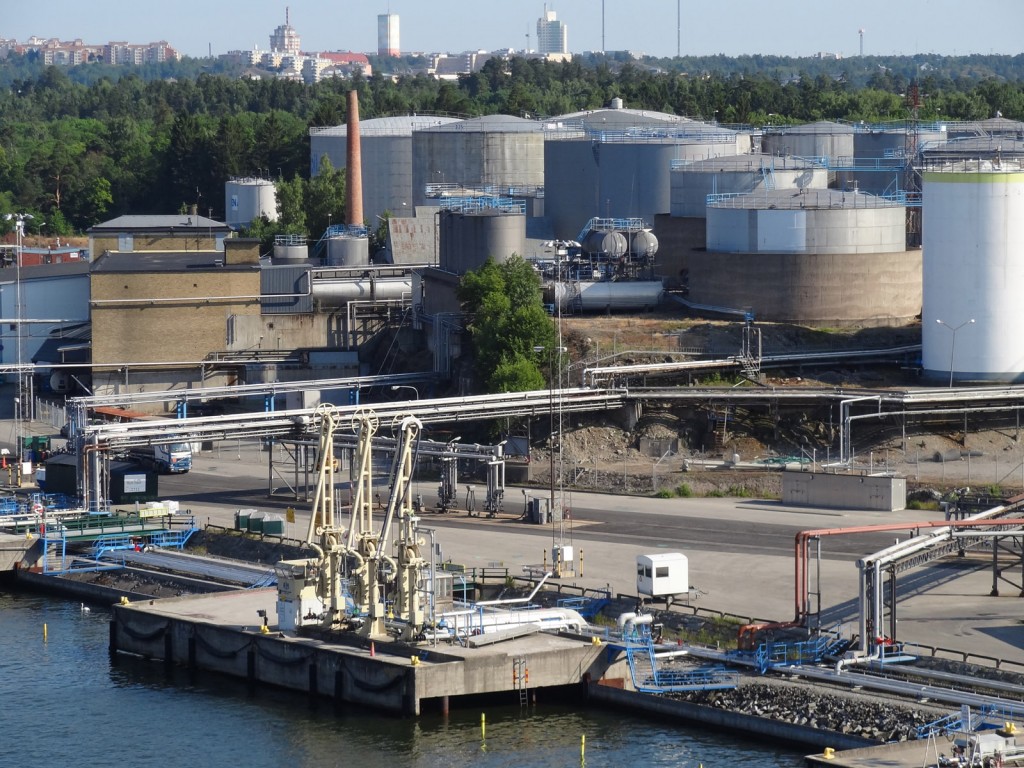
 But why does supply remain so high, given such low prices? As we saw in the post The oil industry and low oil prices, it is partly the result of increases in supply from large-scale investment in new sources of oil over the past few years, such as the fracking of shale deposits, and partly the increased output by OPEC designed to keep prices low and make new investment in shale oil unprofitable.
So why then doesn’t supply drop off rapidly? As we saw in the post, A crude indicator of the economy (Part 2), even though shale oil producers in the USA need a price of around $70 or more to make investment in new sources profitable, the marginal cost of extracting oil from existing sources is only around $10 to £20 per barrel.  This means that shale oil production will continue until the end of the life of the wells. Given that wells typically have a life of at least three years, it could take some time for the low prices to have a significant effect on supply. According to the US Energy Information Administration’s forecasts, US crude oil production will drop next year by only just over 5%, from an average of 9.3 million barrels per day in 2015 to 8.8 million barrels per day in 2016.
In the meantime, we can expect low oil prices to continue for some time. Whilst this is bad news for oil exporters, it is good news for oil importing countries, as the lower costs will help aid recovery.
Webcasts
 IEA says oil glut could worsen through 2016 Euronews (13/11/15)
IEA Says Record 3 Billion-Barrel Oil Stocks May Deepen Rout BloombergBusiness, Grant Smith (13/11/15)
Articles
IEA Offers No Hope For An Oil-Price Recovery Forbes, Art Berman (13/11/15)
Oil glut to swamp demand until 2020 Financial Times, Anjli Raval (10/11/15)
Record oil glut stands at 3bn barrels BBC News (13/11/15)
Global oil glut highest in a decade as inventories soar The Telegraph, Mehreen Khan (12/11/15)
The Oil Glut Was Created In Q1 2015; Q3 OECD Inventory Movements Are Actually Quite Normal Seeking Alpha (13/11/15)
Record oil glut stands at 3 billion barrels Arab News (14/11/15)
OPEC Update 2015: No End To Oil Glut, Low Prices, As Members Prepare For Tense Meeting International Business Times, Jess McHugh (12/11/15)
Surviving The Oil Glut Investing.com, Phil Flynn (11/11/15)
Reports and data
Oil Market Report International Energy Agency (IEA) (13/11/15)
Short-term Energy Outlook US Energy Information Administration (EIA) (10/11/15)
Brent Crude Prices US Energy Information Administration (EIA)
Questions
- Using demand and supply diagrams, demonstrate (a) what has been happening to oil prices in 2015 and (b) what is likely to happen to them in 2016.
- How are the price elasticities of demand and supply relevant in explaining the magnitude of oil price movements?
- What are oil prices likely to be in five years’ time?
- Using aggregate demand and supply analysis, demonstrate the effect of lower oil prices on a national economy.
- Why might the downward effect on inflation from lower oil prices act as a stimulus to the economy? Is this consistent with deflation being seen as requiring a stimulus from central banks, such as lower interest rates or quantitative easing?
- Do you agree with the statement that “Saudi Arabia is acting directly against the interests of half the cartel and is running OPEC over a cliff”?
- If the oil price is around $70 per barrel in a couple of years’ time, would it be worth oil companies investing in shale oil wells at that point? Explain why or why not.
- Distinguish between short-run and long-run shut down points. Why is the short-run shut down price likely to be lower than the long-run one?
 First the IMF in its World Economic Outlook, then the European Commission in its Economic Forecasts (see also) and now the OECD in its Economic Outlook (see also) – all three organisations in the latest issues of their 6-monthly publications are predicting slower global economic growth than they did 6 months previously. This applies both to the current year and to 2016. The OECD’s forecast for global growth this year is now 2.9%, down from the 3.7% it was forecasting a year ago. Its latest growth forecast for 2016 is 3.3%, down from the 3.9% it was forecasting a year ago.
Various reasons are given for the gloomier outlook. These include: a dramatic slowdown in global trade growth; slowing economic growth in China and fears over structural weaknesses in China; falling commodity prices (linked to slowing demand but also as a result of increased supply); austerity policies as governments attempt to deal with the hangover of debt from the financial crisis of 2007/8; low investment leading to low rates of productivity growth despite technological progress; and general fears about low growth leading to low spending as people become more cautious about their future incomes.
 The slowdown in trade growth (forecast to be just 2% in 2015) is perhaps the most worrying for future global growth. As Angel Gurría, OECD Secretary-General, states in his remarks at the launch of the latest OECD Economic Outlook:
‘Global trade, which was already growing slowly over the past few years, appears to have stagnated and even declined since late 2014, with the weakness centering increasingly on emerging markets, particularly China. This is deeply concerning as robust trade and global growth go hand in hand. In 2015 global trade is expected to grow by a disappointing 2%. Over the past five decades there have been only five other years in which trade growth has been 2% or less, all of which coincided with a marked downturn of global growth.’
So what policies should governments pursue to stimulate economic growth? According to Angel Gurría:
‘Short-term demand needs to be supported and structural reforms to be pursued with greater ambition than is currently the case. Three specific actions are key:
|
|
| • |
First, we need to resist and turn back rising protectionism. Trade strengthens competition and investment and revs up the “diffusion machine” – the spread of new technologies throughout the economy – which will ultimately lift productivity. |
| • |
Second, we need to step up structural reform efforts, which have weakened in recent years. And here, I mean the whole range of structural reforms – education, innovation, competition, labour and product market regulation, R&D, taxes, etc. |
| • |
Third, there is scope to adjust public spending towards investment. If done collectively by all countries, if the sector and projects chosen have high multipliers, and if combined with serious structural reforms, stronger public investment can give a boost to growth and employment and not increase the relative debt burden.’ |
 On this third point, the OECD Economic Outlook argues that ‘the rationale for such investments is that they could help to push economies onto a higher growth path than might otherwise be the case, at a time when private investment growth remains modest.’
‘Collective action to increase public investment can be expected to boost the initial domestic multiplier effects from the stimulus, since private investment and exports in each economy will benefit from stronger demand in other economies. …the multiplier effects from an investment-led stimulus are likely to be a little larger than from other forms of fiscal stimulus, since the former also has small, but positive, supply-side effects.
In other words, the OECD is calling for a relaxation of austerity policies, with public investment being used to provide a stimulus to growth. The higher growth will then lead to increased potential output, as well as actual output, and an increase in tax revenues.
These policy recommendations are very much in line with those of the IMF.
Videos and Webcasts
OECD warns of global trade slowdown, trims growth outlook again Reuters (9/11/15)
OECD returns to revisionism with growth downgrade Euronews, Robert Hackwill (9/11/15)
OECD: Weak China Import Growth Leads Trade Slowdown Bloomberg, Catherine L Mann, OECD Chief Economist (9/11/15)
OECD Economic Outlook: Moving forward in difficult times OECD PowerPoint presentation, Catherine L Mann, OECD Chief Economist (9/11/15)
Press Conference OECD, Angel Gurría and Álvaro Pereira (9/11/15)
Articles
OECD cuts world growth forecast Financial Times, Ferdinando Giugliano (9/11/15)
OECD rings alarm bell over threat of global growth recession thanks to China slowdown Independent, Ben Chu (10/11/15)
OECD cuts global growth forecasts amid ‘deep concern’ over slowdown BBC News (9/11/15)
OECD fears slowdown in global trade amid China woes The Guardian, Katie Allen (9/11/15)
The global economy is slowing down. But is it recession – or protectionism? The Observer, Heather Stewart and Fergus Ryan (14/11/15)
Global growth is struggling, but it is not all bad news The Telegraph, Andrew Sentance (13/11/15)
OECD Publications
Economic Outlook Annex Tables OCED (9/11/15)
Press Release: Emerging market slowdown and drop in trade clouding global outlook OCED (9/11/15)
Data handout for press OECD (9/11/15)
OECD Economic Outlook, Chapter 3: Lifting Investment for Higher Sustainable Growth OCED (9/11/15)
OECD Economic Outlook: Full Report OECD (9/11/15)
Questions
- Is a slowdown in international trade a cause of slower economic growth or simply an indicator of slower economic growth? Examine the causal connections between trade and growth.
- How worried should we be about disappointing growth in the global economy?
- What determines the size of the multiplier effects of an increase in public investment?
- Why are the multiplier effects of an increase in public-sector investment likely to be larger in the USA and Japan than in the UK, the eurozone and Canada?
- How can monetary policy be supportive of fiscal policy to stimulate economic growth?
- Under what circumstances would public-sector investment (a) stimulate and (b) crowd out private-sector investment?
- How would a Keynesian economist respond to the recommendations of the OECD?
- How would a neoclassical/neoliberal economist respond to the recommendations?
- Are the OECD’s recommendations in line with the Japanese government’s ‘three arrows‘?
- What structural reforms are recommended by the OECD? Are these ‘market orientated’ or ‘interventionist’ reforms, or both? Explain.
 This rather strange question has been central to a storm that has been brewing between various celebrity chefs, including Jamie Oliver and Hugh Fearnley-Whittingstall, and the supermarkets. Supermarkets say that consumers don’t want irregular shaped vegetables, such as carrots, parsnips and potatoes. ‘Nonsense’, say their critics.
At the centre of the storm are the farmers, who find a large proportion of their vegetables are rejected by the supermarkets. And these are vegetables which are not damaged or bad – simply not of the required shape. Although these rejected vegetables have been described as ‘wonky’, in fact many are not wonky at all, but simply a little too large or too small, or too short or too long. Most of these vegetables are simply wasted – ploughed back into the ground, or at best used for animal feed.
And it’s not just shape; it’s colour too. Many producers of apples find a large proportion being rejected because they are too red or not red enough.
 But do consumers really want standardised fruit vegetables? Are the supermarkets correct? Are they responding to demand? Or are they attempting to manipulate demand?
Supermarkets claim that they are just responding to what consumers want. Their critics say that they are setting ludicrously rigid cosmetic standards which are of little concern to consumers. As Hugh Fearnley-Whittingstall states:
‘It’s only when you see the process of selection on the farm, how it has been honed and intensified, it just looks mad. There are many factory line systems where you have people looking for faults on the production line; in this system you’re looking for the good ones.
What we’re asking supermarkets to do is to relax their cosmetic standards for the vegetables that all get bagged up and sold together. It’s about slipping a few more of the not-so-perfect ones into the bag.’
In return, consumers must be prepared to let the supermarkets know that they are against these cosmetic standards and are perfectly happy to buy slightly more irregular fruit and vegetables. Indeed, this is beginning to happen through social media. 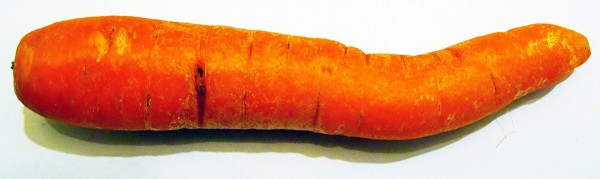 The pressure group 38 degrees has already taken up the cause.
But perhaps consumers ‘voting with their feet’ is what will change supermarkets’ behaviour. With the rise of small independent greengrocers, many from Eastern Europe, there is now intense competition in the fruit and vegetables market in many towns and cities. Perhaps supermarkets will be forced to sell slightly less cosmetically ‘perfect’ produce at a lower price to meet this competition.
Videos
Hugh’s War on Waste Episode 1 BBC on YouTube, Hugh Fearnley-Whittingstall (2/11/15)
Hugh’s War on Waste Episode 2 BBC on YouTube, Hugh Fearnley-Whittingstall (9/11/15)
Articles
Hugh Fearnley-Whittingstall rejects Morrisons’ ‘pathetic’ wonky veg trial The Guardian, Adam Vaughan (9/11/15)
Jamie Oliver leads drive to buy misshapen fruit and vegetables The Guardian, Rebecca Smithers (1/1/15)
Hugh Fearnley-Whittingstall’s war over wonky parsnips The Telegraph, Patrick Foster (30/10/15)
Asda extends ‘wonky’ fruit and veg range Resource, Edward Perchard (4/11/15)
Wearne’s last farmer shares memories and laments loss of farming community in Langport area Western Gazette, WGD Mumby (8/11/15)
Viewpoint: The rejected vegetables that aren’t even wonky BBC News Magazine (28/10/15)
Viewpoint: The supermarkets’ guilty secret about unsold food BBC News Magazine (6/11/15)
Questions
- What market failures are there is the market for fresh fruit and vegetables?
- Supermarkets are oligopsonists in the wholesale market for fruit and vegetables. What is the implication of this for (a) farmers; (b) consumers?
- Is there anything that (a) consumers and (b) the government can do to stop the waste of fruit and vegetables grown for supermarkets?
- How might supermarkets estimate the demand for fresh fruit and vegetables and its price elasticity?
- What can supermarkets do with unsold food? What incentives are there for supermarkets not to throw it away but to make good use of it?
- Could appropriate marketing persuade people to be less concerned about the appearance of fruit and vegetables? What form might this marketing take?
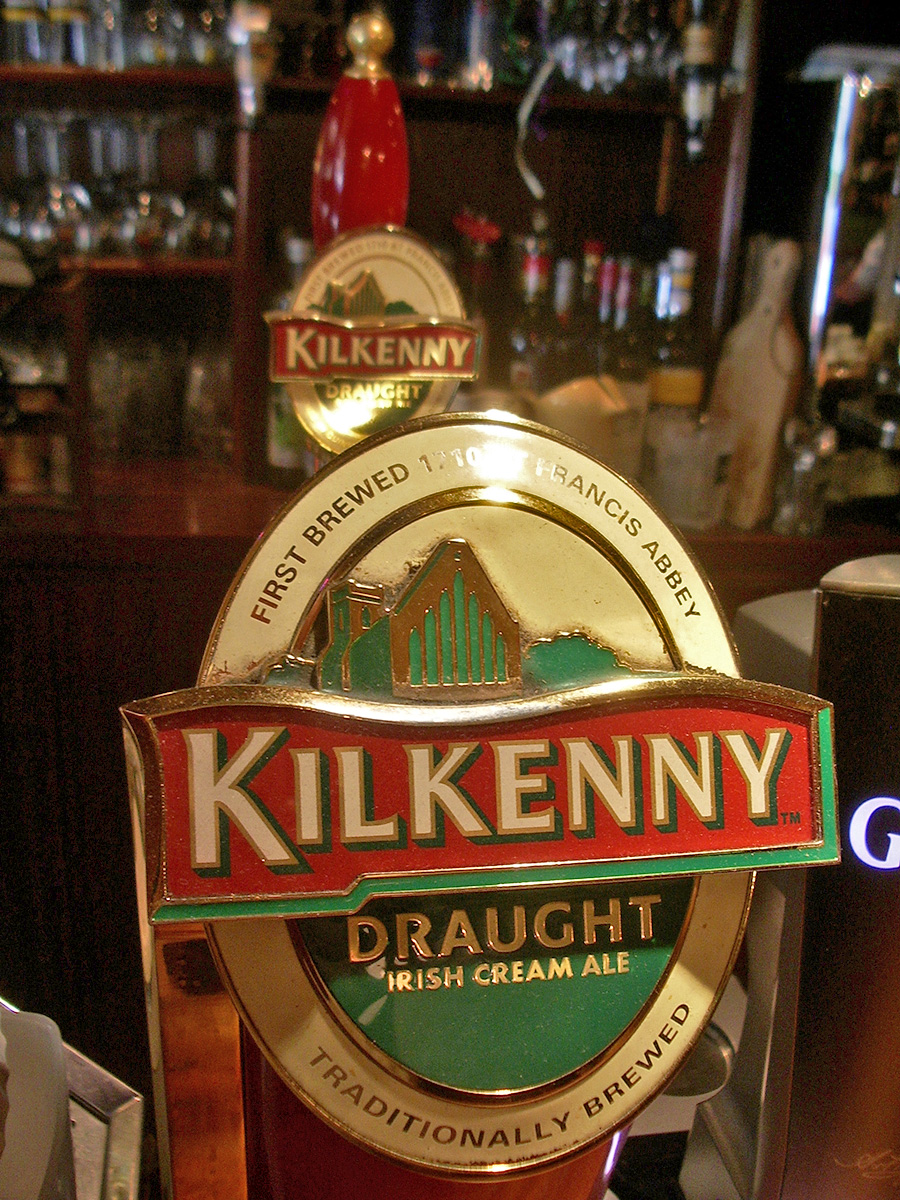
 The town of Kilkenny in Ireland has just hosted the sixth annual Kilkenomics festival (Nov 5–8) where economics and comedy meet. The festival brought together comedians and economists to take a look at some of the most pressing economic and social issues, such as the refugee crisis, economic recovery, banking and finance, the growth in inequality, the future of the EU, economic power, the environment and personal behaviour.
With stand-up comedians taking a sideways look at economic issues and top economists having their ideas lampooned, or lampooning them themselves, the festival provided a fun, but useful, reality check for the discipline of economics.
 The festival attracted some major names in the field of comedy, economics, journalism and politics. Perhaps the biggest draw was the former finance minister of Greece, Yanis Varoufakis (see also), who opened the festival with a withering attack on the economic model being pursued by Greece’s creditors (the European Commission, the IMF and the ECB).
Much of the comedy was really aimed, not so much at economics and economists, but more at how politicians pursue economic policies and interpret economic models in ways that suit their own political agenda. But still there was no escape for economists. Much of the humour was directed at unrealistic assumptions and unrealistic visions of how economies function.
Thanks to JokEc for the following:
|
|
| • |
Economics is the only field in which two people can get a Nobel Prize for saying exactly the opposite thing. |
| • |
If you rearrange the letters in “ECONOMICS”, you get “COMIC NOSE”. |
| • |
Economics has got so rigorous we’ve all got rigor mortis. |
| • |
How many economists does it take to change a light bulb? |
I’ll leave you to work out the best answer to that last one – there could be many depending on the school of thought.
Videos and podcasts
Kilkenomics Promo – 2015 Kilkenomics on YouTube (23/10/15)
Kilkenomics: Highlights 1 Kilkenomics on YouTube (27/10/15)
Kilkenomics: Highlights 2 Kilkenomics on YouTube (30/10/15)
Kilkenomics 2014 BBC ‘In the Balance’ (9/11/14)
Articles
Kilkenomics launches biggest programme to date Meath Chronicle (1/10/15)
The subversive wonders of Kilkenomics – where economics meets stand-up The Spectator, Liam Halligan (15/11/14)
Guilty as charged: Irish standup festival puts economics in the dock The Guardian, Larry Elliott (8/11/15)
Ireland no paradigm of successful austerity – Varoufakis The Irish Times, Eoin Burke Kennedy (5/11/15)
Economy of sex … how much are your orgasms costing you? Irish Independent, Niamh Horan (8/11/15)
Questions
- What is it about economics that gives so much material to comedians?
- ‘The worse it gets the funnier it seems because comedy exists with tragedy.’ To what extent is this true of economics as a discipline or simply of the state of the world economists are studying at any one time?
- Should assumptions in economics always be realistic? Explain why or why not.
- For what types of reason might economists disagree?
- Make up an economics joke and test it on your fellow students. Perhaps there ought to be a vote for the funniest and a prize for the winner. What was it about the winning joke that made it the funniest?
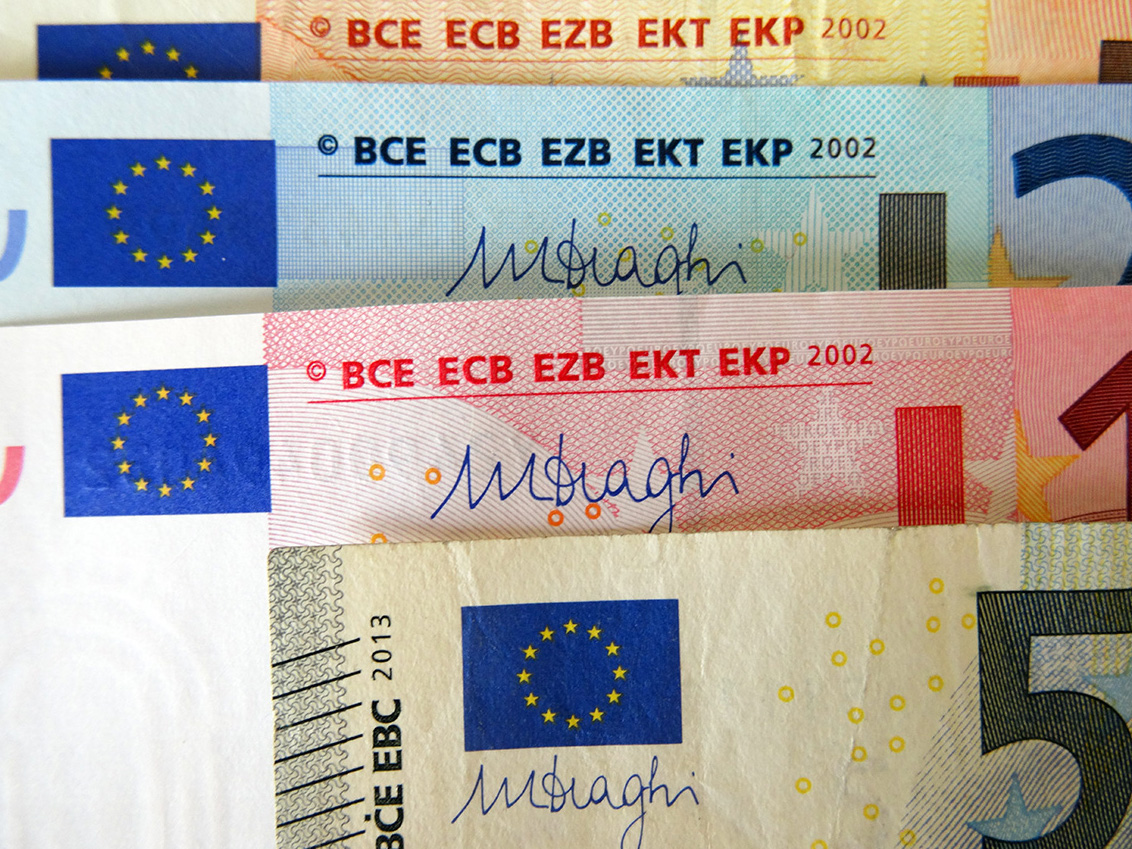
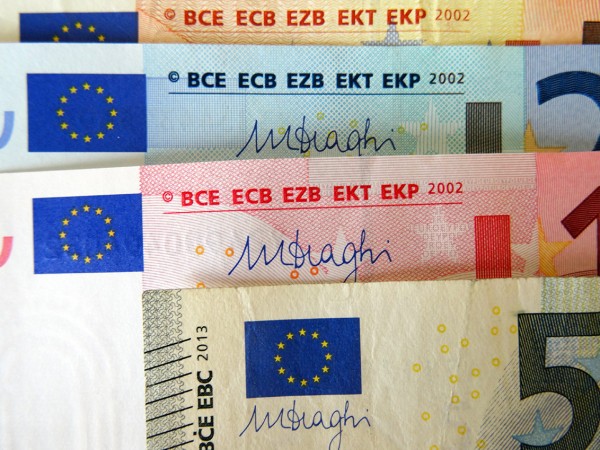 Mario Draghi, the ECB President, has indicated that the ECB is prepared to engage in further monetary stimulus. This is because of continuing weaknesses in the global economy and in particular in emerging markets.
Although the ECB at its meeting in Malta on 22 October decided to keep both interest rates and asset purchases (€60 billion per month) at current levels, Mario Draghi stated at the press conference that, at its next meeting on December 3rd, the ECB would be prepared to cut interest rates and re-examine the size, composition and duration of its quantitative easing programme. He stopped short, however, of saying that interest rates would definitely be cut or quantitative easing definitely increased. He said the following:
“The Governing Council has been closely monitoring incoming information since our meeting in early September. While euro area domestic demand remains resilient, concerns over growth prospects in emerging markets and possible repercussions for the economy from developments in financial and commodity markets continue to signal downside risks to the outlook for growth and inflation. Most notably, the strength and persistence of the factors that are currently 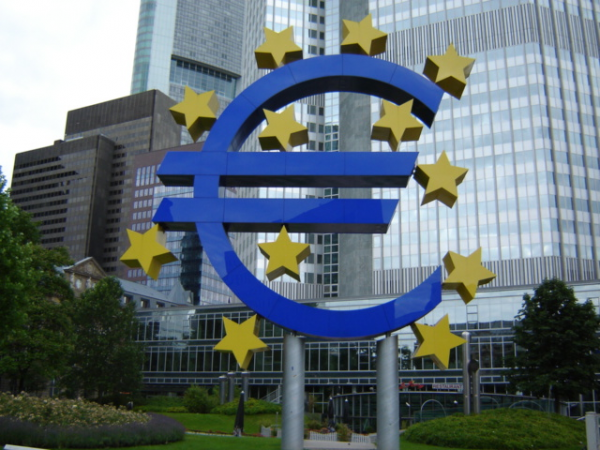 slowing the return of inflation to levels below, but close to, 2% in the medium term require thorough analysis.
In this context, the degree of monetary policy accommodation will need to be re-examined at our December monetary policy meeting, when the new Eurosystem staff macroeconomic projections will be available. The Governing Council is willing and able to act by using all the instruments available within its mandate if warranted in order to maintain an appropriate degree of monetary accommodation.”
Mario Draghi also argued that monetary policy should be supported by fiscal policy and structural policies (mirroring Japan’s three arrows). Structural policies should include actions to improve the business environment, including the provision of an adequate public infrastructure. This is vital to “increase productive investment, boost job creation and raise productivity”.
As far as fiscal policies are concerned, these “should support the economic recovery, while remaining in compliance with the EU’s fiscal rules”. In other words, fiscal policy should be expansionary, while staying within the limits set by the Stability and Growth Pact.
His words had immediate effects in markets. Eurozone government bond yields dropped to record lows and the euro depreciated 3% against the US dollar over the following 24 hours.
Webcasts
ECB Press Conference on YouTube, Mario Draghi (22/10/15)
Draghi reloads bazooka FT Markets, Ferdinando Guigliano (22/10/15)
Articles
Mario Draghi: ECB prepared to cut interest rates and expand QE The Guardian, Heather Stewart (22/10/15)
Draghi signals ECB ready to extend QE Financial Times, Claire Jones and Elaine Moore (22/10/15)
Dovish Mario Draghi sends bond yields to new lows Financial Times, Katie Martin (23/10/15)
What Draghi Said on QE, Policy Outlook, Global Risks and Inflation Bloomberg, Deborah Hyde (22/10/15)
ECB set to ‘re-examine’ stimulus policy at next meeting BBC News (22/10/15)
The global economy warrants a big dose of caution The Guardian, Larry Elliott (25/10/15)
ECB Press Conference
Introductory statement to the press conference (with Q&A) ECB, Mario Draghi (President of the ECB), Vítor Constâncio (Vice-President of the ECB) (22/10/15)
Questions
- Why is the ECB considering further expansionary monetary policy?
- What monetary measures can a central bank use to stimulate aggregate demand?
- Explain the effects of Mario Draghi’s announcement on bond and foreign exchange markets.
- What are the objectives of ECB monetary policy according to the its mandate?
- Should the ECB consider using quantitative easing to provide direct funding for infrastructure projects?
- What constraints does the EU’s Stability and Growth Pact impose on eurozone countries?
- What are the arguments for and against (a) the Bank of England and (b) the US Federal Reserve engaging in further QE?
- If the ECB does engage in an expanded QE programme, what will determine its effectiveness?
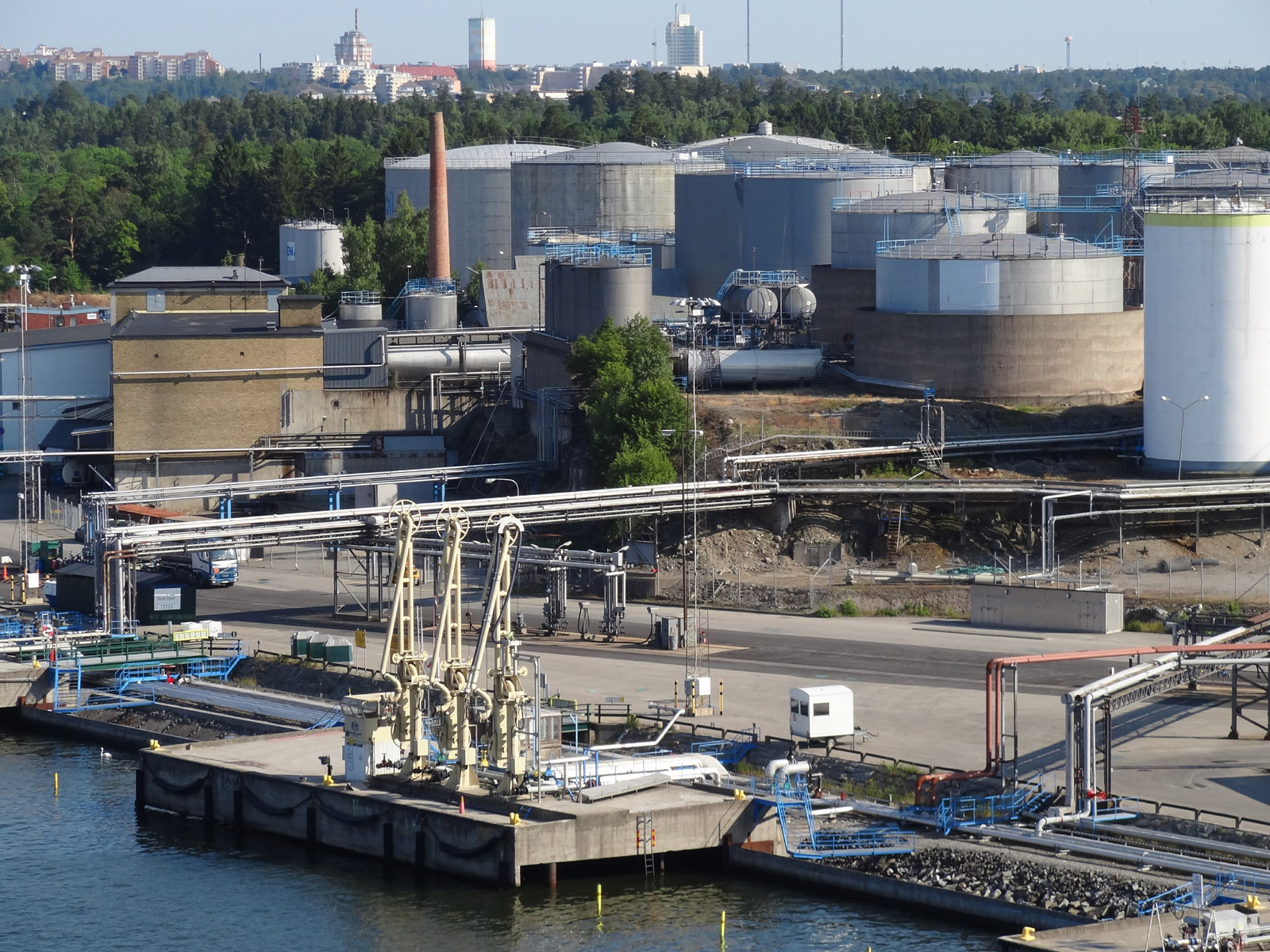 The demand for oil is growing and yet the price of oil, at around $46 per barrel over the past few weeks, remains at less than half that of the period from 2011 to mid 2014. The reason is that supply has been much larger than demand. The result has been a large production surplus and a growth in oil stocks. Supply did fall somewhat in October, which reduced the surplus in 2015 Q3 below than of the record level in Q2 – but the surplus was still the second highest on record.
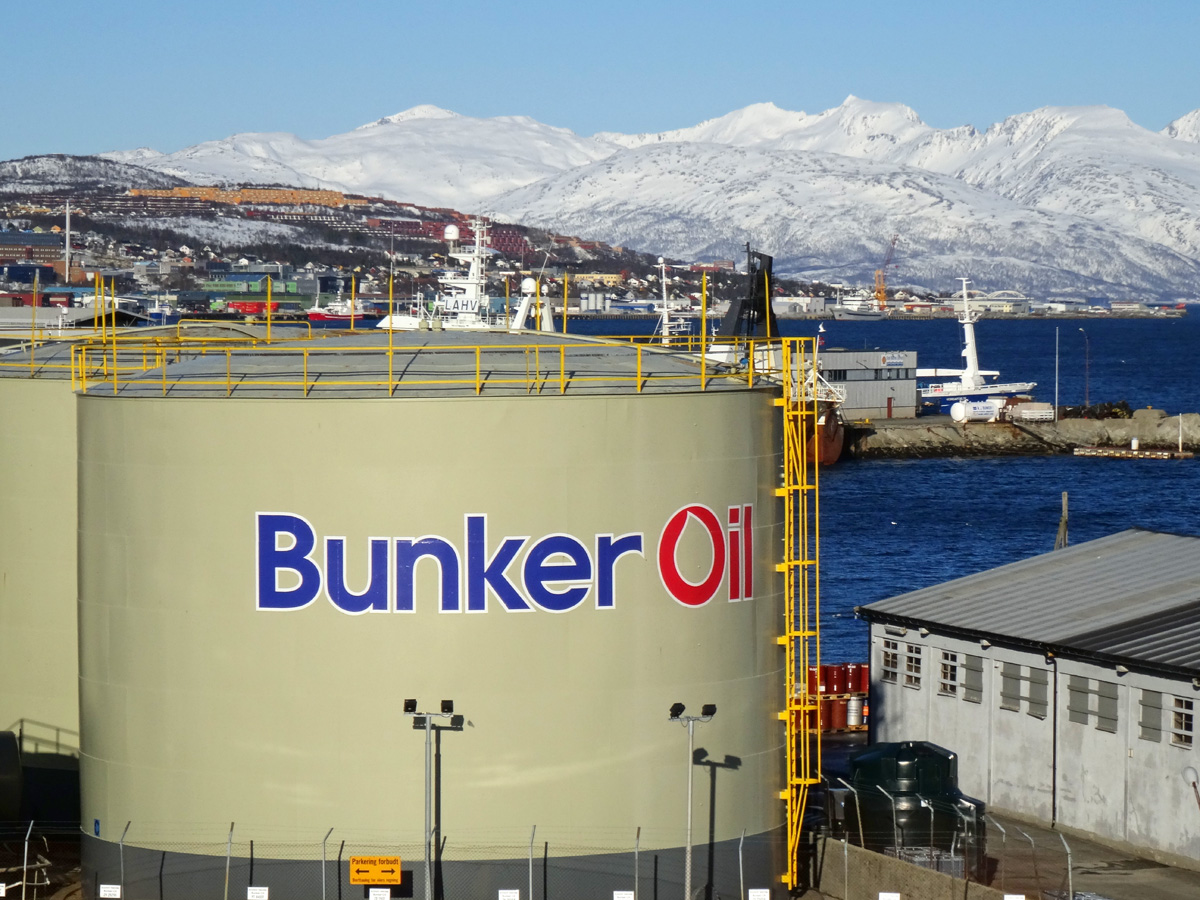 This means that shale oil production will continue until the end of the life of the wells. Given that wells typically have a life of at least three years, it could take some time for the low prices to have a significant effect on supply. According to the US Energy Information Administration’s forecasts, US crude oil production will drop next year by only just over 5%, from an average of 9.3 million barrels per day in 2015 to 8.8 million barrels per day in 2016.