 During the pandemic, millions of people’s wages in the UK were paid by the government to prevent the closure of businesses and a surge in unemployment. The furlough scheme officially came to an end in September 2021. However, with the spread of the Omicron variant and the fear of further restrictions being put in place, there has been a call by many to re-introduce the furlough scheme.
The furlough scheme
The furlough scheme began when the government brought in, what was officially called the Coronavirus Job Retention Scheme (CJRS) in early 2020. This was when the pandemic first forced businesses across the country to close. The scheme worked by paying part of employees’ wages, preventing the need for businesses to make their staff redundant, therefore avoiding a rapid rise in unemployment along with the associated costs. It also avoided the financial and emotional costs of firing and then rehiring workers post pandemic. Under the scheme, furloughed workers received 80% of their wages, up to £2500 a month, if they couldn’t work because of the impact of coronavirus. Employees were able to maintain the security of employment and the payments helped furloughed workers pay their bills.
 The scheme saw billions of pounds spent paying the wages of employees whose firms were forced to close temporarily. It could be argued that the expense of the scheme was a huge disadvantage. However, the alternative would have been for the government to pay unemployment-related benefits. Despite the furlough scheme being deemed necessary, it was not without its drawbacks for the structure of businesses. Rather than businesses adapting to changes in the economy and consumer demands, they could decide to claim the money and avoid the need to restructure. There was also concern about the length of the furlough scheme and the ability of businesses to bounce back post-pandemic.
Since the start of the scheme, the specifics of what was paid and who received it changed over time, especially once the economy started opening again. Initial steps were made to allow part-time return to work and the scheme started to wind down over the summer of 2021, with the government covering less of the wages and businesses covering more. From July, employers had to provide 10% of the wages of their furloughed staff, with the government paying the rest. This then increased to 20% in August with the CJRS coming to a complete end on 30 September 2021. At this point, there were around 1.6 million employees still receiving payment from the scheme.
Impact on Employment
With the end to the furlough scheme in September 2021, there were concerns that this would lead to a large number of redundancies. However, data indicate that has not happened and there is a record number of job vacancies. Official figures show that UK employment rose in October, confirming the strength of the labour market. The Office for National Statistics stated that the employment rate rose to 75.5% in the three months to October, up 0.2 percentage points on the previous quarter. This is believed to be driven by a rise in part-time work, which had dropped sharply during the pandemic. However, it is important to note that the strength in these numbers was prior to the emergence of the Omicron variant.
Omicron
 In November, the government had ruled out once again bankrolling people’s wages at enormous expense. However, the Chancellor is now under pressure to respond to the latest announcements around the ever-changing landscape of the pandemic. The fast-spreading mutation of the Covid-19 virus, Omicron, is posing a fresh threat to the economy.
On the 8 December, the Prime Minister announced new ‘Plan B’ Covid rules for England. As part of these new rules to limit the spread of Omicron, people are being asked to work from home again if possible and face masks are compulsory in most public places. Covid passes or a negative Covid test result are also needed to get into nightclubs and large venues.
Scotland and Wales have brought in further restrictions. Scotland’s First Minister, Nicola Sturgeon, has asked people to limit socialising to three households at a time in the run-up to Christmas. Shops and hospitality venues in Scotland must bring back physical distancing and screens. In Wales, nightclubs will close after 26 December and social distancing will be reintroduced in shops.
 Although the hospitality industry and retail sector remain open, they are facing a slump in trade thanks to the new restrictions and worries among the general public. With the work-from-home guidance and advice from health officials that people should limit their social interactions, pubs and restaurants have seen widespread cancellations in the run-up to Christmas. Trade is suffering and these mass cancellations come at a time when these sectors were hoping for bumper trade after a dismal last couple of years.
In light of these concerns, ministers are now being urged to guarantee support in case businesses have to shut. Despite the indication that it would be highly unlikely that the UK would experience a full return to the restrictions seen at previous stages of the crisis, the International Monetary Fund has stated that the UK government should be drawing up contingency plans. The IMF has called for a mini-furlough scheme in the event that the Omicron variant forces the government to close parts of the economy. The idea is that the mini-furlough scheme would see a limited version of the multi-billion-pound job subsidy scheme being rolled out if firms are forced to close.
There are strong calls for there to be targeted support, which this mini-furlough scheme could offer. The Resolution Foundation argued in mid-December that a furlough scheme tied solely to the hospitality industry would help prevent job loses in an industry that is currently suffering once again. It calculated that the cost of a hospitality-only furlough scheme would be £1.4 billion a month if it were pitched at the original level of 80% of wage support. If a January to March sector-specific scheme were to be introduced it is estimated to cost around £5 billion, a small cost in comparison to £46 billion spent on furlough so far.
Inflation
Any reintroduction of a furlough scheme would be a jolt for the government. This would mean a return to the 2020-style arguments around protecting livelihoods and businesses, a contrast to the recent messaging from the Treasury of restoring public finances. There is also concern about how this will all impact on current growth predictions and inflation concerns. The IMF expects the growth of the UK economy to be 6.8% in 2021 and 5% in 2022. However, the drawback from this is that the recovery would also be accompanied by rising inflation. It has been suggested, therefore, that interest rate increases from the Bank of England would be needed to keep inflation under control, while at the same time being not so great as to kill off growth.
It was widely expected that the Bank of England would again put off a rate hike in order to wait to see the economic impact of Plan B restrictions. However, on Thursday 16 December, interest rates were raised for the first time in more than three years. Despite the fears that Omicron could slow the economy by causing people to spend less, Bank Rate was raised from 0.1% to 0.25% . This came in the wake of data showing prices climbing at the fastest pace for 10 years.
Next Steps?
Government finances would take another huge hit if the furlough scheme were revived. But a version of such a scheme is likely to be necessary to avert an unemployment crisis and the attendant costs.
However, in resisting further measures, the government has argued that it has already acted early to help control the virus’s spread by rapidly rolling out booster jabs, while avoiding unduly damaging economic and social restrictions.
The government also argues that some of the measures from the total £400 billion Covid support package since the start of the pandemic will continue to help businesses into Spring 2022. Such measures include government-backed loans for small- and medium-sized businesses until June 2022, a reduction in VAT from 20% to 12.5% until March 2022 and business rates relief for eligible retail, hospitality, and leisure businesses until March 2022. Talks are ongoing with hospitality and and other business organisations directly affected by Covid restrictions.
The British Chambers of Commerce has argued that current measures are not enough and has called for VAT on hospitality and tourism to be cut back to its emergency rate of 5% and for the 100% business rates relief for retailers to return. The CBI has also called for any unspent local authority grants to be spent now to help affected firms and that further help, including business rates relief, should be on the table if restrictions continue after the government’s 5 January review date. The IMF said that with strong policy support, the economy had proved resilient, but it stressed that a return of some of the measures that prevented mass unemployment and large-scale business failures might soon be needed.
Conclusion
Infections caused by the new Omicron variant are rising rapidly, doubling every two to three days. It is expected to become the dominant variant in the UK soon with health officials warning it may be the most significant threat since the start of the pandemic. However, it is not yet known what the full extent of the impact of this new variant on the NHS will be, leaving the severity of future restrictions uncertain.
But what is evident is that the course of the pandemic has changed and there is a growing case for the government to start planning for new support packages. Although a reintroduction of the furlough scheme was hoped not to be needed on the path out of the pandemic, a short detour may be required in the form of a mini-furlough scheme. The size and reach of any support put in place will depend upon any further restrictions on economic activity.
Articles
Questions
- Should the level of support for business return to the levels in place earlier in 2021?
- What measures could a government put in place to curtail the spread of the Omicron variant that have only a minimal impact on business and employment?
- Compare the UK measures to curtail the spread of the virus with those used in some other European countries.
- What are the arguments for and against (a) re-introducing the furlough scheme as it was earlier in 2021; (b) introducing a version restricted to the hospitality sector?
 Inflation has surged worldwide as countries have come out of their COVID-19 lockdowns. The increases in prices combined with supply-chain problems has raised questions of what will happen to future prices and whether it will feed further inflation cycles.
Inflation targeting
Inflation is a key contributor to instability in an economy. It measures the rate of increases in prices over a given period of time and indicates what will happen to the cost of living for households. Because of its importance, many central banks aim to keep inflation low and steady by setting a target. The Bank of England, the Federal Reserve, and the European Central Bank all aim to keep inflation low at a target rate of 2 per cent.
Inflation-rate targeting has been successfully practised in a growing number of countries over the past few decades. However, measures to combat rising inflation typically contract the economy through reducing real aggregate demand (or at least its rate of growth). This is a concern when the economy is not experiencing a strong economic performance.
Current outlook
 Globally, rising inflation is causing concern as a surge in demand has been confronted by supply bottlenecks and rising prices of energy and raw materials. As the world emerges from the COVID-19 lockdowns, global financial markets have been affected in recent months by concerns around inflation. They have also been affected by the prospect of major central banks around the world being forced into the early removal of pandemic support measures, such as quantitative easing, before the economic recovery from the coronavirus is complete.
The Chief Economist at the Bank of England has warned that UK inflation is likely to rise ‘close to or even slightly above 5 per cent’ early next year, as he said the central bank would have a ‘live’ decision on whether to raise interest rates at its November meeting. Although consumer price inflation dipped to 3.1 per cent in September, the Bank of England has forecast it to exceed 4 per cent by the end of the year, 2 percentage points higher than its target. UK banks and building societies have already started to increase mortgage rates in response to rising inflation, signalling an end to the era of ultra-low borrowing costs and piling further pressure on household finances.
In the USA, shortages throughout the supply chains on which corporate America depends are also causing concern. These issues are translating into widespread inflationary pressure, disrupting operations and forcing companies to raise prices for customers. Pressure on every link in the supply chain, from factory closures triggered by COVID-19 outbreaks to trouble finding enough staff to unload trucks, is rippling across sectors, intensifying questions about the threat that inflation poses to robust consumer spending and rebounding corporate earnings. Reflecting concern over weaker levels of global economic growth despite rising inflationary pressures, US figures published at the end of October showed the world’s largest economy added just 194 000 jobs in September, far fewer than expected.
There are also fears raised over high levels of corporate debt, including in China at the embattled property developer Evergrande, where worries over its ability to keep up with debt payments have rippled through global markets. There are major concerns that Evergrande could pose risks to the wider property sector, with potential spill-overs internationally. However, it is argued that the British banking system has been shown in stress tests to be resilient to a severe economic downturn in China and Hong Kong.
Central bank responses
The sharpest consumer-price increases in years have evoked different responses from central banks. Many have raised interest rates, but two that haven’t are the most prominent in the global economy: the Federal Reserve and the European Central Bank. These differences in responses reflect differing opinions as to whether current price increases will feed further inflation cycles or simply peter out. For those large central banks, they are somewhat relying on households keeping faith in their track record of keeping inflation low. There is also an expectation that there are enough underutilised workers to ensure that wage inflation is kept low.
 However, other monetary authorities worry that they have not yet earned the record of keeping inflation low and are concerned about the risk of wage inflation. In addition, in poorer countries there is a larger share of spending that goes on essentials such as food and energy. These have seen some of the highest price increases, so policy makers are going to be keen to stamp down on the inflation.
The Federal Reserve is expected to announce that it will start phasing out its $120bn monthly bond-buying programme (quantitative easing) as it confronts more pronounced price pressures and predictions that interest rates will be lifted next year. However, no adjustments are expected to be made to the Fed’s main policy rate, which is tethered near zero. Whilst financial markets are betting on an rise in Bank Rate by the Bank of England as early as next month, spurred by comments from Governor Andrew Bailey in mid-October that the central bank would ‘have to act’ to keep a lid on inflation.
Outlook for the UK
 The Bank of England’s Chief Economist, Huw Pill, has warned that high rates of inflation could last longer than expected, due to severe supply shortages and rising household energy bills. He said inflationary pressures were still likely to prove temporary and would fall back over time as the economy adjusted after disruption caused by COVID and Brexit. However, he warned there were growing risks that elevated levels of inflation could persist next year.
The looming rise in borrowing costs for homeowners will add further pressure to family finances already stretched by higher energy bills and surging inflation. According to the Institute for Fiscal Studies, it is expected that households will face years of stagnating living standards, with predictions showing that households would on average be paying £3000 more each year in taxes by 2024/25, with the biggest impact felt by higher earners.
Investors are also reacting to concerns and have pulled $9.4bn out of UK-focused equity funds this year after hopes that a COVID-19 vaccination drive will fuel a vigorous economic recovery were overshadowed by questions about slow growth and high inflation. It is suggested that there is a general sense of caution about the UK when it comes to investing globally, driven by monetary, fiscal and trade uncertainties.
Given all the elements contributing to this outlook, The IMF has forecast that the UK will recover more slowly from the shocks of coronavirus than other G7 nations, with economic output in 2024 still 3 per cent below its pre-pandemic levels. Financial markets are predicting the Bank of England will lift interest rates as soon as the next MPC meeting. And while supply-chain bottlenecks and rising commodity prices are a global trend, the Bank’s hawkish stance has increased the possibility of a sharper slowdown in Britain than other developed markets, some analysts have said.
What next?
Some of the major central banks are poised to take centre stage when announcing their next monetary action, as it will reveal if they share the alarm about surging inflation that has gripped investors. Markets are betting that the Bank of England will begin raising interest rates, with Bank Rate expected to rise to around 1.25 per cent by the end of next year (from the current 0.1 per cent).
It is thought that the Fed will not raise interest rates just yet but will do so in the near future. Markets, businesses, and households globally will be waiting on the monetary decisions of all countries, as these decisions will shape the trajectory of the global economy over the next few years.
Articles
- Three Days Will Reveal Global Alert Level on Inflation: Eco Week
Bloomberg, Molly Smith and Craig Stirling (31/10/21)
- Inflation watch: Global food prices hit 10-year high
Al Jazeera (4/11/21)
- Fed sings the ‘transitory’ inflation refrain, unveils bond-buying ‘taper’
ReutersHoward Schneider and Ann Saphir (3/11/21)
- BoE chief economist warns UK inflation likely to hit 5%
Financial Times, Chris Giles (21/10/21)
- Inflation pressure now ‘brutal’ because of supply squeeze, US companies say
Financial Times, Andrew Edgecliffe-Johnson, Matthew Rocco, Obey Manayiti and Claire Bushey (23/10/21)
- Rising inflation could trigger global sell-off that would harm UK, says Bank
The Guardian, Richard Partington (8/10/21)
- Bank of England chief economist warns high inflation rates may persist in 2022
The Guardian, Richard Partington (7/10/21)
- Bank of England surprises markets by holding rates at record lows
CNBC, Elliot Smith (4/11/21)
 Bank of England resists pressure to raise interest rates as inflation spike looms
Sky News, Ed Conway (4/11/21)
Forecasts and commentary
Questions
- What is the definition of inflation?
- How is inflation measured?
- Using a diagram to aid your answers, discuss the difference between cost-push and demand-pull inflation.
- What are the demand-side and cost-side causes of the current rising inflation?
- Explain the impact an increase in interest rates has on the economy.
 The UK government has made much of its spending commitments in the UK Budget and Spending Review delivered on 27 October 2021. Spending on transport infrastructure, green energy and health care figured prominently. The government claimed that these were to help achieve its objectives of economic growth, carbon reduction and ‘levelling up’. This means that government expenditure will be around 42% of GDP for the five years from 2022 (from 1988 to 2000 it averaged 36%). Although it temporarily rose to 52% in 2020/21, this was the result of supporting the economy through the pandemic. But does this mean that the government is now a ‘Keynesian’ one?
When the economy is in recession, as was the case in 2020 with the effects of the pandemic, increased government expenditure financed by borrowing rather than taxation is the classic Keynesian remedy to boost aggregate demand and close the output gap. The increased injection of spending works through the multiplier process to raise equilibrium national income and reduce unemployment.
But is this the objective of the extra spending announced in October 2021? To answer this, it is important to look at forecasts for the state of the economy with no change in government policy and at the balance of government expenditure and taxation resulting from the Budget. The first chart shows public sector net borrowing from 2006/7 and forecast to 2026/7. The green and red lines from 2021/22 onwards give the PSNB forecasts with and without the October 2021 measures.
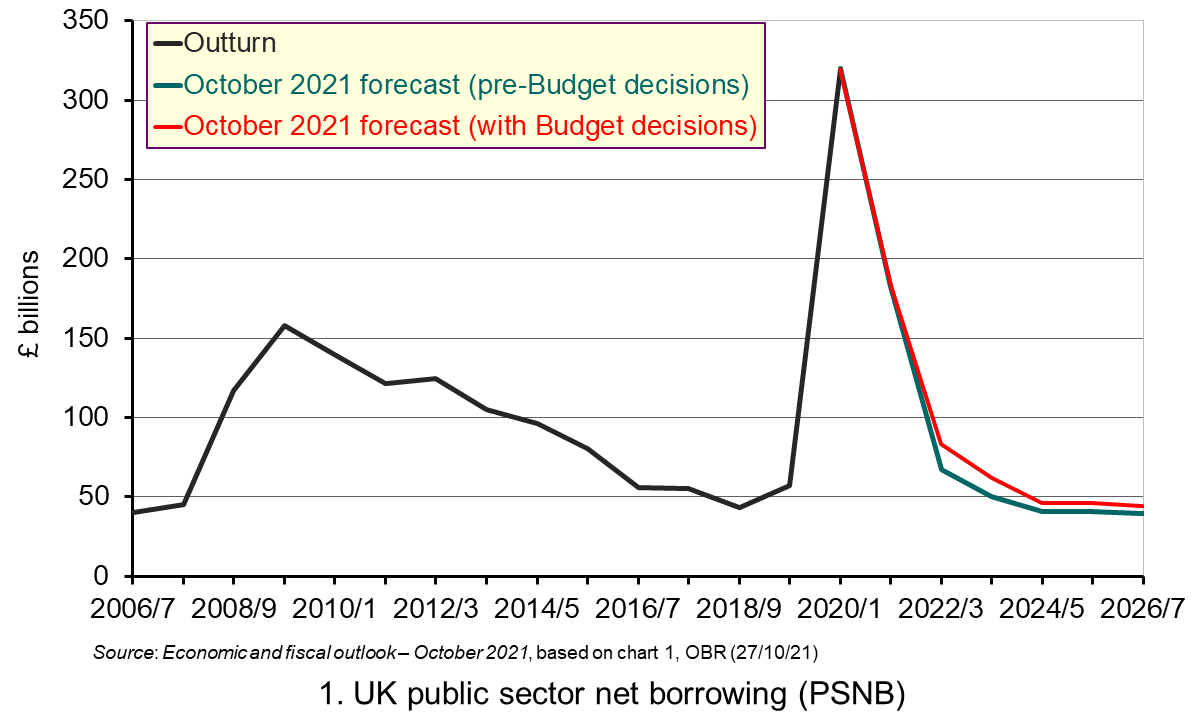 As you can see, there was a large increase in the PSNB in 2020/21, reflecting the government’s measures to support firms and workers during the pandemic. (Click here for a PowerPoint of the chart.) This was very much a Keynesian response, where a large budget deficit was necessary to support aggregate demand. It was also to protect the supply side of the economy by enabling firms to survive.
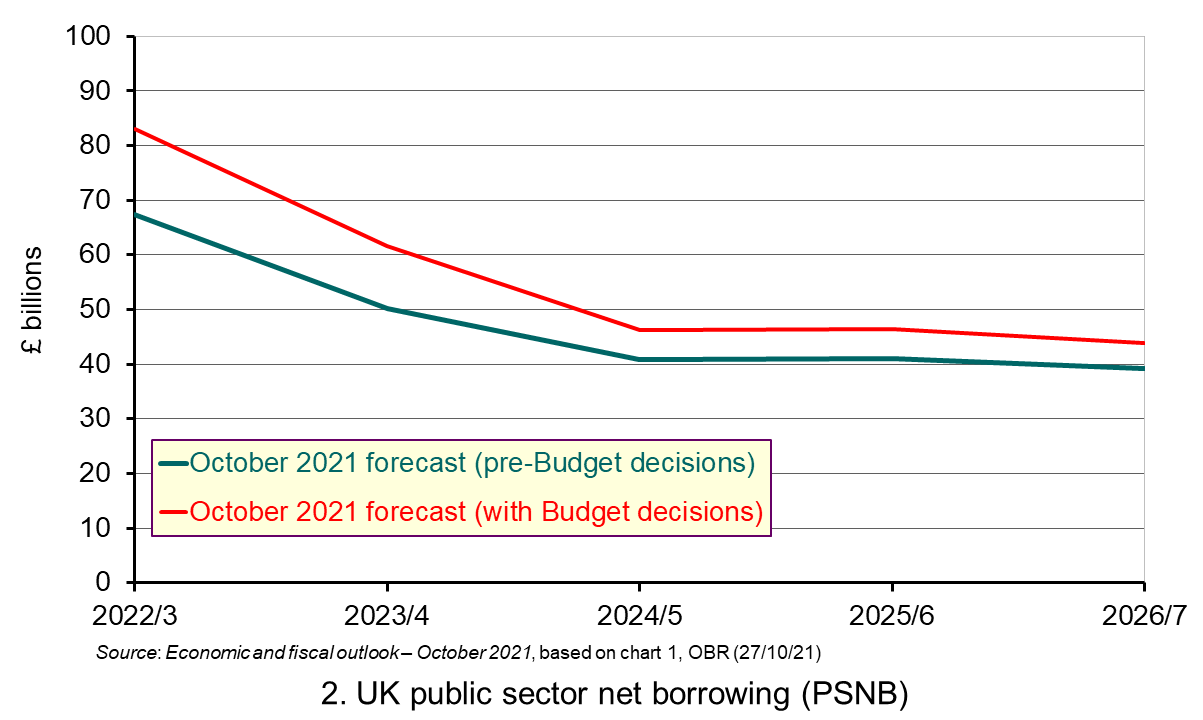 But could the October 2021 announcements also be seen as a Keynesian response to the macroeconomic situation? If we redraw Chart 1, focusing just on the forecast period and adjust the vertical scale, we can see that the measures have a net effect of increasing the PSNB and thus acting as a stimulus to aggregate demand. (Click here for a PowerPoint of the chart.) The figures are shown in the following table, which shows the totals from Table 5.1 in the Autumn Budget and Spending Review 2021 document:
Effects of Spending Review and Budget 2021 on PSNB (+ = increase in PSNB)
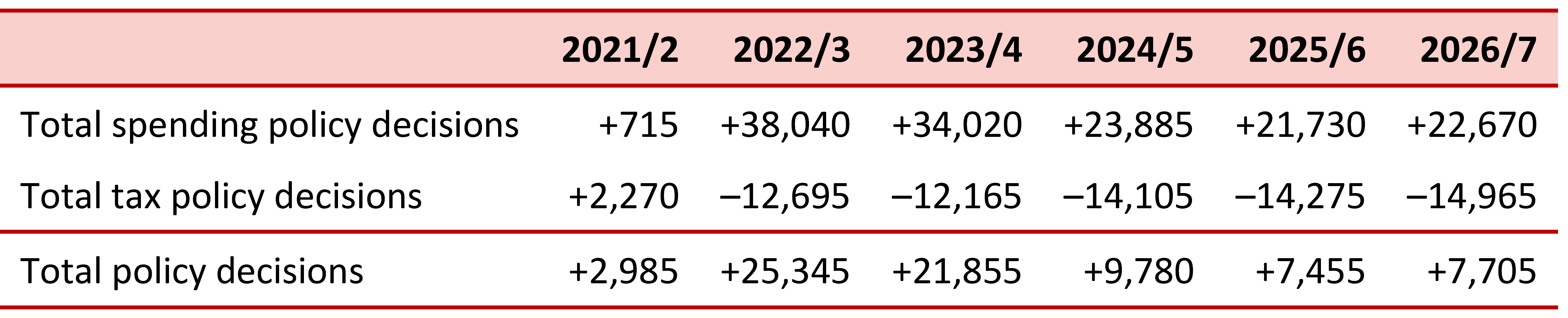
At first sight, it would seem that the Budget was mildly expansionary. To see how much so, the Office for Budget Responsibility (OBR) measures the ‘fiscal stance’ using the ‘cyclically adjusted primary deficit (CAPD)’. This is PSNB minus interest payments and minus expenditures and tax revenues that fluctuate with the cycle and which therefore act as automatic stabilisers. The OBR’s forecast of the CAPD shows it to be expansionary, but decreasing over time. In 2021/22, there is forecast to be a net injection of around 3.2% (excluding ‘virus-related’ support), falling to 2.7% in 2022/23 and then gradually to around 0.6% by 2026/27. So it does seem that fiscal policy remains expansionary throughout the period, but less and less so.
But this alone does not make it ‘Keynesian’. A Keynesian Budget would be one that uses fiscal policy to adjust aggregate demand (AD) according to whether AD is forecast to be deficient or excessive without the Budget measures. To operate a Keynesian Budget, it would be necessary to forecast the output gap without any policy measures. If was forecast to be negative (a deficiency of demand, with equilibrium output below the potential level), then an expansionary policy should be pursued by raising government expenditure, cutting taxes or some combination of the two. If it was forecast to be positive (an excess demand, with equilibrium output above the potential level), then a contractionary/deflationary policy should be pursued by cutting government expenditure, raising taxes or some combination of the two.
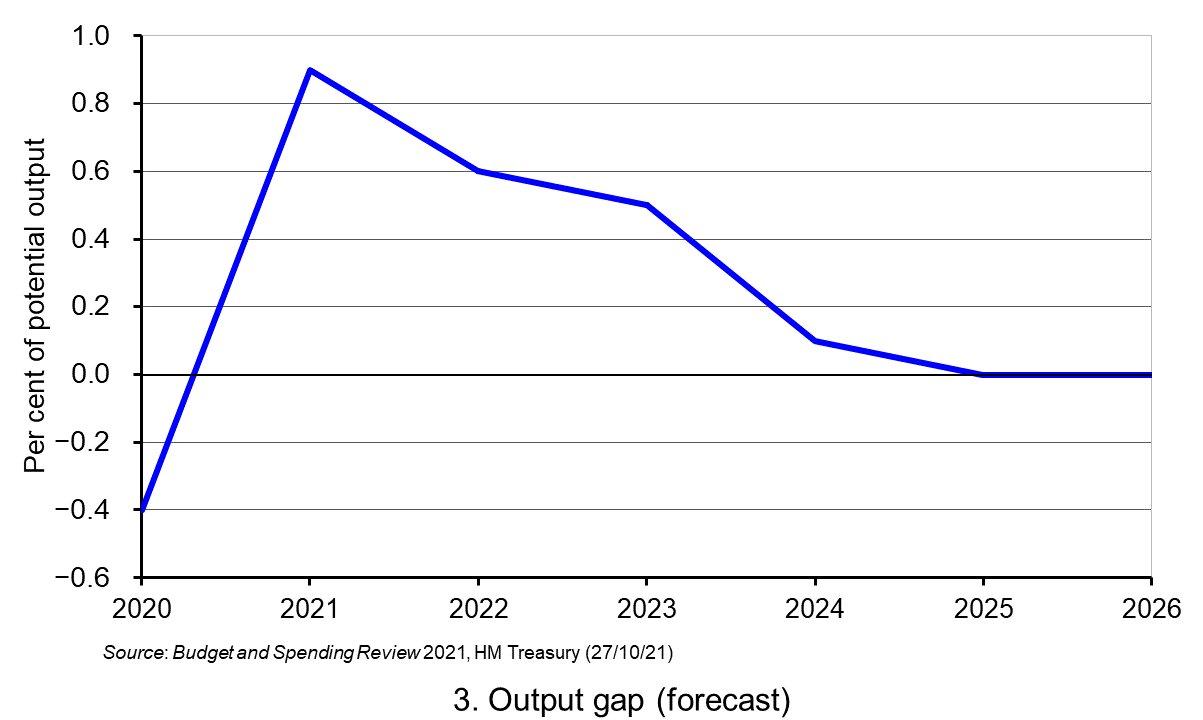 So what is the forecast for the output gap? The OBR states that, after being negative in 2020
(–0.4% of potential GDP), it has risen substantially to 0.9% in 2021 with the rapid bounce back from the pandemic. But it is forecast to remain positive, albeit declining, until reaching zero in 2025. This is illustrated in Chart 3. (Click here for a PowerPoint of the chart.) So fiscal policy remains mildly expansionary until 2025, after having provided a considerable stimulus in 2021.
This is not normally what a Keynesian economist would recommend. Fiscal policy should be designed to achieve a zero output gap. With the output gap being substantially positive in 2021, there is a problem of excess demand. This can be seen in supply-chain difficulties and labour shortages in certain areas and higher inflation, with CPI inflation predicted by the OBR to rise to 4.4 per cent in 2022. The combination of higher prices, the rise in national insurance from April 2022 by 1.25 percentage points and the freezing of income tax personal allowances will squeeze living standards. And the cancelling of the £20 per week uplift to Universal Credit and no increase in its rate for the unemployed will put particular pressure on some of the poorest people.
 The government is hoping that the rise in government expenditure will have beneficial supply-side effects and increase potential national income. The aim is to create a high-wage, high-skilled, high-productivity economy though investment in innovation, infrastructure and skills. As the OBR states, ‘The rebounding economy has provided the Chancellor with a Budget windfall that he has added to with tax rises that lift the tax burden to its highest since the early 1950s’.
It remains to be seen whether the extra spending on education, training, infrastructure and R&D will be sufficient to achieve the long-term growth the Chancellor is seeking. The OBR is forecasting very modest growth into the longer term when the bounce back has worked through. Real GDP is forecast to grow on average by just 1.5% per year from 2024 to 2026. What is more, the OBR sees permanent scarring effects of around 2% of GDP from the pandemic and around 4% of GDP from Brexit.
Articles
Analysis
Documents
Data
Questions
- What do you understand by ‘fiscal stance’?
- What are ‘automatic fiscal stabilisers? How might they affect GDP over the next few years?
- If the government had chosen to pursue a zero output gap from 2022/23 onwards, how would this have affected the balance between total government expenditure and taxation in the 2021 Budget and Spending Review?
- Provide a critique of the Budget from the left.
- Provide a critique of the budget from the right.
- Was this a ‘Green Budget’?
- Is the Budget following the ‘golden rule’ of fiscal policy?
- Look through Table 5.1 in the Budget and Spending Review document (linked below). Which of the measures will have the most substantial effect on aggregate demand?
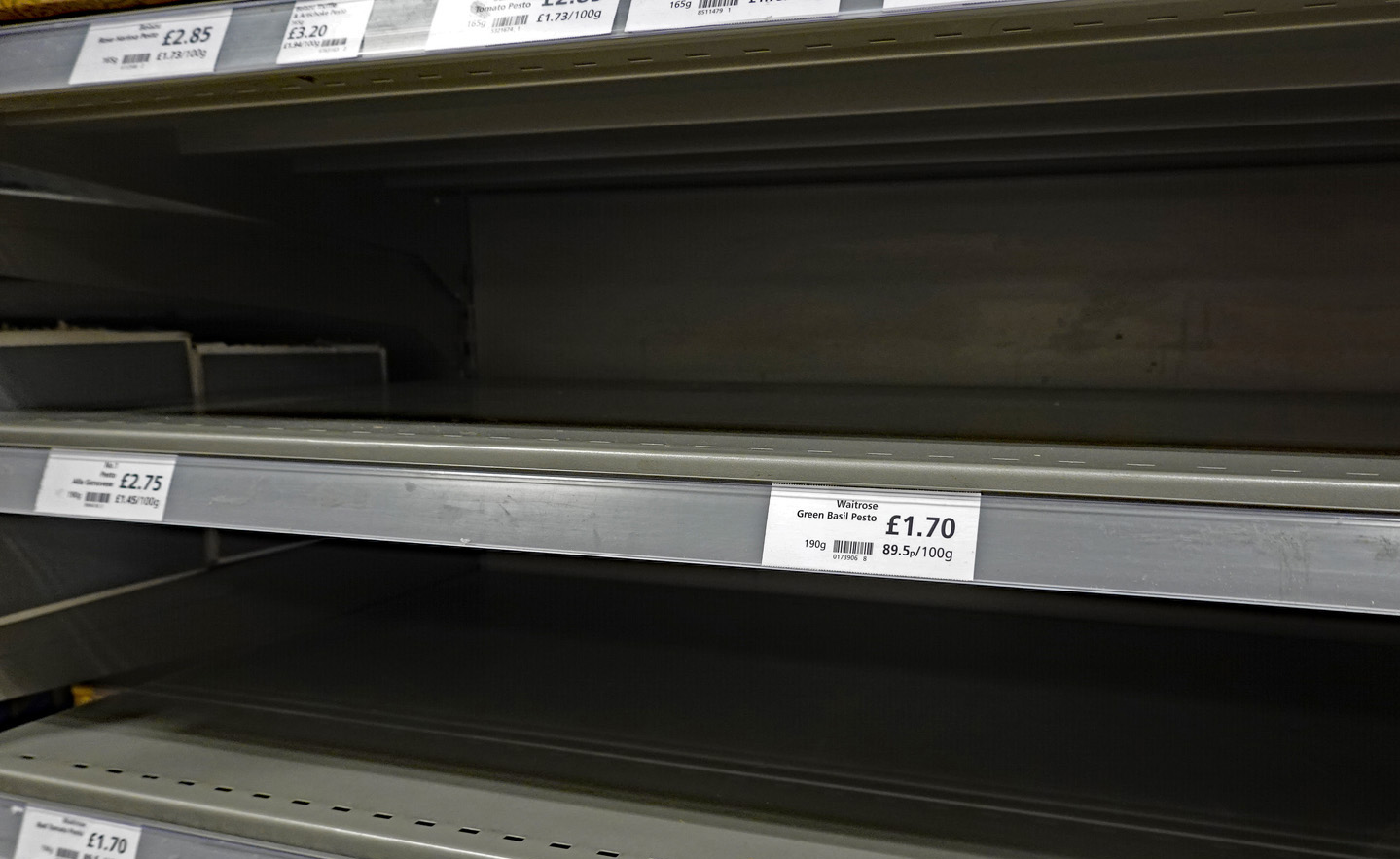
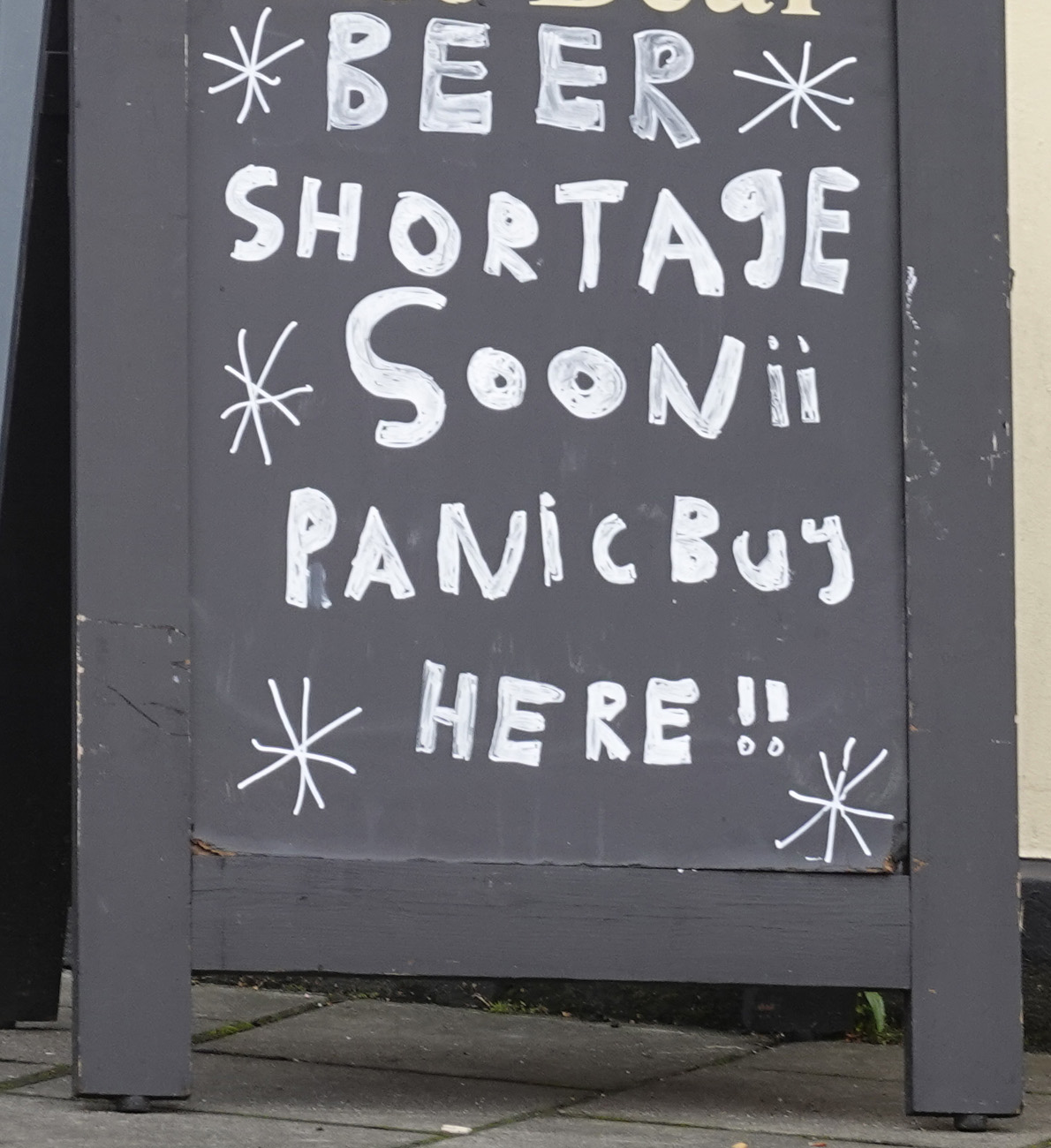
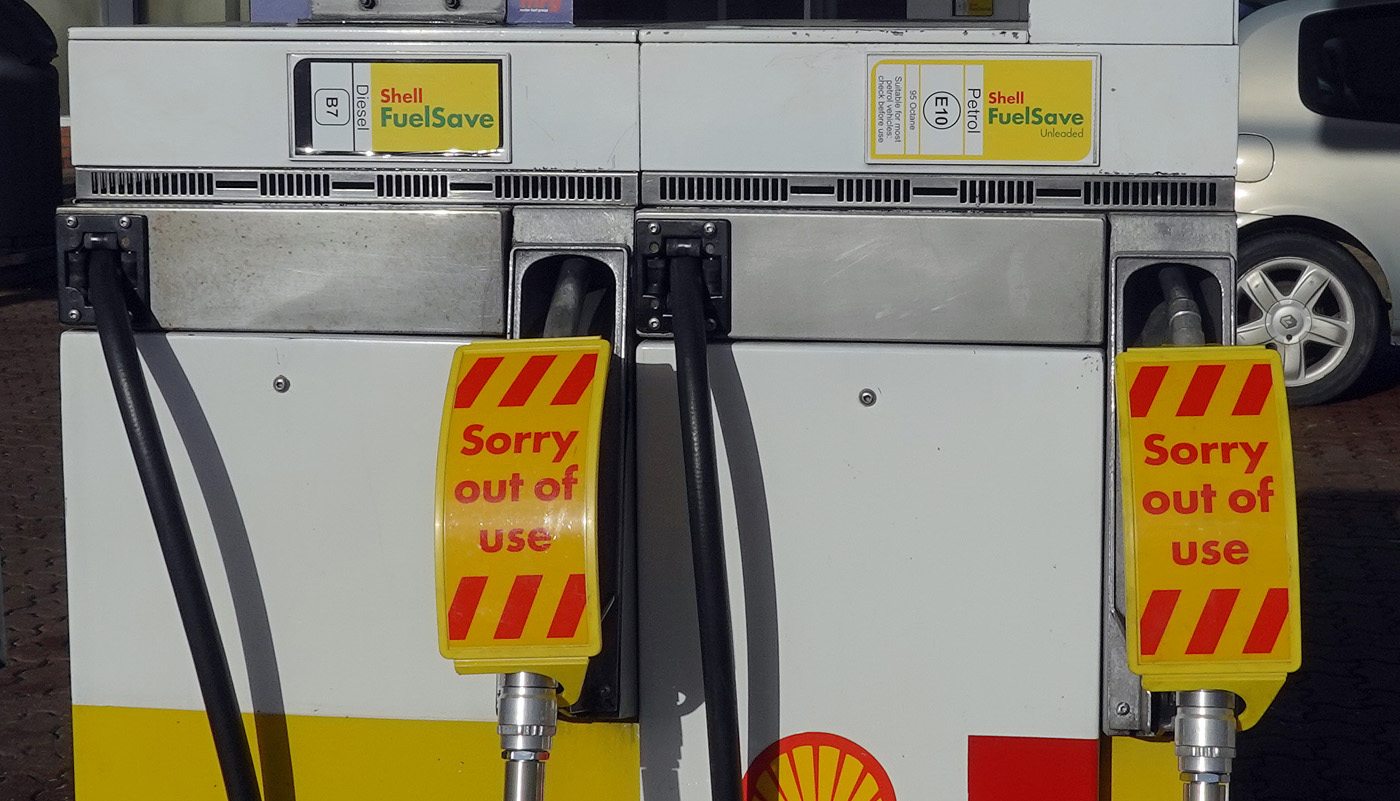 Long queues at petrol pumps, with many filling stations running out of fuel; fears of shortages of food and various other items in supermarkets; orders by shops and warehouses unfilled or delayed. These have been some of the headlines in the UK in recent days.
The immediate problem is a shortage of over 100 000 lorry drivers, with thousands of drivers from EU countries, who were previously living and working in the UK, having returned to their home countries. Their numbers have not been replaced by British drivers, a problem exacerbated by a decline in HGV tests during the pandemic. Thus the supply of lorry drivers has fallen.
At the same time, as the economy recovers from the COVID-19 pandemic, aggregate demand has risen and with it the demand for lorry drivers.
The shortage is pushing up wages somewhat, but not enough to eliminate the shortage. What is more, the supply of lorry drivers is relatively wage inelastic: a higher wage does not attract many more drivers into the market. Also the demand is also relatively wage inelastic: a higher wage does not do much to dampen the demand for drivers.
But why has this happened? Why has the supply of drivers fallen and why is it inelastic? And what will happen in the coming months? The three main causes are Brexit, COVID-19 and working conditions.
Brexit
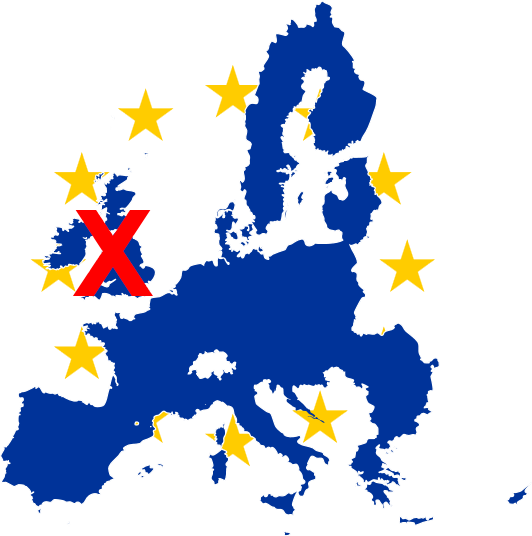 With Brexit, many EU workers left the UK, finding life and working conditions more conducive in the EU. Many EU drivers had faced discrimination and felt that they were not welcome in the UK. It has been difficult finding replacement drivers from the EU as the UK’s immigration system, which now applies to the EU as well as other countries, prioritises workers who are classified as high-skilled, and these do not include lorry drivers.
Those EU drivers who do want to stay as UK residents are finding that settled status or visas are not easy to achieve and involve filling in various documents, which can be an onerous and time-consuming process. As the writer of the first linked bog below, who is a Polish worker in the transport industry, states, ‘Would you rather come to Britain and jump through all the hoops, or choose any of the well-paying EU countries, for example, Germany that, if you live in Western Poland, is just a short drive across (virtually non-existent thanks to Schengen) border?’ Another problem is that with EU driving licences: it is harder for potential employers to check on their status and thus they may prefer to employ UK drivers. This, again, puts off EU drivers from seeking to stay in the UK.
Even in the case of EU drivers living in the EU but delivering to the UK there are problems. First there are the dangers for drivers of boarding ferries in France, where people from migrant camps seek to board lorries to get passage to the UK, often threatening drivers. If illegal migrants do succeed in boarding a trailer unseen by the driver, the driver can then be arrested in the UK. According to the Polish blogger, it’s ‘no surprise that I hear more and more drivers who, when taking on new jobs, demand guarantees from their employers that they won’t be sent to the UK’.
 Then there is a decline in the system known as ‘cabotage’. This is where an EU driver delivers from the EU to destination A in the UK and takes back a load to the EU from destination B in the UK. To avoid having to travel empty between the two UK destinations, the driver could pick up a load to take from A to B. With a fall in imports and exports from and to the EU following Brexit, there are fewer EU lorries on UK roads. This means that there is now less capacity for transporting loads within the UK.
There has also been a large rise in ‘red tape’ associated with post-Brexit customs checks and border controls. This means that lorries can be held up at ports. This makes it much less attractive for EU haulage companies to export to the UK rather than to other EU countries, where paperwork is minimal. In addition, m many drivers are paid by the length of the journey rather than by the time spent, so delays result in them earning less per hour. Full checks have not been introduced yet. When they are, in January and July next year, the problem will be worse.
Tax changes make it more difficult for drivers to avoid taxes by claiming that they are self employed when they are in reality employees. This too is discouraging drivers from the EU from moving to or staying in the UK since many would now (since April 2021) be paying more tax.
COVID-19
Another contributing factor to the shortage of drivers has been COVID-19 and the government’s response to it. COVID rates are considerably higher in the UK than in most EU countries and, not surprisingly, many EU drivers are afraid to come to the UK.
 The pandemic led to fewer HGV driver tests, with 25 000 fewer candidates passing their test in 2020 than in 2019. It takes time to train new drivers and then to test them. However, even if there had been no reduction in HGV drivers passing their tests, there would still be a significant shortage of qualified drivers.
A further problem with the effects of COVID-19 on the economy has been the initial recession and then the bounce back. The sheer size of the bounce back has exacerbated the problem of driver shortages, which otherwise would have been slower to develop, giving the market more time to respond. Real GDP grew by 5.5% from 2021 Q1 to 2021 Q2, giving an annual growth rate of 23.6%. Nevertheless, GDP was still some 3.3% below its 2019 Q3 level.
Pay and working conditions
Working conditions are very poor for many drivers. The following are common complaints:
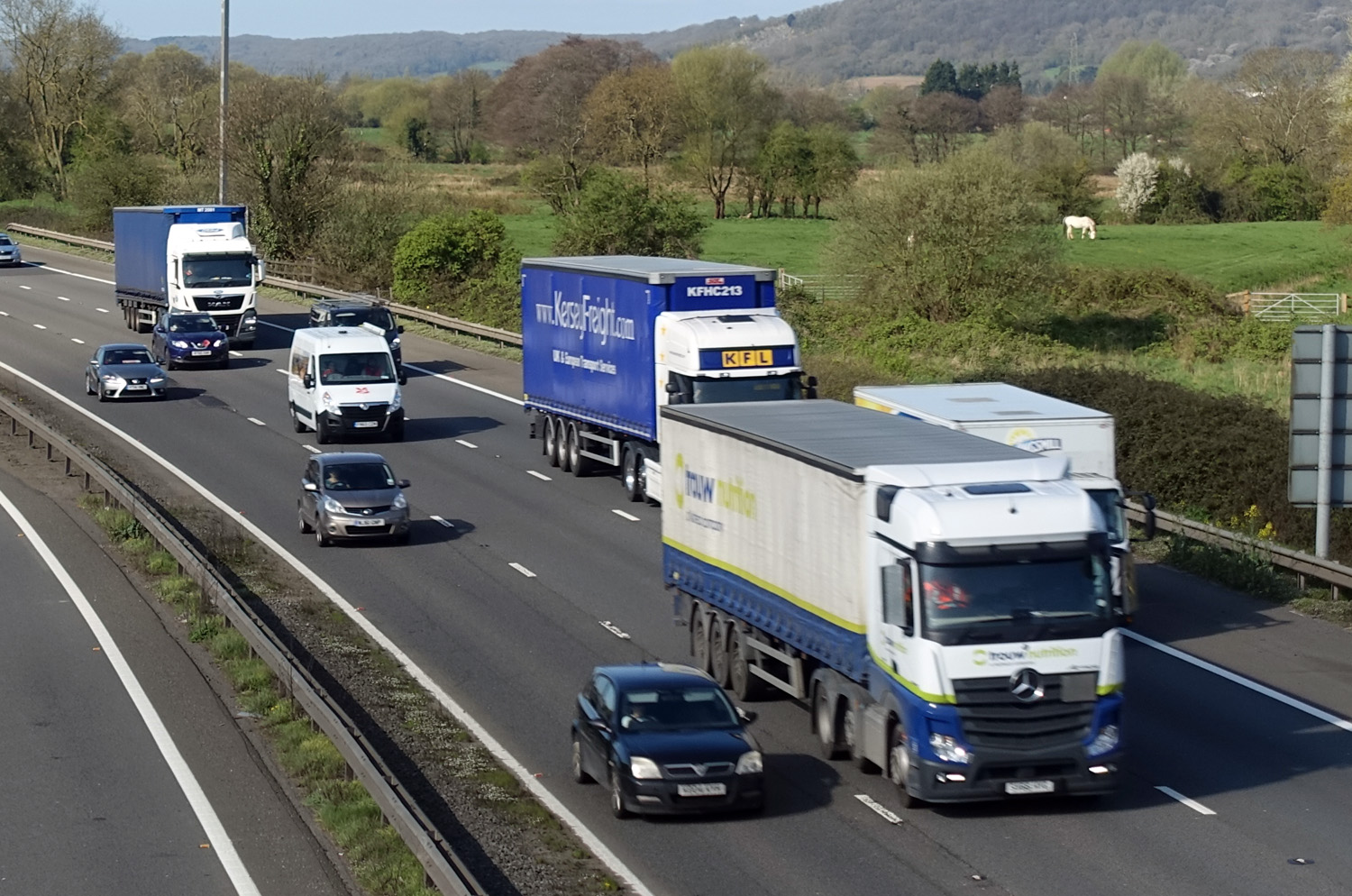 Driving jobs are often very tightly controlled, with computer monitoring and little freedom for the driver. Some cabs have cameras aimed at the drivers so that they can be constantly monitored.
- Drivers are subject to very stringent health and safety regulations, such as not being allowed to drive longer than a certain time, even when they are queuing in congested traffic. Whilst many of these regulations are desirable to protect both the public’s and the driver’s safety, they can discourage drivers from entering or staying in the industry. And some regulations are hard to justify on safety grounds (see second linked article below, point 13).
- Just-in-time deliveries at supermarkets, regional distribution centres (warehouses) or factories make timing very important and add considerable stress to drivers who may face abuse if they are late, even though it was not their fault, with their employer perhaps facing a fine. And yet on other occasions they might have to wait a long time to offload if drivers before them have been delayed, and often the conditions in waiting areas are poor with few if any facilities.
- Drivers often feel a lack of respect from employers, trainers and the general public.
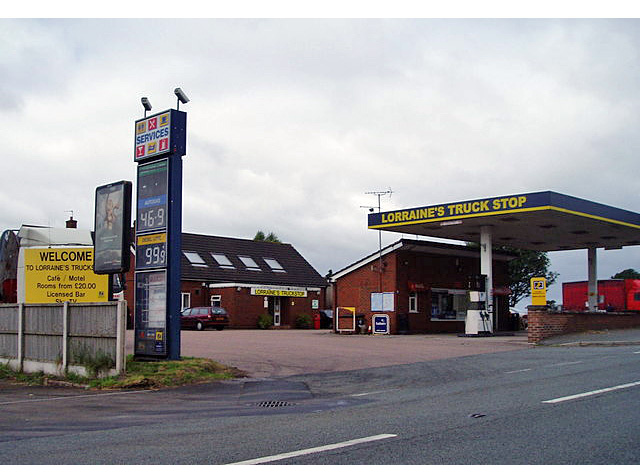 Rest and refreshment facilities are often very poor in the UK and generally much worse than in the EU. In the EU, motorway service areas have better parking, toilets, showers and shops. Restaurants are better and cheaper. Dedicated truck stops have supermarkets, laundrettes, showers or even open-air gyms dedicated to making drivers’ lives easier and more pleasant. The UK by contrast often has very poor facilities. Unlike in most EU motorway services, drivers have to pay to park and are faced with poor toilet and eating facilities. ‘Meanwhile, a typical British truck stop is some dusty yard full of potholes on the side of some industrial estate with a portaloo and a “greasy spoon” burger van parked next to it.’
- Hours are long. Even though driving hours are restricted to 10 hours per day (recently extended to 11 hours), the average working day may be much longer as drivers have to wait at distribution centres, fill in increasing amounts of paperwork and help load or unload their vehicle. Also drivers may have to work variable shifts, which leads to disturbed sleeping patterns.
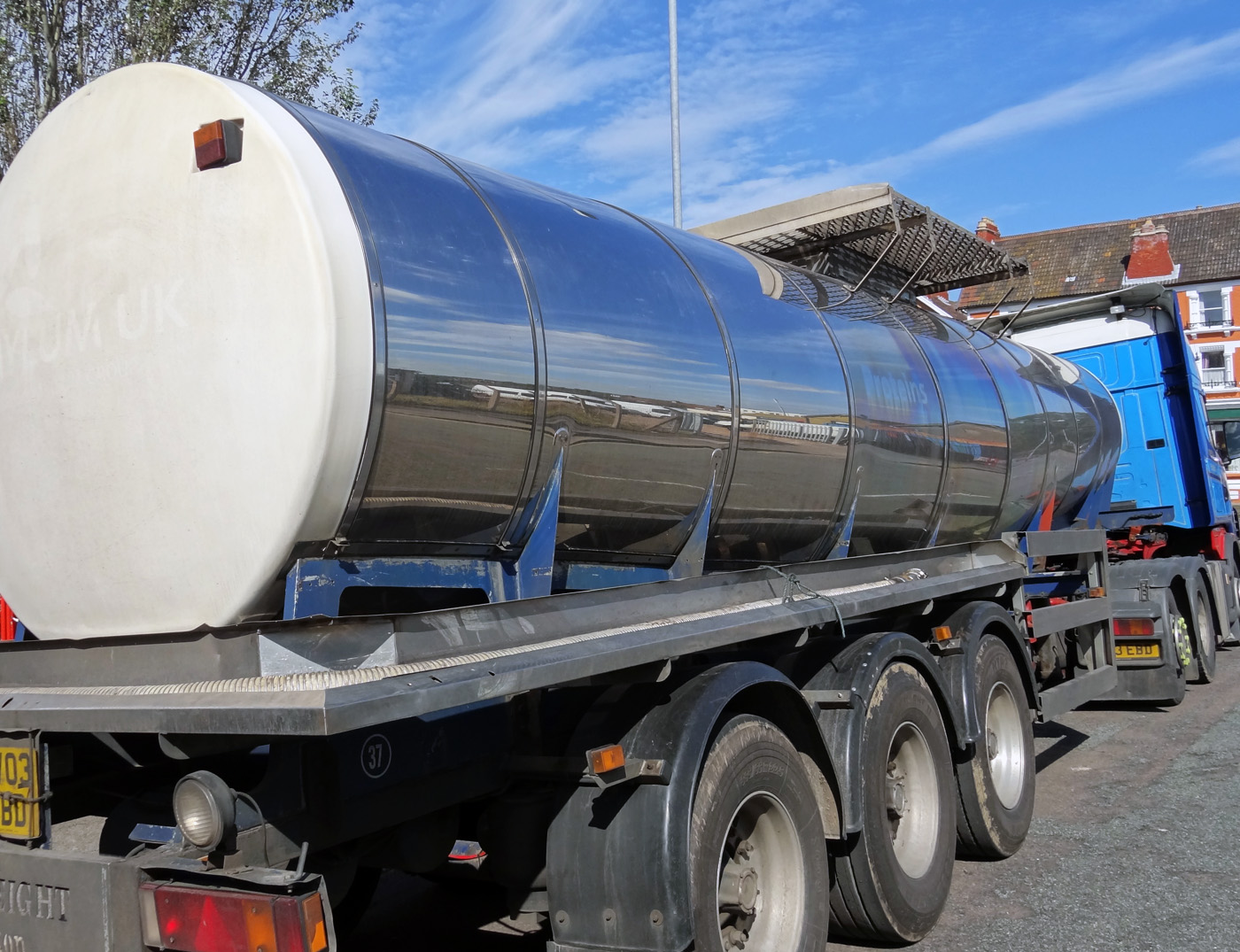 The work is often physically demanding, especially when a large part of the job involves loading and unloading and moving items from the lorry to where the customer wants them.
- Many vehicles are hard and unpleasant to drive, with leased vehicles often low-spec, dirty, uncomfortable and poorly maintained.
- Many of the jobs are agency jobs that do not offer stable employment.
Although pay is higher than in some parts of the labour market where there are shortages, such as social care and hospitality, pay per hour is still relatively poor when compared with many industries which have better conditions of employment.
The future
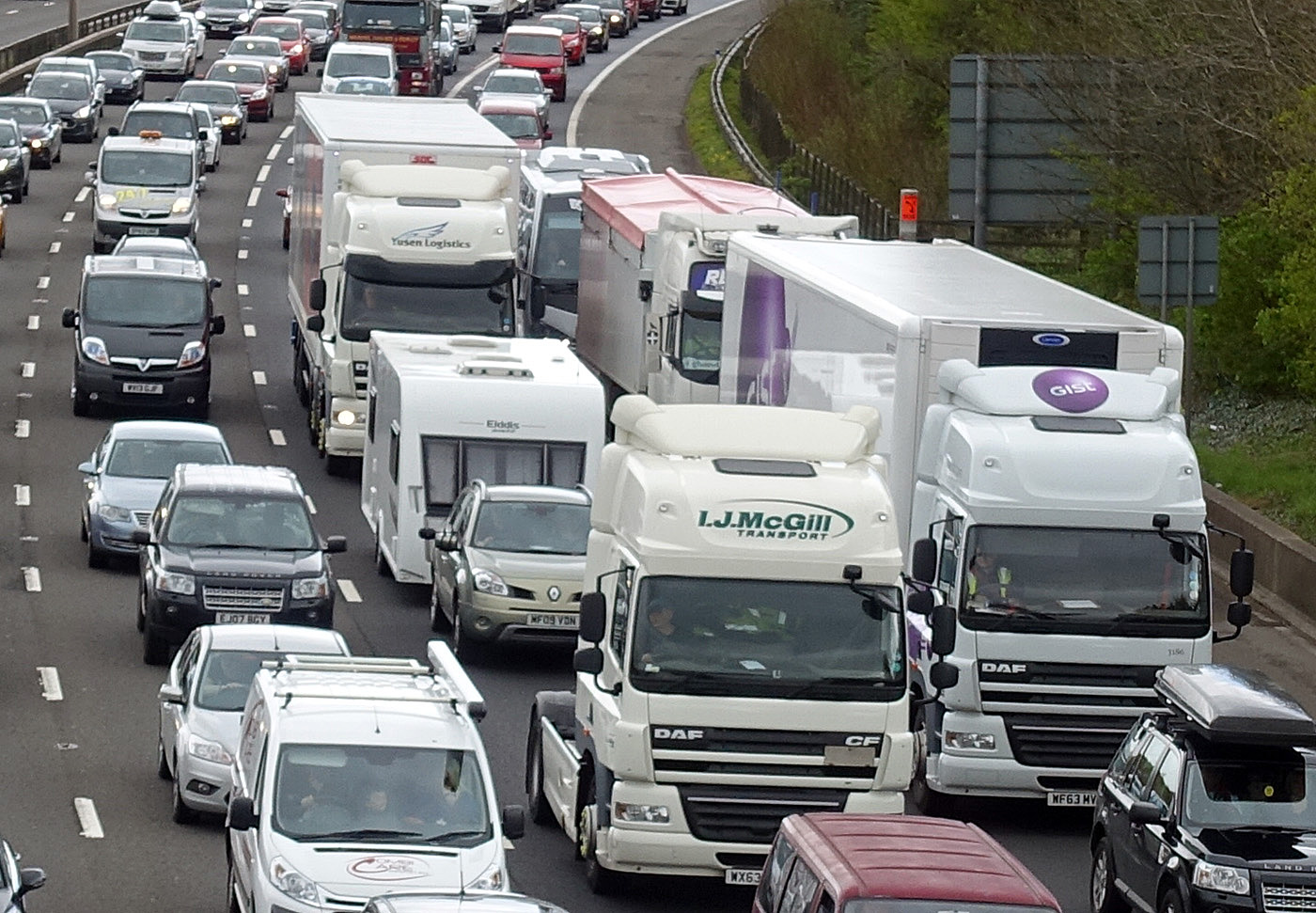 The government is allowing more foreign workers into the UK from this month (October); more training places will be offered for potential drivers and the number of driving tests will increase; the government is also encouraging retired drivers or those who have left driving for other jobs to return to the industry.
However, there are shortages of drivers in other EU countries and so it will be difficult to attract additional drivers to the UK from the EU. What is more, with wages and working conditions remaining poor and the labour market remaining tight in other sectors, it might be hard to fill new training places and encourage workers to return to driving. Also, with the average age of drivers being 55, it is likely that the outflow of workers from driving jobs could be large in the coming years.
Articles
- Twenty reasons why there is an HGV driver shortage – part one: 1-10
West Country Bylines, Tomasz Oryński (21/9/21)
- Twenty reasons why there is an HGV driver shortage – part 2: reasons 11-20
West Country Bylines, Tomasz Oryński (23/9/21)
- Gas Shortages Awaken Britain to Some Crucial Workers: Truck Drivers
New York Times, Eshe Nelson and Megan Specia (29/9/21)
- Time running out to save UK industry from worker shortages, say business leaders
CNN, Walé Azeez (1/10/21)
- Boris Johnson’s Brexit choices are making Britain’s fuel and food shortages worse
CNN, Hanna Ziady (29/9/21)
- How serious is the shortage of lorry drivers?
BBC News, Reality Check Team (28/9/21)
- Petrol shortage: Is the fuel crisis improving?
BBC News (1/10/21)
- UK visa plan will not fix lorry driver shortage, says boss
BBC News (28/9/21)
- The empty shelves crisis isn’t just down to Covid and Brexit – it’s been decades in the making
The Guardian, Felicity Lawrence (17/9/21)
- Emergency visa scheme extended in major U-turn by Boris Johnson
The Guardian, Rajeev Syal (1/10/21)
- Truck driver shortage won’t be solved by quick fix visas – here are three ways forward
The Conversation, Temidayo Akenroye (27/9/21)
- UK lorry driver shortage a stark example of a wider European problem
Euronews, Luke Hurst and Shona Murray (29/9/21)
- Emergency visas won’t tempt European lorry drivers to UK, say haulage chiefs
The Observer, Jon Henley, Michael Savage and James Tapper (25/9/21)
- Labour shortage threatens to cancel out any Brexit dividend
British Meat Processors Association, Industry News, Peter Hardwick (28/9/21)
- How to control a consumer panic
BBC News. Faisal Islam (28/9/21)
Questions
- Why are the supply of and demand for lorry drivers relatively wage inelastic?
- Use a marginal productivity diagram to explain the current situation in the market for lorry drivers.
- What policy measures could be adopted to increase the supply of lorry drivers? How successful would these be?
- Is it ‘rational’ for consumers to ‘panic buy’ fuel and other products in short supply?
- Find out why there is a shortage of lorry drivers in the EU. Are any of the explanations similar to those in the UK?
- What are the macroeconomic implications of a shortage of lorry drivers and other key workers?
 The coronavirus pandemic and the climate emergency have highlighted the weaknesses of free-market capitalism.
Governments around the world have intervened massively to provide economic support to people and businesses affected by the pandemic through grants and furlough schemes. They have also stressed the importance of collective responsibility in abiding by lockdowns, social distancing and receiving vaccinations.
The pandemic has also highlighted the huge inequalities around the world. The rich countries have been able to offer much more support to their people than poor countries and they have had much greater access to vaccines. Inequality has also been growing within many countries as rich people have gained from rising asset prices, while many people find themselves stuck in low-paid jobs, suffering from poor educational opportunities and low economic and social mobility.
The increased use of working from home and online shopping has accelerated the rise of big tech companies, such as Amazon and Google. Their command of the market makes it difficult for small companies to compete – and competition is vital if capitalism is to benefit societies. There have been growing calls for increased regulation of powerful companies and measures to stimulate competition. The problem has been recognised by governments, central banks and international agencies, such as the IMF and the OECD.
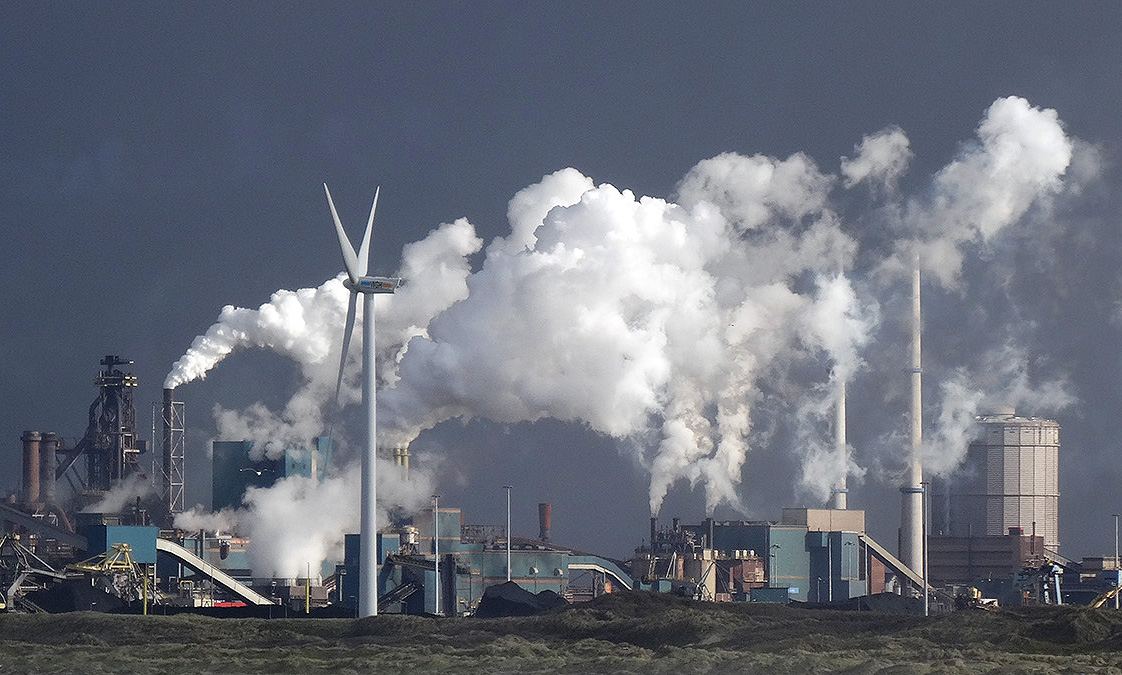 At the same time as the world has been grappling with the pandemic, global warming has contributed to extreme heat and wildfires in various parts of the world, such as western North America, the eastern Mediterranean and Siberia, and major flooding in areas such as western Europe and China. Governments again have intervened by providing support to people whose property and livelihoods have been affected. Also there is a growing urgency to tackle global warming, with some movement, albeit often limited, in implementing policies to achieve net zero carbon emissions by some specified point in the future. Expectations are rising for concerted action to be agreed at the international COP26 climate meeting in Glasgow in November this year.
An evolving capitalism
So are we seeing a new variant of capitalism, with a greater recognition of social responsibility and greater government intervention?
 Western governments seem more committed to spending on socially desirable projects, such as transport, communications and green energy infrastructure, education, science and health. They are beginning to pursue more active industrial and regional policies. They are also taking measures to tax multinationals (see the blog The G7 agrees on measures to stop corporate tax avoidance). Many governments are publicly recognising the need to tackle inequality and to ‘level up’ society. Active fiscal policy, a central plank of Keynesian economics, has now come back into fashion, with a greater willingness to fund expenditure by borrowing and, over the longer term, to use higher taxes to fund increased government expenditure.
But there is also a growing movement among capitalists themselves to move away from profits being their sole objective. A more inclusive ‘stakeholder capitalism’ is being advocated by many companies, where they take into account the interests of a range of stakeholders, from customers, to workers, to local communities, to society in general and to the environment. For example, the Council for Inclusive Capitalism, which is a joint initiative of the Vatican and several world business and public-sector leaders, seeks to make ‘the world fairer, more inclusive, and sustainable’.
If there is to be a true transformation of capitalism from the low-tax free-market capitalism of neoclassical economists and libertarian policymakers to a more interventionist mixed market capitalism, where capitalists pursue a broader set of objectives, then words have to be matched by action. Talk is easy; long-term plans are easy; taking action now is what matters.
Articles and videos
- Why the next stage of capitalism is coming
BBC Future, Matthew Wilburn King (27/5/21)
- During the pandemic, a new variant of capitalism has emerged
The Guardian, Larry Elliott (30/7/21)
- When it comes to social and environmental justice, words don’t cut it
GreenBiz, C J Clouse (28/4/21)
- Introducing the Council for Inclusive Capitalism with the Vatican
Inclusive Capitalism (7/12/20)
- The State and Direction of Inclusive Capitalism
Saïd Business School, Ford Foundation and Deloitte Social Impact practice, Richard Barker, Mary Johnstone-Louis, Colin Mayer, Pradeep Prabhala, Noah Rimland Flower, Theodore Roosevelt Malloch, Tony Siesfeld and Peter Tufano (2018)
- Rising Market Power—A Threat to the Recovery?
IMF Blog, Kristalina Georgieva, Federico J Díez, Romain Duval and Daniel Schwarz (15/3/21)
- The Pandemic Alone Can’t Transform Capitalism
Jacobin, Ramaa Vasudevan (30/7/21)
- Down to earth: How entrepreneurs can collaborate to rejuvenate capitalism
EU-Startups, Luca Sabia (4/8/21)
Questions
- How similar is the economic response of Western governments to the pandemic to their response to the financial crisis of 2007–8?
- What do you understand by ‘inclusive capitalism’? How can stakeholders hold companies to account?
- What indicators are there of market power? Why have these been on the rise?
- How can entrepreneurs contribute to ‘closing the inequality gap for a more sustainable and inclusive form of society’?
- What can be done to hold governments to account for meeting various social and environmental objectives? How successful is this likely to be?
- Can inequality be tackled without redistributing income and wealth from the rich to the poor?