 Some of the largest companies around the world operate in multiple locations. This allows them to take advantage of wider markets, cheaper transport and of course, lower taxes. In many cases, we see companies selling in one country, but locating their Headquarters in another, where tax rates are cheaper and hence their tax bills are lower. Much criticism has been levelled at such companies, who are accused of not paying their fair share in tax. There has been a crackdown on these companies and the UK is playing a leading role in this tightening of tax laws. Google is the latest company to face a large payment in backdated taxes.
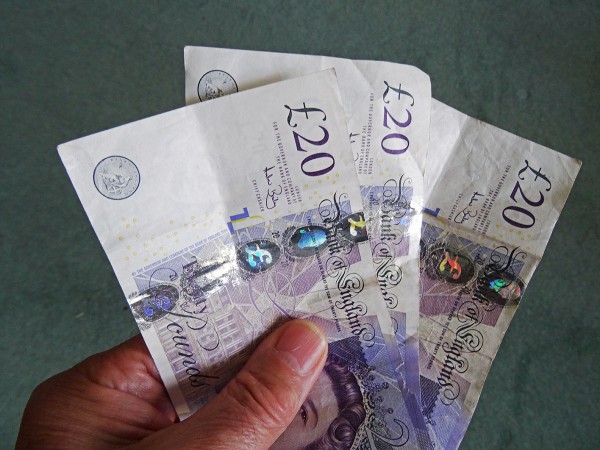
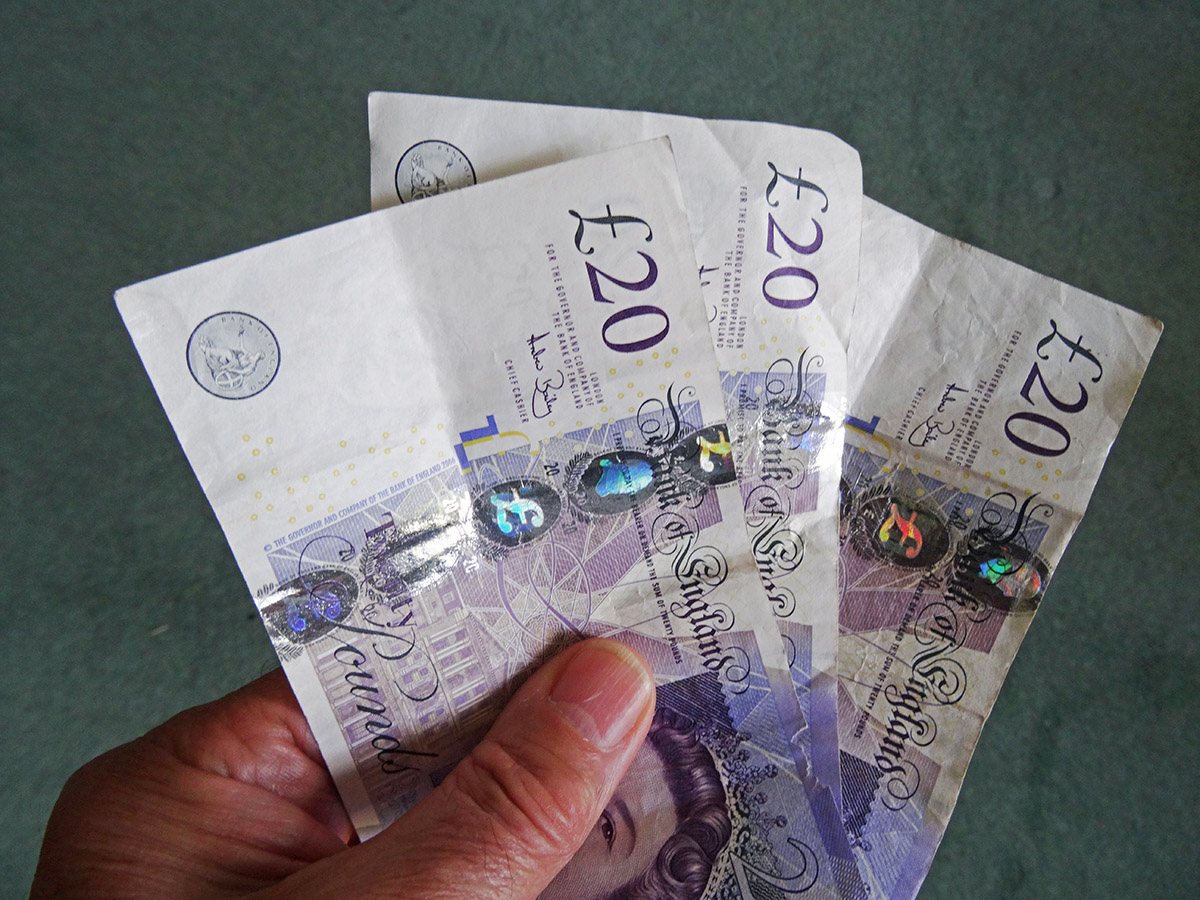
This is a company with a complex structure, which has involved Bermuda as a key location, with its zero rate of corporation tax and a Irish European base. Though locating its business in different countries is legal, it has now agreed to pay HMRC £130 million in back taxes from 2005, following a 6 year investigation. Google will also change its accounting system such that it pays more tax in Britain for sales in this country.
 Google may be the first in a line of companies making such changes to its accounting practices following a global drive to tackle the low levels of taxes paid by these large companies. This change in tax rules may bring welcome relief to government coffers, though criticisms remain about the ‘real’ figure that Google owes. As an example of this: in 2013, Google’s UK revenues were $5.6bn. Yet it only paid £20.5m in tax on its UK profits. The Head of Google Europe, Matt Brittin said:
“The rules are changing internationally and the UK government is taking the lead in applying those rules so we’ll be changing what we are doing here. We want to ensure that we pay the right amount of tax.”
Mr Brittin was clear in saying that these back dated taxes are not evidence that they had been paying too little tax in previous years. He confirmed that they were abiding by tax laws at the time and that tax laws are now changing and hence so will the amount of tax they pay. He continued:
“I think there was concern that international companies were paying only in respect of profits that they make and those were the rules and the pressure was to see us pay in respect of the sales we make to UK customers – and the same for other companies…So, we are making a change because we want to continue to comply with the rules and the rules are changing.”
As the push to tighten tax laws changes, with firms paying more tax on sales as well as profits, we may observe more companies changing their accounting structures. The OECD has taken a big step in simplifying international tax laws and the coming years will tell us just how big an impact this will have and whether companies such as Google will face tax bills in other European countries as well. The following articles consider this taxing matter.
Google agrees £130m UK tax deal with HMRC BBC News, Kamal Ahmed (23/01/16)
Google strikes £130m back tax deal Financial Times, John Gapper (22/01/16)
Google strikes deal with UK tax authority Wall Street Journal, Sam Schechner and Stephen Fidler (23/01/16)
Google agrees to pay HMRC £130m in back taxes The Guardian, Kevin Rawlinson (23/01/16)
Google tax labelled ‘derisory’ by Labour’s John McDonnell BBC News (23/01/16)
Google to pay £130 million UK back taxes, critics want more Reuters, Tom Bergin (23/01/16)
Google to pay UK £130m in back taxes The Telegraph (22/01/16)
Google says it will pay £130m in back taxes Independent, Adam Barnett (23/01/16)
Google ‘agrees’ to pay £130m in extra UK tax after outrage when it coughed up just £20m on UK sales of nearly £4bn Mail Online, Imogen Calderwood (22/01/16)
Google agrees to pay $185 million in UK tax settlement Bloomberg, Brian Womack (23/01/16)
Questions
- What is the difference between a tax on sales and a tax on profits?
- How can companies legally avoid tax? Do you think they have a moral duty to pay tax?
- If firms face higher rates of taxation, how will this affect their costs and profits?
- Why are the larger multinationals, such as Google more able to engage in tax avoidance schemes?
- Do you think the problem of tax avoidance is one of the negative consequences of globalisation?
- Is the criticism about the ‘low’ amount of taxes paid to HMRC justified?
- The OECD has taken a leading role in tightening international tax policy. Do you think this will negatively impact the competitiveness of the global market place?
- What are the costs and benefits to a country of having a low rate of corporation tax?
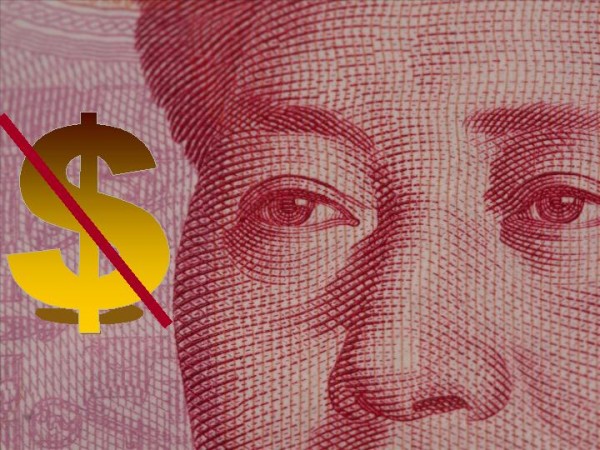 The Chinese economy was, for some time, the beacon of the world economy, posting strong growth and giving a much needed boost to demand in other countries. However, the weakening Chinese economy is now causing serious concerns around the world and not least in China itself.
China’s stock market on Monday 11th January closed down 5.3%, with the Hong Kong Index down by 2.8%. These falls suggest a continuing downward trajectory this week, following the 10% decline on Chinese markets last week. Today, further falls were caused, at least in part, by uncertainty over the direction of the Chinese currency, the yuan. Volatility in the currency is expected to continue with ongoing depreciation pressures and adding to this is continuing concerns about deflation.
The barrage of bad news on key economic indicators may well mean significant intervention by Chinese authorities to try to avoid its slowest growth in 25 years. However, there are also concerns about China’s ability to manage its economic policy, given recent events. IG’s Angus Nicholson said:
“Global markets are still in the grips of China fears, and it is uncertain whether the Chinese government can do enough to reassure global investors.”
Similar sentiments were echoed by Paul Mackel, head of emerging markets FX research at HSBC:
“Different signals about foreign exchange policy have wrong-footed market participants and we are wary in believing that an immediate calmness will soon emerge.”
Perhaps key to turning this downward trend on its head, will be the Chinese consumers. With a traditionally larger saving ratio than 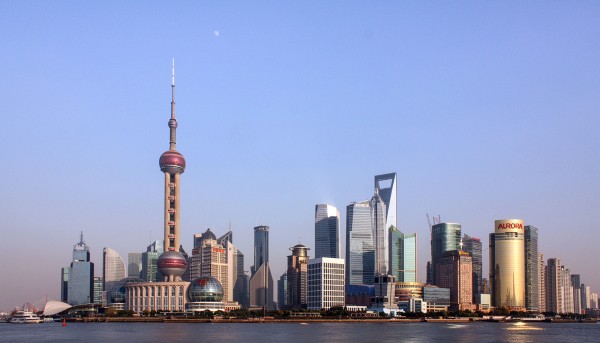 many Western economies, it may be that this ‘cushion’ will give growth a boost, through the contribution of consumer spending. As we know, aggregate demand comprises consumption, investment, government spending and net exports (AD = C + I + G + X – M). Consumer spending (C) increased from 50.2% in 2014 to 58.4% in 2015, according to HIS Global Insight. A similar increase for 2016 would certainly be welcome.
As oil prices continue to fall and concerns remain over China’s weak economic data, we may well soon begin to see just how interdependent the world has become. Many economists suggest that we are now closer to the start of the next recession than we are to the end of the last one and this latest turmoil on Chinese stock markets may do little to allay the fears that the world economy may once again be heading for a crash. The following articles consider the Chinese turmoil.
Free lunch: China’s weakest link Financial Times, Martin Sandbu (11/01/16)
China’s stocks start the week with sharp losses BBC News (11/01/16)
China shares fall 5% to hit-three-month low The Guardian (11/01/16)
China’s resilient shoppers face fresh test from market headwinds Bloomberg (11/01/16)
China shares head lower again on price data Sky News (11/01/16)
U.S., European shares slip as China, oil woes continue Reuters, Lewis Krauskopf (11/01/16)
U.S. stocks drop as oil tumbles again Wall Street Journal (11/01/16)
China escalates emergency stock market intervention The Telegraph, Mehreen Kahn (05/01/16)
Questions
- How are prices and values determined on the stock market?
- Share prices in China have been falling significantly since the start of 2016. Has it been caused by demand or supply-side factors? Use a demand and supply diagram to illustrate this.
- Why has the volatility of the Chinese currency added further downward pressure to Chinese stock markets?
- With the expected increase in consumer spending in China, how will this affect AD? Use a diagram to explain your answer and using this, outline what we might expect to happen to economic growth and unemployment in China.
- Why are there serious concerns about the weak level of inflation in China? Surely low prices are good for exports.
- Should the world economy be concerned if China’s economy does continue to slow?
- To what extent are oil prices an important factor in determining the future trajectory of the world economy?
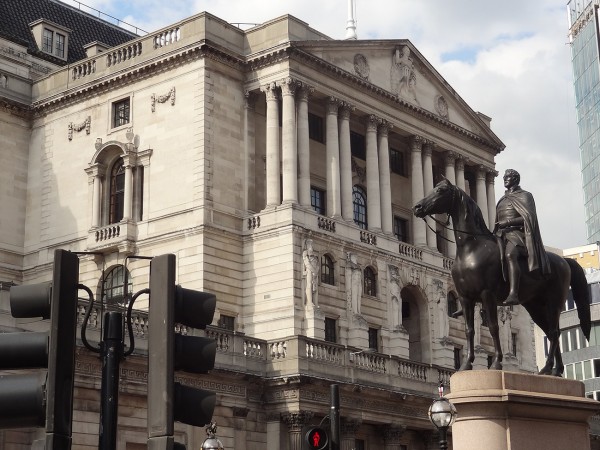 Sales during the weeks leading up to Christmas often make a significant contribution to retailers’ profits. For many consumers, it is a time to spend money on food, presents and decorations and this often means increased borrowing.
Data indicate that borrowing by consumers in the lead-up to Christmas increased by the biggest amount for almost 8 years: a figure of £1.5 billion. As a result, there were likely to have been many happy families at Christmas, with lots of gifts being exchanged. But what does this mean for the New Year? There are concerns about the increase we will see in consumer debt throughout 2016 and the number of borrowers who will, perhaps, be unable to repay their debts.
Could this significant increase in borrowing be a signal that we haven’t learnt from our past? This article from BBC News considers the borrowing data and their implications.
Borrowing jumped ahead of Christmas, Bank of England says BBC News, Brian Milligan (4/01/16)
Questions
- Is borrowing good or bad for the economy? Explain your answer.
- If borrowing is good for the economy, why are there concerns about the current level of borrowing?
- How will this higher level of borrowing affect aggregate demand? Use an AD/AS diagram to explain the impact this will have.
- Could this higher level of borrowing affect unemployment and inflation? In what ways?
- If interest rates had been higher, do you think the level of consumer borrowing would have been lower?
There is a select group of countries (areas) that have something in common: the USA, the UK, Japan and the eurozone. The currency in each of these places is one of the IMF’s reserve currencies. But is China about to enter the mix?
The growth of China has been spectacular and it is now the second largest economy in the world, behind the USA. It is on the back on this growth that China has asked the IMF for the yuan to be included in the IMF’s basket of reserve currencies. The expectation is that Christine Lagarde, the IMF’s Managing Director, will announce its inclusion and, while some suggest that the yuan could become one of the major currencies in the world over the next decade following this move, others say that this is just a ‘symbolic gesture’. But that doesn’t seem to matter, according to Andrew Malcolm, Asia head of capital at Linklaters:
“The direct impact won’t be felt in the near term, not least because implementation of the new basket won’t be until Q3 2016. However the symbolic importance cannot be overlooked…By effectively endorsing the renminbi as a freely useable currency, it sends a strong signal about China’s importance in the global financial markets.”
Concerns about the yuan being included have previously focused on China’s alleged under-valuation of its currency, as a means of boosting export demand, as we discussed in What a devalued yuan means to the rest of the world. However, China has made concerted efforts for the IMF to make this move and China’s continuing financial reforms may be essential. The hope is that with the yuan on the IMF’s special list, it will boost the use of the yuan as a reserve currency for investors. It will also be a contributor to the value of the special drawing right, which is used by the IMF for pricing its emergency loans.
Although the Chinese stock market has been somewhat volatile over the summer period, leading to a devaluation of the currency, it is perhaps this move towards a more market based exchange rate that has allowed the IMF to consider this move. We wait for an announcement from the IMF and the articles below consider this story.
Chinese yuan likely to be added to IMF special basket of currencies The Guardian, Katie Allen (29/11/15)
‘Chinese yuan set for IMF reserve status BBC News (30/11/15)
IMF to make Chinese yuan reserve currency in historic move The Telegraph, James Titcomb (29/11/15)
China selloff pressure Asia stocks, yuan jumpy before IMF decision Reuters, Hideyuki Sano (30/11/15)
IMF’s yuan inclusion signals less risk taking in China Reuters, Pete Sweeney and Krista Hughes (29/11/15)
Did the yuan really pass the IMF currency test? You’ll know soon Bloomberg, Andrew Mayeda (29/11/15)
Questions
- What is meant by a reserve currency?
- Why do you think that the inclusion of the yuan on the IMF’s list of reserve currencies will boost investment in China?
- One of the reasons for the delay in the yuan’s inclusion is the alleged under-valuation of the currency. How have the Chinese authorities allegedly engineered a devaluation of the yuan? To what extent could it be described as a ‘depreciation’ rather than a ‘devaluation’?
- Look at the key tests that the yuan must pass in order to be included. Do you think it has passed them given the report produced a few months ago?
- The weighting that a currency is given in the IMF’s basket of currencies affects the interest rate paid when countries borrow from the IMF. How does this work?
Jim Slater, who has just died at the age of 86, was a tycoon of the 1970s, probably unknown to most reader of this blog. But his legacy lives on and many will question whether the actions of the banking sector and big business today is a reflection of the lessons that were not learnt 40 years ago.
Slater was a businessman: perhaps the businessman in the 1970s, building up a company that in today’s money and the height of its success, would have been worth billions. Buying and selling companies, asset stripping and investing created Slater Walker, which shot to success and then crumbled to failure, taking with it a bailout from the Bank of England of £110 million. You might look at that figure and compare it with the bail outs of more recent times and think – peanuts. But think about how prices have changed and convert £110 million into today’s money and that’s a hefty bail out. A key question is whether the willingness of the government and Bank of England to bail out key banks and financial sector businesses has encouraged the irresponsible lending that led to the credit crunch. Was there a moral hazard? Had Slater Walker been left to fail, would the world look a slightly different place?
Perhaps a little extreme, but I wonder, if we were to look back over the past 50 to 60 years, whether we would find other cases of key businesses being bailed out, which set a precedent for other companies to grow, without necessarily taking full responsibility for it. Jim Slater will certainly leave a legacy behind him .
Jim Slater and the warning from the 1970s that we ignored BBC News, Jonty Bloom (20/11/15)
Questions
- What is meant by asset stripping?
- If a company like Slater Walker had not been bailed out, do you think the economy would have suffered?
- If Slater Walker had been left to fail, would that have changed the business model of some of our largest banks and reduced the chance of a financial crisis 40 years later?
- Do you think the concept of moral hazard is relevant here?
 Google may be the first in a line of companies making such changes to its accounting practices following a global drive to tackle the low levels of taxes paid by these large companies. This change in tax rules may bring welcome relief to government coffers, though criticisms remain about the ‘real’ figure that Google owes. As an example of this: in 2013, Google’s UK revenues were $5.6bn. Yet it only paid £20.5m in tax on its UK profits. The Head of Google Europe, Matt Brittin said: