The grocery retail market in New Zealand is worth billions of dollars each year and is one of the most concentrated supermarket sectors in the world. The industry is dominated by two large groups: Foodstuffs and Woolworths New Zealand. Together, these firms account for around 80–90 per cent of grocery sales, with Foodstuffs operating brands such as Pak’nSave, New World and Four Square, while Woolworths operates the Woolworths supermarket chain.
The market displays many of the characteristics of an oligopoly. The two dominant firms compete through store location, loyalty schemes, advertising and product range, and to some extent through pricing. At the same time, they benefit from substantial economies of scale, extensive distribution networks and strong relationships with suppliers. These factors mean that there are significant barriers to entry in the market and this can prevent new firms from entering the market and surviving.
Competition concerns
Concern about competition in the sector has led to investigations by New Zealand’s Commerce Commission. The Commission concluded that although there was competition in the market, it was less than optimal and both firms were earning higher profits than they would have been able to earn had they been in operating in a more competitive market.
 It identified various barriers to entry that limited competition, including access to suitable retail sites, ownership of distribution networks and the difficulty of establishing large-scale supply chains in a country with a relatively small population.
Despite the market being dominated by these two big firms, there are also many smaller retailers operating within the market, including independent grocery stores, convenience stores and specialist food retailers. However, they lack the scale that is needed to challenge the dominance of Foodstuffs and Woolworths at a national level.
Potential international entrants, such as Aldi and Lidl, have often been suggested as possible competitors, but the costs of establishing a nationwide network of stores and distribution facilities in New Zealand are significant. There have been examples of large and dominant supermarkets in one country attempting to enter the market in other countries but failing to survive or deciding to exit the market early. For example, Tesco entered the Chinese market in 2004 but, despite its efforts, exited the market in 2020.
Response by the New Zealand government
 In response to concerns about competition, the New Zealand government has introduced a series of measures designed to make market entry easier. These include restrictions on anti-competitive land covenants, the introduction of a Grocery Commissioner and changes intended to improve access to wholesale grocery supply.
But, despite these measures, recent reports suggest that the overall market structure has changed little, with the two major firms continuing to dominate grocery retailing.
The public interest
Supporters of the current market structure argue that large supermarket chains deliver lower costs through economies of scale and provide consumers with extensive product choice.
Critics counter that limited competition leads to higher prices, reduced innovation and weaker bargaining power for suppliers.
The debate illustrates the difficulties faced by policymakers when attempting to balance efficiency against the promotion of competition.
Whether greater competition will emerge in the future remains uncertain. Much will depend on whether existing reforms can encourage new entrants or whether the structural advantages enjoyed by Foodstuffs and Woolworths continue to deter potential rivals.
Articles
- ‘Substantive, potentially systemic’ supermarket concerns raised by Commerce Commission
RNZ News, Susan Edmunds (7/7/26)
- Supermarkets aren’t the problem. This issue is a far bigger deal
Money Stuff, Rupert Carlyon (23/9/26)
- This may be as good as it gets: NZ and Australia face a complicated puzzle when it comes to supermarket prices
The Conversation, Richard Meade (23/4/25)
- Every party has pitched its own supermarket fix. What if we combined the best ideas?
The Conversation, Jonathan Baker (21/9/26)
- NZ regulator eyes ‘problematic’ supermarket supplier fees
Inside FMCG, Sean Cao (7/7/26)
- Australia vs NZ: Supermarket competition compared
Consumer NZ, Vanessa Pratley (27/3/25)
- Grocery Commissioner puts supermarkets on notice
RNZ News, Susan Edmunds (18/3/26)
- High margins, double the normal returns – does NZ’s supermarket duopoly drive prices up?
The Press, Susan Edmunds (22/9/26)
- Everyone wants to break up the supermarkets. How would it actually work?
The Spinoff, Joel MacManus (22/9/26)
Questions
- What are the characteristics of the New Zealand supermarket industry that create barriers to entry for new firms?
- To what extent is the New Zealand grocery market consistent with the characteristics of an oligopoly?
- Evaluate the likely effectiveness of government measures designed to increase competition in the supermarket sector.
- Australia too has two main supermarket chains: Coles and Woolworths. However, Aldi has entered the Australian market and in some parts of the country had provided significant competition to the two major chians. Why may Aldi have more difficulty in entering the New Zealnd market
- Investigate the grocery retail market in another country (not the UK). Who are the major competitors and what is their market share? What barriers to entry exist? Has the competition authority expressed concerns about the market and if so, what are they?
Boeing and Airbus have called a truce in their 17-year battle over subsidies. During this period, both have accused each other of unfair government subsidies to their respective plane makers.
The long-running trade dispute
In October 2004, the USA requested the establishment of a WTO panel to consider whether Airbus was providing unfair subsidies to develop its new super-jumbo – the A380. This provoked a counter-request by Airbus, claiming unfair subsidies of $27.3 billion for Boeing by the US government since 1992. In July 2005, two panels were set up to deal with the two sets of allegations.
In June 2010, the WTO panel circulated its findings on Boeing’s case against Airbus. It found Airbus guilty of using some illegal subsidies to win contracts through predatory pricing, but dismissed several of Boeing’s claims because many of the subsidies were reimbursable at commercial rates of interest. However, some of the ‘launch aid’ for research and development was given at below market rates and so violated WTO rules. The report evoked appeal and counter-appeal from both sides, but the WTO’s Appellate Body reported in May 2011 upholding the case that ‘certain subsidies’ provided by the EU and member states were incompatible with WTO rules. In June 2011, the EU accepted the findings.
 In March 2011, the WTO panel circulated its findings on Airbus’s case against Boeing. The EU claimed that ten specific measures amounted to subsidies to Boeing, which were inconsistent with the WTO’s rules on subsidies (the SCM agreement). It upheld three of ten alleged breaches, including subsidies between 1989 and 2006 of at least $5.3 billion. These subsidies were adjudged to have resulted in adverse effects to the EU’s interests, specifically in lost sales, especially to third-country markets, and in significantly suppressing the price at which Airbus was able to sell its aircraft.
But these rulings were not the end of the matter. Various appeals and counter-appeals were lodged by both sides with varying degrees of success. Also the disputes extended to other wide-bodied jets and to narrow-bodied ones too with claims by both sides of unfair subsidies and tax breaks.
On 9 June 2017 the WTO’s compliance panel rejected several EU claims that the USA had failed to withdraw all illegal subsidies to Boeing. However, it also found that the USA had not complied with an earlier ruling to abolish illegal tax breaks. Both sides claimed victory. Airbus claimed that the ruling had seen the WTO condemn non-compliance and new subsidies. In particular, it focused on the WTO ruling that Washington State subsidies had resulted in a significant loss of sales for Airbus. On the other hand, a Boeing press release spoke of a US win in a major WTO compliance ruling. Boeing claimed that that ruling meant that the United States had complied with ‘virtually all’ of the WTO’s decisions in the counter-case that the EU had filed against the USA in 2006.
On 27 June 2017, as expected, the EU challenged the WTO decision. This meant that the EU’s case would go back to the WTO’s appellate body, which was still considering a separate US case over state aid to Airbus.
On 15 May 2018, the WTO ruled that Airbus did not use unfair subsidies for narrow-bodied jets, such as the A320, which competes with the 737, but did for wide-bodied jets. The EU said that it would comply with the WTO ruling over the support for wide-bodied jets.
In 2019, the WTO ruled that the EU had illegally provided support to Airbus. The USA responded with tariffs of up to $7.5bn on a range of goods imported from the EU. In a parallel case, the WTO ruled that the US benefits to Boeing also violated trade rules, authorising the EU to impose tariffs on US imports worth roughly $4bn. Then in March 2020, the USA imposed a 15% tariff on Airbus aircraft.
The truce
Agreement was reached on 15 June 2021 in trade talks between the USA and the EU in Brussels. Both sides recognised that the dispute had been a negative-sum game, with both sides losing. It was thus agreed to suspend for five years all tariffs on aircraft and on a range of other goods, such as EU cheese and wine and US tobacco and spirits. The agreement did not include ending EU tariffs on US steel, however.
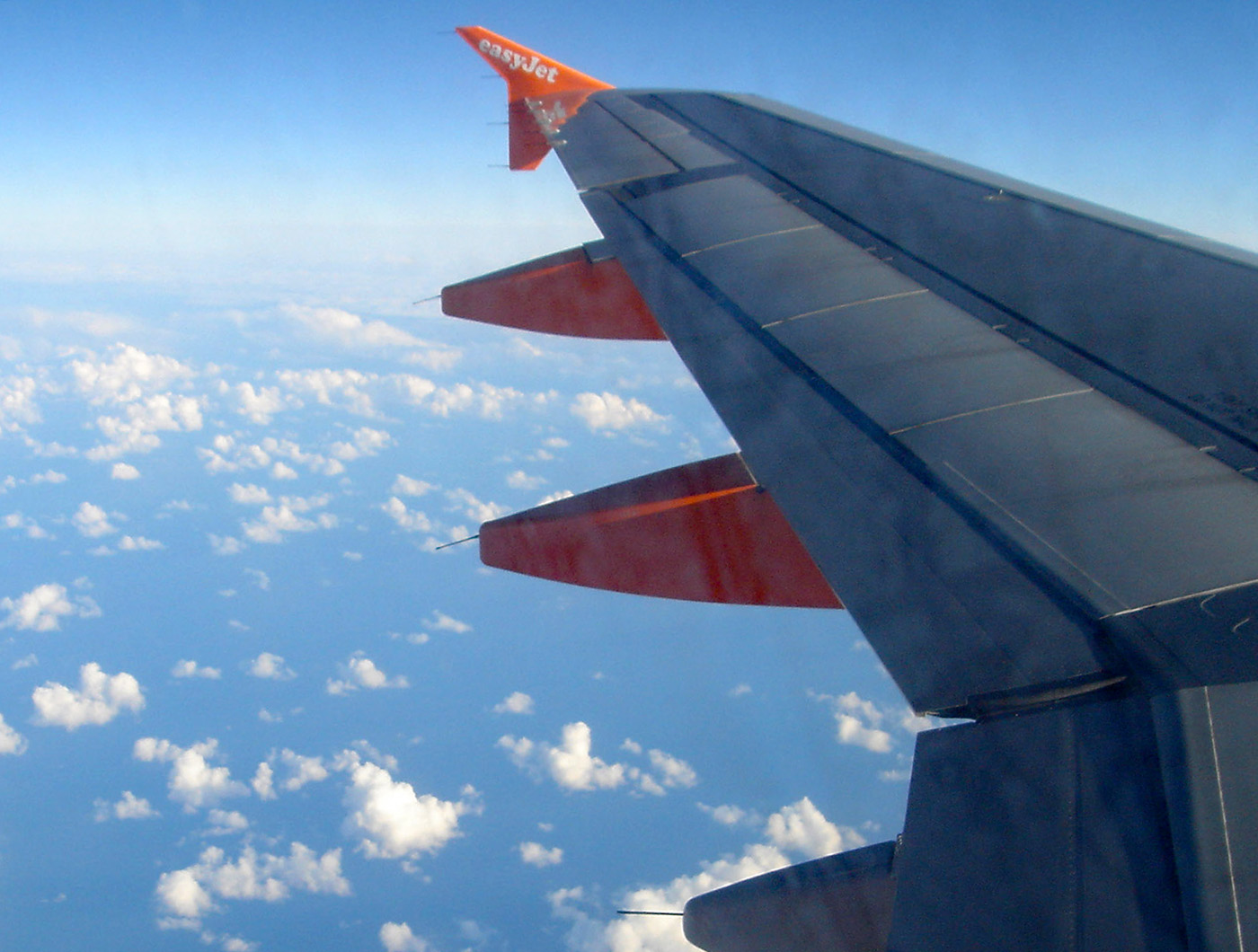 It was also agreed to work on an overarching agreement on subsidies, which would allow fair support by governments on both sides, and to co-operate in finding ways to counter unfair state investment in aircraft by China. US Trade Representative Katherine Tai said that the agreement ‘includes a commitment for concrete joint collaboration to confront the threat from China’s ambitions to build an aircraft sector on non-market practices’. China’s state-sponsored aerospace manufacturer, the Commercial Aircraft Corporation of China, or Comac, sees its C919, now in late stages of development, as a direct rival to the Airbus A320neo and the Boeing 737 Max.
To work out the details of US-EU collaboration, a working group will be set up. It will consider ways of ensuring that finance is provided on market terms, that R&D funding is transparent and that support given to aircraft manufactures will be equivalent by each side and will avoid harming the other side. It will consider just how the two sides can co-operate to address unfair competition from elsewhere.
Two days later, an almost identically worded deal was reached between the USA and the UK to end tariffs on a range of goods and join the EU-USA co-operation on aircraft manufacture.
Articles
 US and Europe end Airbus-Boeing dispute as they eye threat from China
CNN, Charles Riley and Kevin Liptak (15/6/21)
- After 17 years, truce nears in U.S.-Europe jet subsidy war
Reuters, Tim Hepher, Andrea Shalal, David Shepardson and Philip Blenkinsop (15/6/21)
- U.S, EU agree truce in 17-year Airbus-Boeing conflict
Reuters, Philip Blenkinsop (16/6/21)
- After EU, Britain and U.S. reach truce in aircraft trade dispute
Reuters, Tim Hepher and Alistair Smout (17/6/21)
- EU and US end Airbus-Boeing trade dispute after 17 years
Financial Times, Jim Brunsden, Sam Fleming, Aime Williams and James Politi (15/6/21)
- Boeing-Airbus trade row set to end after 17 years
BBC News (16/6/21)
- Biden, E.U. end 17-year Airbus-Boeing trade dispute, seek to calm relations after Trump
The Washington Post, Michael Birnbaum, Anne Gearan and David J. Lynch
- EU, U.S. Agree to Five-Year Truce in Boeing-Airbus Trade Dispute
Bloomberg, Alberto Nardelli, Nikos Chrysoloras and Jennifer Jacobs (15/6/21)
Questions
- Choose any one particular complaint to the WTO by either Boeing or Airbus and assess the arguments used by the WTO in its ruling.
- Are subsidies by aircraft manufacturers in the interests of (a) passengers; (b) society in general?
- Is collaboration between Boeing and Airbus in the interests of (a) passengers; (b) society in general?
- How is game theory relevant to the long-running disputes between Boeing and Airbus and to their relationships in the coming years?
- Would cheaper aircraft from China be in the interests of (a) passengers; (b) society in general?
- Explain what is meant by ‘strategic trade theory’. How is it relevant to aircraft manufacture?