The grocery retail market in New Zealand is worth billions of dollars each year and is one of the most concentrated supermarket sectors in the world. The industry is dominated by two large groups: Foodstuffs and Woolworths New Zealand. Together, these firms account for around 80–90 per cent of grocery sales, with Foodstuffs operating brands such as Pak’nSave, New World and Four Square, while Woolworths operates the Woolworths supermarket chain.
The market displays many of the characteristics of an oligopoly. The two dominant firms compete through store location, loyalty schemes, advertising and product range, and to some extent through pricing. At the same time, they benefit from substantial economies of scale, extensive distribution networks and strong relationships with suppliers. These factors mean that there are significant barriers to entry in the market and this can prevent new firms from entering the market and surviving.
Competition concerns
Concern about competition in the sector has led to investigations by New Zealand’s Commerce Commission. The Commission concluded that although there was competition in the market, it was less than optimal and both firms were earning higher profits than they would have been able to earn had they been in operating in a more competitive market.
 It identified various barriers to entry that limited competition, including access to suitable retail sites, ownership of distribution networks and the difficulty of establishing large-scale supply chains in a country with a relatively small population.
Despite the market being dominated by these two big firms, there are also many smaller retailers operating within the market, including independent grocery stores, convenience stores and specialist food retailers. However, they lack the scale that is needed to challenge the dominance of Foodstuffs and Woolworths at a national level.
Potential international entrants, such as Aldi and Lidl, have often been suggested as possible competitors, but the costs of establishing a nationwide network of stores and distribution facilities in New Zealand are significant. There have been examples of large and dominant supermarkets in one country attempting to enter the market in other countries but failing to survive or deciding to exit the market early. For example, Tesco entered the Chinese market in 2004 but, despite its efforts, exited the market in 2020.
Response by the New Zealand government
 In response to concerns about competition, the New Zealand government has introduced a series of measures designed to make market entry easier. These include restrictions on anti-competitive land covenants, the introduction of a Grocery Commissioner and changes intended to improve access to wholesale grocery supply.
But, despite these measures, recent reports suggest that the overall market structure has changed little, with the two major firms continuing to dominate grocery retailing.
The public interest
Supporters of the current market structure argue that large supermarket chains deliver lower costs through economies of scale and provide consumers with extensive product choice.
Critics counter that limited competition leads to higher prices, reduced innovation and weaker bargaining power for suppliers.
The debate illustrates the difficulties faced by policymakers when attempting to balance efficiency against the promotion of competition.
Whether greater competition will emerge in the future remains uncertain. Much will depend on whether existing reforms can encourage new entrants or whether the structural advantages enjoyed by Foodstuffs and Woolworths continue to deter potential rivals.
Articles
- ‘Substantive, potentially systemic’ supermarket concerns raised by Commerce Commission
RNZ News, Susan Edmunds (7/7/26)
- Supermarkets aren’t the problem. This issue is a far bigger deal
Money Stuff, Rupert Carlyon (23/9/26)
- This may be as good as it gets: NZ and Australia face a complicated puzzle when it comes to supermarket prices
The Conversation, Richard Meade (23/4/25)
- Every party has pitched its own supermarket fix. What if we combined the best ideas?
The Conversation, Jonathan Baker (21/9/26)
- NZ regulator eyes ‘problematic’ supermarket supplier fees
Inside FMCG, Sean Cao (7/7/26)
- Australia vs NZ: Supermarket competition compared
Consumer NZ, Vanessa Pratley (27/3/25)
- Grocery Commissioner puts supermarkets on notice
RNZ News, Susan Edmunds (18/3/26)
- High margins, double the normal returns – does NZ’s supermarket duopoly drive prices up?
The Press, Susan Edmunds (22/9/26)
- Everyone wants to break up the supermarkets. How would it actually work?
The Spinoff, Joel MacManus (22/9/26)
Questions
- What are the characteristics of the New Zealand supermarket industry that create barriers to entry for new firms?
- To what extent is the New Zealand grocery market consistent with the characteristics of an oligopoly?
- Evaluate the likely effectiveness of government measures designed to increase competition in the supermarket sector.
- Australia too has two main supermarket chains: Coles and Woolworths. However, Aldi has entered the Australian market and in some parts of the country had provided significant competition to the two major chians. Why may Aldi have more difficulty in entering the New Zealnd market
- Investigate the grocery retail market in another country (not the UK). Who are the major competitors and what is their market share? What barriers to entry exist? Has the competition authority expressed concerns about the market and if so, what are they?
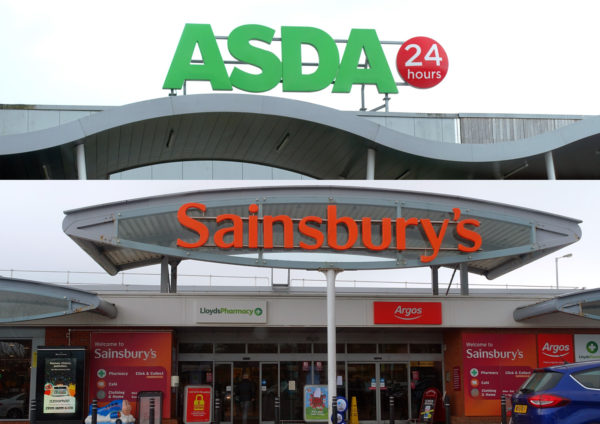 The ‘Big 4’ supermarkets in the UK – Tesco, Sainsbury’s, Asda and Morrisons – have a 69.5% share of the Great Britain grocery market (see data link below). The next four – Aldi, Co-op, Lidl and Waitrose – have a 23.8% share. If two of the Big 4 were to merge, would there be a significant decline in competition? This is a question the Competition and Markets Authority (CMA) has been considering in the light of Sainsbury’s planned £7.3 billion takeover of Asda (owned by the US retailing giant, Walmart).
In a recently published provisional report, the CMA argues that “the merger could lead to a substantial lessening of competition at both a national and local level.” The CMA has concerns that the merger:
…could lead to a worse experience for in-store and online shoppers across the UK through higher prices, a poorer shopping experience, and reductions in the range and quality of products offered. It also has concerns that prices could rise at a large number of Sainsbury’s and Asda petrol stations. …The combined impact means that people could lose out right across the UK and that the deal could also cost shoppers through reduced competition in particular areas where Sainsbury’s and Asda stores overlap.
Sainsbury’s and Asda currently have a combined market share of 31.2%. This is slightly larger than Tesco’s 27.7%. But would this give the merged companies too much market power? Would there not still be intense competition between the new Big 3? 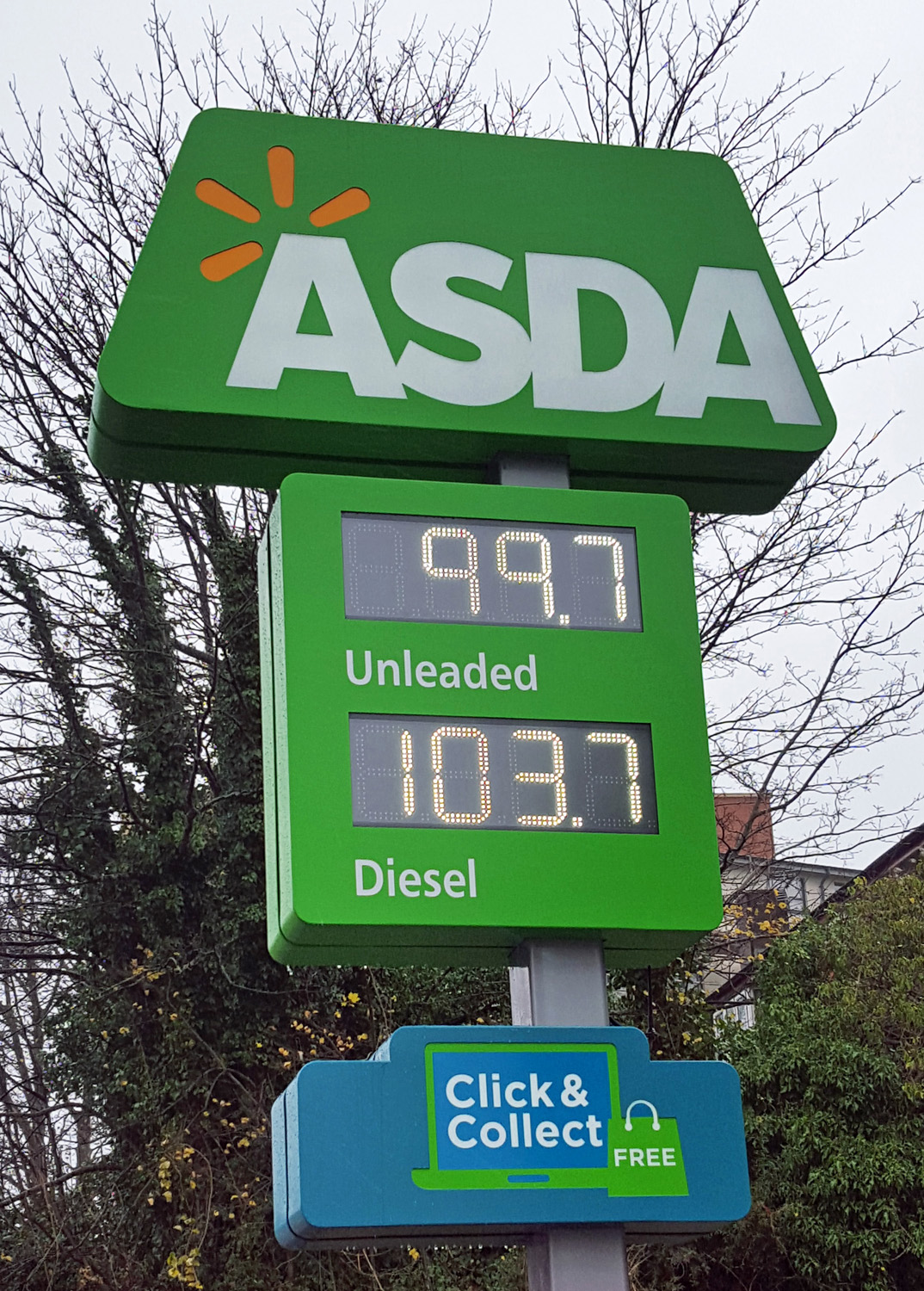 And, with the growth in the German discounters, Aldi and Lidl, as well as competition from Waitrose, the Co-op, Marks & Spencer and Iceland, would there be any significant decline in competition and choice and a rise in prices?
To answer this, it is crucial to define the grocery market. The CMA argues that the major competitors to any Big 4 company are the other Big 4 companies, rather than the German discounters or other supermarkets. Unlike Aldi and Lidl, the Big 4 have a range of facilities, such as fish and meat counters, delivery and a large range of branded products.
At a national level the CMA finds that the merger would reduce competitive pressure, so that a Big 3 would be less competitive than the Big 4, with higher prices and with reduced quality, range of products and in-store services.
At the local level the effects are likely to be serious. Often the consumer has very limited choice of supermarkets at a local level. If a particular area has just two supermarkets, Sainsbury’s and Asda, then the merger of the two could result in a substantial loss of competition. The only alternative for consumers in such areas would be to use small shops, which tend to be more highly priced anyway and do not compete head-to-head with the supermarkets, or to drive to another area or to shop online, depending on how far rival supermarkets are prepared to deliver. Similar arguments apply to supermarket petrol stations, where the only competition to supermarkets is from roadside petrol stations, often selling more highly priced petrol.
 In response to the CMA’s findings, Sainsbury’s chief executive, Mike Coupe, claims that they focus too much on competition between the Big 4 and do not take into account competition from Lidl and Aldi, both of which are expending rapidly and now have a combined market share of 12.8% (compared with 10.7% two years ago).
Sainsbury’s and Asda also claim that there would be considerable scope for economies of scale, with lower costs being achieved through purchasing and logistics. In a joint statement they state that:
Combining Sainsbury’s and Asda would create significant cost savings, which would allow us to lower prices. Despite the savings being independently reviewed by two separate industry specialists, the CMA has chosen to discount them as benefits.
The two companies and other interested parties have until 13 March to respond to the provisional findings. The CMA will then issue its final report by 30 April 2019. If it sticks to its provisional findings, then either the merger will be blocked or the merging companies would have to ‘sell off a significant number of stores and other assets – potentially including one of the Sainsbury’s or Asda brands – to recreate the competitive rivalry lost through the merger.’ This might be very difficult to achieve as the new buyer would have to be big enough to provide effective competition to the remaining Big 3. Perhaps this could be an opportunity for Amazon to move into in-store grocery retailing. Or there may be some private equity company that would like to do the same.
It is likely that if the CMA sticks to its ruling, the two supermarkets will apply for a judicial review of the CMA’s decision.
Articles
Competition and Markets Authority Report
Data
Questions
- In what market segments do the Big 4 supermarkets compete?
- Research earlier investigations of the supermarket sector by the UK competition authorities. What were their findings?
- In what ways might the proposed takeover of Asda by Sainsbury’s affect consumers’ interests (a) at a national level; (b) at the local level?
- What is the ‘GUPPI index’? How is it calculated and how is it used in assessing the effects of the proposed takeover? (See pages 88–91 and 109–11 of the CMA’s Provisional Report and pages I5–I15 of the Appendices and Glossary.)
- Distinguish between horizontal and vertical mergers. How is the distinction relevant in drawing lessons from the Tesco takeover of Booker for the Sainsbury’s takeover of Asda?
- Rather than blocking the takeover, one alternative would be for the CMA to permit it, subject to the sale of specific stores where there are problems of the merger limiting competition in a particular locality. Do you think that this would be a better alternative than blocking the takeover? Explain.