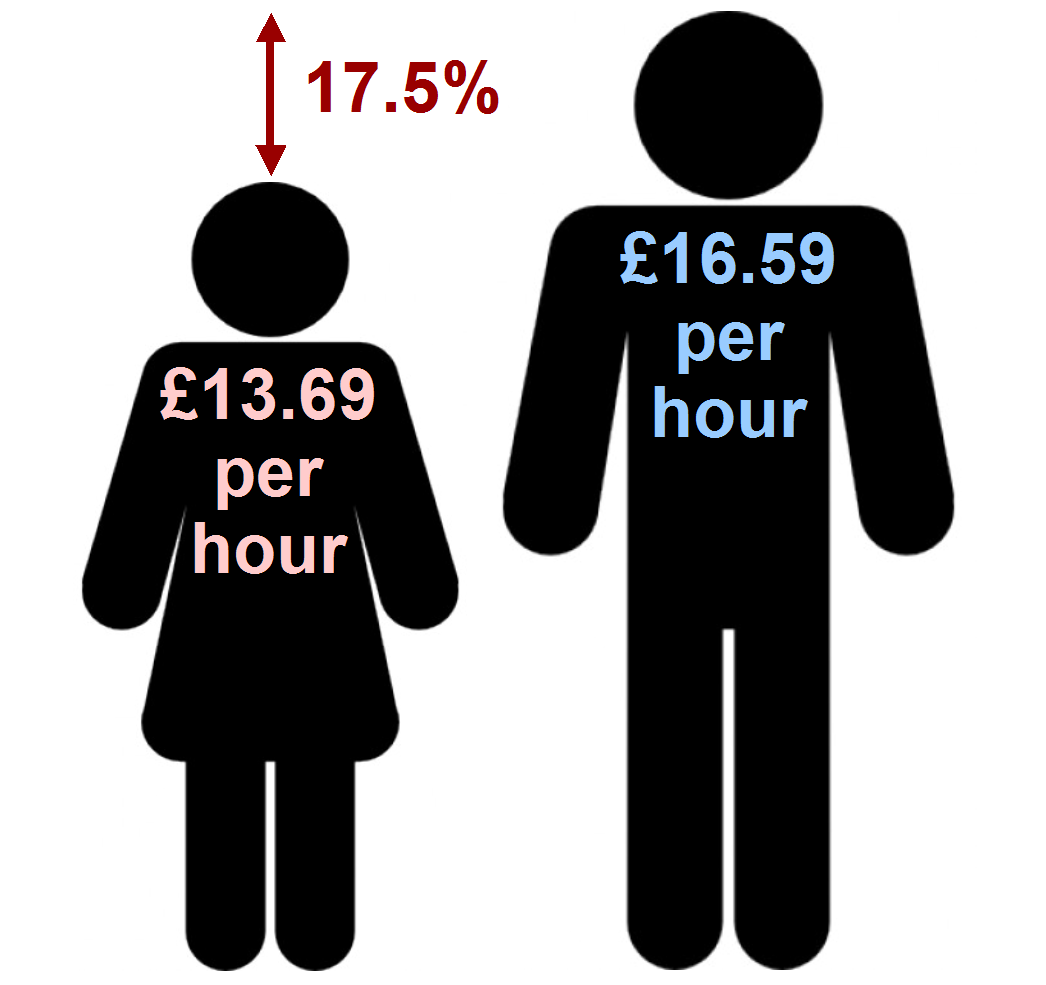
 Women in the UK on average earn less per hour than men. According to the Annual Survey of Hours and Earnings, the mean hourly pay for women in 2015 was 17.5% less than that for men. This figure is for all employees, full and part time. As far as full-time employees is concerned, the gap was slightly smaller at 13.9%. Nevertheless, as you can see from Table 6 in the linked Excel file, these gaps have decreased in recent years – but only slightly.
A recent paper from the Institute for Fiscal Studies has disaggregated the figures to give a better picture of this wage gap. It finds that having children is a major contributing factor to the gap. It also finds that this has a bigger impact on the earnings of graduates and those without a degree but with A levels.
On entry to the labour market, men and women earn roughly the same. People’s wages tend to rise during their 20s, but men’s rise slightly faster than women’s, causing a pay gap to open and widen – but slowly at first. Average (mean) men’s wages continue to grow during their 30s and a bit during their 40s. However, average women’s wages flatline. Thus the wage gap grows substantially, especially for the higher educated.
The paper argues that the arrival of children is a major contributing factor to this picture. It looks at the gap before and after the arrival of children. “The crucial observation is that the gap opens up gradually after the first child arrives and continues to widen for many years after that point.” By 12 years after the first child is born, the wage gap has widened to 33%.
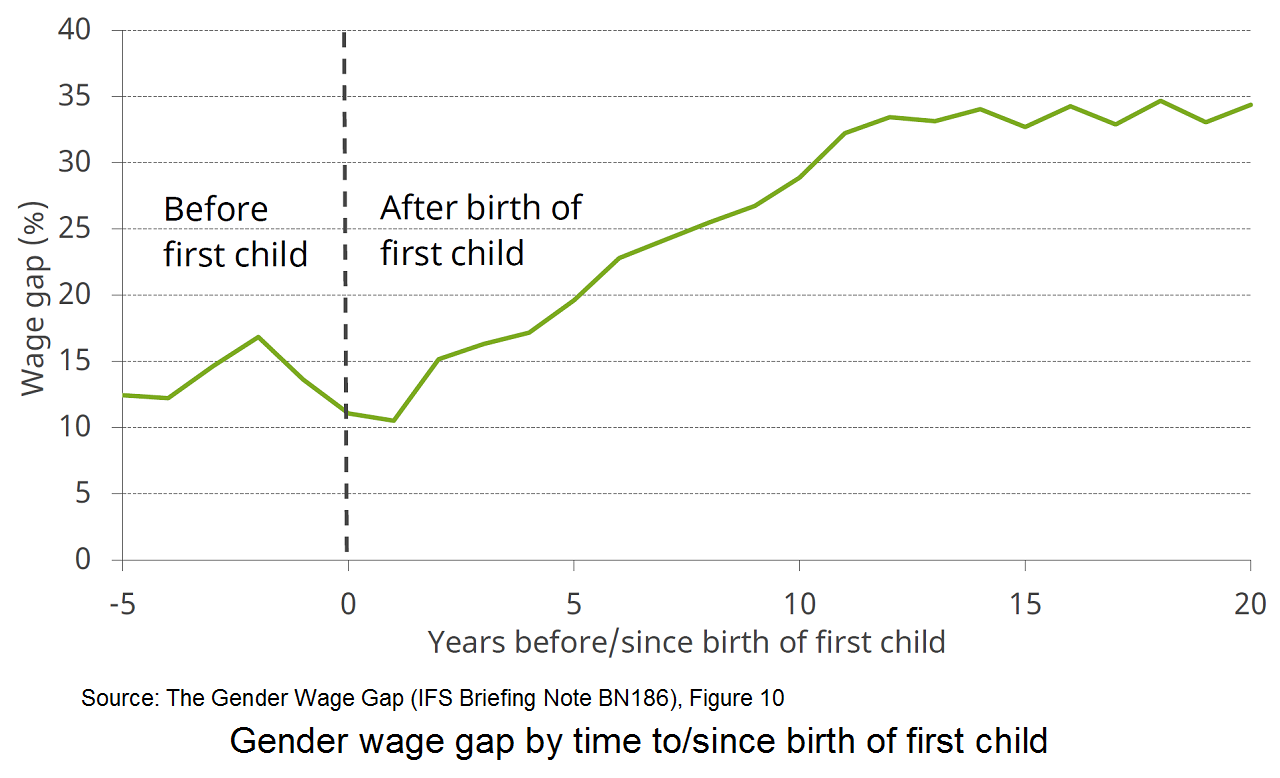
The paper does not offer reasons for the small gap that exists before the arrival of children. But it does give possible reasons for the widening gap after having children. A major one, it suggests, has to do with labour market experience.
“As women are likely to do less paid work after the arrival of children, the level of labour market experience they have falls further and further behind that of their male counterparts, and the wage gap therefore widens.” They may also miss out on promotions.
Each year a woman spends away from the labour market is associated with an average 2% drop in pay compared with those who remain in work. For those with at least A levels, the penalty is 4%; but there is no drop in pay for those without A levels.
Other possible explanations include mothers taking work that requires a lower skill level, and at lower hourly pay, in order to gain flexibility in working hours. However, the evidence suggests that women who move to part-time work on having a child suffer no immediate drop in pay. But their hourly pay does grow more slowly, thus contributing to a widening of the gap.
Another explanation is employers exercising market power to discriminate against women with children. The paper does not consider this explanation.
The articles discussing the paper look at policy implications and identify various things that can be done to narrow the gap. Read the paper and articles and try answering the questions below.
Videos and podcasts
 IFS: gender pay gap widens after first child Compendium of News Reports from BBC News at Six, Channel 4 News, ITV News at Ten and BBC Newsnight from Incorrigible Forever on YouTube (23/8/16)
Gender Pay Gap Hits Women With Children Hardest Sky News (23/8/16)
In Business: Supportive partner = success at work World of Business, BBC Radio 4, Peter Day (25/8/15)
Gender Pay Gap More or Less, BBC Radio 4, Tim Harford (26/8/16)
Gender pay gap: Why do mums increasingly earn less? BBC Victoria Derbyshire programme (23/8/16)
Articles
UK women still far adrift on salary and promotion as gender pay gap remains a gulf The Guardian, Katie Allen (23/8/16)
Gender pay gap: mothers returning to work earn a third less than men The Telegraph, Tim Wallace (23/8/16)
Mothers’ pay lags far behind men BBC News (23/8/16)
Four ways the gender pay gap isn’t all it seems BBC News Magazine, Simon Maybin (29/8/16)
Six ways to tackle the gender pay gap BBC News, Emma Atkinson (23/8/16)
Wage gap for UK women unchanged in 20 years Financial Times, Gemma Tetlow (23/8/16)
The UK’s slow march to gender pay equality Financial Times (23/8/16)
Gender Pay Gap For Mothers Widens For 12 Years After Having Children, New Research Finds Huffington Post, Jack Sommers (23/8/16)
Motherhood costs women a third of their salary compared to men, report reveals Independent, Joe Watts (23/8/16)
The gender pay gap means that more women will be in poverty later in life – but there is something the government can do Independent, Claire Turner (26/8/16)
Gender pay gap won’t close until 2069, says Deloitte The Guardian, Katie Allen (24/9/16)
Papers and Reports
Gender wage gap grows year on year after childbirth as mothers in low-hours jobs see no wage progression IFS Press Release (23/8/16)
The Gender Wage Gap IFS Briefing Note BN18, William Elming , Robert Joyce and Monica Costa Dias (23/8/16)
Women in STEM: Technology, career pathways and the gender pay gap Deloitte (September 2016)
Data
Gender pay differences: Annual Survey of Hours and Earnings: 2015 Provisional Results ONS Statistical Bulletin (18/11/15)
All data related to Annual Survey of Hours and Earnings: 2015 Provisional Results ONS datasets (18/11/15)
ASHE 1997 to 2015 selected estimates (See Tables 1 to 4, 6 and 9) ONS dataset (18/11/15)
All Employees – ASHE: Table 1 ONS dataset (18/11/15)
Questions
- Identify possible reasons for the wage gap between men and women.
- Why is the median wage gap different from the mean wage gap?
- Why is the wage penalty for periods without work greater for more highly educated women?
- To what extent is the gender wage gap a reflection of marginal productivity differences?
- Is the gender pay gap primarily about men and women being paid differently for doing the same job?
- What evidence is provided by the Chartered Management Institute (CMI) on women’s lack of pay progression?
- What could the government do to reduce the wage gap?
- Discuss the relative effectiveness of different policy alternatives.
 The Bank of England has responded to forecasts of a dramatic slowdown in the UK economy in the wake of the Brexit vote. On 4th August, it announced a substantial easing of monetary policy, but still left room for further easing later.
Its new measures are based on the forecasts in its latest 3-monthly Inflation Report. Compared with the May forecasts, the Report predicts that, even with the new measures, aggregate demand growth will slow dramatically. As a result, over the next two years cumulative GDP growth will be 2.5% lower than it would have been with a Remain vote and unemployment will rise from 4.9% to around 5.5%.
What is more, the slower growth in aggregate demand will impact on aggregate supply. As the Governor said in his 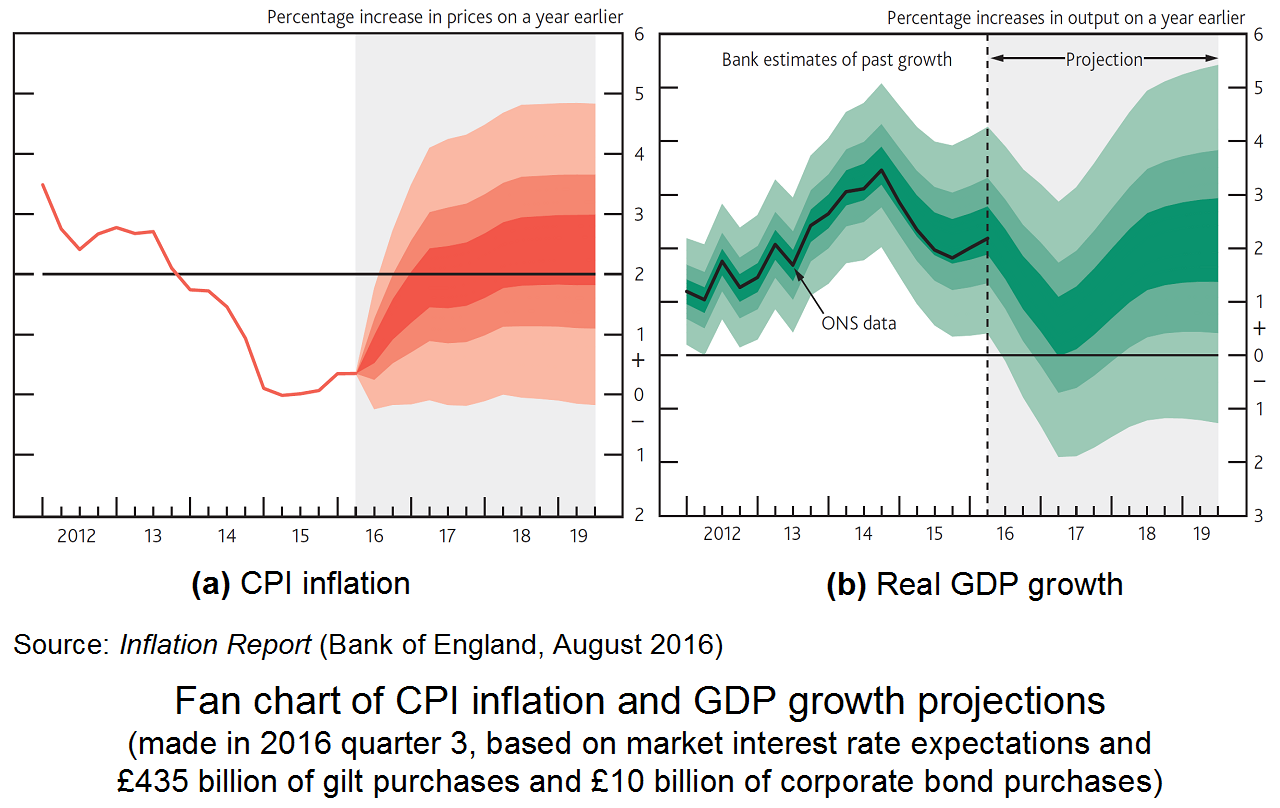 opening remarks at the Inflation Report press conference:
“The weakness in demand will itself weigh on supply as a period of low investment restrains growth in the capital stock and productivity.
There could also be more direct implications for supply from the decision to leave the European Union. The UK’s trading relationships are likely to change, but precisely how will be unclear for some time. If companies are uncertain about the future impact of this on their businesses, they could delay decisions about building supply capacity or entering new markets.”
Three main measures were announced.
|
|
| • |
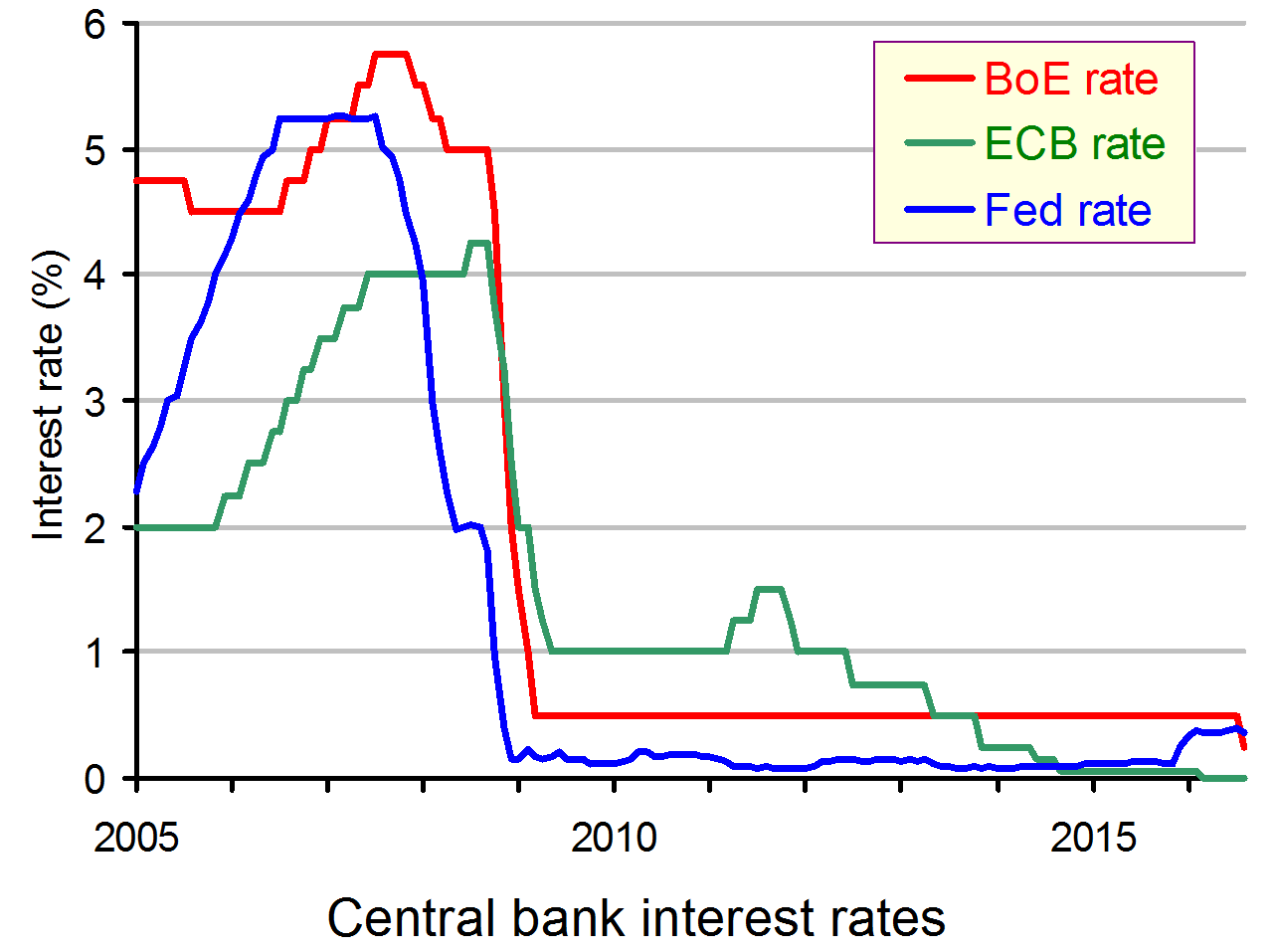
A cut in Bank Rate from 0.5% to 0.25%. This is the first time Bank Rate has been changed since March 2009. The Bank hopes that banks will pass this on to customers in terms of lower borrowing rates. |
| • |
A new ‘Term Funding Scheme (TFS)’. “Compared to the old Funding for Lending Scheme, the TFS is a pure monetary policy instrument that is likely to be more stimulative pound-for-pound.” The scheme makes £100bn of central bank reserves available as loans to banks and building societies. These will be at ultra-low interest rates to enable banks to pass on the new lower Bank Rate to customers in all forms of lending. What is more, banks will be charged a penalty if they do not lend this money. |
| • |
An expansion of the quantitative easing programme beyond the previous £375 billion of gilt (government bond) purchases. This will consist of an extra £60bn of gilt purchases and the purchase of up to £10bn of UK corporate bonds. |
 The Bank recognises that there is a limit to what monetary policy can do and that there is also a role to play for fiscal policy. The new Chancellor, Philip Hammond, is considering what fiscal measures can be taken, including spending on infrastructure projects. These are likely to have relative high multiplier effects and would also increase aggregate supply at the same time. But we will have to wait for the Autumn Statement to see what measures will be taken.
But despite the limits to monetary policy, there is more the Bank of England could do. It already recognises that there may have to be a further cut in Bank Rate, perhaps to 0.1% or even to 0% (the ECB has a 0% rate). There could also be additional quantitative easing or additional term funding to banks.
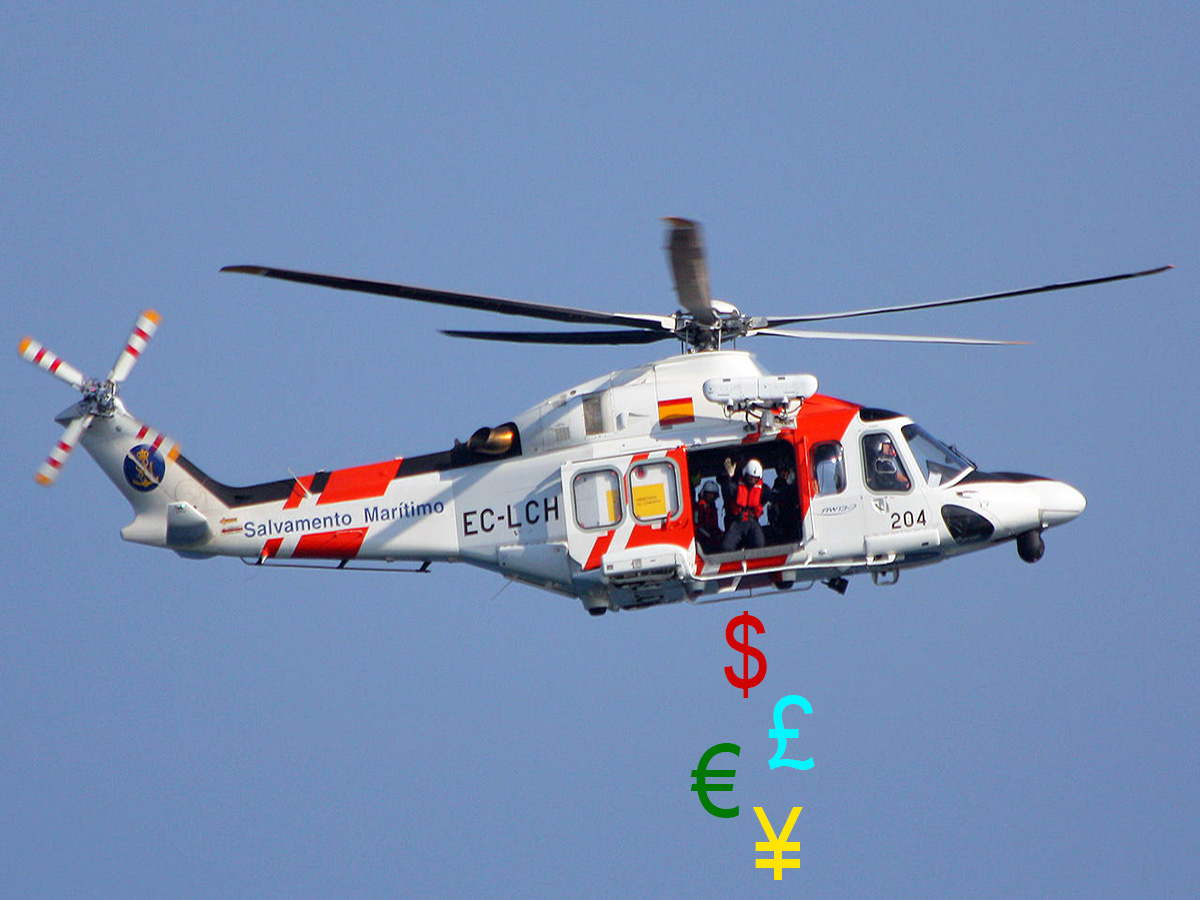
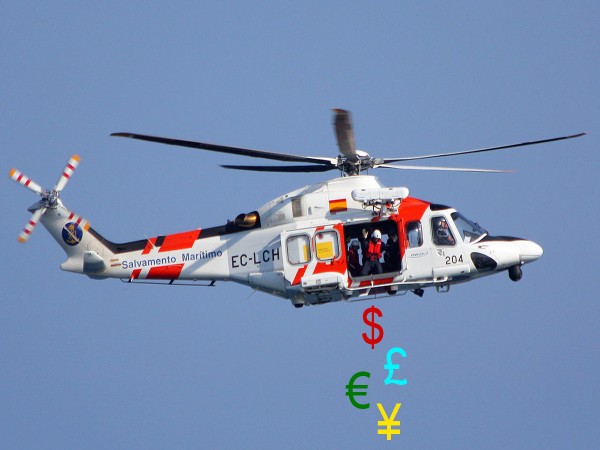 Some economists argue that the Bank should go further still and, in conjunction with the Treasury, provide new money directly to fund infrastructure spending or tax cuts, or even as cash handouts to households. This extra money provided to the government would not increase government borrowing.
We discussed the use of this version of ‘helicopter money’ in the blogs, A flawed model of monetary policy, Global warning and People’s quantitative easing. Some of the articles below also consider the potential for this type of monetary policy. In a letter to The Guardian 35 economists advocate:
A fiscal stimulus financed by central bank money creation [which] could be used to fund essential investment in infrastructure projects – boosting the incomes of businesses and households, and increasing the public sector’s productive assets in the process. Alternatively, the money could be used to fund either a tax cut or direct cash transfers to households, resulting in an immediate increase of household disposable incomes.
Webcasts and podcasts
Inflation Report Press Conference Bank of England, Mark Carney (4/8/16)
Bank spells out chance of further rate cut this year BBC Radio 4 Today Programme, Ben Broadbent, Deputy Governor of the Bank of England (5/8/16)
Broadbent Ready to Back Another BOE Rate Cut Amid Slowdown Bloomberg, Chris Wyllie (5/8/16)
What’s Top of Mind? ‘Helicopter Money’ Goldman Sachs Macroeconomic Insights, Allison Nathan (April 2016)
Articles
Bank of England measures
Interest rate cut: What did the Bank of England announce today and how will it affect you? Independent, Ben Chu (5/8/16)
This is the Bank of England’s all-action response to Brexit The Guardian, Larry Elliott (4/8/16)
Bank of England unveils four-pronged stimulus package in bid to avoid Brexit recession The Telegraph, Szu Ping Chan (4/8/16)
Record-breaking Bank of England Financial Times, Robin Wigglesworth (4/8/16)
The Bank of England has delivered – now for a fiscal response Financial Times (4/8/16)
Bank of England Cuts Interest Rate to Historic Low, Citing Economic Pressures New York Times, Chad Bray (4/8/16)
Sledgehammer? This is more like the small tool to fix a fence The Telegraph, Andrew Sentance (5/8/16)
All eyes are on Hammond as Bank runs low on options The Telegraph, Tom Stevenson (6/8/16)
Bank of England’s stimulus package has bought the chancellor some time The Guardian, Larry Elliott (7/8/16)
Helicopter money
A post-Brexit economic policy reset for the UK is essential Guardian letters, 35 economists (3/8/16)
Cash handouts are best way to boost British growth, say economists The Guardian, Larry Elliott (4/8/16)
Helicopter money: if not now, when? Financial Times, Martin Sandbu (2/8/16)
The helicopters fly on for now, but one day they will crash The Telegraph, Tom Stevenson (23/7/16)
Is the concept of ‘helicopter money’ set for a resurgence? The Conversation, Phil Lewis (2/8/16)
Helicopter money talk takes flight as Bank of Japan runs out of runway Reuters, Stanley White (30/7/16)
Helicopters 101: your guide to monetary financing Deutsche Bank Research, George Saravelos, Daniel Brehon and Robin Winkler (15/4/16)
Helicopter money is back in the air The Guardian, Robert Skidelsky (22/9/16)
Bank of England publications
Inflation Report, August 2016 Bank of England (4/8/16)
Inflation Report Press Conference: Opening Remarks by the Governor Bank of England, Mark Carney (4/8/16)
Inflation Report Q&A Bank of England Press Conference (4/8/16)
Inflation Report, August 2016: Landing page Bank of England (4/8/16)
Questions
- Find out the details of the previous Funding for Lending (FLS) scheme. How does the new Term Funding Scheme (TFS) differ from it? Why does the Bank of England feel that TFS is likely to be more effective than FLS in expanding lending?
- What is the transmission mechanism between asset purchases and real aggregate demand?
- What factors determine the level of borrowing in the economy? How is cutting Bank Rate from 0.5% to 0.25% likely to affect borrowing?
- If the Bank of England’s latest forecast is for a significant reduction in economic growth from its previous forecast, why did the Bank not introduce stronger measures, such as larger asset purchases or a cut in Bank Rate to 0.1%?
- What are the advantages and disadvantages of helicopter money in the current circumstances? If helicopter money were used, would it be better to use it for funding public-sector infrastructure projects or for cash handouts to households, either directly or in the form of tax cuts?
- How does the Bank of England’s measures of 4 August compare with those announced by the Japanese central bank on 29 July?
- What effects can changes in aggregate demand have on aggregate supply?
- What supply-side policies could the government adopt to back up monetary and fiscal policy? Are the there lessons here from the Japanese government’s ‘three arrows’?
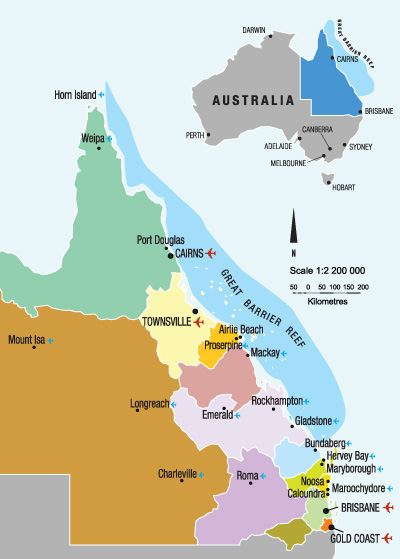 Australia held a general election on 2 July 2016. The Liberal/National coalition narrowly won in the House of Representatives, gaining a substantially reduced majority of 77 of the 150 seats, to Labor’s 68 and other parties’ 5 seats. One campaign issue for all parties was the destruction of the Great Barrier Reef, which is seen as an environmental disaster. Each party had proposals for tackling the problem and we examine some of them here.
The Great Barrier Reef is the largest coral reef in the world. As the BBC’s iWonder guide states:
One of the world’s seven natural wonders, the Great Barrier Reef contains some 900 islands and 3000 smaller reefs. It is larger than the UK, the Netherlands and Switzerland combined, home to around 10% of the world’s marine fish, over 200 bird species and countless other animals, including turtles and dolphins.
But this iconic Reef system is facing unprecedented threats. Together with governments, scientists are playing a key role in the battle to preserve this vulnerable ecosystem before it’s too late.
The Reef is 2300km long. In the northern third, around half of the coral is dead. Few tourists see this, as they tend to dive in the southern third, which, being cooler, is less affected.
The bleaching and destruction of coral reefs has a number of causes. These include: rising water temperatures, generally from global warming and more extreme El Niño events (rising warm waters that periodically spread across the Pacific); pollution, including that from coal mining, industrial effluent and run-off of pesticides, herbicides, fertilisers and sediment from farming, leading to acidification of waters; more frequent and more violent cyclones; rapidly expanding numbers of coral-eating Crown of Thorns starfish; and over fishing of some species of fish, leading to knock-on effects on ecosystems.
 The Barrier Reef and the oceans and atmosphere around it can be regarded as a common resource. The warming of the atmosphere and the oceans, and the destruction of the reef and the wildlife on it, are examples of the ‘tragedy of the commons’. With no-one owning these resources, they are likely to be overused and abused. Put another way, these activities cause negative externalities, which do not appear as costs to the polluters and despoilers, but are still costs to all who treasure the reef. And, from a non-human perspective, it is a cost to the planet and its biodiversity. What is in the private interests of the abusers is not in the social or environmental interest.
The Australian government had sought to downplay the extent of the problem, afraid of deterring tourists – a valuable source of revenue – and under pressure from the coal and farming industries. Nevertheless, in the run-up to the election, the destruction of the Reef and what to do about it became a major debating point between the parties.
 The Coalition government has pledged A$1bn for a new Reef fund, which will be dedicated to tackling climate change and water quality.
The fund will also help coastal sewage treatment plants to reduce ocean outfalls with efficient pumps, biogas electricity generation and next-generation waste water treatment. Improving water quality will enhance the Reef’s resilience to climate change, coral bleaching and outbreaks of the destructive crown of thorns starfish.
But how much difference the fund can make with the money it will have is not clear.
The Labor Party pledged to follow every recommendation in the Great Barrier Reef Water Science Taskforce’s Final Report, released in May, and to pass laws to prevent farm pollution flowing into the waters around the Reef and to have a more rapid shift towards renewable energy.
The Green Party goes the furthest. In addition to the Labor Party’s proposals, it wants to impose taxes on coal firms equal to the cost of the damage they are causing. The tax revenues would be paid into a multi-billion dollar fund. This would then be spent on measures to rescue the Reef, invest in clean energy projects, stop damaging industrial development, improve farm management and stop polluted run-off into the Reef catchment area by investing in water systems.
Promises at the time of an election are all well and good. Just how much will be done by the re-elected Coalition government remains to be seen.
Interactive Videos and presentations
David Attenborough’s Great Barrier Reef: an Interactive Journey, Atlantic Productions, David Attenborough (2015)
Global Warming – the greatest market failure Prezi, Yvonne Cheng (5/12/12)
Articles
The Great Barrier Reef: a catastrophe laid bare The Guardian, Michael Slezak (7/6/16)
The Guardian view on the Great Barrier Reef: the crisis they prefer to downplay The Guardian (7/6/16)
Fight to save Great Barrier Reef could cost billions, secret government modelling estimates ABC News, Mark Willacy (2/6/16)
Great Barrier Reef: government must choose which parts to save, says expert The Guardian, Joshua Robertson (8/7/16)
This election, what hope is there for the Great Barrier Reef? The Guardian, Michael Slezak (1/7/16)
Coalition will protect Great Barrier Reef with $1bn fund, says PM The Guardian, Gareth Hutchens (12/6/16)
Great Barrier Reef election explainer: how do the parties compare? The Guardian, Michael Slezak (2/6/16)
Five things we can do right now to save the Great Barrier Reef The Guardian, John Pandolfi (13/6/16)
We’ve scored the parties on the Reef My Sunshine Coast, Australian Marine Conservation Society (29/6/16)
Our Most Iconic Places Are Under Dire Threat From Climate Change Huffington Post, Nick Visser (26/5/16)
There are bright spots among the world’s coral reefs – the challenge is to learn from them The Conversation, Australia, Joshua Cinner (21/7/16)
Questions
- Explain what is meant by the Tragedy of the Commons. Is all pollution damage an example of this?
- What can the Australian government do to internalise the external costs to the Great Barrier Reef from (a) farming; (b) mining; (c) global warming?
- Why is it difficult to reach international agreement on tackling climte change? What insights can game theory provide for understanding the difficulties?
- What are the recommendations in the Final Report of the Great Barrier Reef Water Science Taskforce? What mix of tools does it suggest?
- What are the relative advantages and disadvantages of taxation, laws and regulations, public investment, education and international negotiation as policy instruments to protect the Reef?
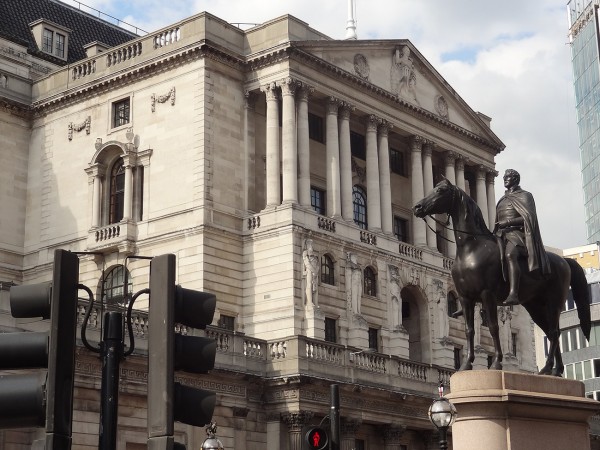 What have been, and will be, the monetary and fiscal responses to the Brexit vote in the referendum of 23 June 2016? This question has been addressed in speeches by Mark Carney, Governor of the Bank of England, and by George Osborne, Chancellor the Exchequer. Both recognise that the vote will cause a negative shock to the economy, which will require some stimulus to aggregate demand to avoid a recession, or at least minimise its depth.
Mark Carney stated that:
The Bank of England stands ready to provide more than £250bn of additional funds through its normal facilities. The Bank of England is also able to provide substantial liquidity in foreign currency, if required.
In the coming weeks, the Bank will assess economic conditions and will consider any additional policy responses.
This could mean that at its the next meeting, scheduled for 13/14 July, the Monetary Policy Committee will consider reducing Bank Rate from its current level of 0.5% and introducing further quantitative easing.
In a speech on 30 June, he went further:
I can assure you that in the coming months the Bank can be expected to take whatever action is needed to support growth subject to inflation being projected to return to the target over an appropriate horizon, and inflation expectations remaining well anchored.
Then in a speech on 5 July, introducing the latest Financial Stability Report, he said that the Bank of England’s Financial Policy Committee is lowering the required capital ratio of banks, thereby freeing up capital for lending to customers. The part being lowered is the ‘countercyclical capital buffer’ – the element that can be varied according to the state of the economy. Mark Carney said:
The FPC is today reducing the countercyclical capital buffer on banks’ UK exposures from 0.5% to 0% with immediate effect. This is a major change. It means that three quarters of UK banks, accounting for 90% of the stock of UK lending, will immediately have greater flexibility to supply credit to UK households and firms.
Specifically, the FPC’s action immediately reduces regulatory capital buffers by £5.7 billion and therefore raises banks’ capacity to lend to UK businesses and households by up to £150 billion. For comparison, last year with a fully functioning banking system and one of the fastest growing economies in the G7, total net lending in the UK was £60 billion.
Thus although there may be changes to interest rates and narrow money in response to economic reactions to the Brexit vote, the monetary policy framework remains unchanged. This is to achieve a target rate of CPI inflation of 2% at the 24-month time horizon.
 But what of fiscal policy?
In its Charter for Budget Responsibility, updated in the Summer 2015 Budget, the government states its Fiscal Mandate:
3.2 In normal times, once a headline surplus has been achieved, the Treasury’s mandate for fiscal policy is:
• a target for a surplus on public-sector net borrowing in each subsequent year.
3.3 For the period outside normal times from 2015-16, the Treasury’s mandate for fiscal policy is:
• a target for a surplus on public-sector net borrowing by the end of 2019-20.
3.4 For this period until 2019-20, the Treasury’s mandate for fiscal policy is supplemented by:
• a target for public-sector net debt as a percentage of GDP to be falling in each year.
The target of a PSNB surplus by 2019-20 has been the cornerstone of recent fiscal policy. In order to stick to it, the Chancellor warned before the referendum that a slowdown in the economy as a result of a Brexit vote would force him to introduce an emergency Budget, which would involve cuts in government expenditure and increases in taxes.
 However, since the vote he is now saying that the slowdown would force him to extend the time for reaching a surplus beyond 2019-20 to avoid dampening the economy further. But does this mean he is abandoning his fiscal target and resorting to discretionary expansionary fiscal policy?
George Osborne’s answer to this question is no. He argues that extending the deadline for a surplus is consistent with paragraph 3.5 of the Charter, which reads:
3.5 These targets apply unless and until the Office for Budget Responsibility (OBR) assess, as part of their economic and fiscal forecast, that there is a significant negative shock to the UK. A significant negative shock is defined as real GDP growth of less than 1% on a rolling 4 quarter-on-4 quarter basis. If the OBR assess that a significant negative shock:
|
|
| • |
occurred in the most recent 4 quarter period; |
| • |
is occurring at the time the assessment is being made; or |
| • |
will occur during the forecast period |
then:
|
|
| • |
if the normal times surplus rule in 3.2 is in force, the target for a surplus each year is suspended (regardless of future data revisions). The Treasury must set out a plan to return to surplus. This plan must include appropriate fiscal targets, which will be assessed by the OBR. The plan, including fiscal targets, must be presented by the Chancellor of the Exchequer to Parliament at or before the first financial report after the shock. The new fiscal targets must be approved by a vote in the House of Commons. |
| • |
if the shock occurs outside normal times, the Treasury will review the appropriateness of its fiscal targets for the period until the public finances return to surplus. Any changes to the targets must be approved by a vote in the House of Commons. |
| • |
once the budget is in surplus, the target set out in 3.2 above applies. |
In other words, if the OBR forecasts that the Brexit vote will result in GDP growing by less than 1%, the Chancellor can delay reaching the surplus and thus not have to introduce tougher austerity measures. This, in effect, is what he is now saying and maintaining that, because of paragraph 3.5, it does not break the Fiscal Mandate. The nature of the next Budget, probably in the autumn, will depend on OBR forecasts.
A few days later, George Osborne announced that he plans to cut corporation tax from the current 20% to less than 15% – below the rate of 17% previously scheduled for 2019-20. His aim is not just to stimulate the economy, but to attract inward investment, as the rate would below that of any major economy and close the rate of 12.5% in Ireland. His hope would also be to halt the outflow of investment as companies seek to relocate in the EU.
Videos and podcasts
Statement from the Governor of the Bank of England following the EU referendum result Bank of England (24/6/16)
Uncertainty, the economy and policy – speech by Mark Carney Bank of England (30/6/16)
Introduction to Financial Stability Report, July 2016 Bank of England (5/7/16)
Osborne: Life will not be ‘economically rosy’ outside EU BBC News (28/6/16)
Osborne takes ‘realistic’ view over surplus target BBC News (1/7/16)
Why has George Osborne abandoned a key economic target? BBC News (1/7/16)
Articles
Mark Carney says Bank of England ready to inject £250bn into economy to keep UK afloat after EU referendum Independent, Zlata Rodionova (24/6/16)
Carney Signals Rate Cuts as Brexit Chaos Engulfs Political Class Bloomberg, Scott Hamilton (30/6/16)
Bank of England hints at UK interest rate cuts over coming months to ease Brexit woes International Business Times, Gaurav Sharma (30/6/16)
Carney prepares for ‘economic post-traumatic stress’ Financial Times, Emily Cadman (30/6/16)
Bank of England warns Brexit risks beginning to crystallise BBC News (5/7/16)
Bank of England tells banks to cut buffer to boost lending Financial Times, Caroline Binham and Chris Giles (5/7/16)
George Osborne puts corporation tax cut at heart of Brexit recovery plan Financial Times (3/7/16)
George Osborne corporation tax cut is the wrong way to start EU negotiations, former WTO boss says Independent, Hazel Sheffield (5/7/16)
George Osborne abandons 2020 UK surplus target Financial Times, Emily Cadman and Gemma Tetlow (1/7/16)
George Osborne scraps 2020 budget surplus plan The Guardian, Jill Treanor and Katie Allen (1/7/16)
Osborne abandons 2020 budget surplus target BBC News (1/7/16)
Brexit and the easing of austerity BBC News, Kamal Ahmed (1/7/16)
Osborne Follows Carney in Signaling Stimulus After Brexit Bloomberg, Simon Kennedy (1/7/16)
Questions
- Explain the measures taken by the Bank of England directly after the Brexit vote.
- What will determine whether the Bank of England engages in further quantitative easing beyond the current £385bn of asset purchases?
- How does monetary policy easing (or the expectation of it) affect the exchange rate? Explain.
- How effective is monetary policy for expanding aggregate demand? Is it more or less effective than using monetary policy to reduce aggregate demand?
- Explain what is meant by (a) capital adequacy ratios (tier 1 and tier 2); (b) countercyclical buffers. (See, for example, Economics 9th edition, page 533–7 and Figure 16.2))
- To what extent does increasing the supply of credit result in that credit being taken up by businesses and consumers?
- Distinguish between rules-based and discretionary fiscal policy. How would you describe paragraph 3.5 in the Charter for Budget Responsibility?
- Would you describe George Osborne’s proposed fiscal measures as expansionary or merely as less contractionary?
- Why is the WTO unhappy with George Osborne’s proposals about corporation tax?
- What is the Nash equilibrium of countries seeking to undercut each other’s corporation tax rates?
 In June 2014, the Gas and Electricity Markets Authority (which governs the energy regulator, Ofgem) referred Great Britain’s retail and wholesale gas and electricity markets to the Competition and Markets Authority (CMA). The market is dominated by the ‘big six‘ energy companies (British Gas, EDF, E.ON, npower, Scottish Power and SSE) and Ofgem suspected that this oligopoly was distorting competition and leading to higher prices.
The CMA presented its report on 10 March 2016. It confirmed its preliminary findings of July and December 2015 “that there are features of the markets for the supply of energy in Great Britain that result in an adverse effect on competition”. It concludes that “the average customer could save over £300 by switching to a cheaper deal” and that “customers could have been paying about £1.7 billion a year more than they would in a competitive market”.
 It made various recommendations to address the problem. These include “requiring the largest suppliers to provide fuller information on their financial performance” and strengthening the role of Ofgem.
Also the CMA wants to encourage more people to switch to cheaper suppliers. At present, some 70% of the customers of the big six are on default standard variable tariffs, which are more expensive than other tariffs available. To address this problem, the CMA proposes the setting up of “an Ofgem-controlled database which will allow rival suppliers to contact domestic and microbusiness customers who have been stuck on their supplier’s default tariff for 3 years or more with better deals.”
Another area of concern for the CMA is the 4 million people (16% of customers) forced to have pre-payment meters. These tend to be customers with poor credit records, who also tend to be on low incomes. Such customers are paying more for their gas and electricity and yet have little opportunity to switch to cheaper alternatives.  For these customers the CMA proposed imposing transitional price controls from no later than April 2017 until 2020. These would cut typical bills by some £80 to £90 per year. In the meantime, the CMA would seek to remove “restrictions on the ability of new suppliers to compete for prepayment customers and reduce barriers such as debt issues that make it difficult for such customers to switch”.
Despite trying to address the problem of lack of competition, consumer inertia and barriers to entry, the CMA has been criticised for not going further. It has also been criticised for the method it has chosen to help consumers switch to cheaper alternative suppliers and tariffs. The articles below look at these criticisms.
Podcast
Competition and Markets Authority Energy Report BBC You and Yours (10/3/16)
Articles
Millions could see cut in energy bills BBC News (10/3/16)
Shake-up of energy market could save customers millions, watchdog says The Telegraph, Jillian Ambrose (10/3/16)
UK watchdog divided over energy market reforms Financial Times, Kiran Stacey (10/3/16)
How the CMA energy inquiry affects you Which? (10/3/16)
UK watchdog accused of bowing to pressure from ‘big six’ energy suppliers The Guardian, Terry Macalister (10/3/16)
CMA documents
CMA sets out energy market changes CMA press release (10/3/16)
Energy Market Investigation: Summary of provisional remedies Competition and Markets Authority (10/3/16)
Questions
- Find out the market share of the ‘big six’ and whether this has changed over the past few years.
- What, if any, are the barriers to entry in the gas and electricity retail markets?
- Why are the big six able to charge customers some £300 per household more than would be the case if they were on the cheapest deal?
- What criticisms have been made of the CMA’s proposals?
- Discuss alternative proposals to those of the CMA for dealing with the problem of excessive prices of gas and electricity.
- Should Ofgem or another independent not-for-profit body be allowed to run its own price comparison and switching service? Would this be better than the CMA’s proposal for allowing competitors access to people’s energy usage after 3 years of being with the same company on its standard tariff and allowing them to contact these people?