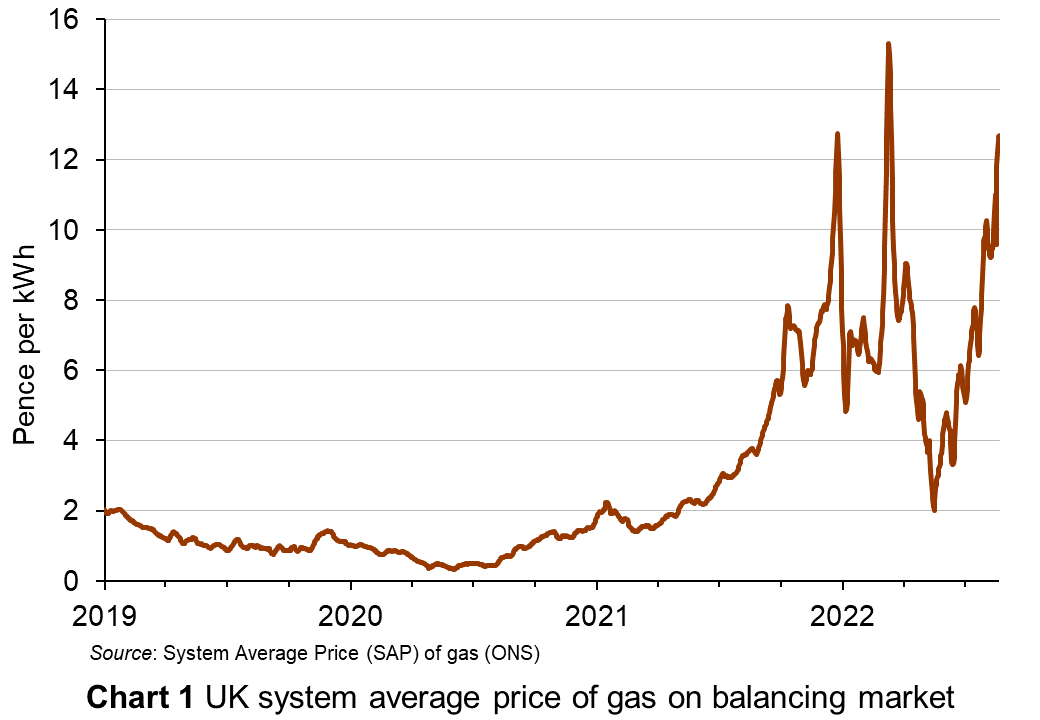
 International wholesale gas prices have soared in recent months. This followed a cold winter in 2021/22 across Europe, the bounceback in demand as economies opened up after COVID and, more recently, pressure on supplies since the Russian invasion of Ukraine and the resulting restricted gas supplies from Russia. The price of gas traded on the UK wholesale market is shown in Chart 1 (click here for a PowerPoint). Analysts are forecasting that the wholesale price of gas will continue to rise for some time. The higher price of gas has had a knock-on effect on wholesale electricity prices, as gas-fired power stations are a major source of electricity generation and electricity prices.
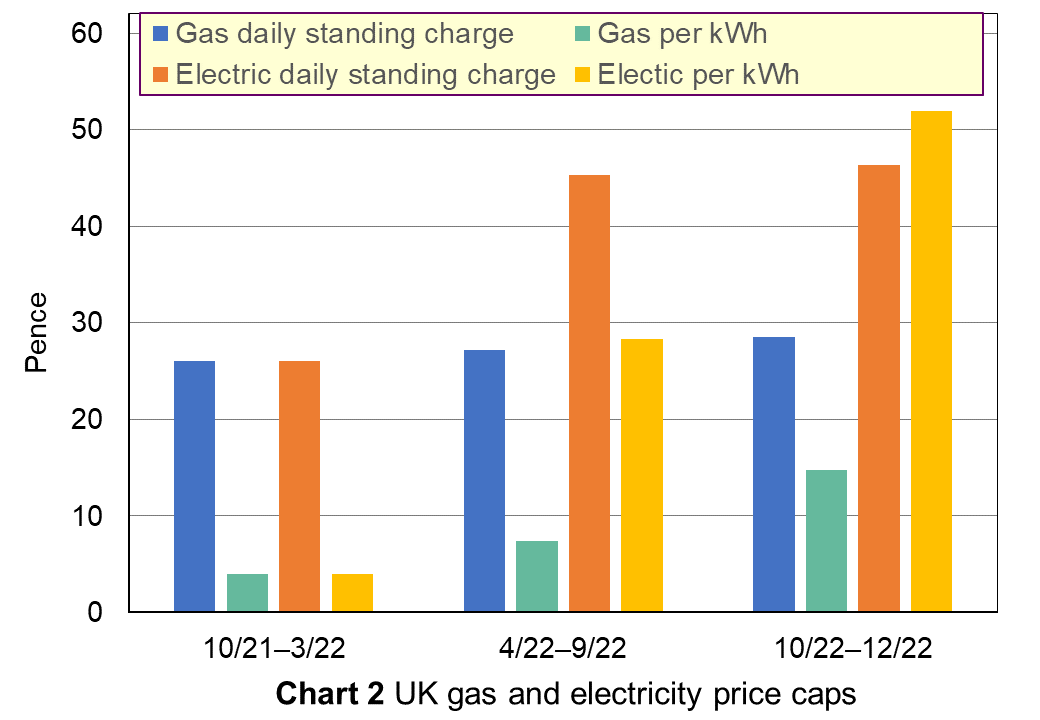 In the UK, domestic fuel prices were capped by the regulator, Ofgem. The cap reflected wholesale prices and was designed to allow electricity suppliers to make reasonable but not excessive profits. The cap was adjusted every six months, but this was been reduced to three months to reflect the rapidly changing situation. Prices are capped for both gas and electricity for both the standing charge and the rate per kilowatt hour (kWh). This is illustrated in Chart 2 (click here for a PowerPoint).
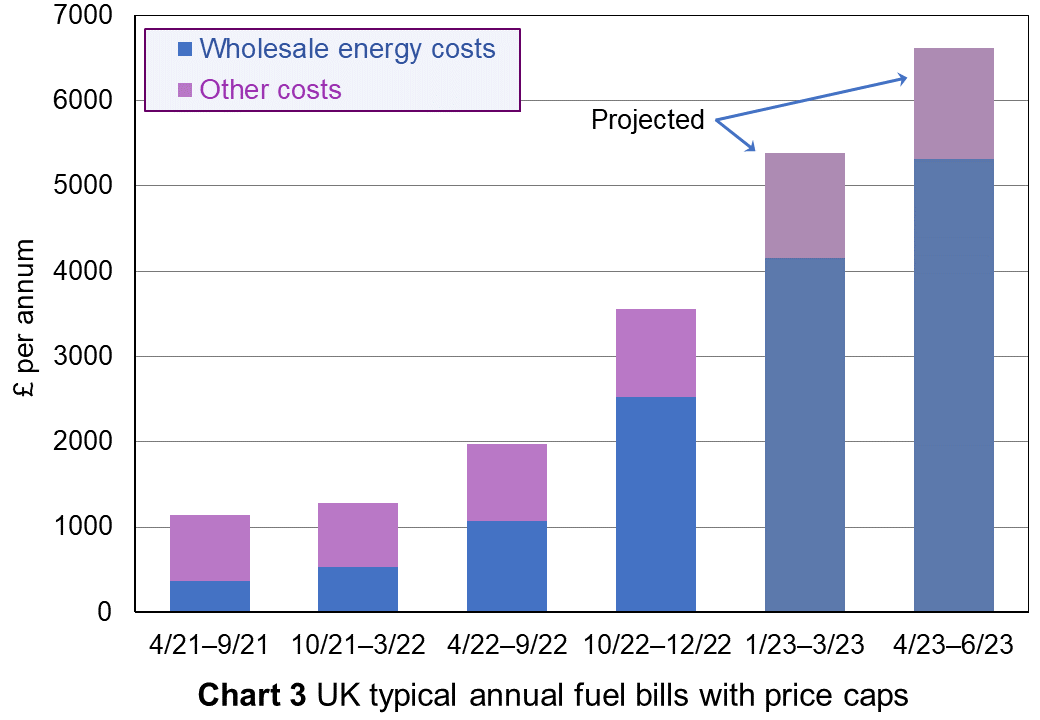 The effects of the cap were then projected in terms of a total annual bill for a typical household consuming 12 000 kWh of gas and 2900 kWh of electricity. Chart 3 shows the typical fuel bill for the last four price caps and, prior to the mini-Budget of 23 September, the projected price caps for the first and second quarters of 2023 based on forecasts at the time of wholesale prices (click here for a PowerPoint). As you can see, wholesale gas and electricity prices account for an increasing proportion of the total bill. The remaining elements in cost consist of profits (1.9% assumed), VAT (5%), operating costs, grid connection costs and green levies (around £153). The chart shows that, without government support for prices, the price cap would have risen by 80.6% in October 2022 and was projected to rise by a further 51% in January 2023 and by another 23% in March 2023. If this were to have been the case, then prices would have risen by 481% between the summer of 2021 and March 2023.
This was leading to dire warnings of extreme fuel poverty, with huge consequences for people’s health and welfare, which would put extra demands on an already stretched health service. Many small businesses would not be able to survive the extra fuel costs, which would lead to bankruptcies and increased unemployment.
Future wholesale gas prices
 Energy market analysts expect wholesale gas prices to remain high throughout 2023, with little likelihood that gas supplies from Russia will increase. Some European countries, such as Germany, have been buying large amounts of gas to fill storage facilities before winter and before prices rise further. This has added to demand.
The UK, however, has only limited storage facilities. Although it is not an importer of gas from Russia and so, in one sense, storage facilities are less important at the current time, wholesale gas prices reflect international demand and supply and thus gas prices in the UK will be directly affected by an overall global shortage of supply.
What would have been the response to the projected rise in gas prices? Eventually demand would fall as substitute fuels are used for electricity generation. But demand is highly inelastic. People cannot readily switch to alternative sources of heating. Most central heating is gas fired. People may reduce consumption of energy by turning down their heating or turning it off altogether, but such reductions are likely to be a much smaller percentage than the rise in price. Thus, despite some use of other fuels and despite people cutting their energy usage, people would still end up spending much more on energy.
Over the longer term, new sources of supply of gas, including liquified natural gas (LNG), may increase supply. And switching to green energy sources for electricity generation, may bring the price of electricity back down and lead to some substitution been gas and electricity in the home and businesses. Also improved home insulation and the installation of heat pumps and solar panels in homes, especially in new builds, may reduce the demand for gas. But these changes take time. Chart 4 illustrates the situation (click here for a PowerPoint).
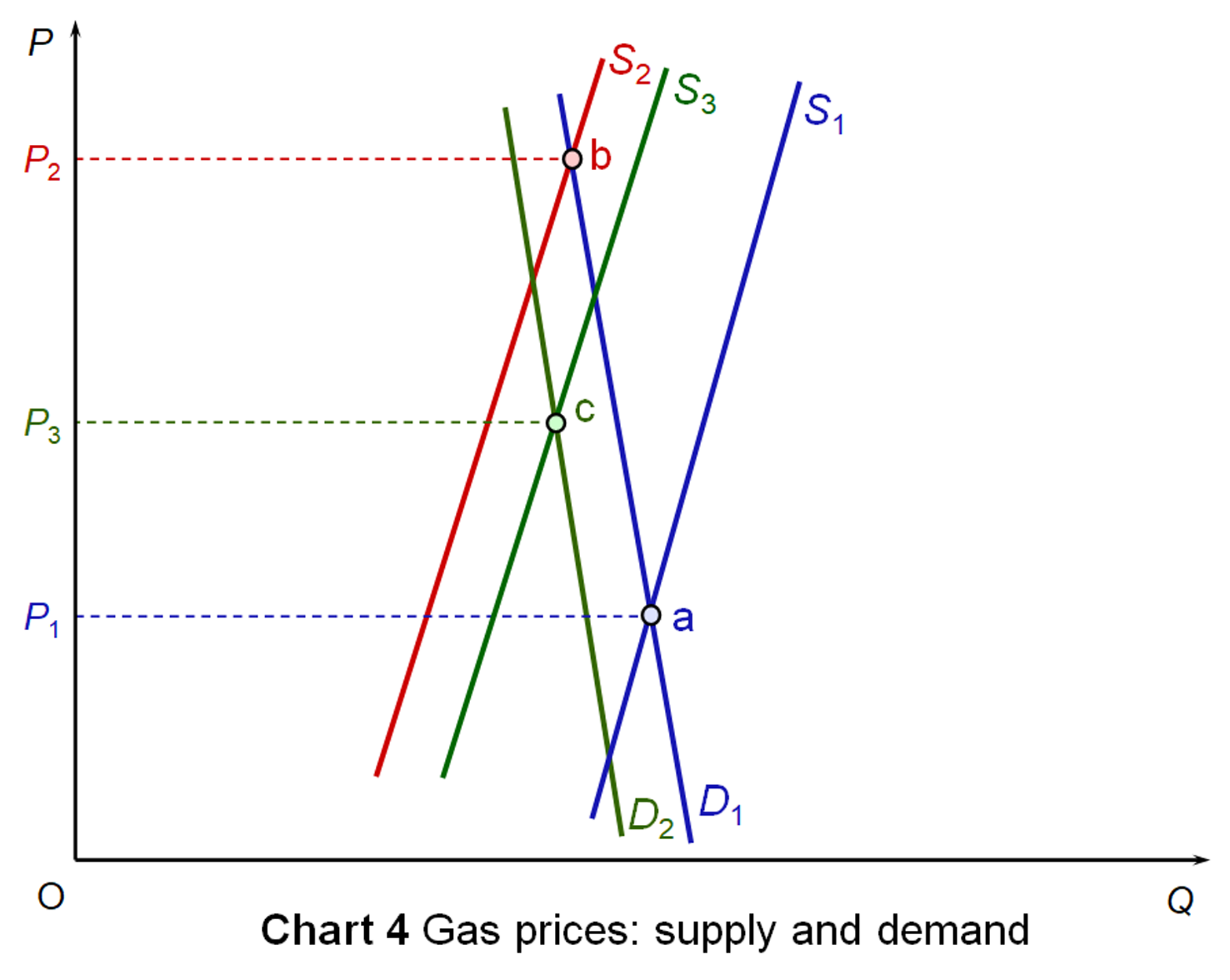 Both demand and supply are relatively inelastic. The initial demand and supply curves are D1 and S1. Equilibrium price is P1 (point a). There is now a fall in supply. Supply shifts to S2. With an inelastic demand, there is a large rise in price to P2 (point b).
Over two or three years, there is a modest fall in demand (as described above) to D2 and a modest rise in supply to S3. Price falls back somewhat to P3 (point c). Over a longer period of time, these shifts would be greater and the price would fall further.
Possible policy responses
What could the government do to alleviate the problem? Consensus was that the new Conservative Prime Minister, Liz Truss, and her Chancellor, Kwasi Kwarteng, would have to take radical measures if many households were to avoid severe hardship and debt. One proposal was to reduce VAT on domestic energy from 5% to zero and to cut green levies. Although this would help, it would make only a relatively small dent in people’s rising bills.
 Another proposal was to give people cash payments to help with their bills. The more generous and widespread these payments, the more costly they would be.
One solution here would be to impose larger windfall taxes on oil and gas producers (as opposed to retailers). Their profits have soared as oil and gas prices have soared. Such a move is generally resisted by those on the right of politics, arguing that it could discourage investment in energy production. Those on the centre and left of politics argue that the profits are the result of global factors and not because of wise business decisions by the energy producers. A windfall tax would only take away these excess profits.
The EU has agreed a tax on fossil fuel companies’ surplus profits made either this year or next. It is also introducing a levy on the excess revenues that other low-cost power producers make from higher electricity prices.
Another proposal was to freeze retail energy prices at the current or some other level. This would make it impossible for energy suppliers to cover their costs and so they would have to be subsidised. This again would be very expensive and would require substantially increased borrowing at a time when interest rates are rising, or increased taxation at a time when people’s finances are already squeezed by higher inflation. An alternative would be to cap the price North Sea producers receive. As around half of the UK’s gas consumption is from the North Sea, this would help considerably if it could be achieved, but it might be difficult to do so given that the gas is sold onto international markets.
One proposal that was gaining support from energy producers and suppliers is for the government to set up a ‘deficit fund’. Energy suppliers (retailers) would freeze energy prices for two years and take out state-backed loans from banks. These would then be paid back over time by prices being capped sufficiently high to cover costs (which, hopefully, by then would be lower) plus repayments.
Another policy response would be to decouple electricity prices from the wholesale price of gas. This is being urgently considered in the EU, and Ofgem is also consulting on such a measure. This could make wholesale electricity prices reflect the costs of the different means of generation, including wind, solar and nuclear, and would see a fall in wholesale electricity prices. At the moment, generators using these methods are making large profits.
The government’s response
On September 23, the government held a mini-Budget. One of its key elements was a capping of the unit price of energy for both households and firms. The government called this the Energy Price Guarantee. For example, those households on a variable dual-fuel, direct-debit tariff would pay no more than 34.0p/kWh for electricity and 10.3p/kWh for gas. Standing charges are capped at 46p per day for electricity and 28p per day for gas. These rates will apply for 2 years from 1/10/22 and should give an average annual household bill of £2500.
Although the government has widely referred to the ‘£2500 cap’, it is the unit price that is capped, not the annual bill. It is still the case that the more you consume, the more you will pay. As you can see from Chart 3, the average £2500 still represents an average increase per annum of just over £500 per household and is almost double the cap of £1277 a year ago. It will thus still put considerable strain on many household finances.
For businesses, prices will be capped for 6 months from 1 October at 21.1p per kWh for electricity and 7.5p per KWh for gas – considerably lower than for domestic consumers.
The government will pay subsidies to the retail energy companies to allow them to make sufficient, but not excess, profit. These subsidies are estimated to cost around £150 billion. This will be funded by borrowing, not by tax increases, with the government ruling out a windfall tax on North Sea oil and gas extracting companies. Indeed, the mini-Budget contained a number of tax reductions, including scrapping the 45% top rate of income tax, cutting the basic rate of income tax from 20% to 19% and scrapping the planned rise in corporation tax from 19% to 25%.
Articles
Data
Questions
- Why are the demand and supply of gas relatively inelastic with respect to price?
- Why are the long-run elasticities of demand and supply of gas likely to be greater than the short-run elasticities?
- Find out how wholesale electricity prices are determined. Is there a case for reforming the system and, if so, how?
- Identify ways in which people could be protected from rising energy bills.
- Assess these different methods in terms of (a) targeting help to those most in need; (b) economic efficiency.
Aggregate demand has been booming as the world bounces back from the pandemic. At the same time, aggregate supply is severely constrained. These supply constraints are making potential national income smaller – at least temporarily. The result is that many countries are heading for recession.
At the same time, supply constraints are causing prices to rise, especially energy and food prices. This cost-push inflation is made worse by the rises in aggregate demand.
The result is ‘stagflation’ – a recession, or stagnation, accompanied by high inflation. In the UK, the latest Bank of England Monetary Policy Report forecast that by the end of 2022, CPI inflation would be 13.1% and that in 2023, real GDP would fall by 1.5%.
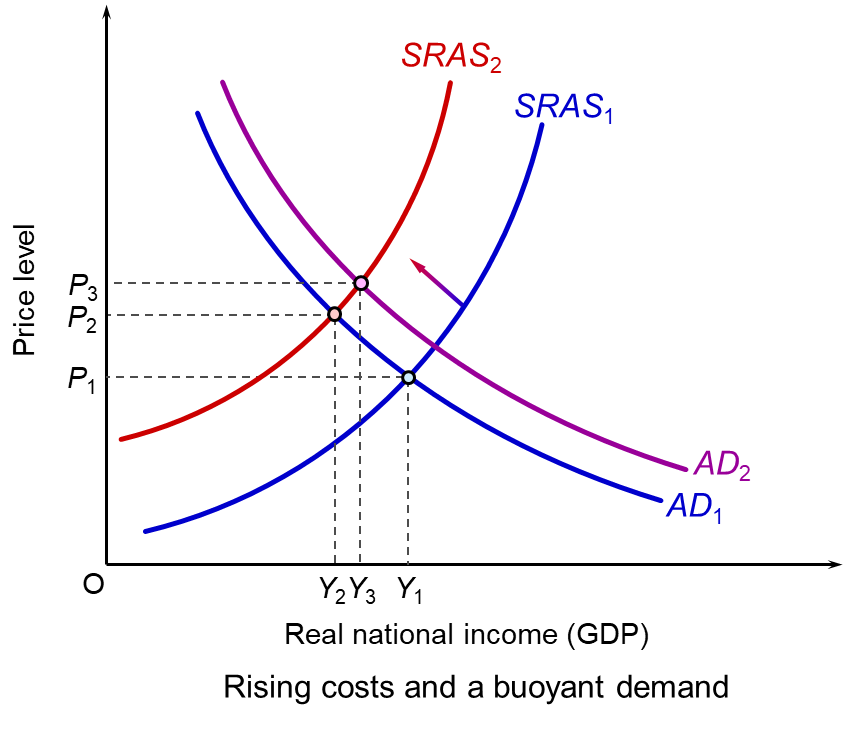 This effect of an adverse supply shock accompanied by relatively buoyant aggregate demand (at least initially) can be illustrated with an aggregate demand and supply diagram. The supply shock is illustrated by an upward shift to the left of the short-run aggregate supply curve (SRAS). (If the shock is a direct rise in prices, then it can be seen as a vertical upward shift. If it is a fall in the total amount supplied, then it can be seen as a horizontal leftward shift.) In the diagram, aggregate supply shifts from SRAS1 to SRAS2. The price level rises from P1 to P2. If costs go on rising or supply goes on falling then the curve will go on shifting upwards to the left.
If the government responds by increasing benefits or reducing taxes, then, other things being
equal, aggregate demand will rise. In the diagram, the AD curve will shift to the right, e.g. from AD1 to AD2. Real GDP only falls to Y3 not Y2. However, the price level rises further: from P2 to P3.
Why has aggregate supply fallen?
There are several factors that have contributed to the fall in aggregate supply/rise in costs.
- Stretched supply chains, which had been adversely affected by Covid. Congestion at container ports has led to delays, with warehouses and shops being short of stock.
- Labour shortages, with many people not returning to the labour force after being laid off or furloughed, or only returning part time, leaving firms needing more people. The problem has been particularly acute in the UK, with many EU citizens having returned to the EU after Brexit and the UK having to rely increasingly on staff from outside the EU.
 The war in Ukraine. This has had a major impact on the supply of natural gas and oil. The war has also led to a fall in grain and other food supplies from Ukraine, as ports have been blockaded and there have been disruptions to planting and harvesting.
- Climate change is causing more severe weather events, such as droughts in Europe and western USA. The droughts of 2022 will compound the problem of food shortages and food price inflation.
- In the UK, Brexit costs, such as increased administrative burdens and difficulties in both exporting and importing, have dampened production and hence adversely impacted on aggregate supply.
- Increased industrial action. As the cost of living soars, unions are demanding pay increases to match the rise in the cost of living. Pay rises further increase firms’ costs – and the bigger the pay rises, the bigger the rise in costs.
The problem with a fall in aggregate supply is that it reduces real GDP. People as a whole are poorer. To use a common analogy, the national ‘pie’ has shrunk. Giving everyone a bigger knife and fork (i.e. a rise in nominal aggregate demand) will not make people better off. It just compounds the problem of rising prices, as the diagram shows.
In the short term, with GDP shrinking, there is a major issue of distribution. If the poor are to be given help so that they are not made even poorer, then other people will have been made worse off. In other words, their nominal incomes must rise more slowly than prices.
Monetary policy
 Central banks generally have a mandate of keeping inflation close to 2% over the medium term. Their levers are changes in interest rates, underpinned by changes in the money supply – in extreme times by quantitative easing (creating money by buying assets with newly created money) or quantitative tightening (withdrawing money from the economy by selling assets). Central banks, faced by soaring inflation, have been raising interest rates. The Fed has recently raised the Federal Funds rate by 0.75 percentage points (75 basis points) and the Bank of England and the European Central Bank by 0.5 percentage points (50 basis points).
Raising interest rates reduces inflation by dampening aggregate demand. In the diagram, the AD curve shifts to the left (or shifts to the right less quickly). This will dampen inflation, as falling real demand will force firms to cut prices. But it will also force them to cut output and employment, thereby worsening the recession.
Central banks recognise this dilemma, but also recognise that if inflation is not brought rapidly under control, it could spiral upwards, with wages and prices chasing each other in a wage–price spiral, which only gets worse as inflationary expectations rise. The short-term pain of falling real income is a price worth paying for getting inflation under control.
Fiscal policy
In the short term, there is little that fiscal policy can do to raise real GDP. The focus, as it was during the pandemic, must therefore be in providing relief to those most in need.
In the UK, the energy price cap set by Ofgem will see likely energy bills for the typical household quadruple in just a year, from a little over £1000 per annum at January 2021 prices to over £4200 in predicted January 2023 prices. These higher prices partly reflect rising wholesale energy costs and partly the need for energy companies, in a process known as ‘backwardation’, to recoup hedging costs they have incurred so as not to be forced out of business.
 Relief for consumers can be in various forms. For example, the government could pay subsidies to energy suppliers to cap prices at a lower level, perhaps just for the poorest households. Or it could pay grants to help people with their bills. Again, these could be targeted to the poorest families, or paid on a sliding scale according to income. Or VAT on gas and electricity could be scrapped.
Generally the more people are entitled to help, the more expensive it is for the government and hence the less generous the help per family is likely to be.
Then there is the question of whether such measures should be accompanied by a rise in broadly-based tax, such as income tax, or whether the government should borrow more, which would be likely to push up interest rates and increase the cost of servicing government debt.
One topic of debate in the Conservative leadership contest is whether taxes should be cut to help people struggling with the cost of living. Whilst such a policy, if carefully targeted to investment, might increase aggregate supply over the longer term, in the short term it will increase aggregate demand and will add to inflationary pressures.
Targeting tax cuts to the poor is difficult. Cutting income tax rates has the opposite effect. The rich pay more income tax than the poor and will benefit most from a cut in rates. An alternative is to raise personal allowances. This will provide a bigger percentage help to income taxpayers on lower incomes, but provides no help at all for the poorest people who currently pay no income tax.
Conclusion
The supply shocks are making countries poorer. The focus in the short term, therefore, needs to be on income distribution and how to help those suffering the most.
To end on a note of optimism: the energy shocks are causing governments to invest in alternative sources, such as wind, solar and nuclear. When these come on line, it is expected that energy prices will fall.
As far as overall inflation is concerned, although the Bank of England is forecasting CPI inflation of 13.1% by Q4 2022, it is also forecasting that this will have fallen to 5.5% by Q4 2023 and to just 0.8% by Q3 2024. Fingers crossed.
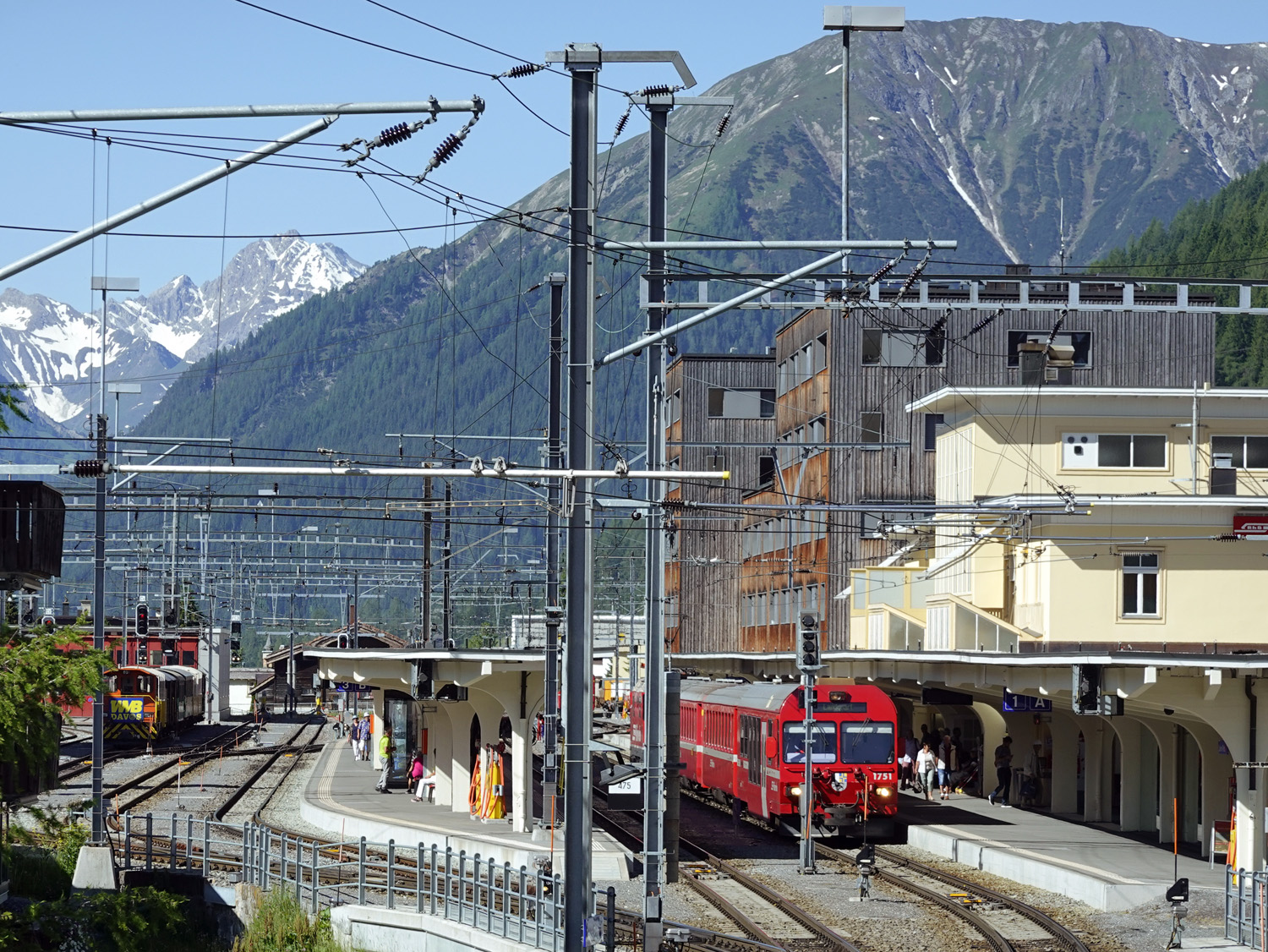 World politicians, business leaders, charities and pressure groups are meeting in Davos at the 2022 World Economic Forum. Normally this event takes place in January each year, but it was postponed to this May because of Covid-19 and is the first face-to-face meeting since January 2020.
The meeting takes place amid a series of crises facing the world economy. The IMF’s Managing Director, Kristalina Georgieva, described the current situation as a ‘confluence of calamities’. Problems include:
- Continuing hangovers from Covid have caused economic difficulties in many countries.
- The bounceback from Covid has led to demand outpacing supply. The world is suffering from a range of supply-chain problems and shortages of key materials and components, such as computer chips.
- The war in Ukraine has not only caused suffering in Ukraine itself, but has led to huge energy and food price increases as a result of sanctions and the difficulties in exporting wheat, sunflower oil and other foodstuffs.
- Supply shocks have led to rising global inflation. This will feed into higher inflationary expectations, which will compound the problem if they result in higher prices and wages in response to higher costs.
- Central banks have responded by raising interest rates. These dampen an already weakened global economy and could push the world into recession.
- Global inequality is rising rapidly, both within countries and between countries, as Covid disruptions and higher food and energy prices hit the poor disproportionately. Poor people and countries also have a higher proportion of debt and are thus hit especially hard by higher interest rates.
- Global warming is having increasing effects, with a growing incidence of floods, droughts and hurricanes. These lead to crop failures and the displacement of people.
- Countries are increasingly resorting to trade restrictions as they seek to protect their own economies. These slow economic growth.
World leaders at Davos will be debating what can be done. One approach is to use fiscal policy. Indeed, Kristalina Georgieva said that her ‘main message is to recognise that the world must spend the billions necessary to contain Covid in order to gain trillions in output as a result’. But unless the increased expenditure is aimed specifically at tackling supply shortages and bottlenecks, it could simply add to rising inflation. Increasing aggregate demand in the context of supply shortages is not the solution.
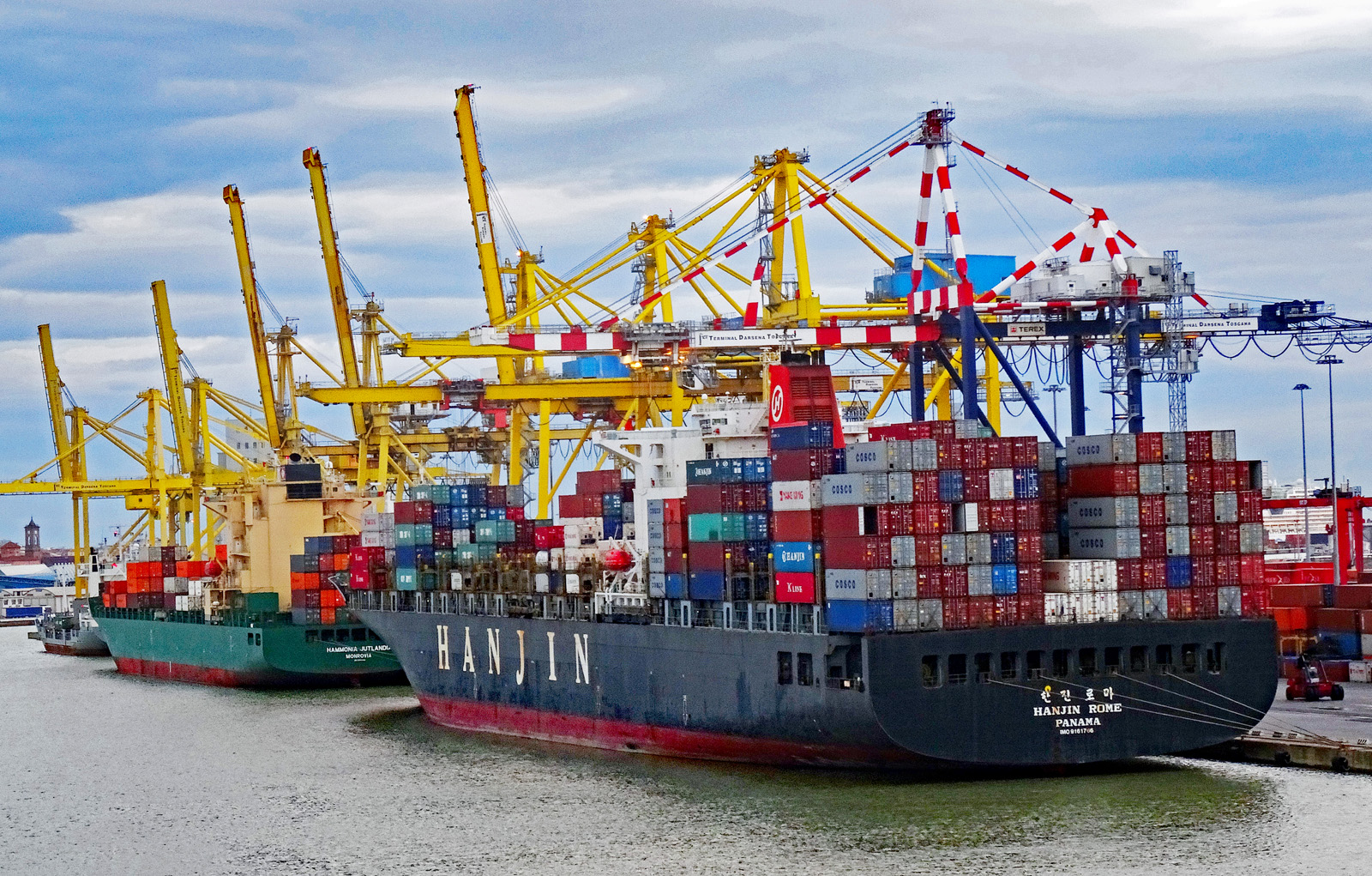 In the long run, supply bottlenecks can be overcome with appropriate investment. This may require both greater globalisation and greater localisation, with investment in supply chains that use both local and international sources.
International sources can be widened with greater investment in manufacturing in some of the poorer developing countries. This would also help to tackle global inequality. Greater localisation for some inputs, especially heavier or more bulky ones, would help to reduce transport costs and the consumption of fuel.
With severe supply shocks, there are no simple solutions. With less supply, the world produces less and becomes poorer – at least temporarily until supply can increase again.
Articles
Discussion (video)
Report
Questions
- Draw an aggregate demand and supply diagram (AD/AS or DAD/DAS) to illustrate the effect of a supply shock on output and prices.
- Give some examples of supply-side policies that could help in the current situation.
- What are the arguments for and against countries using protectionist policies at the current time?
- What policies could countries adopt to alleviate rapid rises in the cost of living for people on low incomes? What problems do these policies pose?
- What are the arguments for and against imposing a windfall tax on energy companies and using the money to support poor people?
- If the world slips into recession, should central banks and governments use expansionary monetary and fiscal policies?
