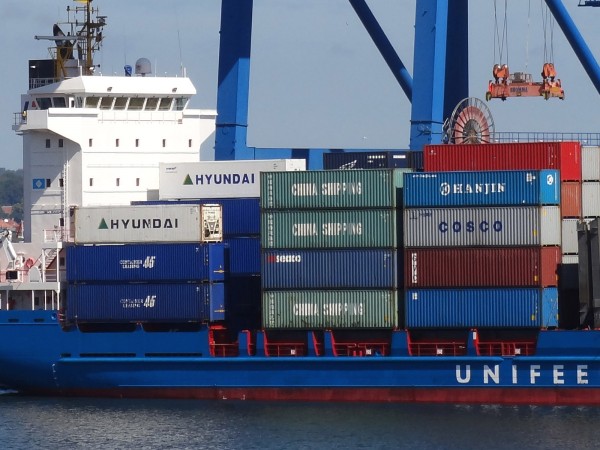
 In a recent blog, Falling sterling – bad for some; good for others, we looked at the depreciation of sterling following the Brexit vote. We saw how it will have beneficial effects for some, such as exporters, and adverse effects for others, such as consumers having to pay a higher price for imports and foreign holidays. The article linked below examines these effects in more depth.
Just how much the quantity of exports will increase depends on two main things. The first is the amount by which the foreign currency price falls. This depends on what exporters choose to do. Say the pound falls from €1.30 to €1.18. Do exporters who had previously sold a product selling in the UK for £100 and in the eurozone for €130, now reduce the euro price to €118? Or do they put it down by less – say, to €125, thereby earning £105.93 (£(125/1.18)). Their sales would increase by less, but their profit margin would rise.
The second is the foreign currency price elasticity of demand for exports in the foreign markets. The more elastic it is, the more exports will rise for any given euro price reduction.
 It is similar with imports. How much the sales of these fall depends again on two main things. The first is the amount by which the importing companies are prepared to raise sterling prices. Again assume that the pound falls from €1.30 to €1.18 – in other words, the euro rises from 76.92p (£1/1.3) to 84.75p (£1/1.18). What happens to the price of an import to the UK from the eurozone whose euro price is €100? Does the importer raise the price from £76.92 to £84.75, or by less than that, being prepared to accept a smaller profit margin?
The second is the sterling price elasticity of demand for imports in the UK. The more elastic it is, the more imports will fall and, probably, the more the importer will be prepared to limit the sterling price increase.
The article also looks at the effect on aggregate demand. As we saw in the previous blog, a depreciation boosts aggregate demand by increasing exports and curbing imports. The effects of this rise in aggregate demand depends on the degree of slack in the economy and the extent, therefore, that (a) exporters and those producing import substitutes can respond in terms of high production and employment and (b) other sectors can produce more as multiplier effects play out.
Finally, the article looks at the effect of the depreciation of sterling on asset prices. UK assets will be worth less in foreign currency terms; foreign assets will be worth more in sterling. Just how much the prices of internationally traded assets, such as shares and some property, will change depends, again, on their price elasticities of demand. In terms of assets, there has been a gain to UK balance sheets from the depreciation. As Roger Bootle says:
Whereas the overwhelming majority of the UK’s liabilities to foreigners are denominated in sterling, the overwhelming bulk of our assets abroad are denominated in foreign currency. So the lower pound has raised the sterling value of our overseas assets while leaving the sterling value of our liabilities more or less unchanged.
Article
How a lower pound will help us to escape cloud cuckoo land, The Telegraph, Roger Bootle (31/7/16)
Questions
- What determines the amount that exporters from the UK adjust the foreign currency price of their exports following a depreciation of sterling?
- What determines the amount by which importers to the UK adjust the sterling price of their products following a depreciation of sterling?
- What determines the amount by which sterling will depreciate over the coming months?
- Distinguish between stabilising and destabilising speculation? How does this apply to exchange rates and what determines the likelihood of there being destabilising speculation against sterling exchange rates?
- How is UK inflation likely to be affected by a depreciation of sterling?
- Why does Roger Bootle believe that the UK has been living in ‘cloud cuckoo land’ with respect to exchange rates?
- Why has the UK managed to sustain a large current account deficit over so many years?
 In many cases, we simply leave the market to do what it does best – equate demand with supply and from this we get an equilibrium price and the optimal quantity. But, what happens if either the price or quantity is ‘incorrect’? What happens if the market fails to deliver an efficient outcome? In this case, we look to governments to intervene and ‘correct’ the market and such intervention can take place on the demand and/or supply-side. One area where it is generally felt that government intervention is needed is drugs and the trafficking of them across borders.
There are many ways in which governments have tried to tackle the problem of drug usage. The issue is that drugs are bad for individuals, for the community, society and the economy. Too much is produced and consumed and hence we have a classic case of market failure and this justifies government intervention.
But, how should governments intervene? With a substance such as drugs, we have an inelastic demand with resepect to price – any increase in price leads to only a small decrease in quantity. So any policy implemented by governments that attempts to change the market price will have limited effect in restricting demand. With globalisation, drugs can be moved more easily across borders and hence global co-operation is needed to restrict the flow. The article below considers the area of drugs and drug trafficking and looks at some of the policy options open to government.
Narconomics: The business of drug trafficking Houston Chronicle (16/3/16)
Questions
- Why does the market fail in the case of drug trafficking?
- Draw the demand curve you would expect for drugs and use this to explain why an increase in price will have limited effect on demand.
- Is there an argument for making drugs legal as a means of raising tax revenue?
- If better educational programmes are introduced about the perils of drug usage, how would this affect the market? Use a demand and supply diagram to help explain your answer.
- Why does globalisation make the solutions to drug trafficking more difficult to implement?
- Could drug usage and drug trafficking and hence the need to invest more money in tackling the problem actually boost an economy’s rate of growth? If so, does this mean that we should encourage drug usage?
 Back in October, we looked at the growing pressure in the UK for a sugar tax. The issue of childhood obesity was considered by the Parliamentary Health Select Committee and a sugar tax, either on sugar generally, or specifically on soft drinks, was one of the proposals being considered to tackle the problem. The committee studied a report by Public Health England, which stated that:
Research studies and impact data from countries that have already taken action suggest that price increases, such as by taxation, can influence purchasing of sugar sweetened drinks and other high sugar products at least in the short-term with the effect being larger at higher levels of taxation.
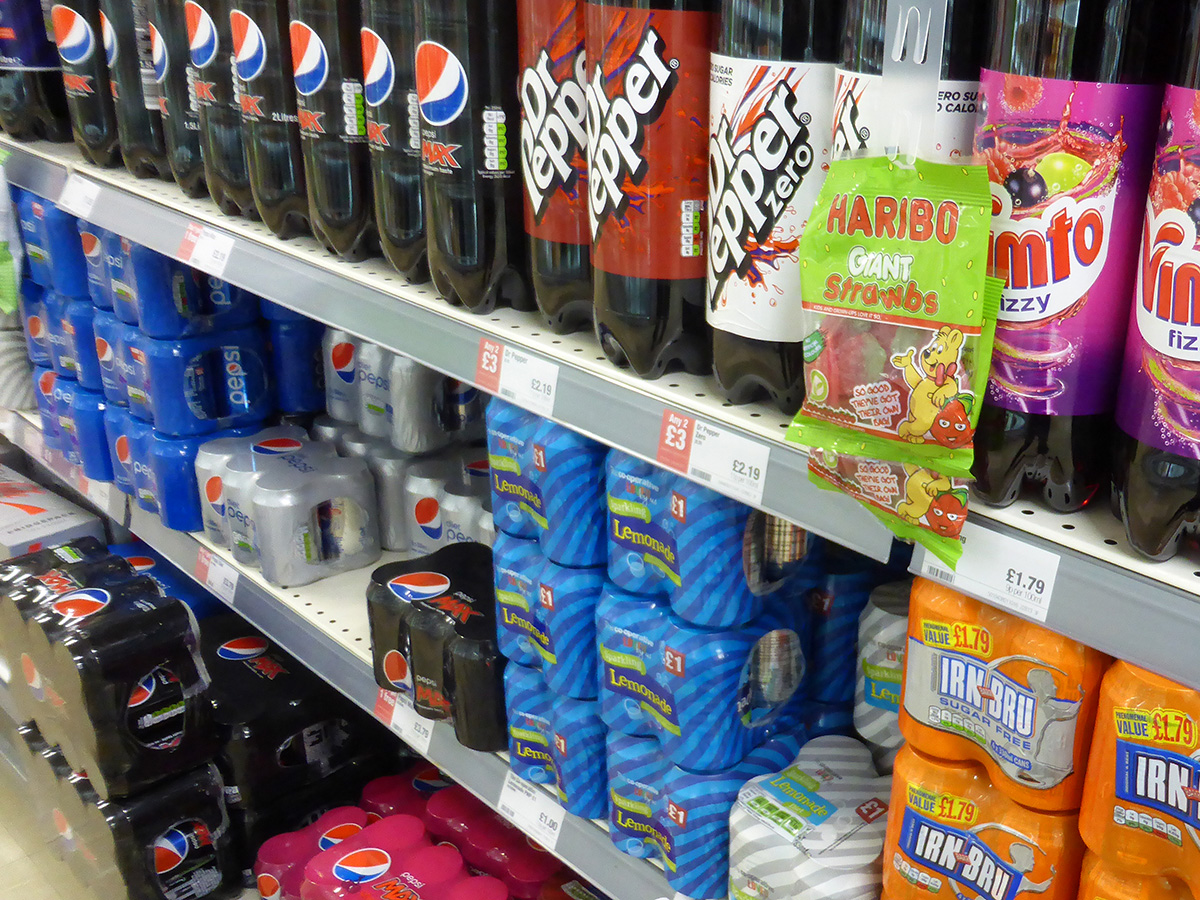
In his Budget on 16 March, the Chancellor announced that a tax would be imposed on manufacturers of soft drinks from April 2018. This will be at a rate of 18p per litre on drinks containing between 5g and 8g of sugar per 100ml, such as Dr Pepper, Fanta and Sprite, and 24p per litre for drinks with more than 8g per 100ml, such as Coca-Cola, Pepsi and Red Bull.
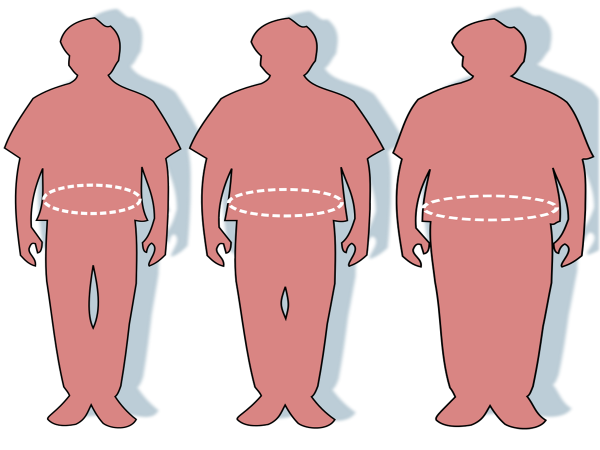 Whilst the tax has been welcomed by health campaigners, there are various questions about (a) how effective it is likely to be in reducing childhood obesity; (b) whether it will be enough or whether other measures will be needed; and (c) whether it is likely to raise the £520m in 2018/19, falling to £455m by 2020/21, as predicted by the Treasury: money the government will use for promoting school sport and breakfast clubs.
These questions are all linked. If demand for such drinks is relatively inelastic, the drinks manufacturers will find it easier to pass the tax on to consumers and the government will raise more revenue. However, it will be less effective in cutting sugar consumption and hence in tackling obesity. In other words, there is a trade off between raising revenue and cutting consumption.
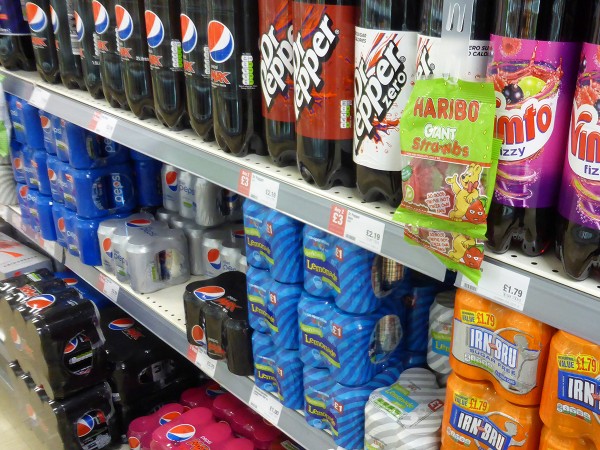 This incidence of tax is not easy to predict. Part of the reason is that much of the market is a bilateral oligopoly, with giant drinks manufacturers selling to giant supermarket chains. In such circumstances, the degree to which the tax can be passed on depends on the bargaining strength and skill of both sides. Will the supermarkets be able to put pressure on the manufacturers to absorb the tax themselves and not pass it on in the wholesale price? Or will the demand be such, especially for major brands such as Coca-Cola, that the supermarkets will be willing to accept a higher price from the manufacturers and then pass it on to the consumer?
Then there is the question of the response of the manufacturers. How easy will it be for them to reformulate their drinks to reduce sugar content and yet still retain sales? For example, can they produce a product which tastes like a high sugar drink, 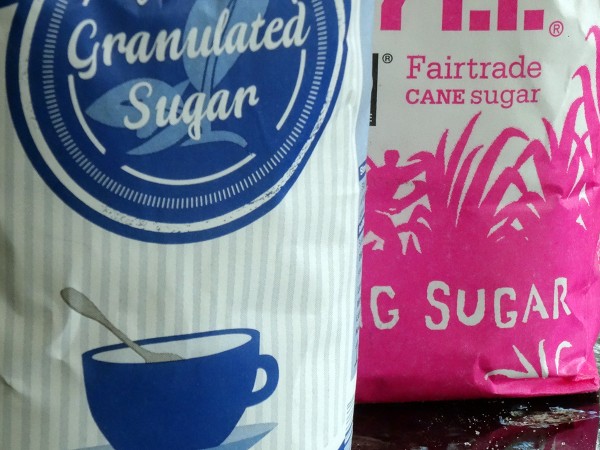 but really contains a mix between sugar and artificial sweeteners – effectively a hybrid between a ‘normal’ and a low-cal version? How likely are they to reduce the size of cans, say from 330ml to 300ml, to avoid raising prices?
The success of the tax on soft drinks in cutting sugar consumption depends on whether it is backed up by other policies. The most obvious of these would be to impose a tax on sugar in other products, including cakes, biscuits, low-fat yoghurts, breakfast cereals and desserts, and also many savoury products, such as tinned soups, ready meals and sauces. But there are other policies too. The Public Health England report recommended a national programme to educate people on sugar in foods; reducing price promotions of sugary food and drink; removing confectionery or other sugary foods from end of aisles and till points in supermarkets; setting broader and deeper controls on advertising of high-sugar foods and drinks to children; and reducing the sugar content of the foods we buy through reformulation and portion size reduction.
Articles
- Sugar tax: How it will work?
BBC News, Nick Triggle (16/3/16)
- Will a sugar tax actually work?
The Guardian, Alberto Nardelli and George Arnett (16/3/16)
- Coca-Cola and other soft drinks firms hit back at sugar tax plan
The Guardian, Sarah Butler (17/3/16)
- Sugar tax could increase calories people consume, economic experts warn
The Telegraph, Kate McCann, and Steven Swinford (17/3/16)
- Nudge, nudge! How the sugar tax will help British diets
Financial Times, Anita Charlesworth (18/3/16)
- Is the sugar tax an example of the nanny state going too far?
Financial Times (19/3/16)
- Government’s £520m sugar tax target ‘highly dubious’, analysts warn
The Telegraph, Ben Martin (17/3/16)
- Sorry Jamie Oliver, I’d be surprised if sugar tax helped cut obesity
The Conversation, Isabelle Szmigin (17/3/16)
- Sugar sweetened beverage taxes
What Works for Health (17/12/15)
Questions
- What determines the price elasticity of demand for sugary drinks in general (as opposed to one particular brand)?
- How are drinks manufacturers likely to respond to the sugar tax?
- How are price elasticity of demand and supply relevant in determining the incidence of the sugar tax between manufacturers and consumers? How is the degree of competition in the market relevant here?
- What is meant by a socially optimal allocation of resources?
- If the current consumption of sugary drinks is not socially optimal, what categories of market failure are responsible for this?
- Will a sugar tax fully tackle these market failures? Explain.
- Is a sugar tax progressive, regressive or proportional? Explain.
- Assess the argument that the tax on sugar in soft drinks may actually increase the amount that people consume.
- The sugar tax can be described as a ‘hypothecated tax’. What does this mean and is it a good idea?
- Compare the advantages and disadvantages of a tax on sugar in soft drinks with (a) banning soft drinks with more than a certain amount of sugar per 100ml; (b) a tax on sugar; (c) a tax on sugar in all foods and drinks.
 The price of petrol is of interest to most families, occupying a key component of weekly expenditure. Over the past decade, it has fluctuated significantly, from around 85p per litre to over £1.40. More recently, prices have been around £1.03 to £1.10, depending on the brand and the location. But, will we see prices falling below that magical £1 per litre mark?
We have recently seen a 2p drop in wholesale fuel prices and it is this which has led to speculation about a further fall in prices at petrol stations to below £1. This, according to the RAC, has a ‘very good chance’ of happening.
A key determinant of petrol prices is the market price for crude oil and it is this which has been contributing towards the low petrol prices. As these prices filter through to the pumps, the RAC suggests that prices may once again come down. Furthermore, with some of the key petrol stations being operated by the big supermarkets, competition for sales and hence on prices may be fierce.
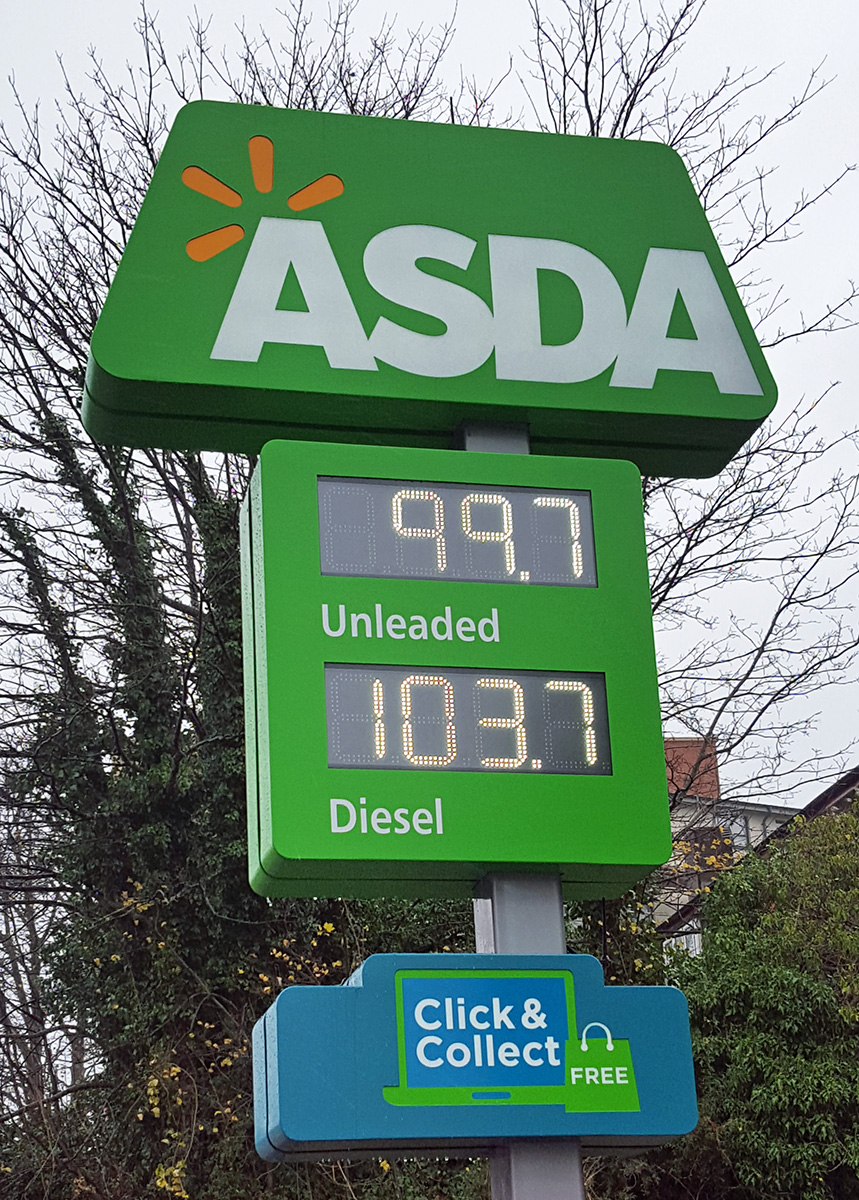
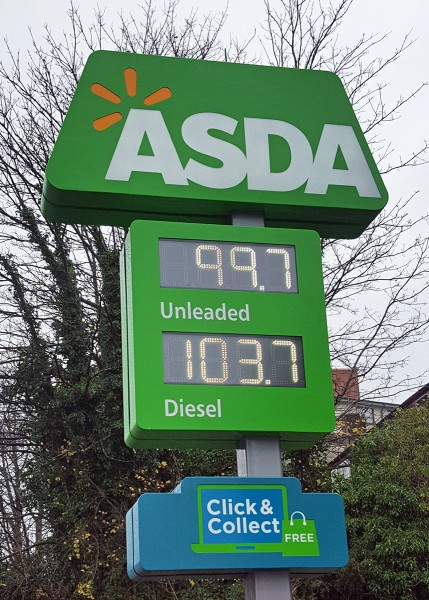 But, now let’s consider another well-informed organisation. According to the AA, the chances of petrol prices falling below £1 are ‘remote’. So, who should we believe? In fact, we can probably believe both. The market price may not fall below £1, but in the run-up to Christmas and in the start of the New Year, we may well see petrol on sale for under £1 as a means to entice shoppers or, as the AA has said, as a ‘marketing gimmick’. As you can see from the picture, Asda has dropped the price below £1 per litre in some of its petrol stations.
You might think this is a little strange, given the inelastic nature of the demand for petrol: after all, as prices of petrol rise and fall, I for one, don’t change my demand. This is also confirmed by HMRC, which reports that total petrol consumption is falling despite the low prices. But, it’s probably less about changing your total demand for petrol and more about from where you buy that total demand. For any one petrol station, the demand may be relatively elastic. It is this which may fuel a price war on petrol. The following articles consider this.
£1 per litre petrol? It’s unlikely The Telegraph, Rozina Sabur (20/11/15)
‘Good chance’ of £1 per litre petrol, says RAC BBC News (20/11/15)
Petrol prices ‘could fall below £1 per litre’ ITV News (20/11/15)
Fuel Prices: ‘Good chance’ of £1 a litre Sky News (20/11/15)
Questions
- What are they demand-side and supply-side factors which have helped to cut the price of petrol? Use a diagram to illustrate your answer.
- How much of a role has OPEC played in keeping petrol prices down in the UK?
- Why is the demand for petrol price inelastic?
- HMRC suggests that despite low prices, the demand for petrol has been falling. Does this suggest that the demand curve for petrol is upward sloping? Explain your answer.
- If the demand for petrol is falling, can this tell car companies anything about the future demand for vehicles? Which concepts are important here?
- If petrol prices do not fall to reflect falling oil prices, what does this suggest about the profit margins on petrol? Should government intervene?
 Global merger and acquisition deals with a combined value of £2.7 trillion ($4.06 trillion) have taken place so far this year (1 Jan to 3 Nov). This is a 38% increase on the same period in 2014 ($2.94 trillion) and even surpasses the previous record high for the same period in 2007 ($3.93 trillion) (see the chart from the Dealogic article linked below).
Measured by dollar value, October was the fifth biggest month in Mergers and Acquisitions (M&As) history with the announcement of $514bn of actual or proposed deals. These included:
|
|
| • |
the proposed £71 billion deal to acquire SABMiller (the world’s second largest brewer) by AB InBev (the world’s largest brewer); |
| • |
the $67bn takeover of network storage provider EMC by Dell (the world’s third largest computer supplier); |
| • |
the proposed deal to acquire Allergan (producer of Botox) by Pfizer (the producer of Viagra). |
Although the dollar value of M&As was extremely large in October the actual number of deals, 2177, was significantly lower than the average of 3521 over the previous 9 months.
Are these large M&As in the interests of the consumer? One advantage is that the newly combined firms may have lower average costs. Reports in the press, following the announcement of most M&As, often discuss the potential for reductions in duplicate resources and rationalisation. After the successful completion of a takeover two previously separate departments, such as finance, law or HRM, may be combined into one office. If the newly integrated department is (i) smaller than the previous two departments added together and (ii) can operate just as effectively, then average costs will fall. This is simply an example of an economy of scale.
Average costs will also decrease if x-inefficiency within the acquired business can be reduced or eliminated. X-inefficiency exists when an organisation incurs higher costs than are necessary to produce any given output. In other words it is not producing in the cheapest possible way. In a number of takeovers in the brewing industry, AB InBev has gained a fearsome reputation for minimising costs and removing any waste or slack in acquired organisations. In an interview with the Financial Times, its chief executive, Carlos Brito, stated that:
“In any company, there’s 20 per cent that lead, 70 per cent that follow and 10 per cent that do nothing. So the 10 per cent, of course, you need to get rid of.”
If any reduction in costs results in lower prices without any lessening in the quality of the good or service, then of course the customer will benefit. However, when two relatively large organisations combine, it may result in a newly merged business with considerable market power. With a fall in the price elasticity of demand for its goods and services, this bigger company may be able to increase its prices and make greater revenues.
An important responsibility of a taxpayer-funded competition authority is to make judgements about whether or not large M&As are in the public interest. For example, the Competition and Markets Authority in the UK investigates deals if the target company has a UK turnover that exceeds £70 million, or if the newly combined business has a market share that is equal to or exceeds 25 per cent. If the CMA concludes that an M&A would lead to a substantial lessening of competition in the market, then it could prohibit the deal from taking place. This has only happened on 9 occasions in the last 12 years. If competition concerns are identified, it is far more likely that CMA will allow the deal to go ahead but with certain conditions attached. This has happened 29 times in the last 12 years and the conditions are referred to as remedies.
The CMA has recently published a report (Understanding past merger remedies) that attempts to evaluate the relative success of the various remedies it has used in 13 M&A cases.
Articles
Are big mergers bad for consumers? BBC News, Daniel Thomas (30/10/15)
Mergers and acquisitions madness may be about to stop The Guardian (11/10/15)
M&A deal activity on pace for record year The Wall Street Journal, Dana Mattioli and Dan Strumpf (10/08/15) [Note: if you can’t see the full article, try clearing cookies (Ctrl+Shift+Delete)]
Global M&A Volume Surpasses $4tr in 2015 YTD Dealogic, Anthony Read (04/11/15)
M&A Volumes Weaken in October despite Megadeals Financial Times, James Fontanella-Khan and Arash Massoudi (01/11/15)
The merger of Dell and EMC is further proof that the IT industry is remaking itself The Economist (12/10/15)
Questions
- Using a cost curve diagram, explain the difference between economies of scale and x-efficiency.
- Explain why a takeover or merger might reduce the price elasticity of demand for the goods or services produced by the newly combined firm.
- Explain how the CMA determines the size of the appropriate market when calculating a firm’s market share.
- Draw a diagram to illustrate the simultaneous impact of greater market power and lower average costs that might result from a horizontal merger. Consider the impact on consumer, producer and total surplus.
- What is the difference between a structural and a behavioural remedy?
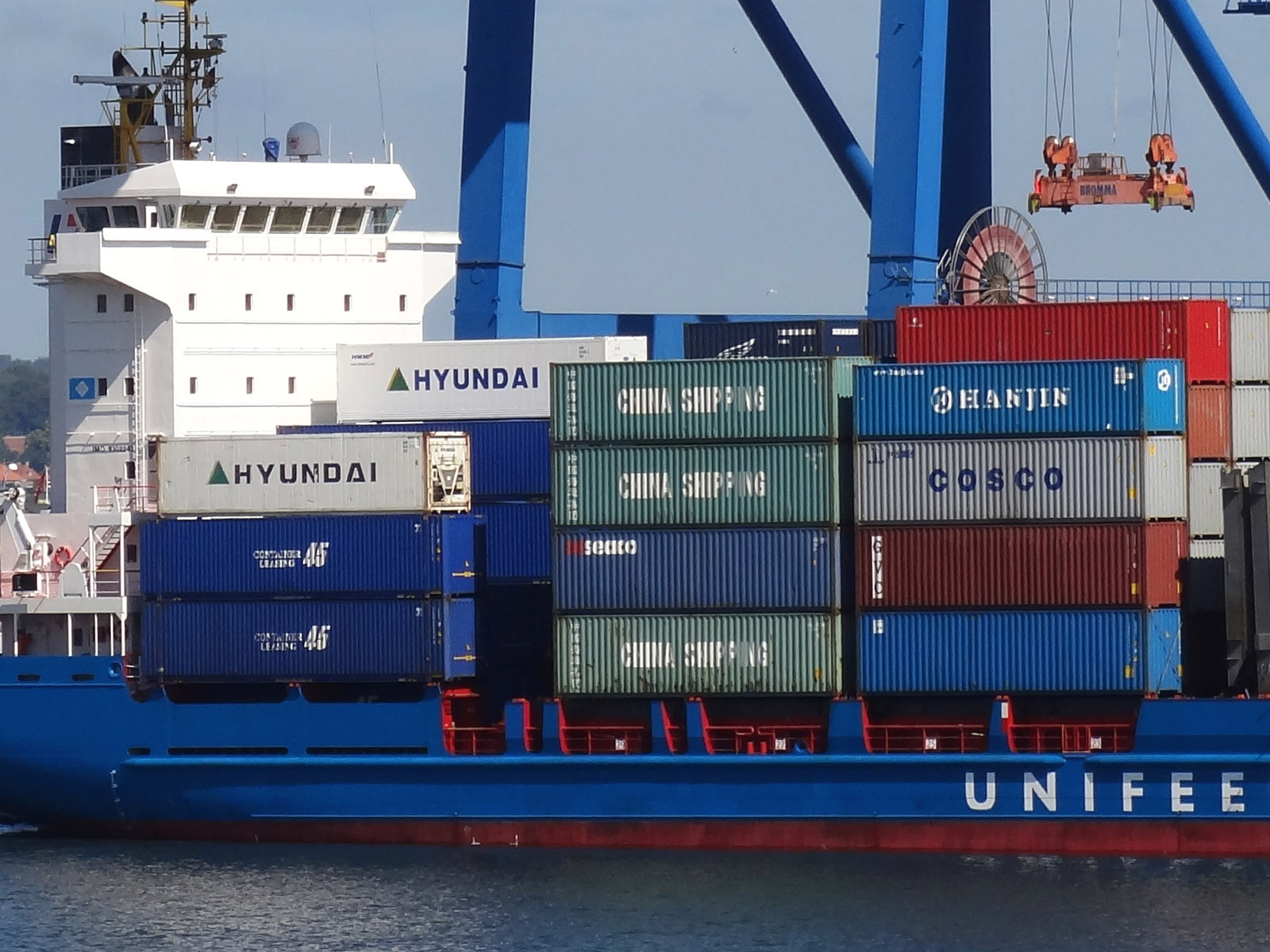 In a recent blog, Falling sterling – bad for some; good for others, we looked at the depreciation of sterling following the Brexit vote. We saw how it will have beneficial effects for some, such as exporters, and adverse effects for others, such as consumers having to pay a higher price for imports and foreign holidays. The article linked below examines these effects in more depth.
 It is similar with imports. How much the sales of these fall depends again on two main things. The first is the amount by which the importing companies are prepared to raise sterling prices. Again assume that the pound falls from €1.30 to €1.18 – in other words, the euro rises from 76.92p (£1/1.3) to 84.75p (£1/1.18). What happens to the price of an import to the UK from the eurozone whose euro price is €100? Does the importer raise the price from £76.92 to £84.75, or by less than that, being prepared to accept a smaller profit margin?