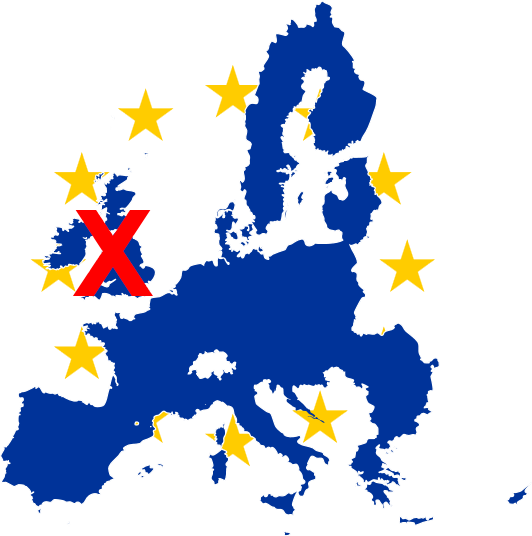
 At 23:00 on 31 December 2020, the UK withdrew from the European single market. This ended the transition period which followed the UK’s departure from the EU on 31 January 2020. But, with the Trade and Cooperation Agreement (‘the deal’) signed on 30 December, it was agreed that there would be no tariffs or quotas on trade in goods between the UK and the EU.
So what are the new economic relations between the EU and the UK and how will they impact on the UK economy? What new restrictions are there on trade in goods and on the movement of labour and capital? How is trade in services, including financial services, affected? What new agreements, such as on fishing, will replace previous agreements?
What will happen to trade between Northern Ireland and the Republic of Ireland? What will happen to trade between Great Britain and Northern Ireland?
 What will happen to regulations over standards of traded products and their production? Will the UK government be able to provide subsidies or other types of support for goods or services exported to the EU? How will disputes about standards and support to companies be resolved?
How will trade with non-EU countries change? If the EU has trade agreements with such countries, do these agreements now apply to trade between the UK and such countries? How free is the UK now to negotiate new trade agreements with non-EU countries? How will the UK’s negotiating strength be affected by its withdrawal from the EU?
Rather than listing the changes here, follow the links below to the articles and assess the nature of the changes and then attempt the questions. The articles represent a balance of views.
What is clear is that these are all big issues and are likely to have a significant impact on the UK economy. Most economists argue that the net effect will be negative on trade and economic growth, but there is huge uncertainty about the magnitude of the effects. Much will depend on how arrangements between the UK and the EU develop over the coming months and years.
Articles
 Brexit deal explained: What will be the impact of UK’s agreement with EU?
Sky News, Ed Conway (24/12/20)
- Brexit deal: What is in it?
BBC News, Chris Morris (28/12/20)
- Brexit: What are the key points of the deal?
BBC News, Tom Edgington (30/12/20)
- Brexit trade deal explained: the key parts of the landmark agreement
Financial Times (25/12/20)
- The key details of the Brexit deal summarised, from trade to fishing
The Telegraph, James Crisp and Gordon Rayner (3/1/21)
- Committees, visas and climate change: Brexit experts’ verdicts on the deal details
The Guardian, Lisa O’Carroll (28/12/20)
- The left must stop mourning Brexit – and start seeing its huge potential
The Guardian, Larry Elliott (31/12/20)
- The Guardian view on Britain out of the EU: a treasure island for rentiers
The Guardian, Editorial (27/12/20)
- Brexit Is Finally Done, but It Already Seems Out of Date
New York Times, Mark Landler (30/12/20)
- Towards a modern UK-EU trade relationship
Best for Britain, David Henig (28/12/20)
- Brexit Is a New World Businesses Still Need to Figure Out
Bloomberg, Deirdre Hipwell, Craig Trudell, and Dara Doyle (1/1/21)
UK and EU documents
Questions
- Summarise the main features of the Trade and Cooperation Agreement and how the UK’s new relationship with the EU differs from being a member.
- What are the potential economic benefits from being outside the EU?
- What are the economic drawbacks for the UK from having left the EU, albeit with the new Trade and Cooperation Agreement?
- On balance, do you think that the UK will gain or lose economically from having left the EU? Explain your answer.
 Mid-December saw a rapid rise in coronavirus cases in London and the South East and parts of eastern and central southern England. This was due to a new strain of Covid, which is more infectious. In response, the UK government introduced a new tier 4 level of restrictions for these areas from 20 December. These amount to a complete lockdown. The devolved administrations also announced lockdowns. In addition, the Christmas relaxation of rules was tightened across the UK. Households (up to three) were only allowed to get together on Christmas day and not the days either side (or one day between 23 and 27 December in the case of Northern Ireland). Tier 4 residents were not allowed to visit other households even on Christmas day.
The lockdowns aimed to slow the spread of the virus and reduce deaths. But this comes at a considerable short-term economic cost, especially to the retail and leisure sectors, which are required to close while the lockdowns remain in force. In taking the decision to introduce these tougher measures, the four administrations had to weigh up the benefits of reduced deaths and illness and pressure on the NHS against the short-term economic damage. As far a long-term economic damage is concerned, this might be even greater if lockdowns were not imposed and the virus spread more rapidly.
In a blog back in September, we examined the use of cost–benefit analysis (CBA) to aid decision-making about such decisions. The following is an updated version of that blog.
The use of cost–benefit analysis
 It is commonplace to use cost–benefit analysis (CBA) in assessing public policies, such as whether to build a new hospital, road or rail line. Various attempts in the past few months have been made to use CBA in assessing policies to reduce the spread of the coronavirus. These have involved weighing up the costs and benefits of national or local lockdowns or other containment measures. But, as with other areas where CBA is used, there are serious problems of measuring costs and benefits and assessing risks. This is particularly problematic where human life is involved and where a value has to be attached to a life saved or lost.
The first step in a CBA is to identify the benefits and costs of the policy.
Identifying the benefits and costs of the lockdown
The benefits of the lockdown include lives saved and a reduction in suffering, not only for those who otherwise would have caught the virus but also for their family and friends. It also includes lives saved from other diseases whose treatment would have been put (even more) on hold if the pandemic had been allowed to rage and more people were hospitalised with the virus. In material terms, there is the benefit of saving in healthcare and medicines and the saving of labour resources. Then there are the environmental gains from less traffic and polluting activities.
 On the cost side, there is the decline in output from businesses being shut and people being furloughed or not being able to find work. There is also a cost if schools have to close and children’s education is thereby compromised. Then there is the personal cost to people of being confined to home, a cost that could be great for those in cramped living conditions or in abusive relationships. Over the longer term, there is a cost from people becoming deskilled and firms not investing – so-called scarring effects. Here there are the direct effects and the multiplier effects on the rest of the economy.
Estimating uncertain outcomes
 It is difficult enough identifying all the costs and benefits, but many occur in the future and here there is the problem of estimating the probability of their occurrence and their likely magnitude. Just how many lives will be saved from the policy and just how much will the economy be affected? Epidemiological and economic models can help, but there is a huge degree of uncertainty over predictions made about the spread of the disease, especially with a new strain of the virus, and the economic effects, especially over the longer term.
One estimate of the number of lives saved was made by Miles et al. in the NIESR paper linked below. A figure of 440 000 was calculated by subtracting the 60 000 actual excess deaths over the period of the first lockdown (March to June 2020) from a figure of 500 000 lives lost which, according to predictions, would have been the consequence of no lockdown. However, the authors acknowledge that this is likely to be a considerable overestimate because:
It does not account for changes in behaviour that would have occurred without the government lockdown; it does not count future higher deaths from side effects of the lockdown (extra cancer deaths for example); and it does not allow for the fact that some of those ‘saved’ deaths may just have been postponed because when restrictions are eased, and in the absence of a vaccine or of widespread immunity, deaths may pick up again.
Some help in estimating likely outcomes from locking down or not locking down the economy can be gained by comparing countries which have taken different approaches. The final article in the first list below compares the approaches in the UK and Sweden. Sweden had much lighter control measures than the UK and did not impose a lockdown. Using comparisons of the two approaches, the authors estimate that some 20 000 lives were saved by the lockdown – considerably less than the 440 000 estimate.
Estimating the value of a human life
To assess whether the saving of 20 000 lives was ‘worth it’, a value would have to be put on a life saved. Although putting a monetary value on a human life may be repugnant to many people, such calculations are made whenever a project is assessed which either saves or costs lives. As we say in the 10th edition of Economics (page 381):
Some people argue ‘You can’t put a price on a human life: life is priceless.’ But just what are they saying here? Are they saying that life has an infinite value? If so, the project must be carried out whatever the costs, and even if other benefits are zero! Clearly, when evaluating lives saved from the project, a value less than infinity must be given.
Other people might argue that human life cannot be treated like other costs and benefits and put into mathematical calculations. But what are these people saying? That the question of lives saved should be excluded from the cost–benefit study? If so, the implication is that life has a zero value! Again this is clearly not the case.
In practice, there are two approaches used to measure the value of a human life.
 The first uses the value of a statistical life (VSL). This is based on the amount extra the average person would need to be paid to work in a job where there is a known probability of losing their life. So if people on average needed to be paid an extra £10 000 to work in a job with a 1% chance of losing their life, they would be valuing a life at £1 000 000 (£10 000/0.01). To avoid the obvious problem of young people’s lives being valued the same as old people’s ones, even though a 20 year-old on average will live much longer than a 70 year-old, a more common measure is the value of a statistical life year (VSLY).
A problem with VSL or VSLY measures is that they only take into account the quantity of years of life lost or saved, not the quality.
A second measure rectifies this problem. This is the ‘quality of life adjusted year (QALY)’. This involves giving a value to a year of full health and then reducing it according to how much people’s quality of life is reduced by illness, injury or poverty. The problem with this measure is the moral one that a sick or disabled person’s life is being valued less than the life of a healthy person. But it is usual to make such adjustments when considering medical intervention with limited resources.
One adjustment often made to QALYs or VSLYs is to discount years, so that one year gained would be given the full value and each subsequent year would be discounted by a certain percentage from the previous year – say, 3%. This would give a lower weighting to years in the distant future than years in the near future and hence would reduce the gap in predicted gains from a policy between young and old people.
Cost–effectiveness analysis (CEA)
Even using QALYs, there is still the problem of measuring life and health/sickness. A simpler approach is to use cost–effectiveness analysis (CEA). This takes a social goal, such as reducing the virus production rate (R) below 1 (e.g. to 0.9), and then finding the least-cost way of achieving this. As Mark Carney says in his third Reith Lecture:
As advocated by the economists Nick Stern and Tim Besley, the ideal is to define our core purpose first and then determine the most cost-effective interventions to achieve this goal. Such cost–effectiveness analysis explicitly seeks to achieve society’s values.
Cost–effectiveness analysis can take account of various externalities – as many of the costs will be – by giving them a value. For example, the costs of a lockdown to people in the hospitality sector or to the education of the young could be estimated and included in the costs. The analysis can also take into account issues of fairness by identifying the effects on inequality when certain groups suffer particularly badly from Covid or lockdown policies – groups such as the poor, the elderly and children. Achieving the goal of a specific R for the least cost, including external costs and attaching higher weights on the effects on certain groups then becomes the goal. As Carney says:
R brings public health and economics together. Relaxations of restrictions increase R, with economic, health and social consequences. A strategic approach to Covid is the best combination of policies to achieve the desired level of infection control at minimum economic cost with due respect for inequality, mental health and other social consequences, and calculating those costs then provides guidance when considering different containment strategies. That means paying attention to the impact on measures of fairness, the social returns to education, intergenerational equity and economic dynamism.
Conclusion
Given the uncertainties surrounding the measurement of the number of lives saved and the difficulties of assigning a value to them, and given the difficulties of estimating the economic and social effects of lockdowns, it is not surprising that the conclusions of a cost–benefit analysis, or even a cost–effectiveness analysis of a lockdown will be contentious. But, at least such analysis can help to inform discussion and drive future policy decisions. And a cost–effectiveness analysis can be a practical way of helping politicians reach difficult decisions about life and death and the economy.
Articles (original blog)
- When Does the Cure Become Worse Than the Disease? Applying Cost-Benefit Analysis to the Covid-19 Recovery
Journal of Medical Ethics, blog, Derek Soled, Michelle Bayefsky and Rahul Nayak (19/5/20)
- How much did the Covid-19 lockdown really cost the UK?
The Guardian, Larry Elliott (6/9/20)
- The UK lockdown: Balancing costs against benefits
VoxEU, David Miles (13/7/20)
- How Economists Calculate The Costs And Benefits Of COVID-19 Lockdowns
Forbes, Chris Conover (27/3/20)
- Coronavirus Is Giving Cost-Benefit Analysts Fits
Bloomberg, Cass R. Sunstein (12/5/20)
- “Stay at Home, Protect the National Health Service, Save Lives”: a cost benefit analysis of the lockdown in the United Kingdom
Wiley Online Library, David Miles, Mike Stedman and Adrian Heald (13/8/20)
- COVID-19 is Forcing Economists to Rethink the Value of Life
RealClearPolicy, James Broughel (20/8/20)
- A cost–benefit analysis of the COVID-19 disease
Oxford Review of Economic Policy, Robert Rowthorn and Jan Maciejowski (28/8/20)
- Living with Covid-19: Balancing Costs against Benefits in the Face of the Virus
National Institute Economic Review, vol. 253, David Miles, Mike Stedman and Adrian Heald (28/7/20)
- How Many Lives Has Lockdown Saved in the UK?
medRxiv, Rickard Nyman and Paul Ormerod (21/8/20)
Articles (additional)
Questions
- What are the arguments for and against putting a monetary value on a life saved?
- Are QALYs the best way of measuring lives saved from a policy such as a lockdown?
- Compare the relative merits of cost–benefit analysis and cost–effectiveness analysis.
- If the outcomes of a lockdown are highly uncertain, does this strengthen or weaken the case for a lockdown? Explain.
- What specific problems are there in estimating the number of lives saved by a lockdown?
- How might the age distribution of people dying from Covid-19 affect the calculation of the cost of these deaths (or the benefits or avoiding them)?
- How might you estimate the costs to people who suffer long-term health effects from having had Covid-19?
- What are the arguments for and against using discounting in estimating future QALYs?
- The Department of Transport currently uses a figure of £1 958 303 (in 2018 prices) for the value of a life saved from a road safety project. Find out how this is figure derived and comment on it. See Box 12.5 in Economics 10th edition and Accident and casualty costs, Tables RAS60001 and RA60003, (Department of Transport, 2019).
 The BBC podcast linked below looks at the use of quantitative easing since 2009 and especially the most recent round since the onset of the pandemic.
Although QE was a major contributor to reducing the depth of the recession in 2009–10, it was barely used from 2013 to 2020 (except for a short period in late 2016/early 2017). The Coalition and Conservative governments were keen to get the deficit down. In justifying pay restraint and curbing government expenditure, Prime Ministers David Cameron and Theresa May both argued that there ‘was no magic money tree’.
But with the severely dampening effect of the lockdown measures from March 2020, the government embarked on a large round of expenditure, including the furlough scheme and support for businesses.
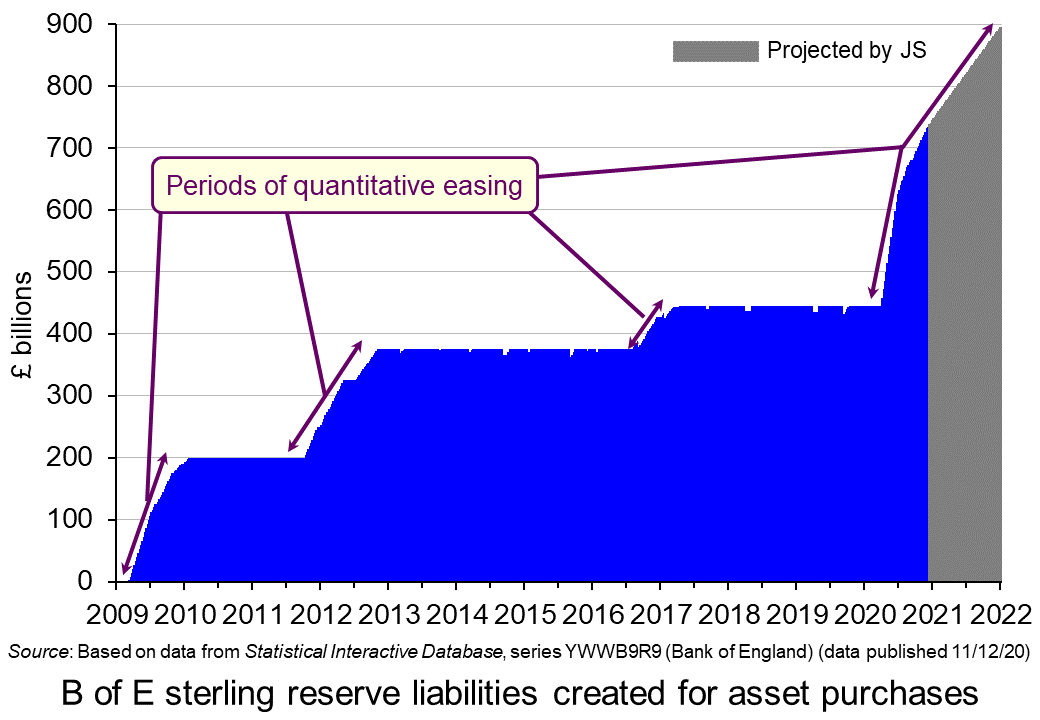 The resulting rise in the budget deficit was accompanied by a new round of QE from the beginning of April. The stock of assets purchased by the Bank of England rose from £445 billion (the approximate level it had been since March 2017) to £740 billion by December 2020 and is planned to reach £895 billion by the end of 2021.
So with the effective funding of the government’s deficits by the creation of new money, does this mean that there is indeed a ‘magic money tree’ or, indeed, a ‘magic money forest’? And if so, is it desirable? Is it simply stoking up problems for the future? Or will, as modern monetary theorists maintain, the extra money, if carefully spent, lead to faster growth and a reducing deficit, with low interest rates making it easy to service the debt?
The podcast explores these issues. There is then a longer list of questions than normal relating to the topics raised in the podcast.
Podcast
Questions
- Which of the following are stocks and which are flows?
(a) Money
(b) Income
(c) The total amount people save each month
(d) The money held in savings accounts
(e) Public-sector net debt
(f) Public-sector net borrowing
(g) National income
(h) Injections into the circular flow of income
(i) Aggregate demand
(j) Wealth
- How do banks create money?
- What is the role of the Debt Management Office in the sale of gilts?
- Describe the birth of QE.
- Is raising asset prices the best means of stimulating the economy? What are the disadvantages of this form of monetary expansion?
- What are the possible exit routes from QE and what problems could occur from reducing the central bank’s stock of assets?
- Is the use of QE in the current Covid-19 crisis directly related to fiscal policy? Or is this use of monetary policy simply a means of hitting the inflation target?
- What are the disadvantages of having interest rates at ultra-low levels?
- Does it matter if the stock of government debt rises substantially if the gilts are at ultra-low fixed interest rates?
- What are the intergenerational effects of substantial QE? Does it depend on how debt is financed?
- How do the policy recommendations of modern monetary theorists differ from those of more conventional macroeconomists?
- In an era of ultra-low interest rates, does fiscal policy have a greater role to play than monetary policy?
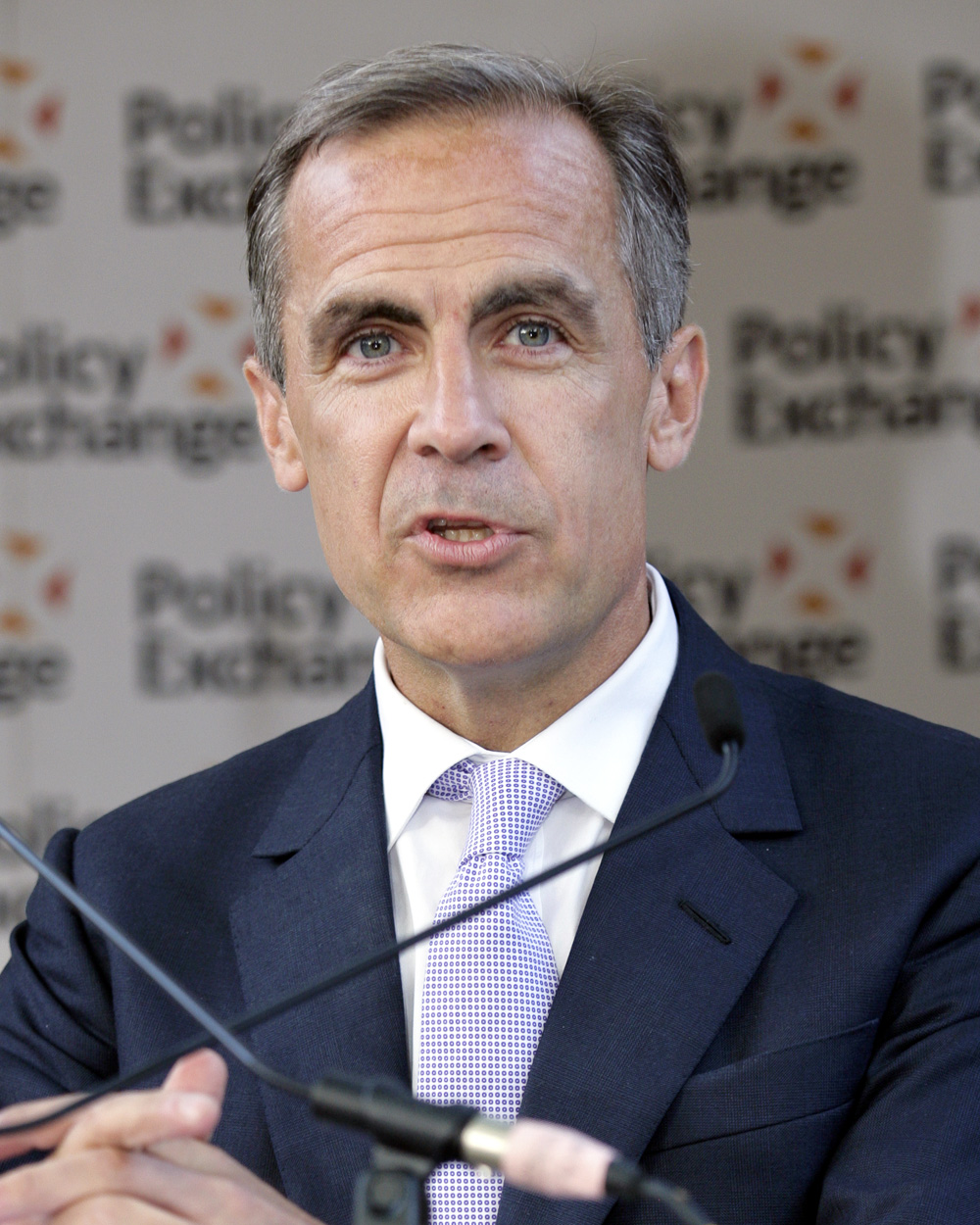 Each year the BBC hosts the Reith Lectures – a series of talks given by an eminent person in their field. This year’s lecturer is Mark Carney, former Governor of the Bank of England. His series of four weekly lectures began on 2 December 2020. Their topic is ‘How we get what we value’. As the BBC site states, the lectures:
chart how we have come to esteem financial value over human value and how we have gone from market economies to market societies. He argues that this has contributed to a trio of crises: of credit, Covid and climate. And the former Bank of England governor will outline how we can turn this around.
 In lectures 2, 3 and 4, he looks at three crises and how they have shaped and are shaping what we value. The crises are the financial crisis of 2007–9, the coronavirus pandemic and the climate crisis. They have challenged how we value money, health and the environment respectively and, more broadly, have prompted people to question what is valuable for individuals and society, both today and into the future.
The questions posed by Carney are how can we establish what is valuable to individuals and society, how well are such values met by economies and how can mechanisms be improved to ensure that we make the best use of resources in meeting those values.
Value and the market
In the first lecture he probes the concept of value. He explores how economists and philosophers have tried to value the goods, services and human interactions that we desire.
First there is ‘objective value’ propounded by classical economists, such as Adam smith, David Ricardo and Karl Marx. Here the value of goods and services depends on the amount of resources used to make them and fundamentally on the amount of labour. In other words, value is a supply-side concept.
This he contrasts with ‘subjective value’. Here the value of goods and services depends on how well they satisfy wants – how much utility they give the consumer. For these neoclassical economists, value is in the eye of the beholder; it is a demand-side concept.
The two are reconciled in the market, with market prices reflecting the balance of demand and supply. Market prices provided a solution to the famous diamonds/water paradox (see Box 4.2 in Economics (10th edition) or Case Study 4.3 in Essentials of Economics (8th edition) – the paradox of ‘why water, which is essential for life, is virtually free, but diamonds, which have limited utility beyond their beauty, are so expensive.’ The answer is to do with scarcity and marginal utility. Because diamonds are rare, the marginal utility is high, even though the total utility is low.  And because water is abundant, even though its total utility is high, for most people its marginal utility is low. In other words, the value at the margin depends on the balance of demand and supply. Diamonds are much scarcer than water.
But is the market balance the right balance? Are the values implied by the market the same as those of society? ‘Why do financial markets rate Amazon as one of the world’s most valuable companies, but the value of the vast region of the Amazon appears on no ledger until it’s stripped of its foliage and converted into farmland?’ – another paradox highlighted by Carney.
It has long been recognised that markets fail in a number of ways. They are not perfect, with large firms able to make supernormal profits by charging more and producing less, and consumers often being ill-informed and behaving impulsively or being swayed by clever marketing. And many valuable things that we experience, such as human interaction and the beauty of nature, are not bought and sold and thus do not appear in measures of GDP – one of the main ways of valuing a country.
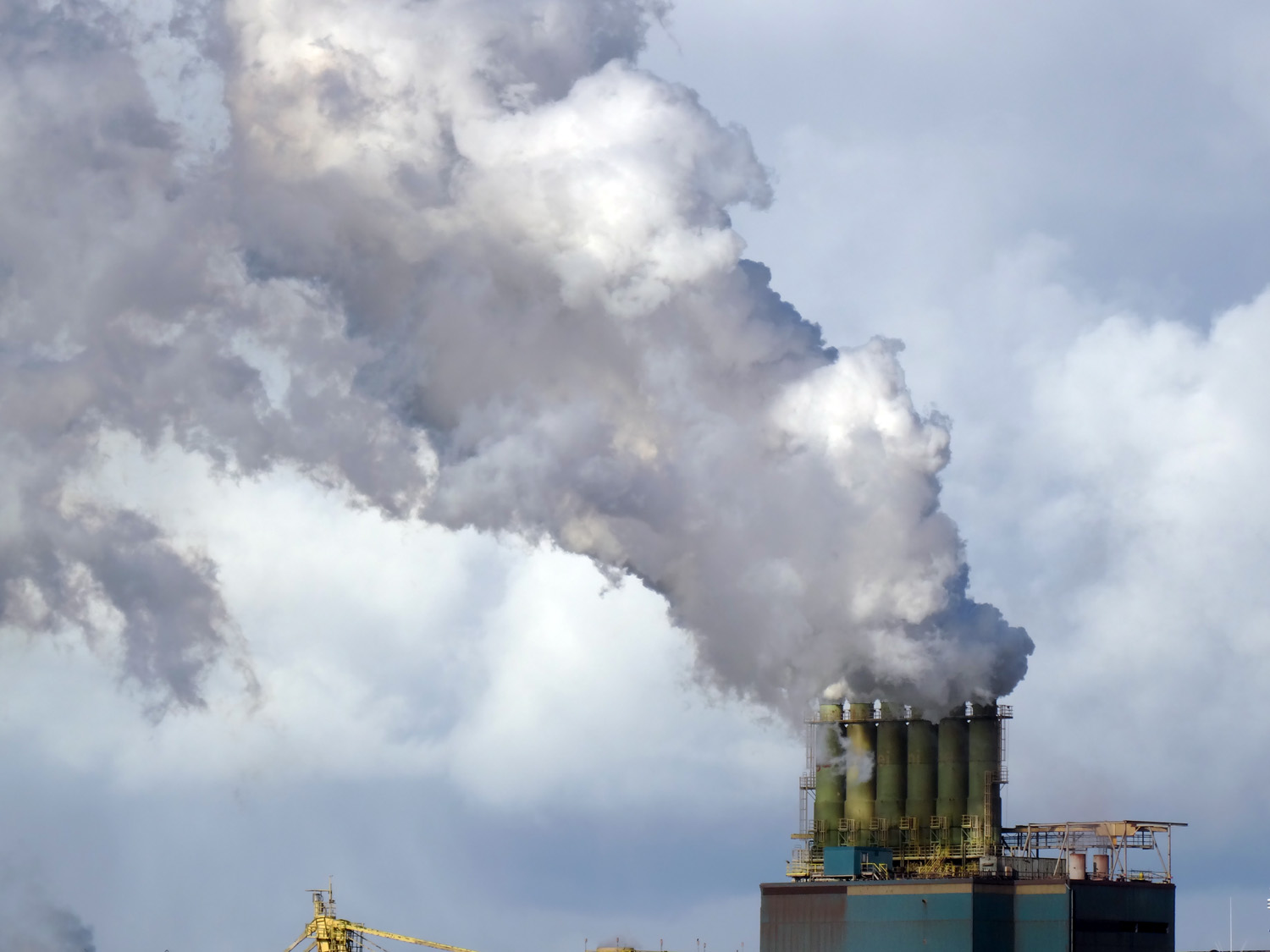 What is more, many of things that are produced in the market have side-effects which are not reflected in prices. These externalities, whether good or bad, can be substantial: for example, the global warming caused by CO2 emissions from industry, transport and electricity production from fossil fuels.
And markets reflect people’s biases towards the present and hence lead to too little investment for the future, whether in healthcare, the environment or physical and social infrastructure. Markets reflect the scant regard many give to the damage we might be doing to the lives of future generations.
What is particularly corrosive, according to Carney, is the
drift from moral to market sentiments. …Increasingly, the value of something, some act or someone is equated with its monetary value, a monetary value that is determined by the market. The logic of buying and selling no longer applies only to material goods, but increasingly it governs the whole of life from the allocation of healthcare, education, public safety and environmental protection. …Market value is taken to represent intrinsic value, and if a good or activity is not in the market, it is not valued.
The drift from moral to market sentiments accelerated in the Thatcher/Regan era, when governments were portrayed as inefficient allocators, which stifled competition, innovation and the movement of capital. Deregulation and privatisation were the order of the day. This, according to Carney, ‘unleashed a new dynamism’ and ‘with the fall of communism at the end of the 1980s, the spread of the market grew unchecked.’
But this drift failed to recognise market failures. It has taken three crises, the financial crisis, Covid and the climate crisis to bring these failures to the top of the public agenda. They are examined in the other three lectures.
The Reith Lectures
Questions
- Distinguish between objective and subjective value.
- If your income rises, will you necessarily be happier? Explain.
- How is the concept of diminishing marginal utility of income relevant to explaining why ‘A Christmas bonus of £1000 means less to Mark Zuckerberg then £500 does to someone on a minimum wage.’
- Does the use of social cost–benefit analysis enable us to use adjusted prices as a measure of value?
- Listen to lectures 2, 3 and 4 and provide a 500-word summary of each.
- Assess the arguments Mark Carney uses in one of these three lectures.
 On 25 November, the UK government published its Spending Review 2020. This gives details of estimated government expenditure for the current financial year, 2020/21, and plans for government expenditure and the likely totals for 2021/22.
The focus of the Review is specifically on the effects of and responses to the coronavirus pandemic. It does not consider the effects of Brexit, with or without a trade deal, or plans for taxation. The Review is based on forecasts by the Office for Budget Responsibility (OBR). Because of the high degree of uncertainty over the spread of the disease and the timing and efficacy of vaccines, the OBR gives three forecast values for most variables – pessimistic, central and optimistic.
 According to the central forecast, real GDP is set to decline by 11.3% in 2020, the largest one-year fall since the Great Frost of 1709. The economy is then set to ‘bounce back’ (somewhat), with GDP rising by 5.2% in 2021.
Unemployment will rise from 3.9% in 2019 to a peak of 7.5% in mid-2021, after the furlough scheme and other support for employers is withdrawn.
This blog focuses at the impact on government borrowing and debt and the implications for the future – both the funding of the debt and ways of reducing it.
Soaring government deficits and debt
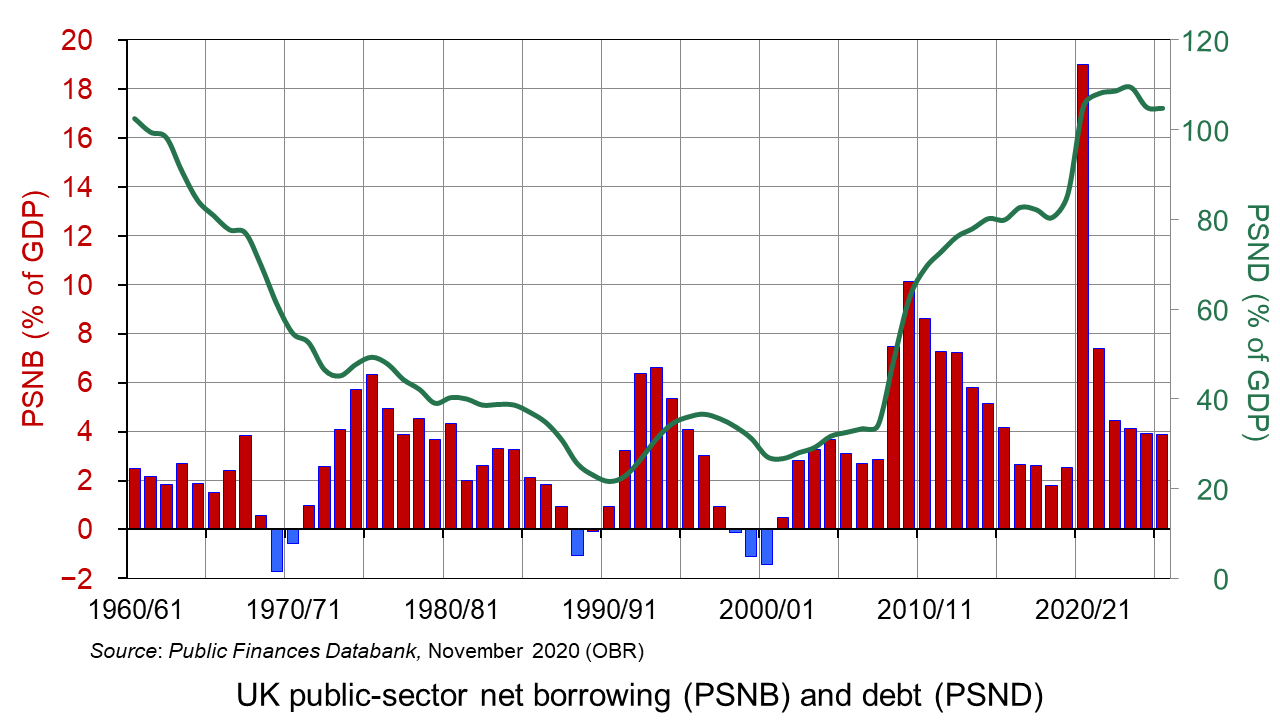
Government expenditure during the pandemic has risen sharply through measures such as the furlough scheme, the Self-Employment Income Support Scheme and various business loans. This, combined with falling tax revenue, as incomes and consumer expenditure have declined, has led to a rise in public-sector net borrowing (PSNB) from 2.5% of GDP in 2019/20 to a central forecast of 19% for 2020/21 – the largest since World War II. By 2025/26 it is still forecast to be 3.9% of GDP. The figure has also been pushed up by a fall in nominal GDP for 2020/21 (the denominator) by nearly 7%. (Click here for a PowerPoint of the above chart.)
The high levels of PSNB are pushing up public-sector net debt (PSNB). This is forecast to rise from 85.5% of GDP in 2019/20 to 105.2% in 2020/21, peaking at 109.4% in 2023/24.
The exceptionally high deficit and debt levels will mean that the government misses by a very large margin its three borrowing and debt targets set out in the latest (Autumn 2016) ‘Charter for Budget Responsibility‘. These are:
- to reduce cyclically-adjusted public-sector net borrowing to below 2% of GDP by 2020/21;
- for public-sector net debt as a percentage of GDP to be falling in 2020/21;
- for overall borrowing to be zero or in surplus by 2025/26.
But, as the Chancellor said in presenting the Review:
Our health emergency is not yet over. And our economic emergency has only just begun. So our immediate priority is to protect people’s lives and livelihoods.
Putting the public finances on a sustainable footing
Running a large budget deficit in an emergency is an essential policy for dealing with the massive decline in aggregate demand and for supporting those who have, or otherwise would have, lost their jobs. But what of the longer-term implications? What are the options for dealing with the high levels of debt?
1. Raising taxes. This tends to be the preferred approach of those on the left, who want to protect or improve public services. For them, the use of higher progressive taxes, such as income tax, or corporation tax or capital gains tax, are a means of funding such services and of providing support for those on lower incomes. There has been much discussion of the possibility of finding a way of taxing large tech companies, which are able to avoid taxes by declaring very low profits by diverting them to tax havens.
2. Cutting government expenditure. This is the traditional preference of those on the right, who prefer to cut the overall size of the state and thus allow for lower taxes. However, this is difficult to do without cutting vital services.  Indeed, there is pressure to have higher government expenditure over the longer term to finance infrastructure investment – something supported by the Conservative government.
A downside of either of the above is that they squeeze aggregate demand and hence may slow the recovery. There was much discussion after the financial crisis over whether ‘austerity policies’ hindered the recovery and whether they created negative supply-side effects by dampening investment.
3. Accepting higher levels of debt into the longer term. This is a possible response as long as interest rates remain at record low levels. With depressed demand, loose monetary policy may be sustainable over a number of years. Quantitative easing depresses bond yields and makes it cheaper for governments to finance borrowing. Servicing high levels of debt may be quite affordable.
The problem is if inflation begins to rise. Even with lower aggregate demand, if aggregate supply has fallen faster because of bankruptcies and lack of investment, there may be upward pressure on prices. The Bank of England may have to raise interest rates, making it more expensive for the government to service its debts.
Another problem with not reducing the debt is that if another emergency occurs in the future, there will be less scope for further borrowing to support the economy.
 4. Higher growth ‘deals’ with the deficit and reduces debt. In this scenario, austerity would be unnecessary. This is the ‘golden’ scenario – for the country to grow its way out of the problem. Higher output and incomes leads to higher tax revenues, and lower unemployment leads to lower expenditure on unemployment benefits. The crucial question is the relationship between aggregate demand and supply. For growth to be sustainable and shrink the debt/GDP ratio, aggregate demand must expand steadily in line with the growth in aggregate supply. The faster aggregate supply can grow, the faster can aggregate demand. In other words, the faster the growth in potential GDP, the faster can be the sustainable rate of growth of actual GDP and the faster can the debt/GDP ratio shrink.
One of the key issues is the degree of economic ‘scarring’ from the pandemic and the associated restrictions on economic activity. The bigger the decline in potential output from the closure of firms and the greater the deskilling of workers who have been laid off, the harder it will be for the economy to recover and the longer high deficits are likely to persist.
Another issue is the lack of labour productivity growth in the UK in recent years. If labour productivity does not increase, this will severely restrict the growth in potential output. Focusing on training and examining incentives, work practices and pay structures are necessary if productivity is to rise significantly. So too is finding ways to encourage firms to increase investment in new technologies.
Podcast and videos
Articles
- Initial reaction from IFS researchers on Spending Review 2020 and OBR forecasts
IFS Press Release, Paul Johnson, Carl Emmerson, Ben Zaranko, Tom Waters and Isabel Stockton (25/11/200
- Rishi Sunak is likely to increase spending – which means tax rises will follow
IFS, Newspaper Article, Paul Johnson (23/11/20)
- Economic and Fiscal Outlook Executive Summary
OBR (25/11/20)
- UK’s Sunak says public finances are on ‘unsustainable’ path
Reuters, David Milliken (26/11/20)
- Rishi Sunak warns ‘economic emergency has only just begun’
BBC News, Szu Ping Chan (25/11/20)
- UK will need £27bn of spending cuts or tax rises, watchdog warns
The Guardian, Phillip Inman (25/11/20)
- What is tomorrow’s Spending Review all about?
The Institute of Chartered Accountants in England and Wales (24/11/20)
- Spending Review 2020: the experts react
The Conversation, Drew Woodhouse, Ernestine Gheyoh Ndzi, Jonquil Lowe, Anupam Nanda, Alex de Ruyter and Simon J. Smith (25/11/20)
OBR Data
Questions
- What is the significance of the relationship between the rate of economic growth and the rate of interest for financing public-sector debt over the longer term?
- What can the government do to encourage investment in the economy?
- Using OBR data, find out what has happened to the output gap over the past few years and what is forecast to happen to it over the next five years. Explain the significance of the figures.
- Distinguish between demand-side and supply-side policies. How would you characterise the policies to tackle public-sector net debt in terms of this distinction? Do the policies have a mixture of demand- and supply-side effects?
- Choose two other developed countries. Examine how their their public finances have been affected by the coronavirus pandemic and the policies they are adopting to tackle the economic effects of the pandemic.