 Australia was one of the few economies that seemed to be somewhat insulated from the 2008/09 recession and credit crunch. However, with the UK now back in recession and global economic conditions worsening in much of Europe, Australia has now joined the list of countries that are experiencing economic conditions that are ‘weaker than forecast’.
Today’s world involves economies that are increasingly interdependent, hence the spread of the world economic slowdown. As such, with weak global demand, Australia has started to feel the effects, with demand for its goods and raw materials falling. This has led Australia’s central bank – the Reserve Bank of Australia – to cut its key interest rate (the ‘cash rate’) by more than expected. The rate had been at 4.25% and it was widely believed that a 0.25 percentage point cut would occur. However, the central bank cut the cash rate rate to 3.75% to counter the weakening conditions. The Reserve Bank said:
“This decision is based on information received over the past few months that suggests that economic conditions have been somewhat weaker than expected, while inflation has moderated …Growth in the world economy slowed in the second half of 2011, and is likely to continue at a below-trend pace this year.”
Banks’ interest rates have been falling in Australia for the past few months and this latest cut will do much to help financially squeezed households. Data show that Australian house sales have fallen, as have house prices, and retail sales have fared little better.
Lower interest rates are often a tool used to steer inflation and the Australian central bank may not have been as willing to cut rates had the inflation rate not come down in recent months. Keeping consumer prices under control remains a top priority for the central bank and so it will be interesting to see the impact that these rate cuts will have on the Australian economy.
Articles
Australia cenbank surprises with aggressive half point rate cut Reuters, Wayne Cole (1/5/12)
Australia cuts rates by than forecast to 3.75% BBC News (1/5/12)
Banks unlikely to pass on full rate cut The Australian, Wall Street Journal, Peter Trute (1/5/12)
Australia cuts rate to support economy Financial Times, Neil Hume (1/5/12)
Australia slashes interest rates by 0.5pc to boost economy The Telegraph (1/5/12)
Australia cuts interest rates as economy slows Guardian, Phillip Inman (1/5/12)
Banks must pass on rate cut: businesses Sydney Morning Herald, Ehssan Veiszadeh (1/5/12)
Bond prices rally after rate cut Sydney Morning Herald (1/5/12)
Surplus remains appropriate: Swan Sydney Morning Herald, Colin Brinsden (1/5/12)
Webcasts
 Reserve Bank of Australia Cuts Rates by 50 Basis Points to 3.75% CNBC video, Lauren Rosborough (1/5/12)
Further `Modest’ RBA Easing Possible, ANZ Says Bloomberg, Tony Morriss (1/5/12)
Australia’s central bank shifts focus to growth BBC News, Duncan Kennedy (1/5/12)
Questions
- Which factors will a central bank consider when setting interest rates?
- Explain the components of aggregate demand that will be affected by a lower rate of interest.
- Using diagrams to illustrate the process, explain both the interest-rate and the exchange-rate transmission mechanisms of the fall in interest rates.
- How are interest rates used to target inflation?
- How will lower rates of interest help the Australian economy recover from weakening global economic conditions?
- Why are Australia’s banks unlikely to pass on the full rate cut to consumers?
- Why did bond prices rise and the Australian dollar depreciate after the rate cut? Why does this suggest that a 0.5% cut was greater than anticpated by markets?
 Binge drinking is a problem that has seen much attention, especially with regards to minimum price controls. However, in this blog, we consider attention in this sector concerning taxation on beer.
Alcohol is widely considered to be a de-merit good with negative externalities imposing external costs on society. This is one of the reasons why taxes are imposed on alcoholic beverages. By increasing production costs to the firms providing these drinks, prices rise and hence the policy aims to discourage consumption.
During the recession, many businesses have seen demand fall and one sector hit particularly hard because of this and very high tax rates has been the local pub community. Duty on beer has increased since 2008 by some 42%. As such, many rural and suburban communities have seen their local watering holes close down and this has led to a campaign by CAMRA to force a debate in Parliament, as a means of protecting ‘one of Britain’s oldest and best loved institutions’. Data suggests that 12 pubs per week are closing down, thus the future of the industry is now under threat. This may also have further damaging effects on local communities, as it may adversely affect the social aspect of communities. Camra’s Chief Executive, Mike Benner said:
‘Whether situated in a small village, city high street, or on the edge of a housing estate, pubs are so central to our society that whole communities can grow around a particular pub.’
According to a study, pubs in Lancashire and the West Midlands have been hardest hit by the pub closures. If pubs don’t pass the tax increase on to consumers in the form of higher prices, then they must bear the burden. If they do pass the tax rises on to consumers then the larger chain firms can increase their market share by selling at a lower price. They are also facing growing pressure from the supermarket industry, which are able to sell cheap alcohol, also contributing to going to the pub becoming an ‘unaffordable activity’. The following articles consider this industry.
Pub closures spark beer tax plea The Press Association (30/4/12)
A dozen pubs close each week Telegraph, James Hall (30/4/12)
Calls for beer tax rethink as 12 pubs shut every week BBC Radio 1, News Beat, Steve Holden (30/4/12)
Pubs in the West Midlands hit hardest by pub closures ITV News (30/4/12)
Questions
- Illustrate the effect of a tax being imposed on a product such as beer.
- In this market, would the tax be more likely to be borne by the producers or consumers? Explain your answer and illustrate on the previous diagram why this is the case.
- Why are supermarkets able to compete local pubs out of the alcohol market? Do you think a minimum price will have any effect?
- What is a de-merit good? Illustrate the concept of a negative externality on a diagram.
- Explain how a de-merit good causes the market to fail. To what extent does the tax on beer solve the market failure?
- Why are there likely to be adverse effects on local communities? Could this have an adverse effect on economic activity in the area?
 Oligopoly: it’s a complex market structure and although closer to the monopoly end of the ‘Market Structure Spectrum’, it can still be a highly competitive market. The characteristics are well-documented and key to the degree of competition within any oligopoly is the number of competitors and extent to which there are barriers to entry.
The greater the barriers and the fewer the competitors the greater the power the established firms have. This can then spell trouble for pricing and hence for consumers. The following articles are just some examples of the oligopolies that exist around the world and some of the benefits and problems that accompany them.
Articles
Oligopoly of PSU oil cos reason for high ATF prices The Indian Express, Smita Aggarwal (30/4/12)
Group energy buying hits the UK headlines Spend Matters UK/Europe(18/1/11)
German cartel office probes petrol companies on pricing Fox Business (4/4/12)
Gov’t unveils steps to lower fuel prices Yonhap News (19/4/12)
How big banks threaten our economy Wall Street Journal, Warren Stephens (29/4/12)
UK Governance: Call for Whitehall to simplify the landscape for SME suppliers to win more government contracts The Information Daily (26/4/12)
Other blogs
Pumping up the price: fuel cartels in Germany April 2012
Energy profit margins up by over 700% October 2011
Every basket helps October 2011
The art of oligopoly December 2010
Questions
- What are the assumptions of an oligopolistic market structure?
- Consider (a) the energy sector and (b) the banking sector. To what extent does each market conform with the assumptions of an oligopoly?
- In the ‘Spend Matters’ article, a group of people in a Lincolnshire village formed a local buying consortium to negotiate deals for heating oil. What could we refer to this as?
- To what extent is an oligopoly in the public interest?
- Explain how barriers to entry in oligopolies affect the competitiveness and efficiency of a market.
- Illustrate how an oligopolistic market structure can fix prices and hence exploit consumers.
- How have the actions of the big oil companies in both the UK and Germany been against independent retailers and the consumer interest?
- What action can governments take to break up oligopolies? Will it always be effective?
 Vodafone has offered to purchase Cable & Wireless Worldwide (C&WW), with Vodafone paying 38p per share, making this deal worth £1.044bn.
This deal, however, was rejected by C&WW’s largest shareholder, Orbis, within hours, as the price was not high enough, despite the 38p per share offer representing a 92% premium to the level of C&WW’s share price before the bid interest emerged in February. A spokesperson for Orbis said:
‘Although we believe the C&WW management team has handled the bid process responsibly, we have declined to give an irrevocable undertaking or letter of intent to the support the transaction.’
However, with the only other interested party, Tata Communications withdrawing, Vodafone was the only remaining bidder. As such, many suggest that this deal is a good one for the struggling business, despite Orbis’ claim that it under-values the business.
Adding a UK fixed-line cable to Vodafone’s business will increase its capacity, which is much needed at this moment in time with the added demand for mobile data from increased Smartphone usage. Cost savings are also expected from this merger, as the company will no longer have to pay to other companies to lease its fixed-line capacity.
The bid from Vodafone did help C&WW’s trading performance, which had been worsening for some time and so some shareholders will be glad of the bid. Its shares were up following this deal and it went to the top of the FTSE250. Vodafone will also benefit, as this merger would make it the second largest combined fixed and mobile line operator in the UK.
The trends of these two companies in recent years have been very much in contrast. C&WW had been the larger of the two firms up until 1999, yet the price Vodafone would now pay for the company represents a mere 1% of its current market value. The following articles consider this merger.
Vodafone bids for Cable and Wireless: The end of the line The Economist (24/4/12)
Questor shares tip: Vodafone deal looks goodThe Telegraph, Garry White(23/4/12)
Vodafone puts paid to once-revered C&WW Financial Times, Daniel Thomas (23/4/12)
Top CWW shareholder rejects sale to Vodafone Independent, Gideon Spanier (24/4/12)
CWW accepting Vodafone’s £1bn bid is a good call The Telegraph, Alistair Osborne (23/4/12)
Vodafone agrees £1bn deal for Cable & Wireless Worldwide Guardian, Julia Kollewe and Juliette Garside (23/4/12)
Vodafone agrees £1bn takeover of C&W Worldwide BBC News (23/4/12)
Questions
- Into which market structure would you place the above industry? Explain your answer.
- Which factors have caused C&WW’s worsening position? In each case, explain whether they are internal or external influences.
- What type of merger is that between C&WW and Vodafone?
- Explain some of the motives behind this merger.
- Which factors have caused these two companies to have such different trading performances in the last 15 years?
- Why was the announcement of the bid followed by better share prices for C&WW?
- Is there any reason why the competition authorities should be concerned about this merger?
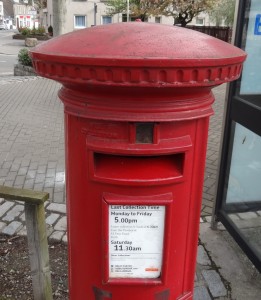 46p – that buys you a First Class stamp. However, the price will now rise to 60p and the price of a Second Class stamp will increase to 50p from 36p, as Ofcom lifts some price caps. These significant price rises have seen shortages of stamps emerging across the country. As people anticipate the price rise, individuals and businesses are buying up stamps while they remain relatively cheap.
The problem is that this has started to result in a stamp shortage, so much so that the Royal Mail has now begun rationing retailers’ supply of stamps, capping each retailers’ supply this month to 20% of its annual allocation. A Royal Mail spokesman said:
“We are more than happy for retailers to receive the normal commercial return they obtain on stamps and no more than that … That is why we have put in place a prudent allocation policy to safeguard Royal Mail’s revenues and ensure there are more than enough stamps for people to buy both now and in the future.”
With postage volumes falling, as individuals turn to other methods of communication, Royal Mail says that this price rise is essential to keep this universal service going. Revenues have been low and the Royal Mail has been loss-making for some time.
However, while the price rise may help the Royal Mail, many businesses may suffer in its place. One optician, who sends out approximately 5,000 reminders to patients each year intends to bulk-buy 10,000 stamps in the hopes of saving some £1,400 when prices of stamps rise. An IT worker bought 20 books of 12 first-class stamps and said ‘If I could afford it, I would buy a lot more’. Many are unhappy at the ‘shameless profiteering at the public’s expense’, but whatever your opinion about the price rise, it does make for an interesting case of demand and supply. The following articles consider this stamp shortage.
Man’s 10,000 stamp panic: stampede for stamps leaves a 1st class mess as Royal Mail introduces rationing ahead of 30% price rise Mail Online, Colin Fernandez and John Stevens (15/4/12)
Stamps rationed by Royal Mail in run up to price rise (including video) BBC News (13/4/12)
Stamp rationing could hit pensioners Telegraph, James Hall (14/3/12)
Stamp sales limited ahead of price hike Sky News (13/4/12)
How stamp collecting came unstuck Guardian, Hunter Davies (13/4/12)
Royal Mail limits supply of stamps ahead of price rise Telegraph, James Hall and Andrew Hough (12/4/12)
’Profiteering’ Royal Mail limits supply of stamps before price rise Guardian, David Batty (13/4/12)
Royal Mail’s stamp price rises come into force BBC News (30/4/12)
How businesses will be affected by Royal Mail’s changing prices BBC News, Catherine Burns (28/4/12)
Questions
- If people expect prices to rise, what will happen to the demand curve? Illustrate this idea on a demand and supply diagram?
- If suppliers anticipate a price rise, what would their best strategy be?
- On a demand and supply diagram, illustrate the shortage of stamps that has emerged. If left to the free market, what should happen to the price of stamps?
- Why could pensioners and those in rural areas be the most adversely affected by this shortage and price rise?
- Why could ‘children and new collectors’ be priced out of the market?
- Why will small businesses be affected by this price hike? How could their customers be affected?
 Australia was one of the few economies that seemed to be somewhat insulated from the 2008/09 recession and credit crunch. However, with the UK now back in recession and global economic conditions worsening in much of Europe, Australia has now joined the list of countries that are experiencing economic conditions that are ‘weaker than forecast’.