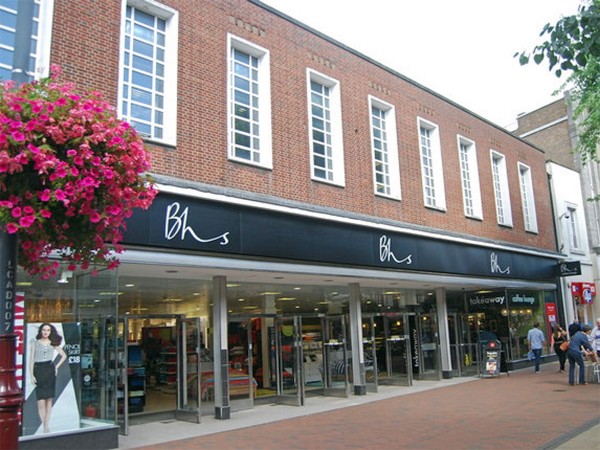
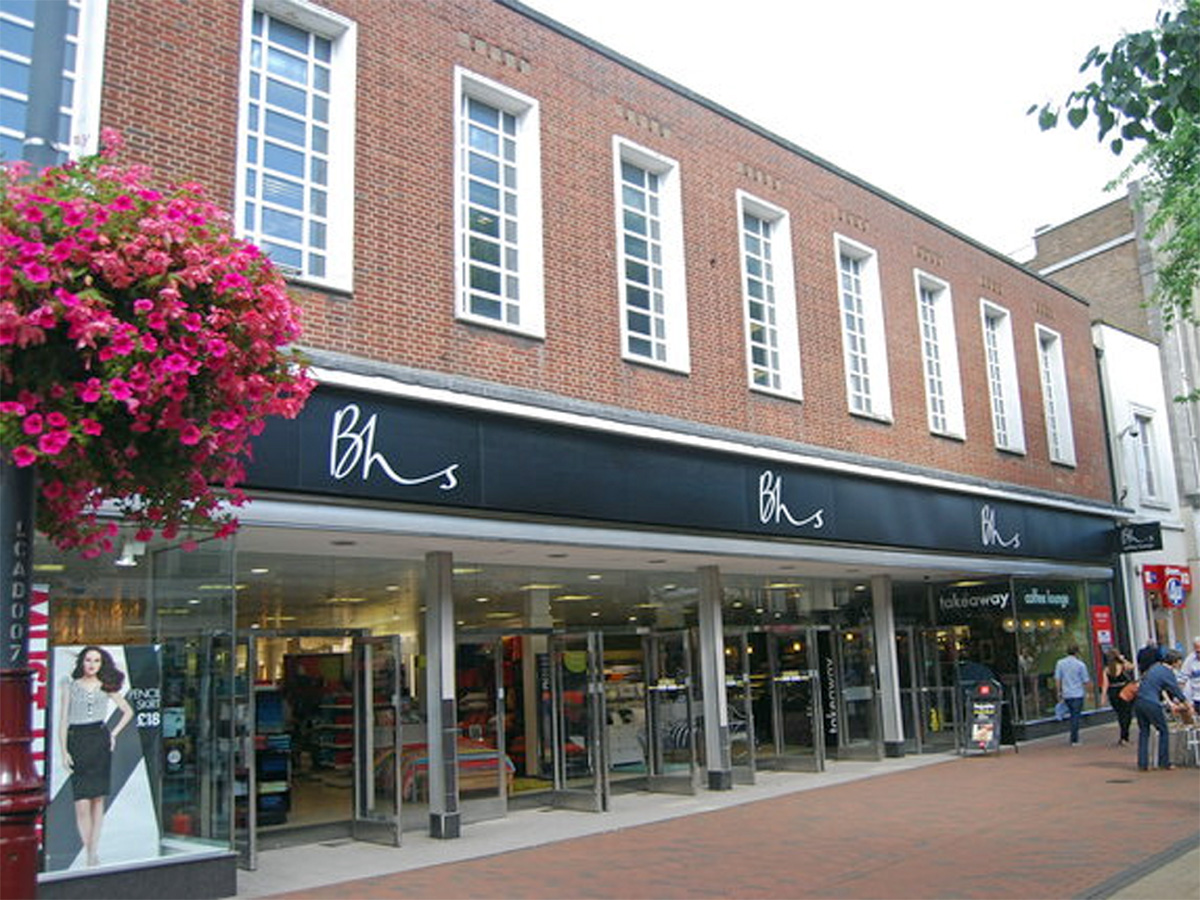
 According to the BBC’s Joe Lynam, “Britain has the most competitive and dynamic retail environment in the world, which attracts shoppers globally.” It is perhaps this fact which may save BHS, with new owners being attracted by such an opportunity. BHS is soon expected to file for administration, with debts of more than £1.3 billion and having failed to secure the loan needed to keep it afloat. If this company collapses, it will bring an end to the life of an 88 year old giant.
The British retail scene has certainly changed over the past decade, with names such as Woolworths and Comet disappearing – could BHS be the next casualty of the changing retail climate? In the world of retail, tastes change quickly and those stores who fail to change with the times are the ones that suffer. One of the factors behind the downfall of BHS is the ‘dated’ nature of its stores and fashions. As clothing outlets such as Zara, Oasis and Next have continued to change with the times, commentators suggest that BHS continues with a trading offer from the 1980s. With the online shopping trend, many household names adapted their strategy, but BHS failed to do so and the second chance that BHS asked the public for when Sir Philip Green, its former owner, sold BHS in 2015 hasn’t materialised.
With administrators ready to be brought in and thousands of jobs hanging in the balance, the administrators will be looking at methods to attract funding, new owners or so-called ‘cherry pickers’ who may be interested in buying up the more profitable stores. Some of their stores remain in prime locations and deliver a tidy profit and it is perhaps these gems, together with the tradition that British Home Stores brings that may yet see the company saved. The outcome for BHS will not only affect the jobs of its employees, but will affect the pensions of thousands of workers. The BHS pension fund currently has a deficit of £576 million and so the Pension Protection Fund will have to look closely at the situation before thinking about issues a contribution notice to those connected with the fund.
A deal was on the cards last week, with BHS owner Dominic Chappell in talks with Mike Ashley’s Sports Direct, but the high debts and pensions deficit appears to have deterred this deal. The failing fortunes of BHS have now come back to haunt former owner, Sir Philip Green, who in March 2015, sold the business for just £1. Sir Philip may return to save the day, but the options for this once giant of the British high street are rather limited. The following articles consider the fortunes of BHS.
BHS seeks Sports Direct lifeline as it heads for collapse The Guardian, Graham Ruddick (24/04/16)
BHS expected to file for administration on Monday BBC News (25/04/16)
Thousands of BHS workers face anxious wait amid administration fears The Telegraph (25/04/16)
BHS administration: ‘Imminent bankruptcy’ puts 11,000 jobs at risk Independent, Peter Yeung (25/04/16)
Up to 11,000 jobs face the axe as BHS is expected to announce collapse of chain after efforts to find rescuer failed Mail Online, Neil Craven (24/04/16)
BHS nears collapse putting 11,000 jobs at risk Sky News (25/04/16)
BHS set to file for administration after sales talks fail Financial Times, Murad Ahmed (25/04/16)
Questions
- Using a demand and supply diagram, can you explain some of the factors that have contributed to the difficult position that BHS finds itself in?
- Now, can you use a diagram showing revenues and profits and explain the current position of BHS?
- What type of market structure does BHS operate in? Can this be used to explain why it is in its current position?
- How has the company failed in adapting its business strategy to the changing times?
- Looking back at the history of BHS, can you apply the product life cycle to this store?
- If another company is considering purchasing BHS, or at least some of its stores, what key information will it need and what might make it likely to go ahead with such a purchase?
 In many cases, we simply leave the market to do what it does best – equate demand with supply and from this we get an equilibrium price and the optimal quantity. But, what happens if either the price or quantity is ‘incorrect’? What happens if the market fails to deliver an efficient outcome? In this case, we look to governments to intervene and ‘correct’ the market and such intervention can take place on the demand and/or supply-side. One area where it is generally felt that government intervention is needed is drugs and the trafficking of them across borders.
There are many ways in which governments have tried to tackle the problem of drug usage. The issue is that drugs are bad for individuals, for the community, society and the economy. Too much is produced and consumed and hence we have a classic case of market failure and this justifies government intervention.
But, how should governments intervene? With a substance such as drugs, we have an inelastic demand with resepect to price – any increase in price leads to only a small decrease in quantity. So any policy implemented by governments that attempts to change the market price will have limited effect in restricting demand. With globalisation, drugs can be moved more easily across borders and hence global co-operation is needed to restrict the flow. The article below considers the area of drugs and drug trafficking and looks at some of the policy options open to government.
Narconomics: The business of drug trafficking Houston Chronicle (16/3/16)
Questions
- Why does the market fail in the case of drug trafficking?
- Draw the demand curve you would expect for drugs and use this to explain why an increase in price will have limited effect on demand.
- Is there an argument for making drugs legal as a means of raising tax revenue?
- If better educational programmes are introduced about the perils of drug usage, how would this affect the market? Use a demand and supply diagram to help explain your answer.
- Why does globalisation make the solutions to drug trafficking more difficult to implement?
- Could drug usage and drug trafficking and hence the need to invest more money in tackling the problem actually boost an economy’s rate of growth? If so, does this mean that we should encourage drug usage?
 It doesn’t seem long ago that we were looking at the prospects of Brazil for hosting the Football World Cup. Now, we turn to the same economy, but this time for the Olympics. It is often the case that hosting big global sporting events can give a boost to the host nation, but is Brazil prepared for it? Did the World Cup bring the expected economic boosts? Some argue that the Olympics is just what Brazil needs, but others suggest it will only worsen the economic situation in the world’s seventh largest economy.
Brazil’s economic performance in the past year was not good. In fact, it was one of the worst performing nations of any major economy, with GDP falling by 3%. This is a very different country from the one that was awarded this biggest of sporting events. Despite these difficult times, Brazil’s government maintains that the country is ready and that the games will be ‘spectacular’.
Key to hosting a sporting event such as the Olympics is the infrastructure investment and as a key component of aggregate demand, this should be a stimulant for growth and job creation. However, with the economy still struggling, many are concerned that the infrastructure won’t be in place in time.
Other benefits from this should be the boost to growth driven by athletes and spectators coming from around the globe, buying tickets, memorabilia, accommodation, food and other items that tourists tend to buy. A multiplier effect should be seen and according to research has the potential to create significant benefits for the whole economy and not just the local regions where events take place. You can look at similar analysis in blogs written about Tokyo: 2020 Tokyo Olympics and London: The London Olympics legacy: a cost–benefit analysis and Does hosting the Olympics Games increase economic growth?
But, is this really likely to happen, especially given the somewhat lacklustre boost that the Brazil World Cup gave to the economy? The following articles consider this.
Rio 2016: Can Games bounce back from Brazil economic woes? BBC News, Bill Wilson (11/03/16)
Does hosting the Olympics actually pay off? It’s the economy, Binyamin Applebaum (5/08/14)
Rio Olympics no help to Brazil economy based on World Cup Bloomberg, Raymond Colitt (16/01/15)
The economic impact of Brazil’s 2014 World Cup and 2016 Olympics Saxo Group, Trading Floor, Sverrir Sverrisson (27/08/12)
Special Interview: Cost–benefit analysis of hosting the World Cup, Olympics Al Arabiya, Ricardo Guerra (3/7/14)
Questions
- How might you carry out a cost–benefit analysis to decide whether to host a big sporting event?
- Are there any externalities that might result from hosting the Olympics? How easy is it to estimate their monetary value? Should this be taken into account by a country when making a decision?
- Why might there be a boost to aggregate demand prior to the Olympics?
- Why might there be a multiplier effect when a nation hosts the Olympics or another sporting event?
- Might there be benefits to Brazil’s neighbours from its hosting the Olympics?
 Deflation is currently a concern in the UK and across Europe. However, relative to Japan, the deflation concern is small. In Japan, deflation has been problematic for more than two decades and this has had significant implications for the Japanese economy.
‘Abenomics’ has been in practice in Japan, as the Prime Minister, Shinzo Abe, has been trying to reflate the economy. Growth has been improving and the deflation concern appeared to be under control. However, GDP data now shows that the economy is once again declining and so with aggregate demand falling, this pushes down average prices across the economy and so the deflation risk re-emerges. This article from BBC News and another from The Guardian look at the economic policy known as ‘Abenomics’ and how the Japanese economy is faring.
Articles
Off target: Is it the end of ‘Abenomics’ in Japan? BBC News, Rupert Wingfield-Hayes (15/2/16)
Japan’s economy shrinks again as Abenomics is blown off course The Guardian, Justin McCurry (15/2/16)
Previous blogs
Japan’s deflation fears grow (update) (27/2/16)
Riding the Japanese roller coaster (15/2/16)
Japan’s interesting monetary stance as deflation fears grow (14/2/16)
Japan’s arrows missing their target (17/11/14)
Japan’s recovery (3/2/14)
Abenomics – one year on (16/12/13)
Japan’s three arrows (6/6/13)
Questions
- What are the key features of Japan’s ‘Abenomics’?
- Why is deflation such a concern? Surely falling prices are good for consumers and hence the economy.
- How has Japan been trying to reflate its economy and why has this failed?
- The yen is getting stronger, but how will this affect the Japanese economy? Use a demand and supply diagram to illustrate what has caused the value of the yen to fall and an aggregate demand and supply diagram to show the impact.
- Negative interest rates have been implemented in Japan. What does this mean for savers and borrowers and the economy?
- How do you think Japan’s stance on immigration and structural change is affecting its macroeconomy?
 The government plans to improve broadband access across the country and BT is a key company within this agenda. However, one of the problems with BT concerns its natural monopoly over the cable network and the fact that this restricts competition and hence might prevent the planned improvements.
Ofcom, the communications watchdog has now said that BT must open up its cable network, making it easier for other companies to access. This will allow companies such as Sky, Vodafone and TalkTalk to invest in the internet network in the UK, addressing their criticisms that BT has under-invested in Openreach and this is preventing universal access to decent and affordable broadband. There have been calls for Ofcom to require BT and Openreach to separate, but Ofcom’s report hasn’t required this, though has noted that it ‘remains an option’.
BT has been criticised as relying on old cables that are not sufficient to provide the superfast broadband that the government wants. The report may come as a relief to BT who had perhaps expected that Ofcom might require it to sell its Openreach operation, but it will also remain concerned about Ofcom’s constant monitoring in the years to come. BT commented:
“Openreach is already one of the most heavily regulated businesses in the world but we have volunteered to accept tighter regulation … We are happy to let other companies use our ducts and poles if they are genuinely keen to invest very large sums as we have done.”
 Its rivals will also be in two minds about the report, happy that some action will be taken, but wanting more, as Ofcom’s report suggests that “Openreach still has an incentive to make decisions in the interests of BT, rather than BT’s competitors”. A spokesperson for Vodafone said:
“BT still remains a monopoly provider with a regulated business running at a 28% profit margin …We urge Ofcom to ensure BT reinvests the £4bn in excess profits Openreach has generated over the last decade in bringing fibre to millions of premises across the country, and not just make half-promises to spend an unsubstantiated amount on more old copper cable.”
The impact of Ofcom’s report on the competitiveness of this market will be seen over the coming years and with a freer market, we might expect prices to come down and see improved broadband coverage across the UK. In order to achieve the government’s objective with regards to broadband coverage, a significant investment is needed in the network. With BT having to relinquish its monopoly power and the market becoming more competitive, this may be the first step towards universal access to superfast broadband. The following articles consider this report and its implications.
Ofcom opens a road to faster broadband The Guardian, Harriet Meyer and Rob Davies (28/2/16)
Ofcom: BT must open up its Openreach network Sky News (25/2/16)
How Ofcom’s review of BT Openreach could improve your internet service Independent, Doug Bolton (25/2/16)
Ofcom’s digital review boosts faltering broadband network Financial Times, Daniel Thomas (25/2/16)
The Observer view on broadband speeds in Britain The Observer, Editorial (28/2/16)
Ofcom tells BT to open up cable network to rivals’ BBC News (25/2/16)
Ofcom should go further and break up BT Financial Times, John Gapper (25/2/16)
BT escapes forced Openreach spin-off but Ofcom tightens regulations International Business Times, Bauke Schram (25/2/16)
Questions
- Why does BT have a monopoly and how might this affect the price, output and profits in this market?
- Ofcom’s report suggests that the market must be opened up and this would increase competitiveness. How is this expected to work?
- What are the benefits and costs of using regulation in a case such as this, as opposed to some other form of intervention?
- How might a more competitive market increase investment in this market?
- If the market does become more competitive, what be the likely consequences for consumers and firms?
 According to the BBC’s Joe Lynam, “Britain has the most competitive and dynamic retail environment in the world, which attracts shoppers globally.” It is perhaps this fact which may save BHS, with new owners being attracted by such an opportunity. BHS is soon expected to file for administration, with debts of more than £1.3 billion and having failed to secure the loan needed to keep it afloat. If this company collapses, it will bring an end to the life of an 88 year old giant.