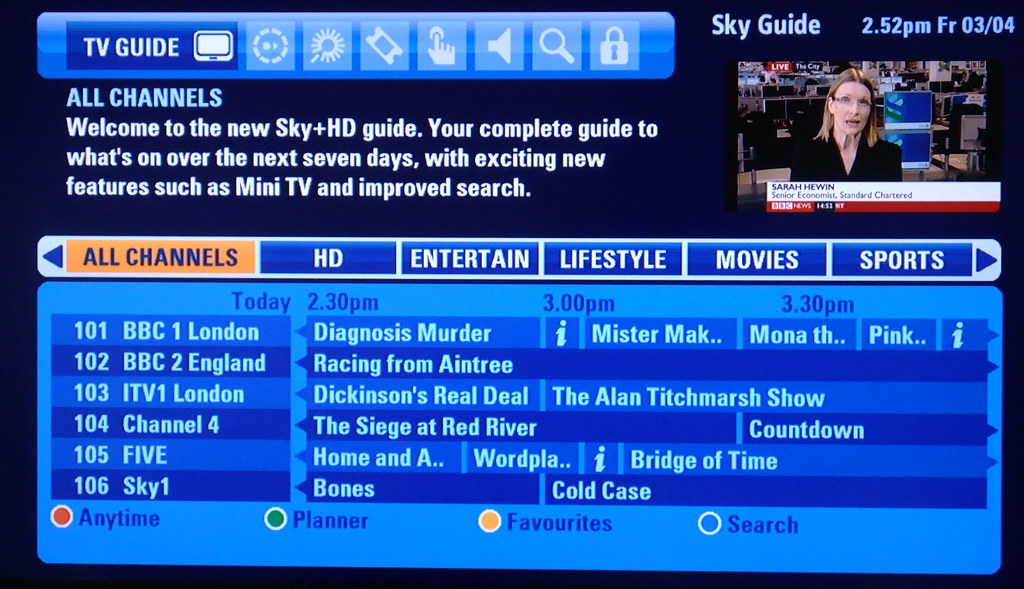
 As an avid sport’s fan, Sky Sports and Eurosport are must haves for me! In the days leading up to the end of January, it was a rather tense time in my house with the prospect of Eurosport being removed from anyone who was a Sky TV subscriber. Thankfully the threat has now gone and tranquility returns, but what was going on behind the scenes?
Whether you have Sky TV, BT, Virgin or any other, we generally take it for granted that we can pick and choose the channels we want, pay our subscription to our provider and happily watch our favourite shows. However, behind the scenes there is a web of deals. While Sky own many channels, such as Sky Sports; BT own others and there are a range of other companies that own the rest. Some companies pay Sky for their channels to be shown, while Sky pays other companies for access to their channels.
One such company is Discovery, which owns a range of channels including TLC, Eurosport, DMAX and Animal planet. Discovery then sells these channels to providers, such as Sky and Virgin, who pay a price for access. The problem was that Sky and Discovery had failed to reach an agreement for these channels and as the deadline of 31st January 2017 loomed, it became increasingly possible that Discovery would simply remove its channels from Sky. This would mean that Sky customers would no longer have access to these channels, while customers with other providers would continue to watch them, as companies such as Virgin still had an agreement in place.
 The issue was money. Hours before the deadline, a deal was finally reached such that Discovery will now keep its programmes on Sky for ‘years to come’. Discovery has indicated the final deal was better than had originally been proposed, while Sky indicate that the deal accepted by Discovery was the same as had previously been offered! Although no details of the financial agreement have been released, it seems likely that either Sky increased the price they were willing to pay or Discovery lowered the price it was asking for. Both companies stood to lose if the dispute was not settled, but it’s interesting to consider which company was at more risk. Following the announcement that a deal had been struck, Discovery shares rose by 2.5 per cent, while Sky’s share remained unchanged.
While Sky said that viewing figures on Discovery’s channels had been falling and that it had been over-paying for years, it seems likely that if a deal had not been reached, millions of Sky customers may have considered switching to other providers, who were still able to show Discovery channels. Although Sky has been looking to cut its costs and one way is to cut the price it pays for channels, failure to reach an agreement may have cost it a significant sum in lost revenue, as channels such as Eurosport are hugely popular.
Discovery claimed that the price Sky was paying them was not fair and that it was paying them less for its channels that it did 10 years ago. Susanna Dinnage, Discovery’s Managing Director in the UK said:
“We believe Sky is using what we consider to be its dominant market position to further its own commercial interest over those of viewers and independent broadcasters. The vitality of independent broadcasters like Discovery and plurality in TV is under threat.”
 Sky claimed that Discovery was demanding close to £1bn for its programmes and that given that these channels were losing viewers, this price was unrealistic. A spokesman said:
“Despite our best efforts to reach a sensible agreement, we, like many other platforms and broadcasters across Europe, have found the price expectations for the Discovery portfolio to be completely unrealistic. Discovery’s portfolio of channels includes many which are linear-only where viewing is falling …
Sky has a strong track record of understanding the value of the content we acquire on behalf of our customers, and as a result we’ve taken the decision not to renew this contract on the terms offered …
We have been overpaying Discovery for years and are not going to anymore. We will now move to redeploy the same amount of money into content we know our customers value.”
Here we have a classic case of two firms in negotiation; each with a lot to lose, but both wanting the best outcome. There are hundreds of channels with millions of programmes and hence it is a competitive market. So why was it that Discovery could pose such a threat to the huge broadcaster? The following articles consider the dispute and the eleventh hour agreement.
Discovery strikes deal to keep channels on Sky BBC News (1/2/17)
Discovery channel strikes last-minute deal with Sky to stay on TV, saving Animal Planet and Eurosport Independent, Aatif Sulleyman (1/2/17)
Eurosport stays o Sky after late deal is struck with hours to spare between broadcasting giant and Discovery Mail Online, Kieran Gill (1/2/17)
Discovery averts UK blackout with Sky in last-minute deal Bloomberg, Rebecca Penty, Joe Mayes and Gerry Smith (1/2/17)
Is Sky losing Discovery? Eurosport, Animal Planet and other fan favourite set to stay International Business Times, Owen Hughes (1/2/17)
Discovery goes to war with Sky over channel fees with blackout threat The Telegraph, Christopher Williams (25/1/17)
Questions
- Can you use game theory to outline the ‘game’ that Sky and Discovery were playing?
- Is the ‘threat’ of stopping access to channels credible?
- Although we don’t know the final financial settlement, why would Sky have had a reason to increase the price it paid to Discovery?
- Why would it be in Discovery’s interests to accept the deal that Sky offered?
- Susanna Dinnage suggested that Sky was using its dominant market position. What does this mean and how does this suggest that Sky might be able to behave?
- What type of market structure is the pay-TV industry? Think about it in terms of broadcasters, channels and programmes as you might get very different answers!
 The UK benefits system is complex and this is just one reason why some people fall through the safety net. There are criticisms that it doesn’t reward work and doesn’t provide sufficient incentives to move off benefits and into work. One rather radical policy that has been discussed in numerous countries is the idea of a ‘Basic Income’.
The Basic Income or Citizen’s Income is a policy where individuals receive a regular payment from the government, essentially for doing nothing. The income is paid and aims to cover basic living costs and on top of this, individuals can then work, earn income and pay tax on it. Experiments of this policy are already in place and over the next few years, we may see many more being trialled and much discussion of the possibility of implementing this in the UK. We tend to be fairly risk averse when it comes to radical policies and so while we may see discussion of it in the UK, I imagine we’ll want to see the relative success of the policy in other countries first!
There are many variations of the scheme and lots of questions that need addressing. Will it encourage people to work more or less? Might it reduce the stigma of claiming benefits, if this is a basic income that everyone receives? Does it simplify the system and hence provide more people with a basic income thus targeting poverty?
Some proposals have this payment as a universal one – non means tested and not conditional on anything. 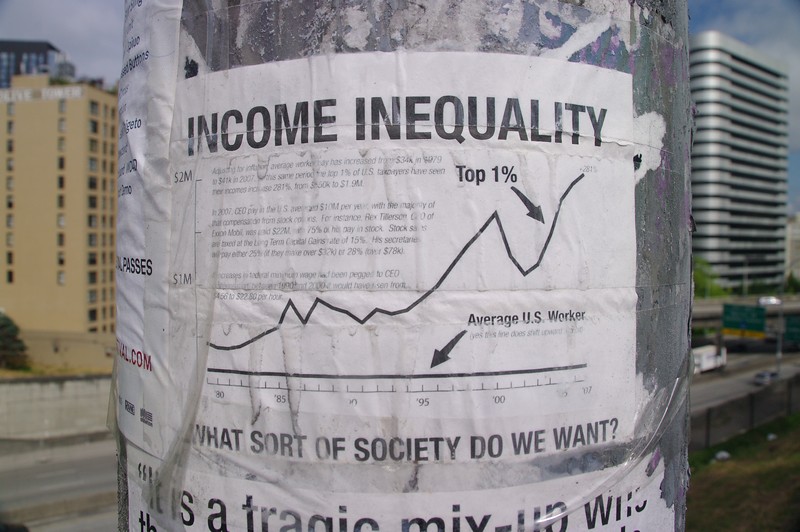 Other proposals, including one in Finland, sees just the unemployed receive the benefit and appears to be a social experiment to see if such a policy discourages the unemployed from taking jobs. Traditionally individuals receive a benefit if they are out of work, but this benefit can be cut (in some cases quite substantially) if they begin to work. This creates a disincentive to supply labour. However, under the basic income scheme, those who moved into work would continue to receive the basic income payment and hence the disincentive effect is removed. The policy thus creates a basic level of economic security. As Howard Reed and Stewart Lansley argue, it would offer:
“…financial independence and freedom of choice for individuals between work and leisure, education and caring, while recognising the huge value of unpaid work”.
There isn’t universal support for this type of scheme and many remain very cautious about such a radical policy and how the incentives will work. Key questions focus around the marginal rate of income tax that might be needed to finance such a policy. Furthermore, there is discussion about the equity of the policy if it is universal and hence non means-tested.
In Switzerland, the policy was put to a public referendum and it was rejected, with 75% of voters voting against such a policy. However, with changes in the structure of economies and, in many countries, technological change increasingly leading to automation, some argue that such a system will help to protect people. Lord Skidelsky, Professor of Political Economy at Warwick University said:
“Credible estimates suggest it will be technically possible to automate between a quarter and a third of all current jobs in the western world within 20 years … It [Basic Income] would ensure the benefits of automation were shared by the many, not just the few.”
Basic Income or Citizen’s Income is certainly something we are likely to hear a lot about during 2017. Whether or not the time has come for implementation is another matter, but it’s a good idea now to look into both sides and the relative success of the upcoming trials around the world.
8 basic income experiments to watch out for in 2017 Business Insider, Chris Weller (24/1/17)
What is basic income? Basic Income Earth Network (January 2017)
Finland trials basic income for unemployed The Guardian, Jon Henley (3/1/17)
Howard Reed and Stewart Lansley, Universal Basic Income: An idea whose time has come? Citizen’s Income Trust (14/6/16)
Is the world ready for a guaranteed basic income? Freakonomics, Stephen Dubner (13/4/16)
France’s Benoit Hamon rouses Socialists with basic income plan BBC News, Lucy Williamson (24/1/17)
Universal basic income trials being considered in Scotland The Guardian, Libby Brooks (1/1/17)
Questions
- What is basic income?
- What are three advantages of this policy? If you can, try to use a diagram to explain why this is an advantage.
- What are three disadvantages of moving towards this type of policy?
- Why does the provision of benefits affect an individual’s labour supply decision?
- Do you think that income tax would have to rise in order to finance this policy? Do you think high income earners would be prepared to pay a higher rate of tax in order to receive the basic income?
- If the trials showed that the policy did create an incentive to work in countries like Finland, do you think the results would also occur in the UK?
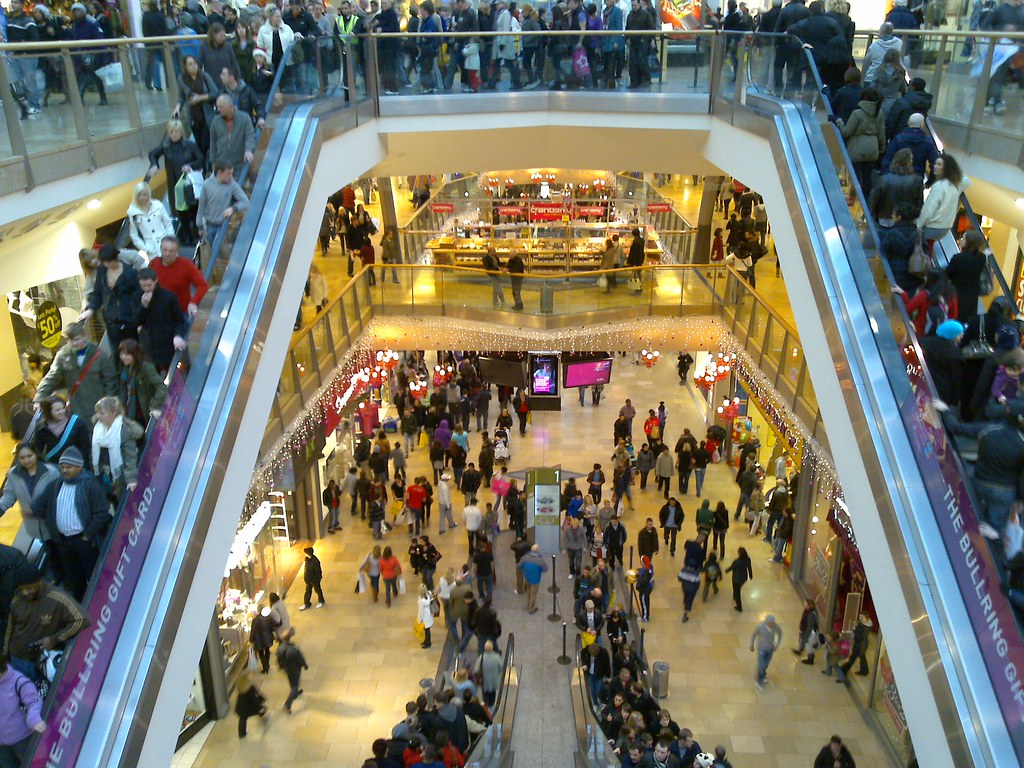 We all know that our spending changes during the Christmas period: namely we spend a lot more than during the rest of the year. This applies across the board – we buy more clothes, food and drink, even though each day, we can generally only wear, eat and drink the same amount as usual! This has some interesting points from a behavioural economics stance, but here I’m going to think about the impact of this on some key retailers.
Marks & Spencer have previously made headlines for the wrong reasons: poor sales on clothes and the need for serious restructuring of its stores, target audience and marketing in order for this long-standing retailer to remain current and competitive. Although sales were expected to rise in the Christmas period, they did significantly better than expected, with sales growth of 2.3%, above the expected 0.5%. More encouragingly, this growth was not just in food, but in clothing and homeware as well.
One of the key reasons given for this above-expected improvement in sales was the conveniently timed Christmas, falling on a Sunday and hence giving extra shopping days. M&S have said that this certainly helped with their Christmas trading. Although this was good for Q4 trading, the timing will not play ball for Easter and they are expecting a negative effective during that trading period. Some analysts have said that despite the growth being boosted by the timing of Christmas, there were still signs of a change in fortunes. Bryan Roberts from TCC Global said:

“It might be the sign of some green shoots in that part of the business.”
This is consistent with the Chief Executive, Steve Rowe’s comments that despite the timing of Christmas adding around 1.5% to clothing and home sales growth, the recovery was also due to “better ranges, better availability and better prices”.
It appears as though many other retailers have experienced positive growth in Christmas sales, with the John Lewis Partnership seeing like-for-like sales growth of 2.7%, with Waitrose at a 2.8% rise.
The other interesting area is supermarkets. Waitrose and M&S are certainly competitors in the food industry, but at the higher end. If we consider the mid-range supermarkets (Asda, Morrisons, Sainsbury’s and Tesco), they have also performed, as a whole, fairly well. The low-cost Aldi and Lidl have been causing havoc for these supermarket chains, but the Christmas period seemed to prove fruitful for them.
Tesco saw UK like-for-like sales up by 1.8%, which showed significant progress in light of previously difficult trading periods with the emergence of the low-cost chains. Q$ was its better quarter of sales growth for over five years. One of the key drivers of this growth is fresh food sales and its Chief Executive, Dave Lewis said “we are very encouraged by the sustained strong progress that we are making across the group.” However, despite these positive numbers, Tesco only really met market expectation, rather than surpassing them as Morrison, Sainsbury’s and Marks & Spencer did.
 Perhaps the stand-out performance came from Morrisons, with its best Christmas performance for seven years. Another casualty of the low-cost competitors, it has been making a recovery and Q4 of 2016 demonstrated this beyond doubt. Like-for-like sales for the nine weeks to the start of 2017 were up by 2.9%, with growth in both food and drink and clothing.
Morrisons has been on a long and painful journey, with significant reorganisation of its stores and management. While this has created problems, it does appear to be working.
We also saw a general move up to the more premium own-brands and this again benefited all supermarkets. Morrisons Chief Executive, David Potts said:
“We are delighted to have found our mojo … Every year does bring its challenges, but so far we haven’t seen any change in consumer sentiment. Customers splashed out over Christmas and wanted to trade up … We are becoming more relevant to more people as we turn the company around.”
So it seems to be success all round for traders over the Christmas period and that, in many cases, this has been a reversal of fortunes. The question now is whether or not this will continue with the uncertainty over Brexit and the economy.
Articles
M&S beats Christmas sales forecast in clothing and homeware BBC News (12/1/17)
Marks & Spencer reports long-awaited rise in clothing sales The Telegraph, Ashley Armstrong (12/1/17)
Marks and Spencer reveals signs of growth in clothing business Financial Times, Mark Vandevelde (12/1/17)
Tesco’s festive sales lifted by fresh food The Telegraph, Ashley Armstrong (12/01/17)
Tesco caps year of recovery with solid Christmas Reuters, James Davey and Kate Holton (12/1/17)
Tesco, Marks & Spencer, Debenhams, John Lewis and co cheer strong Christmas trading Independent, Josie Cox and Zlata Rodionova (12/1/17)
Morrisons sees best Christmas performance for seven years BBC News (10/12/17)
Morrisons enjoys some ‘remarkable’ Christmas cheer’ The Guardian, Sarah butler and Angela Monaghan (10/1/17)
Record Christmas as Sainsbury’s ‘shows logic of Argos takeover’ The Guardian, Sarah Butler and Angela Monaghan (11/1/17)
Questions
- Why have the big four in the supermarket industry been under pressure over the past 2 years in terms of their sales, profits and market share?
- How have the changes that have been made by M&S’ Chief Executive helped to boost sales once more?
- Share prices for supermarkets have risen. Illustrate why this is on a demand and supply diagram. Why has Tesco, despite its performance, seen a fall in its share price?
- What are the key factors behind Morrison’s success?
- What type of market structure is the supermarket industry? Does this help to explain why the big four have faced so many challenges in recent times?
- If there has been a general increase in sales across all stores over the Christmas trading period, that goes beyond expectations, can we infer anything about customer tastes and their expectations about the future?
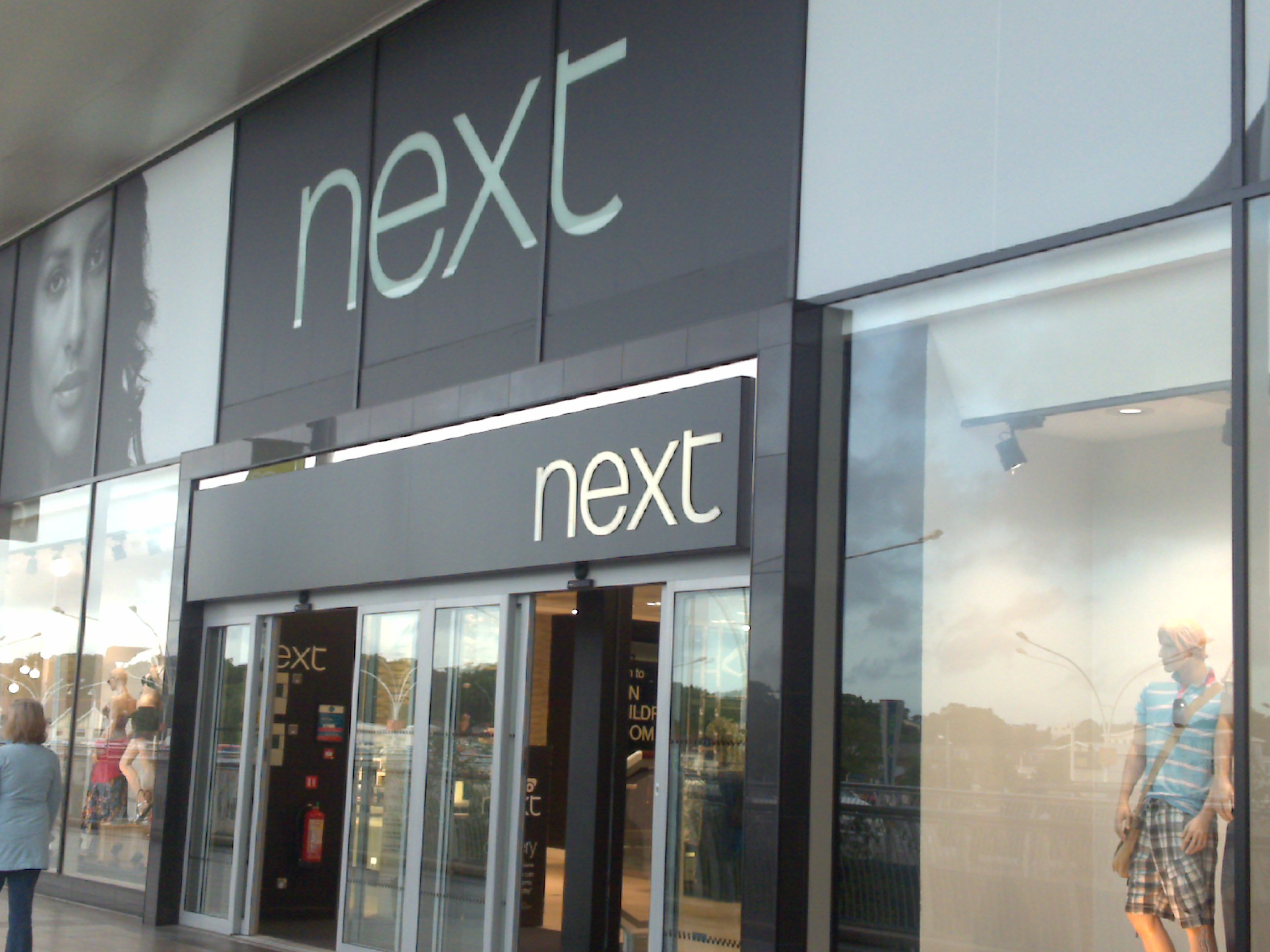 The economic climate remains uncertain and, as we enter 2017, we look towards a new President in the USA, challenging negotiations in the EU and continuing troubles for High Street stores. One such example is Next, a High Street retailer that has recently seen a significant fall in share price.
Prices of clothing and footwear increased in December for the first time in two years, according to the British Retail Consortium, and Next is just one company that will suffer from these pressures. This retail chain is well established, with over 500 stores in the UK and Eire. It has embraced the internet, launching its online shopping in 1999 and it trades with customers in over 70 countries. However, despite all of the positive actions, Next has seen its share price fall by nearly 12% and is forecasting profits in 2017 to be hit, with a lack of growth in earnings reducing consumer spending and thus hitting sales.
The sales trends for Next are reminiscent of many other stores, with in-store sales falling and online sales rising. In the days leading up to Christmas, in-store sales fell by 3.5%, while online sales increased by over 5%. However, this is not the only trend that this latest data suggests. It also indicates that consumer spending on clothing and footwear is falling, with consumers instead spending more money on technology and other forms of entertainment. Kirsty McGregor from Drapers magazine said:
“I think what we’re seeing there is an underlying move away from spending so much money on clothing and footwear. People seem to be spending more money on going out and on technology, things like that.”
Furthermore, with price inflation expected to rise in 2017, and possibly above wage inflation, spending power is likely to be hit and it is spending on those more luxury items that will be cut. With Next’s share price falling, the retail sector overall was also hit, with other companies seeing their share prices fall as well, although some, such as B&M, bucked the trend. However, the problems facing Next are similar to those facing other stores.
But for Next there is more bad news. It appears that the retail chain has simply been underperforming for some time. We have seen other stores facing similar issues, such as BHS and Marks & Spencer. Neil Wilson from ETX Capital said:
“The simple problem is that Next is underperforming the market … UK retail sales have held up in the months following the Brexit vote but Next has suffered. It’s been suffering for a while and needs a turnaround plan … The brand is struggling for relevancy, and risks going the way of Marks & Spencer on the clothing front, appealing to an ever-narrower customer base.”
Brand identity and targeting customers are becoming ever more important in a highly competitive High Street that is facing growing competition from online traders. Next is not the first company to suffer from this and will certainly not be the last as we enter what many see as one of the most economically uncertain years since the financial crisis.
Next’s gloomy 2017 forecast drags down fashion retail shares The Guardian, Sarah Butler and Julia Kollewe (4/1/17)
Next shares plummet after ‘difficult’ Christmas trading The Telegraph, Sam Dean (4/1/17)
Next warns 2017 profits could fall up to 14% as costs grow Sky News, James Sillars (4/1/17)
Next warns on outlook as sales fall BBC News (4/1/17)
Next chills clothing sector with cut to profit forecast Reuters, James Davey (4/1/17)
Next shares drop after warning of difficult winter Financial Times, Mark Vandevelde (22/10/15)
Questions
- With Next’s warning of a difficult winter, its share price fell. Using a diagram, explain why this happened.
- Why have shares in other retail companies also been affected following Next’s report on its profit forecast for 2017?
- Which factors have adversely affected Next’s performance over the past year? Are they the same as the factors that have affected Marks & Spencer?
- Next has seen a fall in profits. What is likely to have caused this?
- How competitive is the UK High Street? What type of market structure would you say that it fits into?
- With rising inflation expected, what will this mean for consumer spending? How might this affect economic growth?
- One of the factors affecting Next is higher import prices. Why have import prices increased and what will this mean for consumer spending and sales?
 Can behavioural economics be applied to the case of Sweden? The Swedish government is trying this out by changing government policy in a way that may encourage its residents to change their behaviour.
People in many countries in the world live in what is often called a ‘throwaway society’. If something breaks, it’s often easier and cheaper simply to get rid of it and buy a new one. But with changes in government policy, including VAT cuts on repairs to white goods, the objective is to encourage consumers to repair their goods, rather than buying new ones. This is also contributing towards the wider objective of sustainable consumption, which is being promoted by the Swedish government.
Per Bolund, who is one of Sweden’s six Green Ministers, spoke about this policy commenting that:
“Consumers are quite active in changing both what they buy and how they buy in Sweden … We believe that getting lower costs for labour is a big part in making it more rational to repair rather than just to buy cheap and throw away …If we don’t change the economic incentives the change will never come.”
Whether or not this policy works will take some time to see, but it’s certainly an interesting test of how changing incentives affect consumer behaviour. You can read about other examples of nudging in the following blog A nudge in the right direction?.
Articles
Waste not want not: Sweden to give tax breaks for repairs The Guardian, Richard Orange (19/9/16)
Can Sweden tackle the throwaway society? BBC News (20/9/16)
Trendy now, trash tomorrow Huffington Post, Kirsten Brodde (29/9/16)
Hong Kong needs a strategy quickly for dealing with waste South China Morning Post (27/9/16)
Questions
- If VAT on repairs falls, how will this affect consumer behaviour?
- Do you think there would be an income and a substitution effect from this change in government policy? What would they be?
- How is the Swedish government using incentives to change consumer behaviour?
- If it is cheaper to buy a new white good, then is it rational to buy a new one rather than repair an existing one?
- How effective do you think this policy would be in encouraging consumers to change their behaviour?
- Find some other examples of how people might be nudged to behave in ways that are in their own interest or that of society.