 When people take out loans they typically do so to spend and with the UK economy in its current state, many would argue that this is a good thing. The ‘payday loan’ industry took advantage of the weak economy and the squeezed households in the UK and for the past few years, we have seen constant adverts that will appeal to many households. But, is the industry as competitive as the adverts would have us believe?
An inquiry into this industry has been on-going for some time, and it has now been referred to the Competition Commission, due to ‘deep-rooted problems with the way competition works’. For some, a payday loan is a short term form of finance, but for others it has become a way of living that has led to a debt spiral. Frank McKillop, policy manager at Abcul said:
There is a clear demand for instant credit and across the country we are increasingly seeing members who have debts with multiple payday lenders and a record of rolling over debts, or going to one payday lender to clear the debt to another.
One problem identified by the OFT is that customers have found it difficult to compare costs and this has led, in some cases, to customers paying back significantly more than they originally thought. Customers being unable to repay loans will ring warning bells for many people, with no-one wanting a return to the height of the credit crunch.
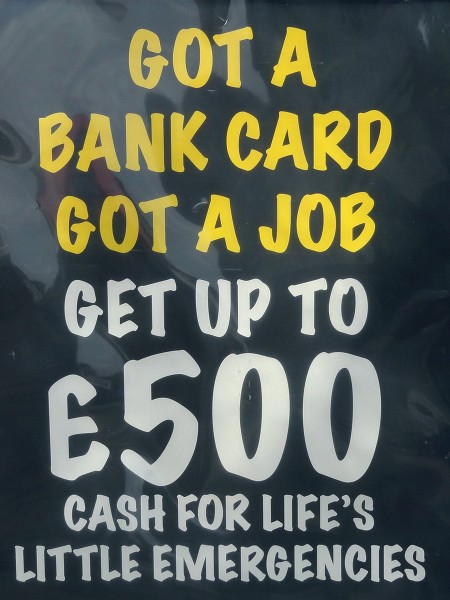 The OFT has criticized payday loan companies for competing not on costs, but on the speed of approval and using certain unapproved tactics as part of their advertising. The selling point of such companies is that you can have the money in a very short time period. However, the criticism is that this leads to loans being given to those who are unable to afford them. Key credit checks are not being done and with late night texts being sent to often financially vulnerable people, it is no wonder that complaints have been received. In a statement, the OFT said:
The competitive pressure to approve loans quickly may give firms an incentive to skimp on the affordability assessment which is designed to prevent irresponsible lending and protect consumers.
[the business models of companies were] predicated on making loans which are unaffordable, leading to borrowers paying far more than expected through rollovers, additional interest and other charges.
While payday loans are legal and there are many companies offering them, it is what they are competing over, which seems to be in question. The industry itself has begun to change its practices, providing more information to customers, only allowing loans to be rolled over three times and the potential to freeze repayments if the customer gets into financial difficulty. If more stringent checks are completed and hence timing does not become the only grounds for competition, then the problems above may become less significant. With the ongoing OFT inquiry into the practices of the payday loan industry and the continuing demand for such financing, it is likely that we will see much more of both the good and the bad that it has to offer. The following articles consider the investigation.
Webcasts
 Balls warns against payday loans ‘blank cheque’ BBC News (27/6/13)
Payday lender investigation could be delayed by bureaucracy Telegraph, Steve Hawkes (27/6/13)
Payday lenders to face ‘tougher restrictions’ on advertising BBC News, Simon Gompertz (1/7/13)
Payday lending rates BBC News, Julio Martino and Stella Creasy (2/7/13)
Articles
Regulator to investigate payday loan industry Financial Times, Elaine Moore and Robert Cookson (27/6/13)
Q&A: Payday loans BBC News (31/5/13)
Payday loans: reining in an industry that is a law unto itself Guardian (27/6/13)
Payday loans industry to face competition inquiry BBC News (27/6/13)
Payday loans firms face competition inquiry Sky News (27/6/13)
Payday loans market faces competition inquiry Guardian, Hilary Osborne (27/6/13)
OFT refers payday loans to Competition Commission Scotsman, Jane Bradley (27/6/13)
Five reasons why we all need to worry about payday lenders Telegraph, Emma Simon (27/6/13)
OFT documents
Payday lending compliance review Office of Fair Trading (27/6/13)
Questions
- Into which market structure would you place the payday loans industry? Make sure you justify your answer.
- What is the role of the (a) the OFT and (b) the Competition Commission? Do these authorities overlap?
- What part does advertising play in this industry?
- To what extent is the payday loan industry a possible cause of another credit crunch?
- Why has the OFT referred this industry to the Competition Commission?
- To what extent are payday loans an essential part of an economy?
 Over the past few years, the term ‘bail-out’ has been a common phrase. But, what about the term ‘bail-in’? The latest bank to face financial ruin is the Co-operative Bank, but instead of turning to the tax-payer for a rescue, £1.5 billion will come from bond holders being offered shares in the bank. This will mean that the bank will become listed on the stock market.
Back in 2009, the Co-operative Bank bought Britannia Building Society and it seems that this was the start of its downfall. It took over many bad mortgage loans and loans to companies, and these played a large part in its current financial difficulties.
In order to rescue the bank and raise the capital needed to absorb current and future losses, without turning to the tax-payer, bond-holders of £1.3 billion of loans to the bank will be asked to swap them for shares and bonds, thus leading to significant losses for them. These bond-holders include 7000 private investors.
Since the financial crisis five years ago, the conventional banking model has seen much criticism and many suggested that the mutual structure of the Co-operative provided a better model, creating trust, due to its many stakeholders, who are not as focused on profitability and returns as those shareholders of a listed bank. However, the problems of the Co-operative seem to have put paid to that idea. The bail-in will mean that the bank is now listed on the stock market and thus will have shareholders expecting returns and profitability. This will undoubtedly change the focus of the bank. Euan Sutherland, the new Chief Executive said:
We are very clear that the bank will remain true to responsible and community-based banking and retain its ethical investment stance … Clearly there are lessons to learn and clearly there will be a time to look back and do that but, to be honest, in the last six weeks, where I have been involved with the Co-operative group, we have focused on driving a very solid future for this bank.
The good news is that the savings of those in the Co-operative are safe and taxpayers will not have to fork out any more money.
Yet, the co-operative structure of the bank has long been praised by customers and government alike. But is it perhaps this structure, which has led to its collapse? Furthermore, will the change in structure that will see it listed on the stock market, lead to a change in its approach to banking? The following articles consider the latest bank to run into difficulties.
Webcast
Co-op Bank unveils rescue plan to tackle the £1.5bn hole BBC News (17/6/13)
Articles
Co-op Bank travails show weakness of mutual model Financial Times, Sarah Gordon (21/6/13)
Co-operative Bank to list on stock market in rescue deal The Guardian, Jill Treanor (17/6/13)
Troubled Co-operative Bank unveils rescue plan to plug £1.5bn hole in balance sheet Independent, Nick Goodway (17/6/13)
Co-op Bank announces plan to plug £1.5bn hole Which? (17/6/13)
The Co-operative Bank and the challenge of finding co-op capital The Guardian, Andrew Bibby (13/6/13)
Co-op Bank seeks to fill £1.5bn capital hole Sky News (17/6/13)
Does Co-op Group deserve to keep control of Co-op Bank? BBC News, Robert Peston (9/7/13)
Questions
- Why did the Co-operative Bank move into financial trouble?
- What are the key characteristics of a Mutual? Are they disadvantages or advantages?
- What is a ‘bail-in’? Who will gain and who will lose?
- The Co-operative Bank will now be listed on the stock market. What does this mean?
- What are the advantages and disadvantages of floating a company on the stock market?
- Why are all banks required to hold capital to absorb losses?
 How important are emotions when you go shopping? Many people go shopping when they ‘need’ to buy something, whether it be a new outfit, food/drink, a new DVD release, a gift, etc. Others, of course, simply go window shopping, often with no intention of buying. However, everyone at some point has made a so-called ‘impulse’ purchase.
There is only one article below, which is from the BBC and draws on data released from the National Employment Savings Trust’s survey. This report suggests that British people spend over £1 billion every year on impulse buys – purchases that are not needed, were not intended and are often regretted once the ‘high’ has worn off. Often, it is the way in which a product is advertised or positioned that leads to a spontaneous purchase – seeing chocolate bars/sweets at the tills; a product offered at a huge discount advertised in the window of a shop; 2 for 1 purchases; points for loyalty etc. All of these and more are simple techniques used by retailers to encourage the impulse buy. As consumer psychologist, Dr. James Intriligator says:
Retailers have clever ways of manipulating customers to spend more but if you stick to your plans you can avoid being affected by their tactics.

In other cases, it’s simply the frame of mind of the consumer that can lead to such purchases, such as being hungry when you’re food shopping or having an event to attend the next day and deciding to go window shopping, despite already having something to wear! Dr. Intriligator continues, saying:
Your ability to resist and make rational choices is diminished when your glucose levels are down … When you get irrational, you fall back on trusted brands, which often leads you to spend more money … Later in the shop, you’re more tired and less likely to resist [impulse buys]
But are such purchases irrational? One of the key assumptions made by economists (at least in traditional economics) is that consumers are rational. This implies that consumers weigh up marginal costs and benefits when making a decision, such as deciding whether or not to purchase a product. But, do impulse buys move away from this rational consumer approach? Is buying something because it makes you happy in the short term a rational decision? Behavioural economics is a relatively new ‘branch’ of economics that takes a closer look at the decisions of consumers and what’s behind their behaviour. The following article from the BBC considers the impulse buy and leaves you to consider the question of irrational consumers.
Article
How to stop buying on impulse BBC Consumer (30/5/13)
Questions
- If the marginal benefit of purchasing a television outweighs the marginal cost, what is the rational response?
- Using the concept of marginal cost and benefit, illustrate them on a diagram and explain how equilibrium should be reached.
- What is behavioural economics?
- What are the key factors that can be used to explain impulse buys?
- How can framing help to explain irrational purchases?
- If a product is advertised at a significant discount, what figure for elasticity is it likely to have to encourage further purchases in-store?
- Is bulk-buying always a bad thing?
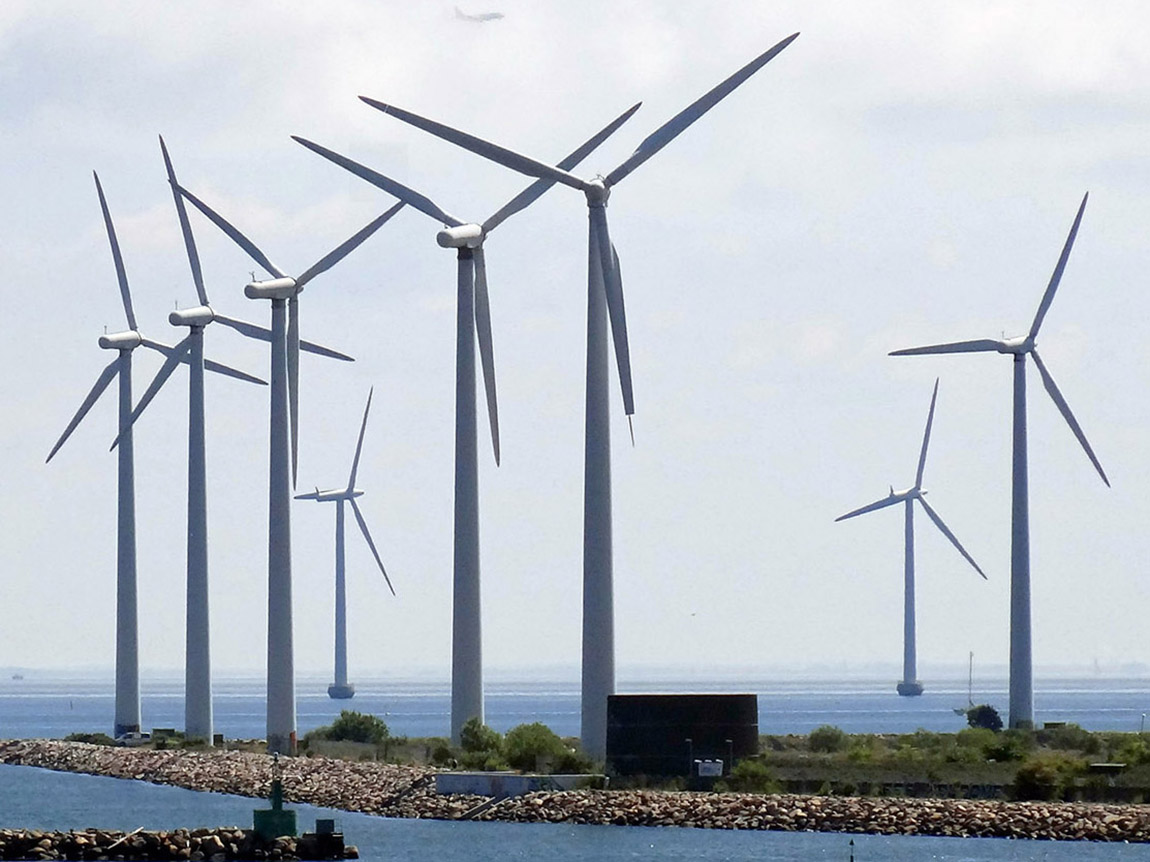 The Clean Energy Bill has been on the agenda for some time and not just in the UK. With climate change an ever growing global concern, investment in other cleaner energy sources has been essential. However, when it comes to investment in wind farms, developers have faced significant opposition. The balancing act for the government appears to be generating sufficient investment in wind farms, while minimising the negative externalities.
The phrase often thrown around with regards to wind farms, seems to be ‘not in my backyard’. That is, people recognise the need for them, but don’t want them to be built in the local areas. The reason is to do with the negative externalities. Not only are the wind farms several metres high and wide, creating a blight on the landscape, but they also create a noise, both of which impose a third party effect on the local communities. These factors, amongst others, have led to numerous protests whenever a new wind farm is suggested. The problem has been that with such challenging targets for energy, wind farms are essential and thus government regulation has been able to over-ride the protests of local communities.
However, planning guidance in the UK will now be changed to give local opposition the ability to override national energy targets. In some sense, more weight is being given to the negative externalities associated with a new wind farm. This doesn’t mean that the government is unwilling to let investment in wind farms stop. Instead, incentives are being used to try to encourage local communities to accept new wind farms. While acknowledging the existence of negative externalities, the government is perhaps trying to put a value on them. The benefits offered to local communities by developers will increase by a factor of five, thus aiming to compensate those affected accordingly. Unsurprisingly, there have been mixed opinions, summed up by Maria McCaffery, the Chief Executive of trade association RenewableUK:
Maria McCaffery, chief executive of trade association RenewableUK, said the proposals would signal the end of many planned developments and that was “disappointing”.
Developing wind farms requires a significant amount of investment to be made upfront. Adding to this cost, by following the government’s advice that we should pay substantially more into community funds for future projects, will unfortunately make some planned wind energy developments uneconomic in England.
That said, we recognise the need to ensure good practice across the industry and will continue to work with government and local authorities to benefit communities right across the country which are hosting our clean energy future.
The improved benefits package by the energy industry is expected to be in place towards the end of the year. The idea is that with greater use of wind farms, energy bills can be subsidised, thereby reducing the cost of living. Investment in wind farms (on-shore and off-shore) is essential. Current energy sources are non-renewable and as such new energy sources must be developed. However, many are focused on the short term cost and not the long term benefit that such investment will bring. The public appears to be in favour of investment in new energy sources, especially with the prospect of subsidised energy bills – but this positive outlook soon turns into protest when the developers pick ‘your back yard’ as the next site. The following articles consider this issue.
Residents to get more say over wind farms The Guardian, Fiona Harvey and Peter Walker (6/6/13)
Local communities offered more say over wind farms BBC News (6/6/13)
Locals to get veto power over wind farms The Telegraph, Robert Winnett (6/6/13)
Wind farms are a ‘complete scam’, claims the Environment Secretary who says turbines are causing ‘huge unhappiness’ Mail Online, Matt Chorley (7/6/13)
New planning guidance will make it harder to build wind farms Financial Times, Jim Pickard, Pilita Clark and Elizabeth Rigby (6/6/13)
Will more power to nimbys be the death of wind farms? Channel 4 News (6/6/13)
Locals given more ground to block wind farms Independent, Tom Bawden (6/6/13)
Questions
- What are the negative externalities associated with wind farms?
- Conduct a cost-benefit analysis as to whether a wind farm should be constructed in your local area. Which factors have you given greatest weight to?
- In question 2 above, were you concerned about the Pareto criterion or the Hicks-Kaldor criterion?
- If local communities can be compensated sufficiently, should wind farms go ahead?
- If the added cost to the development of wind farms means that some will no longer go ahead, is this efficient?
- Why is there a need to invest in new energy sources?
- To what extent is climate change a global problem requiring international (and not national) solution?
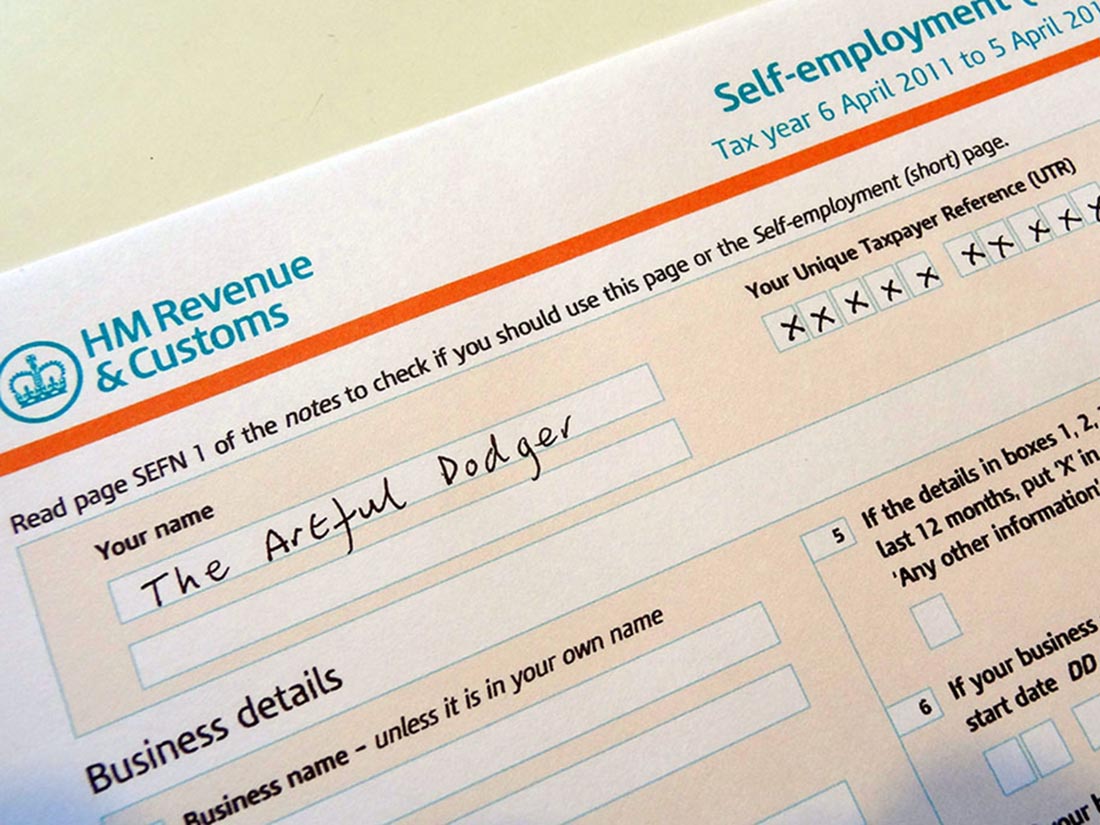
 At a cost of €1 trillion to EU states, tax evasion is undoubtedly an area in need of attention. With government finances in deficit across the world, part of the gap could be plugged by preventing tax revenues from going unpaid. Well-known companies and individuals have been accused of tax evasion (and avoidance), but part of the problem is the existence of countries that make such activities possible.
Tax havens not only offer favourable tax rates, but also have in place regulations that prevent the effective exchange of information. That is, they are able to keep the identity and income information of depositors a private affair and are not required to share that information with other governments. This means that other tax authorities are unable to demand the tax revenue from income earned, when it is held in some of these countries. This can deprive the government’s coffers of substantial amounts of money.
In 2000, the OECD produced a report naming so-called ‘uncooperative tax havens’, including Monaco, Andorra, Liechtenstein and Liberia. Since then, all nations on this list have pledged their cooperation and been removed and in a recent step, Andorra has announced a proposal to implement its first ever income tax. This move is partly in response to pressures from EU governments to tackle tax evasion. Furthermore, talks between the finance ministers of tax havens, such as Switzerland and Liechtenstein have been agreed with the aim of improving the flow of bank account information and thus combating tax evasion. The Council of the European Union said:
The decision represents an important step in the EU’s efforts to clamp down on tax evasion and tax fraud”
Countries, such as Switzerland (a non-EU member) are likely to find requests for information difficult to ignore, if they want to have access to EU financial markets. However, any concessions on information provision will come at a significant cost for a country that has long regarded its banking secrecy as an ‘honourable policy.
 Reforming policy on tax havens is essential, not only to help tackle tax evasion and thus government deficits, but also to generate investment into countries that don’t offer such favourable tax rates. Investors naturally want to invest in those countries with low tax rates and as such, could it be that countries like the UK suffer from a loss of investment and that the only way to encourage it is to offer similarly low tax rates? International agreement is certainly needed to tackle the worldwide issue of tax evasion and at the moment, it seems as though pressure is building on secretive countries. The following articles consider this controversial issue.
Clock ticks on Swiss banking secrecy BBC News, Imogen Foulkes (21/5/13)
Andorra bows to EU pressure to introduce income tax The Telegraph, Fiona Govan (2/6/13)
Andorra to introduce income tax for first time BBC News (2/6/13)
Andorra to introduce income tax for the first time Economy Watch (3/6/13)
Swiss have no choice but to bow to US ultimatum – Ackermann Reuters, Katharina Bart> (3/6/13)
Austria out front as EU zeroes in on tax evasion The Budapest Times (29/5/13)
EU to start talks with non-EU countries on tax evasion BBC News (14/5/13)
Questions
- What is tax evasion?
- Using game theory, explain why an international agreement on tax evasion might be needed?
- When an income tax is imposed in Andorra, what will be the impact on government revenues?
- How might the labour supply incentive change once an income tax is imposed?
- How do tax havens affect investment in other countries?
- Is there an argument that countries such as the UK should cut its tax rates to encourage investment?
 When people take out loans they typically do so to spend and with the UK economy in its current state, many would argue that this is a good thing. The ‘payday loan’ industry took advantage of the weak economy and the squeezed households in the UK and for the past few years, we have seen constant adverts that will appeal to many households. But, is the industry as competitive as the adverts would have us believe?
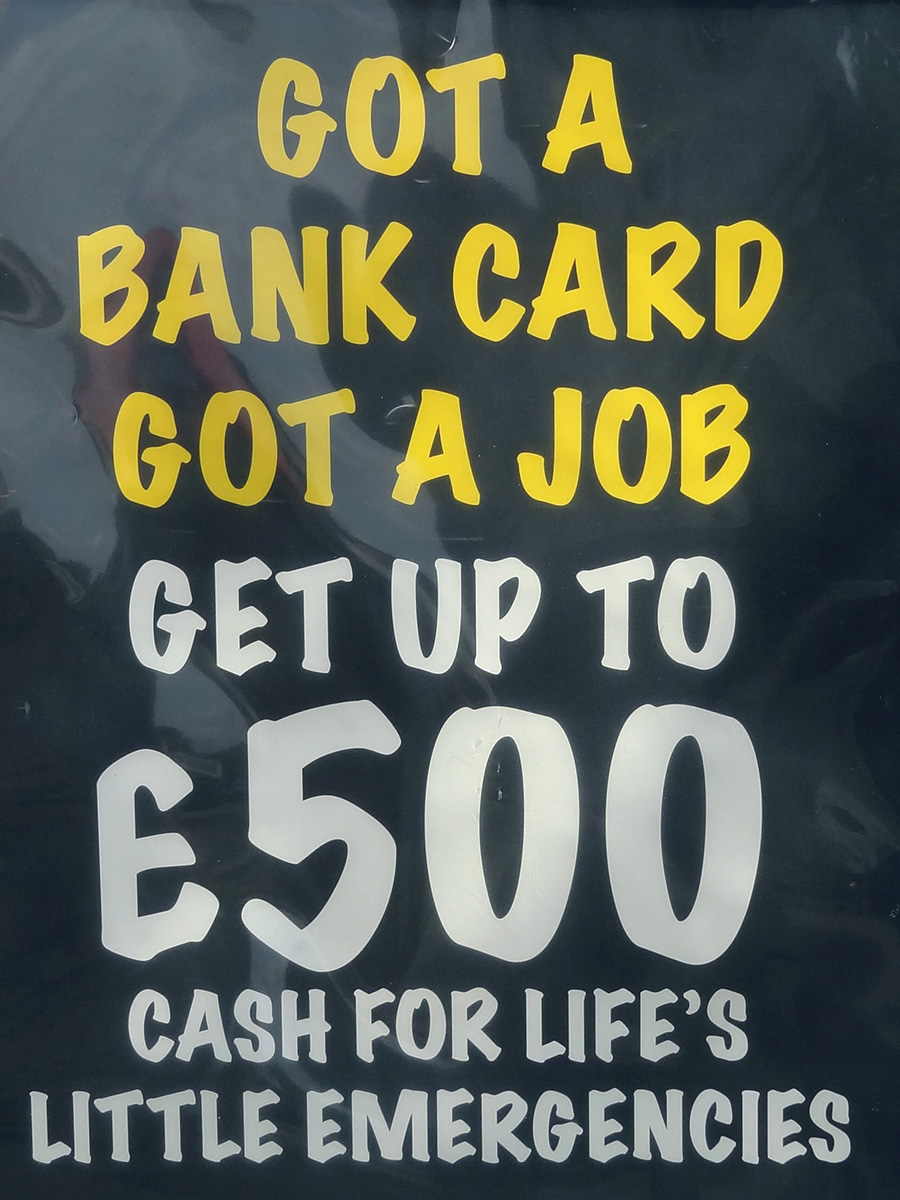 The OFT has criticized payday loan companies for competing not on costs, but on the speed of approval and using certain unapproved tactics as part of their advertising. The selling point of such companies is that you can have the money in a very short time period. However, the criticism is that this leads to loans being given to those who are unable to afford them. Key credit checks are not being done and with late night texts being sent to often financially vulnerable people, it is no wonder that complaints have been received. In a statement, the OFT said: