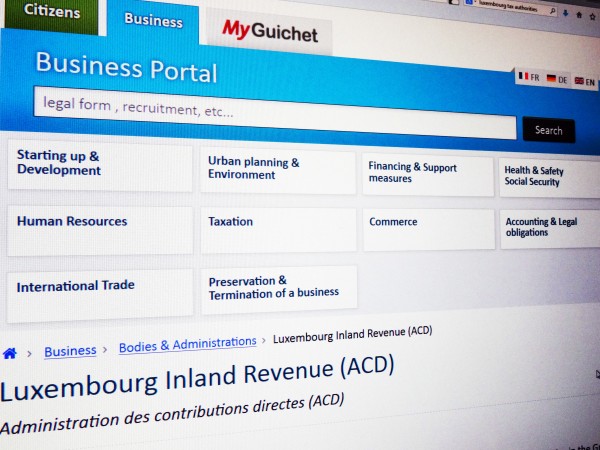
 An investigation by the International Consortium of Investigative Journalists has revealed how more than 1000 businesses from 340 major companies from around the world have used Luxembourg as a base for avoiding huge amounts of tax. Many of the companies are household names, such as Ikea, FedEx, Apple, Pepsi, Coca Cola, Dyson, Amazon, Fiat, Google, Accenture, Burberry, Procter & Gamble, Heinz, JP Morgan, Caterpillar, Deutsche Bank and Starbucks. Through complicated systems of ‘advanced tax agreements’ (ATAs), negotiated with the Luxembourg authorities via accountants PricewaterhouseCoopers (PwC), companies have used various methods of avoiding tax.
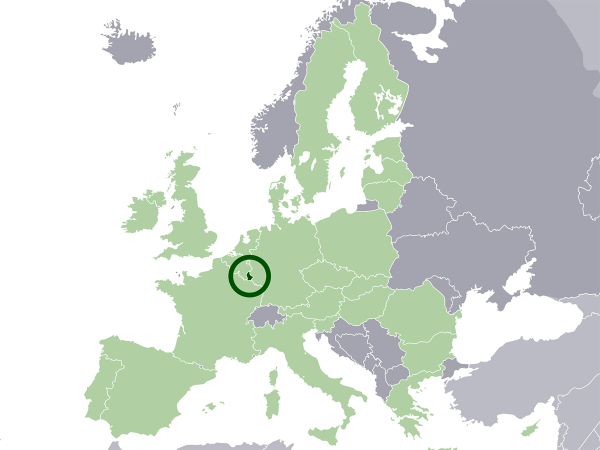
Although such measures are legal, they have denied other countries vast amounts of tax revenues on sales generated in their own countries. Instead, the much reduced tax bills have been paid to Luxembourg. The result is that this tiny country, with a population of just 550,000, has, according to the IMF, the highest (nominal) GDP per head in the world (estimated to be $116,752 in 2014).
 So what methods do Luxembourg and these multinational companies use to reduce the companies’ tax bills? There are three main methods. All involve having a subsidiary based in Luxembourg: often little more than a small office with one employee, a telephone and a bank account. All involve varieties of transfer pricing: setting prices that the company charges itself in transactions between a subsidiary in Luxembourg and divisions in other countrries.
The first method is the use of internal loans. Companies lend money to themselves, say in the UK, from Luxembourg at high interest rates. The loan interest can be offset against profit in the UK, reducing tax liability to the UK tax authorities. But the interest earned by the Luxembourg subsidiary incurs very low taxes. Profits are thus effectively transferred from the UK to Luxembourg and a much lower tax bill is incurred.
The second involves royalty payments for the use of the company’s brands. These are owned by the Luxembourg subsidiary and the overseas divisions pay the Luxembourg subsidiary large sums for using the logos, designs and brand names. Thus, again, profits are transferred to Luxembourg, where there is a generous tax exemption.
The third involves generous allowances in Luxembourg for losses in the value of investments, even without the company having first to sell the investments. These losses can be offset against future profits, again reducing tax liability. By transferring losses made elsewhere to Luxembourg, again usually by some form of transfer pricing, these can be used to reduce the already small tax bill in Luxembourg even further.
 Tax loopholes offered by tax havens, such as Luxembourg, the Cayman Islands and the Channel Islands, are denying exchequers around the world vast sums. Not surprisingly, countries, especially those with large deficits, are concerned to address the issue of tax avoidance by multinationals. This is one item on the agenda of the G20 meeting in Brisbane from the 12 to 16 November 2014.
The problem, however, is that, with countries seeking to attract multinational investment and to gain tax revenues from them, there is an incentive to reduce corporate tax rates. Getting any binding agreement on tax harmonisation, and creating an essentially global single market, is likely, therefore, to prove virtually impossible.
Webcasts and videos
 Luxembourg Leaks: Tricks of the Trade ICIJ in partnership with the Pulitzer Center (5/11/14)
Luxembourg ‘abetted’ companies in avoiding taxes France 24, Siobhán Silke (6/11/14)
Tax deals with Luxembourg save companies billions, says report Deutsche Welle, Dagmar Zindel (6/11/14)
Luxembourg: the tax haven and the $870m loan company above a stamp shop The Guardian, John Domokos, Rupert Neate and Simon Bowers (5/11/14)
Luxembourg leaks: nation under spotlight over tax avoidance claims euronews (6/11/14)
Northern and Shell used west Dublin address to cut Luxembourg tax bill on €1bn The Irish Times, Colm Keena (6/11/14)
The ATO’s global tax avoidance investigation ABC News, Phillip Lasker (9/11/14)
Pepsi, IKEA Secret Luxembourg Tax Deals Exposed TheLipTV, Elliot Hill (9/11/14)
Articles
Leaked Docs Expose More Than 340 Companies’ Tax Schemes In Luxembourg Huffington Post, Leslie Wayne, Kelly Carr, Marina Walker Guevara, Mar Cabra and Michael Hudson (5/11/14)
Luxembourg tax files: how tiny state rubber-stamped tax avoidance on an industrial scale The Guardian, Simon Bowers (5/11/14)
Fact and fiction blur in tales of tax avoidance The Guardian (9/11/14)
companies engaged in tax avoidance The Guardian, Michael Safi (6/11/14)
The Guardian view on tax avoidance: Europe must take Luxembourg to task The Guardian, Editorial (6/11/14)
G20 leaders in the mood to act on tax avoidance after Luxembourg leaks Sydney Morning Herald, Tom Allard (6/11/14)
Scale of Luxembourg tax avoidance revealed economia, Oliver Griffin (6/11/14)
EU to press Luxembourg over tax breaks amid fresh allegations BBC News (6/11/14)
Luxembourg leaks: G20 alone can’t stamp out tax avoidance The Conversation, Charles Sampford (7/11/14)
‘Lux leaks’ scandal shows why tax avoidance is a bad idea European Voice, Paige Morrow (8/11/14)
EU to Probe Luxembourg’s ‘Sweetheart Tax Deal’ with Amazon International Business Times, Jerin Mathew (7/10/14)
Investigative Project
Luxembourg Leaks: Global Companies’ Secrets Exposed The International Consortium of Investigative Journalists (5/11/14)
Questions
- Distinguish between tax avoidance and tax evasion. Which of the two is being practised by companies in their arrangements with Luxembourg?
- Explain what is meant by transfer pricing.
- Do a search of companies to find out what parts of their operations as based in Luxembourg.
- In what sense can the setting of corporate taxes be seen as a prisoner’s dilemma game between countries?
- Discuss the merits of changing corporate taxes so that they are based on revenues earned in a country rather than on profits.
- What type of agreement on tax havens is likely to be achieved by the international community?
- Is it desirable for companies to be able to offset losses against future profits?
 On my commute to work on the 6th October, I happened to listen to a programme on BBC radio 4, which provided some fascinating discussion on climate change, growth, capitalism and the need for co-operation. With more countries emerging as leading economic powers, pollution and emissions continue to grow. Is it time for a green revolution?
The programme considers some ‘typical’ policies and also discusses some radical solutions. There is discussion on developing and developed nations and how these countries should be looked at in terms of compensation, entitlement and aid. Carrots and sticks are analysed as means of saving the planet and how environmental damage can be reduced, without adversely affecting the growth rate of the world economy. I won’t say any more, but it’s certainly worth listening to, for an interesting discussion on one of the biggest problems that governments across the world are facing and it is not going to go away any time soon.
Naomi Klein on climate change and growth BBC Radio 4, Start the Week (6/10/14)
Questions
- What are the market failures with the environment?
- Why is global co-operation so important for tackling the problem of climate change?
- Which policies are discussed as potential solutions to the problem of climate change?
- What has been the problem with the European carbon trading scheme?
- Why may there be a trade-off between capitalism, growth and the problem of carbon emissions?
- To what extent do you think that countries such as Bangladesh should be ‘compensated’?
 In an earlier post, Elizabeth looked at oligopolistic competition between supermarkets. Although supermarkets have been accused of tacit price collusion on many occasions in the past, price competition has been growing. And recent developments show that it is likely to get a lot fiercer as the ‘big four’ try to take on the ‘deep discounters’, Aldi and Lidl.
Part of the reason for the growth in price competition has been a change in shopping behaviour. Rather than doing one big shop per week in Tesco, Sainsbury’s, Asda or Morrisons, many consumers are doing smaller shops as they seek to get more for their money. A pattern is emerging for many consumers who are getting their essentials in Aldi or Lidl, their ‘special’ items in more upmarket shops, such as Waitrose, Marks & Spencer or small high street shops (such as bakers and ethnic food shops) and getting much fewer products from the big four. Other consumers, on limited incomes, who have seen their real incomes fall as prices have risen faster than wages, are doing virtually all their shopping in the deep discounters. As the Guardian article below states:
A steely focus on price and simplicity, against a backdrop of falling living standards that has sharpened customers’ eye for a bargain, has seen the discounter grab market share from competitors and transform what we expect from our weekly shop.
The result is that the big four are seeing their market share falling, as the chart shows. 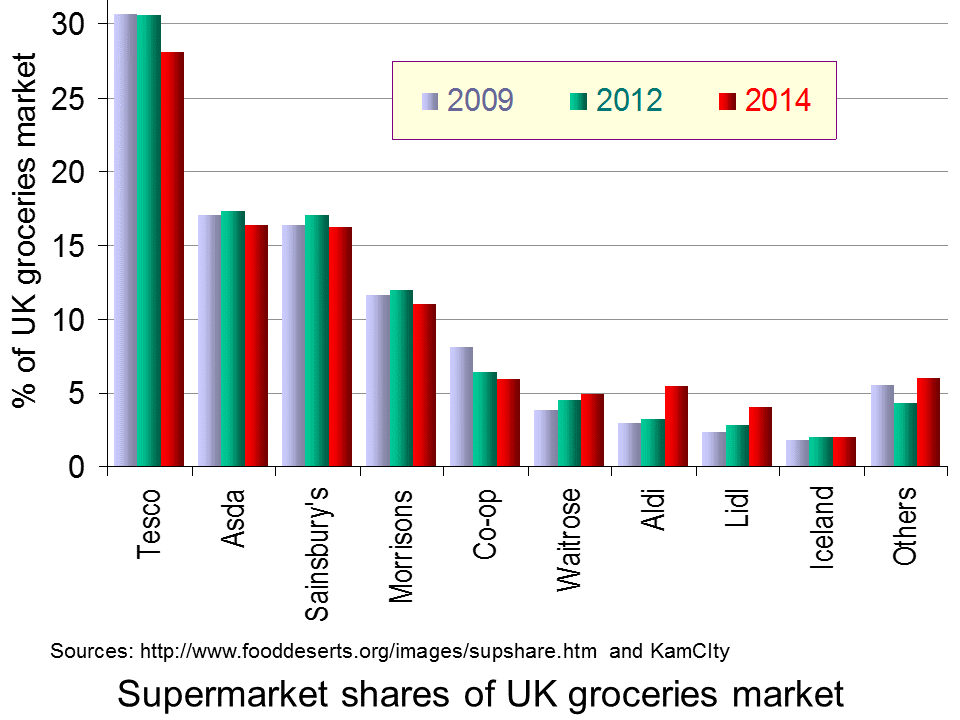 (Click here for a PowerPoint of the chart.) In the past year, Tesco’s market share has fallen from 29.9% to 28.1%, Asda’s from 17.8% to 16.3%, Sainsbury’s from 16.9% to 16.2% and Morrisons’ from 11.7% to 11.0%. By contrast, Aldi’s has risen from 3.9% to 5.4% and Lidl’s from 3.1% to 4.0%, while Waitrose’s has also risen, from 4.7% to 4.9%. And it’s not just market share that has been falling for the big four. Profits have also fallen, as have share prices. Sales revenues in the four weeks to 13 September are down 1.6% on the same period a year ago; sales volumes are down 1.9%.
But can the big four take on the discounters at their own game? Morrison’s has just announced a form of price match scheme called ‘Match & More’. If a shopper finds that a comparable grocery shop is cheaper in not only Tesco, Sainsbury’s or Asda, but also in Aldi or Lidl, then ‘Match & More users will automatically get the difference back in points on their card. Shoppers also will be able to collect extra points on hundreds of featured products and fuel’. When the difference has risen to a total £5 (5000 points), the shopper will get a £5 voucher at the till. The idea is to encourage customers to stay loyal to Morrisons.
 But what if Tesco, Asda and Sainsbury’s do the same? What will be the impact on their prices and profits. Will there be a race to the bottom in prices, or will they be able to keep prices higher than the deep discounters, hoping that many customers will not cash in their vouchers?
But if effectively the big four felt forced to cut their prices to match Aldi and Lidl, could they afford to do so? This depends on their comparative average costs. At first sight, it might be thought that the big four could succeed in profitably matching the discounters, thereby clawing back market share. After all, they are much bigger and it might be thought that they would benefit from greater economies of scale and hence lower costs.
But it is not as simple as this. The discounters have lower costs than the big four. Their shops are typically in areas where rents or land prices are lower; their shops are smaller; they carry many fewer lines and thus gain economies of scale on each line; they have a much higher proportion of own-brand products; products are displayed in the boxes they come in, thus saving on the staff costs of unpacking them and placing them on shelves; they buy what is cheapest and thus do not always display the same brands.
So is Morrison’s a wise strategy? Will other supermarkets be forced to follow? Is there a prisoners’ dilemma here and, if so, is there any form of collusion in which the big four can engage which is not illegal? Can the big four differentiate themselves from the discounters and the up-market supermarkets in ways that will attract back customers?
It is worrying times for the big four.
Articles
- Heavy Discounters Up Pressure On The UK’s Big Four Supermarkets
Alliance News, Rowena Harris-Doughty (3/6/14)
- Tesco loses more market share as supermarket sector slows to record low
CITY A.M., Catherine Neilan (23/9/14)
- Record low for grocery market growth as inflation disappears
Kantar World Panel, Fraser McKevitt (23/9/14)
- How Aldi’s price plan shook up Tesco, Morrison’s, Asda and Sainsbury’s
The Guardian, Sarah Butler (29/9/14)
- Sainsbury’s shares drop 7% on falling sales report
BBC News (1/10/14)
- Sainsbury results: the reaction
Food Manufacture, Mike Stones (3/10/14)
- Morrisons Becomes First Of Big Four Grocers To Price Match Aldi, Lidl
Alliance News, Rowena Harris-Doughty (2/10/14)
- UK: Morrisons Takes On Discounters With Price Match Card
KamCity (3/10/14)
- Morrisons to match the prices of Aldi and Lidl
The Telegraph, Graham Ruddick (2/10/14)
- Three reasons why Morrisons price-matching Aldi and Lidl is not a ‘gamechanger’
The Telegraph, Graham Ruddick (2/10/14)
Questions
- Would it be possible for the big four to price match the deep discounters?
- What is meant by the prisoners’ dilemma? In what ways are the big four in a prisoners’ dilemma situation?
- Assume that you had to advise Tesco on it strategy? What advise would you give it and why?
- Assume that two firms, M and A, are playing the following ‘game’: firm M pledges to match firm A’s prices; and firm A pledges to sell at 2% below M’s price. What will be the outcome of this game?
- Is Morrisons wise to adopt its ‘Match & More’ strategy?
- Why is it difficult for Morrisons to make a like-for-like comparison with Aldi and Lidl in its ‘Match & More’ strategy?
- Why may Aldi and Lidl benefit from Morrisons’ strategy?
 The round robin group stage of the World Cup was recently completed with 16 out of the 32 countries eliminated from the competition – including England, Italy and Spain. The remaining 16 countries progressed to the single game elimination section of the tournament. At the time of writing, the first round of elimination games had been completed with the remaining 8 teams proceeding to the quarter finals of the tournament. Two of these 8 elimination games ended as a draw after extra time. The winner was decided by a penalty shoot-out e.g. Brazil and Costa Rica. Are these shoot-outs just a lottery or are there any factors that significantly influence their outcome?
The penalty shoot-out was first introduced in June 1970 and has become an important part of competitions such as the World Cup and European Championships for national teams and The Champions League, UEFA Cup and FA Cup for club teams. English fans have suffered more than most with victory in only one out of the seven penalty-shoot outs they have been involved in at major tournaments. On average only three out of every five penalties taken were scored. Germany has a very different record. They have won six out of the seven shoot-outs they have participated in and have a scoring rate of 93%. The Czech Republic has an even better record as their players have not missed a single penalty in the three shoot-outs they have been involved in – including beating West Germany in 1976.
Each individual penalty can be thought of as an example of an interdependent or game theoretic situation. The penalty taker (PT) has to choose from one of three different strategies: shoot to the right, shoot to the left or shoot down the middle. The success of the penalty does not just depend on which of these strategies is chosen. It also depends on the choice made by the goalkeeper (GK) i.e. dive to the left, dive to the right or stay where they are.
In the jargon of game theory there is strategic interdependence. It can also be thought of as an example of a simultaneous game. After the ball is struck it takes approximately 0.3 seconds until it hits the back of the net!! Therefore it is impossible for the GK to observe the shot and respond. Instead they simply have to guess which way they think the PT will kick the ball and respond accordingly. The same reasoning applies to the PT. They cannot observe which way the keeper will dive before they strike the ball. A penalty shoot-out is also an example of a zero sum game. If one teams scores they are better off by one goal while the other team is worse off by one goal.
There is also a sequential element to the shoot- outs as in each round one team always follows another. Is there either a first or second mover advantage? Is there any advantage from always shooting first or second? This was a question investigated by some economists who analysed the data from 129 shoot-outs in ten different tournaments taken between June 1970 and June 2003. This cut-off was chosen because up until this point it could be argued that a penalty shoot-out was an example of a truly randomized field experiment. The team that won the coin toss was required to shoot first. Teams were not given a choice of whether to shoot first or second until the rules were amended in June 2003.
The economists found that the teams who took the first shot won in 78 (60.5%) cases while the team that shot second won in only 51 cases (39.5%). This evidence suggests that there is a significant first mover advantage. One explanation for this finding is that there is greater psychological pressure on the PTs who go second in each round of the shoot-off and this has a significantly negative effect on their performance. The researchers also found that in 19 of the 20 shoot-outs they observed after June 2003 the team that won the toss decided to kick first. They concluded that not only is there a first mover advantage, but that teams/players are aware of it.
If there is currently a first mover advantage which provides teams with an unfair advantage then is there anything that the football authorities could do to help reduce the bias? One suggestion is to change the order in which the teams shoot in each round. A similar approach could be taken to that used in tennis in order to determine the order of the server in a tie break.
Imagine a penalty shoot-out between England and Germany. The sequence below provides one possible alternative to the current structure of the contest.
Penalty 1: Germany England
Penalty 2: England Germany
Penalty 3: England Germany
Penalty 4: Germany England
Penalty 5: England Germany
Penalty 6: Germany England
This would involve increasing the number of penalties from 5 to 6 so that both teams get to shoot first in three rounds of the contest. Interestingly the authors also found any first mover advantages fell dramatically if the shoot-outs reached the sudden death stage.
It will be interesting to see if first mover advantages occur in the remaining games in the tournament.
The English Disease – How to handle pressure: lessons from penalty shoot-outs The Economist (14/6/14)
Penalty kick shootouts and the importance of shooting first Soccermetrics Research (3/1/11)
Game Theory Lesson: Man Utd v Chelsea Penalty Shootout Econfix (11/3/14)
World Cup Game Theory – What economics tells us about penalty kicks Slate (24/6/06)
Football penalty shoot-outs are unfair says new research LSE (16/12/10).
Questions
- Explain the difference between a sequential and simultaneous game.
- Explain how either the penalty taker or goal keeper might attempt to transform the penalty from a simultaneous to a sequential game. (Hint: watch the next time the Brazilian footballer, Neymar, takes a penalty!!!
- Give some examples of potential first or second mover advantages in other industries.
- What other factors might influence the outcome of a penalty shoot? Is it possible for researchers to obtain any data in order to control for any of the factors you have identified?
- Explain the difference between a zero sum game and a non-zero sum game. Give some real world examples of a non-zero sum game.
 When you think about John Lewis, you think of a large department store. It is a department store celebrating its 150th anniversary. Many large retailers, such as John Lewis, have expanded their product range throughout their history and have grown organically, moving into larger and more prominent locations. What’s the latest location? St Pancras station.
The idea of a click-and-collect store has grown in popularity over the past decade. With more and more people working and leading very busy lives, together with the growth of online shopping, it is the convenience of this type of purchase which has led to many retailers developing click-and-collect. Indeed, for John Lewis, 33% of its internet sales do come through click-and-collect. However, John Lewis is going a step further and its new strategy is reminiscent of companies like Tesco. If you just need to pop into Tesco to get some milk, you’re likely to go to the local Tesco express. The first mover advantage of Tesco in this market was vital.
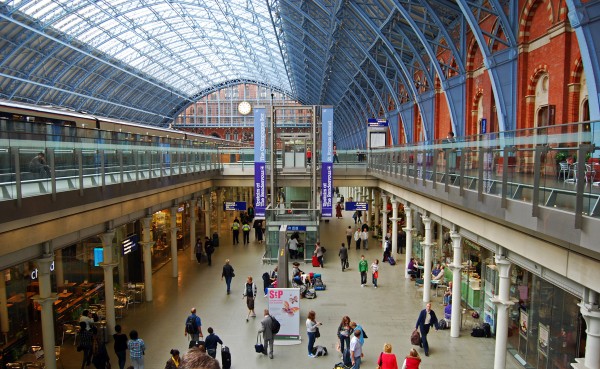
John Lewis is unusual in that it is owned by its employees and this ownership structure has proved successful. Despite a long history, John Lewis has moved with the times and this latest strategy is further evidence of that. In today’s world, convenience is everything and that is one of the key reasons behind its new St Pancras convenience store. It will allow customers to purchase items and then collect them on their way to and from work – click-and-commute, but it will also provide customers with an easily accessible place to buy electronic equipment and a range of household goods. The retail director, Andrew Murphy said:
In the battleground of convenience, we are announcing a new way for commuters to shop with us … Customers spend a huge amount of time commuting, and our research shows that making life easier and shopping more convenient is their top priority.
This appears to be the first of many smaller convenience stores, enabling John Lewis to gain a presence in seemingly impossible places, given the normal size of such Department stores. For many people, commuting to and from work often involves waiting at transport hubs – one of the big downsides to not driving. So it seems sensible for such an established retailer to take advantage of commuters waiting for their train or plane to arrive, who have time to kill. The following articles consider this new direction for an old retailer.
John Lewis to open St Pancras convenience store BBC News (2/5/14)
John Lewis thinks small with convenience store The Guardian, Zoe Wood (2/5/14)
John Lewis to trial convenience store click-and-collect format at St Pancras Retail Week, Ben Cooper (2/5/14)
Why is click and collect proving so popular? BBC News, Phil Dorrell (2/5/14)
The rise of click and collect for online shoppers BBC News, Phil Dorrell (2/5/14)
Questions
- What are the advantages and disadvantages of the organisational and ownership structure of John Lewis?
- How would you classify this new strategy?
- How do you think this new strategy will benefit John Lewis in terms of its market share, revenue and profit?
- Is it likely that John Lewis will be able to target new customers with this new convenience store strategy?
- How important is a first-mover advantage when it comes to retail? Using game theory, can you create a game whereby there is clear first mover advantage to John Lewis?
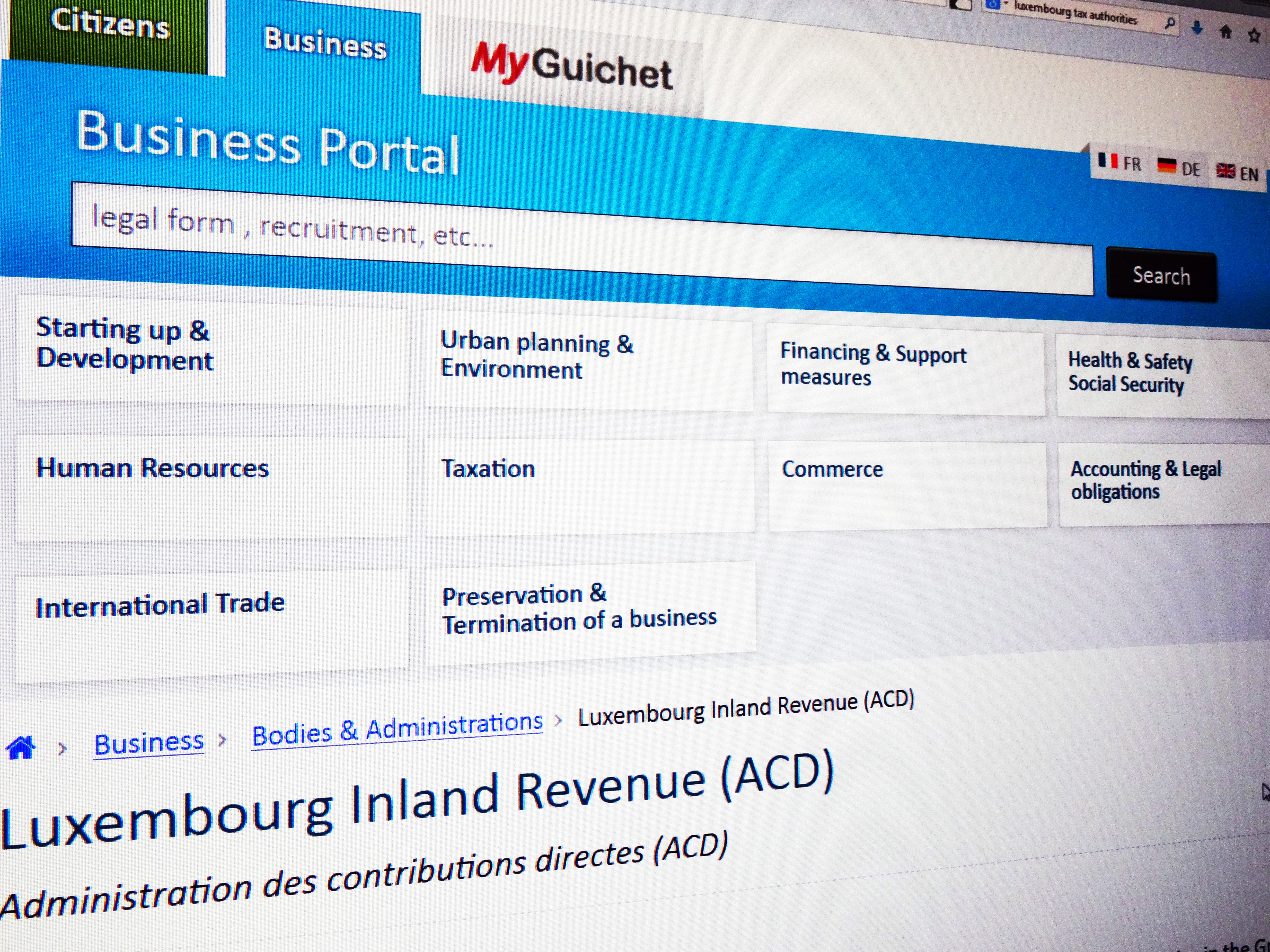 An investigation by the International Consortium of Investigative Journalists has revealed how more than 1000 businesses from 340 major companies from around the world have used Luxembourg as a base for avoiding huge amounts of tax. Many of the companies are household names, such as Ikea, FedEx, Apple, Pepsi, Coca Cola, Dyson, Amazon, Fiat, Google, Accenture, Burberry, Procter & Gamble, Heinz, JP Morgan, Caterpillar, Deutsche Bank and Starbucks. Through complicated systems of ‘advanced tax agreements’ (ATAs), negotiated with the Luxembourg authorities via accountants PricewaterhouseCoopers (PwC), companies have used various methods of avoiding tax.
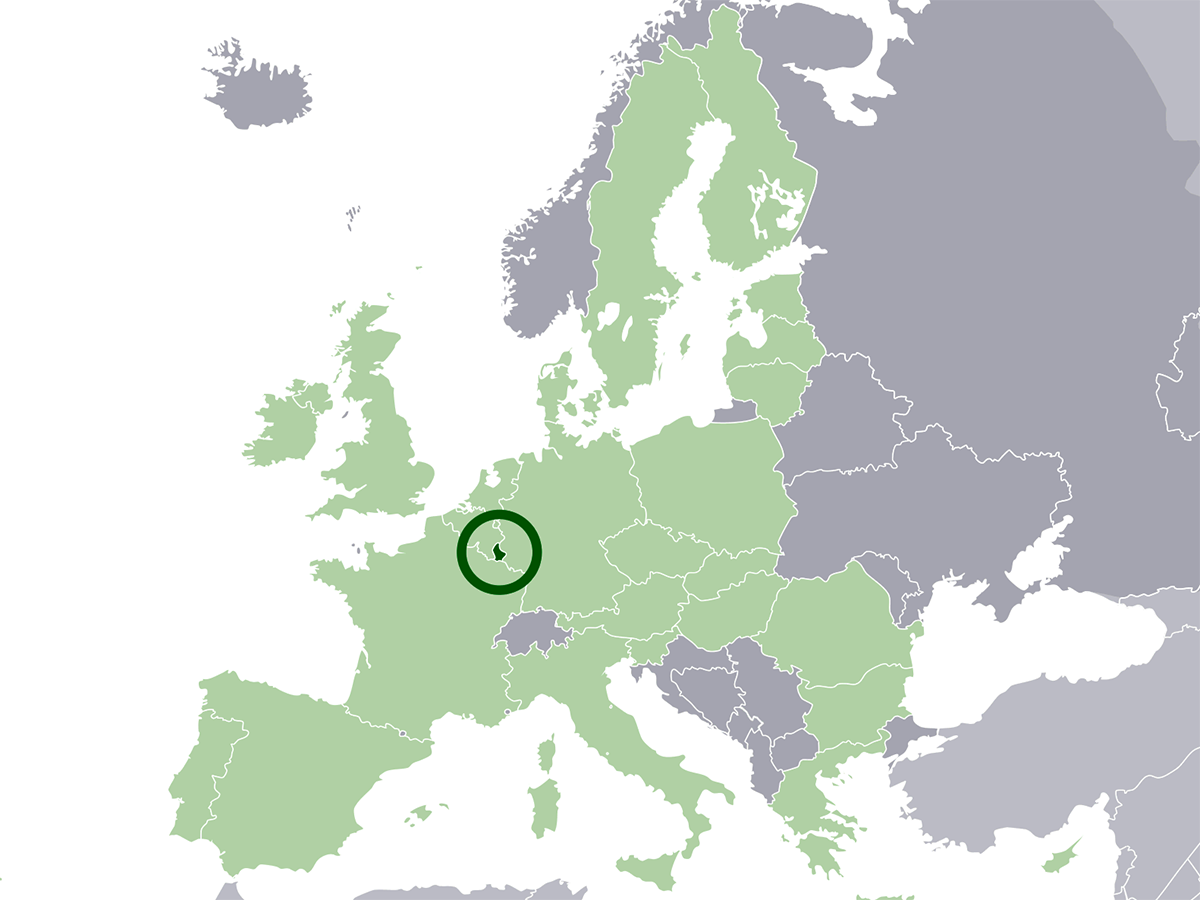 So what methods do Luxembourg and these multinational companies use to reduce the companies’ tax bills? There are three main methods. All involve having a subsidiary based in Luxembourg: often little more than a small office with one employee, a telephone and a bank account. All involve varieties of transfer pricing: setting prices that the company charges itself in transactions between a subsidiary in Luxembourg and divisions in other countrries.
 Tax loopholes offered by tax havens, such as Luxembourg, the Cayman Islands and the Channel Islands, are denying exchequers around the world vast sums. Not surprisingly, countries, especially those with large deficits, are concerned to address the issue of tax avoidance by multinationals. This is one item on the agenda of the G20 meeting in Brisbane from the 12 to 16 November 2014.