The negotiations between Greece and the ‘troika’ of creditors (the IMF, the European Commission and the ECB) have seen many twists and turns before breaking down on 26 June. Throughout, both sides have sought to give as little as possible while seeking a compromise. Both sides have claimed that their position is reasonable, even though a gulf has remained between them.
What has been playing out is a high-stakes game, where the optimum outcome for each side is quite different.
Greece seeks bailout terms that would allow it to achieve a smaller primary budget surplus (but still a surplus in the midst of a deep recession). The surplus would be achieved largely through tax rises on the wealthy rather than further cuts that would hit the poor hard. It is also seeking a substantial amount of debt forgiveness to make servicing the remaining debt possible.
The troika is seeking a larger budget surplus than the Greeks are willing to contemplate. This, it maintains, should be achieved largely through additional cuts in government expenditure, including further reductions in pensions and in public-sector wages.
Both sides used threats and promises as the negotiations became more and more acrimonious.
The troika threatened to withhold the final €7.2bn of the bailout necessary to pay the €1.6bn due to the IMF on 30 June, unless the Greeks accepted the terms of the austerity package put to them. The Greek Prime Minister, Alexis Tsipras, in rejecting the proposals, called a referendum on the package. This threatens the stability of the eurozone as a No vote, if it led to a Greek exit from the eurozone, could undermine confidence in monetary union. After all, if Greece could be forced out, other countries facing severe difficulties might also be forced out at some point in the future. Once a country leaves the eurozone, the monetary union becomes more like a system of pegged exchange rates. And pegged exchange rates are open to destabilising speculation at times of economic divergence.
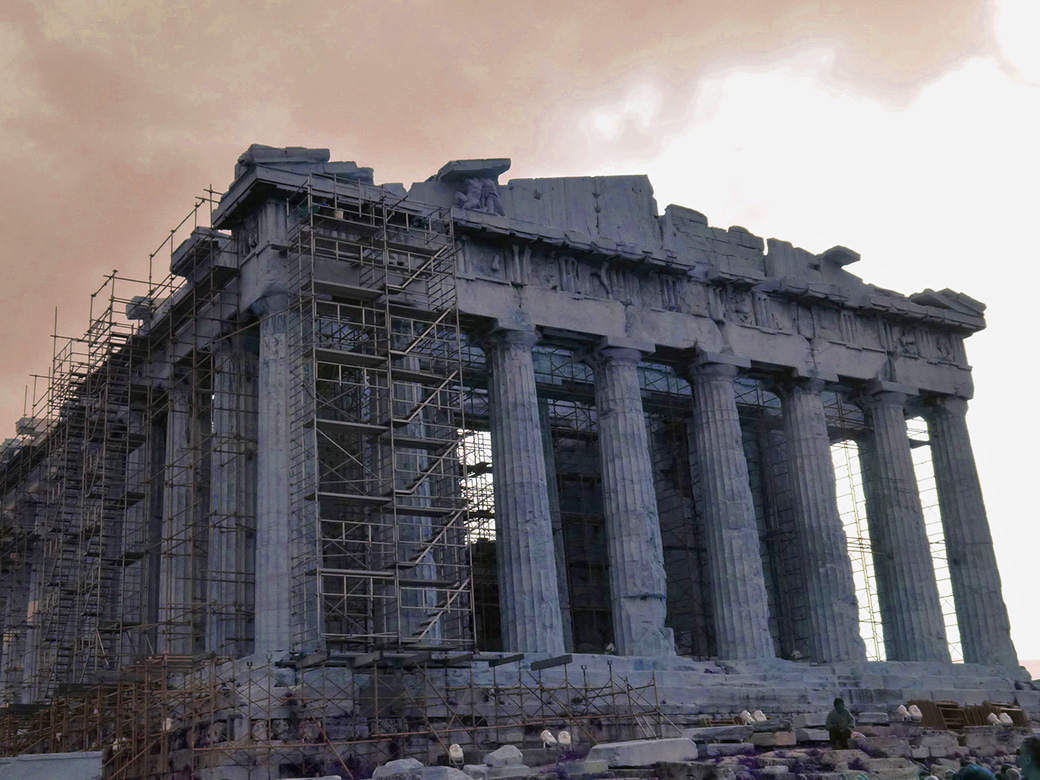
 A Greek exit from the euro (dubbed ‘Grexit’) is seen as undesirable by most Greeks and by most politicians in the rest of Europe. The optimum for both sides collectively would be a compromise, which saw more modest cuts by Greece and the eurozone remaining intact. By both sides seeking to maximise their own position, the Nash equilibrium is certainly not the best outcome.
But as long as the troika believes that the Greeks are likely to vote Yes to the proposed bailout terms, it still hopes to get the outcome that is best from its point of view – an outcome that would probably involve regime change. And as long as the Greek government hopes that a No vote will force the troika to think again and come back with less austere proposals, it still hopes to get the outcome that is best from its point of view. But the outcome of this game of ‘chicken’ could well be Grexit and a Nash equilibrium that neither side wants.
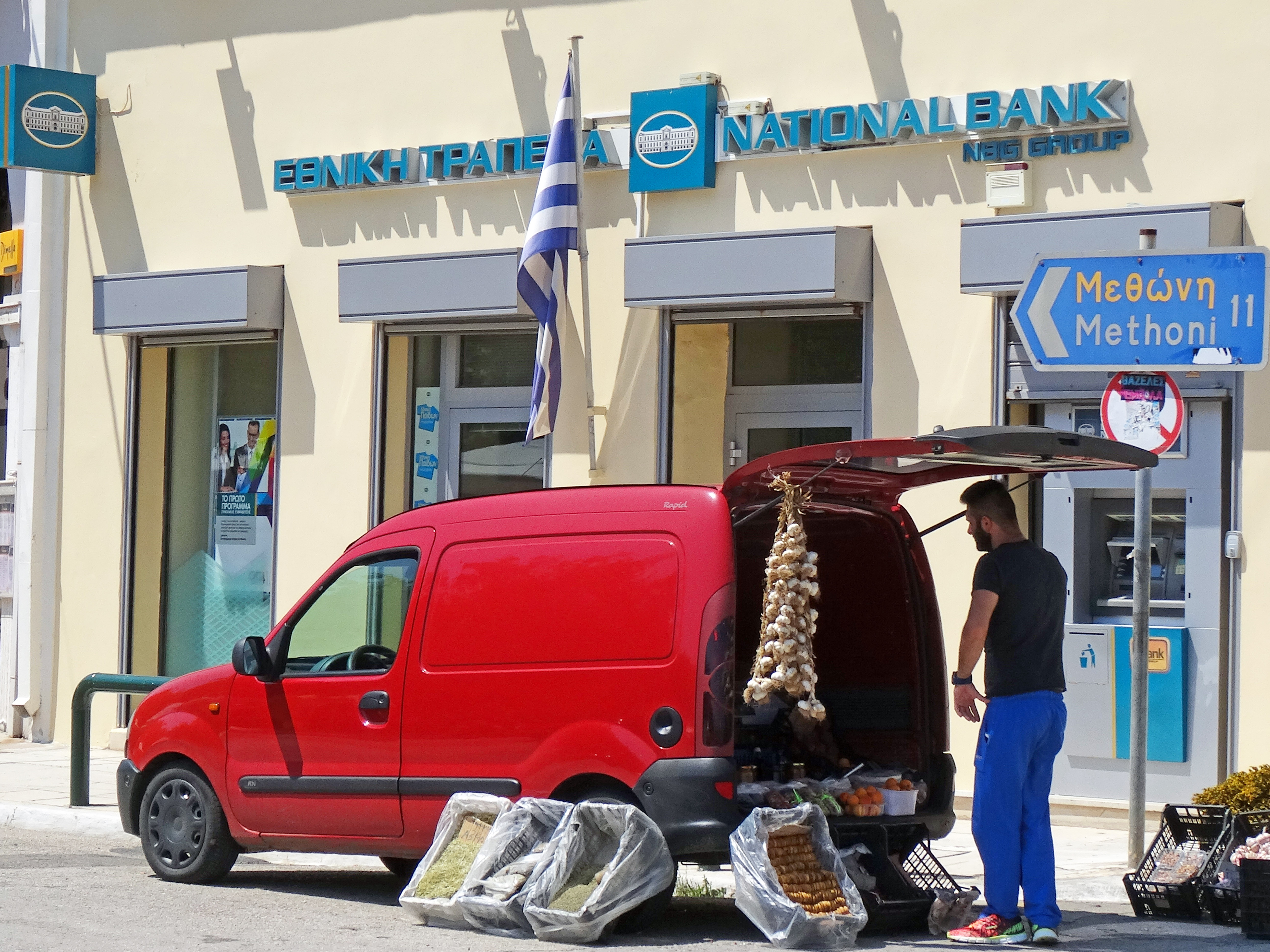
 But while the endgame is being played out by politicians, people in Greece are suffering. Policies of severely depressing aggregate demand to turn a large budget deficit into a primary budget surplus have led to the economy shrinking by 26%, overall unemployment of 27% and youth unemployment of over 60%. The Greeks truly believe themselves to be stuck between a rock and a hard place.
The following articles look at the nature of the ‘game’ being played and at the effects on the Greek economy, both of the proposed austerity package proposed by the troika and Grexit. They also look at the knock-on effects for the eurozone, the EU and the global economy.
Can game theory explain the Greek debt crisis? BBC News Magazine, Marcus Miller (26/6/15)
Against the Grain: What Yanis Varoufakis can learn from a real game theory master – Nicola Sturgeon City A.M., Paul Ormerod (24/6/15)
John Nash’s Game Theory and Greece Bloomberg, Mohamed A. El-Erian (29/5/15)
The Greek crisis: that 1931 moment The Economist, Buttonwood column (23/6/15)
How game theory explains Grexit and may also predict Greek poll outcome The Conversation, Partha Gangopadhyay (1/7/15)
Greece debt crisis: Tsipras may resign if Greeks vote yes BBC News (30/6/15)
Greek debt crisis: Is Grexit inevitable? BBC News. Paul Kirby (29/6/15)
Existential threat to euro from Greek exit BBC News, Robert Peston (29/6/15)
How I would vote in the Greek referendum The Guardian, Joseph Stiglitz (29/6/15)
Greece in chaos: will Syriza’s last desperate gamble pay off? The Guardian, Paul Mason (29/6/15)
What happens if Greece defaults on its International Monetary Fund loans? The Telegraph, Mehreen Khan (30/6/15)
For Greece’s international creditors, regime change is the ultimate goal The Telegraph, Jeremy Warner (29/6/15)
Europe has suffered a reputational catastrophe in Greece The Telegraph, Ambrose Evans-Pritchard (2/7/15)
Questions
- What is meant by a primary budget surplus?
- What was the troika’s proposal on the table on the 26 June that was rejected by the Greek government?
- What was the Greek government’s proposal that was rejected by the troika?
- Explain the decision trees outlined in the first BBC article below.
- In terms of game theory, what form of game is being played?
- Are the negotiations between the Greek government and the troika a prisoners’ dilemma game? Explain why or why not.
- Does the game being played between the SNP and the Conservative government in the UK offer any useful lessons to both sides in the negotiations over Greece’s possible bailout and its terms?
- Does a No vote in the referendum on 5 July imply that Greece must leave the euro? Explain.
- What would be the effects of further austerity measures on aggregate demand? What benefits to the Greek economy could be achieved from such measures?
- Why may pegged exchange rates be regarded as the worst of both worlds – a single currency in a monetary union and floating exchange rates?
 John Nash was one of the pioneers of game theory and in 1994 was awarded the Nobel prize in economics for his work in this field. He was also the subject of the 2001 film, A beautiful mind, where the young John Nash was played by Russell Crowe, for which he won an Oscar.
Tragically, John Nash and his wife were killed in a car crash on May 23: he was 86 years old. Since his death there have been many tributes paid to him and his work.
As a student of economics you will almost certainly have studied the concept of a Nash equilibrium: a situation where everyone makes their best choice, given the choices of the other ‘players’ in a ‘game’. But a Nash equilibrium is not in the collective best interests of the participants in a non-cooperative game.
This is a very different concept of equilibrium from the simple equilibrium in a perfectly competitive market. In fact, in the complex world of strategic decision making, where firms are constantly looking at their rivals’ behaviour and possible reactions to their own behaviour, there are all sorts of Nash equilibria which are clearly sub-optimal. Competition may be highly destructive.
The following obituaries look at Nash’s contribution to the development of economics. As the Bloomberg article states:
The game theory concepts that Nash’s math[s] brought to the field were a true paradigm shift in economics. Macroeconomists, who continue to use the old Walrasian notion of equilibrium typically engage in hand-waving about how the macroeconomy is too big for strategic interactions to matter. But most of the economics profession has gradually shifted toward Nash equilibrium. The 2014 Nobel winner, Jean Tirole, is emblematic of the new economics. And many of the biggest successes in applied economics, like the auctions that power Google’s advertising, rely on Nash’s technique.
Do we owe him as much as Adam Smith?
Articles
Death of John Nash and His Beautiful Ideas Bloomberg, Noah Smith (26/5/15)
John Nash, economist and mathematician, 1928–2015 Financial Times, Ferdinando Giugliano (25/5/15)
Obituary: John Nash: Lost and found The Economist (28/5/15)
Remembering John Nash: Finding equations to explain the world The Economist (28/5/15)
John F. Nash Jr., Math Genius Defined by a ‘Beautiful Mind,’ Dies at 86 New York Times, Erica Goode (24/5/15)
Explaining a Cornerstone of Game Theory: John Nash’s Equilibrium New York Times, Kenneth Chang (24/5/15)
John Nash’s Indelible Contribution To Economic Analysis Forbes, Jon Hartley (25/5/15)
John Nash’s ground-breaking contributions to maths BBC News, John Moriarty (24/5/15)
From the archives: Nash’s Nobel prize The Economist (24/5/15)
 A beautiful strategy: John Nash’s ‘game theory’ explained Hindustan Times, Gaurav Choudhury (25/5/15)
Interview with John Nash
Interview with John Nash Nobelprize.org (Sept 2004)
Questions
- What is meant by the ‘prisoners’ dilemma’? How is this a demonstration of a sub-optimal Nash equilibrium in a non-cooperative game?
- Why is it difficult to predict the outcome of a non-cooperative game?
- Give some examples of non-cooperative games played by companies competing with each other.
- Give some examples of non-cooperative games played by nations competing with each other.
- Why do competition authorities try to prevent cooperation between businesses?
- Why may a cooperative equilibrium between firms be an unstable one?
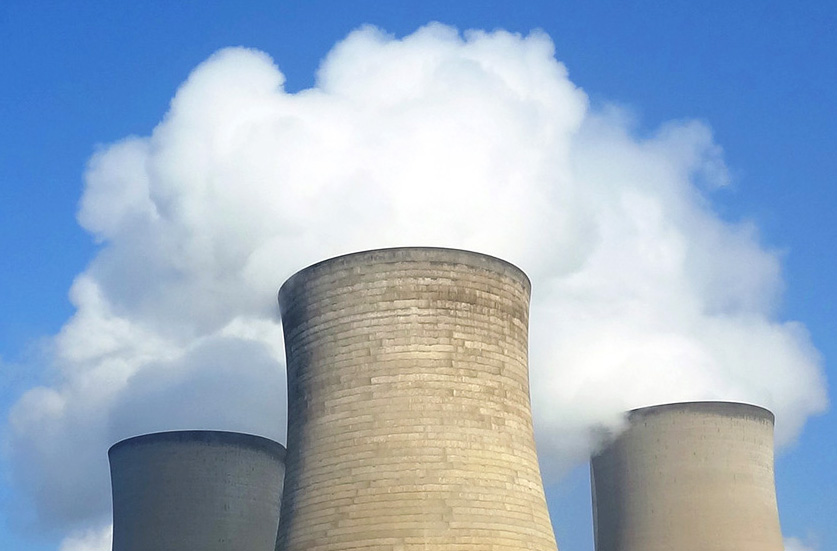
 Many UK coal mines closed in the 1970s and 80s. Coal extraction was too expensive in the UK to compete with cheap imported coal and many consumers were switching away from coal to cleaner fuels. Today many shale oil producers in the USA are finding that extraction has become unprofitable with oil prices having fallen by some 50% since mid-2014 (see A crude indicator of the economy (Part 2) and The price of oil in 2015 and beyond). So is it a bad idea to invest in fossil fuel production? Could such assets become unusable – what is known as ‘stranded assets‘?
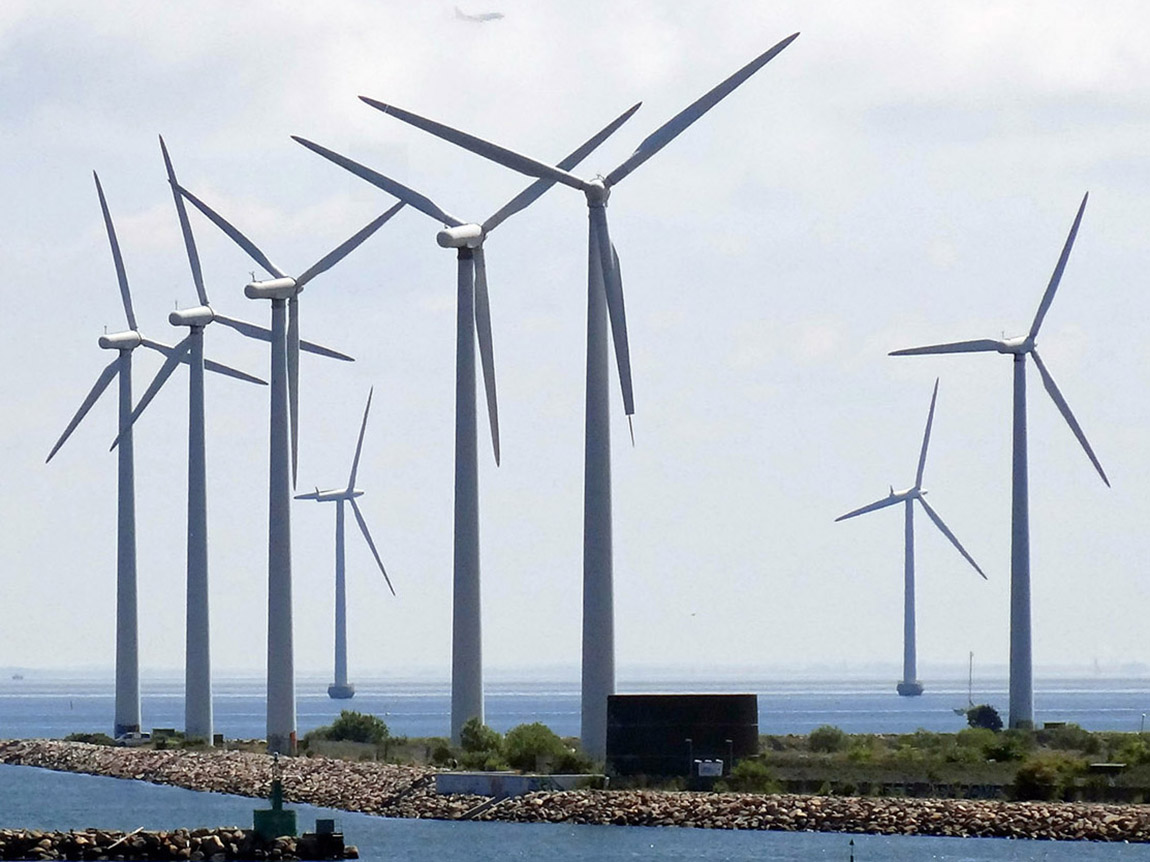
In a speech on 3 March 2015, Confronting the challenges of tomorrow’s world, delivered at an insurance conference, Paul Fisher, Deputy Governor of the Bank of England, warned that a switch to both renewable sources of energy and actions to save energy could hit investors in fossil fuel companies.
‘One live risk right now is of insurers investing in assets that could be left ‘stranded’ by policy changes which limit the use of fossil fuels. As the world increasingly limits carbon emissions, and moves to alternative energy sources, investments in fossil fuels and related technologies – a growing financial market in recent decades – may take a huge hit. There are already a few specific examples of this having happened.
… As the world increasingly limits carbon emissions, and moves to alternative energy sources, investments in fossil fuels and related technologies – a growing financial market in recent decades – may take a huge hit. There are already a few specific examples of this having happened.’
Much of the known reserves of fossil fuels could not be used if climate change targets are to be met. And investment in the search for new reserves would be of little value unless they were very cheap to extract. But will climate change targets be met? 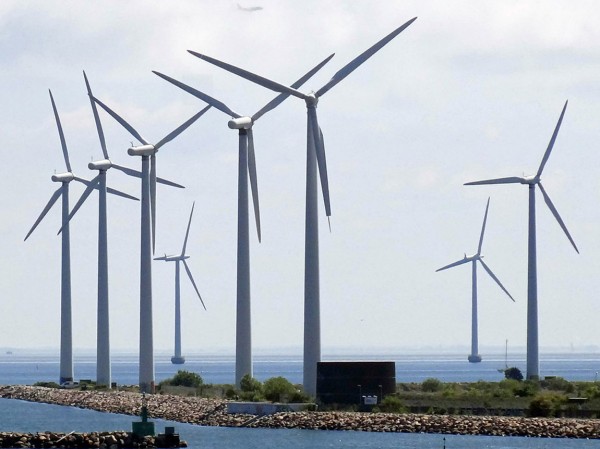 That is hard to predict and depends on international political agreements and implementation, combined with technological developments in fields such as clean-burn technologies, carbon capture and renewable energy. The scale of these developments is uncertain. As Paul Fisher said in his speech:
‘Tomorrow’s world inevitably brings change. Some changes can be forecast, or guessed by extrapolating from what we know today. But there are, inevitably, the unknown unknowns which will help shape the future. … As an ex-forecaster I can tell you confidently that the only thing we can be certain of is that there will be changes that no one will predict.’
The following articles look at the speech and at the financial risks of fossil fuel investment. The Guardian article also provides links to some useful resources.
Articles
Bank of England warns of huge financial risk from fossil fuel investments The Guardian, Damian Carrington (3/3/15)
PRA warns insurers on fossil fuel assets Insurance Asset Risk (3/3/15)
Energy trends changing investment dynamics UPI, Daniel J. Graeber (3/3/15)
Speech
Confronting the challenges of tomorrow’s world Bank of England, Paul Fisher (3/3/15)
Questions
- What factors are taken into account by investors in fossil fuel assets?
- Why might a power station become a ‘stranded asset’?
- How is game theory relevant in understanding the process of climate change negotiations and the outcomes of such negotiations?
- What social functions are filled by insurance?
- Why does climate change impact on insurers on both sides of their balance sheets?
- What is the Prudential Regulation Authority (PRA)? What is its purpose?
- Explain what is meant by ‘unknown unknowns’. How do they differ from ‘known unknowns’?
- How do the arguments in the article and the speech relate to the controversy about investing in fracking in the UK?
- Explain and comment on the statement by World Bank President, Jim Yong Kim, that sooner rather than later, financial regulators must address the systemic risk associated with carbon-intensive activities in their economies.
Yanis Varoufakis, the new Greek finance minister, is also an economist and an expert in game theory and co-author of Game Theory: a critical text. He is now putting theory into practice.
He wishes to renegotiate the terms of Greece’s debt repayments. He argues not that some of the debt should be written off, but that the terms of the repayment are far too tough.
Greece’s problem, he argues, was wrongly seen as one of a lack of liquidity and hence the Troika (of the EU, the ECB and the IMF) provided a large amount of loans to enable Greece to keep servicing its debts. These loans were conditional on Greece following austerity policies of higher taxes and reduced government expenditure. But this just compounded the problem as seen by Yanis Varoufakis. With a shrinking economy, it has been even more difficult to repay the loans granted by the Troika.
The problem, he argues, is essentially one of insolvency. The solution is to renegotiate the terms of the debt to make it possible to pay. This means reducing the size of the budget surplus that Greece is required to achieve. The Troika is currently demanding a surplus equal to 3% of GDP in 2015 and 4.5% of GDP in 2016.
 The Syriza government is also seeking to link repayments to economic growth, by the issue of growth-linked bonds, whose interest rate depends on the rate of economic growth, with a zero rate if there is no growth in real GDP. He is also seeking emergency humanitarian aid
At the centre of the negotiations is a high stake game. On the one hand, Germany and other countries do not want to reduce Greece’s debts or soften their terms. The fear is that this could unleash demands from other highly indebted countries in the eurozone, such as Spain, Portugal and Ireland. Already, Podemos, Spain’s anti-austerity party is rapidly gaining support in Spain. On the other hand, the new Greek government cannot back down in its fundamental demands for easing the terms of its debt repayments.
And the threats on both sides are powerful. The Troika could demand that the original terms are met. If they are not, and Greece defaults, there could be capital flight from Greece (even more than now) and Greece could be forced from the euro. The Greeks would suffer from further falls in income, which would now be denominated in a weak drachma, high inflation and financial chaos. But that could unleash a wave of speculation against other weaker eurozone members and cause a break-up of the currency union. 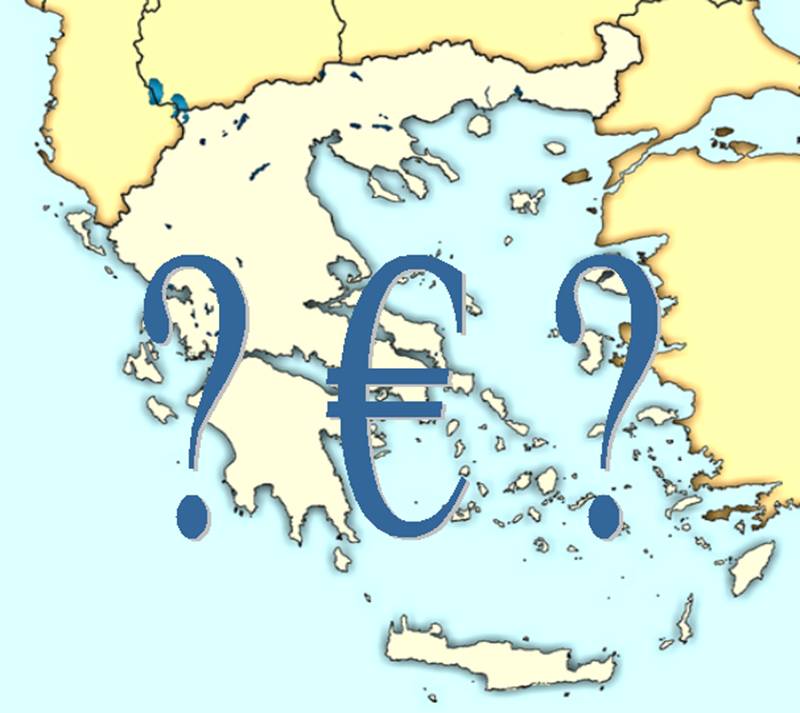 This could seriously harm all members and have large-scale repercussions for the global economy.
So neither side wants Greece to leave the euro. But is it a game of chicken, where if neither side backs down, ‘Grexit’ (Greek exit from the euro) will be the result? Yanis Varoufakis understands the dimensions of the ‘game’ very well. He is well aware of the quote from Keynes, ‘If you owe your bank a hundred pounds, you have a problem. But if you owe a million, it has.’ He will no doubt bring all his gaming skills to play in attempting to reach the best deal for Greece.
Greece’s last minute offer to Brussels changes absolutely nothing The Telegraph, Ambrose Evans-Pritchard (10/2/15)
The next card Yanis Varoufakis will play The Conversation, Partha Gangopadhyay (8/2/15)
Senior European official: ‘The Greeks are digging their own graves’ Business Insider, Mike Bird (10/2/15)
Greece: The Tie That Doesn’t Bind New York Times, Paul Krugman (9/2/15)
Greek finance minister says euro will collapse if Greece exits Reuters, Gavin Jones (8/2/15)
Greece is playing to lose the debt crisis poker game The Guardian, Project Syndicate and Anatole Kaletsky (9/2/15)
Greek markets find sliver of hope Financial Times, Elaine Moore, Kerin Hope and Daniel Dombey (10/2/15)
Greece: What are the options for its future? BBC News, Jamie Robertson (12/2/15)
‘If I weren’t scared, I’d be awfully dangerous’ The Guardian, Helena Smith (13/2/15)
Greek debt crisis: German MPs back bailout extension BBC News (27/2/15)
Questions
- Is a deal over the terms of repayment of Greek debt a zero sum game? Explain whether it is or not.
- What are Keynes Bisque bonds (or GDP-indexed bonds)? Do a Web search to find out whether they have been used and what their potential advantages and disadvantages are. Are they a good solution for both creditors and Greece in the current situation?
- What is meant by a ‘debt swap’? What forms can debt swaps take?
- Has Greece played its best cards too early?
- Should Greece insist on debt reduction and simply negotiate around the size and terms of that reduction?
- Are Greece’s new structural reform proposals likely to find favour with other EU countries and the Troika?
 After Syriza’s dramatic victory in the Greek election, it is now seeking to pursue its manifesto promises of renegotiating the terms of Greece’s bailout and bringing an end to austerity policies.
The bailout of €240bn largely involved debt restructuring to give Greeks more time to pay. A ‘haircut’ (reduction) on privately held bonds, estimated to be somewhere between €50bn and €110bn, was more than offset by an increase of €130bn in loans granted by official creditors.
The terms of the bailout negotiated with the ‘Troika’ of the EU Commission, the ECB and the IMF, had forced the previous Greek government to make substantial fiscal adjustments. These have included large-scale cuts in government expenditure (including public-sector wages), increases in taxes, charges and fares, and selling state assets through an extensive programme of privatisation.
Although Greece is now regarded as having achieved a structural budget surplus (a surplus when the economy is operating at potential output: i.e. with a zero output gap),  the austerity policies and a decline in inward investment have dampened the economy so much that, until last year, the actual budget deficit and public-sector debt continued to rise as tax revenues plummeted.
Since 2007, GDP has fallen by nearly 27% and the unemployment rate is around 26%. The fall in GDP has made the achievement of a reduction in the debt/GDP ratio that much harder. General government debt has risen from 103% of GDP in 2007 to 176% in 2014, and the budget deficit, although having peaked at 12.2% of GDP in 2013, has only been brought down through huge cuts.
As a report to the European Parliament from the Economic Governance Support Unit argues on page 27:
With less front-loaded fiscal adjustment, the EU-IMF financing envelope for Greece would have needed to expand, in what is already the largest financial assistance programme in percent of GDP in recent global history. On the other hand, a less rapid fiscal adjustment may have helped to preserve some of the productive capacity that, in the course of the adjustment, was destroyed.
The new government, although pledging not to default on debt, is insistent on renegotiating the debt and wants to achieve a high level of rescheduling and debt forgiveness. As the new Prime Minister, Alexis Tsipras, says:
On existing loans, we demand repayment terms that do not cause recession and do not push the people to more despair and poverty. We are not asking for new loans; we cannot keep adding debt to the mountain.
But, just as the Greek government is insistent on renegotiating its debt, so the German government and others in the EU are insisting that Greece sticks to the terms of the bailout and carries on with its current programme of debt reduction. Another haircut, they maintain, is out of the question.
We must wait to see how the negotiations play out. We are in the realms of game theory with various possible threats and promises on either side. It will be interesting to how these threats and promises are deployed.
New Leader in Greece Now Faces Creditors New York Times, Liz Alderman (26/1/15)
Syriza’s historic win puts Greece on collision course with Europe The Guardian, Ian Traynor and Helena Smith (26/1/15)
Greece Q&A: what now for Syriza and EU austerity? The Guardian, Phillip Inman (26/1/15)
Greek elections: Syriza gives eurozone economic headache BBC News, Prof Dimitri Mardas (26/1/15)
How a Syriza government would approach the eurozone The Telegraph, Andrew Lilico (19/1/15)
Australian economists urge Greek debt forgiveness as Syriza election win looks likely ABC News, Michael Janda (26/1/15)
Will Syriza win rock the global economy? CBS News, Nick Barnets (26/1/15)
Syriza should ignore calls to be responsible Irish Times. Paul Krugman (27/1/15)
Syriza Victory in Greek Election Roils European Debate Over Austerity Wall Street Journal, Marcus Walker (25/1/14)
Greece markets hit by debt default fears BBC News (28/1/15)
Why Europe Will Cave to Greece Bloomberg, Clive Crook (29/1/15)
Greece and the euro: Take the money and run The Economist, Buttonwood (28/1/15)
Tanking markets send dire warning to Greece’s new government Fortune, Geoffrey Smith (28/1/15)
The biggest debt write-offs in the history of the world The Telegraph, Mehreen Khan (2/2/15)
Questions
- Why has Greek debt continued to rise despite extremely tight fiscal policy?
- How is the structural deficit defined? What difficulties arise in trying to measure its size?
- Would there have been any way of substantially reducing the Greek budget deficit without driving Greece into a deep recession?
- What are the arguments for and against cancelling a large proportion of Greek debt? Is there a moral hazard involved here?
- Will the recently announced ECB quantitative easing programme help to reduce Greece’s debt?
- Are negotiations about debt forgiveness a zero sum game? Explain.
- What are the likely impacts of the Syriza victory on the global economy?

 A Greek exit from the euro (dubbed ‘Grexit’) is seen as undesirable by most Greeks and by most politicians in the rest of Europe. The optimum for both sides collectively would be a compromise, which saw more modest cuts by Greece and the eurozone remaining intact. By both sides seeking to maximise their own position, the Nash equilibrium is certainly not the best outcome.
 But while the endgame is being played out by politicians, people in Greece are suffering. Policies of severely depressing aggregate demand to turn a large budget deficit into a primary budget surplus have led to the economy shrinking by 26%, overall unemployment of 27% and youth unemployment of over 60%. The Greeks truly believe themselves to be stuck between a rock and a hard place.