 A campaign to introduce a tax on disposable plastic bags in England has been launched by various pressure groups, including The Campaign to Protect Rural England (CPRE), Keep Britain Tidy, the Marine Conservation Society and Surfers Against Sewage. Plastic bags, they maintain, litter streets and the countryside and pollute the seas, where they cause considerable damage to marine life.
They propose a tax of 5p per bag, which would be passed on to consumers. Such a levy has already been introduced in Wales in October 2011. As a result, plastic bag use in Wales has dropped dramatically (see also the full report from the Welsh Government). The Scottish Government and the Northern Ireland Assembly are also planning introducing similar charges.
Many other governments have introduced taxes, charges or bans on plastic bags and many more are considering introducing such measures. Ireland introduced a 15 euro cent charge on single-use plastic bags as far back as 2002 and saw a 94% reduction in plastic bag use (328 per person per year to 21). The charge was raised to 22 euro cents in 2007 after bag use rose to 30 per person.
Other countries have banned plastic bags altogether: some, such as Rwanda and Somalia have banned all plastic bags; others, such as China and South Africa have banned very thin bags; others, such as Italy, have banned non-biodegradable ones.
In the USA, various states or districts have introduced levies and in the EU, where more than four billion bags are thrown away each year, the European Commission will soon publish proposals for limiting the use of plastic bags.
So what are the arguments for limiting the use of plastic bags? Why is it not enough to leave things simply to the market? And if the use of plastic bags is to be reduced, what’s the most efficient way of doing so? Are there any problems with alternatives to plastic bags? The following articles and reports consider these questions?
Articles
England urged to pick up Wales’ plastic bag levy businessGreen, Jessica Shankleman (1/8/12)
Wales’ plastic bag charge yields massive green savings businessGreen, Jessica Shankleman (5/7/12)
 Supermarkets ‘should charge £1 a bag’ BBC Today Programme, Samantha Harding and Judith Holder (2/8/12)
Environmentalists team up to push for bag tax in England Plastics News, Anthony Clark (1/8/12)
Break the Bag Habit Keep Britain Tidy (1/8/12)
Plastic bag use ‘up for second year running’ Guardian, Rebecca Smithers (5/7/12)
Plastic bag use in Wales plummets due to 5p charge, figures show Guardian, Adam Vaughan (4/7/12)
Carrier bag charge ‘effective and popular’ figures reveal ITV News (4/7/12)
What should be done about plastic bags? BBC News Magazine, Chris Summers (19/3/12)
Irish bag tax hailed success BBC News, Chris Summers (20/8/02)
The Big Fix The Math Behind Sacking Disposable Bags Atlantic Cities, Nate Berg (26/9/11)
Fremantle moves to ban plastic bags ABC News, Lucy Martin (23/7/12)
Bans Plastic Bag Ban Report, Ted Duboise (updated)
Vote With Your Dollars, and Also Vote New York Times, Gernot Wagner (30/7/12)
Reports
Evaluation Of The Introduction Of The Single-Use Carrier Bag Charge In Wales: Attitude Change And Behavioural Spillover, Wouter Poortinga, Lorraine Whitmarsh and Christine Suffolk Report to Welsh Government by Cardiff University (June 2012)
Life cycle assessment of supermarket carrierbags: a review of the bags available in 2006 Environment Agency, Joanna Marchant (25/7/11)
Stakeholder consultation on options to reduce the use of plastic carrier bags … EC Environment (19/3/12)
Questions
- Draw a diagram demonstrating the externalities involved in the use of plastic bags. Show the marginal private and social costs and benefits and the socially efficient level of consumption.
- How would you set about establishing the amount of consumer surplus from the use of plastic bags at a zero price?
- Compare the relative social efficiency of a tax on plastic bags with a ban on plastic bags.
- Would education be an effective alternative to taxing plastic bags?
- Why might it be difficult to get supermarkets and other retailers to agree to a voluntary ban on giving out free plastic bags?
- Why might it be extremely difficult in practice to establish the socially efficient price for plastic bags?
 The Office for Budget Responsibility has said that the UK Treasury will face a shortfall of £13bn in motoring taxes within a decade. Although car usage continues to rise putting increasing pressure on the road infrastructure, the greener and more fuel efficient cars being produced are driving down the tax revenues generated from motoring.
A report by the IFS has put forward the case for replacing the existing system of taxes on cars and fuel by a new road charging system. If no such change occurs, the IFS has forecast that with more electric cars and hence lower revenues raised from fuel and vehicle excise duties, the shortfall facing the Treasury would require an increase in fuel duty of some 50%. Instead of this, the solution could be to charge individuals for every mile of road they use, with the ‘price’ varying depending on the degree of congestion. For example, at peak times the price would be higher, where as for those in the countryside where roads are traditionally much quieter, charges would be lower. The IFS said:
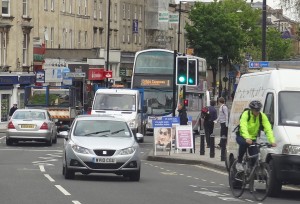 ‘Such a move would generate substantial economic efficiency gains from reduced congestion, reduce the tax levied on the majority of miles driven, leave many (particularly rural) motorists better off, and provide a stable long-term footing for motoring taxes without necessarily raising net additional revenue from drivers.’
Government policy across the world has been increasingly focused on climate change, with targets for emissions reductions being somewhat ambitious. However, many car manufactures who were told to reduce emissions significantly are on the way to meeting these targets and this success is a key factor contributing towards this new road ‘crisis’ that could soon be facing the government. The following articles consider the possibility of a road charging scheme.
Report
The road ahead for motoring taxes? Institute of Fiscal Studies (link to full report at the bottom of the page) (May 2012)
Articles
Compelling case for UK road charging, IFS study says BBC News (15/5/12)
Fears tax shortfall may lead to road tolls Sky News (15/5/12)
Who’s going to pay to update Britain’s infrastructure? Guardian Business Blog (15/5/12)
Motoring taxes: a future headache for the Chancellor Channel 4 News (15/5/12)
For whom the toll bills – less traffic hurts M6 toll road owner Guardian, Ian Griffiths and Dan Milmo (14/5/12)
Charge motorists per mile, says IFS Independent, Nigel Morris (15/5/12)
Green cars to drive down tax receipts Financial Times, Mark Odell and John Reed (15/5/12)
Questions
- Illustrate the effect of a tax being imposed on petrol. What happens to the equilibrium price and quantity?
- Despite fuel duty pushing up the price of petrol, why has there been such a small decline in the quantity of petrol individuals use?
- Evaluate the case for and against a road charging scheme.
- Why are tax revenues from motoring expected to decline over the next decade?
- Climate change has become an increasingly important focus of government policy. To what extent is the current road ‘crisis’ a positive sign that policies to tackle climate change are working?
- If a road charging scheme went ahead and prices were varied depending on traffic, time etc, what name would you give to this strategy?
- Why would it be possible to charge a higher price at peak times and a lower price for cars using country roads?
- Is there an argument for privatising the road network? Is it even possible?
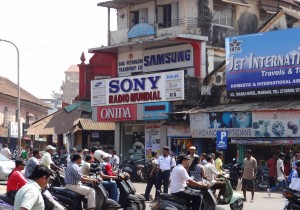 My son Andrew Sloman (see also) is currently in Goa. My wife Alison and I went to visit him over half term – our first trip to India. Goa is a beautiful state, with wonderful beaches, fantastic food and perfect weather in February. But inland from this tourist haven lies an environmental disaster caused by the open-cast extraction of iron ore.
This tiny state by Indian standards produces more than 60% of India’s iron ore exports. Whilst, along with tourism, the iron ore industry has been one of the largest contributors to the Goan economy, its environmental footprint is massive. Deforestation and water and air pollution are just three of the environmental externalities.
So should a cap be placed on the amount of iron ore that is mined? Should the industry be taxed more heavily? Should tough environmental standards be imposed on the industry? Or should it simply be allowed to continue, given its large contribution to the Goan economy? Or, at the other extreme, should the industry be closed? The linked article looks at some of the issues. Try to identify, as an economist, what information you would require in order to come to a conclusion to these questions.
Greens’ shout for cap on iron ore mining falls on deaf ears Times of India, Paul Fernandes (28/2/12)
Questions
- What negative externalities are involved with the Goan iron ore industry? Are there any positive externalities?
- What difficulties are there in measuring the negative externalities?
- How would you set about doing a cost–benefit analysis of (a) expanding the Goan iron ore industry; (b) shutting it?
- Explain the following: “The net present value of the opportunity cost for 25 years at 12% social discount rate of giving it up is greater than its environmental cost by Rs 14,449 crore, the report states.” (A crore is 10 million and Rs is the symbol for an Indian Rupee, where £1 = approximately 78 rupees.)
- What difficulties are there in attempting to take distribution into account when doing a cost–benefit analysis?
The total EU budget in 2010 was €123 billion. Just under half of this (€58 billion) was spent on supporting agriculture. The programme of support – the Common Agricultural Policy (CAP) – has changed over the years. For a start, despite its being a large proportion of the EU budget, this proportion has actually been falling. In 1980, the CAP accounted for 69% of the EU budget; in 1990 it was 60%; in 2000 it was 52%; in 2010 it was 47%.
The types of support have also changed. The main method in the past was effectively to set minimum prices for various foodstuffs and for Intervention Boards to buy up any surpluses that arose from such prices being above the market equilibrium. Massive food ‘mountains’ resulted. Sometimes these surpluses were dumped on the world market; sometimes they were thrown away; sometimes they were simply kept in storage. Export subsidies and import levies (taxes) were also used to reduce surpluses. This, of course, was highly damaging to farmers in many countries outside the EU, especially in various primary exporting developing countries.
Reforms have taken place in recent years. The most important has been to replace high intervention prices with direct payments to farmers unrelated to current output. Whilst such payments still provide a substantial outgoing from the EU budget, being unrelated to current output, they do not encourage farmers to produce more and thus do not generate surpluses. Prices in most cases are allowed to be determined by the market.
The EU has just announced further reforms. These include:
• Capping total CAP spending at current levels until 2020
• Capping the total payment to any one farm to €300,000
• Relating subsidies to acreage rather than previous output
• Making 30% of the direct payments dependent on farmers meeting environmental criteria.
The following videos and articles examine the proposals and assess their likely benefits, their likely drawbacks and their likelihood of being implemented.
Videos
EU plans to reform Common Agricultural Policy for farmers BBC News, Jeremy Cooke (12/10/11)
EU unveils controversial agricultural reforms Euronews (12/10/11)
Towards a new Common Agricultural Policy Euronews (14/10/11)
Queen to lose out in shake up of Europe’s farm payments Channel 4 News (12/10/11)
Cautious welcome for EU agriculture policy shake-up STV News (12/10/11)
CAP reform proposals YouTube, Dacian Cioloş, European Commissioner for Agriculture and Rural Development (in French with English subtitles) (12/10/11)
Articles
EU farm chief: CAP plans represent profound reform Reuters, Charlie Dunmore (12/10/11)
UK to dismiss Common Agricultural Policy reforms as inadequate Guardian, David Gow (11/10/11)
EU Farm Policy Debate Pits Top Receiver France Against U.K. Bloomberg Businessweek, Rudy Ruitenberg (12/10/11)
EU plans CAP reforms for ‘greener’ farm subsidies BBC News (12/10/11)
Common Agriculture Policy farm subsidy plan unveiled BBC News (12/10/11)
Q&A: Reform of EU farm policy BBC News (12/10/11)
CAP reform: Shepherd and steward of the land BBC News, Jeremy Cooke (12/10/11)
EU agriculture policy ‘still hurting farmers in developing countries’ Guardian: Poverty Matters blog, Mark Tran (11/10/11)
EU aid to farmers to continue over next decade Financial Times, Joshua Chaffin (12/10/11)
EU publications
CAP Reform – an explanation of the main elements Europa Press Release (12/10/11)
The European Commission proposes a new partnership between Europe and the farmers European Commission Press Release (12/10/11)
EU farm policy after 2013: Commission proposals welcomed with reservations European Parliament Press Release (12/10/11)
Legal proposals for the CAP after 2013 European Commission: Agriculture and Rural Development (12/10/11)
Questions
- Explain why the old system of price support under the CAP led to food surpluses. Use a diagram to illustrate your analysis.
- What is the significance of price elasticity of demand and supply in determining the size of these surpluses?
- What reforms have been introduced to the CAP in recent years? What effects have these had?
- Explain the new proposals for the CAP after 2013.
- What are the likely benefits of these proposals?
- What are the likely drawbacks of the proposals?
It is widely acknowledged that the supply of oil and gas will eventually run out. As these resources are depleted, prices will inevitably rise. However, with heating and energy bills at extremely high levels, a new ‘resource’ in Sweden has been used to heat buildings: Body Heat!
Hundreds of thousands of people pass through Stockholm Central Station every day and rather than letting the body heat these people generate go to waste, a Swedish firm, Jernhusen, is now ‘collecting’ their heat, converting it into hot water and then using this as a new heating resource. Klass Johnasson, one of the creators of the system said:
This is old technology being used in a new way. The only difference here is that we’ve shifted energy between two different buildings.
The Swedish firm has found that the system is not only environmentally friendly, but it is also good business practice, as it has reduced the energy costs of the block by some 25%, which, during a recession and with high energy prices, is no small thing!
The costs and benefits of such a system will inevitably vary from country to country, but in Sweden’s case, it is a viable method of heating, given their high energy prices and low winter temperatures. They are not stealing the heat from anyone, but are simply converting the excess heat that is already there. Obviously, the fact that the firm owns the station, and also the land between the station and their building, is helpful in ‘transferring’ the energy, but the firm argues that even if this wasn’t the case, it’s nothing co-operation wouldn’t solve. Is this the future of low-cost and low-carbon heating?
Harvesting energy: body heat to warm buildings BBC News, Xanthe Hinchey (9/1/11)
How Sweden turns human body heat into useful energy BBC News (19/4/10)
Passengers passing by Stockholm Central Station reduce 25% of used heating energy The Green Optimistic, Mihai Sandru (12/1/11)
Body heat: the new energy source ecPulse (11/1/11)
Questions
- Think about how we define abundance. Is body heat an abundant resource?
- Why are energy and oil prices so high? How does scarcity affect their price?
- Could this source of heating be described as a market failure? If so, how could we illustrate this on a diagram?
- Consider the Swedish firm’s profit-maximising price and output. The new heating method is said to reduce their costs – will it affect their average and/or marginal costs? Show the impact on a diagram. What happens to the firm’s profits?
- Is this heating method something other firms could benefit from? How could they decide whether it is cost-effective?
- Is there a role for the government to encourage more firms to use this method? Explain your answer.
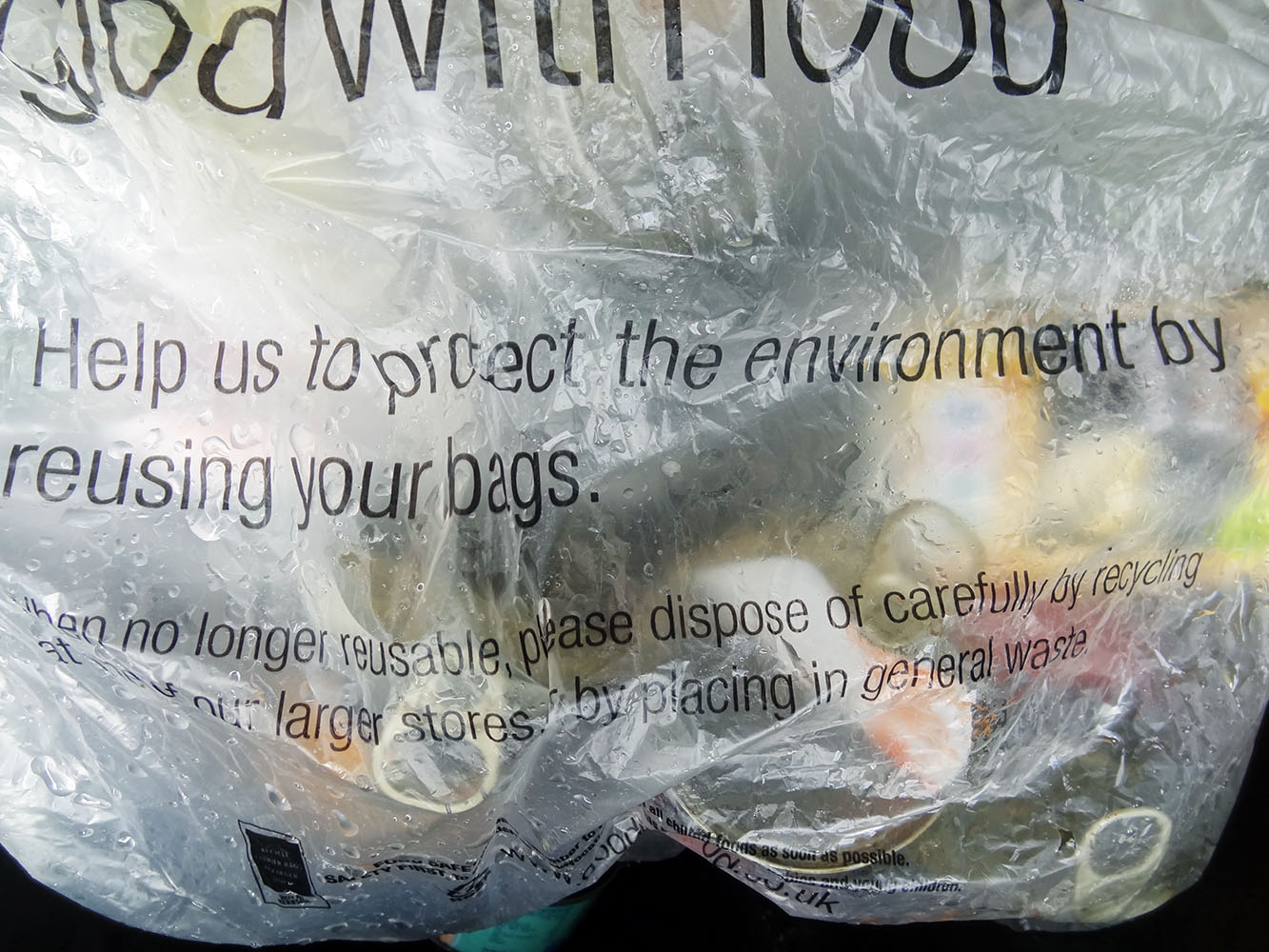 A campaign to introduce a tax on disposable plastic bags in England has been launched by various pressure groups, including The Campaign to Protect Rural England (CPRE), Keep Britain Tidy, the Marine Conservation Society and Surfers Against Sewage. Plastic bags, they maintain, litter streets and the countryside and pollute the seas, where they cause considerable damage to marine life.