 One of the key developments in economics in recent years has been the growing influence of behavioural economics. We considered some of the insights of behavioural economics in a blog in 2016 (A nudge in the right direction?). As the post stated, ‘Behavioural economists study how people’s buying, selling and other behaviour responds to various incentives and social situations. They don’t accept the simplistic notion that people are always rational maximisers.’ The post quoted from a Livemint article (see first linked article below):
According to behavioural economists, the human brain neither has the time nor the ability to process all the information involved in decision making, as assumed by the rational model.
Instead, people use heuristics. A heuristic technique is any approach to problem-solving, such as deciding what to buy, which is practical and sufficient for the purpose, but not necessarily optimal. For example, people may resort to making the best guess, or to drawing on past experiences of similar choices that turned out to be good or bad. On other accasions, when people are likely to face similar choices in the future, they resort to trial and error. They try a product. If they like it, they buy it again; if not, they don’t.
On other occasions, they may use various rules of thumb: buying what their friends do, or buying products on offer or buying trusted brands. These rules of thumb can lead to estimates that are reasonably close to the utility people will actually get and can save on time and effort. However, they sometimes lead to systematic and predictable misjudgements about the likelihood of certain events occurring.
In traditional models of consumer choice, individuals aim to maximise their utility when choosing between goods, or bundles of goods. The context in which the choices are offered is not considered.
Yet, in real life, we see that context is important; people will often make different choices when they are presented, or framed, in different ways. For example, people will buy more of a good when it is flagged up as a special offer than they would if there is no mention of an offer, even though the price is the same.
 The recognition that framing is important to choices has led to the development of nudge theory. Indeed, it underpins many marketing techniques. These seek to persuade people to make a particular choice by framing it in an optimistic way or presenting it in a way that makes it easy to decide.
Governments too use nudge theory. In the UK, the Coalition government (2010–15) established the Behavioural Insights Team (BIT) (also unofficially known as the Nudge Unit) in the Cabinet Office in 2010. A major objective of this team is to use ideas from behavioural economics to design policies that enable people to make better choices for themselves.
The podcast linked below, looks at the use of nudge theory. The presenter, Mary Ann Sieghart looks at how we are being encouraged to change our behaviour. She also looks at the work of UCL’s Love Lab which researches the way we make decisions. As the programme notes state:
Mary Ann is grilled in UCL’s Love Lab to find out how she makes decisions; she finds taking the pound signs off the menu in a restaurant encourages her spend more and adding adjectives to the food really makes it taste better.
Walking through the Nudge Unit, she hears how powerful a tiny tweak on a form or text can get be, from getting people back to work to creating a more diverse police force. Popular with the political left and right, it has been embraced around the world; from Guatemala to Rwanda, Singapore to India it is used to reduce energy consumption, encourage organ donation, combat corruption and even stop civil wars.
But the podcast also looks at some of the darker sides of nudging. Just as we can be nudged into doing things in our interests, so too we can be nudged to do things that are not so. Politicians and businesses may seek to manipulate people to get them to behave in ways that suit the government or the business, rather than the electorate or the consumer. The dark arts of persuasion are also something that behavioural economists study.
The articles below explore some of the areas where nudge theory is used to devise policy to influence our behaviour – for good or bad.
Podcast
Video
Articles
- New frontiers of human behaviour
Livemint, Biju Dominic (15/9/16)
- It’s been 10 years since behavioral economics hit the mainstream
Quartz, Dan Kopf (13/10/18)
- What is ‘nudge theory’ and why should we care? Explaining Richard Thaler’s Nobel economics prize-winning concept
Independent, Ben Chu (9/10/17)
- Is Nudge Theory The Answer To Our Single-Use Plastics Problem?
HuffPost, Ollie Boesen (15/6/18)
- Re-enrolment key to ‘nudge’ UK into saving: survey
Investment and Pensions Europe Magazine (IPE), Elizabeth Pfeuti (22/10/18)
- Applying nudge strategies to higher education
Times Higher Education, Ben Castleman (6/7/18)
- Want to nudge others to install solar? Actions speak louder than words
Phys.org, Kevin Dennehy (25/10/18)
- DNA test and phone app to ‘nudge’ Waitrose shoppers towards healthier food
Imperial College London News, Caroline Brogan (12/10/18)
- “Nudge theory” explored to boost medication adherence
AMA Wire, Sara Berg (29/6/18)
- Simple ‘nudge’ letters can boost school attendance, new research suggests
The Seattle Times, Neal Morton (5/7/18)
- Using Behavioral Nudges to Treat Diabetes
Harvard Business Review, Thomas H. Davenport, James Guszcza and Greg Szwartz (10/10/18)
- Why nudge theory works until a kick in the backside is needed.
The Guardian, Andrew Rawnsley (22/10/17)
- Why Nudging Your Customers Can Backfire
Harvard Business Review, Utpal M. Dholakia (15/4/16)
Questions
- Explain what are meant by ‘bounded rationality’ and ‘heuristics’.
- How may populist politicians use nudge theory in their campaigning?
- Give some examples from your own behaviour of decisions made using rules of thumb.
- Should we abandon models based on the assumption of rational maximising behaviour (e.g. attempts to maximise consumer surplus or to maximise profit)?
- Find out some other examples of how people might be nudged to behave in ways that are in their own interest or that of society.
- How might we be nudged into using less plastic?
- How might people be nudged to eat more healthily or to give up smoking?
- To what extent can financial incentives, such as taxes, fines, grants or subsidies be regarded as nudging? Explain.
- Would you advise all GP surgeries and hospital outpatient departments to text reminders to people about appointments? What should such reminders say? Explain.
 Would you like to be a millionaire? Of course you would – who wouldn’t, right? Actually the answer to this question may be more complicated than you might think (see for instance Sgroi et al (2017) on the economics of happiness: see linked article below), but, generally speaking, most people would answer positively to this question.
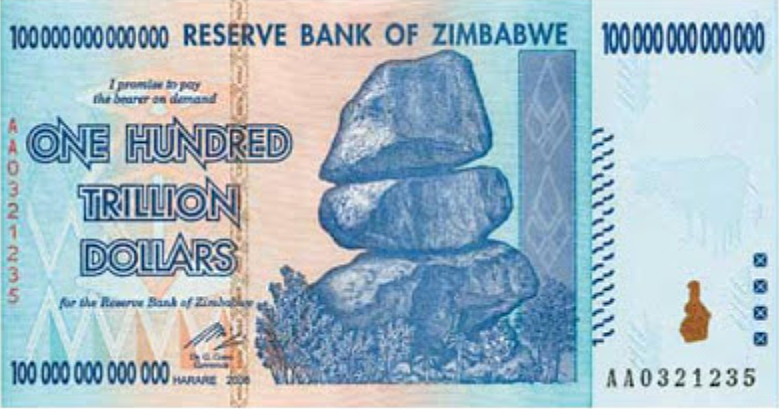
What if I told you, however, that you could become a millionaire (actually, scratch that – think big – make that “trillionaire”) overnight and be deeply unhappy about it? If you don’t believe me see what happened to Zimbabwe 10 years ago, when irresponsible money printing and fiscal easing drove the country’s economy to staggering hyperinflation (see the blogs A remnant of hyperinflation in Zimbabwe and Fancy a hundred trillion dollar note?. At the peak of the crisis, prices were increasing by a factor of 130 each year. I have in my office a 100 trillion Zimbabwean dollar note (see below) which I show in my lectures when I talk about hyperinflation to my first year Economics for Business students (if you are one of them, make sure not to miss it next February at UEA!). How much is this 100 trillion note worth? Nothing (except, may be, for collectors). It has been withdrawn from circulation as it ended up not even being worth the cost of the paper on which it was printed.
The Zimbabwean economy managed to pull itself out of this spiral of economic death, partly by informally replacing its hyperinflationary currency with the US greenback, and partly by keeping its fiscal spending under control and reverting to more sane economic policy making. That lasted until 2013, after which the government launched a Zimbabwean digital currency (known as “Zollar”) that had a nominal value set equal to a US dollar; and forced its exporters to exchange their greenbacks for Zollars. It then started spending these USD to finance a very ambitious and unsustainable programme of fiscal expansion.
The Economist published yesterday a story that shows the results of this policy – wild price increases and empty supermarket shelves are both back. According to the newspaper’s report:
At a supermarket in Harare, Zimbabwe’s capital, the finance minister is staring aghast at a pack of nappies. ‘This is absolutely ridiculous!’, exclaims Mthuli Ncube. ‘$49!’ A manager says it cost $23 two weeks ago, before pointing out other eye-watering items such as $20 Coco Pops. […] Over the past two weeks zollars have been trading at as little as 17 cents to the dollar. The devaluation has led to a surge in prices—and not just in imported goods like nappies. Football fans attending the Zimbabwe v Democratic Republic of Congo game on October 16th were shocked to learn that ticket prices had doubled on match day.
How long will it take for the 100 trillion Zollar to make its appearance again? We shall find out. I am sure Zimbabweans will be less than thrilled!
Articles and Report
- A fist full of zollars: Zimbabwe’s shops are empty and prices are soaring
The Economist (28/10/18)
- Shelves Empty as Specter of Hyperinflation Stalks Zimbabwe
Bloomberg, Paul Wallace, Godfrey Marawanyika and Desmond Kumbuka (12/10/18)
- imbabwe currency crisis: No cash, no bread, no KFC
BBC News, Andrew Harding (12/10/18)
- Hyperinflation in Zimbabwe: money demand, seigniorage and aid shocks
Journal of Applied Economics, Tara McIndoe-Calder (Volume 50, Issue 15, 18/9/17)
- Understanding Happiness
A CAGE Policy Report: Social Market Foundation, Daniel Sgroi, Thomas Hills, Gus O’Donnell, Andrew Oswald and Eugenio Proto (January 2017)
Videos
Questions
- Using an AS/AD diagram, explain the concept of hyperinflation. How can irresponsible fiscal policy-making lead to hyperinflation?
- What are the effects of hyperinflation on the people who live in the affected countries? Search the web for examples and case studies, and use them to support your answer.
- Once it has started, what policies can be used to fight hyperinflation? Use examples to support your answer.
- How does speculation affect hyperinflation?
 In December 2015, countries from around the world met in Paris at the United Nations Intergovernmental Panel on Climate Change (IPCC). The key element of the resulting Paris Agreement was to keep ‘global temperature rise this century well below 2 degrees Celsius above pre-industrial levels and to pursue efforts to limit the temperature increase even further to 1.5 degrees Celsius.’ At the same time it was agreed that the IPCC would conduct an analysis of what would need to be done to limit global warming to 1.5°C. The IPPC has just published its report.
The report, based on more than 6000 scientific studies, has been compiled by more than 80 of the world’s top climate scientists. It states that, with no additional action to mitigate climate change beyond that committed in the Paris Agreement, global temperatures are likely to rise to the 1.5°C point somewhere between 2030 and 2040 and then continue rising above that, reaching 3°C by the end of the century.
 According to the report, the effects we are already seeing will accelerate. Sea levels will rise as land ice caps and glaciers melt, threatening low lying coastal areas; droughts and floods will become more severe; hurricanes and cyclones will become stronger; the habits of many animals will become degraded and species will become extinct; more coral reefs will die and fish species disappear; more land will become uninhabitable; more displacement and migration will take place, leading to political tensions and worse.
Two tragedies

The problem of greenhouse gas emissions and global warming is a classic case of the tragedy of the commons. This is where people overuse common resources, such as open grazing land, fishing grounds, or, in this case, the atmosphere as a dump for emissions. They do so because there is little, if any, direct short-term cost to themselves. Instead, the bulk of the cost is borne by others – especially in the future.
There is another related tragedy, which has been dubbed the ‘tragedy of incumbents’. This is a political problem where people in power 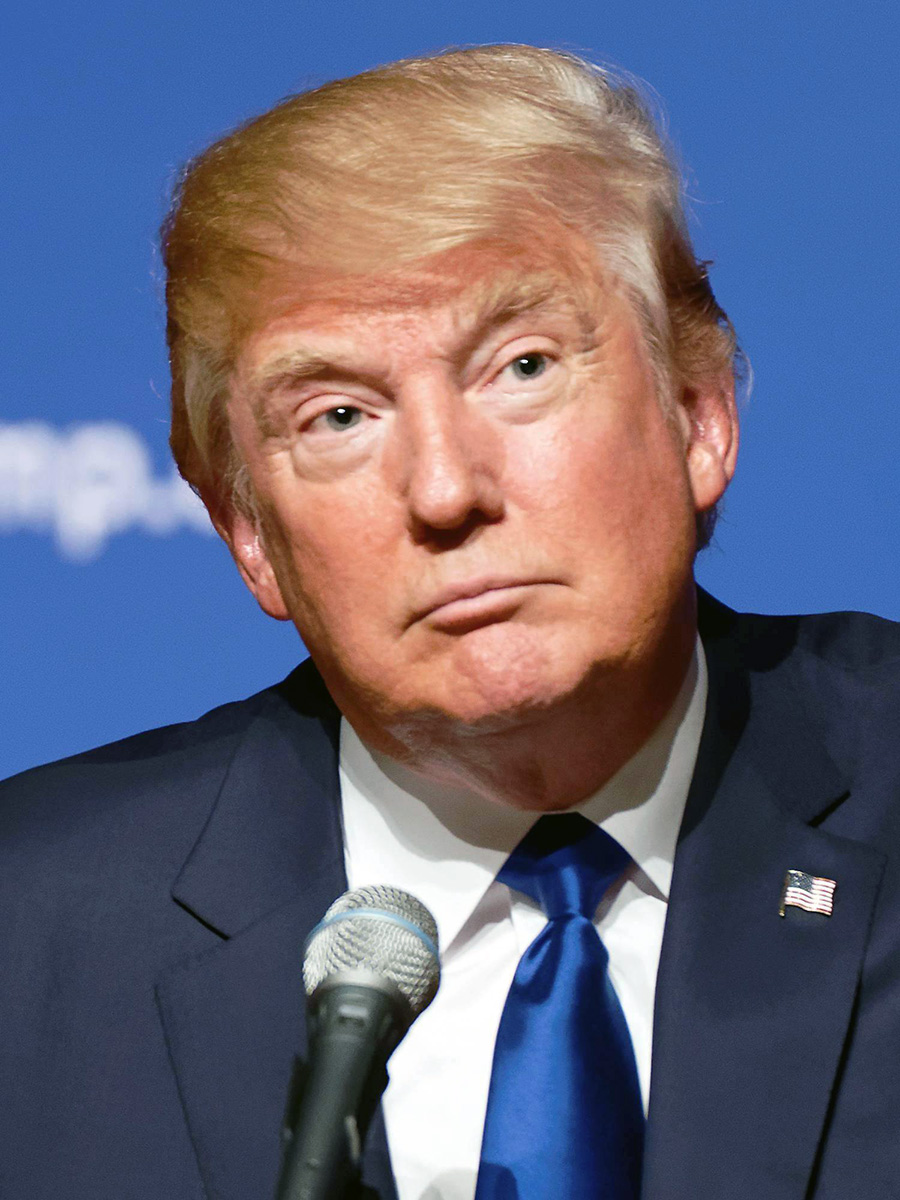 want to retain that power and do so by appealing to short-term selfish interests. The Trump administration lauds the use of energy as helping to drive the US economy and make people better off. To paraphrase Donald Trump ‘Climate change may be happening, but, hey, let’s not beat ourselves up about it and wear hair shirts. What we do will have little or no effect compared with what’s happening in China and India. The USA is much better off with a strong automobile, oil and power sector.’
What’s to be done?
According to the IPCC report, if warming is not to exceed 1.5℃, greenhouse gas emissions must be reduced by 45% by 2030 and by 100% by around 2050. But is this achievable?
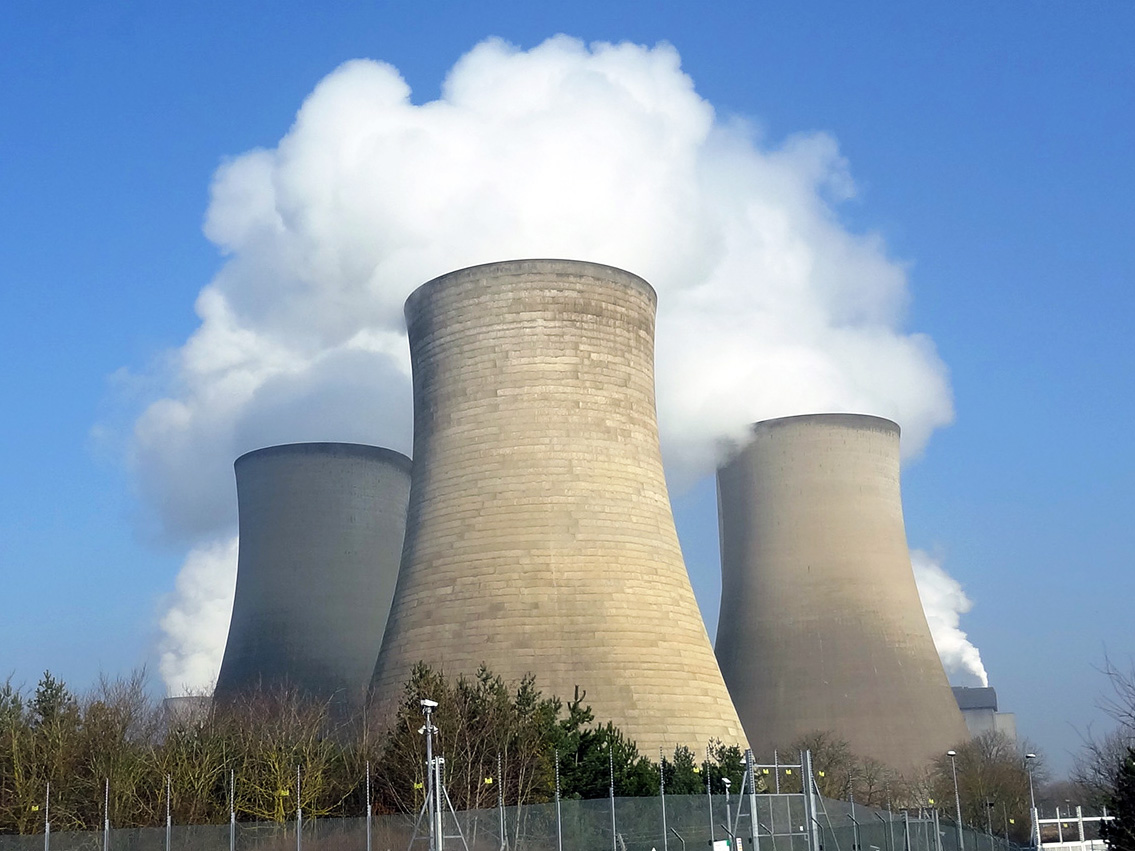 The commitments made in the Paris Agreement will not be nearly enough to achieve these reductions. There needs to be a massive movement away from fossil fuels, with between 70% and 85% of global electricity production being from renewables by 2050. There needs to be huge investment in green technology for power generation, transport and industrial production.
In addition, the report recommends investing in atmospheric carbon extraction technologies. Other policies to reduce carbon include massive reforestation.
Both these types of policies involve governments taking action, whether through increased carbon taxes on either producers or consumer or both, or through increased subsidies for renewables and other alternatives, or through the use of cap and trade with emissions allocations (either given by government or sold at auction) and carbon trading, or through the use of regulation to prohibit or limit behaviour that leads to emissions. The issue, of course, is whether governments have the will to do anything. Some governments do, but with the election of populist leaders, such as President Trump in the USA, and probably Jair Bolsonaro in Brazil, and with sceptical governments in other countries, such as Australia, this puts even more onus on other governments.
Another avenue is a change in people’s attitudes, which may be influenced by education, governments, pressure groups, news media, etc. For example, if people could be persuaded to eat less meat, drive less (for example, by taking public transport, walking, cycling, car sharing or living nearer to their work), go on fewer holidays, heat their houses less, move to smaller homes, install better insulation, etc., these would all reduce greenhouse gas emissions.
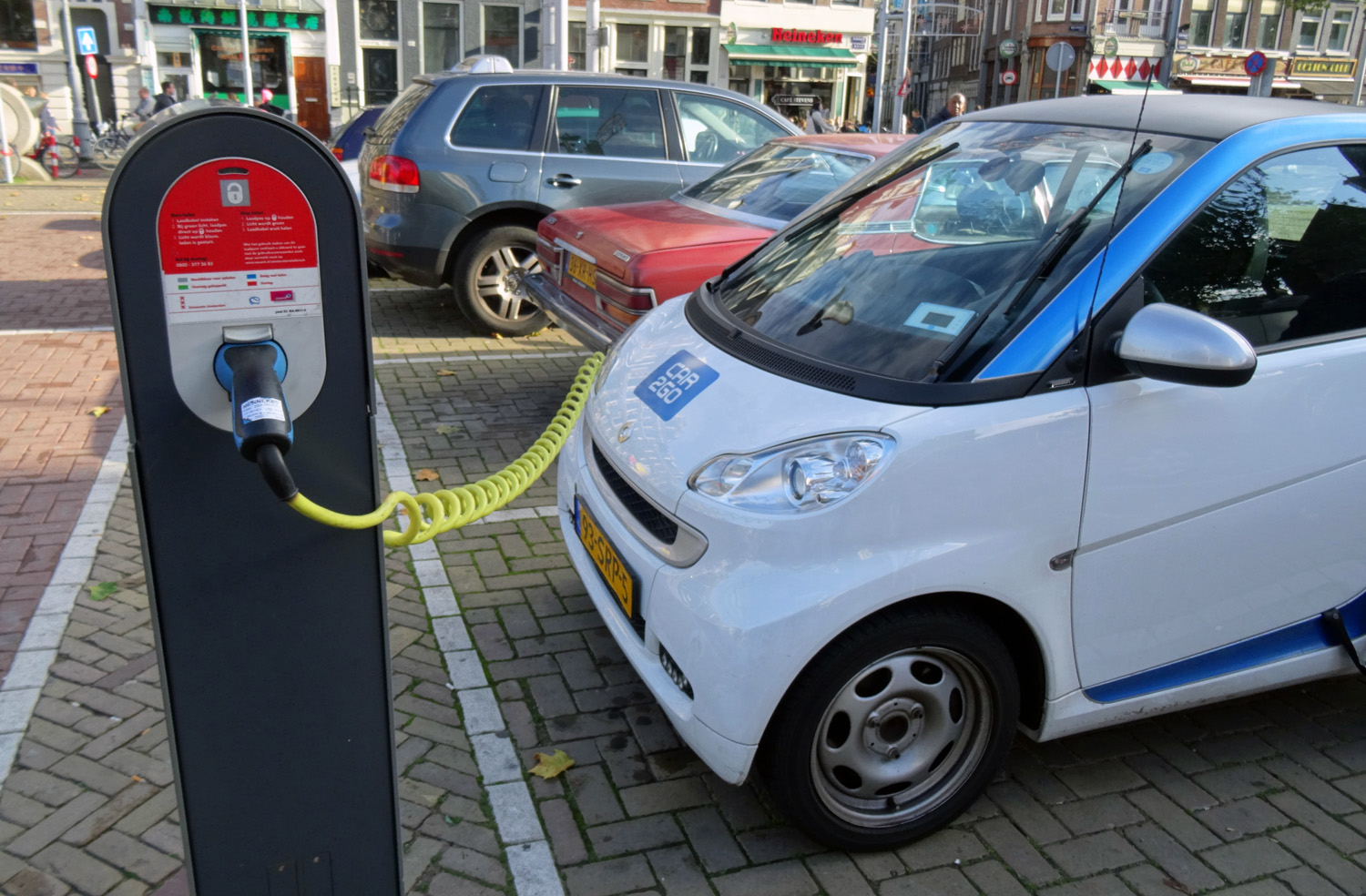 Finally, there is the hope that the market may provide part of the solution. The cost of generating electricity from renewables is coming down and is becoming increasingly competitive with electricity generated from fossil fuels. Electric cars are coming down in price as battery technology develops; also, battery capacity is increasing and recharging is becoming quicker, helping encourage the switch from petrol and diesel cars to electric and hybrid cars. At the same time, various industrial processes are becoming more fuel efficient. But these developments, although helpful, will not be enough to achieve the 1.5°C target on their own.
Videos and audio
Articles
- We must reduce greenhouse gas emissions to net zero or face more floods
The Guardian, Nicholas Stern (8/10/18)
- Rapid, unprecedented change needed to halt global warming – U.N.
Reuters, Nina Chestney and Jane Chung (8/10/18)
- Final call to save the world from ‘climate catastrophe’
BBC News, Matt McGrath (8/10/18)
- New UN report outlines ‘urgent, transformational’ change needed to hold global warming to 1.5°C
The Conversation, Mark Howden and Rebecca Colvin (8/10/18)
- Earth’s temperature to rise 1.5C as early as 2030 amid dire warnings from UN climate panel
The Telegraph (8/10/18)
- UN Climate Change Report: Everything You Need To Know
Huffington Post, Isabel Togoh (8/10/18)
- Thirty years of the IPCC
Physics World (8/10/18)
- 13 things you should know about 1.5
Unearthed, Zach Boren (8/10/18)
- Climate change impacts worse than expected, global report warns
National Geographic, Stephen Leahy (7/10/18)
- World to miss Paris climate targets by wide margin, says UN panel
Financial Times, Leslie Hook (8/10/18)
- We have 12 years to limit climate change catastrophe, warns UN
The Guardian, Jonathan Watts (8/10/18)
- Limiting warming to 1.5C is possible – if there is political will
The Guardian, Christiana Figueres (8/10/18)
- The Trump administration has entered Stage 5 climate denial
The Guardian, Dana Nuccitelli (8/10/18)
- ‘Unprecedented changes’ needed to stop global warming as UN report reveals islands starting to vanish and coral reefs dying
Independent, Josh Gabbatiss (8/10/18)
Report
Questions
- Explain the extent to which the problem of global warming is an example of the tragedy of the commons. What other examples are there of the tragedy?
- Explain the meaning of the tragedy of the incumbents and its impact on climate change? Does the length of the electoral cycle exacerbate the problem?
- With the costs of low or zero carbon technology for energy and transport coming down, is there as case for doing nothing in response to the problem of global warming?
- Examine the case for and against using taxes and subsidies to tackle global warming.
- Examine the case for and against using regulation to tackle global warming.
- Examine the case for and against using cap-and-trade systems to tackle global warming.
- Is there a prisoners’ dilemma problem in getting governments to adopt policies to tackle climate change?
- What would be the motivation for individuals to ‘do their bit’ to tackle climate change? Other than altering prices or using regulation, how might the government or other agencies set about persuading people to ‘be more green’?
- If you were doing a cost–benefit analysis of some project that will have beneficial environmental impacts in the future, how would you set about adjusting the values of these benefits for the fact that they occur in the future and not now?
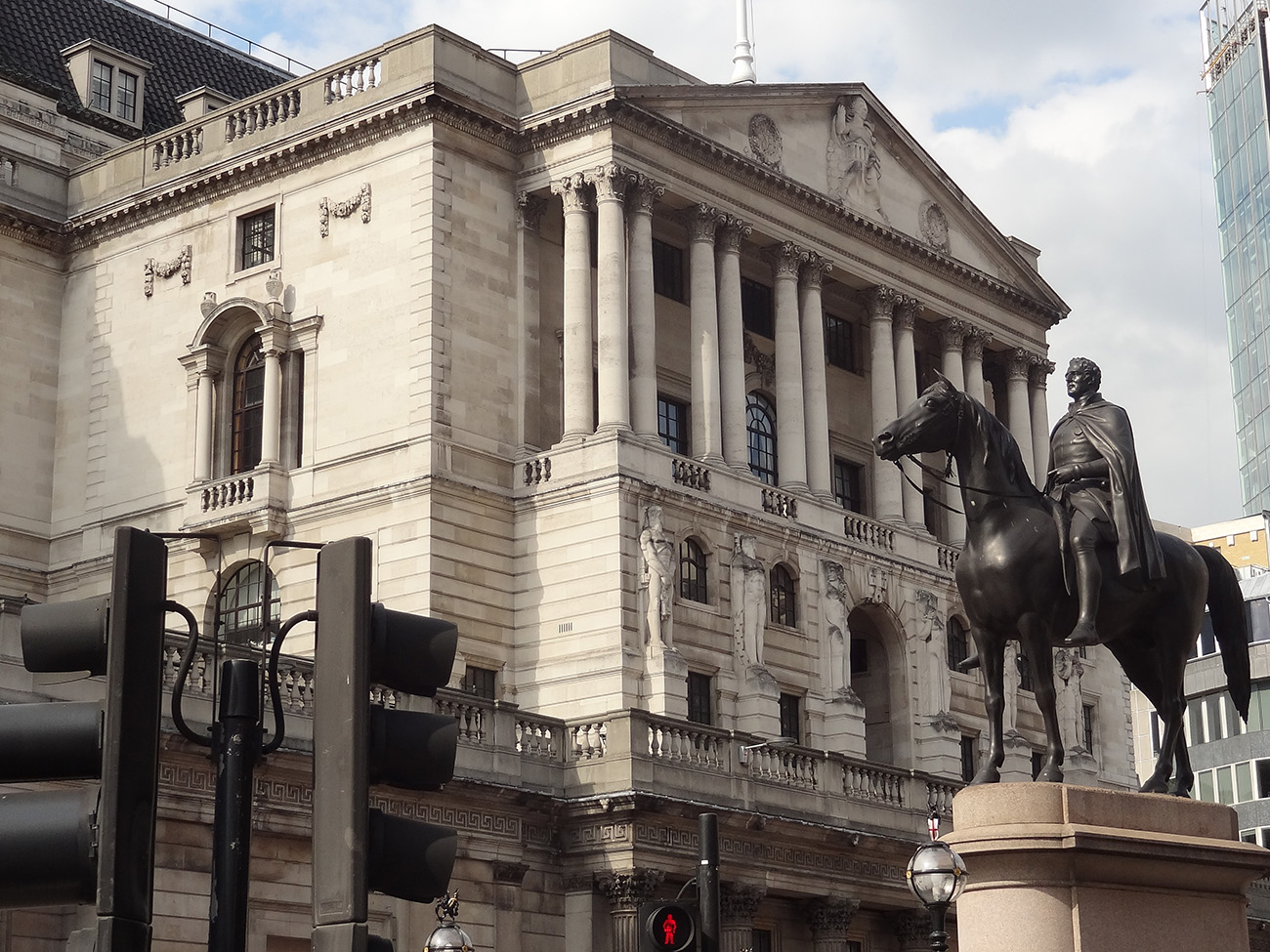
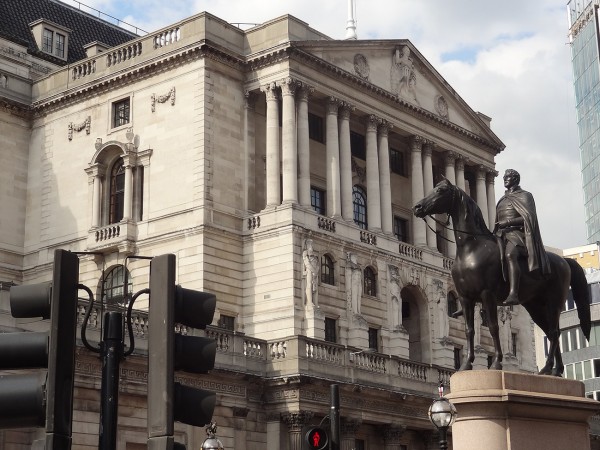 On 8 February, the Bank of England issued a statement that was seen by many as a warning for earlier and speedier than previously anticipated increases in the UK base rate. Mark Carney, the governor of the Bank of England, referred in his statement to ‘recent forecasts’ which make it more likely that ‘monetary policy would need to be tightened somewhat earlier and by a somewhat greater extent over the forecast period than anticipated at the time of the November report’.
A similar picture emerges on the other side of the Atlantic. With labour markets continuing to deliver spectacularly high rates of employment (the highest in the last 17 years), there are also now signs that wages are on an upward trajectory. According to a recent report from the US Bureau of Labor Statistics, US wage growth has been stronger than expected, with average hourly earnings rising by 2.9 percent – the strongest growth since 2009.
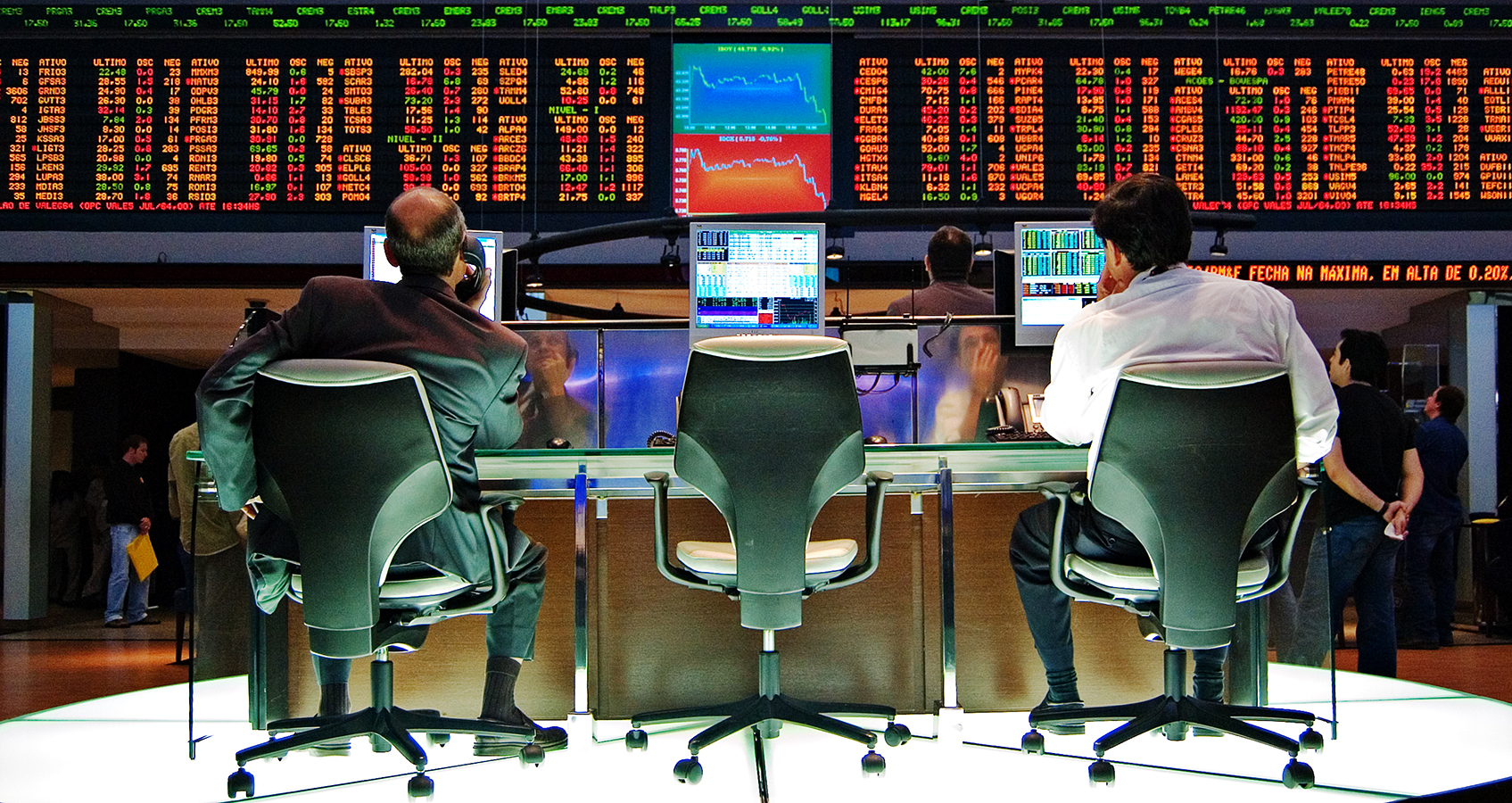
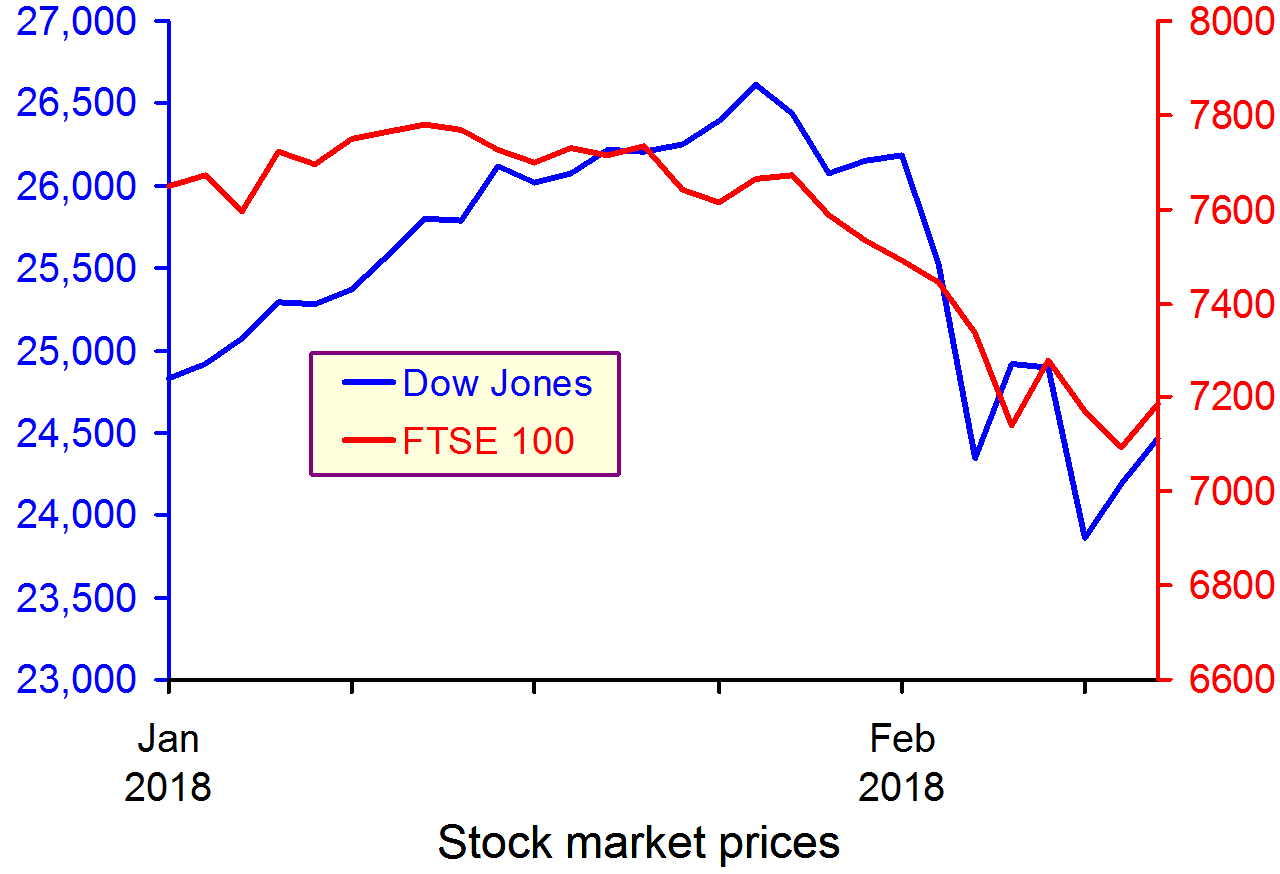
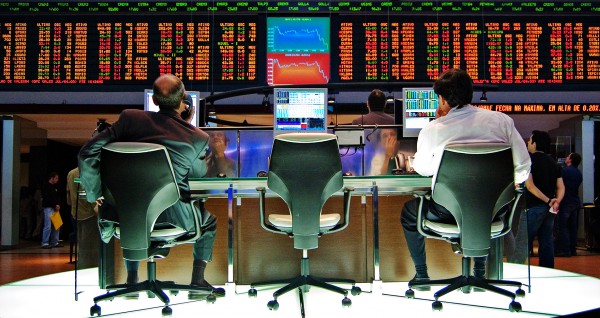 These statements have coincided with a week of sharp corrections and turbulence in the world’s largest capital markets, as investors become increasingly conscious of the threat of rising inflation – and the possibility of tighter monetary policy.
The Dow Jones plunged from an all-time high of 26,186 points on 1 February to 23,860 a week later – losing more than 10 per cent of its value in just five trading sessions (suffering a 4.62 percentag fall on 5 February alone – the worst one-day point fall since 2011). European and Asian markets followed suit, with the FTSE-100, DAX and NIKKEI all suffering heavy losses in excess of 5 per cent over the same period.
 But why should higher inflationary expectations fuel a sell-off in global capital markets? After all, what firm wouldn’t like to sell its commodities at a higher price? Well, that’s not entirely true. Investors know that further increases in inflation are likely to be met by central banks hiking interest rates. This is because central banks are unlikely to be willing or able to allow inflation rates to rise much above their target levels.
The Bank of England, for instance, sets itself an inflation target of 2%. The actual ongoing rate of inflation reported in the latest quarterly Inflation Report is 3% (50 per cent higher than the target rate).
Any increase in interest rates is likely to have a direct impact on both the demand and the supply side of the economy.
Consumers (the demand side) would see their cost of borrowing increase. This could put pressure on households that have accumulated large amounts of debt since the beginning of the recession and could result in lower consumer spending.
Firms (the supply side) are just as likely to suffer higher borrowing costs, but also higher operational costs due to rising wages – both of which could put pressure on profit margins.
It now seems more likely that we are coming towards the end of the post-2008 era – a period that saw the cost of money being driven down to unprecedentedly low rates as the world’s largest economies dealt with the aftermath of the Great Recession.
For some, this is not all bad news – as it takes us a step closer towards a more historically ‘normal’ equilibrium. It remains to be seen how smooth such a transition will be and to what extent the high-leveraged world economy will manage to keep its current pace, despite the increasingly hawkish stance in monetary policy by the world’s biggest central banks.
Video
 Dow plunges 1,175 – worst point decline in history CNN Money, Matt Egan (5/2/18)
Articles
Global Markets Shed $5.2 Trillion During the Dow’s Stock Market Correction Fortune, Lucinda Shen (9/2/18)
Bank of England warns of larger rises in interest rates Financial Times, Chris Giles and Gemma Tetlow (8/2/18)
Stocks are now in a correction — here’s what that means Business Insider, Andy Kiersz (8/2/18)
US economy adds 200,000 jobs in January and wages rise at fastest pace since recession Business Insider, Akin Oyedele (2/2/18)
Questions
- Using supply and demand diagrams, explain the likely effect of an increase in interest rates to equilibrium prices and output. Is it good news for investors and how do you expect them to react to such hikes? What other factors are likely to influence the direction of the effect?
- Do you believe that the current ultra-low interest rates could stay with us for much longer? Explain your reasoning.
- What is likely to happen to the exchange rate of the pound against the US dollar, if the Bank of England increases interest rates first?
- Why do stock markets often ‘overshoot’ in responding to expected changes in interest rates or other economic variables
 OPEC, for some time, was struggling to control oil prices. Faced with competition from the fracking of shale oil in the USA, from oil sands in Canada and from deep water and conventional production by non-OPEC producers, its market power had diminished. OPEC now accounts for only around 40% of world oil production. How could a ‘cartel’ operate under such conditions?
One solution was attempted in 2014 and 2015. Faced with plunging oil prices which resulted largely from the huge increase in the supply of shale oil, OPEC refused to cut its output and even increased it slightly. The aim was to keep prices low and to drive down investment in alternative sources, especially in shale oil wells, many of which would not be profitable in the long term at such prices.
In late 2016, OPEC changed tack. It introduced its first cut in production since 2008. In September it introduced a new quota for its members that would cut OPEC production by 1.2 million barrels per day. At the time, Brent crude oil price was around $46 per barrel.
In December 2016, it also negotiated an agreement with non-OPEC producers, and most significantly Russia, that they would also cut production, giving a total cut of 1.8 million barrels per day. This amounted to around 2% of global production. In March 2017, it was agreed to extend the cuts for the rest of the year and in November 2017 it was agreed to extend them until the end of 2018.
With stronger global economic growth in 2017 and into 2018 resulting in a growth in demand for oil, and with OPEC and Russia cutting back production, oil prices rose rapidly again (see chart: click here for a PowerPoint). By January 2018, the Brent crude price had risen to around $70 per barrel.
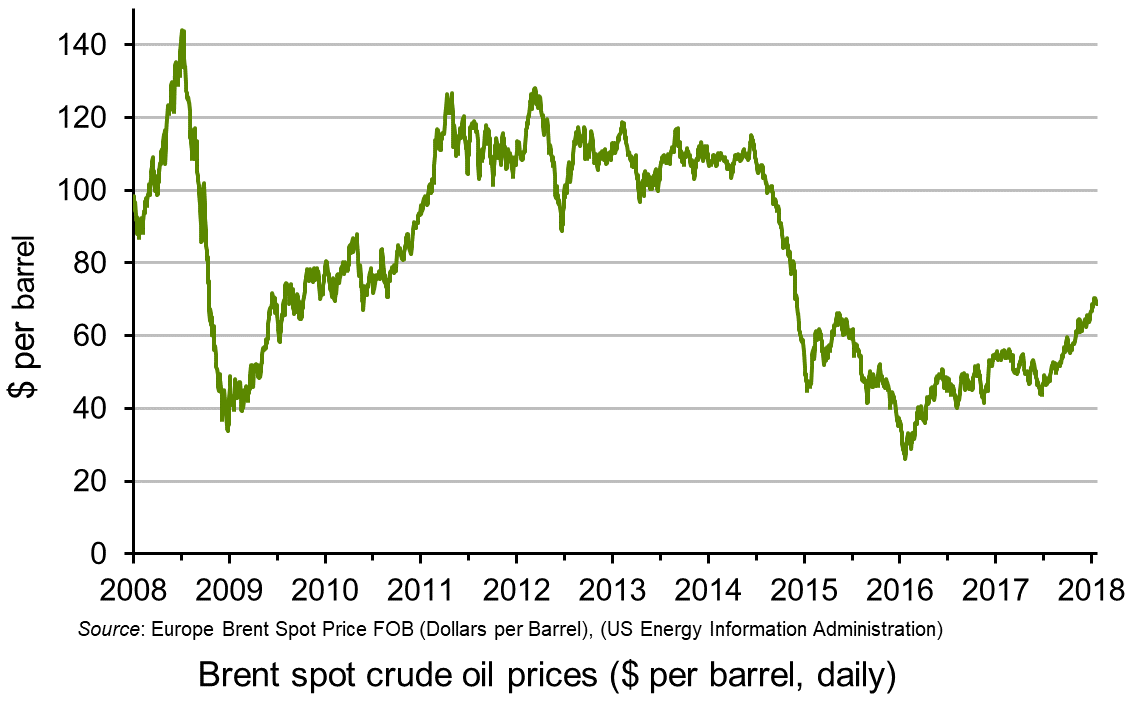
Low oil prices had had the effect of cutting investment in shale oil wells and other sources and reducing production from those existing ones which were now unprofitable. The question being asked today is to what extent oil production from the USA, Canada, the North Sea, etc. will increase now that oil is trading at around $70 per barrel – a price, if sustained, that would make investment in many shale and other sources profitable again, especially as costs of extracting shale oil is falling as fracking technology improves. US production since mid-2016 has already risen by 16% to nearly 10 million barrels per day. Costs are also falling for oil sand and deep water extraction.
In late January 2018, Saudi Arabia claimed that co-operation between oil producers to limit production would continue beyond 2018. Shale oil producers in the USA are likely to be cheered by this news – unless, that is, Saudi Arabia and the other OPEC and non-OPEC countries party to the agreement change their minds.
Videos
OPEC’s Control of the Oil Market Is Running on Fumes Bloomberg (21/12/17)
Oil Reaches $70 a Barrel for First Time in Three Years Bloomberg, Stuart Wallace (11/1/18)
Banks Increasingly Think OPEC Will End Supply Cuts as Oil Hits $70 Bloomberg, Grant Smith (15/1/18)
Articles
Oil prices rise to hit four-year high of $70 a barrel BBC News (11/1/18)
Overshooting? Oil hits highest level in almost three years, with Brent nearing $70 Financial Times, Anjli Raval (10/1/18)
Can The Oil Price Rally Continue? OilPrice, Nick Cunningham (14/1/18)
Will This Cause An Oil Price Reversal? OilPrice, Olgu Okumus (22/1/18)
The world is not awash in oil yet
Arab News, Wael Mahdi (14/1/15)
‘Explosive’ U.S. oil output growth seen outpacing Saudis, Russia CBC News (19/1/18)
Oil’s Big Two seeking smooth exit from cuts The Business Times (23/1/18)
Saudi comments push oil prices higher BusinessDay, Henning Gloystein (22/1/18)
Report
Short-term Energy Outlook U.S. Energy Information Administration (EIA) (9/1/18)
Questions
- Using supply and demand diagrams, illustrate what has happened to oil prices and production over the past five years. What assumptions have you made about the price elasticity of supply and demand in your analysis?
- If the oil price is above the level at which it is profitable to invest in new shale oil wells, would it be in the long-term interests of shale oil companies to make such investments?
- Is the structure of the oil industry likely to result in long-term cycles in oil prices? Explain why or why not.
- Investigate the level of output from, and investment in, shale oil wells over the past three years. Explain what has happened.
- Would it be in the interests of US producers to make an agreement with OPEC on production quotas? What would prevent them from doing so?
- What is likely to happen to oil prices over the coming 12 months? What assumptions have you made and how have they affected your answer?
- If the short-term marginal costs of operating shale oil wells is relatively low (say, below $35 per barrel) but the long-term marginal cost (taking into account the costs of investing in new wells) is relatively high (say, over $65 per barrel) and if the life of a well is, say, 5 years, how is this likely to affect the pattern of prices and output over a ten-year period? What assumptions have you made and how do they affect your answer?
- If oil production from countries not party to the agreement between OPEC and non-OPEC members increases rapidly and if, as a result, oil prices start to fall again, what would it be in OPEC’s best interests to do?