 In 2012, the Scottish Parliament voted to introduce a minimum unit price for alcoholic drinks. The Scotch Whisky Association along with others appealed against the legislation, but on 15 November 2017 the UK Supreme Court ruled unanimously that the legislation does not breach European Union law. It is thus likely that, after consultation, a 50p minimum unit price will be introduced, making Scotland the first country in the world to introduce minimum pricing for alcohol.
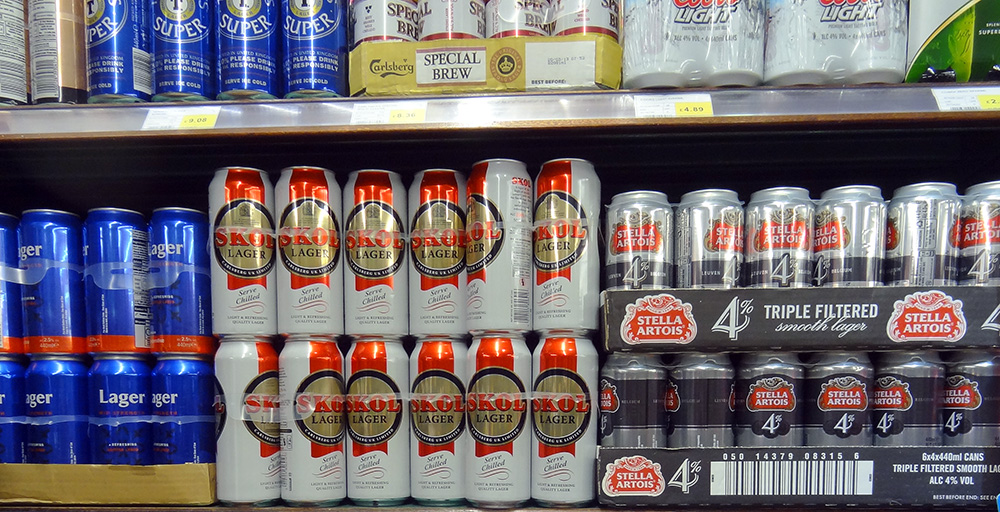
As we saw in a previous blog, Alcohol minimum price, the aim is to prevent the sale of really cheap drinks in supermarkets and other outlets. For example, three-litre bottles of strong cider can be sold for as little as £3.59. Sometimes supermarkets offer multibuys which are heavily discounted. The idea of minimum pricing is to stop these practices without affecting ‘normal’ prices. For example, the legislation will not affect prices in pubs, which are already more than 50p per unit of alcohol.
The following table shows how much prices would rise for various types of drink when compared to current cheap supermarket prices. The biggest percentage effect is for cheap, strong cider and beer.
|
Strength |
Size |
Units of alcohol |
Current price |
New minimum price |
| Cheap strong cider |
7.5% |
3 litres |
22.5 |
£3.50 |
£11.25 |
| Cheap wine |
13% |
750ml |
9.75 |
£3.99 |
£4.88 |
| Cheap beer/lager (normal) |
4% |
4 × 440ml |
7.04 |
£2.50 |
£3.52 |
| Cheap beer/lager (strong) |
8% |
4 × 500ml |
16 |
£3.50 |
£8.00 |
| Cheap spirits |
37.5% |
70cl |
26.25 |
£10.00 |
£13.13 |
| Cheap strong spirits |
50% |
70cl |
35 |
£12.00 |
£17.50 |
The hope is that by preventing the sale of really cheap drinks in supermarkets, people will no longer be encouraged to ‘pre-load’, so that when they go out for the evening they are already drunk. It would also help to reduce the number of alcoholics amongst the poor.
But this raises the question of equity. By targeting cheap drink, the policy is likely to hit the poor hardest. The question is whether this will simply lead to alcoholics on low incomes cutting down on other things, such as food and clothing for themselves and their children.
How successful, then, will such a policy be in cutting down drunkenness and the associated anti-social behaviour in many Scottish towns and cities, especially on Friday and Saturday nights? This will depend on the price elasticity of demand.
Videos and podcasts
 Scotland first country to introduce minimum alcohol price Channel 4 News, Fatima Manji (15/11/17)
The story of how Scotland brought in minimum pricing on alcoh The Scotsman, Ross McCafferty (15/11/17)
Supreme Court rejects challenge against plans for minimum alcohol pricing in Scotland ITV News, Peter Smith (15/11/17)
Scotland getting the all-clear for minimum alcohol pricing as judges reject appeal Heart Scotland News, Connor Gillies (15/11/17)
Articles
Alcohol minimum unit pricing to go ahead Scottish Government: news (15/11/17)
Scottish alcohol price survey 2016 Alcohol Focus Scotland (2016)
Minimum pricing Alcohol Focus Scotland (2017)
Supreme Court backs Scottish minimum alcohol pricing BBC News (15/11/17)
Supreme Court backs Scottish minimum alcohol pricing plans Out-Law.com (15/11/17)
Go-ahead for minimum alcohol pricing British Medical Association (BMA), Jennifer Trueland (15/11/17)
Expert reaction to UK supreme court ruling that the Scottish government can set a minimum price for alcohol, rejecting a challenge by the Scotch Whisky Association Science Media Centre (15/11/17)
Scotland to become first country with minimum price for alcohol sales Independent, Alex Matthews-King (15/11/17)
Scotland leading the world over minimum alcohol price ITV News (15/11/17)
Campaigners urge minimum alcohol price in England after Scottish ruling The Guardian, Severin Carrell (15/11/17)
Scottish ‘booze cruises’ to England predicted as minimum pricing introduced The Telegraph, Olivia Rudgard (15/11/17)
Questions
- Draw a diagram to illustrate the effect of a minimum price per unit of alcohol on (a) cheap cider; (b) good quality wine.
- What would be the likely effects of a 50p per unit minimum price on the pub trade?
- How is the price elasticity of demand for alcoholic drinks relevant to determining the success of minimum pricing?
- What determines the price elasticity of demand for cheap alcoholic drinks?
- Compare the effects on alcohol consumption of imposing a minimum unit price of alcohol with raising the duty on alcoholic drinks. What are the revenue implications of the two policies for the government?
- What externalities are involved in the consumption of alcohol? How could a socially efficient price for alcohol be determined?
- Could alcohol consumption be described as a ‘de-merit good’? Explain.
- Other than high minimum prices and taxation, what other policies could be used to (a) tackle binge drinking; (b) tackle the problem of alcoholism?
- What will determine the number of people travelling from Scotland to England to buy cheaper alcoholic drinks?
 In three interesting articles, linked below, the authors consider the state of economies since the financial crisis of 2007–8 and whether governments have the right tools to tackle future economic shocks.
There have been some successes over the past 10 years, in particular keeping inflation close to central bank targets despite considerable shocks (see the Vox article). Also unemployment has fallen in most countries and to very low levels in some, including the UK.
But economic growth has generally remained well below the levels prior to the financial crisis, with low productivity growth being the main culprit. Indeed, many people have seen no growth at all in their real incomes over the past 10 years, with low unemployment being bought at the cost of a growth in zero-hour contracts and work in the gig economy. And what economic growth we have seen has been largely the result of taking up slack through unprecedentedly loose monetary policy.
Fiscal policy, except in the period directly following the financial crisis, has generally been tight as governments have sought to reduce their deficits and slow down the growth in their debt.
But what will happen if economies once more slow? Or, worse still, what will happen if there is another global recession? Do countries have the policies to tackle the problem this time round?
 Quantitative easing could be used again, but many economists believe that it will have more limited scope if confined to the purchase of assets in the secondary market. Also, there is little scope for reducing interest rates, which, despite some modest rises in the USA, remain at close to zero in most developed countries.
One possibility is a combination of monetary and fiscal policy, where new money is used to finance government expenditure on infrastructure, such as road and rail, broadband, green energy, hospitals and schools and colleges. This would avoid the need for governments to borrow on open markets as the spending would be financed by new government securities purchased directly by the central bank.
An objection to such ‘people’s quantitative easing‘, as it has been dubbed, is that it would effectively end the independence of central banks. This independence has been credited by many with giving central banks credibility in controlling inflation. Would inflationary expectations rise with people’s quantitative easing and, with it, actual inflation? A lot would depend on the extent to which this QE could still be conducted within a framework of targeting inflation and whether people’s expectations of inflation could be managed jointly by the government and central bank.
Articles
How should recessions be fought when interest rates are low? The Economist. Free exchange (21/10/17)
The economy is failing. We need to think radically about how to fix it The Guardian, Liam Byrne (25/10/17)
Elusive inflation and the Great Recession Vox, David Miles, Ugo Panizza, Ricardo Reis, Ángel Ubide (25/10/17)
Videos
Economics since the crisis Vox on YouTube. Charles Goodhart (11/10/17)
Is the system broken? Vox on YouTube, Anat Admati (12/10/17)
Signs of a crisis Vox on YouTube, Christian Thimann (19/10/17)
Policy stances since 2007 Vox on YouTube, Paul Krugman (29/10/17)
Did policymakers get it right? Vox on YouTube, Paul Krugman (4/10/17)
Questions
- Why, during the next recession, will the “zero lower bound” (ZLB) on interest rates almost certainly bite again?
- Why would the scope for QE, as conducted up to now, be more limited in the future if a recession were to occur?
- Why have central banks appeared to have been so successful in keeping inflation close to target despite negative and positive demand- and supply-side shocks?
- Why are the pressures on government expenditure likely to increase in the coming years?
- How would a temporary price-level target help to tackle a recession when the economy next bumps into the ZLB? What would limit its success?
- Is it appropriate for central banks to stick to an inflation target in times when there is an adverse supply-side shock resulting in cost-push inflation?
- Why might monetary policy conducted in a framework of inflation targeting tend to lessen the impact of a fiscal stimulus?
- What are the arguments for and against relaxing central bank independence and pursuing a co-ordinated fiscal and monetary policy?
- What are the arguments for and against using helicopter money to boost private expenditure during a future recession where interest rates are already near the ZLB?
- What are the arguments for and against using ‘people’s QE’?
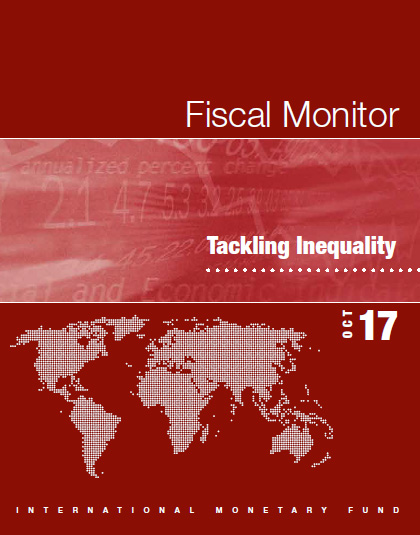 The latest edition of the IMF’s Fiscal Monitor, ‘Tackling Inequality’ challenges conventional wisdom that policies to reduce inequality will also reduce economic growth.
While some inequality is inevitable in a market-based economic system, excessive inequality can erode social cohesion, lead to political polarization, and ultimately lower economic growth.
The IMF looks at three possible policy alternatives to reduce inequality without damaging economic growth
The first is a rise in personal income tax rates for top earners. Since top rates have been cut in most countries, with the OECD average falling from 62% to 35% over the past 30 years, the IMF maintains that there is considerable scope of raising top rates, with the optimum being around 44%. Evidence suggests that income tax elasticity is low at most countries’ current top rates, meaning that a rise in top income tax rates would only have a small disincentive effect on earnings.
 An increased progressiveness of income tax should be backed by sufficient taxes on capital to prevent income being reclassified as capital. Different types of wealth tax, such as inheritance tax, could also be considered. Countries should also reduce the opportunities for tax evasion.
The second policy alternative is a universal basic income for all people. This could be achieved by various means, such as tax credits, child benefits and other cash benefits, or minimum wages plus benefits for the unemployed or non-employed.
The third is better access to health and education, both for their direct effect on reducing inequality and for improving productivity and hence people’s earning potential.
In all three cases, fiscal policy can help through a combination of taxes, benefits and public expenditure on social infrastructure and human capital.
But a major problem with using increased tax rates is international competition, especially with corporation tax rates. Countries are keen to attract international investment by having corporation tax rates lower than their rivals. But, of course, countries cannot all have a lower rate than each other. The attempt to do so simply leads to a general lowering of corporation tax rates (see chart in The Economist article) – to a race to the bottom. The Nash equilibrium rate of such a game is zero!
Videos
Raising Taxes on the Rich Won’t Necessarily Curb Growth, IMF Says Bloomberg, Ben Holland and Andrew Mayeda (11/10/17)
The Fiscal Monitor, Introduction IMF (October 2017)
Transcript of the Press Conference on the Release of the October 2017 Fiscal Monitor IMF (12/10/17)
Articles
Higher taxes can lower inequality without denting economic growth The Economist, Buttonwood (19/10/17)
Trump says the US has the highest corporate tax rate in the world. He’s wrong. Vox, Zeeshan Aleem (31/8/17)
Reducing inequality need not hurt growth Livemint, Ajit Ranade (18/10/17)
IMF: higher taxes for rich will cut inequality without hitting growth The Guardian, Larry Elliott and Heather Stewart (12/10/17)
IMF Fiscal Monitor
IMF Fiscal Monitor: Tackling Inequality – Landing Page IMF (October 2017)
Opening Remarks of Vitor Gaspar, Director of the Fiscal Affairs Department at a Press Conference Presenting the Fall 2017 Fiscal Monitor: Tackling Inequality IMF (11/10/17)
Fiscal Monitor, Tackling Inequality – Full Text IMF (October 2017)
Questions
- Referring to the October 2017 Fiscal Monitor, linked above, what arguments does the IMF use for suggesting that the optimal top rate of income tax is considerably higher than the current OECD average?
- What are the arguments for introducing a universal basic income? Should this depend on people’s circumstances, such as the number of their children, assets, such as savings or property, and housing costs?
- Find out the details of the UK government’s Universal Credit. Does this classify as a universal basic income?
- Why may governments reject the IMF’s policy recommendations to tackle inequality?
- In what sense can better access to health and education be seen as a means of reducing inequality? How is inequality being defined in this case?
- Find out what the UK Labour Party’s policy is on rates of income tax for top earners. Is this consistent with the IMF’s policy recommendations?
- What does the IMF report suggest about the shape of the Laffer curve?
- Explain what is meant by tax elasticity and how it relates to the Laffer curve?
 The annual Sveriges Riksbank Prize in Economic Sciences in Memory of Alfred Nobel, normally known as the Nobel Prize in Economics, has been awarded 49 times since it was founded in 1969. Many well-known economists have been recipients of the award. This year it had been awarded to Richard Thaler for his research in behavioural economics. The award recognises his work in integrating economics with psychology.
Richard H. Thaler has incorporated psychologically realistic assumptions into analyses of economic decision-making. By exploring the consequences of limited rationality, social preferences, and lack of self-control, he has shown how these human traits systematically affect individual decisions as well as market outcomes.
In total, Richard Thaler’s contributions have built a bridge between the economic and psychological analyses of individual decision-making. His empirical findings and theoretical insights have been instrumental in creating the new and rapidly expanding field of behavioural economics, which has had a profound impact on many areas of economic research and policy.
Instead of making the assumption that people are rational maximisers, behavioural economists look at how people actually behave and respond to various incentives.
For example, people may be motivated by concepts of fairness and be prepared to make personal sacrifices for the sake of others. Such concepts of fairness tend to depend on the social context in which choices are made and can be influenced by the way choices are framed.
Also people may not weigh up costs and benefits but use simple rules of thumb, or heuristics, when making decisions. This might be an example of rational behaviour when time or information is limited, but the use of such heuristics often becomes engrained in behaviour and the rules become just habit.
People may also suffer from a lack of willpower or ‘present bias’. They may spend more than they can afford because they cannot resist the temptation to have a product. They may overeat because of the short-term pleasure it brings and ignore the long-term effects on their health.
 Understanding how people make choices and the temptations to which they succumb can help policymakers devise incentives to change behaviour to achieve various social goals.
One type of incentive is nudging. A well-known example is people’s choice about whether to become an organ donor in the event of their death. If people are required to opt in to such a scheme, they may never get round to doing so. However, if they are required to opt out if they do not want to participate, many more people would thereby be donors and more organs would become available.
Another form of nudge is making desirable things fun. A well-known experiment here was encouraging people to use the stairs rather than the escalator when exiting a subway by making the stairs like a musical keyboard. See here for more examples.
The UK government set up a Behavioural Insights Team – also known as the Nudge Unit (now independent of government) to find ways of encouraging people to behave in their own or society’s best interests.
But it is not just governments which use the insights of behavioural economists such as Thaler. The advertising and marketing industry is always examining the most effective means of influencing behaviour. A classic example is the loss leader, where consumers are tempted into a shop with a special offer and then end up buying more expensive items there rather than elsewhere.
Firms and advertisers know only too well the gains from tempting people to buy items that give them short-term gratification – such as putting chocolate bars by the tills in supermarkets.
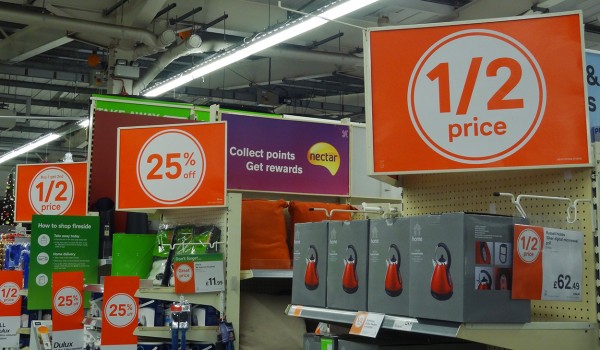 Understanding consumer psychology helps firms to manipulate people’s choices. And such manipulation may not be in our best interests. If we are being persuaded to buy this product or that, are we fully aware of what’s going on and how our tastes are being affected? Would we, by standing back and reflecting, make the same choices as we do on impulse or out of habit?
And governments too can seek to manipulate people in ways that some may find undesirable. Governments may try to influence us to follow their particular political agenda – as may newspapers. Certainly, during election or referendum campaigns, we are being nudged to vote a particular way.
It is important then for us to understand when we are being nudged or otherwise persuaded. Do we really want to behave in that way? Just as it is important, then, for governments and firms to understand individuals’ behaviour, so too it is important for individuals to understand their own behaviour.
Articles
Richard Thaler’s work demonstrates why economics is hard The Economist, RA (11/10/17)
Nobel in Economics Is Awarded to Richard Thaler The New York Times, Binyamin Appelbaum (9/10/17)
The Making of Richard Thaler’s Economics Nobel The New Yorker, John Cassidy (10/10/17)
Nobel prize in economics awarded to Richard Thaler The Guardian, Richard Partington (10/10/17)
Richard Thaler is a controversial Nobel prize winner – but a deserving one The Guardian, Robert Shiller (11/10/17)
What the mainstreaming of behavioural nudges reveals about neoliberal government The Conversation, Rupert Alcock (17/10/17)
This year’s economics Nobel winner invented a tool that’s both brilliant and undemocratic Vox, Henry Farrell (16/10/17)
How a critic of economics became the disciplines Nobel-winning best friend The Guardian, Tiago Mata and Jack Wright (25/10/17)
Podcast
How Richard Thaler changed economics BBC, More of Less, Tim Harford (14/10/17)
Questions
- For what reasons may individuals not always weigh up the costs and benefits of purchasing an item?
- Give some examples of the use of heuristics in making consumption decisions?
- Is the use of heuristics irrational?
- Explain how people considering that they have behaved fairly is influenced by the social context of their behaviour?
- Find out what is meant by the Dictator Game and how it can challenge the assumption that people behave selfishly. How is the ‘dictator’s’ behaviour affected by the possible payoffs?
- Thaler suggested that Brexit could be an example of behavioural economics in action. Find out what he meant by this. Do you agree?
- Give some examples of ways in which the government can nudge people to persuade them to behave in socially or individually desirable ways.
- Find out what is meant by the ‘endowment effect’ and how it influences people’s valuation of items they own.
- Why may nudging by governments be undemocratic?
 Ten years ago (on 9 August 2007), the French bank BNP Paribas sparked international concern when it admitted that it didn’t know what many of its investments in the US sub-prime property market were worth and froze three of its hedge funds. This kicked off the financial crisis and the beginning of the credit crunch.
In September 2007 there was a run on the Northern Rock bank in the UK, forcing the Bank of England to provide emergency funding. Northern Rock was eventually nationalised in February 2008. In July 2008, the US financial authorities had to provide emergency assistance to America’s two largest mortgage lenders, Fannie Mae and Freddie Mac.
Then in September 2008, the financial crisis really took hold. The US bank, Lehman Brothers, filed for bankruptcy, sending shock waves around the global economy. In the UK, Lloyds TSB announced that it was taking over the UK’s largest mortgage lender, Halifax Bank Of Scotland (HBOS), after a run on HBOS shares.
Later in the month, Fortis, the huge Belgian banking, finance and insurance company, was partly nationalised to prevent its bankruptcy. Also the UK government was forced to take control of mortgage-lender, Bradford & Bingley’s, mortgages and loans, with the rest of the business sold to Santander.
Early in October 2008, trading was suspended in the main Icelandic banks. Later in the month, the UK government announced a £37 billion rescue package for Royal Bank of Scotland (RBS), Lloyds TSB and HBOS. Then in November it partially nationalised RBS by taking a 58% share in the bank. Meanwhile various other rescue packages and emergency loans to the banking sector were taking place in other parts of the world. See here for a timeline of the financial crisis.
So, ten years on from the start of the crisis, have the lessons of the crisis been learnt. Could a similar crisis occur again?
The following articles look at this question and the answers are mixed.
On the positive side, banks are much more highly capitalised than they were ten years ago. Moves by the Basel Committee on Banking Supervision in its Basel III regulatory framework have ensured that banks are much more highly capitalised and operate with higher levels of liquidity. What is more, banks are generally more cautious about investing in highly complex and risky collateralised assets.
On the negative side, increased flexibility in labour markets, although helping to keep unemployment down, has allowed a huge squeeze on real wages as austerity measures have dampened the economy. What is more, household debt is rising to possibly unsustainable levels. Over the past year, unsecured debt (e.g. personal loans and credit card debt) have risen by 10% and yet (nominal) household incomes have risen by only 1.5%. While record low interest rates make such loans relatively affordable, when interest rates do eventually start to rise, this could put a huge strain on household finances. But if households start to rein in their borrowing, this would put downward pressure on aggregate demand and jeopardise economic growth.
Articles
- The crisis: 10 years in three chart
BBC News, Simon Jack (9/8/17)
- Darling: ‘Alarm bells ringing’ for UK economy
BBC News (9/8/17)
- Alistair Darling warns against ‘complacency’ 10 years on from financial crisis
The Telegraph (9/8/17)
- A decade after the financial crisis consumers are still worried
Independent, Kate Hughes (9/8/17)
- Bankers still do not understand complex reasons behind financial crash, senior politician warns
Independent, Ashley Cowburn (9/8/17)
- We let the 2007 financial crisis go to waste
The Guardian, Torsten Bell (9/8/17)
- Bank of England warns of complacency over big rise in personal debt
The Guardian, Larry Elliott (24/7/17)
- On the 10th anniversary of the global financial meltdown, here’s what’s changed
USA Today, Kim Hjelmgaard (8/8/17)
- Financial crisis: Ten years ago today the tremors started
Irish Times (9/8/17)
- If We Are Racing to the Pre-Crisis Bubble, Here Are 12 Charts To Watch
Bloomberg, Sid Verma (9/8/17)
Videos
Questions
- Explain what are meant by ‘collateralised debt obligations (CDOs)’.
- What part did CDOs play in the financial crisis of 2007–8?
- In what ways is the current financial situation similar to that in 2007–8?
- In what ways is it different?
- Explain the Basel III banking regulations.
- To what extent has the Bank of England exceeded the minimum Basel III requirements?
- Explain what is meant by ‘stress testing’ the banks? Does this ensure that there can never be a repeat of the financial crisis?
- Why is it desirable for central banks eventually to raise interest rates to a level of around 2–3%? Why might it be difficult for central banks to do that?
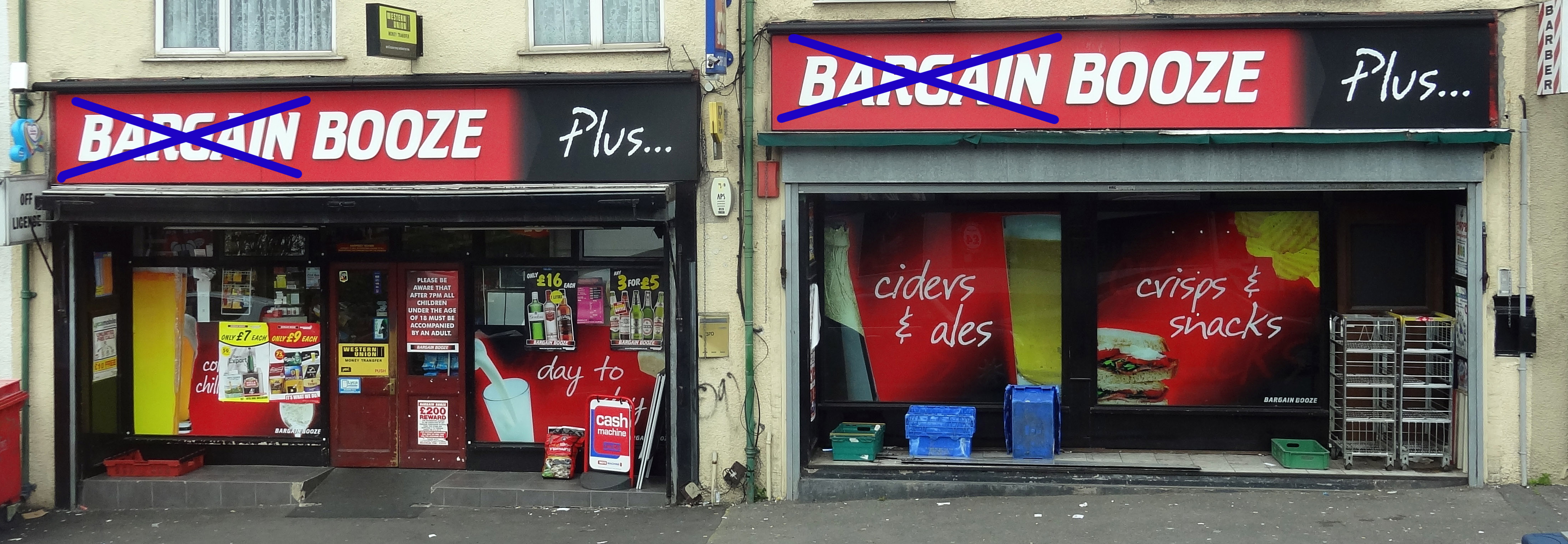 In 2012, the Scottish Parliament voted to introduce a minimum unit price for alcoholic drinks. The Scotch Whisky Association along with others appealed against the legislation, but on 15 November 2017 the UK Supreme Court ruled unanimously that the legislation does not breach European Union law. It is thus likely that, after consultation, a 50p minimum unit price will be introduced, making Scotland the first country in the world to introduce minimum pricing for alcohol.