 An agreement in principle was reached on September 30 between the USA, Canada and Mexico over a new trade deal to replace the North American Free Trade Agreement (NAFTA). President Trump had described NAFTA as ‘the worst trade deal maybe ever signed anywhere, but certainly ever signed in this country.’ The new deal, named the United States-Mexico-Canada Agreement, or USMCA, is the result of 14 months of negotiations, which have often been fractious. A provisional bilateral agreement was made between the USA and Mexico in August. At the same time, President Trump threatened a trade war with Canada if it did not reach a trade agreement with the USA (and Mexico). The new USMCA must be ratified by lawmakers in all three countries before it can come into force. This could take a few months.
So is USMCA a radical departure from NAFTA? Does the USA stand to gain substantially, as President Trump claims? In fact, USMCA is little different from NAFTA. It could best be described as a relatively modest reworking of NAFTA. So what are the changes?
 The first change affects the car industry. From 2020, 75% of the components of any vehicle crossing between the USA and Canada or Mexico must be made within one or more of the three countries to qualify for tariff-free treatment. The aim is to boost production within the region. But the main change here is merely an increase in the proportion from the current 62.5%.
A more significant change affecting the car industry concerns wages. Between 40% and 45% of a vehicle’s components must be made by workers earning at least US$16 per hour. This is some three times more than the average wage currently earned by Mexican car workers. Although it will benefit such workers, it will reduce Mexico’s competitive advantage and could hence lead to some diversion of production away from Mexico. Also, it could push up the price of cars.
The agreement has also strengthened various standards inadequately covered in NAFTA. According to The Conversation article:
The new agreement includes stronger protections for patents and trademarks in areas such as biotech, financial services and domain names – all of which have advanced considerably over the past quarter century. It also contains new provisions governing the expansion of digital trade and investment in innovative products and services.
Separately, negotiators agreed to update labor and environmental standards, which were not central to the 1994 accord and are now typical in modern trade agreements. Examples include enforcing a minimum wage for autoworkers, stricter environmental standards for Mexican trucks and lots of new rules on fishing to protect marine life.
 Another area where the USMCA agreement has made changes concerns trade in dairy products. This particularly affects Canada, which has agreed to allow more US dairy products tariff-free into Canada (see the CNN article at the end of the list of articles below). New higher quotas will give US dairy farmers access to 3.6% of Canada’s dairy market. They will still pay tariffs on dairy exports to Canada that exceed the quotas, ranging from 200% to 300%.
The other significant change for consumers in Mexico and Canada is a rise in the value of duty-free imports they can bring in from the USA, including online transactions. As the first BBC article listed below states:
The new agreement raises duty-free shopping limits to $100 to enter Mexico and C$150 ($115) to enter Canada without facing import duties – well above the $50 previously allowed in Mexico and C$20 permitted by Canada. That’s good news for online shoppers in Mexico and Canada – as well as shipping firms and e-commerce companies, especially giants like Amazon.
Despite these changes, USMCA is very similar to NAFTA. It is still a preferential trade deal between the three countries, but certainly not a completely free trade deal – but nor was NAFTA.
And for the time being, US tariffs on Mexican and Canadian steel and aluminium imports remain in place. Perhaps, with the conclusion of the USMCA agreement, the Trump administration will now, as promised, consider lifting these tariffs.
Video
Articles
- USMCA, the new trade deal between the US, Canada, and Mexico, explained
Vox, Jen Kirby (2/10/18)
- USMCA: What Donald Trump’s Nafta replacement trade deal means and how it will work
Independent, Mythili Sampathkumar (2/10/18)
- USMCA trade deal: Who gets what from ‘new Nafta’?
BBC News, Jessica Murphy & Natalie Sherman (1/10/18)
- Can Trump really cut the US trade deficit?
BBC News, Andrew Walker (2/10/18)
- How is ‘new NAFTA’ different? A trade expert explains
The Conversation, Amanda M. Countryman (2/10/18)
- Was NAFTA ‘worst trade deal ever’? Few agree
PolitiFact, Jon Greenberg (29/9/18)
- NAFTA out, USMCA in: What’s in the Canada, Mexico, US trade deal?
Aljazeera, Heather Gies (2/10/18)
- Mexico boosted by US-Canada agreement on revamped Nafta deal
Financial Times, Jude Webber (3/10/18)
- Nafta Is Dead. Long Live Nafta.
Bloomberg (2/10/18)
- Trump Clears Deck for China Trade War With New Nafta Deal
Bloomberg, Rich Miller, Andrew Mayeda and Jenny Leonard (2/10/18)
- Fact check: Is Trump right that the new trade deal is “biggest” ever?
CBS News (2/10/18)
- Commentary: What Trump’s new trade pact signals about China
Reuters, Andres Martinez (4/10/18)
- Canada opened its dairy market. But by how much?
CNN, Katie Lobosco (2/10/18)
Questions
- What have been the chief gains and losses for the USA from USMCA?
- What have been the chief gains and losses for Mexico from USMCA?
- What have been the chief gains and losses for Canada from USMCA?
- What are the economic gains from free trade?
- Why might a group of countries prefer a preferential trade deal with various restrictions on trade rather than a completely free trade deal between them?
- Distinguish between trade creation and trade diversion.
- In what areas, if any, might USMCA result in trade diversion?
- If the imposition of tariffs results in a net loss from a decline in trade, why might it be in the interests of a country such as the USA to impose tariffs?
 Senior Bank of England officials appeared before the House of Commons’ Treasury Select Committee on 21 February to report on the state of the economy and the future path for inflation and interest rates. One topic considered was the role of depreciation.
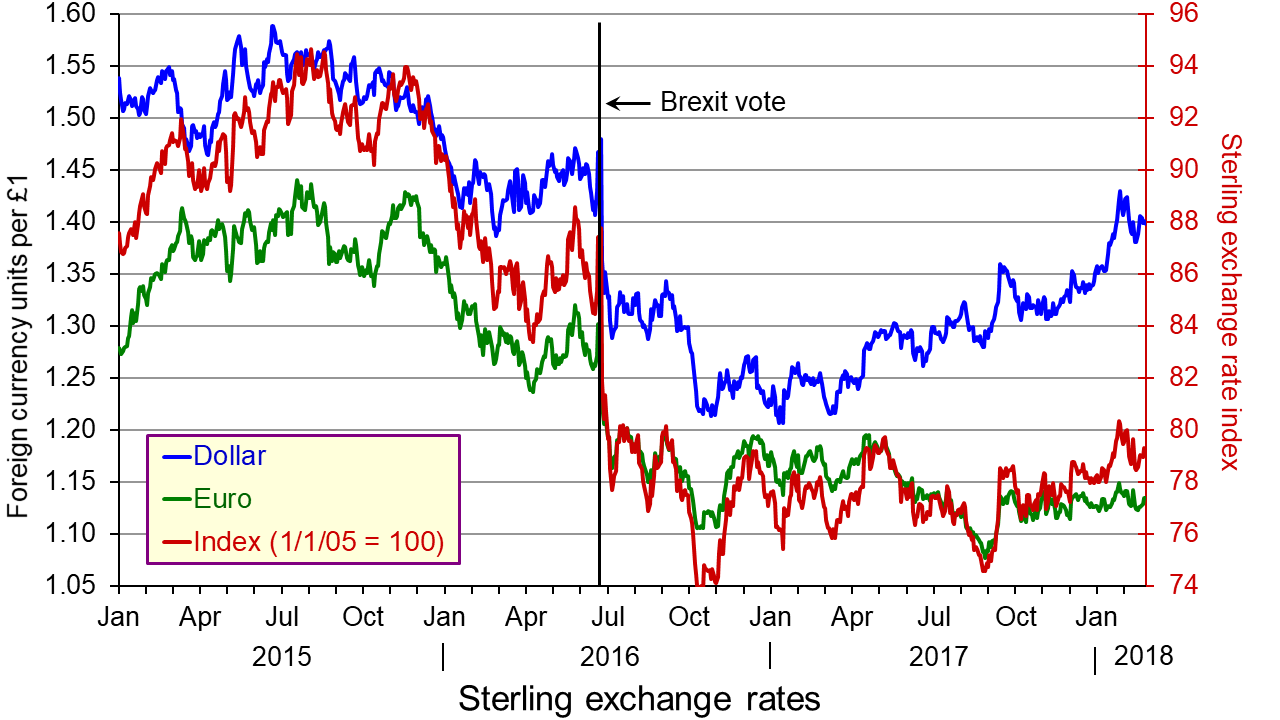
The pound has depreciated since the referendum on EU membership in June 2016. The exchange rate index today is some 9% below that before the referendum and 15% below the peak a year before the referendum.
It had fallen as much as 14% by October 2016 below the level before the referendum and 20% below its peak, pushed down partly by the cut in Bank Rate from 0.5% to 0.25% following the referendum. In November 2017, the Bank’s Monetary Policy Committee raised Bank Rate back to 0.5%. Two or three more rises of 25 basis points are expected over the next couple of years. This has helped to strengthen sterling somewhat. (Click here for a PowerPoint of the chart below.)
But has the depreciation been advantageous or disadvantageous to the economy? Here the Governor (Mark Carney) and the Chief Economist (Andy Haldane) appeared to differ. Andy Haldane said:
A combination of the weaker pound and a stronger global economy has worked its magic. That has meant that net trade has been a significant contributor, and we expect those effects to continue over the next two or three years. … Depreciations work, and that’s how they work.
By contrast, Mark Carney said:
Depreciations don’t work. They have an economic effect, but they’re not a good economic strategy. They may be an outcome of various things … but it’s how you make yourself poorer.
Are these statements contradictory or are they simply emphasising different effects of depreciation?
Both Andy Haldane and Mark Carney would accept that a depreciation makes imports more expensive and thus reduces real incomes (at least in the short run). They would also accept that a depreciation makes exports priced in pounds cheaper in foreign currency terms and thus can boost the demand for exports.
There is disagreement over two things, however. The first is the effect on people’s real incomes in the long run. Will any fall in real incomes from higher-priced imports in the short run be offset in the long run by higher economic growth?
This relates to a second area of disagreement. This is whether a depreciation can act as a significant driver for exports over the longer term. The increased incentive on the demand side (from consumers abroad to buy UK exports) could be offset by a disincentive for exporters to become more efficient and/or to compete in terms of quality. In other words, although it can give exporters a price advantage, the crucial question is the extent to which they take advantage of this, or merely take higher profits.
The disagreements thus relate primarily to the incentive effects over the longer term.
Articles
Bank of England governor says Brexit has made us poorer – as it happened The Guardian, Graeme Wearden (21/2/18)
Brexit will knock 5% off wage growth, says Mark Carney The Guardian, Phillip Inman (21/2/18)
Video
 Treasury Committee: Wednesday 21 February 2018 Parliamentlive.tv (21/2/18) (see from 16:08:00)
Bank of England documents
Treasury Select Committee hearing on the February 2018 Inflation Report Bank of England (21/2/18)
Inflation Report – February 2018 Bank of England (8/2/18)
Data
Interest & exchange rates data Bank of England
Questions
- How does a depreciation affect the demand for and supply of imports and exports?
- What determines the size of the effect on inflation of a depreciation?
- What is the significance of the price elasticity of demand for and supply of sterling in determining the size of depreciation resulting from a change in confidence or a change in interest rates?
- How does productivity growth impact on the effectiveness of a depreciation in leading to higher economic growth?
- In what ways might a depreciation affect productivity growth?
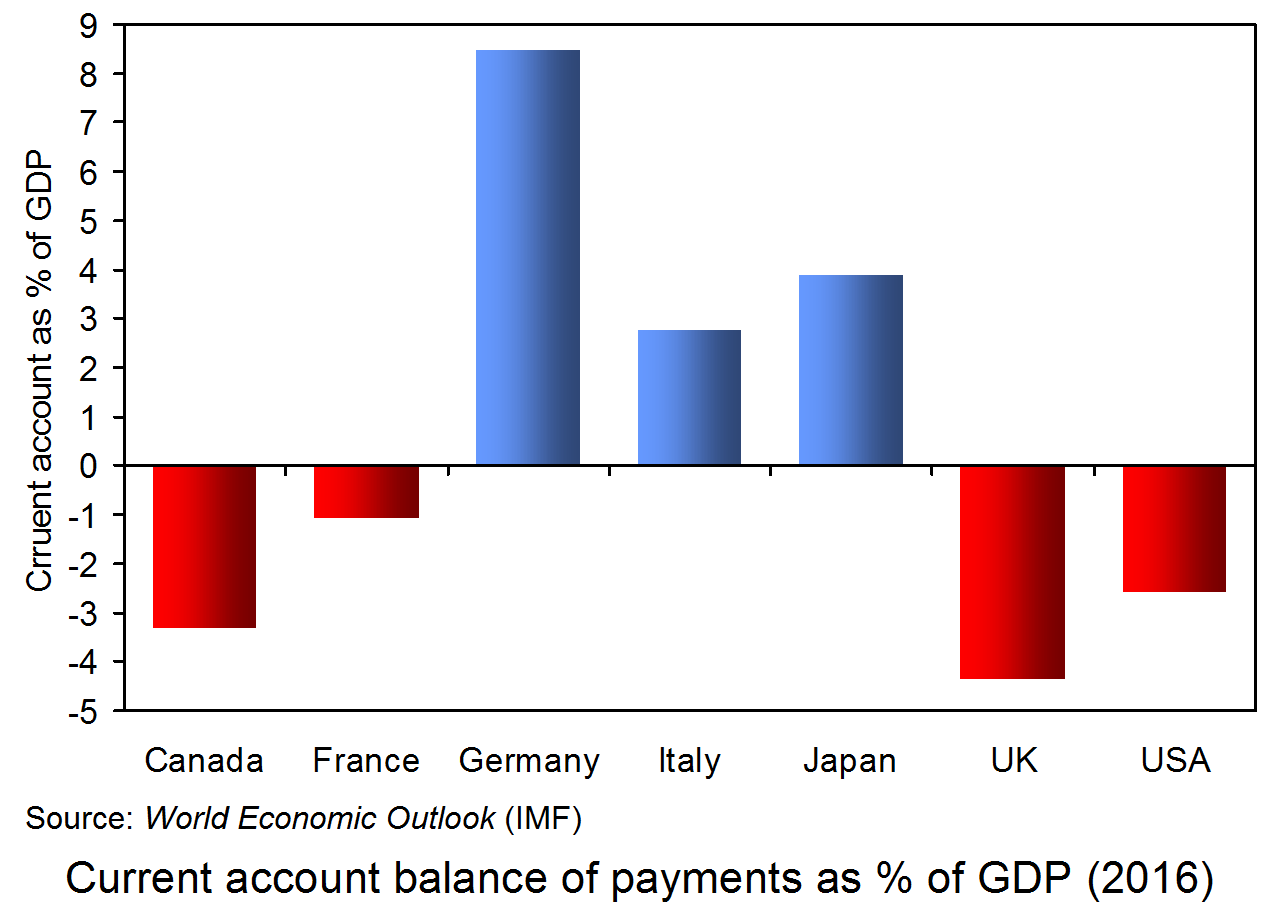
 One of President Trump’s main policy slogans has been ‘America first’. As Trump sees it, a manifestation of a country’s economic strength is its current account balance. He would love the USA to have a current account surplus. As it is, it has the largest current account deficit in the world (in absolute terms) of $481 billion in 2016 or 2.6% of GDP. This compares with the UK’s $115bn or 4.4% of GDP. Germany, by contrast, had a surplus in 2016 of $294bn or 8.5% of GDP.
However, he looks at other countries’ current account surpluses suspiciously – they may be a sign, he suspects, of ‘unfair play’. Germany’s surplus of over $50bn with the USA is particularly in his sights. Back in January, as President-elect, he threatened to put a 35% tariff on imports of German cars.
In practice, Germany is governed by eurozone rules, which prevent it from subsidising exports. And it does not have its own currency to manipulate. What is more, it is relatively open to imports from the USA. The EU imposes an average tariff of just 3% on US imports and importers also have to add VAT (19% in the case of Germany) to make them comparably priced with goods produced within the EU.
 So why does Germany have such a large current account surplus? The article below explores the question and dismisses the claim that it’s the result of currency manipulation or discrimination against imports. The article states that the reason for the German surplus is that:
… it saves more than it invests. The correspondence of savings minus investment with exports minus imports is not an economic theory; it’s an accounting identity. Germans collectively spend less than they produce, and the difference necessarily shows up as net exports.
But why do the Germans save so much? The answer given is that, with an aging population, Germans are sensibly saving now to support themselves in old age. If Germany were to reduce its current account surplus, this would entail either the government reducing its budget surplus, or people reducing the amount they save, or some combination of the two. This is because a current account surplus, which consists of exports and other incomes from abroad (X) minus imports and any other income flowing abroad (M), must equal the surplus of saving (S) plus taxation (T) over investment (I) plus government expenditure (G). In terms of withdrawals and injections, given that:
I + G + X = S + T + M
 then, rearranging the terms,
X – M = (S + T) – (I + G).
If German people are reluctant to reduce the amount they save, then an alternative is for the German government to reduce taxation or increase government expenditure. In the run-up to the forthcoming election on 24 September, Chancellor Merkel’s centre-right CDU party advocates cutting taxes, while the main opposition party, the SPD, advocates increasing government expenditure, especially on infrastructure. The article considers the arguments for these two approaches.
Article
The German economy is unbalanced – but Trump has the wrong answer The Guardian, Barry Eichengreen (12/5/17)
Data
German economic data (in English) Statistisches Bundesamt (Federal Statistical Office)
World Economic Outlook Databases IMF
Questions
- Why does Germany have such a large current account surplus?
- What are the costs and benefits to Germany of having a large current account surplus?
- What is meant by ‘mercantilism’? Why is its justification fallacious?
- If Germany had its own currency, would it be a good idea for it to let that currency appreciate?
- What are meant by ‘resource crowding out’ and ‘financial crowding out’? Why might the policies of tax cuts advocated by the CDU result in crowding out? What form would it take and why?
- Compare the relative benefits of the policies advocated by the CDU and SPD to reduce Germany’s budget surplus.
- Would other countries, such as the USA, benefit from a reduction in Germany’s current account surplus?
- Is what ways would the USA gain and lose from restricting imports from Germany? Would it be a net gain or loss? Explain.
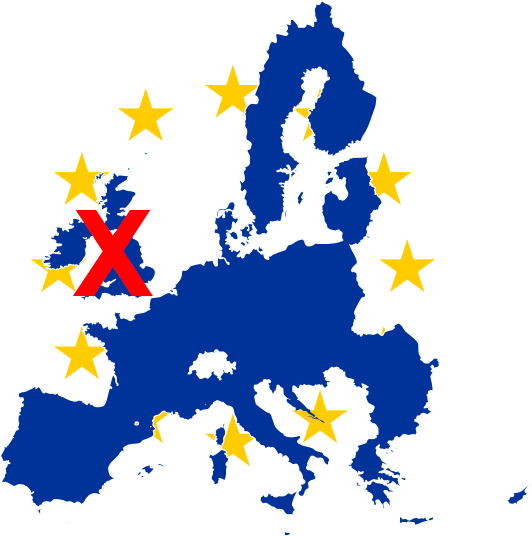 Theresa May has said that the UK will quit the EU single market and seek to negotiate new trade deals, both with the EU and with other countries. As she said, “What I am proposing cannot mean membership of the single market.” It would also mean leaving the customs union, which sets common external tariffs for goods imported into the EU.
The single market guarantees free movement of goods, services, labour and capital between EU members. There are no internal tariffs and common rules and regulations concerning products, production and trade. By leaving the single market, the UK will be able to restrict immigration from EU countries, as it is currently allowed to do from non-EU countries.
A customs union is a free trade area with common external tariffs and uniform methods of handling imports. There are also no, or only minimal, checks and other bureaucracies at borders between members. The EU customs union means that individual EU countries are not permitted to do separate trade deals with non-EU countries.
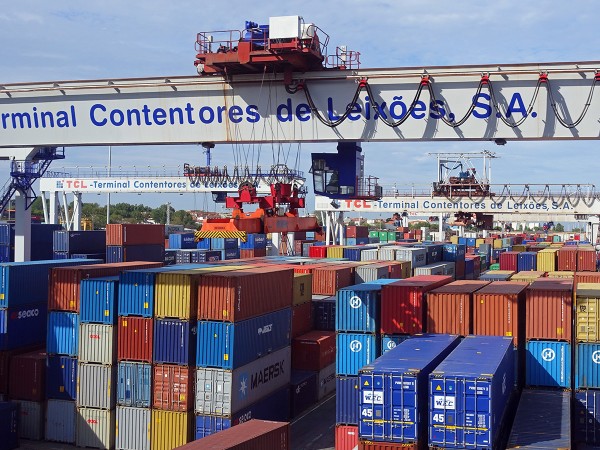 Once the UK has left the EU, probably in around two years’ time, it will then be able to have different trade arrangements from the EU with countries outside the EU. Leaving the customs union would mean that the UK would face the EU’s common external tariff or around 5% on most goods, and 10% on cars.
Leaving the EU single market and customs union has been dubbed ‘hard Brexit’. Most businesses and many politicians had hoped that elements of the single market could be retained, such as tariff-free trade between the UK and the EU and free movement of capital. However, by leaving the single market, access to it will depend on the outcome of negotiations.
Negotiations will take place once Article 50 – the formal notice of leaving – has been invoked. The government has said that it will do this by the end of March this year. Then, under EU legislation, there will be up to two years of negotiations, at which point the UK will leave the EU.
The articles look at the nature of the EU single market and customs union and at the implications for the UK of leaving them.
Articles
Britain to leave EU market as May sets ‘hard Brexit’ course Reuters, Kylie MacLellan and William James (17/1/17)
Brexit: UK to leave single market, says Theresa May BBC News (17/1/17)
How Does U.K. Want to Trade With EU Post-Brexit?: QuickTake Q&A Bloomberg, Simon Kennedy (17/1/17)
Brexit at-a-glance: What we learned from Theresa May BBC News, Tom Moseley (17/1/17)
Theresa May unveils plan to quit EU single market under Brexit Financial Times, Henry Mance (17/1/17)
Doing Brexit the hard way The Economist (21/1/17)
Theresa May confirms it’ll be a hard Brexit – here’s what that means for trade The Conversation, Billy Melo Araujo (17/1/17)
How to read Theresa May’s Brexit speech The Conversation, Paul James Cardwell (17/1/17)
Theresa May’s hard Brexit hinges on a dated vision of global trade The Conversation, Martin Smith (17/1/17)
Brexit: What is the EU customs union and why should people care that the UK is leaving it? Independent, Ben Chapman (17/1/17)
Questions
- Explain the difference between a free-trade area, a customs union, a common market and a single market.
- What arrangement does Norway have with the EU?
- How would the UK’s future relationship with the EU differ from Norway’s?
- Distinguish between trade creation and trade diversion from joining a customs union. Who loses from trade diversion?
- Will leaving the EU mean that trade which was diverted can be reversed?
- What will determine the net benefits from new trade arrangements compared with the current situation of membership of the EU?
- What are the possible implications of hard Brexit for (a) inward investment and (b) companies currently in the UK of relocating to other parts of the EU? Why is the magnitude of such effects extremely hard to predict?
- Explain what is meant by ‘passporting rights’ for financial services firms. Why are they unlikely still to have such rights after Brexit?
- Discuss the argument put forward in The Conversation article that ‘Theresa May’s hard Brexit hinges on a dated vision of global trade’.
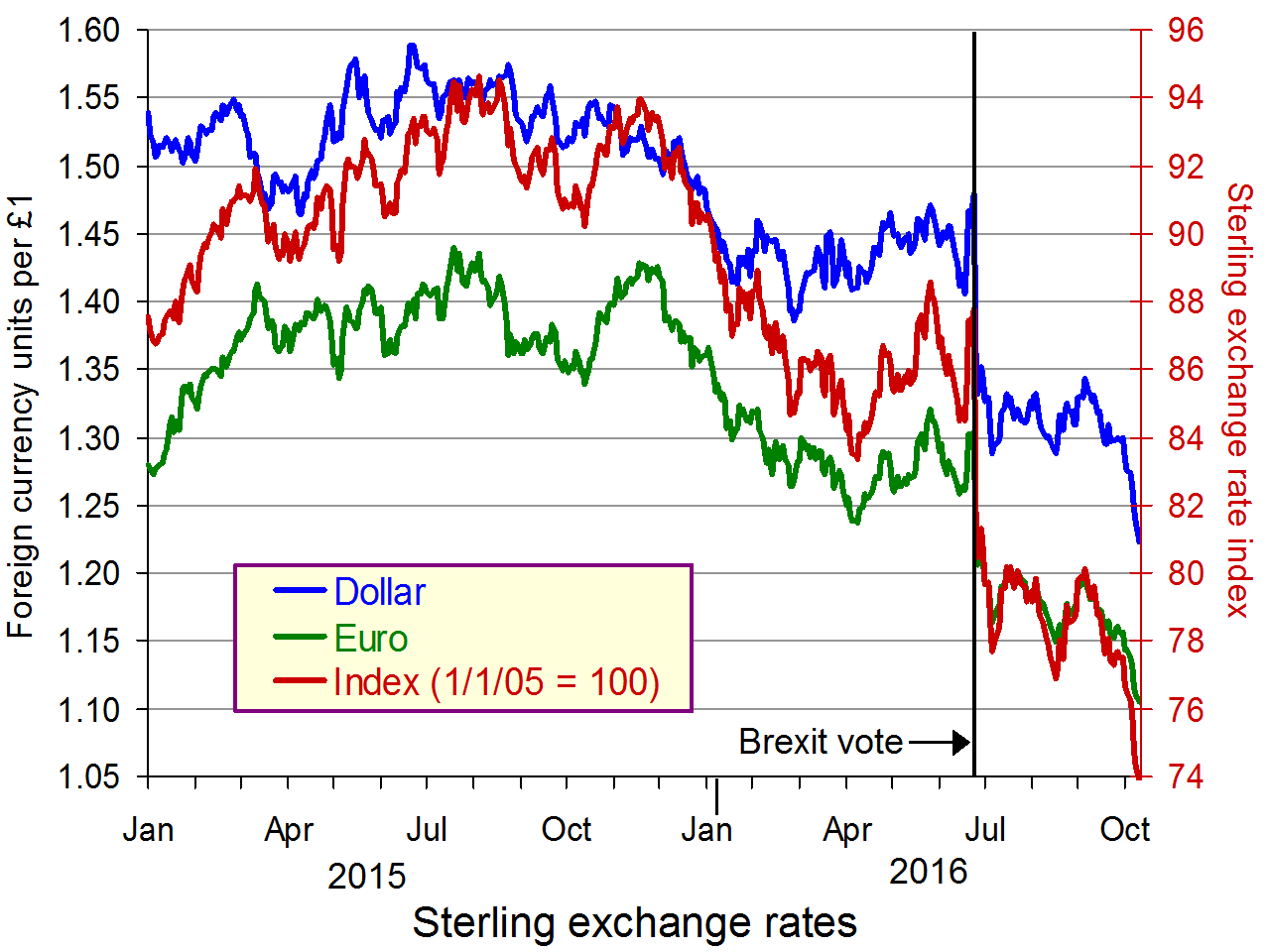
The pound has fallen to its lowest rate against the euro since July 2013 and the lowest rate against the US dollar since 1985. Since August 2015, the pound has depreciated by 23.4% against the euro and 22.2% against the dollar. And since the referendum of 23 June, it has depreciated by 15.6% against the euro and 17.6% against the dollar.
On Sunday 2 October, at the start of the Conservative Party conference, the Prime Minister announced that Article 50, which triggers the Brexit process, would be invoked by the end of March 2017. Worries about what the terms of Brexit would look like put further pressure on the pound: the next day it fell by around 1% and the next day by a further 0.5%.
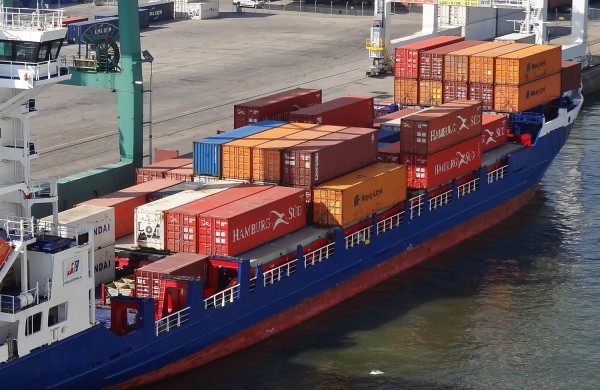
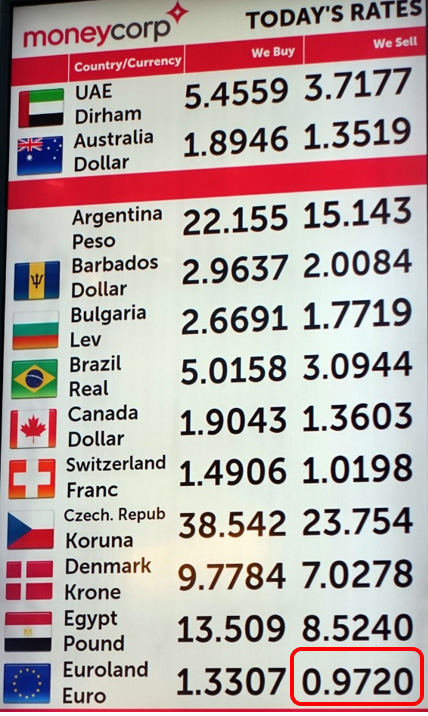
Then, on 6 October, it was reported that President Hollande was demanding tough Brexit negotiations and the pound dropped significantly further. By 7 October, it was trading at around €1.10 and $1.22. At airports, currency exchange agencies were offering less than €1 per £ (see picture).
With the government implying that Brexit might involve leaving the Single Market, the pound continued falling. On 12 October, the trade-weighted index reached its lowest level since the index was introduced in 1980: below its trough in the depth of the 2008 financial crisis and below the 1993 trough following Britain’s ejection from the European Exchange Rate Mechanism in September 1992.
So just why has the pound fallen so much, both before and after the Brexit vote? (Click here for a PowerPoint of the chart.) And what are the implications for the economy?
 The articles explore the reasons for the depreciation. Central to these are the effects on the balance of payments from a possible decline in inward investment, lower interest rates leading to a net outflow of currency on the financial account, and stimulus measures, both fiscal and monetary, leading to higher imports.
Worries about the economy were occurring before the Brexit vote and this helped to push sterling down in late 2015 and early 2016, as you can see in the chart. This article from The Telegraph of 14 June 2016 explains why.
Despite the short-run effects on the UK economy of the Brexit vote not being as bad as some had predicted, worries remain about the longer-term effects. And these worries are compounded by uncertainty over the Brexit terms.
A lower sterling exchange rate reduces the foreign currency price of UK exports and increases the sterling price of imports. Depending on price elasticities of demand, this should improve the current account of the balance of payments.
These trade effects will help to boost the economy and go some way to countering the fall in investment as businesses, uncertain over the terms of Brexit, hold back on investment in the UK.
Articles
Pound Nears Three-Decade Low as May Sets Date for Brexit Trigger Bloomberg, Netty Idayu Ismail and Charlotte Ryan (3/10/16)
Sterling near 31-year low against dollar as May sets Brexit start dat Financial Times, Michael Hunter and Roger Blitz (3/10/16)
Sterling hits three-year low against the euro over Brexit worries The Guardian, Katie Allen (3/10/16)
Pound sterling value drops as Theresa May signals ‘hard Brexit’ at Tory conference Independent, Zlata Rodionova (3/10/16)
Pound falls as Theresa May indicates Brexit date BBC News (3/10/16)
The pound bombs and stocks explode over fears of a ‘hard Brexit’ Business Insider UK, Oscar Williams-Grut (3/10/16)
Pound Will Feel Pain as Brexit Clock Ticks Faster Wall Street Journal, Richard Barley (3/10/16)
British Pound to Euro Exchange Rate’s Brexit Breakdown Slows After Positive Manufacturing PMI Halts Decline Currency Watch, Joaquin Monfort (3/10/16)
7 ways the fall in the value of the pound affects us all Independent (4/10/16)
The pound and the fury: Brexit is making Britons poorer, and meaner The Economist, ‘Timekeeper’ (11/10/16)
Is the pound headed for parity v US dollar and euro? Sydney Morning Herald, Jessica Sier (5/10/16)
Flash crash sees the pound gyrate in Asian trading BBC News (7/10/16)
Flash crash hits pound after Hollande remarks Deutsche Welle (7/10/16)
Sterling mayhem gives glimpse into future Reuters, Swaha Pattanaik (7/10/16)
Sterling takes a pounding The Economist, Buttonwood (7/10/16)
Government must commit to fundamental reform The Telegraph, Andrew Sentance (7/10/16)
Data
Interest & exchange rates data – Statistical Interactive Database Bank of England
Questions
- Why has sterling depreciated? Use a demand and supply diagram to illustrate your argument.
- What has determined the size of this depreciation?
- What is meant by the risk premium of holding sterling?
- To what extent has the weaker pound contributed to the better economic performance than was expected immediately after the Brexit vote?
- What factors will determine the value of sterling over the coming months?
- Who gain and who lose from a lower exchange rate?
- What is likely to happen to inflation over the coming months? Explain and consider the implications for monetary and fiscal policy.
- What is a ‘flash crash’. Why was there a flash crash in sterling on Asian markets on 7 October 2016? Is such a flash crash in sterling likely to occur again?