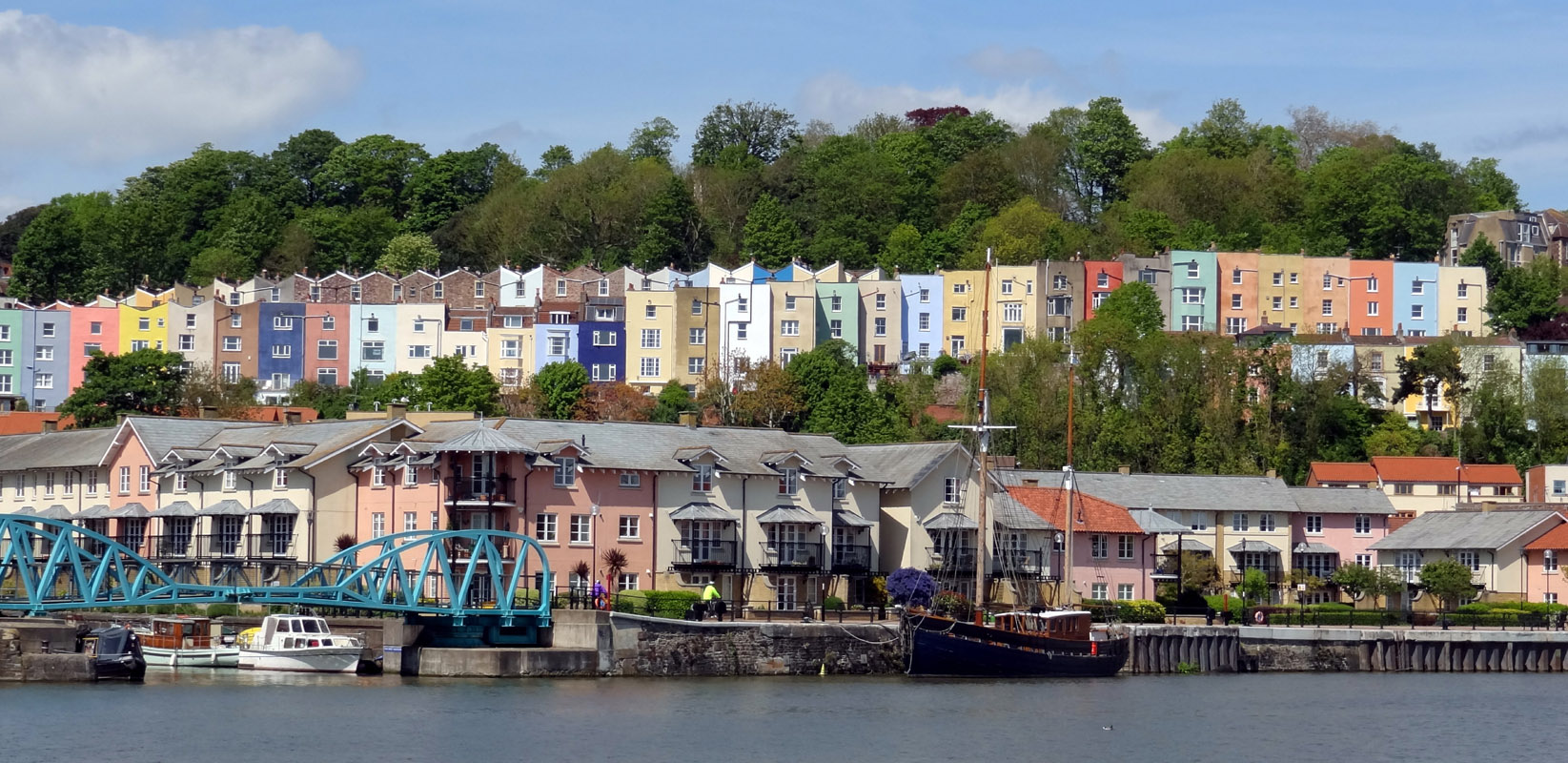
 As a resident of Bristol it is with considerable interest that I’m following the development of the Bristol pound, due for launch in September 2012. One Bristol pound will be worth one pound sterling.
The new currency will be issued in demoninations of £1, £5, £10 and £20 and there is a local competition to design the notes. Participating local traders will open accounts with Bristol Credit Union, which will administer the scheme. It has FSA backing and so all deposits will be guaranteed up to £85,000.
The idea of a local currency is not new. There are already local currencies in Stroud in Gloucestershire, Totnes in Devon, Lewes in East Sussex and Brixton in south London. The Bristol scheme, however, is the first to be introduced on a city-wide scale. The administrators are keen that use of the currency should be as easy as possible; people will be able to open accounts with Bristol Credit Union, pay bills online or by mobile phone.
As the money has to be spent locally, the aim is to help local business, of which more han 100 have already signed up to the scheme. Bristol has a large number of independent traders – in fact, the road where I live is off the Gloucester Road, which has the largest number of independent traders on one street in the UK. The organisers of the Bristol pound are determined to preserve the diversity of shops and prevent Bristol from becoming a ‘clone town’, with high streets full of chain stores.
But how likely is the scheme to encourage people to shop in independent shops and deal with local traders? Will the scheme take off, or will it fizzle out? What are its downsides? The following articles consider these issues.
Articles
The Bristol Pound set to become a flagship for local enterprise The Random Fact, Thomas Foss (7/2/12)
What is the point of local currency? The Telegraph, Rosie Murray-West (7/2/12)
The Bristol pound: will it save the (local) economy? Management Today, Emma Haslett (6/2/12)
‘Bristol Pound’ currency to boost independent traders BBC News Bristol, Dave Harvey (6/2/12)
We don’t want to be part of ‘clone town Britain’: City launches its own currency to keep money local Mail Online, Tom Kelly (6/2/12)
British Town Prepares To Launch Its Own Currency — Here’s How That’s Going To End Business Insider, Macro Man (7/2/12)
They don’t just shop local in Totnes – they have their very own currency Independent, Rob Sharp (1/5/08)
Videos and webcasts
 The town printing its own currency [Stroud] BBC News, Tim Muffett (22/3/10)
Brixton launches its own currency BBC News (17/9/09)
Local currency BBC Politics Show (30/3/09)
Local currency for Lewes BBC News, Rob Pittam (13/5/08)
The Totnes Pound transitionculture.org on YouTube, Clive Ardagh (21/1/09)
Local Currencies – Replacing Scarcity with Trust Peak Moment on YouTube, Francis Ayley (8/2/07)
Questions
- What are the advantages of having a local currency?
- What are the dangers in operating a local currency?
- What steps can be taken to avoid the dangers?
- Can Bristol pounds be ‘created’ by Bristol Credit Union? Could the process be inflationary?
- What market failures are there in the pattern of shops in towns and cities? To what extent is the growth of supermarkets in towns and the growth of out-of-town shopping malls a result of market failures or simply of consumer preferences?
- Are local currencies only for idealists?
 With the fall of communism in eastern Europe between 1989 and 1991, many hailed this as the victory of capitalism.
Even China, which is still governed by the Chinese Communist Party, has embraced the market and accepted growing levels of private ownership of capital. It is only one or two countries, such as North Korea and Cuba, that could be described as communist in the way the term was used to describe the centrally planned economies of eastern Europe before 1990.
But whilst market capitalism seemed to have emerged as the superior system in the 1990s, may are now questioning whether the market capitalism we have today is fit for the 21st century. Today much of the world’s capital in the hands of big business, with financial institutions holding a large proportion of shares in such companies. And the gap between rich and poor is ever widening
The market system of today, is very different from that of 100 years ago. In fact, as John Kay agues in his article “Let’s talk about the market economy” below, it would be wrong to describe it as ‘capitalism’ in the sense the term was used in the debates of the 19th and early 20th centuries. Nonetheless, the term is still used and generally refers to the market system we now have. And it is a market system that many see as failing and unfit for purpose. It is a system that coincided with the bubble of the 1990s and early 2000s, the credit crunch of 2007–9 and the recession of 2008/9, now seeming to return as a double-dip recession
 With the political and business leaders of the world meeting at the World Economic Forum at Davos in Switzerland on 25–29 January 2012, a central theme of the forum has been the future of capitalism and whether it’s fit for the 21st century.
Is there a fairer and more compassionate capitalism that can be fostered? This has been a stated objective of all three political parties in the UK recently. Can we avoid another crisis of capitalism as seen in the late 2000s and which still continues today? What is the role of government in regulating the market system? Does the whole capitalist system need restructuring?
It’s becoming increasingly clear that we need to talk about capitalism. The following webcasts and articles do just that.
Webcasts and podcasts
Davos 2012 – TIME Davos Debate on Capitalism< World Economic Forum (25/01/12)
Can capitalism be ‘responsible’? BBC Newsnight, Paul Mason (19/01/12)
Capitalism ‘nothing to do with responsibility’ BBC Newsnight, Eric Hobsbawm (19/01/12)
Are there alternatives to capitalism? BBC Newsnight, Danny Finkelstein, Tristram Hunt and Julie Meyer (19/01/12)
America Beyond Capitalism The Real News on YouTube, Gar Alperovitz (27/12/11)
The future of capitalism CNBC, Warren Buffett and Bill Gates (12/11/09)
Capitalism Hits the Fan (excerpt) YouTube, Richard Wolff (2/1/12)
Panel Discussion “20 years after – Future of capitalism in CEE” Erste Group on YouTube, Andreas Treichl, Janusz Kulik, Jacques Chauvet, and media Adrian Sarbu (24/2/11)
The Future of Capitalism: Constructive Competition or Chaos? YouTube, Nathan Goetting, Tony Nelson, Craig Meurlin and Judd Bruce Bettinghaus (24/1/11)
Capitalism in Crisis Financial Times, Various videos (24/1/11)
Bill Gates: Capitalism a ‘phenomenal system’ BBC Today Programme, Bill Gates talks to Evan Davis (25/1/12)
Capitalism (See also) BBC The Bottom Line, Evan Davis and guests (28/1/12)
Articles
Meddle with the market at your peril Financial Times, Alan Greenspan (25/1/12)
The world’s hunger for public goods Financial Times, Martin Wolf (24/1/12)
When capitalism and corporate self-interest collide JohnKay.com, John Kay (25/1/12)
Let’s talk about the market economy JohnKay.com, John Kay (11/1/12)
A real market economy ensures that greed is good JohnKay.com, John Kay (18/1/12)
Seven ways to fix the system’s flaws Financial Times, Martin Wolf (22/1/12)
To the barricades, British defenders of open markets! The Economist, Bagehot’s Notebook (26/1/12)
Community reaction to doubts about capitalism in Davos CBC News (26/1/12)
Capitalism saw off USSR, now it needs to change or die The National (UAE), Frank Kane (26/1/12)
Words won’t change capitalism. So be daring and do something Observer, Will Hutton (22/1/12)
A political economy fit for purpose: what the UK could learn from Germany Our Kingdom, Alex Keynes (20/1/12)
Debate on State Capitalism The Economist (24/1/12)
Questions
- How has the nature of capitalism changed over recent decades?
- Can capitalism be made more ‘caring’ and, if so, how?
- What do you understand by the term a ‘fair allocation of resources’? Is capitalism fair? Can it be made fairer and, if so, what are the costs of making it so?
- Can greed ever be good?
- How does the ‘Anglo-Saxon’ model of capitalism differ from the European model?
- What do you understand by the term ‘crony capitalism’? Is crony capitalism on the increase?
- John Kay states that “Modern titans derive their authority and influence from their position in a hierarchy, not their ownership of capital.” Explain what this means and what its implications are for making capitalism meet social goals.
- In what ways can governments control markets? Have these instruments and their effectiveness changed in effectiveness over time?
- What are the costs and benefits to society of the increasing globalisation of capital?
- To what extent was the financial crisis and credit crunch the result of a flawed capitalist system and to what extent was it a failure of government intervention?
- Why is it important for the success of capitalism that companies should be allowed to fail? Consider whether this should also apply to banks. How is the concept of moral hazard relevant to your answer?
Here’s a quiz for you. What one chart would you chose as an illustration of the most significant economic event(s), trends or data of the year? You could search out a chart, perhaps by looking through the news items on this site. Or you could construct a chart of you own in Excel or PowerPoint using economic data from a data site. You can find links to a whole range of data sites here.
To give you some ideas, the link to the BBC site below gives the charts selected by a range of eminent economists.
Top economists reveal their graphs of 2011 BBC News (13/12/11)
Questions
- Look through each of the 11 charts in the link above and explain their significance.
- Why did you choose the chart you did?
- Name five other economic events or trends during 2011 that you would consider to be highly significant and say why.
- Identify three likely economic events in 2012 that would, if they came true, prove significant and say why? Just how likely are they?
Economic assessment of real-world issues relies heavily on data. It is the same with economic policy recommendations. Both public- and private-sector organisations gather data, which are then used for analysis, often presented in a report. These reports are then often used as the basis for policy, whether by the government, local authorities or the private sector. Sometimes the data are those collected by national statistical agencies, such as the Office for National Statistics (ONS) in the UK; sometimes they are collected by private agencies; sometimes by individual researchers.
Clearly the analysis and the suitability of any policy recommendations depend on the quality of the data. But how much can we rely on the data? A problem is that people have an interest in gathering and/or selecting data that support their opinions. As a result, the data used for analysis and policy recommendations may be unreliable and incomplete.
This is not to say that the data collected by reputable agencies such as the ONS are wrong. Rather, it is the selective use of them that can be highly misleading. Sometimes, however, the data that some agencies produce may indeed be unreliable, with too small or unrepresentative samples. If they rely on surveys, the survey questions may be poorly framed or lead the respondent into giving a particular answer.
Newspapers make use of data and reports all the time to make a particular case – a case in line with the newspaper’s political stance. The lesson for economic students is that we need to be alert all the time as to just how reliable data are; and to whether the conclusions drawn from them are correct.
The following two articles by Ben Goldacre, from the Guardian’s Bad Science series, look at the misuse of data. The first looks at the case of the Health Service; the second at the possibility of savings by local government in their procurement activities.
Articles
How far should we trust health reporting? Guardian, Ben Goldacre (17/6/11)
Misleading money-saving claims help no one Guardian, Ben Goldacre (24/6/11)
Report
Realising Savings through Procurement Optimisation Opera Solutions
Questions
- According to the first article above, how much newspaper reporting based on the use of data is unreliable?
- What are the reasons for the unreliability of newspaper reporting?
- For what reasons might the ONS and other reputable agencies periodically have to amend time series data?
- “Council incompetence ‘costs every household £452 a year'”. Critically examine this claim by the Daily Mail.
- Why may Opera Solutions be seen as not wholly independent in reporting the possibilities of cost savings by local government?
- In the absence of reliable data, can any economic policy conclusions be drawn from economic models? Explain.
We’ve had numerous examples in recent years of the economic turmoil that natural disasters can have and unfortunately, we have another to add to the list: the Japanese earthquake and tsunami. As Japan tries to take stock of the damage and loss of life, the economic consequences of this disaster will also need considering. The previous Kobe earthquake cost the economy an estimated 2% of GDP, but this did hit a key industrial area. The economic consequences of the 2011 earthquake were originally not thought to be as bad, but the economy will undoubtedly suffer.
The Japanese economy, like the UK, shrank in the final quarter of 2010, but was expected to return to growth. The devastation of the earthquake and tsunami is now likely to delay this economic recovery. Many car companies are based in Japan and are expected to take some of the biggest hits. Nomura analysts suggested that annual operating profits of companies such as Toyota, Nissan and Honda would be dented by between 3% and 8%. You only have to look at some of the footage of the disaster to see why this is expected. Supply chains will undoubtedly be disrupted, many of whom are located in the exclusion zone and financial markets across the world have fallen, as the possibility of a nuclear disaster threatens. As Louise Armistead writes:
‘By lunchtime in Britain £32bn had been knocked off the value of the FTSE-100 dropped, which fell by more than 3pc in early trading but recovered later to close down 1.38pc at 5,695.28. Germany’s DAX plunged 3.19pc, recovering from a 4.8pc fall, and France’s CAC ended the day 3.9pc lower, while on Wall Street, the Dow Jones Industrial Index dropped 2pc shortly after opening.’
A key question will be whether Japanese reconstruction will push the economy out of its deflationary spiral or make it even worse.
GDP measures the value of output produced within the domestic economy, but it is by no means an accurate measure of a country’s standard of living. Whilst it will take into account new construction that will be required to rebuild the economy, it doesn’t take into account the initial destruction of it. As output and growth are expected to fall in the immediate aftermath, we may see a boost to growth, as reconstruction begins.
The problem of scarcity is becoming more and more apparent to many survivors, as they begin to run short of basic necessities, which has led to various rationing mechanisms being introduced. Despite the devastating conditions which survivors now find themselves in, when supplies are delivered, the efficiency of Japan is still very evident. As noted by BBC Radio 4 coverage, as soon as the supplies arrived, a line was in place to unload the van in minutes. Teams have been set up to help everyone get through the tragedy. Even in the most devastating of times, Japanese efficiency still shines through and undoubtedly this will be a massive aid in the huge re-construction projects that we will see over the coming months and even years. Analysts say that there will be short term pain, but that the investment in construction will boost the economy later in the year.
Japanese earthquake: Markets shed £1trillion amid nuclear fears Telegraph, Louise Armistead (16/3/11)
Panic over Japan triggers market turmoil Independent, Nikhil Kumar (16/3/11)
Japan quake: Economy ‘to rebound’ after short term pain BBC News (14/3/11)
Japan disaster: The cost of a crisis Guardian (16/3/11)
Global stock markets tumble in ‘perfect storm’ amid fears of nuclear disaster Mail Online, Hugo Duncan (16/3/11)
Japan’s earthquake will cause a global financial aftershock Guardian, Peter Hadfield (15/3/11)
Economists’ estimate of Japan quake impact Reuters (16/3/11)
Fukishima factor adds pressure to economic fallout from Japan’s crisis Guardian, Larry Elliott (15/3/11)
Questions
- What is the likely impact on Japan’s GDP?
- Why is the potential disruption to the supply chain important for a firm?
- How and why will this catastrophe affect global financial markets?
- What are some of the main problems of using GDP as a measurement for growth? Think about the impact on GDP of Japan’s destruction and their future re-construction.
- What types of production methods etc have Japan implemented to allow them to become so efficient in production?
- What are the arguments to suggest that this disaster might help the Japanese economy recover from its deflationary spiral? What are the arguments to suggest that it might make it worse?
- What are some other examples of natural disasters or human errors that have also had economic consequences?