 Comet, Peacocks, Woolworths, JJB, Jessops and now HMV – they all have one thing in common. The recession has hit them so hard that they entered administration. HMV is the latest high street retailer to bring in the administrators, despite insisting that it does have a future on the UK’s high streets. With debts of £176m and huge competition from online retailers, the future of HMV is very uncertain.
Over the past decades, companies such as Amazon, ebay, LoveFilm, Netflix and apple have emerged providing very stiff competition to the last remaining high street seller of music and DVDs. People have been turning more and more to the internet to do their shopping, with cheaper prices and greater choice. The speed of delivery, which in the past may have been a disadvantage of buying from somewhere like Amazon, is now barely an obstacle and these substitute companies have created a difficult environment for high street retailers to compete in. Despite going into administration, it’s not necessarily the end of the much-loved HMV. Its Chief Executive said:
We remain convinced we can find a successful business outcomes. We want to make sure it remains on the high street … We know our customers fell the same way.
 While the recession has undoubtedly affected sales at HMV, is this the main reason for its demise or are other factors more relevant? As discussed, online retailers have taken over the DVD and music industry and with downloading increasing in popularity and CD/DVDs on sale in numerous locations, including supermarket chains, HMV has felt the competitive pressure and its place on the high street has come into question. As Neil Saunders, the Managing Director of Conlumino said:
By our own figures, we forecast that by the end of 2015 some 90.4 per cent of music and film sales will be online. The bottom line is that there is no real future for physical retail in the music sector.
Further to this, prices have been forced downwards and HMV, having to pay high fixed costs to retain their place on the high streets, have been unable to compete and remain profitable. Another contributing factor could be an outdated management structure, which has not responded to the changing times. Whatever the cause, thousands of jobs have been put at risk. Even if buyers are found, some store closures by the administrators, Deloitte, seem inevitable. Customer gift vouchers have already become worthless and further losses to both workers and customers seem likely. It is thought that there will be many interested buyers and huge support from suppliers, but the former is likely to remain a relatively secretive area for some time.

 This latest high street disaster will undoubtedly raise many questions. One theory about recovery from a recession looks at the need for many businesses to go under until the fittest are left and there is sufficient scope for new businesses to emerge.
 Could it be that the collapse of companies such as Woolworths, HMV, Comet, Jessops and Blockbuster is an essential requirement for economic recovery? Or was the recession irrelevant for HMV? Was its collapse an inevitable consequence of the changing face of Britain’s high streets and if so, what does the future hold for the high street retailers? The following articles consider the demise of HMV.
HMV: a visual history BBC News (15/1/13)
Chief executive says ‘HMV still has a place on the high street’, as customers are told their gift vouchers are worthless Independent, James Thompson (15/1/13)
Potential buyers circle stricken HMV Financial Times, Andrea Felsted (15/1/13)
HMV and independents to urged to work together to save in-store music market BBC News, Clive Lindsay (15/1/13)
HMV record chain was besest by digital downloads and cheap DVDs The Guardian (15/1/13)
The death of traditional retailers like HMV started when we caught on to one-click and the joy of owning DVDs wore thin Independent, Grace Dent (15/1/13)
HMV shoppers: ‘I’m disappointed, but it’s understandable why they went bust The Guardian, James Brilliant (15/1/13)
HMV: Record labels could take HMV back to its 1920 roots The Telegraph, Graham Ruddick (15/1/13)
HMV’s future seen as handful of stores and website Reuters, Neil Maidment and James Davey (15/1/13)
HMV leaves social gap in high street BBC News, Robert Plummer (15/1/13)
Is there good news in HMV’s collapse? BBC News, Robert Peston (15/1/13)
Is it game over for UK retail? The Guardian, Larry Elliott (18/1/13)
High Street retailers: Who has been hit hardest? BBC News (16/1/13)
Questions
- What are the main reasons behind the collapse of HMV?
- Use a diagram to illustrate the impact the companies such as Amazon and Tesco have had on costs and prices in the entertainment industry.
- Has the value we place on owning DVDs truly changed or have other factors led to larger purchases of online entertainment?
- Why is online retail providing such steep competition to high street retailers?
- Explain why it can be argued that economic recovery will only take place after a certain number of businesses have gone into administration.
- To what extent do you think HMV’s collapse is due to its failure to adapt to changing social circumstances?
- Briefly outline the wider economic implications of the collapse of a company such as HMV. Think about managers, employees, suppliers, customers and other competitors, as well as other high street retailers.
- In which market structure would you place the entertainment industry? Explain your answer. Has this contributed to the demise of HMV?
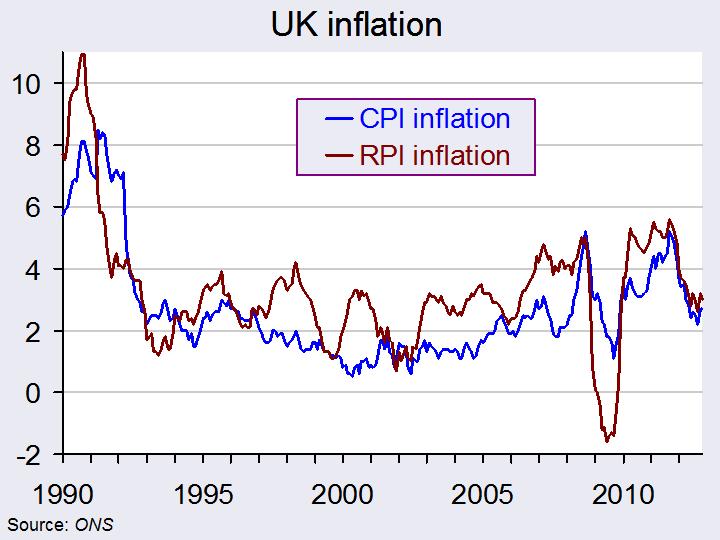 Inflation is a key macroeconomic variable and governments typically aim for both low and stable rates of inflation. In the UK there are two main measures of the rate of inflation in the UK – the CPI and the RPI. Over the past few years there has been a growing gap between the two measures and this has led to consultations about how the RPI could be adapted to allow it to rise more slowly in the future. (Click here for a PowerPoint of the chart.)
The RPI and CPI measure inflation in different ways – they don’t measure the same basket of goods. The RPI measure includes the costs of housing, whereas the CPI does not include this. Furthermore, the RPI is an arithmetic mean and the CPI is a geometric mean, which will be lower than the arithmetic mean. The ONS says that a key advantage of using the geometric mean (i.e. the CPI) is that:
…it can better reflect changes in consumer spending patterns relative to changes in the price of goods and services.
Typically the RPI has been about 1% higher than the CPI and governments can benefit from this by linking state benefits to the CPI (the lower rate) and payments they receive to the RPI, thus maximising the difference between earnings and expenditure.
However, the gap between these two measures of inflation has been growing and this has been causing concern for the ONS and the Office for Budget Responsibility (OBR). This has led to the consultative process regarding making changes to the RPI. However, any change made to the RPI would put certain groups at a disadvantage. One such group is pensioners – many pensioners in the private sector have their pensions linked to the RPI and if a change were made to bring it more in line with the CPI (i.e. lower it) they would suffer. Ros Altman, director general of SAGA said:
After 30 years of retirement, someone who receives 0.6% lower inflation uprating will end up with a pension nearly 20% lower…Therefore, over time, pensioners will be able to afford less and less and pensioner poverty will increase once again.
There would be some beneficiaries of any change to the RPI – the government would benefit in some areas; company pension schemes might also see gains made; some students might benefit and even rail travellers.
An announcement was made by the National Statistician, Jil Matheson, on the 10 January. Much to the surprise of most experts, she has decided to keep the RPI measure unchanged. She did recommend, however, that a new index be introduced that would be published alongside RPI and CPI. The new index would better meet international standards.
The following articles look at the arguments for and against changing the RPI measure.
Articles prior to announcement
Pensioner backlash expected over pension reform The Telegraph, Philip Aldrick (9/1/13)
Inflation: Changes to the calculation of RPI expected BBC News (9/1/13)
RPI review ‘may hit pensioners’ Express and Star (9/1/13)
Q&A: Inflation changes BBC News (9/1/13)
Pension holders and savers: beware of an RPI inflation change The Economic Voice (9/1/13)
Pensioners and savers face ‘stealth attack’ on their income from change to the inflation index Mail Online (9/1/13)
Articles following announcement
Relief for pensions as ONS says leave RPI unchanged The Telegraph (10/1/13)
RPI review recommends new inflation index The Guardian (10/1/13)
Inflation: No change to RPI calculation BBC News, 10/1/13)
The ONS puts consistency first BBC News, Stephanie Flanders (10/1/13)
Q&A: Inflation changes BBC News (10/1/13)
Announcement by National Statistician
National Statistician announces outcome of consultation on RPI ONS (10/1/13)
Questions
- How are the RPI and CPI measured?
- Why is the RPI typically higher than the CPI?
- What changes to the RPI were suggested? What are the advantages and disadvantages of each?
- Who would have benefited from each of the proposed changes to the RPI?
- Who would have suffered from each of the proposed changes to the RPI?
- Why has there been a growing divergence between the two measures of inflation?
- Do interest rates affect the RPI and CPI measures of inflation to the same extent?
- Which measure of inflation is used for the Bank of England’s inflation target? Has it always been the measure used?
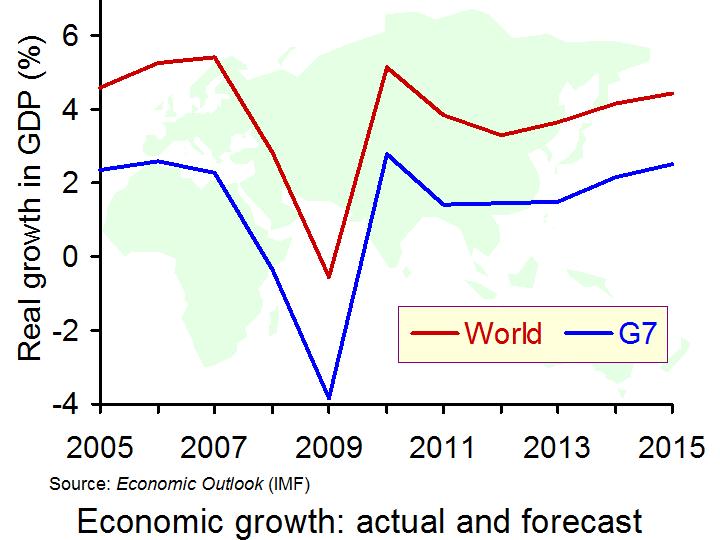 While the Western world has struggled with economic growth for the past 6 years, emerging economies such as China, Brazil and India have recorded some very high rates of growth. Throughout 2012, there were signs that these economies were not going to be the saviour of the global economy that we all thought. But, as we enter 2013, is it these economies that still hold the hope of the West for more positive figures and better economic times?
The article below from BBC News, in particular, considers the year ahead for the Asian economies and what it might mean for the Western world. Although these countries are by no means safeguarded against the impending approach of the US economy to their fiscal cliff or the ongoing eurozone crisis, they have seemed to be more insulated than the rest of the world. A crucial question to consider is whether this will continue. Furthermore, are the growth levels and policies of a country such as China sustainable? Can it continue to record such high growth rates in the face of the global economic situation?
The Japanese economy has been in serious trouble for a couple of decades, but measures to boost growth for this economy are expected. If these do occur, then western economies may feel some of their positive effects. At present, there is a degree of optimism as we enter the New Year, but how long this will last is anybody’s guess. The following articles consider the year ahead.
Asian economies face regional and global challenges BBC News (1/1/13)
Asia faces hard road ahead China Daily, Haruhiko Kuroda and Changyong Rhee (31/12/12)
Asia to continue rise despite US fiscal cliff Economic Times, Sugata Ghosh (1/1/13)
‘3.6% growth’ for global economy next year China Daily, Alvin Foo (28/12/12)
Asian economies surge ahead despite global slowdown Coast Week, Ding Qilin and Hu Junxin (4/1/13)
Global grind The Economist, Robin Bew (21/11/12)
Questions
- Why have the Asian economies been more insulated to the global economic conditions over the past few years, in comparison with the Western world?
- What challenges will the global economy be facing over the coming year?
- What challenges are the Asian economies facing? How different are they from the challenges you identified in question 3?
- Why is the rate of exchange an important factor for an economy such as Japan?
- What does a low exchange rate for the yen mean for European countries? Is it likely to be seen as a good or bad thing? What about for South Korea? Use a diagram to help you answer this question.
- Why is the economic situation in countries such as China and India so important for the rest of the global economy? Use a diagram to illustrate this.
 Unemployment is a term that economists and non-economists are familiar with, even if the non-economists perhaps have a less stringent definition of what we term unemployment. Typically, we say you are unemployed if you are of working age and available for work at the current wage rate, but are not in work. Another important and related concept is that of underemployment, which according to the ONS, is a growing problem in the economy.
Latest figures released by the ONS show that just over 10% of all workers in the UK would like to work more hours each week. This is essentially what underemployment is and it typically affects part-time workers who want to move closer to a full-time job, but are unable to find the necessary hours from their employer. As the economic situation in the UK worsened after the financial crisis, unemployment increased rapidly. Some people went from working full-time to part-time and others simply lost their job. As the economy started to stabilize, people began returning to work, but many found that part-time employment was the only option, despite wanting to work many more hours at the going wage rate. As the ONS said:
During this period [the economic downturn] many workers moved from full-time to part-time roles and many of those returning to work after a period of unemployment could only find part-time jobs … Of the extra one million underemployed workers in 2012 compared with 2008, three-quarters were in part-time posts.
The increase in underemployment has levelled off and though the recession has been a key contributing factor to the higher levels of underemployment, it’s important to note that it can be caused by a few things, as outlined by the ONS.
• employers only being able to offer a few hours of work each week
• workers, such as bar staff, being in jobs where they are only required for a few hours a day
• personal circumstances changing so that someone now wants to work more hours than before
• people settling for a part-time job as second-best when they would much rather have a full-time one
 Although many people are happy with their part-time jobs and hence would not see themselves as underemployed, for those who are underemployed, the fact that they cannot find sufficient hours seems to indicate an inefficiency within the economy, especially if long-term unemployment or underemployment emerges. This problem is particularly relevant amongst the young and those in low-skilled jobs. However, it is also an increasing problem amongst the self-employed.
The implications of underemployment are far-reaching. Naturally it adversely affects an individual’s financial situation, which at the current time with rising household bills can have devastating consequences. There are also wider effects such as the economic implications in terms of economic growth and inefficiency, as well as a potential increased strain on the tax and benefits system. Given these far-reaching consequences, it is an issue that everyone should be concerned about. The following articles consider the growth of underemployment in the UK economy.
Underemployed workers jump by 1m since financial crisis Telegraph, Rebecca Clancy (28/11/12)
 Underemployment affects 10.5% of UK workforce (including video) BBC News (28/11/12)
Economic crash leaves an extra 1million workers under-employed and wanting more hours Mail Online (28/11/12)
UK is underemployed: should we be surprised? BBC News, Stephanomics, Stephanie Flanders (28/11/12)
Unemployment affects 1 in 10 workers, ONS says Guardian, Mark King (28/11/12)
One in 10 workers no underemployed Financial Times, Brian Groom (28/11/12)
Underemployment rises to affect one in ten workers Channel 4 News (28/11/12)
Questions
- What is the difference between unemployment and underemployment? Is one worse than the other?
- Why did underemployment initially begin to rise after the financial crisis and what factors helped to slow the increase?
- How can underemployment be measured? Is it likely to be accurate?
- Part-time work has risen in recent decades, as part of a more flexible labour market. Do you think this is a good thing or does it add to the problem of underemployment?
- What are the economic implications of underemployment? You should think about the effects on an individual, their family, society and the wider economy.
- How can someone who is self-employed be classed as underemployed?
- What action, if any, can be taken by the government to tackle the rising problem of underemployment?
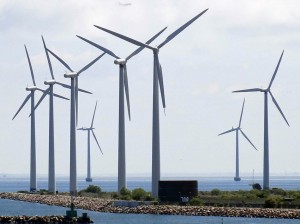 The environment has been a growing part of government policy for many years. With the Kyoto Protocol and Europe’s carbon trading system, effort has been made to reduce carbon emissions. Part of UK policy to meet its emission’s target requires substantial investment in infrastructure to provide efficient energy.
Details of the government’s Energy Bill sets out plans that will potentially increase average household energy bills by about £100 per annum, although estimates of this vary from about £90 to £170. This money will be used to finance much needed investment in infrastructure that will allow the UK to meet its carbon emissions target. With this extra cost on bills, energy companies will increase bring in something like £7.6bn. The benefit of this higher cost is that investment today will lead to lower energy bills tomorrow. Essentially, we’re looking at a short-term cost for a long-term gain.
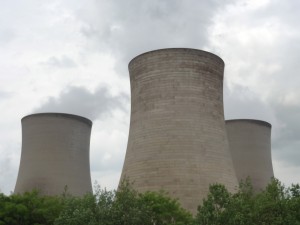 The Energy Bill also delayed setting a carbon emission target until 2016. Crucially, this will come after the next election. Environmentalists have naturally criticised this omission. John Sauven of Greenpeace said:
’By failing to agree to any carbon target for the power sector until after the next election, David Cameron has allowed a militant tendency within his own ranks to derail the Energy Bill … It’s a blatant assault on the greening of the UK economy that leaves consumers vulnerable to rising gas prices, and sends billions of pounds of clean-tech investment to our economic rivals.’
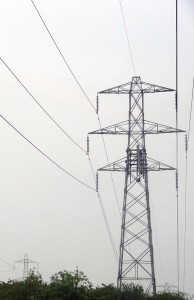
One further problem that this lack of a target creates is uncertainty. The energy sector requires significant investment and in order to be encouraged to invest, firms need assurances. Without knowing the target and hence facing a degree of uncertainty, firms may be less likely to invest in building new power plants. And this investment is crucial. The Government has committed to replacing most coal-fired power stations across Britain with low carbon technology at a cost of hundreds of billions of pounds. However, the Chancellor has said “he would not allow saving the planet to come at the cost of ‘putting our country out of business.’”
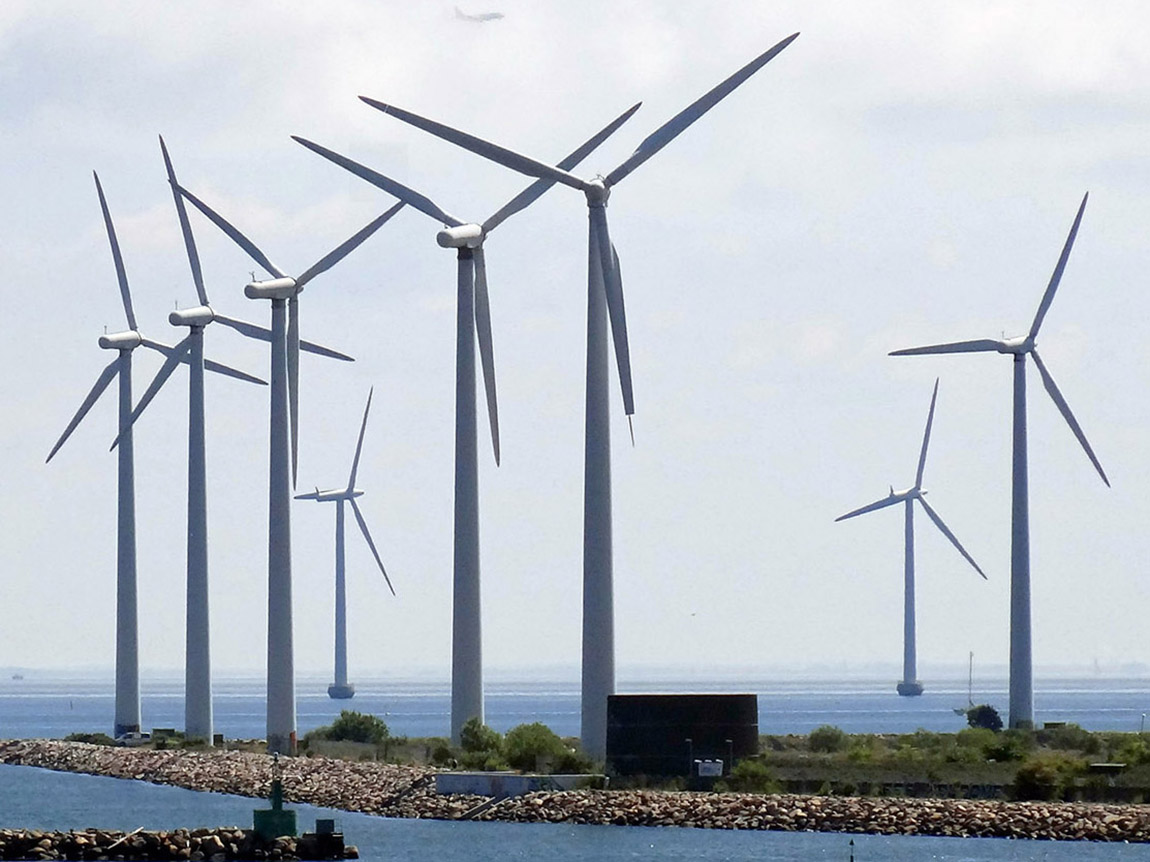
When this Energy Bill is published, it is claimed that £110bn of spending on different aspects of the National Grid will occur. The suggestion is that this will generate a further 250,000 jobs by 2030 and will be a big step in the right direction towards creating an economy that is more reliant on clean energy.
The following articles consider the wide range of issues surrounding the Energy Bill.
’It’s reasonable to hike energy bills to build wind farms’ says Tim Yeo The Telegraph, Rowena Mason (23/11/12)
Energy Bill to increase prices to fund cleaner fuel BBC News (23/11/12)
Energy deal means bills will rise to pay for green power The Guardian, Juliette Jowit and Fiona Harvey (23/11/12)
Energy Bill Q&A BBC News (23/11/12)
Energy bills to rise by £170 a year to fund wind farms Independent, Andrew Woodcock and Emily Beament (23/11/12)
Energy deal – but no target to cut Britain’s carbon emissions Independent, Nigel Morris (22/11/12)
Davey defends contentious energy agreement Financial Times, Jim Pickard, Pilita Clark and Hannah Kuchler (23/11/12)
Energy bill lacks emissions target Channel 4 News (23/11/12)
Questions
- Why does the environment require so much government intervention? Think about the different ways in which the environment as a market fails.
- If household bills rise, is there likely to be an income and substitution effect between consumption of ‘energy’ and other goods? Which direction will each effect move in and which do you think would be the largest?
- Why is uncertainty such a deterrent for investment? Why does a lack of a carbon emissions target represent uncertainty?
- The higher cost of bills today may enable future bills to fall. Why is this? For a household, explain why discount factors could be important here.
- Why do some argue that the extra cost to households set out by the government are likely to under-estimate the actual increase households will face?
- Is the Chancellor right to say that he will not put our country out of business to save the planet?