 Advertising is a costly venture, but for firms in a highly competitive market it can be essential for success. During the recession, many firms had to make a variety of cut backs and reduced advertising for many was one of the key areas to go.
However, one of the leading advertising companies – WPP – has posted significant profits this year, which are up by some 18.5%, reaching £1.008bn. According to Sir Martin Sorrell, a key factor in this success is that many firms, whilst not looking to increase their market share, have felt the need to continue advertising, simply to maintain their existing market share. This has become especially important in growing markets, as competition has become more and more intense.
This new is not only good for the company in question, but also for the UK economy, as the firm has said that it will be moving its headquarters back from Ireland to the UK. This is assuming that legislation is passed concerning the taxation of profits earned abroad. If this relocation does go ahead, it could mean the creation of many more jobs in the UK and a boost to tax revenues, both of which are crucial for the UK economy. As Sir Martin Sorrell said:
‘I am delighted to say that the last remaining issues I think have been removed subject to legislation being introduced in Parliament. We will be coming back subject to shareholder approval’.
WPP believes growth throughout 2012 will be high, due to events such as the Olympics and the US Presidential elections, together with its strength in emerging economies. At the moment, this all looks like good new for the UK and oh how it’s needed!
WPP profit up ahead of 2012 Olympics boost Reuters (1/3/12)
WPP’s Martin Sorrell says he is likely to move HQ back to London Guardian, Mark Sweney (1/3/12)
Olympics, Election to boost WPP Wall Street Journal, Kathy Gordon (1/3/12)
WPP breaks £1bn profit barrier Guardian, Mark Sweney (1/3/12)
WPP boosts dividend after strong year Financial Times, Tim Bradshaw and Mark Wembridge (1/3/12)
WPP profits reach record in 2011 BBC News (1/3/12)
Questions
- What is market share and how can it be calculated?.
- What is the purpose of advertising. Using a supply and demand diagram, illustrate the effect the advertising should have. Think about the position and the shape of the curves.
- Why is advertising an area that did see cut backs throughout the recession?
- Do you think that advertising is more important for firms in growing markets? Explain your answer.
- Why did WPP relocate to Ireland and what may bring it back to the UK?
- How have WPP’s dividend payments been affected by this latest profit information?
- During a recession, competition tends to become more intense. Why is this and what role does advertising play?
 Petrol prices have been a bone of contention for some time. With household incomes remaining low and the cost of living rising, the fact that average petrol prices have reached their highest level of more than 1.37p per litre on average will undoubtedly put growing pressure on the approaching budget.
There have already been calls for the Chancellor to reduce fuel duty and with this latest data, the pressure will only mount. The problem is, if fuel duty does fall, so will tax revenues and as one of the Coalition’s key objectives has been to cut the budget deficit, this could pose further problems. Even the calls to cut VAT on fuel will also put a dent in the budget deficit.
Although everyone is undoubtedly feeling the effects of these higher prices, the key thing with petrol is its elasticity of demand. Whether the price of petrol was 0.90p or 1.37p per litre, I continue to buy the same amount. Therefore, for me, the price elasticity of demand for petrol is highly inelastic – at least between those prices. After all, if the price increase above say £3 per litre, I might think twice about driving to work!
So what has been driving this increase in prices? Petrol prices are hugely dependent on the cost of oil and on the demand for any product that uses fuel. With growing demand from countries like India and China, as they continue to develop and grow very quickly; the continuing concerns with Iran’s nuclear programme and the political problems in the Middle East, oil prices have been forced up. The future trend in prices will depend on many factors, not least whether or not there is any change in fuel duty in the 2012 budget and whether something like a regulator is introduced to monitor increases in fuel prices. This is definitely an area to pay close attention to in the coming months.
Petrol prices reach record high Independent, Peter Woodman (3/3/12)
Petrol prices hit record high with further rises expected Guardian, Hilary Osborne (2/3/12)
Appeak to regulate petrol prices This is South Wales (3/3/12)
Plea to slash duty as fuel costs soar to record high Scotsman, Alastair Dalton (3/3/12)
Petrol prices hit record high The Telegraph, David Millward (2/3/12)
Diesel prices predicted to reach 150p as petrol hits new record Guardian, Terry Macalister and Hilary Osborne (2/3/12)
Questions
- Which are the factors on the demand side that have pushed up the price of oil and hence petrol and diesel?
- What are the supply-side factors that are causing the rising price of fuel?
- Use a demand and supply diagram to illustrate the effects you have explained in the first two questions.
- In the blog, I mention that my price elasticity of demand is relatively inelastic between 2 given prices. What does this suggest about the shape of my demand curve for petrol? How does this shape affect prices following any change in demand or supply?
- Why is petrol a relatively price inelastic product?
- There have been calls for the government to cut VAT or reduce fuel duty. What are the arguments for and against these policies?
- How effective do you think a petrol price regulator would be?
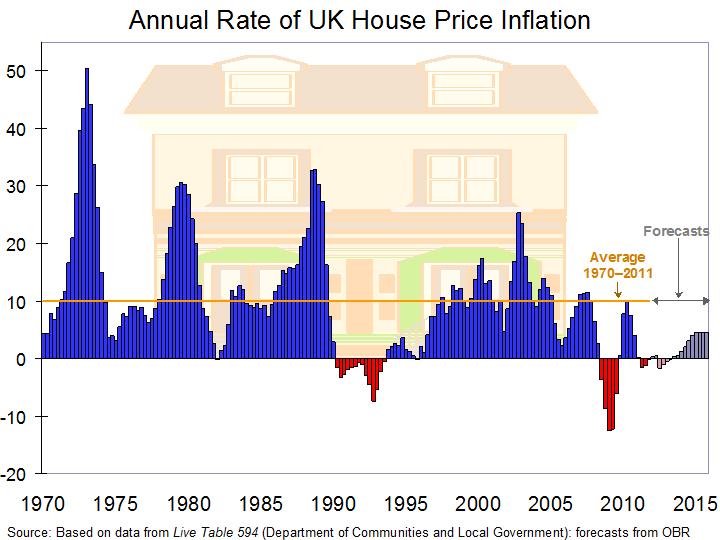 The housing market has long been seen as a crucial element in stimulating the British economy. For this reason various incentives had been introduced to encourage people to buy properties. (Click here for a PowerPoint of the chart.)
One such strategy was the stamp duty holiday. Stamp Duty Land Tax is paid by the purchaser of a property against a purchase price and the cost of it will rise through each price band. The stamp duty holiday meant that first-time buyers were free from the 1% stamp duty on homes that cost under £250,000. However, this holiday is due to end from March 2012, as according to the government, the holiday has been ineffective. Indeed, in the Autumn statement documents, the government said:
‘The government is publishing analysis showing that the stamp duty land tax relief for first-time buyers has been ineffective in increasing the number of first time buyers entering the market.’
The government has said that instead it will focus on other strategies that provide better value for money. Such schemes include a mortgage guarantee scheme and the FirstBuy scheme launched last year, both of which aim to help those struggling to finance the purchase of their first properties.
According to the Land Registry, property prices have fallen by over 1% over the past year, so fewer properties will face the stamp duty land tax, but this data does little to instill confidence in the housing market being the stimulus that the economy needs. By stimulating the housing market, construction jobs should be created and this in turn should create a much needed multiplier effect helping to boost other sectors within the economy. The following articles consider this latest development.
Stamp duty rush boosts January valuations Mortgage Strategy, Tessa Norman (11/2/12)
New deals for buyers as stamp duty holiday ends BBC News, Susannah Streeter (11/2/12)
Autumn Statement: Stamp duty concession to end BBC News (29/11/11)
First-time buyers boost mortgage market activity FT Adviser, Michael Trudeau (9/2/12)
When shared ownership turns sour Guardian, Rupert Jones (10/2/12)
Questions
- Why does the housing market play such a crucial role in the economy?
- What is the multiplier effect? How will new jobs in the construction industry help other sectors in the economy?
- Why has the stamp duty holiday been ‘ineffective’ in stimulating the housing market?
- How have the other schemes introduced by the government created incentives in the housing market?
- Why have January valuations improved? Use a demand and supply diagram to illustrate your explanation.
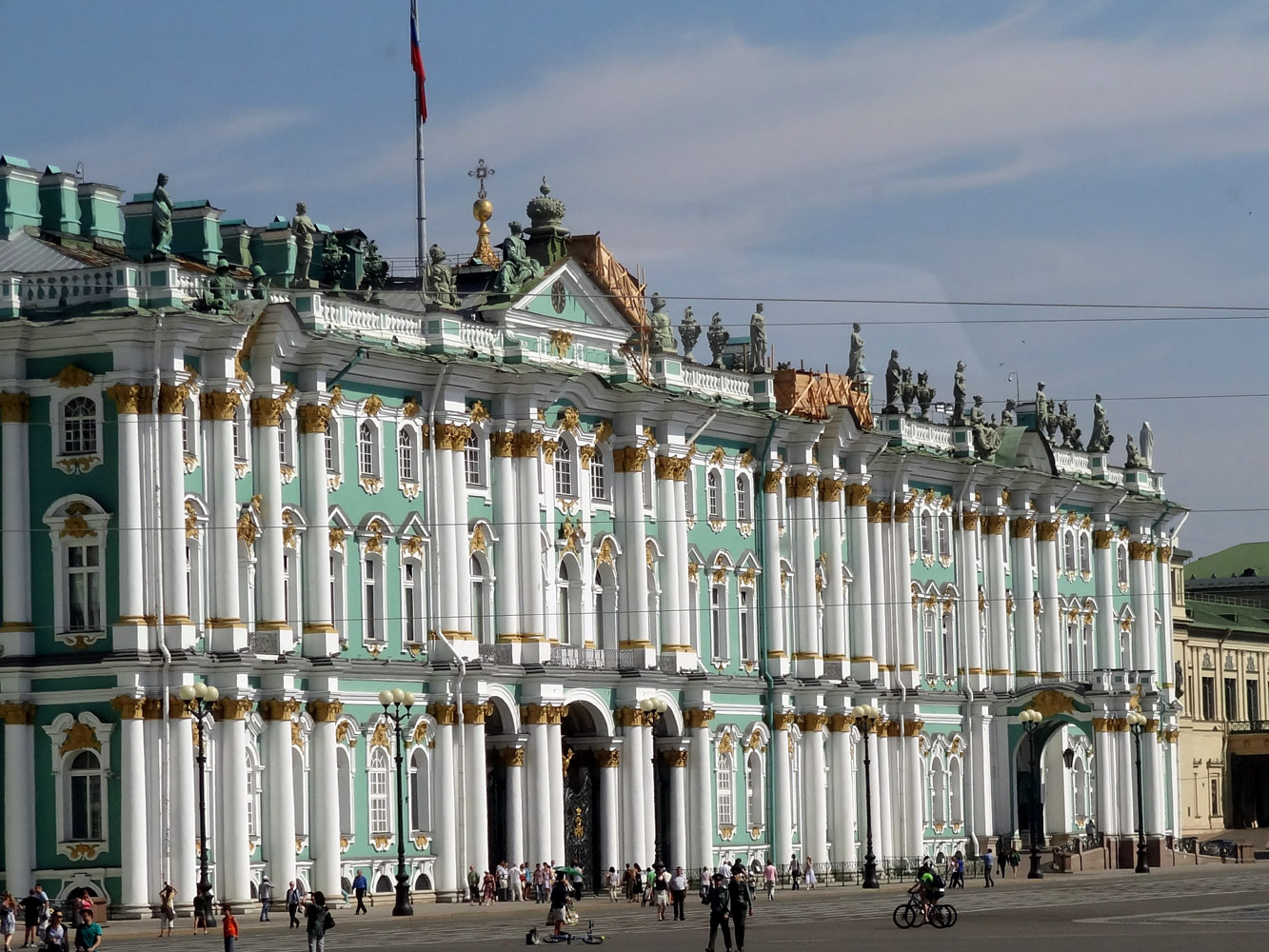 Last year, we felt the cost of the cold weather and whilst we haven’t seen such low temperatures this year, gas shortages are also emerging. Across Eastern Europe, temperatures have fallen well below -30ºC and so demand for gas has unsurprisingly increased.
Thanks to these low temperatures, Russian gas supplies are running low and several countries have seen their deliveries of gas fall. However, the Russian gas monopoly, Gazprom has said that supplies have not been cut and that it has been exporting more gas during these cold times. The blame, according to Alexander Medvedev (the Deputy CEO of Gazprom), lies with the Ukraine taking gas at a pace significantly above contracted levels. The following articles consider this issue.
Russia, Ukraine argue over gas as EU reports shortage Reuters (2/2/12)
Freezing Europe hit by Russian gas shortage BBC News (4/2/12)
Gazprom says ‘Perplexed’ by EU supply drop as Ukraine takes gas Bloomberg BusinessWeek, Anna Shiryaevskaya (3/2/12)
Gazprom cuts gas supplies amid cold snap Financial Times, Guy Chazan (3/2/12)
Gazprom ‘unable to pump extra gas to Europe’ Associated Press (4/2/12)
Questions
- Using a demand and supply diagram, illustrate what we would expect to see with a gas shortage.
- What has been the cause of this current gas shortage? Use a diagram to illustrate the causes.
- What would you expect to happen to prices following this gas shortage?
- Gazprom is said to be a monopoly: what are the characteristics of a monopoly?
- As there are other gas suppliers, how can Gazprom be said to be a monopolist?
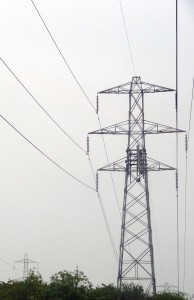 In an earlier blog Energy profits margins up by over 700% we analysed the increasing pressure on many households as they saw their energy bills increase in price year on year. This helped the big six energy companies achieve a 700% rise in their profits.
However, it also sparked interest by the regulator Ofgem, which was looking to ensure that consumers found it easier to make price comparisons and create a more competitive market. One issue that Ofgem were looking into was how to make the energy sector more open to competition, given that the big six companies own the power stations and hence this acts as a barrier to the entry of new firms.
The latest announcements from some of the big energy companies will therefore come as a pleasant turn of events for Ofgem. On Wednesday January 11th 2012, EDF announced that it would be cutting its energy prices by 5% from 7th February in response to a fall in wholesale costs. Only a day later, Npower announced its plans to cut its tariffs by 5% from 1st February. British Gas cut its prices by 5% with immediate effect and SSE will reduce its gas prices by 4.5% from March 26th.
Is this a sign that the market is becoming more competitive thanks to Ofgem or is there another explanation? For the past 2 winters, temperatures have been consistently below freezing and hence demand for gas/electricity was at an all time high, speaking concerns of gas shortages. However, with the mild winter we are currently experiencing (I hope I haven’t jinxed it!) demand for heating etc has been significantly lower, which has reduced wholesale costs and the big six companies have begun to pass these savings on to their customers. Yet, despite this seemingly good news, are they being as ‘kind’ as we think? Most of the companies are cutting their prices by about 5%, yet wholesale prices fell by significantly more than that. Furthermore, over the past few years, customers have seen their tariffs increase significantly – by a lot more than 5%. To some extent, this confirms the criticism levelled at the energy sector – when costs rise, they are quick to pass on the full costs to their customers. But, when costs fall, they are slow to pass on only a fraction of their cost savings. The following articles consider this issue.
Npower will cut gas prices by 5% BBC News (13/1/12)
EDF cuts gas price by 5% Reuters, Karolin Schaps and Henning Gloystein (11/1/12)
British Gas readies push to promote price cut MarketingWeek, Lara O’Reilly (13/1/12)
British Gas cuts prices by 5% Independent (13/1/12)
Energy suppliers do battle in the war of modest price cuts The Telegraph, Emily Godsen (13/1/12)
British Gas and SSE follow EDF Energy price cut Financial Times, Guy Chazan and Sylvia Pfeifer (11/1/12)
British Gas cuts electricity prices, but keeps gas on hold Guardian, Hillary Osborne (12/1/12)
British gas and SSE announce price cuts (including video) BBC News (12/1/12)
More power firms cut energy tariffs The Press Association (12/1/12)
Questions
- In which market structure would you place the energy sector? Explain your answer.
- What is the role of Ofgem? What powers does it (and the other regulators have)?
- Using a demand and supply diagram to help you, explain why wholesale costs have fallen.
- Why have the energy companies only passed on about 5% of cost savings to their customers, despite falls in wholesale costs of significantly more than that?
- Do you think price wars are likely to break out in this sector? Are they in the interests of consumers?
- Why did energy prices increase so quickly last year and the year before? Use a diagram to help you.
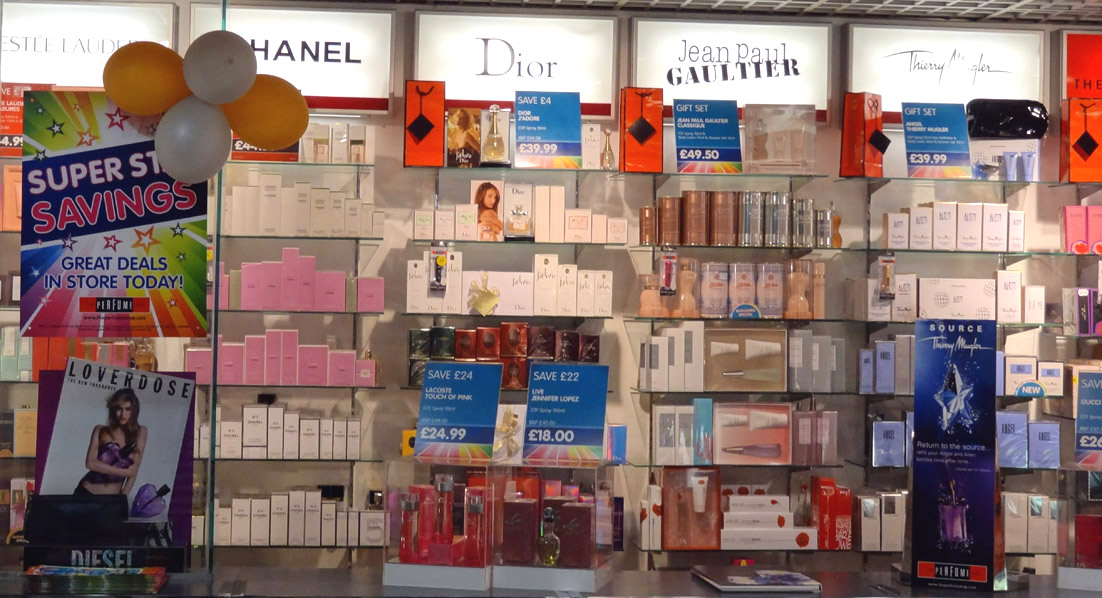 Advertising is a costly venture, but for firms in a highly competitive market it can be essential for success. During the recession, many firms had to make a variety of cut backs and reduced advertising for many was one of the key areas to go.