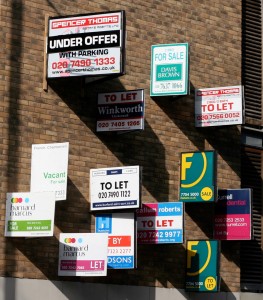
 The housing market is crucial in any economy, as it provides so many jobs in related industries. It is frequently a good signal of how buoyant the economy is. With recession in the UK, mortgage rationing continuing and many homeowners having to find 20% deposits to buy a house, many would expect the housing market to be showing signs of trouble.
And to some extent this is the case. Studies on house prices have clearly shown how unpredictable this market is and prices remain 0.7% below what they were a year ago. However, in August house prices increased, recording their biggest rise in two and a half years, at 1.3%. For many, this rise was a surprise, but came as a welcome relief following the declines in previous months. Despite this rise, analysts have suggested that this trend is unlikely to continue throughout the rest of the year, as the demand for houses remains weak. Robert Gardner, the Chief Economist at Nationwide said:
“Given the difficult economic backdrop, the extent of the rebound in August is a little surprising. However, we should never read too much into one month’s data, especially since monthly price changes have been impacted by a number of one-off factors this year, such as the ending of the stamp duty holiday for first time buyers’.
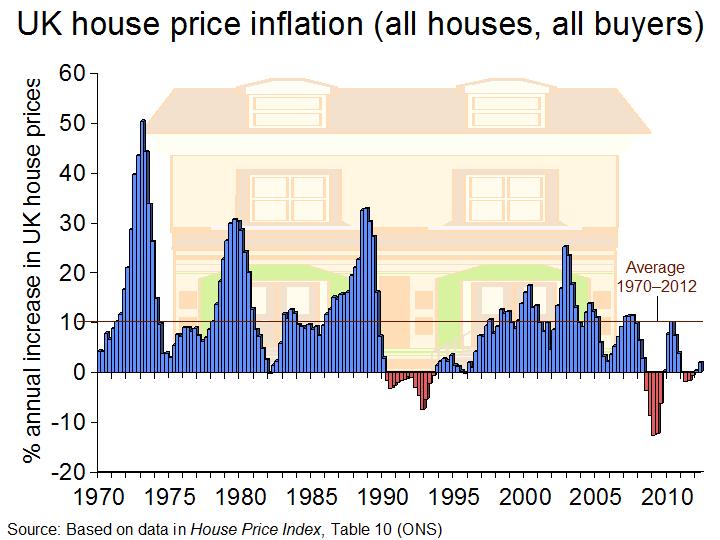 So, what is behind this upward trend? Nationwide’s Chief Economist says that it could be explained by a resilient labour market, where employment has risen in recent months, despite the recession. The labour market undoubtedly has a big effect on the housing market, as mortgages do take up so a large percentage of take-home pay.
However, another key factor that affects house prices is the availability of mortgages. The Bank of England and Treasury launched the Funding for Lending Scheme at the beginning of August in a bid to make mortgages cheaper and more easily available. However, analysts suggest that the scheme is yet to have an effect. Furthermore, until deposit requirements are eased, that first step on the property ladder will remain elusive for many people. Mortgage approvals did increase slightly in July, but still remain a major barrier for the housing market to really boom.
The following articles consider this ‘surprising’ rise in house prices and the factors behind it.
Articles
House prices in ‘surprising’ jump, Nationwide says BBC News (31/8/12)
UK house prices record surprise increase Financial Times, Tanya Powley (31/8/12)
Surprise house price rise in August not indicative of market, says Nationwide The Telegraph, Emma Wall (31/8/12)
House prices in surprise rebound Independent, Vicky Shaw (31/8/12)
House prices continue to hold The Economic Voice, Jeff Taylor (31/8/12)
Mortgage approvals still subdued, Bank of England says BBC News (30/8/12)
Banks are pulling back from property – expect prices to fall Money Week, Matthew Partridge (31/8/12)
UK house prices up, as London continues surge Share Cast, Michael Miller (29/8/12)
Data
Lending to Individuals Bank of England 2012
House Price Index Land Registry 2012
UK house prices (links) Economics Network
Questions
- Use a supply and demand diagram to analyse recent trends in the housing market.
- Why is the Bank of England’s lending scheme not having the expected impact on the housing market?
- To what extent do you think the state of the housing market depends on mortgage rationing? Which other factors are likely to affect the housing market?
- In the article from the Economic Voice, the author says that house prices holding as they are is a surprise, because of relatively high inflation and the fact that wages are not keeping pace. Explain the economic thinking behind this view.
- The Chief Economist at Nationwide has said that the future of the housing market depends heavily on what happens to the labour market. Why is this the case?
- Why have mortgages been rationed and minimum deposit requirements been increased?
- Why is the housing market so important for the economy?
 Weather has already been partly blamed for poor economic growth, in particular in December 2010 and January 2011. April 2012 is no different – the wettest April on record is said to have caused the worst performance in sales since March 2011.
Like-for-like sales fell by 3.3%, mainly through lower demand for clothes and shoes. Supermarkets saw an increased demand for warmer food items with the colder weather and demand for home products also increased, with analysts suggesting that people decided to re-decorate their houses rather than venture outside! This was further supported by sales of gardening equipment, which also fell. However, the weather is not always bad – in March, sales were higher than expected, with the unusually warm weather, but unfortunately for growth statistics, the boost in sales in March has been more than offset by the decline in sales in April. Furthermore, there are concerns that the March ‘heat-wave’ may have encouraged consumers to do their summer shopping already and hence summer sales may suffer.
The retail data for April 2012 must be considered carefully, as comparing this month’s sales with the same period last year will be very misleading. Last April, the UK was hit with the Royal Wedding, which did boost sales of many products – underlying sales growth was recorded at 5.2% for the month. However, whilst April sales for 2012 could hardly hope to compete with April sales for 2011, the downward trend is undoubtedly going to cause concern for the government. Helen Dickinson, Head of Retail at KPMG said:
“While May will certainly be brighter than April, the health of the retail sector continues on a downward trajectory.”
Whether or not sales do continue their downward trend depends on many factors, including government policy measures to boost growth and cut unemployment. However, one other variable that may influence the trend is the weather. Here’s hoping that the sun shines and people begin to spend!
Weaker retail sales, job surveys raise risk of longer slump Reuters, Olesya Dmitracova (9/5/12)
Wettest April ‘hits retail sales’ BBC News (9/5/12)
Retail sales slide in wettest April on record Telegraph (9/5/12)
April showers wash out retail sales Financial Times, Sarah O’Connor (9/5/12)
Retail sales slip back 1 per cent as fashion stores weather April showers Independent, James Thompson (9/5/12)
Questions
- Use a demand and supply diagram to illustrate the effects of the weather on equilibrium price and output.
- What other factors besides the weather affect retail sales?
- What government policy measures could be implemented to try to boost the retail sector?
- From the information you are told are there any sectors that surprise you in terms of whether sales have risen or fallen? Explain your answer in each case.
- With sales in April falling, what is the implication for a firm’s profits? What steps might a firm take in a bid to boost sales?
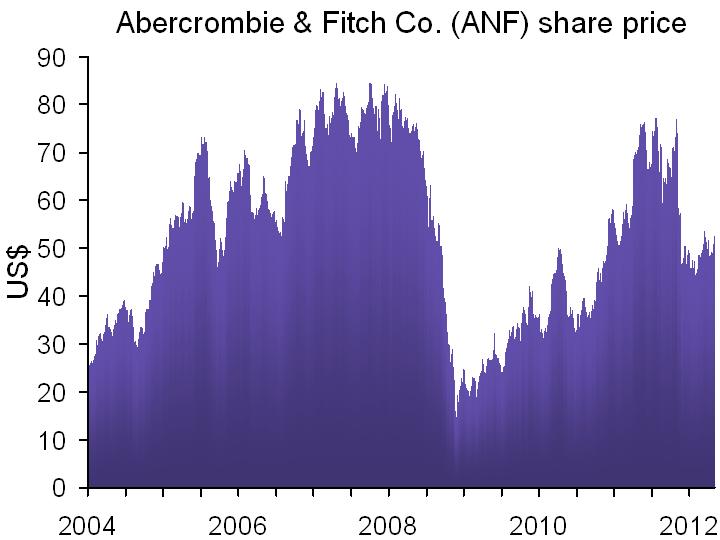 The trendy US fashion retailer Abercrombie & Fitch entered the UK in 2007 with the opening of a flagship store close to Savile Row in London. Located in the upmarket Mayfair area of London, Savile Row is famous for its traditional men’s tailors.
Recently Abercrombie & Fitch decided to go one step further by opening a childrenswear store directly on Savile Row. This move upset the local retailers and was met with protests.
This was just the latest in a history of controversy surrounding Abercrombie & Fitch which has included a product boycott and a lawsuit concerning employment issues. Should all this bad publicity be a concern for the company?
We expect tastes to be one of the key determinants of demand. If taste for a company’s product declines, its demand curve shifts to the left. This means it can sell less at any given price and consequently will have a knock-on effect on profits. Somewhat surprisingly, therefore, the PR expert, Mark Borkowski, quoted in the Guardian article above, suggests that all this adverse publicity may have in fact helped the company because:
“…the focus is on the brand. They’ve got a very keen identity of who they are, what they want, who they want to consume their products, and they’ve stuck to it.”
It is also clear that the company is very aware of the importance of protecting its brand – even going as far as paying television actors NOT to wear their clothes! Abercrombie & Fitch has also been reluctant to cut its prices during the current recession, perhaps because of a fear of harming its brand.
Abercrombie & Fitch with its ‘crappy clothes’ threatens staid Savile Row Observer, Euan Ferguson (11/03/12)
Savile Row cannot live in the past Guardian, Charlie Porter (24/04/12)
Sorry chaps, Abercrombie & Fitch simply doesn’t fit Savile Row Guardian, Gustav Temple (24/04/12)
Savile unrest … the tailors who want to stop Abercrombie & Fitch London Evening Standard, Josh Sims (27/04/12)
Questions
- What are the distinctive features of the Abercrombie & Fitch brand?
- What are the key features of competition in this industry?
- Why might Abercrombie & Fitch be keen to open up a store on Savile Row?
- Why might the local tailors object to Abercrombie & Fitch opening a store nearby?
- Why do you think negative publicity appears to have little effect on Abercrombie & Fitch?
- Why do you think television coverage could harm the Abercrombie & Fitch brand?
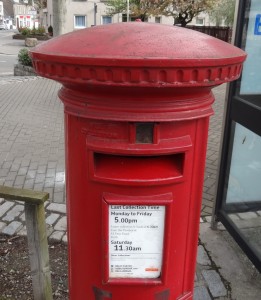 46p – that buys you a First Class stamp. However, the price will now rise to 60p and the price of a Second Class stamp will increase to 50p from 36p, as Ofcom lifts some price caps. These significant price rises have seen shortages of stamps emerging across the country. As people anticipate the price rise, individuals and businesses are buying up stamps while they remain relatively cheap.
The problem is that this has started to result in a stamp shortage, so much so that the Royal Mail has now begun rationing retailers’ supply of stamps, capping each retailers’ supply this month to 20% of its annual allocation. A Royal Mail spokesman said:
“We are more than happy for retailers to receive the normal commercial return they obtain on stamps and no more than that … That is why we have put in place a prudent allocation policy to safeguard Royal Mail’s revenues and ensure there are more than enough stamps for people to buy both now and in the future.”
With postage volumes falling, as individuals turn to other methods of communication, Royal Mail says that this price rise is essential to keep this universal service going. Revenues have been low and the Royal Mail has been loss-making for some time.
However, while the price rise may help the Royal Mail, many businesses may suffer in its place. One optician, who sends out approximately 5,000 reminders to patients each year intends to bulk-buy 10,000 stamps in the hopes of saving some £1,400 when prices of stamps rise. An IT worker bought 20 books of 12 first-class stamps and said ‘If I could afford it, I would buy a lot more’. Many are unhappy at the ‘shameless profiteering at the public’s expense’, but whatever your opinion about the price rise, it does make for an interesting case of demand and supply. The following articles consider this stamp shortage.
Man’s 10,000 stamp panic: stampede for stamps leaves a 1st class mess as Royal Mail introduces rationing ahead of 30% price rise Mail Online, Colin Fernandez and John Stevens (15/4/12)
Stamps rationed by Royal Mail in run up to price rise (including video) BBC News (13/4/12)
Stamp rationing could hit pensioners Telegraph, James Hall (14/3/12)
Stamp sales limited ahead of price hike Sky News (13/4/12)
How stamp collecting came unstuck Guardian, Hunter Davies (13/4/12)
Royal Mail limits supply of stamps ahead of price rise Telegraph, James Hall and Andrew Hough (12/4/12)
’Profiteering’ Royal Mail limits supply of stamps before price rise Guardian, David Batty (13/4/12)
Royal Mail’s stamp price rises come into force BBC News (30/4/12)
How businesses will be affected by Royal Mail’s changing prices BBC News, Catherine Burns (28/4/12)
Questions
- If people expect prices to rise, what will happen to the demand curve? Illustrate this idea on a demand and supply diagram?
- If suppliers anticipate a price rise, what would their best strategy be?
- On a demand and supply diagram, illustrate the shortage of stamps that has emerged. If left to the free market, what should happen to the price of stamps?
- Why could pensioners and those in rural areas be the most adversely affected by this shortage and price rise?
- Why could ‘children and new collectors’ be priced out of the market?
- Why will small businesses be affected by this price hike? How could their customers be affected?
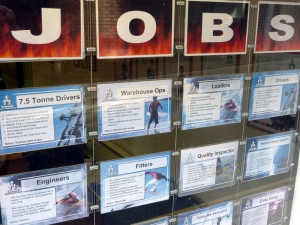 Unemployment figures for the UK have been going in the wrong direction for some time. With consumer expenditure, investment and hence aggregate demand remaining low, job creation has been severely lacking. However, 2 pieces of news have emerged in the last couple of days, which as David Cameron said was ‘a massive confidence boost for the UK economy’. Tesco and Nissan have both announced the creation of thousands of new jobs.
Over the next 2 years, Tesco has said that it will create 20,000 new jobs through store improvement and the opening of new stores. Whilst it is not clear how many will be full-time, part-time or apprenticeship placements, it still represents net job creation. This huge investment represents what many are calling a ‘fight-back’ from Tesco, who issued its first profit warning in 20 years, following weak Christmas trading. That announcement slashed their shares by over £5bn and is perhaps partly responsible for this planned investment.
Despite this good news, criticisms have emerged that the major supermarkets are simply inflating the job creation figures and that the actual number of new jobs will be significantly less than the 20,000 suggested. This follows allegations made towards Asda, who claimed to have created 30,000 jobs. However, evidence from records at Companies House suggests that new job creation by the company was closer to 7,000. Whatever the true figure, it still means new jobs, which can only help UK unemployment data.
In addition to this, Nissan has also announced that it will be creating 2,000 new jobs, as it begins production on a new model at its Sunderland factory. The jobs will be created as part of a £125m investment, including a £9.3m grant from the government. This is especially good news, given the area where many of these jobs will emerge. The North East is a region that has been hit particularly hard by the recession and the grant from the government has come from its regional growth fund. Nissan has said that even in hard economic times, it is possible to sell cars, as long as they are competitively priced. Neither of the plans discussed above will create jobs immediately, but perhaps the key is that it creates confidence, which is a rarity in the UK with the current economic situation. The following articles consider these job creation plans and their wider implications.
Tesco plans to create 20,000 UK jobs over 2 years BBC News (5/3/12)
Tesco to create 20,000 jobs in UK fight-back Telegraph, Jamie Dunkley (6/3/12)
Tesco’s UK boss defends ‘new jobs’ claims Sky News (5/3/12)
Tesco to freshen up with 20,000 new staff Financial Times, Andrea Felsted (5/3/12)
Now Tesco creates 20,000 jobs – with pay Independent (9/5/11)
Nissan to build new car in Sunderland BBC News (6/3/12)
Nissan pledges 2,000 new jobs at North East plant Sky News, Gerard Tubb (6/3/12)
Nissan Invitation compact car set to create 2,000 jobs Telegraph, Roland Gribben and David Millward (6/3/12)
Nissan to create 2,000 new jobs by building compact car in Sunderland Guardian, Dan Milmo(6/3/12)
Questions
- Explain the process by which net job creation should provide a boost to the economy.
- Will these new jobs have any impact on the government’s budget deficit?
- Why is there concern that the supermarkets are inflating the employment creation figures?
- What type of unemployment has been created by the recession? Why have certain areas, such as the North East been affected so badly by the recession and austerity measures?
- Which factors could have led to Tesco’s weaker trading figures towards then end of 2011? Why did this lead to a £5bn loss in the value of the group’s shares?
- Nissan has said that cars can be sold as long as they are competitively priced. To what extent do you think price is the main competitive weapon in the market for cars and in the supermarket industry?
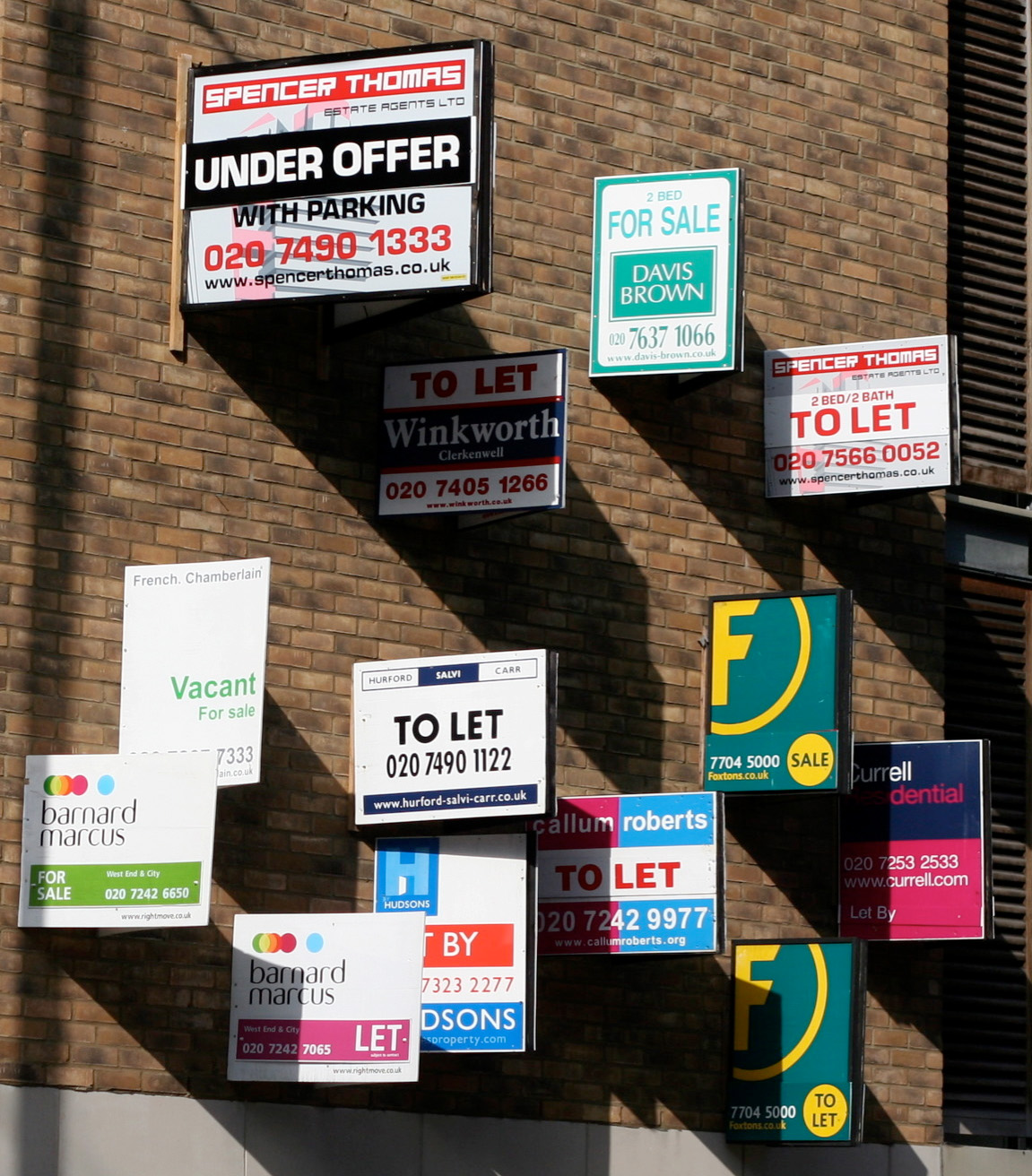 The housing market is crucial in any economy, as it provides so many jobs in related industries. It is frequently a good signal of how buoyant the economy is. With recession in the UK, mortgage rationing continuing and many homeowners having to find 20% deposits to buy a house, many would expect the housing market to be showing signs of trouble.