 On 20 February, the UK Prime Minister, David Cameron, announced the date for the referendum on whether the UK should remain in or leave the EU. It will be on 23 June. The announcement followed a deal with EU leaders over terms of UK membership of the EU. He will argue strongly in favour of staying in the EU, supported by many in his cabinet – but not all.
Two days later, Boris Johnson, the Mayor of London, said that he would be campaigning for the UK to leave the EU.
In the meantime, Mr Johnson’s announcement, the stance of various politicians and predictions of the outcome of the referendum are having effects on markets.
One such effect is on the foreign exchange market. As the Telegraph article below states:
The pound suffered its biggest drop against the dollar in seven years after London Mayor Boris Johnson said he will campaign for Britain to leave the European Union [‘Brexit’].
Sterling fell by as much as 2.12pc to $1.4101 against the dollar on Monday afternoon, putting it on course for the biggest one day drop since February 2009. Experts said the influential Mayor’s decision made a British exit from the bloc more likely.
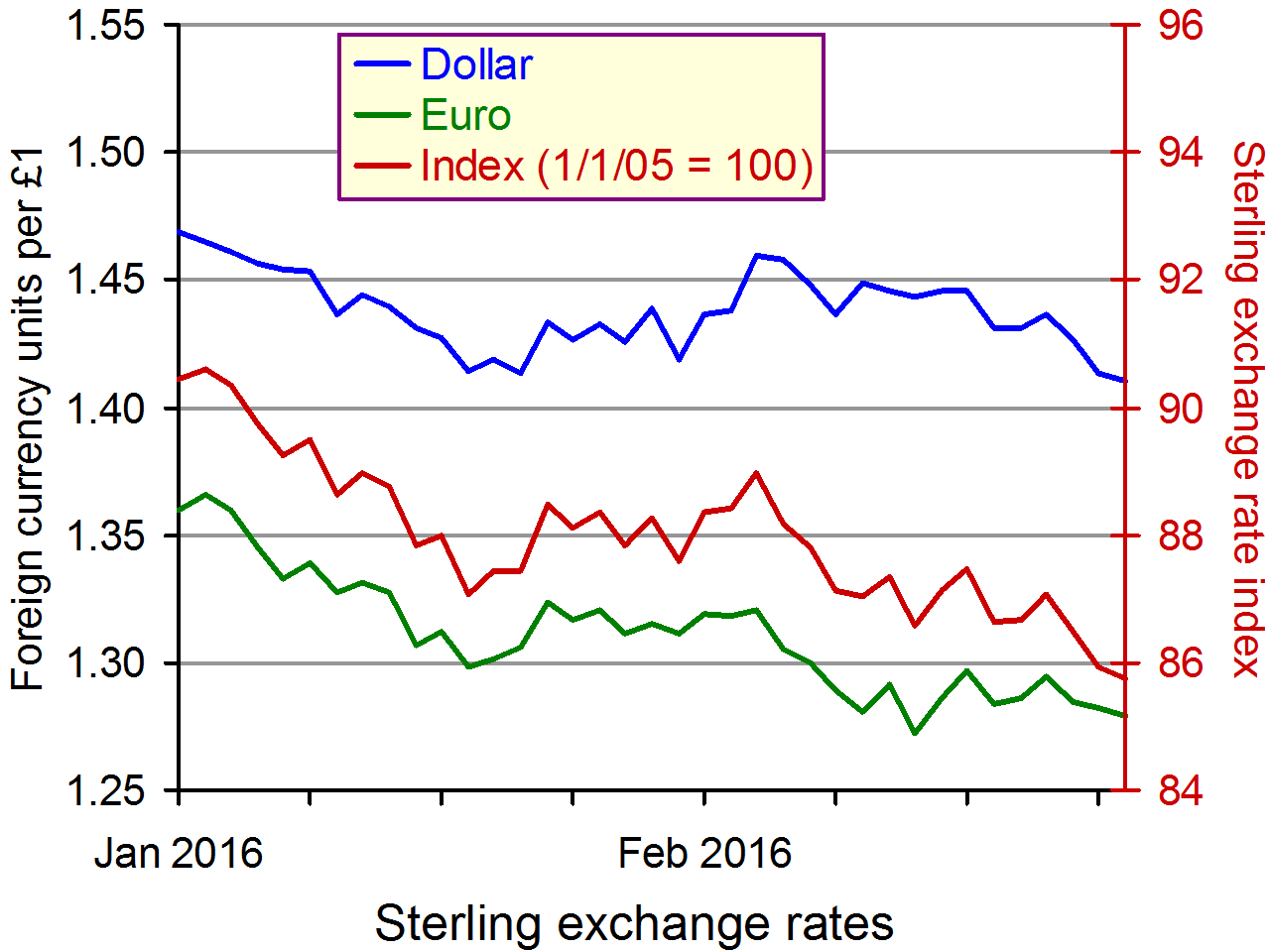
The pound also fell by as much as 1.2pc to €1.2786 against the euro and hit a two-year low against Japan’s yen.
This follows depreciation that has already taken place this year as predictions of possible Brexit have grown. The chart shows that from the start of the year to 23 February the sterling trade weighted index fell by 5.3% (click here for a PowerPoint).
But why has sterling depreciated so rapidly? How does this reflect people’s concerns about the effect of Brexit on the balance of payments and business more generally? Read the articles and try answering the questions below.
Articles
 Pound in Worst Day Since Banking Crisis as `Brexit’ Fears Bite Bloomberg, Eshe Nelson (21/2/16)
Pound hits 7-year low on Brexit fears Finiancial Times, Michael Hunter and Peter Wells (22/2/16)
Pound in freefall as Boris Johnson sparks Brexit fears The Telegraph, Szu Ping Chan (22/2/16)
Pound falls below $1.39 as economists warn Brexit could hammer households The Telegraph, Peter Spence (24/2/16)
Why is the pound falling and what does it mean for households and businesses? The Telegraph, Szu Ping Chan (23/2/16)
Pound heading for biggest one-day fall since 2009 on Brexit fears BBC News (22/2/16)
Cameron tries to sell EU deal after London mayor backs Brexit Euronews, Guy Faulconbridge and Michael Holden (22/2/16)
EU referendum: Sterling suffers biggest fall since 2010 after Boris Johnson backs Brexit International Business Times, Dan Cancian (22/2/16)
Exchange rate data
Spot exchange rates against £ sterling Bank of England
Questions
- What are the details of the deal negotiated by David Cameron over the UK’s membership of the EU?
- Why did sterling depreciate in (a) the run-up to the deal on UK EU membership and (b) after the announcement of the date of the referendum?
- Why did the FTSE100 rise on the first trading day after the Prime Minister’s announcement?
- What is the relationship between the balance of trade and the exchange rate?
- What are meant by the ‘six-month implied volatility in sterling/dollar’ and the ‘six-month risk reversals’?
- Why is it difficult to estimate the effect of leaving the EU on the UK’s balance of trade?
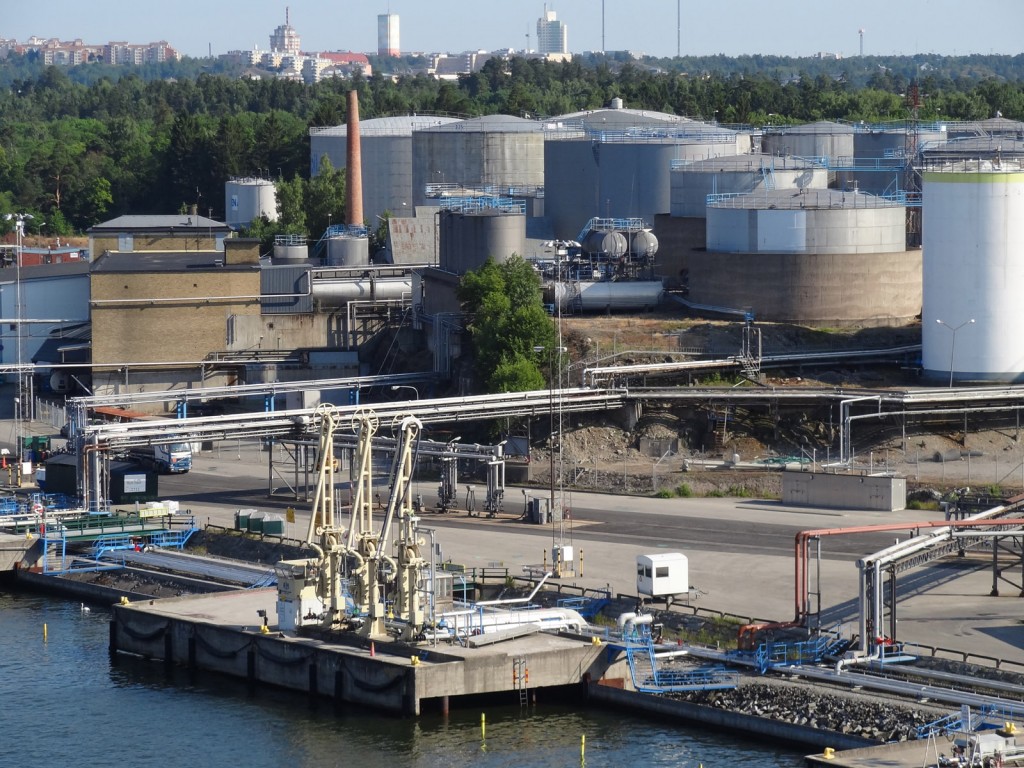 In the UK, petrol prices have fallen significantly over the past couple of years and currently stand in some places at below £1 per litre. For UK residents, this price is seen as being cheap, but if we compare it to prices in Venezuela, we get quite a different picture. Prices are increasing here for the first time in 20 years from $0.01 per litre to $0.60 per litre – around 40 pence, while lower grade petrol increases to $0.10 per litre.
Venezuela has oil fields in abundance, but has not used this natural resource to its full potential to bolster the struggling economy. The price of petrol has been heavily subsidised for decades and the removal of this subsidy is expected to save around $800 million per year.
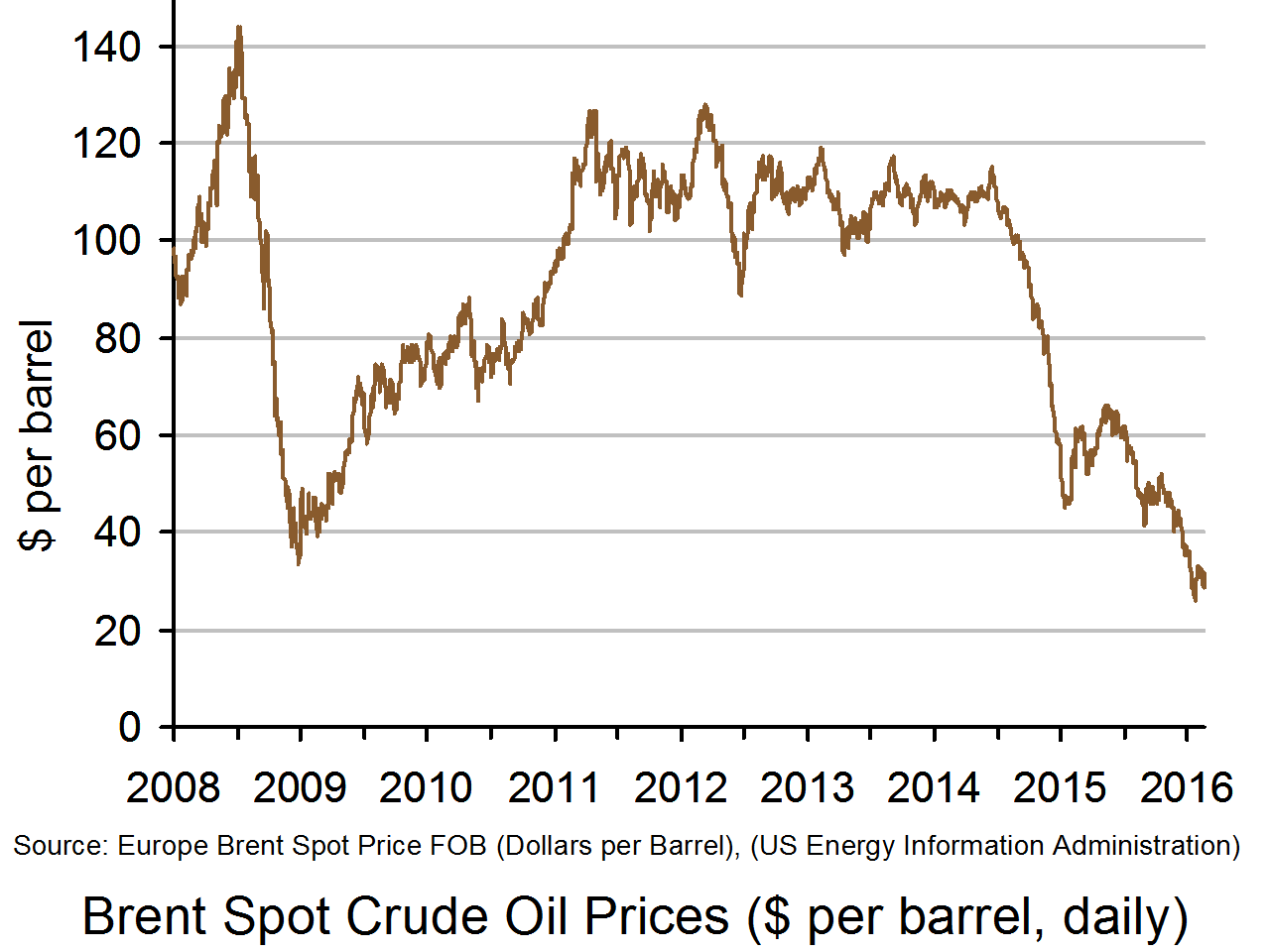 This will be important for the economy, given its poor economic growth, high inflation and shortages of some basic products. Venezuela relies on oil as the main component of its export revenues and so it has been hit very badly, by such low oil prices. The money from this reduced subsidy will be used to help social programmes across the country, which over time should help the economy.
In addition to this reduced subsidy on petrol prices, Venezuela’s President has also taken steps to devalue the exchange rate. This will help to boost the economy’s competitiveness and so is another policy being implemented to help the economy. However, some analysts have said that these changes don’t go far enough, calling them ‘small steps’, ‘nowhere near what is required’ and ‘late and insufficient’. The following articles consider the Venezuelan crisis and policies.
Venezuela raises petrol price for first time in 20 years BBC News (18/02/16)
Venezuela president raises fuel price by 6,000% and devalues bolivar to tackle crisis The Guardian, Sibylla Brodzinsky (18/02/16)
Venezuela’s Maduro devalues currency and raises gasoline prices Financial Times, Andres Schipani (18/02/16)
Venezuela hikes gasoline price for first time in 20 years The Economic Times (18/02/16)
Venezuela hikes fuel prices by 6000%, devalues currency to tackle economic crisis International Business Times, Avaneesh Pandey (18/02/16)
Market dislikes Venezuela reforms but debt rallies again Reuters (18/02/16)
Questions
- Why are oil prices so important for the Venezuelan economy?
- How will they affect the country’s export revenues and hence aggregate demand?
- Inflation in Venezuela has been very high recently. What is the cause of such high inflation? Illustrate this using an aggregate demand/aggregate supply diagram.
- How will a devaluation of the currency help Venezuela? How does this differ from a depreciation?
- Petrol prices have been subsidised in Venezuela for 20 years. Show how this government subsidy has affected petrol prices. Now that this subsidy is being reduced, how will this affect prices – show this on your diagram.
- Why are many analysts suggesting that these policies are insufficient to help the Venezuelan economy?
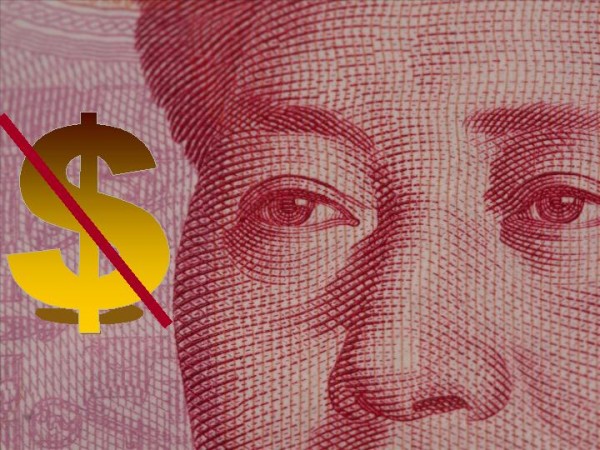 There is a select group of countries (areas) that have something in common: the USA, the UK, Japan and the eurozone. The currency in each of these places is one of the IMF’s reserve currencies. But is China about to enter the mix?
The growth of China has been spectacular and it is now the second largest economy in the world, behind the USA. It is on the back on this growth that China has asked the IMF for the yuan to be included in the IMF’s basket of reserve currencies. The expectation is that Christine Lagarde, the IMF’s Managing Director, will announce its inclusion and, while some suggest that the yuan could become one of the major currencies in the world over the next decade following this move, others say that this is just a ‘symbolic gesture’. But that doesn’t seem to matter, according to Andrew Malcolm, Asia head of capital at Linklaters:
“The direct impact won’t be felt in the near term, not least because implementation of the new basket won’t be until Q3 2016. However the symbolic importance cannot be overlooked…By effectively endorsing the renminbi as a freely useable currency, it sends a strong signal about China’s importance in the global financial markets.”
Concerns about the yuan being included have previously focused on China’s alleged under-valuation of its currency, as a means of boosting export demand, as we discussed in What a devalued yuan means to the rest of the world. However, China has made concerted efforts for the IMF to make this move and China’s continuing financial reforms may be essential. The hope is that with the yuan on the IMF’s special list, it will boost the use of the yuan as a reserve currency for investors. It will also be a contributor to the value of the special drawing right, which is used by the IMF for pricing its emergency loans.
Although the Chinese stock market has been somewhat volatile over the summer period, leading to a devaluation of the currency, it is perhaps this move towards a more market based exchange rate that has allowed the IMF to consider this move. We wait for an announcement from the IMF and the articles below consider this story.
Chinese yuan likely to be added to IMF special basket of currencies The Guardian, Katie Allen (29/11/15)
‘Chinese yuan set for IMF reserve status BBC News (30/11/15)
IMF to make Chinese yuan reserve currency in historic move The Telegraph, James Titcomb (29/11/15)
China selloff pressure Asia stocks, yuan jumpy before IMF decision Reuters, Hideyuki Sano (30/11/15)
IMF’s yuan inclusion signals less risk taking in China Reuters, Pete Sweeney and Krista Hughes (29/11/15)
Did the yuan really pass the IMF currency test? You’ll know soon Bloomberg, Andrew Mayeda (29/11/15)
Questions
- What is meant by a reserve currency?
- Why do you think that the inclusion of the yuan on the IMF’s list of reserve currencies will boost investment in China?
- One of the reasons for the delay in the yuan’s inclusion is the alleged under-valuation of the currency. How have the Chinese authorities allegedly engineered a devaluation of the yuan? To what extent could it be described as a ‘depreciation’ rather than a ‘devaluation’?
- Look at the key tests that the yuan must pass in order to be included. Do you think it has passed them given the report produced a few months ago?
- The weighting that a currency is given in the IMF’s basket of currencies affects the interest rate paid when countries borrow from the IMF. How does this work?
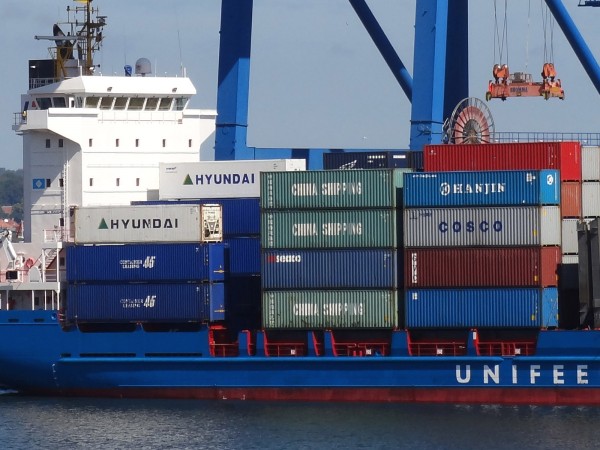 The UK’s balance on trade continues to be sharply in deficit. At the same time, both manufacturing and overall production are still well below their pre-crisis levels. What is more, with a sterling exchange rate that has appreciated substantially over recent months, UK exports are at an increasing price disadvantage. The hoped-for re-balancing of the economy from debt-financed consumption to investment and exports has not occurred. Investment in the UK remains low relative to that in other major economies (see).
But other developments in the global economy are working in the UK’s favour.
Manufacturing globally is becoming more capital intensive, which reduces the comparative advantage of developing countries with low labour costs.
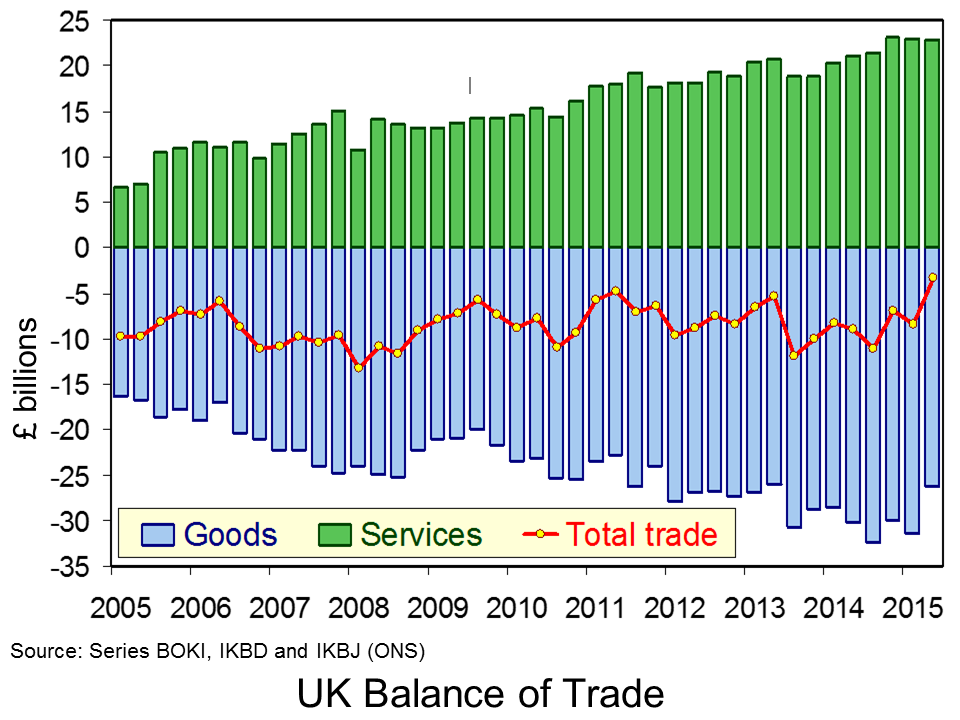 At the same time, the dividing line between manufacturing and services is becoming more blurred. Manufacturers in developing countries may still produce parts, such as chips or engines, but the design, marketing and sales of the products may take place in developed countries, such as the UK. Indeed, as products become more sophisticated, an increasing amount of value added may occur in developed countries.
The UK may be particularly well-placed in this regard. It can provide many high-end services in IT, business support and financial services to international manufacturers. It may have a comparative advantage in idea-intensive production.
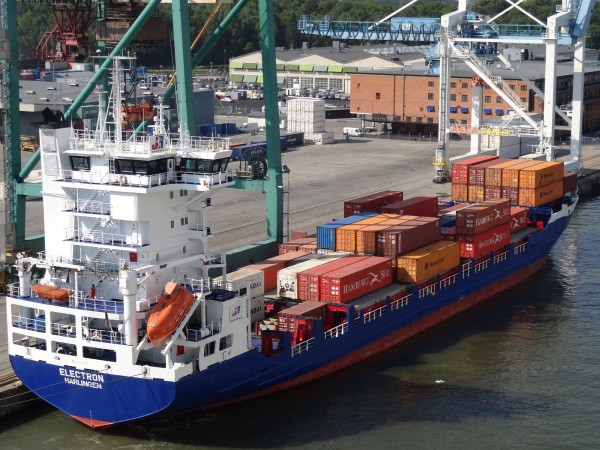 Finally with a higher exchange rate, the UK’s terms of trade have been improving. The downside is that it makes UK exports more expensive in foreign currency terms, but it also makes commodity prices cheaper, which have already fallen in dollar terms, and also the prices of imported component parts. This helps offset the effect of the appreciation of the exchange rate on exports.
The following article by Jeremy Warner considers whether, despite its poor performance in traditional manufacturing, the UK might have hit an economic ‘sweet spot’ in its trade position.
Article
Unbalanced but lucky, Britain hits an economic sweet spot The Telegraph, Jeremy Warner (8/9/15)
Data
UK Trade (Excel file) ONS (9/9/15)
(See, for example, Worksheet 1. You can search for longer series using Google advanced search, putting www.ons.gov.uk in the ‘site or domaine’ box and searching for a particular series, using the series identifier found at the top of each column in the Excel file, such as BOKI for balance on trade in goods.)
Exchange rate data Bank of England Statistical Interactive Database
Questions
- Explain the difference between the balance on trade, the balance on trade in goods and the balance of payments on current account.
- Why has the UK not experienced a re-balancing of the economy as hope for by the Chancellor of the Exchequer, amongst others?
- What is meant by the ‘terms of trade’?
- What would cause an ‘improvement’ in the terms of trade?
- Are the UK’s terms of trade likely to move in the UK’s favour in the coming months? Explain.
- What current factors are mitigating against a recovery of UK manufacturing exports?
- Is de-industrialisation necessarily a ‘bad thing’?
- Does the development of new capital-intensive technologies in manufacturing mean that the UK could become a net exporter of manufactures? Explain why or why not.
China has a key role in the global economy. Recording double digit growth for a number of years and posting impressive export figures, China’s has been an economy on an upward trajectory. But its growth has been slowing and this might spell trouble for the global economy, as was discussed in the following blog. For many, China is the pendulum and the direction it moves in will have a big influence on many other countries.
There are some suggestions that China’s rapid growth has been somewhat artificial, in particular following the financial crisis, where we saw massive investment by state-owner enterprises, banks and local government. This has led to a severe imbalance within the Chinese economy, with high levels of debt. One of the key factors that has enabled China to grow so quickly has been strong exports. China has typically had a large current account surplus, often balanced by large current account deficits in many Western countries.
The exchange rate is a key component in keeping strong export growth and the devaluation of the Chinese currency in August (see What a devalued yuan means to the rest of the world) is perhaps a suggestion that export growth in China is lower than desired. Devaluing the currency will boost the competitiveness of Chinese exports and this in turn may lead to a growth in the current account surplus, which had fallen quite significantly from around 10% to 2%.
The problem is that China is currently imbalanced and this is likely to create problems around the world. With globalisation, the free movement of capital and people, deflation in the West and falling world asset prices, the situation in China is crucial. Although you will find many articles about China and blogs on this site about its devaluation, its growth and policy, the BBC News article below considers the conflicts that exist between three key economic objectives:
1. currency stability
2. the free movement of capital
3. independent monetary policy
and the need for some international co-operation and co-ordination to enable China’s economy to return to internal and external balance.
China’s impossible trinity BBC News, Duncan Weldon (8/9/15)
Questions
- What is meant by internal balance?
- What is external balance?
- Would you suggest that China is suffering from an imbalanced economy? If so, which type of imbalance and why is this a problem for China and for the world economy?
- The article refers to the trilemma. Why can an country not achieve all 3 parts of the trilemma? You should explain why each combination of 2 aspects is possible, but why the third is problematic.
- Use a diagram to explain why a fall in the exchange rate will boost the competitiveness of exports and why this can create economic growth.
- Why is a devalued Chinese currency bad news for the rest of the world?
- How could international co-operation and co-ordination help China?