 The most commonly used measure of economic performance is GDP and while there is agreement that it is an important and useful measure, there is also agreement that there are some big problems with it. Does it measure welfare or quality of life? What is and isn’t included? Do some things add to GDP which actually make us worse off?
One criticism often levelled at GDP is that there are many aspects that go unmeasured – often known as the underground economy. Some areas are typical everyday things – DIY, looking after your own children rather than paying someone to do it, or even giving yourself a haircut. But, there are other activities, often illegal, which go unrecorded, such as the selling and distribution of drugs and prostitution. In countries like the Netherlands, their GDP figures get a boost, as some drugs and prostitution are legal. In other countries, such data is not recorded and as such, the contribution of these markets is under-estimated or even completely omitted.
However, this aspect of the calculation of GDP statistics is changing across Europe, which will allow much easier and more meaningful comparisons of relative GDP across countries. This extra production will therefore offer a positive contribution towards our GDP and perhaps suggest to the untrained eye that the British economy is growing, which can only be good news. But, for the trained economist, we are looking at extra data being added, which will boost total output and the question will be does it really indicate that the economy is better off? The following articles consider this change to GDP.
Small data: The way drugs and prostitution boost the economy BBC News (4/4/14)
Small data: Calculating the sex and drugs economy BBC News (2/6/14)
UK economic output to be revised up after ONS updates BBC News, Anthony Reuben (10/6/14)
UK economic output will get near 5 percent boost from data changes Reuters (10/6/14)
Accounting for drugs and prostitution to help push UK economy up by £65bn The Guardian, Katie Allen (10/6/14)
Questions
- What does GDP measure? Is it good at measuring it?
- Explain the pros and cons of using GDP to measure the welfare of an economy.
- Why are there problems using GDP to compare output between countries?
- Is it a good idea to include markets such as sex and drugs in calculating a nation’s output?
- What other measures of welfare do we have?
 At the end of January 2014, we looked at the problem of deflation and in particular at the fortunes of Japan, as its CPI was rising. As the blog explained, the Japanese economy, rather than being plagued by high inflation has been plagued by deflation and many suggest this is even worse.
In December 2013, Japan’s core consumer prices were growing faster than expected. The data gave the economy a much needed boost, following increases in government spending aimed at stimulating aggregate demand. This in turn pushed up prices, such that they achieved their fastest rate of growth in 5 years. Now, more recent date from May 2014 shows that the trend has continued. Prices in Japan have now increase at their fastest rate in 23 years, rising 3.2% and beating the forecasts of 3.1%. This means that prices have no risen in Japan for 11 consecutive months. Numerous policies have contributed towards this impressive trend for an economy plagued by deflation for 2 decades. Boosts in the money supply, increases in government spending, a rise in sales tax are just some of the contributing factors.
 Although the economy is certainly over the problem of deflation, some are now concerned that such price rises may reduce consumer spending. An ironic twist, given that barely a year ago the concern about low consumer spending was due to deflation. The next 12 months will be a key indicator of how consumers will respond to this unusual inflation data – after all inflation and high prices have been pretty uncommon. The following articles consider the update on the Japanese economy.
Japan inflation rate hits 23 year high (including video) BBC News (30/5/14)
Japan April core CPI rises to 23-year high after sales tax rise Reuters (29/5/14)
Japan inflation accelerates Wall Street Journal, Takashi Nakamichi (30/5/14)
Japan’s consumer inflation set to reach five year high The Guardian (18/4/14)
Japan’s inflation at highest rate for 23 years The Telegraph, Rebecca Clancy (30/5/14)
Japan inflation quickens to fastest since 1991 Bloomberg, Toru Fujioka (30/5/14)
Japaense inflation rises at fastest pace in over five years at 1.3% in December 2013 Independent, Russel Lynch (31/1/14)
Questions
- Why is deflation a problem?
- Using an AD/AS diagram, illustrate the problem of expectations and how this contributes to stagnant growth.
- Japanese policies have helped create a rise in the CPI. Which policies have been effective in creating rising prices?
- Explain how the sales tax has contributed towards higher prices.
- With prices rising, there are now concerned that consumer spending may decline. Using a diagram, explain why this may be the case.
- In the previous blog, we analysed the Indian economy and said that high inflation was something that was contributing towards lower growth. How is that low inflation or deflation can also contribute towards low growth?
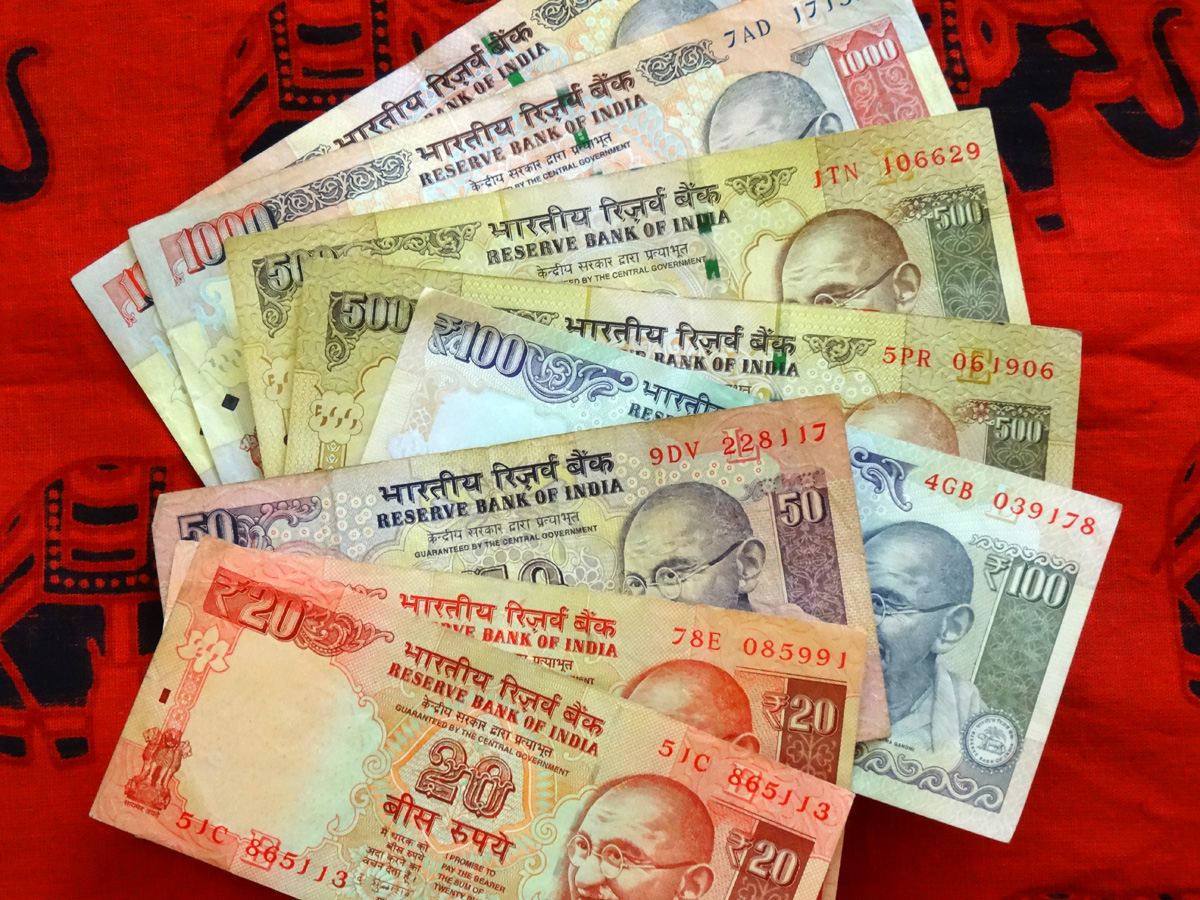
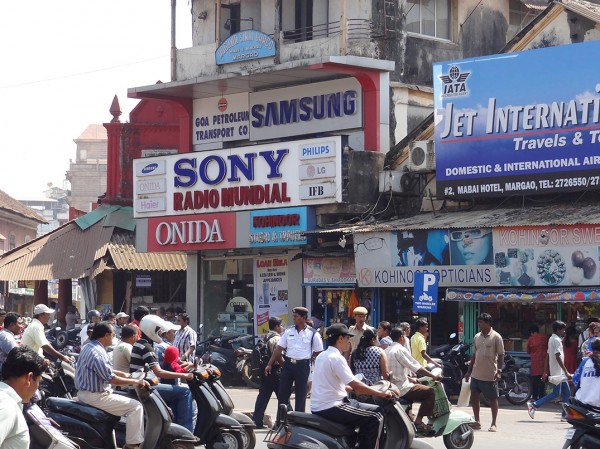 The expansion of the BRIC economies has both advantages and disadvantages for Western countries. Their consistently high growth rates have created a much wider market place for Western firms and a much needed additional source of consumer demand, especially in times of recession. Countries such as China have had double digit growth rates, with others like India experiencing growth rates of just under 10%. But are these impressive growth rates now beginning to fall?
For the last 2 years, the growth rate in the Indian economy has been sub-5%, with growth in the 2013-14 financial year at 4.7%. Though some sectors, including agriculture have experienced buoyant growth, it is other sectors that have been holding this economy back. Manufacturing contracted at an annualised rate of 1.4% over the quarter, while mining contracted by 0.4%. With a growth rate of just under 5%, one might think that this was good – after all many Western economies have only recently entered positive growth. However, the Indian economy has a rapidly growing population and it is estimated that 10 million additional jobs each year must be created. It is this figure that requires such a high growth rate – estimated at around 8%. Thus, the sub-5% growth recorded for 2 years is insufficient to sustain the required job creation.
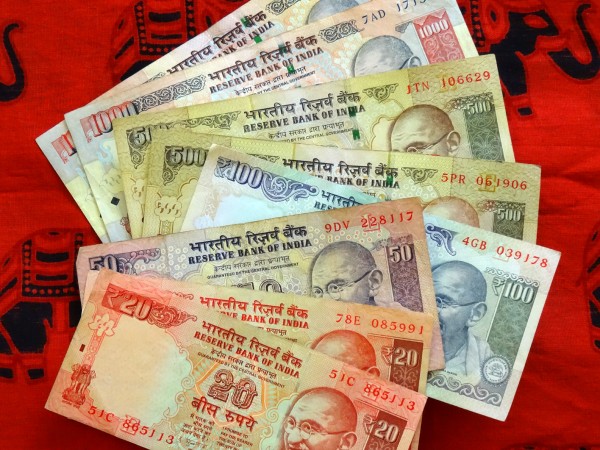
There are many factors that appear to be holding growth back. High inflation has been a problem for some years and the Indian currency has been relatively weak and volatile. Together, these issues have created an environment of uncertainty and if there’s one thing that investors don’t like, it’s uncertainty. This has therefore led to a lack of investment in the economy, which is a key component of aggregate demand and hence a key source of economic growth. Furthermore, interest rates rose last year, thereby pushing up the cost of borrowing and the rate of credit growth has also slowed. These factors collectively have led to lower foreign investment, domestic investment and spending, which have all contributed towards more subdued growth than in the past. Glenn Levine, a senior economist at Moody’s said:
India’s economy continues to grow well below potential as a combination of supply‐side constraints and the adverse effects of an underperforming government weigh on capital expenditure and hiring … It will be a while before the Indian economy is expanding above 6% again.
However, many economists remain optimistic about the prospects of Asia’s third-largest economy. Inflation appears to be under control and the currency has gained strength. Many believe that more investment supporting government policies will be the kick start the economy needs and this will in turn encourage firms to begin investment. It may be the new leader of this country, Narendra Modo, that will jump start the economy. The Prime Minister is expected to back policies to stimulate growth, who will direct more spending at infrastructure, simplify taxes and introduce policies to attract foreign investment. Adi Godrej, Chairman of the Godrej group said:
As soon as investors see the first signals of growth-supportive policies, you will see a definite turnaround on the ground.
The coming months will be crucial in determining how quickly the Indian economy is likely to see a return to near double digit growth. The new government has indeed promised policies to boost the economy, but the annual budget will confirm whether this promise is likely to be kept. Given the dependence of Indian jobs on a fast growth rate and the dependence of the Western world on the continued growth of the BRICs in creating a wider market for our exports, the fortunes of India are extremely important. The following articles consider this economy.
Indian economy grew at 4.7% in 2013-14 The Times of India (30/5/14)
India’s economic growth disappoints BBC News (30/5/14)
India’s GDP grows 4.7% in fiscal year, missing government forecast Wall Street Journal, Anant Vijay Kala (30/5/14)
India’s economy expands 4.7pct in fiscal year 2013/14 Reuters (30/5/14)
India’s economy still underwhelms CNN Money, Charles Riley, Alanna Petroff (30/5/14)
FY14 GDP growth at 4.7%; India sees worst slowdown in 25 years The Economic Times (30/5/14)
India growth below 5% adds pressure on Modi to spur investment Bloomberg, Unni Krishnan (30/5/14)
Jim Armitage: ‘Modinomics’ in India has helped growth, but not for all Independent, Jim Armitage (17/5/14)
Questions
- Using a diagram, explain how economic growth can be created through (a) demand-side measures and (b) supply-side measures.
- Why would higher interest rates reduce growth?
- Why does high inflation create uncertainty and what impact does this have on business investment?
- India has experienced a weak and volatile currency and this has contributed towards a lack of foreign investment and low growth. Using a diagram, explain why this could be the case.
- What sort of government policies would you recommend for the Indian economy if you had become the new Prime Minister and your primary objective was to boost economic growth?
- Why is the expansion of the BRIC economies, of which India is one, so important for Western economies?
 We have had a minimum wage in the UK for well over a decade and one its key purposes was to boost the pay of the lowest paid workers and in doing so reduce the inequality gap. Rising inequality has been a concern for many countries across the world and not even the nations with the most comprehensive welfare states have been immune.
Switzerland, known for its banking sector, has been very democratic in its approach to pay, holding three referenda in recent years to give the Swiss public the chance to decide on pay. Imposing restrictions on the bonuses available to the bosses of the largest companies was backed in the first referendum, but in this latest vote, the world’s highest minimum wage has been rejected. The proposed wage is the equivalent of £15 per hour and it is the hourly wage which proponents argue is the wage needed to ensure workers can afford to ‘live a decent life’. However, prices in Switzerland are considerably higher than those in the UK and this wage translates to around £8.33 per hour in purchasing power parity terms, according to the OECD. In the UK, much debate has surrounded the question of a living wage and the impact that a significant increase in the NMW would have on firms. The concern in Switzerland has been of a similar nature.
With a higher wage, costs of production will inevitably rise and this is likely to lead to firms taking on fewer workers and perhaps moving towards a different mix of factors of production. With less workers being employed, unemployment would be likely to increase and it may be that the higher costs of production are passed onto consumers in the form of a higher price. One problem is that as prices rise, the real wage falls. Therefore, while advocates of this high minimum wage suggest that it would help to reduce the gap between rich and poor, the critics suggest that it may lead to higher unemployment and would actually harm the lowest paid workers. It appears that the Swiss population agreed with the critics, when 76% voted against the proposal. Cristina Gaggini, who is the Director of the Geneva Office of the Swiss Business Association said:
I think [it would have been] an own goal, for workers as well as for small companies in Switzerland … Studies show that a minimum wage can lead to much more unemployment and poverty than it helps people … And for very small companies it would be very problematic to afford such a high salary.

The proposal was made by Swiss Unions, given the high cost of living in Switzerland’s suggest cities. It was rejected by the Swiss Business Federation and government and this was then echoed by the overwhelming majority in the referendum. Switzerland has been found to be the most expensive place to live in the world and the wages paid are insufficient to provide a decent life, with many claiming benefits to support their earnings. The debate over the minimum wage and the living wage will continue in countries across the world, but for now the Swiss people have had their say. The following articles consider this issue.
Switzerland rejects world’s highest minimum wage BBC News (18/5/14)
Swiss voters reject plan to establish world’s highest minimum wage The Guardian, Julia Kollewe (18/5/14)
Swiss voters reject setting world’s highest minimum wage Wall Street Journal, Neil Maclucas (18/5/14)
Swiss voters reject world’s highest minimum wage, block fighter jets Reuters, Caroline Copley (18/5/14)
Switzerland votes on world’s highest minimum wage at £15 per hour Independent, Loulla-Mae Eleftheriou-Smith (18/5/14)
Swiss reject highest minimum wage in world Financial Times, James Shotter (18/5/14)
Swiss reject world’s highest minimum wage, jet purchase Bloomberg, Catherine Bosley (18/5/14)
Questions
- Using a demand and supply diagram, illustrate the impact of a national minimum wage being imposed.
- Using the diagram above, explain the impact on unemployment and evaluate the factors that determine the amount of unemployment created.
- Given what you know about the proposed Swiss minimum wage, how much of an impact on unemployment do you think there would be?
- Draw a diagram to show the effect on a firm’s costs of production of the national minimum wage. Explain how such costs may affect the prices consumers pay for goods and services.
- How is it possible that a higher minimum wage could actually lead to more inequality within a country?
- Is there a chance that a minimum wage could lead to inflation? What type would it be?
 On my commute to work on the 6th May, I happened to listen to a programme on BBC radio 4, which provided some fascinating discussion on a variety of economic issues. Technological change is constant and unstoppable and the consequences of it are likely to be both good and bad.
In this programme some top economists, including Joseph Stiglitz offer their analysis of the impact of technology and how the future might look, by considering a range of factors, such as youth unemployment, the productivity of labour, education, pensions and inequality. The benefits of new technology can be seen as endless, but the impact on inequality and how the benefits of technology are being distributed is a concern for many people. The best introduction to the programme and its content is simply to reproduce the description provided by BBC radio 4.
The baby boom generation came of age when it was accepted knowledge that innovation and productivity would always lead to higher standards of living. The generations which followed assumed this truth would continue into the future indefinitely. With the crash of 2008 the upward mobility the middle classes assumed was their right evaporated, and it is unlikely to return.
Martin Wolf, chief economics commentator of the Financial Times, asks how the work force of the future will be changed by the advancements of technologies. How should governments respond to a jobs market which is hollowing out opportunities for traditional educated professions and how will rewards for innovation and income for labour be distributed without creating a society plagued by endemic inequality?
We will speak with optimists and pessimists on both sides of the argument to find out how the repercussions of these changes will affect the way we all live now and well into the future.
It is well worth listening to and provides some interesting insights as to what the future might look like, as the inevitable technological change continues. The link for the programme is below.
 The future is not what it used to be BBC Radio 4 (6/5/14)
Questions
- What are the expected costs and benefits of technological change?
- Which factors are discussed as being the main obstacles to upwards mobility? Why have these become more prevalent in recent decades?
- Using a diagram, explain how technology can improve economic growth. To what extent is the multiplier effect important here?
- How is technology expected to affect the labour market? Use a diagram to help your explanation and make sure you consider both sides of the argument.
- What is meant by the idea that the benefits of new technology are likely to be felt in the long run?
- How important is education in creating equal opportunities?
- What is meant by secular stagnation? Is it seen as being a problem?
 The most commonly used measure of economic performance is GDP and while there is agreement that it is an important and useful measure, there is also agreement that there are some big problems with it. Does it measure welfare or quality of life? What is and isn’t included? Do some things add to GDP which actually make us worse off?