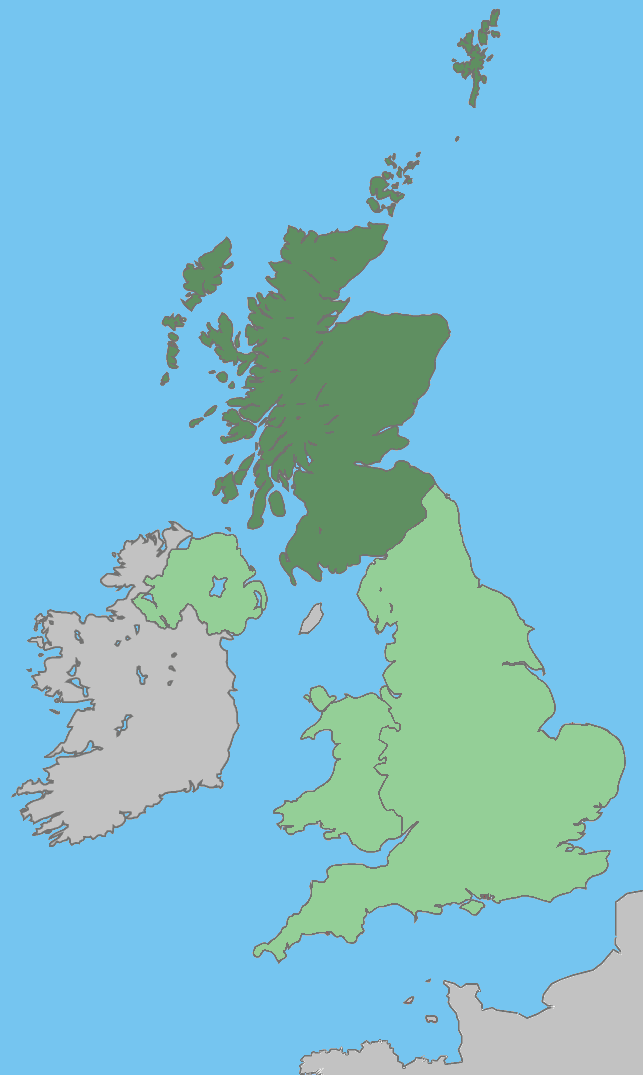
 The Scottish debate revolved around a variety of issues and one of the key factors that added weight to the ‘No’ campaign was the idea of being British. But the concept of ‘Britishness’ is not just important to those who live here. It still appears to be a key signal of quality in foreign markets and it is something which foreign consumers are willing to pay a price for.
Barclays Corporate Banking has undertaken research into eight key export markets to determine the value of ‘Britain’. One of the key factors that boost demand for a product is quality and another is the idea of a brand. As quality improves and brands become more recognized, a product’s demand curve will begin to shift to the right, thus pushing up the market price. In other words, with higher quality and brand recognition, an individual’s willingness to pay rises. One brand that foreign consumers seem willing to pay a premium to purchase are those labelled ‘Made in Britain’.
The research indicates that 31% of customers in emerging markets have been prepared to and have purchased products that are from Britain, despite the higher price. Seeing the label ‘Made in Britain’ seems to send the signal of quality and this in turn creates a higher willingness to pay. Furthermore, this willingness to pay, while still good for Scottish, English and Welsh products, is higher for ‘British’ products, perhaps another indication of the truth behind the ‘Better together’ campaign.
The increase in willingness to pay between products with seemingly no country of origin and a British country of origin is 7% and this knowledge should give a confidence boost to the British export market. It should also indicate to exporters in Wales, Scotland and England that they are better to advertise as ‘Made in Britain’ than ‘Made in Wales, Scotland or England’. The expected boost from the 8 key emerging markets is around £2bn. The following articles consider the concept of ‘Brand Britain’.
Good news for exports as Brand Britain is revealed to be valuable concept Small Business, John Bromley (3/11/14)
Britain ‘best brand’ for Welsh exports, survey suggests BBC News (26/11/11)
Overseas consumers 64% more willing to pay premium for ‘Brand Britain’ Marketing Week, Sebastian Joseph (3/11/14)
Report flags up ‘British’ benefit The Courier, James Williamson (3/10/14)
Questions
- Using a diagram, illustrate the effect of a product’s being a well-known brand on its equilibrium price and quantity.
- Why is it that the relative willingness to pay a premium for British products is higher in developing countries than in developed countries?
- Using the concept of marginal utility theory, explain the impact of the ‘Made in Britain’ label.
- The BBC News article suggests, however, that some Welsh companies have not found the brand effect to be the case. What factors might explain this?
- To what extent are the concepts of consumer and producer surplus relevant here?
 The growth rates of the Western world have been somewhat volatile for the past decade, with negative growth sending economies into recession and then varying degrees of economic recovery. Growth rates elsewhere have been very high, in particular in countries such as China and India. The future of economic growth in the west is hotly debated and whether the western world has been forever changed by the credit crunch remains to be seen.
The article below from the BBC, written by Robert Peston, the Economics Editor, addresses the question of the future of the western world. Opinions differ as to whether the west is finally recovering from the recession and financial instability or if the credit crunch and subsequent recession is just the beginning of many years of economic stagnation. The article in particular focuses on the yield curve and the trends in government debt or gilts. This tends to be a key indicator of the expectations of the future of an economy and how confident investors are in its likely trajectory. Though technical in places, this article provides some interesting stances on what we might expect in the coming 2-3 decades for economic performance in the West.
Note that John also looks at this article in his blog Cloudy Skies Ahead?
The end of growth in the West? BBC News, Robert Peston (26/9/14)
Questions
- Which factors affect the economic growth of a nation?
- Confidence from consumers, firms and investors is always argued to be crucial to the future economic growth and in many cases, the recovery of an economy. Explain why this factor is so important.
- What is the yield curve and what does it show?
- How can the yield curve be used to offer predictions about the future strength of an economy?
- Why are governments seen as the safest place to lend?
- If Larry Summers is correct in saying that it is a negative equilibrium interest rate that is needed to generate full employment growth, what does this suggest about the future economic performance of the western world?
- In the article, there is a list of some of the key things that make investors anxious. Review each of these factors and explain why it is so important in generating anxiety.
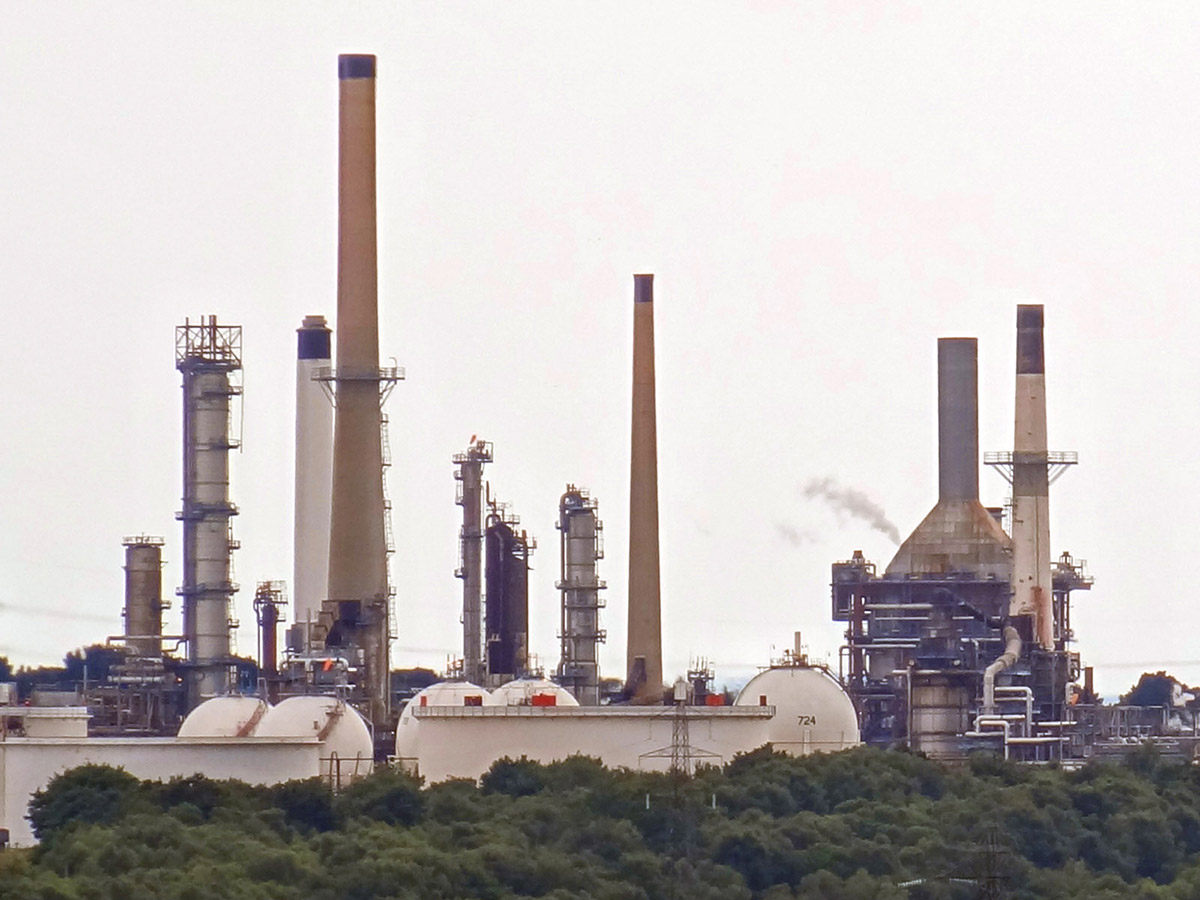 One of the key prices in any economy is that of oil. Whenever oil prices change, it can have a knock-on effect on a range of other markets, as oil, or some variation, is used as an input into the production of countless products. The main products that consumers will see affected are energy prices and petrol prices..
Although on the supply-side, we see a large cartel in the form of OPEC, it is still the case that the forces of demand and supply directly affect the market price. Key things such as the demand for heating, economic growth, fears of war and disruption will change the demand and supply of oil. The possibility of militant strikes in oil producers, such as Syria, would normally reduce supply and push up the market price. However, we have actually seen oil prices drop much faster than we have in two years, dropping below $100 per barrel since September 5th. The slowdown of economic growth in Asia, together with the return of Libyan production at a level greater than expected have helped to push prices down and have offset the fears of global production.
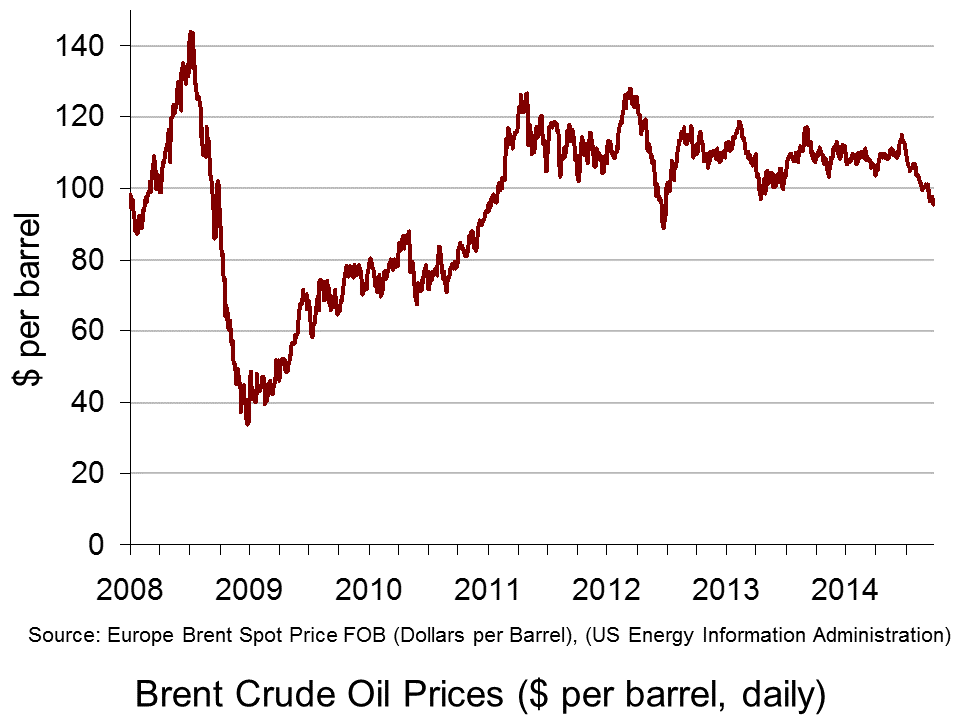 The market forces pushing prices down, while good for consumers and firms that use crude oil or one of its by-products, are clearly bad for oil producers. (Click here for a PowerPoint of the chart.) Countries are urging OPEC to halt its production and thereby shift supply upwards to the left putting a stop to the downward oil price trend. Several countries are concerned about the impact of lower prices, and one country that may be significantly affected is Russia. Some are suggesting that the impact could be as big as 4% of Russia’s GDP, taking into account the ongoing political crisis with Ukraine.
The market for oil is highly susceptible to changes in both demand and supply-side factors. Microeconomic changes will have an impact, but at the same time any global macroeconomic factors can have significant effects on the global price. Expectations are crucial and as countries release information about the size of the oil stocks and inventories, it is adding to the downward pressure on prices. Some oil experts have predicted that prices could get as low as $80 per barrel before OPEC takes significant action, influenced heavily by countries like Saudi Arabia. The following articles consider this global market.
Articles
Iran urges OPEC to halt oil price slide Financial Times, Anjli Raval (26/9/14)
Oil overflow: as prices slump, producers grapple with a new reality The Globe and Mail, Shawn McCarthy and Jeff Lewis (27/9/14)
Weak demand, plentiful supply drive decline in oil prices International Distribution (26/9/14)
Oil prices plunging despite ISIS CNN Money, Paul R La Monica (25/9/14)
Oil prices fall on EIA report of big U.S. crude stocks build Reuters, Robert Gibbons (17/9/14)
Sanctions and weaker oil prices could cost Russia 4% of GDP – official RT (25/9/14)
Data
Spot oil prices Energy Information Administration
Weekly European Brent Spot Price Energy Information Administration (Note: you can also select daily, monthly or annual.)
Annual Statistical Bulletin OPEC
Questions
- What are the key factors on the microeconomic side that affect (a) demand and (b) supply of oil?
- Explain the key macroeconomic factors that are likely to have an impact on global demand and supply of oil.
- Militant action in some key oil producing countries has caused fears of oil disruption. Why is that oil prices don’t reflect these very big concerns?
- Use a demand and supply diagram to explain the answer you gave to question 3.
- What type of intervention could OPEC take to stabilise oil prices?
- Why is the Russian economy likely to be adversely affected by the trend in oil prices?
- Changes in the global macroeconomy will directly affect oil prices. Is there a way that changes in oil prices can also affect the state of the global economy?
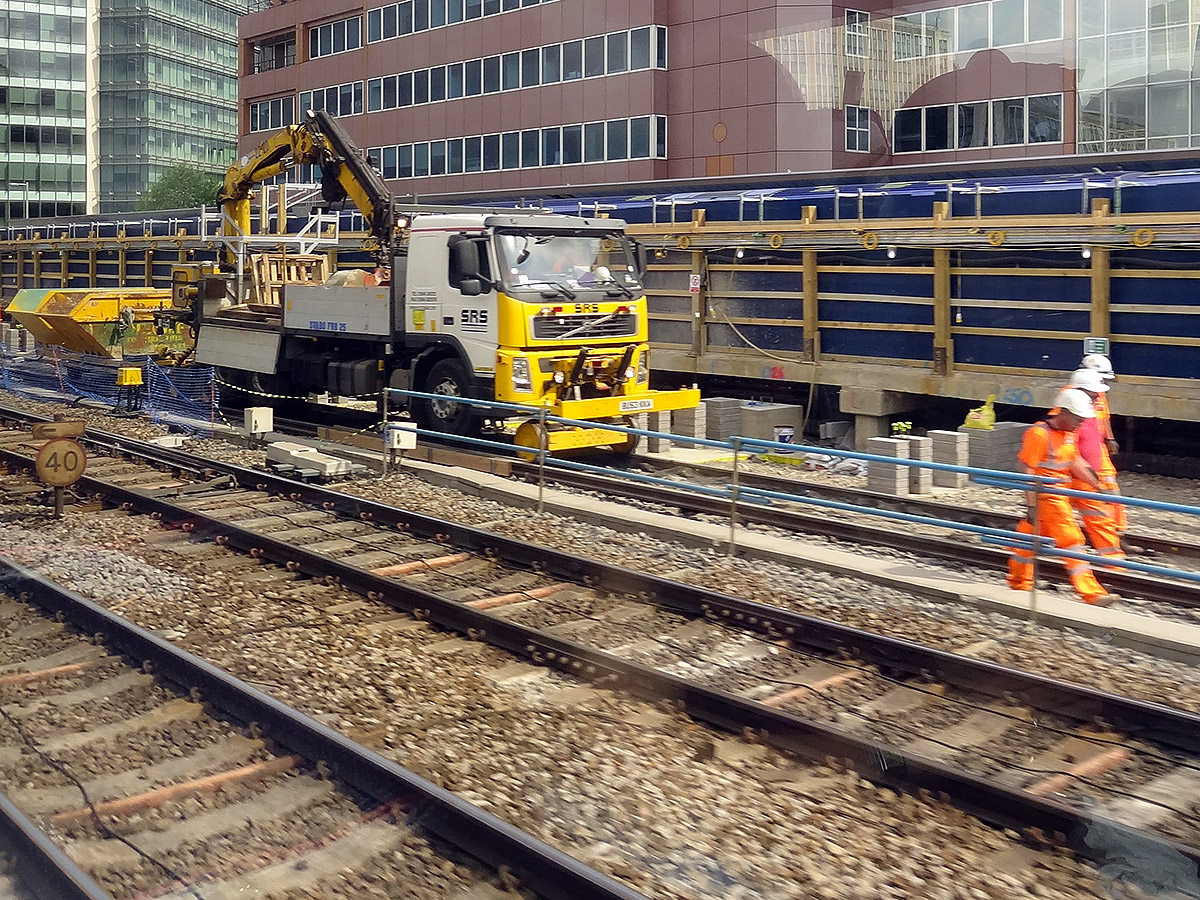
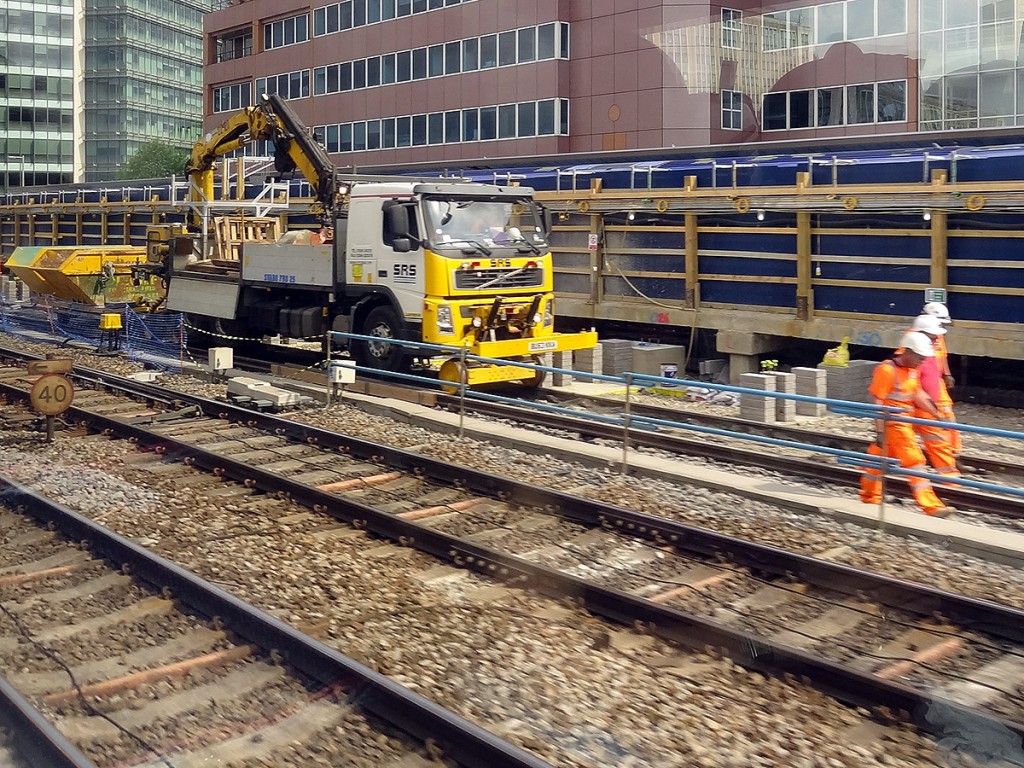 Over the past few decades, numerous areas within the British economy have been partly or fully privatized and one such case is British Rail. Why is this relevant now? We’re once again looking at the potential increase in rail fares across the country and the impact this will have on commuters and households. So, have the promises of privatisation – namely lower fares – actually materialised?
Comparing the increase in rail fares with that of the RPI makes for interesting reading. Data obtained back in January 2013 shows that since 1995, when the last set of British Rail fares were published, the RPI has been 66%, according to data from Barry Doe and this compares unfavourably with the increase in a single ticket from London to Manchester which had increased by over 200%. However, it compares favourably with a season ticket, which had only increased by 65%. In the last couple of years, increased in rail fares have been capped by the government to increase by no more than the rate of inflation. As such, customers are likely to be somewhat insulated from the increases that were expected, which could have ranged between 3 and 5%.
This announcement has been met with mixed reviews, with many in support of such caps and the benefit this will bring to working households, including Passenger Focus, the rail customer watchdog. Its Passenger Director, David Sidebottom said:
The capping of rail fare rises by inflation will be welcome news to passengers in England, especially those who rely on the train for work, as will the ban on train companies increasing some fares by more than the average. It is something we have been pushing for, for several years now and we are pleased that the Government has recognised the need to act to relieve the burden on passengers.
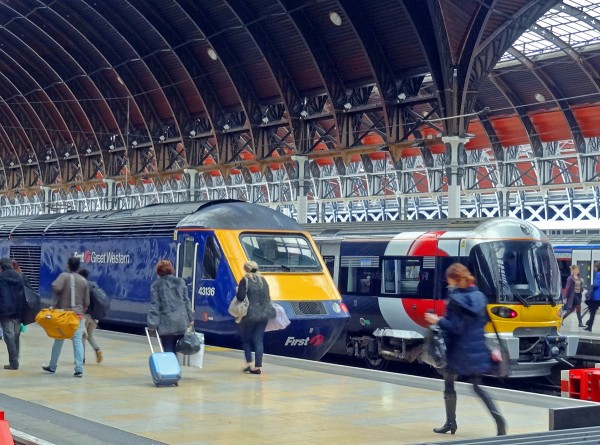 However, others have criticised the increases in rail fares, given the cost of living crisis and the potential 9% pay rise for MPs. The acting General Secretary of the RMT transport union commented:
The announcement from George Osborne does not stack up to a freeze for millions of people whose incomes are stagnant due to years of austerity. To try and dress this up as benefiting working people is pure fraud on the part of the Government … Tomorrow, RMT will be out at stations across the north where some off-peak fares will double overnight.
Commuters in different parts of the country do face different prices and with some changes in peak travel times in the Northern part of the country, it is expected that some customers will see significant hikes in prices. Peak travel prices being higher is no surprise and there are justifiable reasons for this, but would such changes in peak times in the North have occurred had we still been under British Rail? Privatisation should bring more competition, lower prices and government revenue at the point of sale. Perhaps you might want to look in more detail at the actual to see whether or not you think the benefits of privatisation have actually emerged. The following articles consider the latest announcement regarding rail fares.
Rail fares to increase by 2.5% in January after Osborne caps price rises at no more than inflation Mail Online, Tom McTague (7/9/14)
Have train fares gone up or down since British Rail? BBC News, Tom Castella (22/1/13)
Rail fares to match inflation rate for another 12 months The Guardian (7/9/14)
Britain caps rail fares at inflation Reuters (7/9/14)
Regulated rail fares to increase by 3.5% in 2015 BBC News (19/8/14)
Northern commuters face big rise in fares for evening travel The Guardian, Gwyn Topham (7/9/14)
Commuter rail fares frozen again, says George Osborne BBC News (7/8/14)
Rail fares, the third payroll tax Financial Times, Jonathan Eley (22/8/14)
Questions
- What are the general advantages and disadvantages of privatisation, whether it is of British Rail or British Gas?
- Why is it that season tickets have increased by less than the RPI, but single tickets have increased by more?
- What are the conditions needed to allow train companies to charge a higher price at peak travel times?
- Are higher prices at peak times an example of price discrimination? Explain why or why not.
- In the Financial Times article, it is suggested that rail fares are like a payroll tax. What is a payroll tax and why are rail fares related to this? Does it suggest that the current method of setting rail fares is equitable?
- Based on the arguments contained in the articles, do you think the cap on rail fares is sufficient?
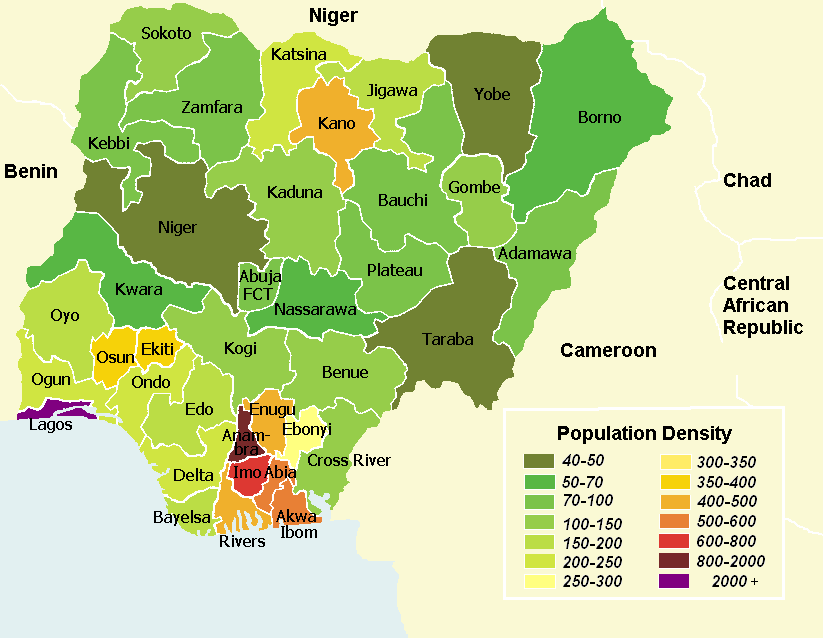
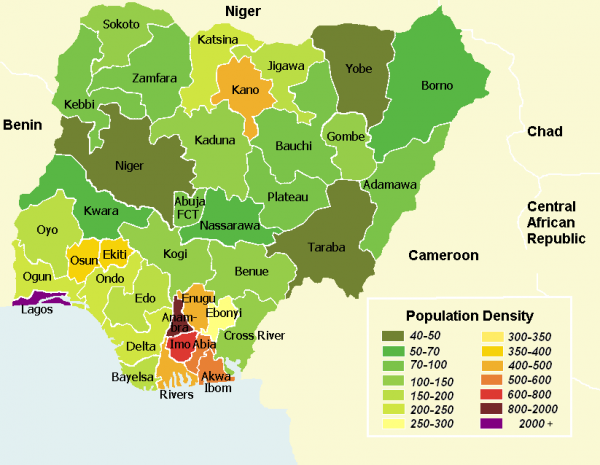 I found this interesting article on the BBC News website about three students in Nigeria who have created an online job search company. Only five years later, this company now is valued in the millions and employs over 100 people.
The article below contains some interesting insights into the Nigerian job market and the key to success for this company. In particular, they note the effect of the multiplier through job creation and how this has been used to benefit the wider economy. This is particularly pertinent given the severe unemployment problem that has affected this African economy. It has helped 35,000 people to find jobs in the past two years.
How three students created Nigeria’s online jobs giant BBC News, Jason Boswell (2/9/14)
Questions
- What are the main causes of the unemployment problem in Nigeria?
- The company itself employs hundreds of people, but indirect employment effects have also occurred. How has this happened?
- How important are entrepreneurs in African countries as a means of helping their development?