 A new group of economies, known as MINT, are seen as strong current and future emerging markets. We’ve had the BRICS (Brazil, Russia, India, China and South Africa) and now we have the MINTs (Mexico, Indonesia, Nigeria and Turkey).
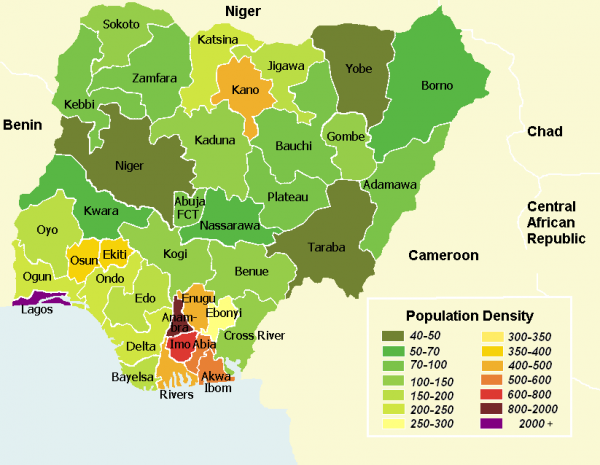
In 2014, Nigeria became Africa’s fastest growing nation. A large part of Nigeria’s success has to do with growth in some of its key industries.
Nigerian’s reliance on the oil and gas industry created an attractive economy for further development and it now has high growth in a diverse range of sectors, including mobile phones, champagne, private jets and ‘Nollywood’. Despite the uncertainty and political unrest caused by Boko Haram, Nigeria is attracting a significant amount of Foreign Direct Investment (FDI) in a range of sectors, indicating its growing diversity and attractiveness to some of the world’s largest multinational companies.
Boko Haram has certainly had a dampening effect on Nigeria’s growth, as has the lower oil price, but this may create opportunities for further diversification. Furthermore there are concerns about how the wealth of the nation is concentrated, given that poverty is still prevalent across the country. However, Nigeria is certainly emerging as a success story of Africa and surely the question that will be asked is will other African nations follow suit?
The following article from BBC News considers the Nigerian economy.
Nigeria’s ‘champagne’ economy bucks Boko Haram effect BBC News, Vishala Sri-Pathma (27/3/15)
Questions
- Is a falling oil price necessarily bad for the Nigerian economy?
- Explain why Boko Haram is likely to have a dampening effect on economic growth in Nigeria.
- Do you think other African nations will be able to replicate the success of Nigeria? Which factors may prevent this?
- If the number of millionaires is increasing significantly, but poverty is persisting, does this tell us anything about what is happening to inequality in Nigeria?
- Is is possible to reduce inequality in Nigeria while maintaining economic growth? Might it even be posible for greater equality to be a driver of economic growth?
- The Nigerian currency is weakening. What has caused this and why may this be a cause for concern?
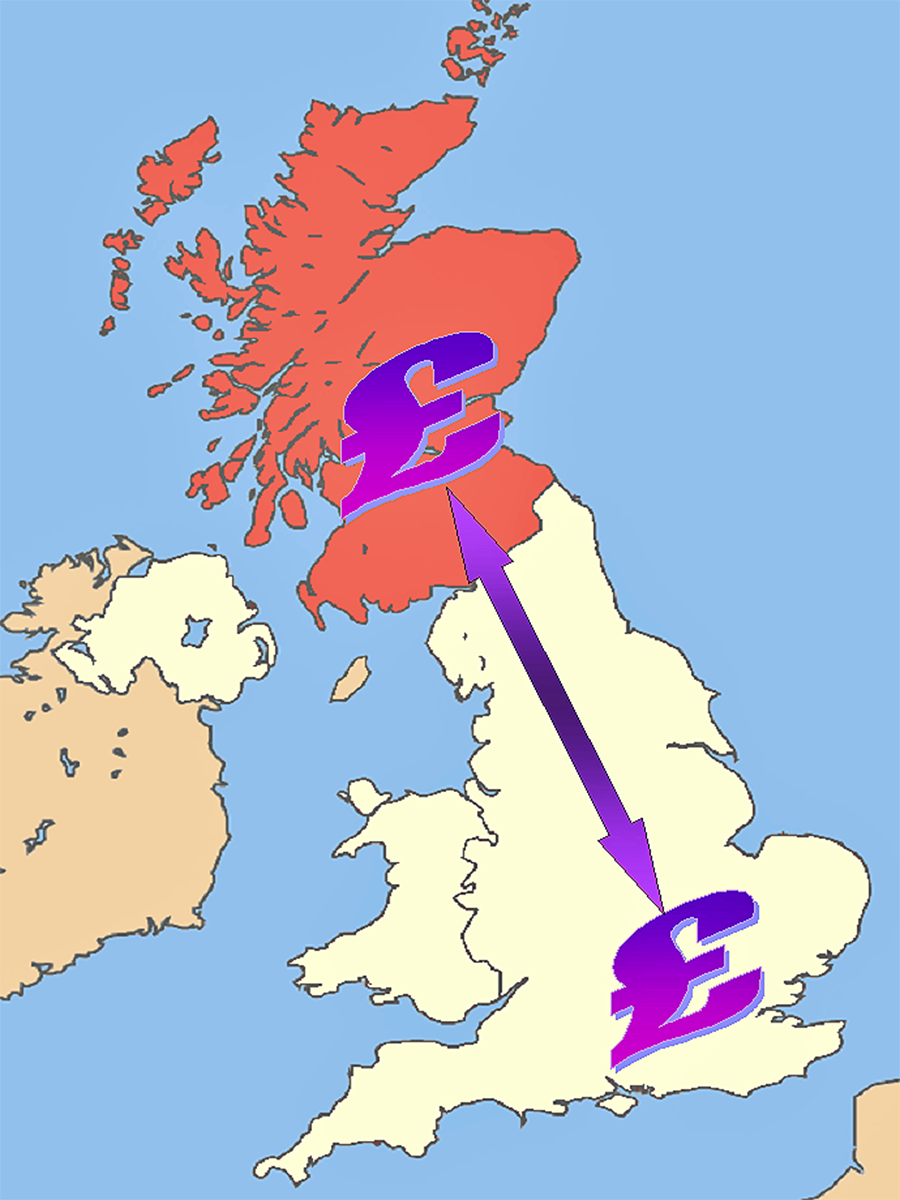 Scottish voters will be crucial in the upcoming election, with the SNP poised to take many of Labour’s seats north of the border. The future of Scotland will depend on which party comes to power and what decisions are made with regards to its finances.
Nicola Sturgeon wants government spending and taxation powers transferred to the Scottish Parliament, but would this mean spending cuts and tax rises for the Scottish people? Ed Miliband, Labour’s leader has been vocal in pointing out what this might mean, with cuts to pensions or raising taxes. However, given that it is Labour that is facing the biggest threat from the SNP, it is perhaps hardly surprising.
However, as the first video below shows, there would be an estimated £7.6bn deficit in Scotland, according to the IFS if spending and taxing was to be transferred here. This is because the tax revenues raised in Scotland are lower per person and spending per person is higher than across the whole of the UK. Oil prices are extremely low at present and hence this is reducing tax revenues. When the oil price does rise, revenues will increase and so if the split in finances was to occur this would reduce that deficit somewhat, but it would still leave a rather large hole in Scotland’s finances. The following videos and articles consider the SNP’s plans.
Videos
 SNP fiscal autonomy plan: What would it do to Scotland’s finances? BBC News, Robert Peston (10/4/15)
Labour attacks SNP’s ‘devastating’ economic plans BBC News (10/4/15)
Articles
Ed Miliband attacks SNP plan for Scottish fiscal autonomy The Guardian, Severin Carrell (10/4/15)
Ed Miliband wars pensions will be cut under SNP plans The Telegraph, Auslan Cramb (10/4/15)
SNP fails to account for billions in welfare and pensions pledge, says IFS The Guardian, Severin Carrell (10/4/15)
Questions
- What is a budget deficit?
- What does fiscal autonomy for Scotland actually mean?
- The IFS suggests that there will be a large deficit in Scottish finances if they gain autonomy. How could this gap be reduced?
- Why has Labour claimed that tax rises would occur under the SNP’s plans? What could this mean for Scottish growth?
- Why do lower oil prices reduce tax revenues for Scotland?
- If Scotland had control over its finances, it could influence where government spending goes. Which industries would you invest in if you were in charge?
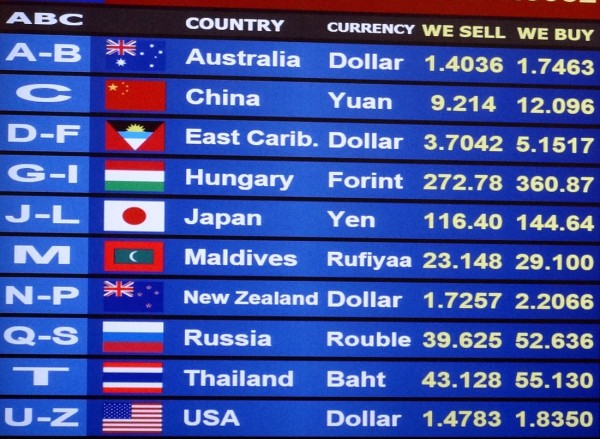 With an election approaching in the UK, uncertainty is a term we will hear frequently over the next few weeks. Until we know which party or parties will be in power and hence which policies will be implemented, planning anything is difficult. This is just one of the factors that has caused the British pound sterling to fall last week by 2% to an almost five year low against the dollar.
In the last election, uncertainty also prevailed and continued even after the election before the Coalition was formed. Given how close this election appears to be at present, another Coalition may have to be formed and this is adding to the current election uncertainty. A currency strategist at Standard Bank said:
“A $1.40 level for sterling/dollar is certainly not out of reach if the election aftermath turns ugly”
With such uncertainty, investors are refraining from putting their money into the UK and this has contributed towards the deprecation of the British pound against the dollar.
Another factor adding to this downward pressure on the pound is the latest data on industrial output. Although economic growth figures for the UK in 2014 were very positive, there are some suggestions that 2015 will not be as good as expected, though still a strong performance. The first quarter data will not be available until just before the election, but data from the ONS on industrial output shows very minimal growth at just 0.1% from January to February. Chris Williams at Markit said:
“Clearly this all bodes ill for economic growth in the opening quarter of the year. It’s now looking like the economy slowed, and possibly quite markedly, compared to the 0.6% expansion seen in the closing quarter of 2014 … The trend should improve in March, however, according to survey data.”
These two factors have combined to push the pound down, with investors preferring to hold their money in dollars, despite the weak US unemployment data. However, it is not only against the dollar that we must consider sterling’s performance. Against the euro, it has performed better, rising by 1.5%. Whether this is positive for the UK or very negative for the Eurozone is another question. The following articles consider the performance of the British pound.
Sterling falls to five-year low Financial Times, Neil Dennis (10/4/15)
Sterling plummets to five year low as economic slowdown looms The Telegraph, Mehreen Khan (10/4/15)
Pound at five-year low against dollar on weak output BBC News (10/4/15)
Sterling falls after Bank of England’s Haldane says even chances of rate cut or rise Reuters (10/4/15)
Pound falls to five-year low as volatility jumps before election Bloomberg, Anooja Debnath and David Goodman (11/4/15)
Pound falls to a five-year low against the dollar as polls suggest election will create economic uncertainty Mail Online, Matt Chorley (10/4/15)
Questions
- Draw a diagram illustrating the way in which the $/£ exchange rate is determined.
- Explain why the election is causing economic uncertainty in the UK.
- How would uncertainty affect the demand and supply of sterling and hence the exchange rate?
- US job data is worse than expected. Shouldn’t this have caused the dollar to depreciate against the pound and not appreciate?
- Industrial output data for the UK economy is lower than expected. What has caused this?
- Why does slower growth in industrial output cause the exchange rate to depreciate?
- In order to keep the UK’s inflation rate on target, Haldane has said that we could expect a cut or rise in interest rates and policy should be prepared for both. How has this affected the exchange rate?
- Are there any advantages of having a lower pound?
 In the developed countries of 2015, extreme poverty is (or should be) a thing of the past. With well-developed welfare states and hence safety nets, no-one should be living in deep poverty. However, that is not the case across the rest of the world, where extreme poverty is still a common thing – though much reduced compared to a decade ago.
In the article linked below, Linda Yueh of the BBC asks whether it is possible to end global poverty. Looking at some of the key data, we are certainly moving in the right direction, with the poverty rate in the developing world halving since 1981. Projections suggest that ending global poverty by 2030 is possible, though it will require significant investment and commitment. The World Bank data indicates that 50 million people would need to be brought out of poverty every year. Economists, on the other hand, suggest that the poverty rate may have fallen to around 8% – still progress, but perhaps a more realistic target?
How we measure poverty is clearly important here, as the higher the threshold income required to be ‘out of poverty’, the longer it will take and the more people will currently be in poverty. It is also important to consider things like changes in the population as although more people may be brought out of poverty, if an even greater number of people are being born in a country, then it is entirely possible that poverty actually increases in absolute terms.
A key thing to bear in mind when it comes to reducing poverty is that there is no ‘one size fits all’ policy. What works in one country is not necessarily going to work in another country. Policies will have to be targeted to the needs of the population and this means more time and resources. The numbers are definitely moving in the right direction, but whether they are going quickly enough to meet the 2030 target is another story. The BBC News article is linked below, as are some interesting documents and items from the World Bank and United Nations.
Is it possible to end global poverty? BBC News, Linda Yueh (27/3/15)
Poverty will only end by 2030 if growth is shared World Bank, Espen Beer Prydz (19/11/14)
Far greater effort needed to eradicate extreme poverty in world’s poorest nations United Nations News Centre (23/10/14)
Ending Poverty and Sharing Prosperity World Bank Group and International Monetary Fund, Global Monitoring Report 2014/2015 2015
Questions
- What is poverty and how to we measure it?
- If the growth rate of the world is high, does this mean that poverty is falling?
- What factors have explained the success of China in reducing poverty? Why might similar policies be ineffective in Africa? What types of policies would you recommend to reduce global poverty in Sub-Saharan Africa?
- Does Aid or Debt Forgiveness from developed countries help poorer nations or could it create a moral hazard?
- How important is economic growth in eliminating global poverty?
- How important are the Millennium Development Goals in driving efforts to eradicate global poverty?
- What are the 3 elements that the Global Monitoring Report focuses on to make growth inclusive and sustainable? In each case, explain how the elements would contribute towards global efforts to end poverty.
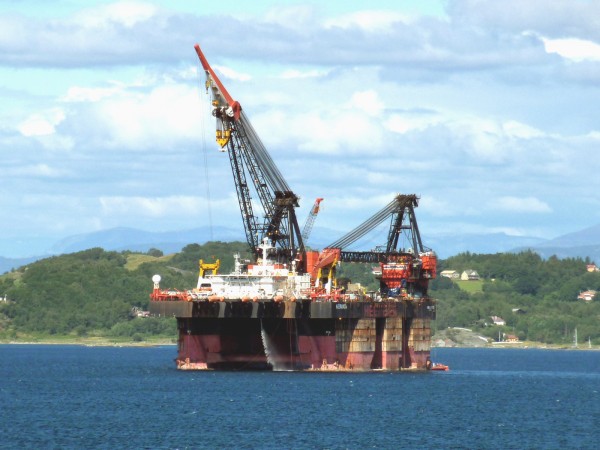 The Budget takes place on 17th March 2015 and as always there is much speculation as to what it will and won’t include. One industry that is eagerly awaiting Osborne’s Budget is the North Sea oil and gas industry. Tax cuts and rises may well play a key role in the Budget, but this is one sector where a possibly large tax cut is expected.
The tax paid by this industry is very high compared to others, potentially reaching 80%. The tax rate was increased some years ago and it is now thought that it may come back down. One key factor is oil prices: with such huge decreases in the price of oil relative to when the tax on the industry was increased, the industry is now asking for these tax rises to be reversed. The industry has suggested that a 10% tax cut is a possibility and this would make a big difference for the industry.
Danny Alexander, the chief secretary to the Treasury, said:
“We’ve been very clear that the direction of travel for tax in the North Sea needs to be downwards … And that needs to be even stronger given the low oil price we see at the moment. We want people to have the confidence to invest for the long term future of the North Sea … And so George Osborne and I have been listening very carefully to what the industry has been saying …People will have to wait and see what we say on Wednesday [Budget day], but I hope very much that it will give the North Sea that confidence that we all want to see for one of Britain’s most important industries.”
We may also see further changes for this industry, such as allowances to encourage further investment, as costs of investment are extremely high and this has led to many years of under-investment. These changes are hoped to regenerate this industry. Any change in tax allowances or tax rates will have an impact on tax revenue and it is not necessarily the case that an increase in tax will lead to a rise in revenue or a fall in revenue. The relationship between tax rates and tax revenues can be very complex. The following articles consider this particular issue and what the Budget will do for this industry.
North sea oil groups set for tax breaks in budget Financial Times, Christopher Adams and George Parker (16/3/15)
What does the Budget 2015 mean for the North sea oil industry? The Telegraph, Andrew Critchlow (16/3/15)
Britain needs oil tax cuts to attract North Sea Investment Reuters, Karolin Schaps and Claire Milhench (16/3/15)
Treasury paves way for major tax cut for North sea BBC News, Kamal Ahmed (16/3/15)
Home of Brent Oil benchmark seeks help as investment slumps Bloomberg, Firat Kayakiran (17/3/15)
Questions
- If a tax is imposed on an industry, what type of effect might this have on costs of production? Use a diagram to support your answer.
- In the BBC News article, North Sea Oil is referred to as a cash cow. What does this mean?
- If taxes are cut for the North Sea Oil industry, how will this affect its costs and what might it doe for investment?
- What will happen to tax revenues if taxes are cut? Use the Laffer curve to help your answer.
- How has the North Sea Oil industry been affected by falling oil prices? Does this offer a justification for a tax cut?
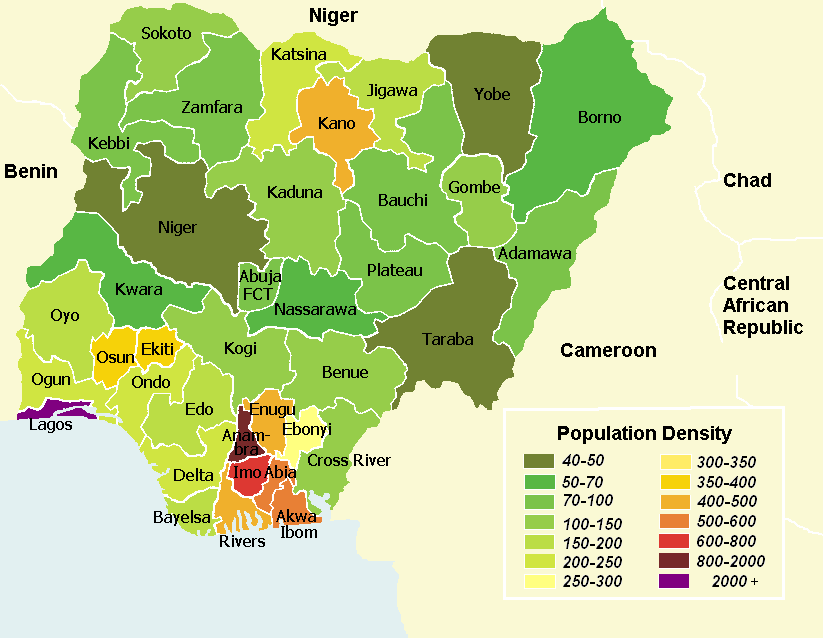 A new group of economies, known as MINT, are seen as strong current and future emerging markets. We’ve had the BRICS (Brazil, Russia, India, China and South Africa) and now we have the MINTs (Mexico, Indonesia, Nigeria and Turkey).