 At a meeting of the G7 finance ministers in London from 4–5 June, it was agreed to adopt a minimum corporate tax rate of 15% and to take measures to prevent multinational companies using tax havens to avoid paying taxes. It was also agreed that part of the taxes paid should go to the countries where sales are made and not just to those where the companies are based.
This agreement is the first step on the road to a comprehensive global agreement. The next step is a meeting of the finance ministers and central bank governors of the G20 countries in Venice from 9 to 10 July. The G7 ministers hope that their agreement will be adopted by this larger group, which includes other major economies such as Russia, China, India, Brazil, Australia, South Korea and South Africa.
Later in July, the proposals will be put to a group of 139 countries and jurisdictions at a meeting co-ordinated by the OECD. It is hoped that this meeting will finalise an international agreement with precise details on corporate tax rules. It follows work by the OECD on reforming international taxation under its Framework on Base Erosion and Profit Shifting (BEPS).
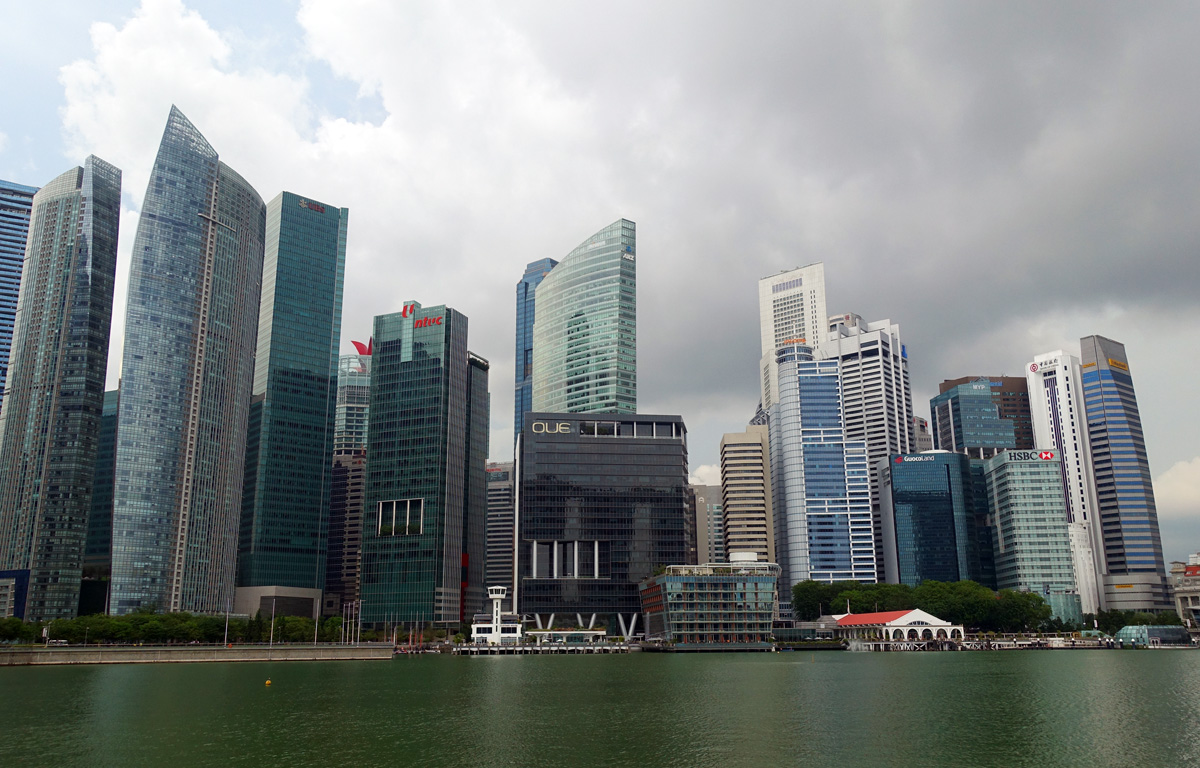 These meetings follow growing concerns about the ability of multinational companies to avoid taxes by basing regional headquarters in low-tax countries, such as Luxembourg or Singapore, and declaring their profits there, despite having only a tiny proportion of their sales in these countries.
The desire to attract multinational profits has led to a prisoners’ dilemma situation, whereby countries have been competing against each other to offer lower taxes, even though it reduces global corporate tax revenues.
With many countries having seen a significant rise in government deficits as result of the COVID-19 pandemic and the support measures put in place, there has been a greater urgency to reach international agreement on corporate taxes. The G7 agreement, if implemented, will provide a significant increase in tax revenue.
Details of the G7 agreement
The agreement has two parts or ‘pillars’.
Pillar 1 allows countries to tax large multinationals earning global profits of more than 10% if these companies are not based there but earn revenues there. Countries will be given tax rights over at least 20% of the profits earned there which exceed the 10% margin. The level of profits determined for each country will be based on the proportion of revenues earned there.
Pillar 2 sets a minimum corporate tax rate of 15% for each of the seven countries, which call on other countries to adopt the same minimum. The hope is that the G20 countries will agree to this and then at the OECD meeting in July a global agreement will be reached. If a country chooses to charge a rate below 15%, then a top-up tax can be applied by the home country to bring the total rate up to the 15%.
It is possible that these proposals will be strengthened/amended at the G20 and OECD meetings. For example, the 15% minimum rate may be raised. Indeed, the USA had initially proposed a 25% rate and then 21%, and several EU countries such as France, have been pushing for a substantially higher rate.
Analysis
The agreement was hailed as ‘historic’ by Rishi Sunak, the UK Chancellor of the Exchequer. This is true in that it is the first time there has been an international agreement on minimum corporate tax rates and locating part of tax liability according to sales. What is more, the rules may be strengthened at the G20 and/or OECD meetings.
There have been various criticisms of the agreement, however. The first is that 15% is too low and is well below the rates charged in many countries. As far as the UK is concerned, the IPPR think tank estimates that the deal will raise £7.9bn whereas a 25% rate would raise £14.7bn.
 Another criticism is that the reallocation of some tax liabilities to countries where sales are made rather than where profits are booked applies only to profits in excess of 10%. This would therefore not affect companies, such as Amazon, with a model of large-scale low-margin sales and hence profits of less than 10%.
Also there is the criticism that a 20% reallocation is too low and would thus provide too little tax revenue to poor countries which may record large sales but where little or no profits are booked.
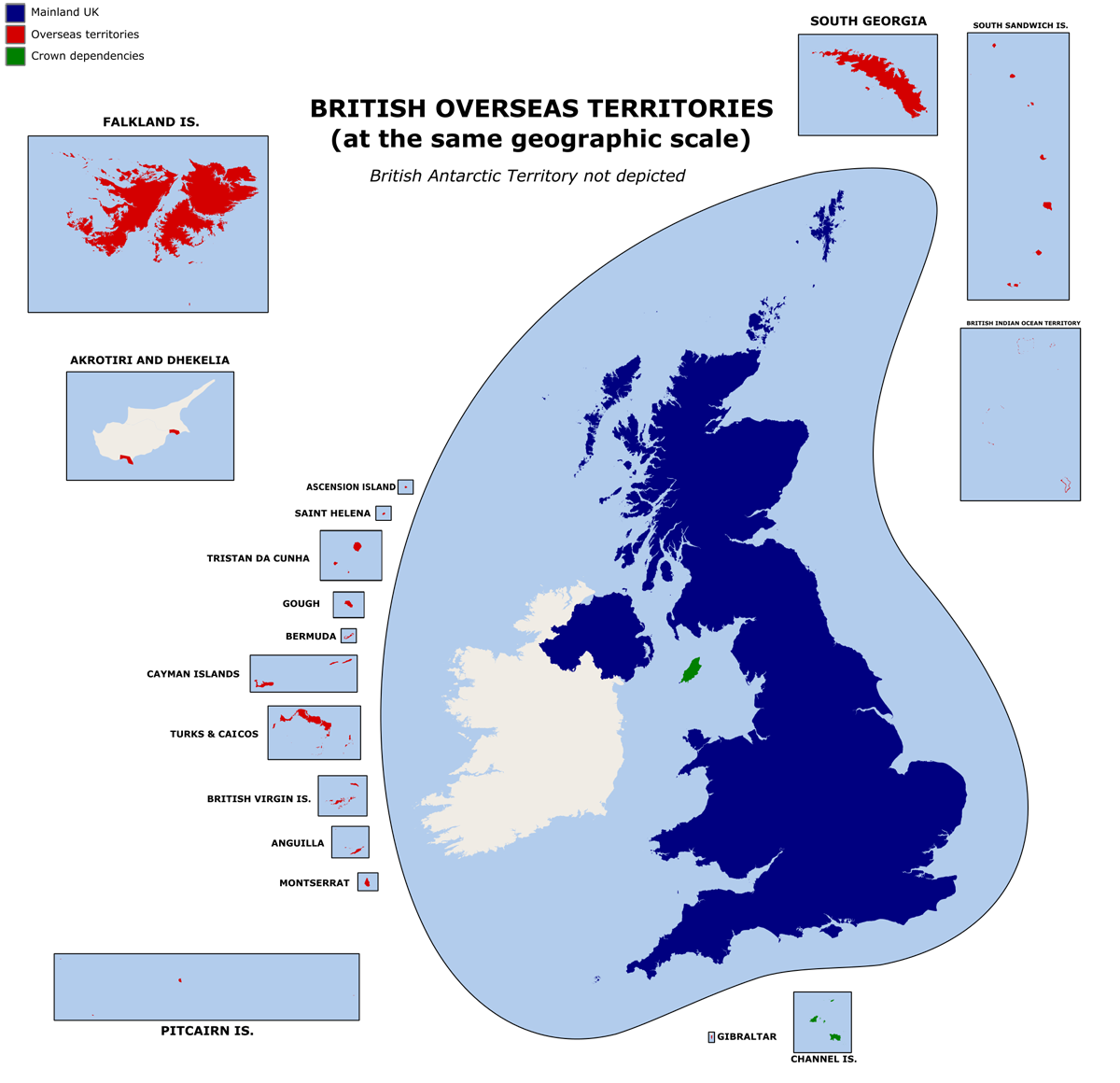 The UK was one of the more reluctant countries to sign up to a deal that would have a significant impact on tax havens in various British overseas territories and crown dependencies, such as the British Virgin islands, Bermuda, the Cayman Islands, the Channel Islands and Isle of Man. The agreement also calls into question whether the announced UK freeports can go ahead. Although these are largely concerned with waiving tariffs and other taxes on raw materials and parts imported into the freeport, which are then made into finished or semi-finished products within the freeport for export, they are still seen by many as not in the spirit of the G7 agreement.
What is more, the UK has been pushing for financial services to be exempted from Pillar 1 of the deal, which would otherwise see taxes partly diverted from the UK to other countries where such firms do business. For example, HSBC generates more than half its income from China and Standard Chartered operates mostly in Asia and Africa.
Update: July 2021
The G7 plan was agreed by the finance ministers of the G20 countries on July 11 in Venice. By that point, 130 of the 139 countries which are part of the Inclusive Framework of the OECD and which represent more than 90% of global GDP, had signed up to the plan and it was expected that there would be a global agreement reached at the OECD meeting later in the month. The other nine countries were Ireland, Hungary and Estonia in the EU and Kenya, Nigeria, Peru, Sri Lanka, Barbados and Saint Vincent and the Grenadines. Several of these countries use low corporate taxes to encourage inward investment and are seen as tax havens.
Videos
Articles
- G-7 nations reach historic deal on global tax reform
CNBC, Silvia Amaro, Joanna Tan and Emma Newburger (5/6/21)
- Rishi Sunak hails ‘historic’ breakthrough as G7 ministers agree global tech tax deal
The Telegraph, Lucy Burton and Edward Malnick (5/6/21)
- G7 backs Biden’s sweeping overhaul of global tax system
CNN, Tara John and Kevin Liptak (5/6/21)
- ‘Historic’ G7 deal to stop global corporate tax avoidance welcomed by tech giants Google and Facebook
Sky News, Ajay Nair (6/6/21)
- Finance Leaders Reach Global Tax Deal Aimed at Ending Profit Shifting
New York Times, Alan Rappeport (5/6/21)
- G7 strikes historic agreement on taxing multinationals
Financial Times, Chris Giles (5/6/21)
- G7 tax deal is ‘starting point’ on road to global reform
LAPM Journal, Chris Giles and Delphine Strauss (FT) (6/6/21)
- G7 tax deal doesn’t go far enough, campaigners say
BBC News (6/6/21)
- Rishi Sunak announces ‘historic agreement’ by G7 on tax reform
The Observer, Phillip Inman and Michael Savage (5/6/21)
- G7 deal is as much about balance of power as global tax reform
The Guardian, Richard Partington (6/6/21)
- Global G7 deal may let Amazon off hook on tax, say experts
The Guardian, Jasper Jolly (6/6/21)
- Explainer: G7 tax deal – what was agreed and what does it mean for Ireland?
The Irish Times, Cliff Taylor (5/6/21)
- G7 deal: UK is badly conflicted between offshore tax havens and Biden’s global tax drive
The Conversation, Atul K. Shah (4/6/21)
- G7 tax dodging deal ‘sets bar so low companies can just step over it’
Independent, Emily Goddard (6/6/21)
- UK pushes for City of London to be exempt from G7 tax plan
The Guardian, Phillip Inman and Richard Partington (9/6/21)
- The global pandemic, sustainable economic recovery, and international taxation
Independent Commission for the Reform of International Corporate Taxation (May 2020)
- G20 finance ministers back deal to tax companies
BBC News (11/7/21)
Questions
- How are multinationals currently able to avoid paying corporate taxes in many countries, even though their sales may be high there?
- If the deal is accepted at the OECD meeting in July, would it still be in the interests of low-tax countries to charge tax rates below the agreed minimum rate?
- Why was the UK reluctant to accept the 21% rate proposed by the Biden administration?
- Find out about the digital services tax that has been adopted by many countries, including EU countries and the UK, and why it will be abolished once a minimum corporate tax comes into force.
- Argue the case for and against taxing the whole of multinational profits in countries where they earn revenue in proportion to the company’s total global revenue. Would such a system benefit developing countries?
- Should financial services, such as those provided by City of London firms, be exempted from the deal?
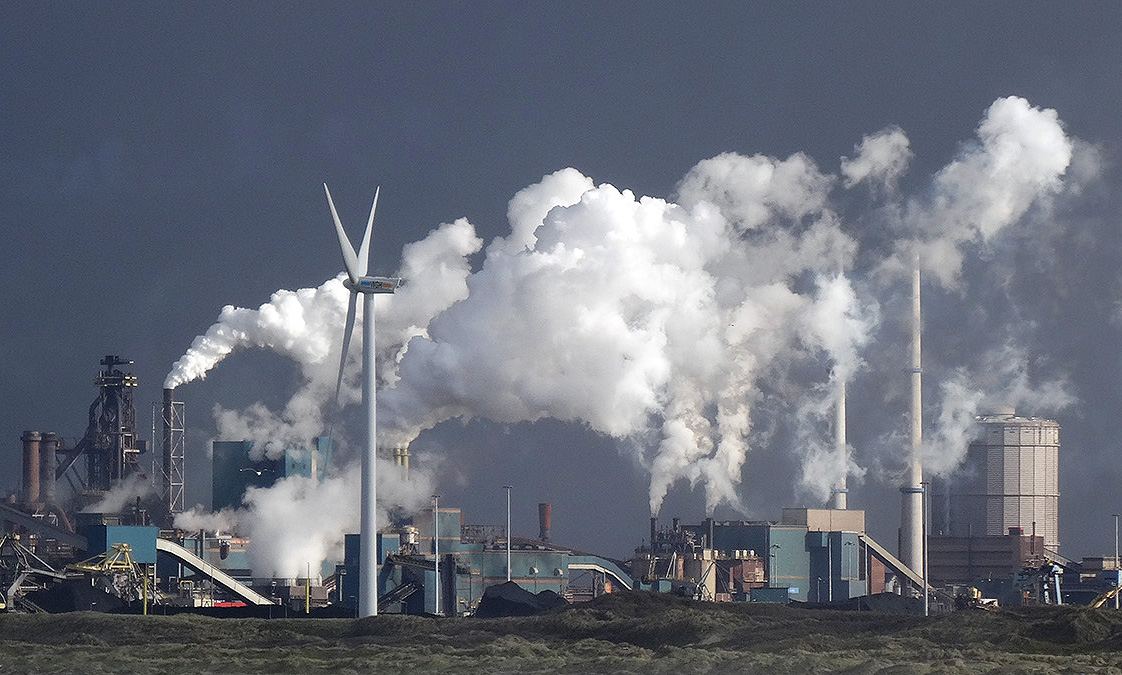 In 2015, at the COP21 climate change conference in Paris, an agreement was reached between the 195 countries present. The Paris agreement committed countries to limiting global warming to ‘well below’ 2°C and preferably to no more than 1.5°C. above pre-industrial levels. To do this, a ‘cap-and-trade’ system would be adopted, with countries agreeing to limits to their emissions and then being able to buy emissions credits to exceed these limits from countries which had managed to emit below their limits. However, to implement the agreement, countries would need to adopt a ‘rulebook’ about how the permitted limits would be applied, how governments would measure and report emissions cuts, how the figures would be verified and just how a cap-and-trade system would work.
At the COP24 meeting from 2 to 15 December 2018 in Katowice, Poland, nearly 14 000 delegates from 196 countries discussed the details of a rulebook. Despite some 2800 points of contention and some difficult and heated negotiations, agreement was finally reached. Rules for targeting, measuring and verifying emissions have been accepted. If countries exceed their limits, they must explain why and also how they will meet them in future. Rich countries agreed to provide help to poor countries in curbing their emissions and adapting to rising sea levels, droughts, floods and other climate-induced problems.
 But no details have been agreed on the system of carbon trading, thanks to objections from the Brazilian delegates, who felt that insufficient account would be made of their country’s existing promises on not chopping down parts of the Amazon rainforest.
Most seriously, the measures already agreed which would be covered by the rulebook will be insufficient to meet the 2°C, let alone the 1.5°C, target. The majority of the measures are voluntary ‘nationally determined contributions’, which countries are required to submit under the Paris agreement. These, so far, would probably be sufficient to limit global warming to only around 3°C, at which level there would be massive environmental, economic and social consequences.
There was, however, a belief among delegates that further strong international action was required. Indeed, under the Paris agreement, emissions limits to keep global warming to the ‘well below 2°C’ level must be agreed by 2020.
Climate change is a case of severe market failure. A large proportion of the external costs of pollution are borne outside the countries where the emitters are based. This creates a disincentive for countries acting alone to internalise all these externalities through the tax system or charges, or to regulate them toughly. Only by countries taking an international perspective and by acting collectively can the externalities be seen as a fully internal problem.
Even though most governments recognise the nature and scale of the problem, one of the biggest problems they face is in persuading people that it is in their interests to cut carbon emissions – something that may become increasingly difficult with the rise in populism and the realisation that higher fuel and other prices will make people poorer in the short term.
Articles
Questions
- To what extent can the atmosphere been seen as a ‘global commons’?
- What incentives might be given for business to make ‘green investments’?
- To what extent might changes in technology help businesses and consumers to ‘go green’?
- Why might international negotiations over tackling climate change result in a prisoner’s dilemma problem? What steps could be taken to tackle the problem?
- How would an emissions cap-and-trade system work?
- Investigate the Brazilian objections to the proposals for emissions credits. Were the delegates justified in their objections?
- What types of initiative could businesses take to tackle ‘supply chain emissions’?
- How could countries, such as the USA, be persuaded to reduce their reliance on coal – an industry lauded by President Trump?
 A professor in the USA recently posed an interesting dilemma to students taking his psychology exam. At the end of the exam students were provided with a bonus question in order to gain extra credit. All they had to do was decided whether they would like two or six additional marks adding on to their final score. The twist was that if more than 10% of the class opted for an additional six marks then everyone would get nothing added on!
The professor had placed the students in a prisoner’s dilemma scenario. To see this consider an individual student weighing up which option to choose; if more than 90% of the class chose two additional marks, then this student is better off choosing six additional marks. Whereas if more than 90% of the class chose six additional marks, then this student is indifferent between the two options (the student will get no additional marks regardless of their choice). It follows that choosing six additional marks is a weakly dominant strategy.
In a similar fashion, in the classic prisoners setting keeping quiet is collectively better, however, each criminal has a strong individual incentive to confess. Likewise, in oligopoly markets the interdependence between firms results in a tension between cooperation and competition. Firms collectively benefit from keeping prices high, but an individual firm has an incentive to undercut its rivals and steal a large share of the market. A strong prediction when self-interested participants play the prisoner’s dilemma game just once and choose their strategies independently is therefore that the prisoners will confess to the crime and that firms will set low prices.
So did the US professor end up giving away many bonus marks? No, about 20% of the class opted for six additional marks and as a result all the students ended up with no extra marks. In fact, the professor claims to have been running the same experiment for the previous seven years and only once has he ended up giving away any bonus marks. On the one hand, this result is consistent with what is predicted in the prisoner’s dilemma game. However, running contrary to this is the fact that around 80% of the students opted for just two additional marks. It would certainly be interesting to see what would happen if in future years the professor relaxed the threshold above which all students get no extra marks.
UMD ‘tragedy of the commons’ tweet goes viral The Baltimore Sun, Quinn Kelley (09/07/15)
A professor tested the ‘Prisoner’s Dilemma’ on his students by bribing them with extra credit points Tech Insider, Will Haskell (17/07/15)
Questions
- Draw the payoff matrix for the student’s dilemma.
- What are some of the possible explanations for around 80% of the class choosing two extra marks?
- How do you think the outcome of the game might have changed if students were allowed to communicate with each other before making their choice on the number of additional marks to ask for?
- How do you think student choices would change if the threshold above which all students get no extra marks was varied?

The negotiations between Greece and the ‘troika’ of creditors (the IMF, the European Commission and the ECB) have seen many twists and turns before breaking down on 26 June. Throughout, both sides have sought to give as little as possible while seeking a compromise. Both sides have claimed that their position is reasonable, even though a gulf has remained between them.
What has been playing out is a high-stakes game, where the optimum outcome for each side is quite different.
Greece seeks bailout terms that would allow it to achieve a smaller primary budget surplus (but still a surplus in the midst of a deep recession). The surplus would be achieved largely through tax rises on the wealthy rather than further cuts that would hit the poor hard. It is also seeking a substantial amount of debt forgiveness to make servicing the remaining debt possible.
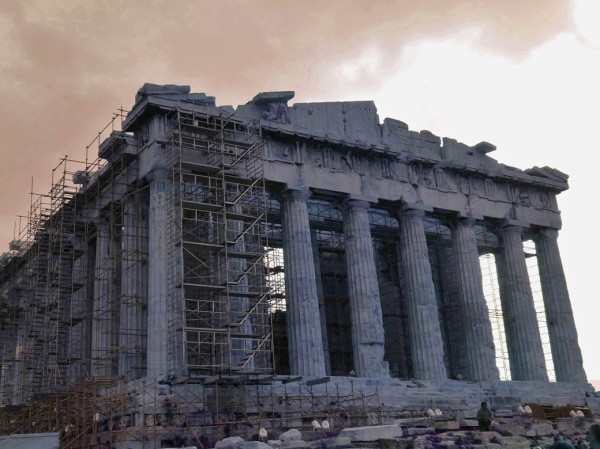
The troika is seeking a larger budget surplus than the Greeks are willing to contemplate. This, it maintains, should be achieved largely through additional cuts in government expenditure, including further reductions in pensions and in public-sector wages.
Both sides used threats and promises as the negotiations became more and more acrimonious.
The troika threatened to withhold the final €7.2bn of the bailout necessary to pay the €1.6bn due to the IMF on 30 June, unless the Greeks accepted the terms of the austerity package put to them. The Greek Prime Minister, Alexis Tsipras, in rejecting the proposals, called a referendum on the package. This threatens the stability of the eurozone as a No vote, if it led to a Greek exit from the eurozone, could undermine confidence in monetary union. After all, if Greece could be forced out, other countries facing severe difficulties might also be forced out at some point in the future. Once a country leaves the eurozone, the monetary union becomes more like a system of pegged exchange rates. And pegged exchange rates are open to destabilising speculation at times of economic divergence.
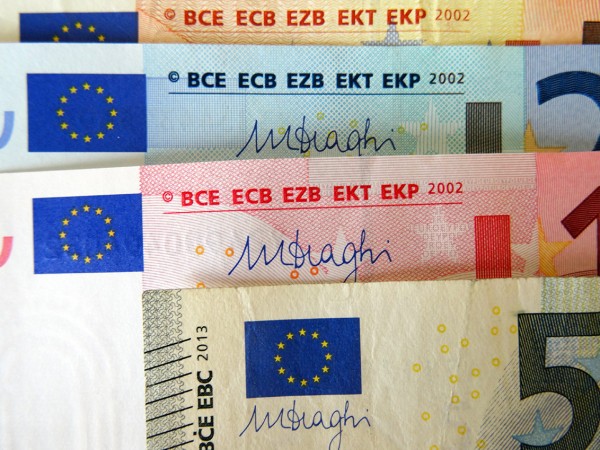 A Greek exit from the euro (dubbed ‘Grexit’) is seen as undesirable by most Greeks and by most politicians in the rest of Europe. The optimum for both sides collectively would be a compromise, which saw more modest cuts by Greece and the eurozone remaining intact. By both sides seeking to maximise their own position, the Nash equilibrium is certainly not the best outcome.
But as long as the troika believes that the Greeks are likely to vote Yes to the proposed bailout terms, it still hopes to get the outcome that is best from its point of view – an outcome that would probably involve regime change. And as long as the Greek government hopes that a No vote will force the troika to think again and come back with less austere proposals, it still hopes to get the outcome that is best from its point of view. But the outcome of this game of ‘chicken’ could well be Grexit and a Nash equilibrium that neither side wants.
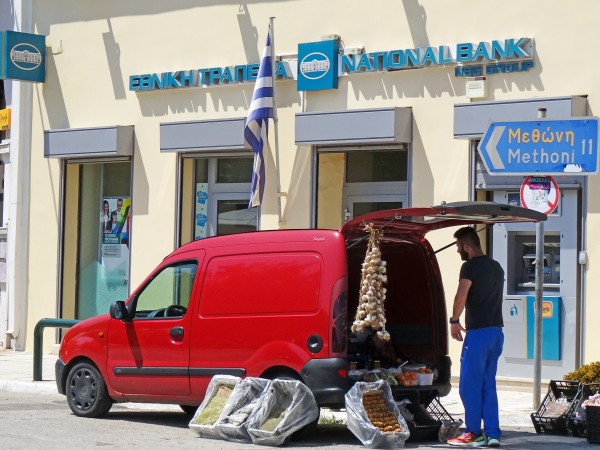 But while the endgame is being played out by politicians, people in Greece are suffering. Policies of severely depressing aggregate demand to turn a large budget deficit into a primary budget surplus have led to the economy shrinking by 26%, overall unemployment of 27% and youth unemployment of over 60%. The Greeks truly believe themselves to be stuck between a rock and a hard place.
The following articles look at the nature of the ‘game’ being played and at the effects on the Greek economy, both of the proposed austerity package proposed by the troika and Grexit. They also look at the knock-on effects for the eurozone, the EU and the global economy.
Can game theory explain the Greek debt crisis? BBC News Magazine, Marcus Miller (26/6/15)
Against the Grain: What Yanis Varoufakis can learn from a real game theory master – Nicola Sturgeon City A.M., Paul Ormerod (24/6/15)
John Nash’s Game Theory and Greece Bloomberg, Mohamed A. El-Erian (29/5/15)
The Greek crisis: that 1931 moment The Economist, Buttonwood column (23/6/15)
How game theory explains Grexit and may also predict Greek poll outcome The Conversation, Partha Gangopadhyay (1/7/15)
Greece debt crisis: Tsipras may resign if Greeks vote yes BBC News (30/6/15)
Greek debt crisis: Is Grexit inevitable? BBC News. Paul Kirby (29/6/15)
Existential threat to euro from Greek exit BBC News, Robert Peston (29/6/15)
How I would vote in the Greek referendum The Guardian, Joseph Stiglitz (29/6/15)
Greece in chaos: will Syriza’s last desperate gamble pay off? The Guardian, Paul Mason (29/6/15)
What happens if Greece defaults on its International Monetary Fund loans? The Telegraph, Mehreen Khan (30/6/15)
For Greece’s international creditors, regime change is the ultimate goal The Telegraph, Jeremy Warner (29/6/15)
Europe has suffered a reputational catastrophe in Greece The Telegraph, Ambrose Evans-Pritchard (2/7/15)
Questions
- What is meant by a primary budget surplus?
- What was the troika’s proposal on the table on the 26 June that was rejected by the Greek government?
- What was the Greek government’s proposal that was rejected by the troika?
- Explain the decision trees outlined in the first BBC article below.
- In terms of game theory, what form of game is being played?
- Are the negotiations between the Greek government and the troika a prisoners’ dilemma game? Explain why or why not.
- Does the game being played between the SNP and the Conservative government in the UK offer any useful lessons to both sides in the negotiations over Greece’s possible bailout and its terms?
- Does a No vote in the referendum on 5 July imply that Greece must leave the euro? Explain.
- What would be the effects of further austerity measures on aggregate demand? What benefits to the Greek economy could be achieved from such measures?
- Why may pegged exchange rates be regarded as the worst of both worlds – a single currency in a monetary union and floating exchange rates?
 John Nash was one of the pioneers of game theory and in 1994 was awarded the Nobel prize in economics for his work in this field. He was also the subject of the 2001 film, A beautiful mind, where the young John Nash was played by Russell Crowe, for which he won an Oscar.
Tragically, John Nash and his wife were killed in a car crash on May 23: he was 86 years old. Since his death there have been many tributes paid to him and his work.
As a student of economics you will almost certainly have studied the concept of a Nash equilibrium: a situation where everyone makes their best choice, given the choices of the other ‘players’ in a ‘game’. But a Nash equilibrium is not in the collective best interests of the participants in a non-cooperative game.
This is a very different concept of equilibrium from the simple equilibrium in a perfectly competitive market. In fact, in the complex world of strategic decision making, where firms are constantly looking at their rivals’ behaviour and possible reactions to their own behaviour, there are all sorts of Nash equilibria which are clearly sub-optimal. Competition may be highly destructive.
The following obituaries look at Nash’s contribution to the development of economics. As the Bloomberg article states:
The game theory concepts that Nash’s math[s] brought to the field were a true paradigm shift in economics. Macroeconomists, who continue to use the old Walrasian notion of equilibrium typically engage in hand-waving about how the macroeconomy is too big for strategic interactions to matter. But most of the economics profession has gradually shifted toward Nash equilibrium. The 2014 Nobel winner, Jean Tirole, is emblematic of the new economics. And many of the biggest successes in applied economics, like the auctions that power Google’s advertising, rely on Nash’s technique.
Do we owe him as much as Adam Smith?
Articles
Death of John Nash and His Beautiful Ideas Bloomberg, Noah Smith (26/5/15)
John Nash, economist and mathematician, 1928–2015 Financial Times, Ferdinando Giugliano (25/5/15)
Obituary: John Nash: Lost and found The Economist (28/5/15)
Remembering John Nash: Finding equations to explain the world The Economist (28/5/15)
John F. Nash Jr., Math Genius Defined by a ‘Beautiful Mind,’ Dies at 86 New York Times, Erica Goode (24/5/15)
Explaining a Cornerstone of Game Theory: John Nash’s Equilibrium New York Times, Kenneth Chang (24/5/15)
John Nash’s Indelible Contribution To Economic Analysis Forbes, Jon Hartley (25/5/15)
John Nash’s ground-breaking contributions to maths BBC News, John Moriarty (24/5/15)
From the archives: Nash’s Nobel prize The Economist (24/5/15)
 A beautiful strategy: John Nash’s ‘game theory’ explained Hindustan Times, Gaurav Choudhury (25/5/15)
Interview with John Nash
Interview with John Nash Nobelprize.org (Sept 2004)
Questions
- What is meant by the ‘prisoners’ dilemma’? How is this a demonstration of a sub-optimal Nash equilibrium in a non-cooperative game?
- Why is it difficult to predict the outcome of a non-cooperative game?
- Give some examples of non-cooperative games played by companies competing with each other.
- Give some examples of non-cooperative games played by nations competing with each other.
- Why do competition authorities try to prevent cooperation between businesses?
- Why may a cooperative equilibrium between firms be an unstable one?