 The technology sector is highly complex and is led by Apple. However, as the tablet market is continuing to grow, it is becoming increasingly competitive with other firms such as Samsung gaining market share. Although both firms sell many products, it is the growing tablet market which is one of the keys to their continued growth.
Tablet PCs have seen a growth in the final quarter of 2012 to a high of 52.5 million units, according to IDC. Although Apple, leading the market, has seen a growth in its sales, its market share has declined to 43.6%. Over the same period, Samsung has increased its market share from 7.3% to 15.1%. While it is still a huge margin behind Apple in the tablet PC market, Samsung’s increase in sales from 2.2 million to 7.9 million is impressive and if such a trend were to continue, it would certainly cause Apple to take note.
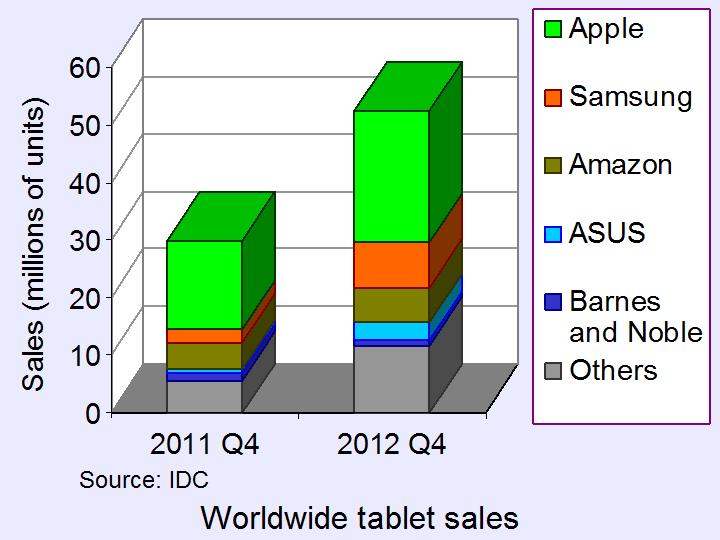 It’s not just these two firms trying to take advantage of this growing industry. Microsoft has recently launched a new tablet PC and although its reception was less than spectacular, it is expected that Microsoft will become a key competitor in the long run. There are many factors driving the growth in this market and the war over market share is surely only just beginning. The chart shows the 75.3% growth in sales in just one year. (Click here for a PowerPoint of the chart.)
A Research Director at IDC said:
We expected a very strong fourth quarter, and the market didn’t disappoint…New product launches from the category’s top vendors, as well as new entrant Microsoft, led to a surge in consumer interest and very robust shipments totals during the holiday season’
Apple has been so dominant in this sector that other companies until recently have had little success in gaining market share. However, with companies such as Samsung and ASUS now making in-roads, competition is likely to become fierce. There are already concerns that Apple’s best days are behind it and its share price reflects this. People are now less willing to pay a premium price for an Apple product, as the innovations of its competitors have now caught up with those of the leading brand name. The following articles consider this growing market.
Samsung gain tablet market share as Apple lead narrows BBC News (1/2/13)
Apple snatches US lead from Samsung Financial Times, Tim Bradshaw (1/2/13)
Apple revenues miss expectations despite high sales figures BBC News (24/1/13)
Samsung eats into Apple sales in the tablet market Mirror, Ruki Sayid (1/2/13)
MacWorld’s Apple celebration opens amid fears of tech giant’s decline Guardian, Rory Carroll (31/1/13)
Samsung’s tablet sales soar as Apple’s grip on market loosens Daily News and Analysis, Richard Blagden (2/2/13)
Samsung takes a nibble out of Apple’s tablet lead InfoWorld, Ted Samson(31/1/13)
Tablet Sales up 75% as Samsung and Asus Gain on Apple Interational Business Times, Edward Smith (31/1/13)
Questions
- Which factors are behind this exceptional growth in the tablet PC market?
- Using the Boston matrix, where do you think tablet PCs fit in terms of market size and market growth?
- Where would you place this market in terms of the product life cycle?
- What does the product life cycle say about the degree of competition, the impact on pricing on profits etc. in the phase that you placed the tablet PC market in your answer to question 3?
- Why have Apple’s shares fallen recently? Do you think this will be the new trend?
- Microsoft’s new tablet didn’t attract huge sales. What explanation was given for this? Use a diagram to help answer this question.
- Tablet PCs are relatively expensive, yet sales of them have increased significantly over the past few years. What explanation is there for this, given that we have been (and still are) in tough financial times?
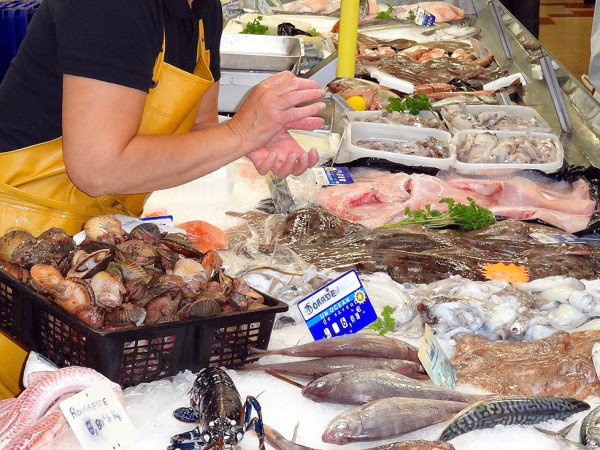 It’s a relatively common dish to see on a menu at a restaurant: mackerel. This particular fish has been promoted as a healthy and sustainable dish, but now its sustainability is coming into question and the Marine Conservation Society has taken it off its ‘fish to eat’ list. My brother Hugh is a marine biologist and often comments on which fish we should be avoiding due to sustainability issues (especially given how much I like fish!) So, how is this an economics issue?
There a couple of key things to pick out here. Firstly, with the conservationists’ warning of this issue of unsustainability, they have been asking consumers to reduce the amount of mackerel they buy. This will naturally have an impact on fisherman. If consumers do listen to the conservationists and hence reduce their demand for mackerel, we could see a fall in the price of this fish and a reduction in the fishermen’s turnover. It could be that we see a switch in consumption to other more sustainable fish, especially if we see some form of intervention.
 Another area concerning economics is the idea of over-fishing. For years, there have been disputes over who has the rights to these fish stocks. In the past, the Faroe Isles and Iceland have increased their quotas significantly, as mackerel appear to have migrated to their shores, contributing to this question of sustainability. Iceland and the Faroe Isles have ‘unilaterally agreed their quotas … as they are not governed by the common fisheries policy’.
The question is: when fisherman catch one additional mackerel, what are they considering? Do they think about the private benefit to them (or their company) or do they consider the external cost imposed on others? Whenever one fish is taken from the sea, there is one less fish available for other fishermen.
 This leads to over-consumption of fish and contributes towards the well-documented depletion of fish stocks and ‘The Tragedy of the Commons’, if account is not taken of the external cost imposed on other fishermen.
The total catch is now far in excess of what has been scientifically recommended and previously agreed upon by all participating countries. Negotiations to introduce new catch allowances have so far failed to reach agreement.
There are hopes that an international policy on quotas can be agreed to ensure mackerel levels return to or remain at a sustainable level. However, at present no progress has been made. Until some form of an agreement is reached, fishermen around Iceland and the Faroe Isles will continue to battle against the conservationists. The following articles consider this fishy topic.
Mackerel taken off conservationists’ ‘fish-to-eat’ list The Guardian, Rebecca Smithers (22/1/13)
Warning over mackerel stocks Scottish Herald (22/1/13)
Fishing quota talks begin amid ongoing disputes and finger-pointing The Scotsman, Fran Urquhart (14/1/13)
Mackerel no longer an ethical choice because of over-fishing The Telegraph, Louise Gray (22/1/13)
Ths fishy tale of macro-mismanagement The Guardian, Annalisa Barbieri (22/1/13)
You can still eat mackerel – just make sure it’s British The Telegraph, Louise Gray (22/1/13)
Dispute means mackerel is no longer fish of the day BBC News, Matt McGrath (22/1/13)
Mackerel struck off sustainable fish list Associated Press (22/1/13)
Questions
- Why are quotas set by the EU for fishing? Who do they apply to?
- Why is there an externality from fishing?
- What is the Tragedy of the Commons? Using a diagram with average and marginal revenue product and average and marginal cost illustrate the market equilibrium and the social optimum. Why are they different?
- Following on from question 3, what does this suggest about the role of governments?
- If the conservationists’ request regarding buying less mackerel is successful, what impact might this have on fishermen and fisheries?
- If consumers do switch to buying other fish, what would happen to the equilibrium in the mackerel market and in the market for other fish? Think about this question in terms of general equilibrium analysis.
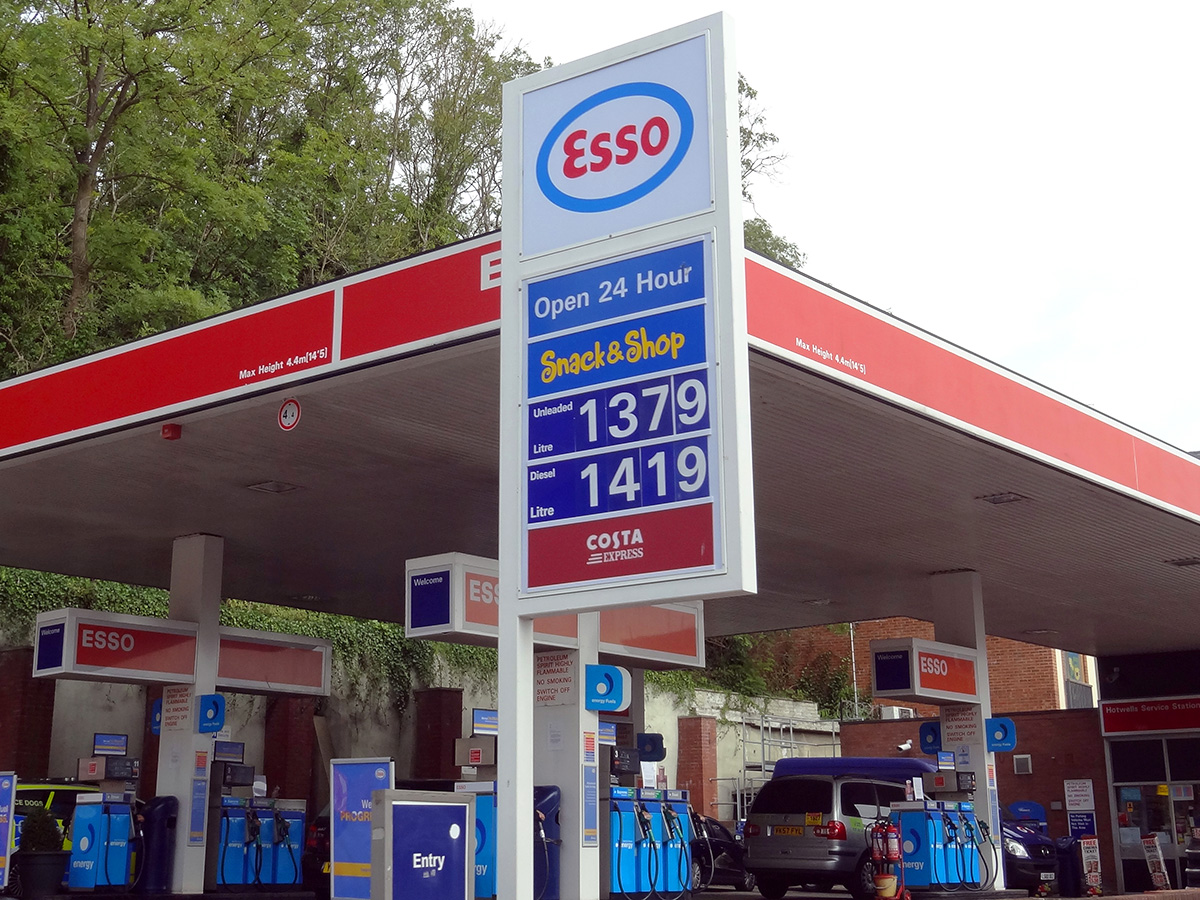
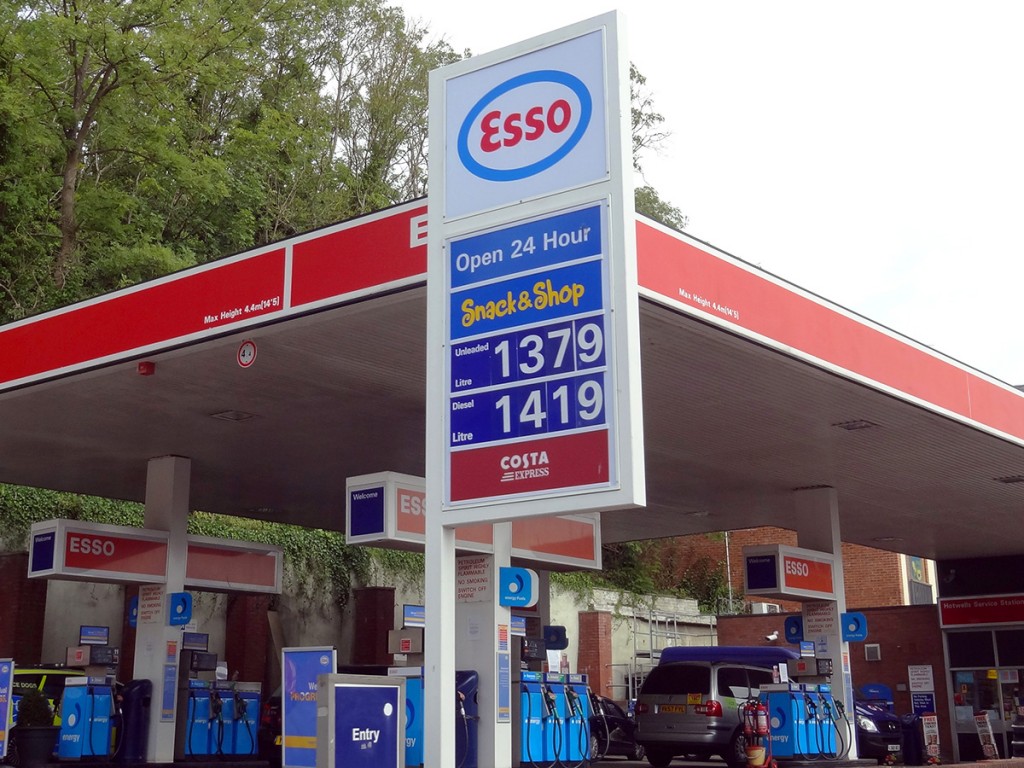 Increases in the cost of living over the past few years have put many families under financial pressure. One of the main factors that has been hurting households is the price of petrol and diesel. Road fuel duty was due to be increased last August, but the Chancellor delayed it in June. However, a planned 3p rise in duty by the Coalition, which has faced rebellion from numerous MPs may now be delayed further, following a hint from the Treasury.
The government has said that it will do everything it can to support struggling families with the cost of living and this has led many to conclude that in the Autumn Statement, the Chancellor will delay the planned 3p rise. Labour was defeated in its efforts to force a delay of the proposed 3p duty rise, as Tory bankbenchers were given this hint that the Treasury would decide to delay the increase anyway. The Economic Secretary to the Treasury said that fuel duty is part of the government’s strategy to help cut the cost of living. He commented that fuel duty was 20% lower in real terms compared to March 2000, when it was at its peak.
If we had continued with the policies of the previous government, quite simply prices would be higher, fuel would be 10p more expensive per litre. I know some will call for a further freeze in fuel duty today. I can assure them this government understands the financial pressures hard-working families are facing. Subject to the constraints of the public finances, this government is determined to help families with the cost of living.

A key economic question to consider is why is fuel one of the products that is frequently taxed? When a tax is imposed on a product, its price will rise and as the law of demand tells us, this will cause people to purchase less of it. But, what is so special about petrol? Why do people continue to purchase petrol even when its price rises? The following articles consider the concerns surrounding the 3p fuel duty rise.
Treasury to defer planned increase in fuel duty The Guardian, Nicholas Watt (13/11/12)
Asda chief Andy Clarke urges scrapping fuel duty rise BBC News (15/11/12)
Fuel Duty: Labour to force vote to delay 3p rise The Guardian, Helene Mulholland (12/11/12)
Fuel duty delay called for by Which? BBC News (11/11/12)
Fuel Duty: Government may still axe increase Sky News (13/11/12)
Chancellor heads off fuel duty rebellion Financial Times, George Parker (12/11/12)
Osborne pressed to shelve fuel duty rise Financial Times, George Parker (8/11/12)
Planned 3p petrol increase could be abandonedThe Telegraph, Christopher Hope (11/11/12)
Questions
- Why is petrol a good that is taxed so heavily?
- Illustrate the impact of a tax on petrol using a demand and supply diagram. Explain what happens to the equilibrium price and quantity.
- Which factors will make the change in price and quantity relatively larger or smaller? Think about how elasticity is relevant here.
- What other factors have contributed towards the increased cost of living over the past few years?
- Which factors in particular would make a January rise in fuel duty especially painful for many families?
- What are the arguments both for and against delaying the 3p rise in duty?
- According to the Economic Secretary to the Treasury, fuel duty is 20% lower in real terms. What does this actually mean?
 For those looking to buy larger electrical appliances at cheaper prices, things might be looking up, as Comet have begun heavy discounting after entering administration. Deloitte, as the administrator, will now begin the search for a buyer for this retailer, while Comet aims to raise the funds to rescue the company.
Comet was bought by OpCapita last year, but with poor performance continuing across the 200+ stores, we could be about to see the demise of this retailer. Over 6,000 jobs are now at risk, although Deloitte has maintained that stores will continue to trade and that redundancies will not be made. One of the administrators said:
‘Our immediate priorities are to stabilise the business, fully assess its financial position, and begin an urgent process to seek a suitable buyer which would also preserve jobs.’
The retail environment has inevitably suffered over the past few years, with well-known companies such as Woolworths, Optical Express and JJB Sports (to name a few) entering administration. Comet, therefore seems to be the latest in a long line of sad trading stories. So, which factors have contributed towards the collapse of this giant retailer?
Over the past few years, online retailers have gained a larger and larger market share. These internet retailers do not have the same overhead costs that Comet and other high street retailers face. To open a store in an area where customers are in high supply, premium rents must be paid and this adds to the cost of running any given store. In order to cover these higher costs, higher prices can result and this, together with consumers facing tight budgets, has led many customers to look at the cheaper alternatives online. Deloitte has also said that Comet has been suffering from a lack of credit, which has meant that it has not been able to purchase stock in the run-up to Christmas. Deloitte commented that:
‘The inability to obtain supplier credit for the peak Christmas trading period means that the company had no realistic prospect of raising further capital to build up sufficient stock to allow it to continue trading.’
Concerned customers are naturally emerging, wondering whether items they have ordered and paid for will actually turn up. However, Deloitte’s reassurance that trading will continue may go some way to relieving their concern. The following articles consider how Comet has fallen from the sky.
Comet officially enters administration, stores re-open for expected firesale The Telegraph, Graham Ruddick and Helia Ebrahimi (2/11/12)
Comet calls in Deloitte as administrators BBC News (2/11/12)
Apple sky-high as Comet falls to earth The Guardian, Zoe Wood (2/11/12)
Comet enters administration, Deloitte seeks buyer Reuters (2/11/12)
Comet electricals administrators formally begin search for saviour The Guardian, Zoe Wood (2/11/12)
Comet goes into administration Financial Times, Andrea Felsted (3/11/12)
Comet collapse: Deloitte blames internet and lack of first-time home buyers The Telegraph(2/11/12)
Collapse of Comet puts 7000 jobs in danger Independent, James Thompson (2/11/12)
Questions
- Why does the retail environment remain very weak?
- Explain why Deloitte suggest that a lack of first time home buyers has played a part in the demise of Comet.
- Why has a lack of credit contributed towards Comet’s downfall?
- Should customers be concerned about how Comet’s demise (if indeed a buyer is not found) might affect prices in other retailers such as Currys, given that they will now have a larger share of the market?
- Why has online trading contributed towards the harsher retail environment for the high street stores? You should think about fixed and variable costs in your answer.
- Why are companies such as Apple doing so well relative to other companies, such as Comet and JJB Sports? Is there a secret to their success?
- What impact might this collapse have on local labour markets, given Comet employs so many people? Think about the effect on wages, unemployment and on claimants of benefits.
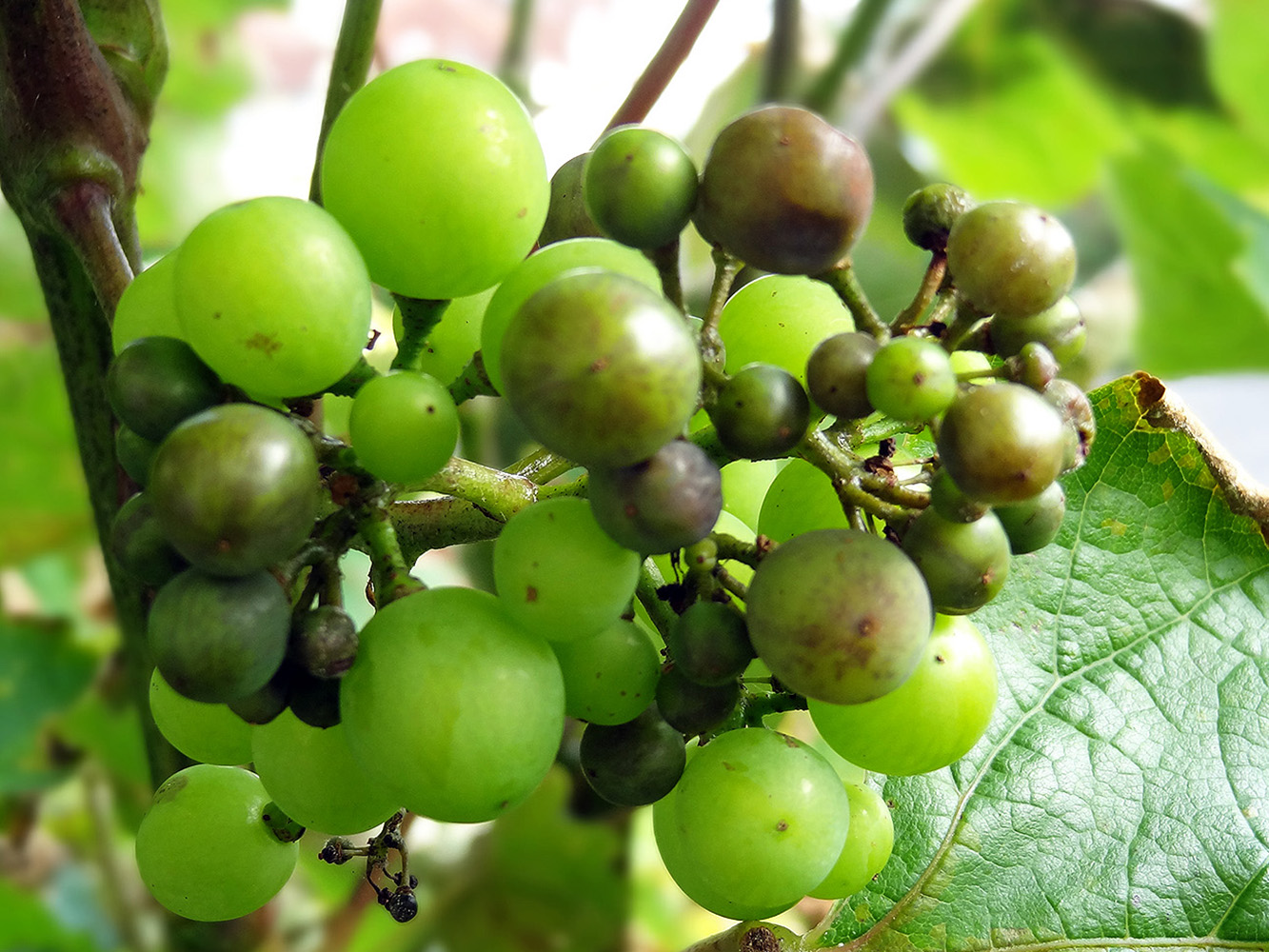
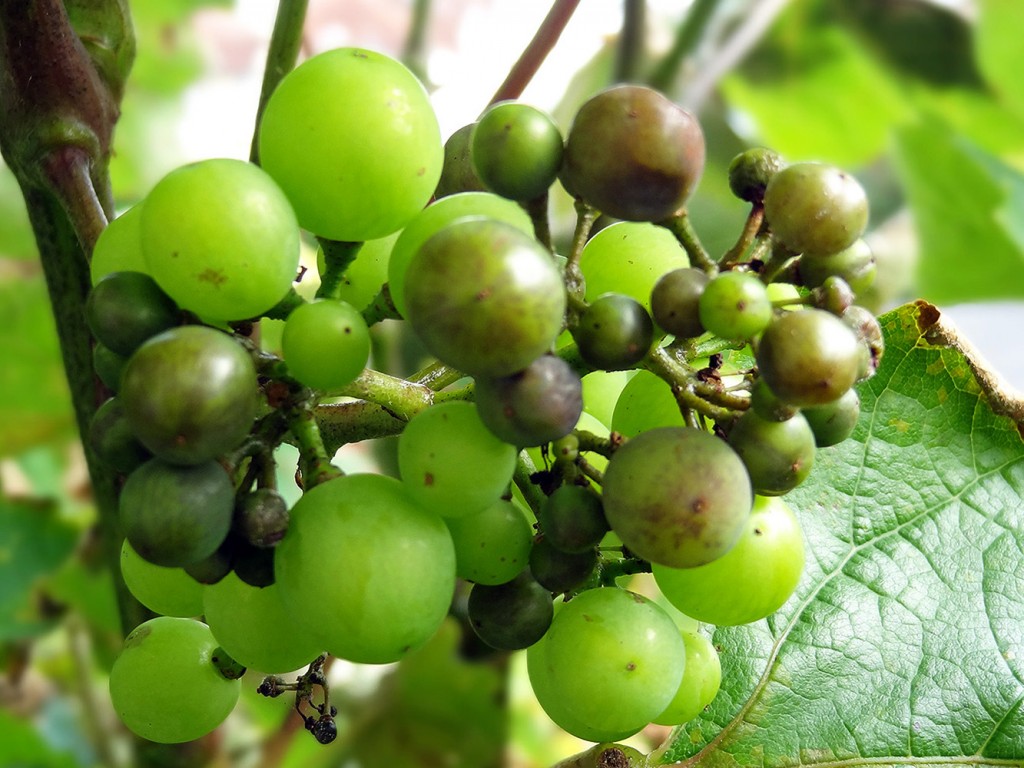 European wine producers have seen one of the worst grape harvests for decades. With exceptionally wet weather in the northern European growing areas and exceptionally hot and dry weather in the southern ones, yields are well down in most countries.
In France, the world’s largest wine producer, wine production is forecast to be 19% down on the previous year. In Italy and Spain, Europe’s second and third largest producers, production is forecast to be 3% and 6% down respectively. Production in the EU as a whole, which produces some 57% of world output, is expected to be 9% down and at a historically low level. What is more, the past five years in the EU have all seen modest harvests.
And the poor harvests are not confined to Europe. Argentina’s production is some 24% down on 2011, with New Zealand’s 17% down. And despite a few countries expecting an increase, including the USA and Chile, overall world production is expected to be 6% down on 2011 and more than 7% down on the average for 2008–11.

So is this good news or bad? At first sight it would seem to be bad, especially for the countries with large falls in output. It would also seem to be bad news for the consumer, with prices set to rise.
But for some it’s good news. If prices rise, then producers experiencing an increase in output will have a double gain. And a fall in output is only part of the story. For some producers, the smaller yield has been accompanied by an increase in quality. And then there’s the question of stocks. For several years, global production of wine has exceeded consumption. Indeed the gap widened after the financial crisis and recession of 2007–9 as consumption of wine fell. This year’s poor global harvest should help to slow down the increase in stocks or may even lead to a reduction in stocks, depending on the extent to which demand recovers.
Articles
World Wine Output to Fall to 37-Year Low, Depleting Stocks BloombergBusinessweek, Rudy Ruitenberg (30/10/12)
World wine drought after weather ruins harvests The Telegraph, John-Paul Ford Rojas (31/10/12)
Wine Experts: Drought, Cold Bring Worst Harvest in 50 Years Skye (30/10/12)
Wine experts: worst grape harvest in half century Washington Examiner (17/10/12)
Small 2012 harvest sparks supply fears thedrinksbusiness.com, Gabriel Savage (30/10/12)
Wine shortage to follow poor 2012 grape harvest BBC News (31/10/12)
 Hot summer cools business prospects for Madrid vintners BBC News, Jaime Gonzales (24/9/12)
World awash in wine, so Europe’s poor grape harvest won’t hit Edmonton goblets just yet Edmonton Journal, Dan Barnes (17/10/12)
Data
Wine in figures Wines from Spain
2012 global economic vitiviniculture data Wines from Spain (Note that the countries in Table 1 have been entered in the wrong order.)
Questions
- Illustrate the effect of the global wine harvest on a demand and supply diagram.
- Will a fall in grape production of x per cent lead to a rise in the price of wine of more or less than x percent? How is the price elasticity of demand relevant to your answer?
- What elements are there in the supply chain from planting vines to consuming wine?
- How does the holding of stocks affect (a) the profitability of wine production; (b) the price volatility of wine?
- The Greek grape harvest is predicted to be higher in 2012 than in 2011. How will this affect the prices of Greek wines in (a) Greece; (b) outside Greece?
- How is the fallacy of composition relevant in assessing the benefits to owners of vineyards of a good grape harvest?