 Footballers in the English Premier League are some of the most highly paid workers in the world. With unique talents and skills and hence a limited supply of labour, together with an insatiable appetite from the British public for football, we would expect to see high wages and a market ripe for investment, with high returns on offer. But, is this case?
The article below is by Linda Yueh, the Chief Business Correspondent for BBC News, and she has looked into the football, asking why on earth buy a football club? Despite the success of the English Premier League in drawing fans, TV and commercial revenues, many teams find it difficult to break even and investing in a team is unlikely to yield much of a return (if any!). Yet, we still see successful businesspeople, especially from abroad, purchasing English football teams.
Many club owners have hugely profitable ventures in other markets and historically only invest their money when they see an opportunity for a high return. But, not in the case of football. A return is unlikely and yet they still invest. So, with positive returns unlikely, what is it about this market that attracts investors? The article by Linda Yueh considers this question.
Article
Why on earth buy a football club? BBC News, Linda Yueh (27/2/14)
Report
Annual Review of Football Finance – Highlights Deloitte, Sports Business Group June 2013
Questions
- How can the returns to investment be measured?
- How can a company’s operating profit be calculated?
- Using a labour market diagram, explain why footballers are paid such a high wage.
- Is it monetary or non-monetary factors that seem to explain why businessmen invest in football clubs?
- Why are English football clubs typically unprofitable? Should they be?
- Which factors can explain the growing financial inequality between clubs in the Premier League and in the divisions below? Is there an argument for government involvement to regulate football?
 Business performance is always affected by the economy and we can always look at the economic theory to explain why profits rise and fall. Some companies prosper during recession, whereas others decline and the key is to understand the economics behind the data. This blog takes a look at the performance of a variety of companies and asks you to think about the economic theory behind it.
The world of betting has grown significantly and the profits of companies in this market, while certainly linked to economic performance, is also dependent on sport results. Paddy Power has announced pre-tax profits of €141m for 2013, an increase from €139.2m, despite sporting results causing profit performance to fall. On the part of football clubs, Liverpool FC saw a loss emerge for the 2012-2013 financial year, whereas Newcastle’s profits rose by 900% to £9.9m. What factors can explain the vastly different performance (off and on the pitch) of these two clubs?
In the USA, Radio Shack has been forced to close 1100 stores. This is, in part, as a response to a change in the way we are shopping. More and more consumers are purchasing goods online and Radio Shack is therefore experiencing growing competition from online retailers. Sales fell by 10% last year and even during the fourth quarter sales continued to decline.
Companies based in the largest economy in Europe have also experienced declines in performance, showing that a strong performing country doesn’t imply the same for companies operating in it. RWE, Germany’s biggest energy provider, has not made a loss since 1949. However, in 2013, this company posted its first annual loss in over 60 years: a loss of £2.28bn. With energy being in constant demand and criticism being levelled at UK energy providers for the high profits they’re making, the economics behind these data is important.
In better news for a company, Thorntons has boasted a significant increase in pre-tax profits, with much of this due to strong trading in the months leading up to Christmas and a sensible business strategy, involving selling more in supermarkets. Thorntons has cut its number of stores, but its profitable position has been saved by a good business strategy and this is going to lead to significant investment by the company.
Another strong performance was recorded by Berkshire Hathaway, an investment firm run by Warren Buffett. The company made a profit of £11.6bn in 2013, a significant increase on its 2012 performance. It is the insurance, rail and energy parts of the business that have contributed to the big increase in profits.
These are just some recent examples of data on business performance and your job is to think about the economic theory that can be used to explain the varying performance of different companies.
Liverpool announce annual loss of £50m in new club accounts Guardian, David Conn (4/3/14)
Thorntons makes biggest manufacturing investment for 25 years Telegraph, Natalie Thomas (3/3/14)
Thorntons cashes in on the snowman Independent, Simon Neville (3/3/14)
Warren Buffett’s Berkshire Hathaway sees record profit BBC News (2/3/14)
Newcastle says ‘player trading’ helped increase profits to £9.9m BBC Sport (25/2/14)
RWE posts first annual net loss for over 60 years BBC News (4/3/14)
UK among RWE woes as it posts first annual loss since 1949 The Telegraph, Denise Roland (4/3/14)
Germany’s RWE slides into €2.8bn net loss for 2013 Financial Times, Jeevan Vasagar (4/3/14)
John Menzies profits hit by drop in magazine sales BBC News (4/3/14)
Fresnillo profits drop as gold prices and production falls The Telegraph, Olivia Goldhill (4/3/14)
Glencore 2013 profit rises 20% as copper production gains Bloomberg, Jesse Riseborough (4/3/14)
Questions
- In each of the cases above, explain the economic theory that can be used to explain the performance of the respective company.
- To what extent is a change in the market structure of an industry a contributing factor to the change in company performance?
- To what extent do you think a company’s performance is dependent on the performance of the economy in which it operates?
- Are the profits of a company a good measure of success? What else could be used?
 I am an avid tennis fan and have spent many nights and in the last 10 days had many early mornings (3am), where I have been glued to the television, watching in particular Rafael Nadal in the Australian Open. Tennis is one of the biggest sports worldwide and generates huge amounts of revenue through ticket sales, clothing and other accessories, sponsorship, television rights and many other avenues. When I came across the BBC article linked below, I thought it would make an excellent blog!
There are many aspects of tennis (and of every other sport) that can be analysed from a Business and Economics stance. With the cost of living having increased faster than wages, real disposable income for many households is at an all-time low. Furthermore, we have so many choices today in terms of what we do – the entertainment industry has never been so diverse. This means that every form of entertainment, be it sport, music, cinema, books or computer games, is in competition. And then within each of these categories, there’s further competition: do you go to the football or the tennis? Do you save up for one big event and go to nothing else, or watch the big event on TV and instead go to several other smaller events? Tennis is therefore competing in a highly competitive sporting market and a wider entertainment market. The ATP Executive Chairman and President said:
We’ve all got to understand the demands on people’s discretionary income are huge, they are being pulled in loads of different avenues – entertainment options of film, music, sport – so we just need to make sure that our market share remains and hopefully grows as well.
As we know from economic analysis, product differentiation and advertising are key and tennis is currently in a particularly great era when it comes to drawing in the fans, with four global superstars.
However, tennis and all sports are about more than just bringing in the fans to the live events. Sponsorship deals are highly lucrative for players and, in this case, for the ATP and WTA tennis tours. It is lucrative sponsorship deals which create prize money worth fighting for, which help to draw in the best players and this, in turn, helps to draw in the fans and the TV companies.
 With technological development, all sports are accessible by wider audiences and tennis is making the most of the fast growth in digital media. Looking at the packaging of tour events and how best to generate revenues through TV rights is a key part of strategic development for the ATP. It goes a long way to showing how even one of the world’s most successful sporting tours is always looking at ways to innovate and adapt to changing economic and social times. Tennis is certainly a sport that has exploited all the opportunities it has had and, through successful advertising, well-organised events and fantastic players, it has created a formidable product, which can compete with any other entertainment product out there. As evidence, the following fact was observed in the Telegraph article:
A 1400 megawatt spike – equivalent to 550,000 kettles being boiled – was recorded at around 9.20pm on that day [6/7/08] as Nadal lifted the trophy. The surge is seen as an indicator of millions viewing the final and then rushing to the kitchen after it is over. The national grid felt a bigger surge after the Nadal victory even than at half time during the same year’s Champions League final between Manchester United and Chelsea.
Tennis top guns driving ATP revenues BBC News, Bill Wilson (20/1/14)
The top 20 sporting moments of the noughties: The 2008 Wimbledon Final The Telegraph, Mark Hodgkinson (14/12/09)
 The global tennis industry in numbers BBC News (22/1/14)
Questions
- How does tennis generate its revenue?
- In which market structure would you place the sport of tennis?
- What are the key features of the ATP tour which have allowed it to become so successful? Can other sports benefit from exploiting similar things?
- How has technological development created more opportunities for tennis to generate increased revenues?
- Can game theory be applied to tennis and, if so, in what ways?
- Why does sponsorship of the ATP tour play such an important role in the business of tennis?
- How important is (a) product differentiation and (b) advertising in sport?
 No matter the product or service, price is always a key factor and never more so than in tough economic times. In most cases, prices are allowed to be determined by the forces of demand and supply, which gives the equilibrium price. However, in some cases, the government may choose to intervene with a price control, for example rent controls and the national minimum wage. Another market where there is also regulation is the airline industry and the Civil Aviation Authority have recently been criticized by Heathrow Airport for its price control plan.
Whenever we go on holiday, the price we pay for an airline ticket will depend in part on the airport we are taking off from and landing at, as they will charge the airline for landing fees, security, terminals etc.  Heathrow airport had proposed that annual rises to its tariffs charged to airlines would increase by 4.6% above RPI inflation. However, this plan has been rejected by the CAA, which has said that the annual tariff rise between 2014 and 2018 should not be above the RPI. Though Heathrow are criticizing the CAA about this restriction, it is an improvement from the initial proposal which would have capped price rises at the RPI minus 1.3%.
Controversy has naturally been created, with the CAA arguing that such price controls are needed to keep prices down and thus benefit consumers and retain the competitiveness of Heathrow airport. But, in contrast, Heathrow has argued that such a cap will put its competitive position under pressure and will risk future investment in the UK. But this isn’t the only criticism of the CAA. Airlines aren’t happy with the ruling either, arguing that the CAA has bowed to the pressure of Heathrow. The contrasting positions of the CAA, Heathrow and airlines are evident in the following quotes, firstly from the Chairwoman of the CAA:
The proposals will put an end to over a decade of prices rising faster than inflation at Heathrow. Tackling the upward drift in Heathrow’s prices is essential to safeguard its globally competitive position. The challenge for Heathrow is to maintain high levels of customer service while reducing costs. We are confident this is possible and that our proposals create a positive climate for further capital investment, in the passenger interest.
Secondly, from Heathrow’s Chief Executive:
This proposal is the toughest Heathrow has ever faced. The CAA’s settlement could have serious and far-reaching consequences for passengers and airlines at Heathrow … We want to continue to improve Heathrow for passengers. Instead, the CAA’s proposals risk not only Heathrow’s competitive position but the attractiveness of the UK as a centre for international investment. We will now carefully consider our investment plans before responding fully to the CAA.
And finally from the IAG Chief Executive, who said:
[The CAA] neglected its new primary statutory duty to further the interests of passengers by endorsing a settlement that allows the UK’s monopoly hub to ignore its inefficiencies and over-reward investors by imposing excessive charges … It is a bad day for customers who have been let down by the CAA.
Any price rise from the airports will be passed on to airlines and these in turn will translate into higher prices for customers. However, is there any truth to Heathrow’s claims that investment will be adversely impacted? As costs rise, profit margins and profit will fall, unless the revenue generated can increase. Price controls restrict the amount that prices can rise and thus unless demand increases by a significant margin, profits will decline. With lower profits, there will be less money for investment and arguably the service that customers face will also decline. However, the CAA suggests that Heathrow will be able to cut its costs and thus protect investment into the future, while retaining its competitive position globally by charging lower prices to airlines. This is unlikely to be the end of the journey, but for the moment, the CAA appears to have put its foot down. The following articles consider the battleground between the CAA and Heathrow.
Regulation in the passenger’s interest, support investment and driving competition The Civil Aviation Authority (3/10/13)
Passengers at Heathrow ‘face £1bn fares hike’ Independent, Matthew Beard (4/10/13)
Heathrow airport attacks regulator’s price control plan BBC News (3/10/13)
CAA proposed Heathrow charges rise in line with inflation The Telegraph, Rebecca Clancy (13/10/13)
Passengers face fare increases as Heathrow and Gatwick are allowed to up landing fees Mail Online (3/10/13)
Heathrow and airlines enraged by CAA price proposals The Telegraph, Alistair Osborne (3/10/13)
Heathrow attacks Civil Aviation Authority over airport charges Financial Times, Andrew Parker (3/10/13)
BAA considers life outside Heathrow as CAA backtracks on charges The Guardian, Gwyn Topham (3/10/13)
Heathrow charge plan disappoints all round Wall Street Journal, Peter Evans (3/10/13)
Questions
- What is the role of a regulator?
- Explain how the price control outlined by the CAA will affect Heathrow.
- If Heathrow is unable to cut costs, what is the likely effect? Using a diagram illustrate the impact on profitability if costs (a) can be reduced and (b) cannot be reduced.
- Why are the CAA being criticised by airlines and airports?
- How will customers be affected by Heathrow’s planned price rises and the CAA’s proposal?
- ‘Regulation in the airlines industry is essential to retain competitiveness.’ Evaluate the validity of this statement.
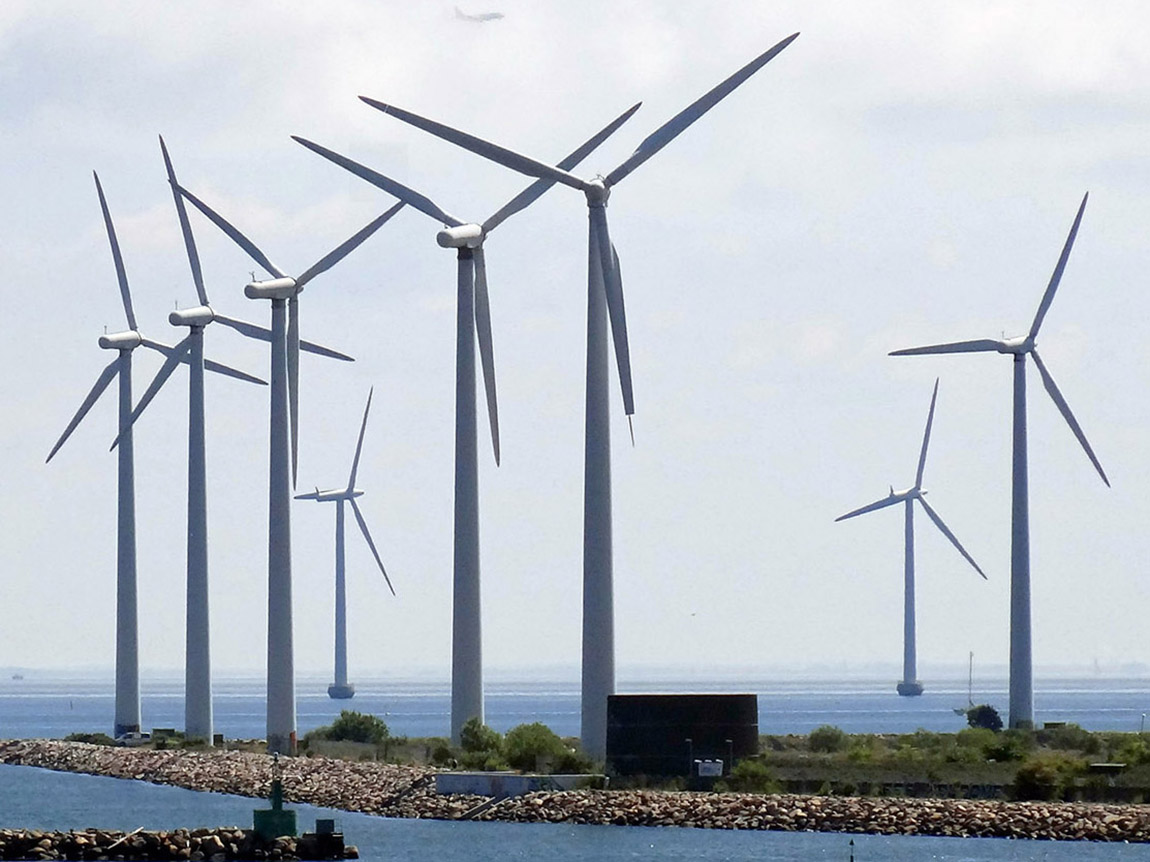 The Clean Energy Bill has been on the agenda for some time and not just in the UK. With climate change an ever growing global concern, investment in other cleaner energy sources has been essential. However, when it comes to investment in wind farms, developers have faced significant opposition. The balancing act for the government appears to be generating sufficient investment in wind farms, while minimising the negative externalities.
The phrase often thrown around with regards to wind farms, seems to be ‘not in my backyard’. That is, people recognise the need for them, but don’t want them to be built in the local areas. The reason is to do with the negative externalities. Not only are the wind farms several metres high and wide, creating a blight on the landscape, but they also create a noise, both of which impose a third party effect on the local communities. These factors, amongst others, have led to numerous protests whenever a new wind farm is suggested. The problem has been that with such challenging targets for energy, wind farms are essential and thus government regulation has been able to over-ride the protests of local communities.
However, planning guidance in the UK will now be changed to give local opposition the ability to override national energy targets. In some sense, more weight is being given to the negative externalities associated with a new wind farm. This doesn’t mean that the government is unwilling to let investment in wind farms stop. Instead, incentives are being used to try to encourage local communities to accept new wind farms. While acknowledging the existence of negative externalities, the government is perhaps trying to put a value on them. The benefits offered to local communities by developers will increase by a factor of five, thus aiming to compensate those affected accordingly. Unsurprisingly, there have been mixed opinions, summed up by Maria McCaffery, the Chief Executive of trade association RenewableUK:
Maria McCaffery, chief executive of trade association RenewableUK, said the proposals would signal the end of many planned developments and that was “disappointing”.
Developing wind farms requires a significant amount of investment to be made upfront. Adding to this cost, by following the government’s advice that we should pay substantially more into community funds for future projects, will unfortunately make some planned wind energy developments uneconomic in England.
That said, we recognise the need to ensure good practice across the industry and will continue to work with government and local authorities to benefit communities right across the country which are hosting our clean energy future.
The improved benefits package by the energy industry is expected to be in place towards the end of the year. The idea is that with greater use of wind farms, energy bills can be subsidised, thereby reducing the cost of living. Investment in wind farms (on-shore and off-shore) is essential. Current energy sources are non-renewable and as such new energy sources must be developed. However, many are focused on the short term cost and not the long term benefit that such investment will bring. The public appears to be in favour of investment in new energy sources, especially with the prospect of subsidised energy bills – but this positive outlook soon turns into protest when the developers pick ‘your back yard’ as the next site. The following articles consider this issue.
Residents to get more say over wind farms The Guardian, Fiona Harvey and Peter Walker (6/6/13)
Local communities offered more say over wind farms BBC News (6/6/13)
Locals to get veto power over wind farms The Telegraph, Robert Winnett (6/6/13)
Wind farms are a ‘complete scam’, claims the Environment Secretary who says turbines are causing ‘huge unhappiness’ Mail Online, Matt Chorley (7/6/13)
New planning guidance will make it harder to build wind farms Financial Times, Jim Pickard, Pilita Clark and Elizabeth Rigby (6/6/13)
Will more power to nimbys be the death of wind farms? Channel 4 News (6/6/13)
Locals given more ground to block wind farms Independent, Tom Bawden (6/6/13)
Questions
- What are the negative externalities associated with wind farms?
- Conduct a cost-benefit analysis as to whether a wind farm should be constructed in your local area. Which factors have you given greatest weight to?
- In question 2 above, were you concerned about the Pareto criterion or the Hicks-Kaldor criterion?
- If local communities can be compensated sufficiently, should wind farms go ahead?
- If the added cost to the development of wind farms means that some will no longer go ahead, is this efficient?
- Why is there a need to invest in new energy sources?
- To what extent is climate change a global problem requiring international (and not national) solution?
 Footballers in the English Premier League are some of the most highly paid workers in the world. With unique talents and skills and hence a limited supply of labour, together with an insatiable appetite from the British public for football, we would expect to see high wages and a market ripe for investment, with high returns on offer. But, is this case?