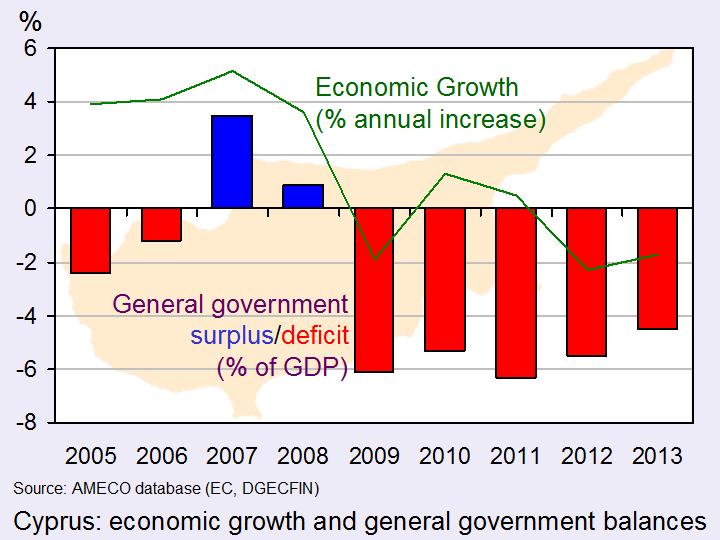
 Banks in Cyprus are in crisis. They have many bad debts e.g. to Greece and as mortgages in a falling property market. Private-sector debts have become unsustainable for the banks. The problem is compounded by negative economic growth and large government deficits (see chart). But, as with Icelandic banks back in 2008, this means a crisis for the whole country.
The reason is that the banking sector in Cyprus, as in Iceland and Ireland too, is large relative to the whole economy – over 8 times annual GDP (second only to Ireland in the EU). Loans to Greece alone are as much as 160% of Cyprus’ GDP and Cypriot banks were badly hit by the terms of the Greek bailout, which required creditors to take a 53% reduction (or ‘haircut’) in the value of their loans to Greece. With such a large banking sector, it is impossible for the Cypriot government alone to rescue the banks.
Cyprus thus turned to the EU for a bailout: back in June 2012. This makes Cyprus the fifth country to seek a bailout (after Greece, Ireland, Portugal and Spain). A bailout of €10 billion has just been agreed by the EU and IMF. The bailout comes with the ‘usual’ conditions of strong austerity measures of tax rises and cuts in government expenditure. But what makes this bailout different from those given to the other countries was a proposed levy on savers.
 The proposal was that people with up €99,999 in their bank accounts (of any type) would face a one-off tax of 6.75%. The rate for those with €100,000 or more would be 9.9%, including on the first €99,999. This would raise around €5.8 billion of the €10 billion.
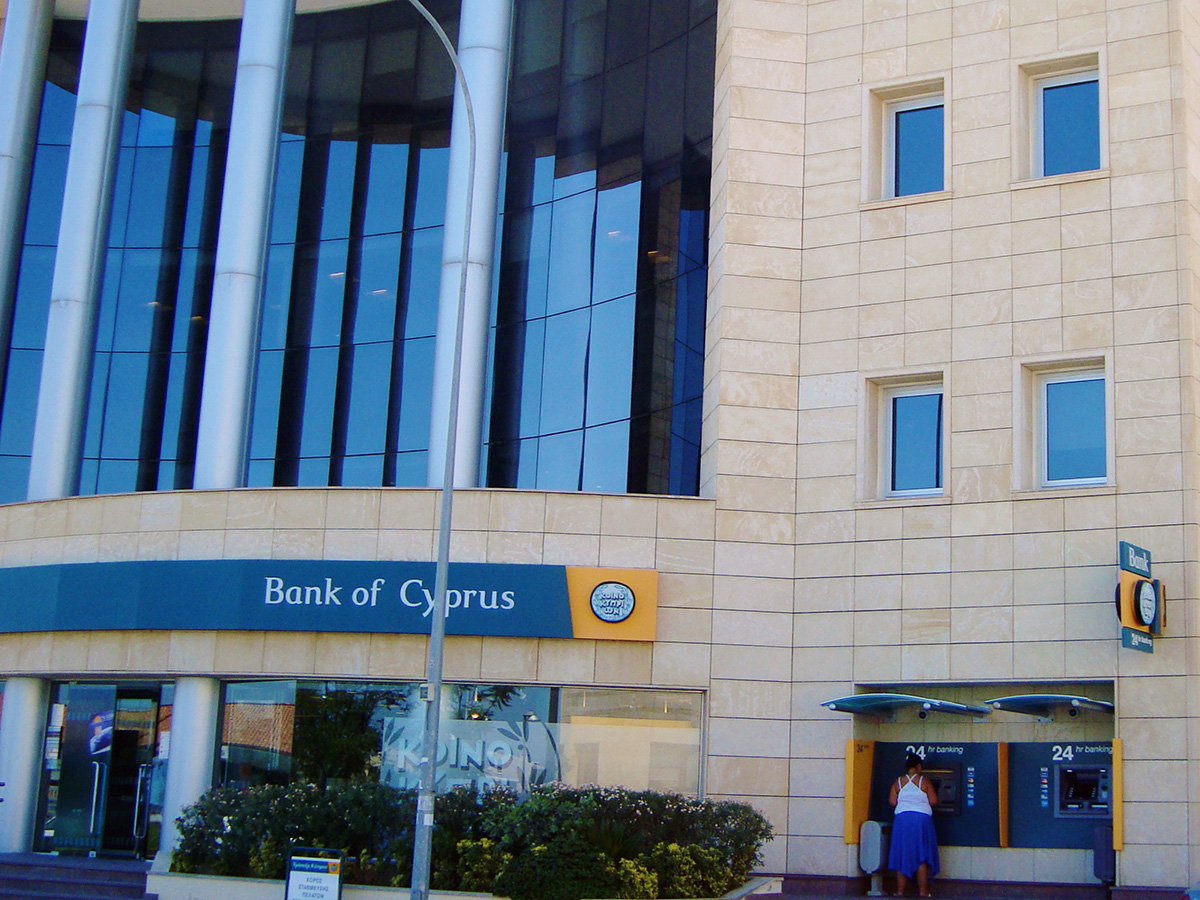
Not surprisingly, there was a public outcry in Cyprus. People had thought that their deposits were protected (at least up to €100,000). There was a run on cash machines, which, as a result were set to deliver just small amounts of cash to cope with the excessive demand. There was huge pressure on the Cypriot government not to introduce the measure.
But the ramifications of the proposed levy go well beyond the question of justice to savers. Questions are being raised about its incentive/disincentive effects. If people in other countries in future financial difficulties felt that they might face similar levies, how would they behave? Also, there is no haircut being proposed for holders of banks’ bonds. As Robert Peston states in his first article below:
The Cypriot deal sets back the cause of the new global rules for bringing order to banking systems when crisis hits. Apart from anything else, in other eurozone countries where banks are weak, it licenses runs on those banks, as and when a bailout looms.
But getting incentives right is not easy. As the Buttonwood column in The Economist points out:
The problem is tied up with the issue of moral hazard. This can be applied to both creditors and debtors; the former should be punished for reckless lending and the latter for living beyond their means. The collapse of Lehman Brothers is seen as an example of the faulty reasoning behind moral hazard; by letting the bank go bust, the crisis was spread throughout the financial system. But rescuing every creditor (or intervening to bail out the markets every time they falter) is the reason we are in this mess.
One alternative considered by the Cyprus parliament was to exempt people with less than €20,000 in their accounts from the levy. But this was rejected as being insufficient protection for savers. Another is to exempt people with less than €100,000, or to charge people with between €20,000 and €100,000 at a lower rate or rates.
But charging less, or nothing, on deposits of less than €100,000 would make it harder to to raise the €5.8 billion required by the EU. Without alternative measures it would mean charging a rate higher than 9.9% on larger deposits. The Cypriot government is afraid that this would discourage inward investment. Russia, in particular, has invested heavily in the Cyprus economy and Russia is campaigning vigorously to limit the size of the levy on large deposits. But there is little sympathy for Russian depositors, much of whose deposits are claimed to be ‘laundered money’. The Cypriot government has been seeking financial support from the Russian government.
An alternative proposal being considered is to issue government bonds in an “investment solidarity fund” and to transfer pension funds from semi-public companies to the state. Also Russia may be willing to invest more money in Cyprus’ offshore oil and gas fields.
Agreement
A deal was struck between Cyprus and the EU/IMF early in the morning of 25 March, just hours before the deadline. For details, see the News Item Cyprus: one crisis ends; another begins.
Webcasts and podcasts
 Eurozone ministers agree 10bn euro Cyprus bailout Channel 4 News (16/3/13)
Bailout is ‘blackmail’ claims Cyprus president Euronews (17/3/13)
Cyprus’s president tries to calm fears over EU bailout The Guardian (18/3/13)
Cypriot bank customers reactions to savings levy BBC News (17/3/13)
Cyprus bailout: Parliament postpones debate amid anger BBC News (17/3/13)
Cyprus parliament delays debate on EU bailout Al Jazeera (17/3/13)
Cyprus told it can amend bailout, as key vote postponed BBC News, Gavin Hewitt (18/3/13)
Robert Peston: Cyprus bailout an ‘astonishing mess’ BBC News, Robert Peston (18/3/13)
Cyprus bailout is ‘completely unfair’ BBC Radio 4 Today Programme, Michael Fuchs and Bernadette Segol (18/3/13)
Lenders ‘doing everything you should not do’ on Cyprus BBC Radio 4 Today Programme, Alistair Darling (19/3/12)
Cyprus warned over bailout rejection BBC News (20/3/13)
Articles
Cyprus becomes fifth eurozone bailout The News International (Pakistan) (17/3/13)
Cyprus bailout deal sparks run on ATMs Irish Independent (17/3/13)
EU leaders gamble in Cyprus bank bailout BBC News, Gavin Hewitt (17/3/13)
Cyprus told it can amend bailout, as key vote postponed BBC News (18/3/13)
Q&A: Cyprus bailout BBC News (19/3/13)
Cyprus’ President Defends Bailout Deal The Motley Fool (16/3/13)
Sad Cyprus The Economist, Buttonwood’s Notebook (12/3/13)
The Cypriot bail-out: A fifth bitter lemon The Economist (30/6/12)
Analysis: Cyprus bank levy risks dangerous euro zone precedent Reuters, Mike Peacock (17/3/13)
The Cyprus precedent Reuters, Felix Salmon (17/3/13)
The Cyprus Bank Bailout Could Be A Disastrous Precedent: They’re Reneging On Government Deposit Insurance Forbes, Tim Worstall (16/3/13)
Cyprus rescue breaks all the rules BBC News, Robert Peston (18/3/13)
Cyprus and the eurozone’s survival BBC News, Robert Peston (20/3/13)
Eurogroup defends Cyprus bail-out The Telegraph (17/3/13)
Cyprus eurozone bailout prompts anger as savers hand over possible 10% levy The Guardian (16/3/13)
Cyprus’s wealth tax makes perfect sense – its rich won’t escape unscathed The Guardian, Phillip Inman (18/3/13)
The tragedy of Cyprus The Real Economy blog, Edmund Conway (16/3/13)
Damage limitation in Cyprus BBC News, Stephanie Flanders (19/3/13)
The fatal flaw in the eurozone’s not-so-cunning plan for Cyprus The Guardian, Larry Elliott (19/3/13)
Cyprus plans special fund in race to get EU-IMF bailout BBC News, (21/3/13)
Cyprus says ‘significant progress’ in debt crisis talks BBC News (23/3/13)
Background information
The Banking System in Cyprus: Time to Rethink the Business Model? Cyprus Economic Policy Review, Vol. 5, No. 2, pp. 123–130, Constantinos Stephanou (2011)
European sovereign-debt crisis Wikipedia
Questions
- What is the justification given by the Cypriot government and the EU for imposing a levy on bank deposits?
- What alternative measures could have been demanded by the EU? Why weren’t they?
- What is the significance of Russian deposits in Cypriot banks?
- Compare the benefits of the proposed levy rates with the alternative of imposing levies only on deposits over €100,000, but at higher rates (perhaps tiered).
- Explain the moral hazard issues in bailing out the Cypriot banks.
- How serious is the problem that imposing a tax on deposits in Cypriot banks might have adverse affects on the behaviour of depositors in other countries’ banks?
- How might Cypriots behave in future in regards to depositing money in banks? What impact could this have on the economy of Cyprus?
- Explain “the unholy trinity of options facing indebted nations (inflate, stagnate, default)”. Compare the effectiveness of each.
 As part of the Basel III round of banking regulations, representatives of the EU Parliament and member governments have agreed with the European Commission that bankers’ bonuses should be capped. The proposal is to cap them at 100% of annual salary, or 200% with the agreement of shareholders. The full Parliament will vote in May and then it will go to officials from the 27 Member States. Under a system of qualified majority voting, it is expected to be accepted, despite UK resistance.
The main arguments in favour of a cap are that it will reduce the focus of bankers on short-term gains and reduce the incentive to take excessive risks. It will also appease the anger of electorates throughout the EU over bankers getting huge bonuses, especially in the light of the recession, caused in major part by the excesses of bankers.
 The main argument against is that it will drive talented top bankers to countries outside the EU. This is a particular worry of the UK government, fearful of the effect on the City of London. There is also the criticism that it will simply drive banks into increasing basic salaries of senior executives to compensate for lower bonuses.
But it is not just the EU considering curbing bankers’ pay. The Swiss have just voted in a referendum to give shareholders the right to veto salaries and bonuses of executives of major companies. Many of these companies are banks or other financial sector organisations.
So just what will be the effect on incentives, banks’ performance and the movement of top bankers to countries without such caps? The following videos and articles explore these issues. As you will see, the topic is highly controversial and politically charged.
 Meanwhile, HSBC has revealed its 2012 results. It paid out $1.9bn in fines for money laundering and set aside a further $2.3bn for mis-selling financial products in the UK. But its underlying profits were up 18%. Bonuses were up too. The 16 top executives received an average of $4.9m each. The Chief Executive, Stuart Gulliver, received $14.1m in 2012, 33% up on 2011 (see final article below).
Webcasts and podcasts
EU moves to cap bankers bonuses Euronews on Yahoo News (1/3/13)
EU to Curb Bank Bonuses WSJ Live (28/2/13)
Inside Story – Curbing Europe’s bank bonuses AlJazeera on YouTube (1/3/13)
Will EU bonus cap ‘damage economy’? BBC Radio 4 Today Programme (28/2/13)
Swiss back curbs on executive pay in referendum BBC News (3/3/13)
Has the HSBC scandal impacted on business? BBC News, Jeremy Howell (4/3/13)
Articles
Bonuses: the essential guide The Guardian, Simon Bowers, Jill Treanor, Fiona Walsh, Julia Finch, Patrick Collinson and Ian Traynor (28/2/13)
Q&A: EU banker bonus cap plan BBC News (28/2/13)
Outcry, and a Little Cunning, From Euro Bankers The New York Times, Landon Thomas Jr. (28/2/13)
Bank bonuses may shrink – but watch as the salaries rise The Observer, Rob Taylor (3/3/13)
Don’t cap bank bonuses, scrap them The Guardian, Deborah Hargreaves (28/2/13)
Capping banker bonuses simply avoids facing real bank problems The Telegraph, Mats Persson (2/3/13)
Pro bonus The Economist, Schumpeter column (28/2/13)
‘The most deluded measure to come from Europe since fixing the price of groceries in the Roman Empire’: Boris Johnson attacks EU banker bonus cap Independent, Gavin Cordon , Geoff Meade (28/2/13)
EU agrees to cap bankers’ bonuses BBC News (28/2/13)
Viewpoints: EU banker bonus cap BBC News (28/2/13)
Voters crack down on corporate pay packages swissinfo.ch , Urs Geiser (3/3/13)
Swiss voters seen backing executive pay curbs Reuters, Emma Thomasson (3/3/13)
Swiss referendum backs executive pay curbs BBC News (3/3/13)
Voters in Swiss referendum back curbs on executives’ pay and bonuses The Guardian, Kim Willsher and Phillip Inman (3/3/13)
Swiss vote for corporate pay curbs Financial Times, James Shotter and Alex Barker (3/3/13)
HSBC pays $4.2bn for fines and mis-selling in 2012 BBC News (4/3/13)
Questions
- How does competition, or a lack of it, in the banking industry affect senior bankers’ remuneration?
- What incentives are created by the bonus structure as it is now? Do these incentives result in desirable outcomes?
- How would you redesign the bonus system so that the incentives resulted in beneficial outcomes?
- If bonuses are capped as proposed by the EU, how would you assess the balance of advantages and disadvantages? What additional information would you need to know to make such an assessment?
- How has the relationship between banks and central banks over the past few years created a moral hazard? How could such a moral hazard be eliminated?
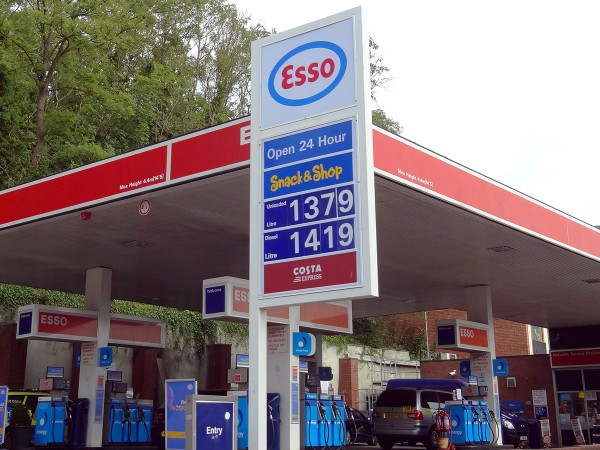 From early January to late February 2013, the average pump price of petrol in the UK rose by over 6p per litre – a rise of 4.7% in just seven weeks. There have also been substantial rises in the price of diesel.
The higher prices reflect a rise in the dollar wholesale price of oil and a depreciation in the pound. From 2 January to 21 February the pound fell from $1.63 to $1.53 – a depreciation of 6.1% (see). Crude oil prices (in dollars) rose by just under 7% over this period. With oil imports priced in dollars, a weaker pound pushes up the price of oil in the UK. The price has then been pushed up even higher by speculation, fuelled by the belief that prices have further to rise.
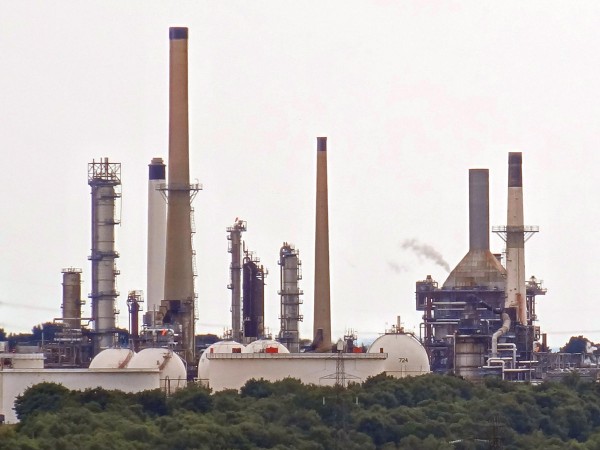 The higher price of road fuel, plus the general squeeze on living standards from the recession, with prices rising faster than wages, has caused a reduction in the consumption of road fuel. Petrol sales have fallen to their lowest level for 23 years. Sales in January 2013 were 99m litres down on the previous month’s sales of 1564m litres (a fall of 6.3%).
Not surprisingly motorists’ groups have called for a reduction in fuel taxes to ease the burden on motorists. They also argue that this will help to drive recovery in the economy by leaving people with more money in their pockets.
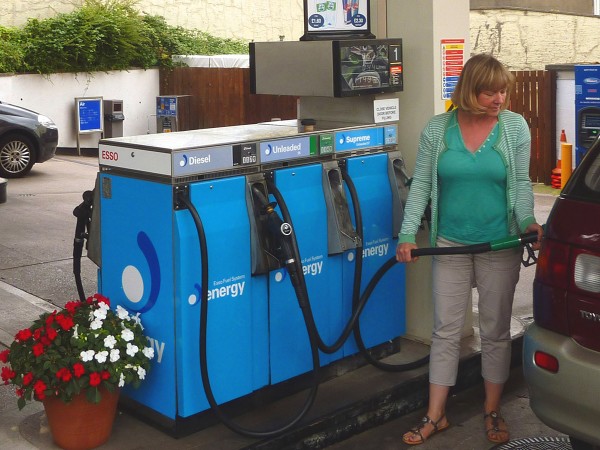
Equally not surprisingly, those concerned about the environment have welcomed the reduction in traffic, as have some motorists who like the quieter roads, allowing journey times to be cut, with resulting reductions in fuel consumption per mile.
The following videos and articles discuss the causes of the most recent fuel price rises and also examine the responsiveness of demand to these higher prices and to the reductions in real incomes.
Webcasts
Rising petrol prices are ‘forcing drivers off the road’ BBC News, Richard Westcott (22/2/13)
Fuel prices ‘forcing drivers off road’ – AA BBC News (22/2/13)
Fuel Prices Head For Highest Level Ever Sky News (22/2/13)
Commodities Next Week: Fuel Prices Hit Fresh 2013 Highs CNBC (22/2/13)
Ministers to blame for high fuel prices, says competition watchdog The Telegraph, Peter Dominiczak (30/1/13)
Articles
Petrol price surge adds 6.24p to a litre in a month The Guardian (22/2/13)
Petrol prices set for record highs as speculators and weak pound drive up pump costs again This is Money (22/2/13)
How are motorists saving fuel? NNC Magazine, Tom Geoghegan (9/3/11)
AA Report
Fuel Price Report (February 2013)
Data
Weekly road fuel prices Department of Energy and Climate Change
Energy consumption in the UK Department of Energy and Climate Change
Oil and oil products: section 3, Energy Trends Department of Energy and Climate Change
Europe Brent Spot Price FOB (Dollars per Barrel) US Energy Information Administration
Crude Oil (petroleum), Price index Monthly Price – Index Number Index Mundi
Questions
- Is it possible to calculate the price elasticity of demand for petrol from the data given? Try making the calculation.
- How important is the ceteris paribus (other things being equal) assumption when calculating the price elasticity of demand for petrol?
- Why is the long-run price elasticity of demand for road fuel likely to different from the short-run price elasticity?
- If wholesale oil prices go up by x%, will prices at the pumps go up by approximately x% or by more or less then x%? Similarly, if the pound depreciates by y% would you expect prices at the pumps go up by approximately y% or by more or less then y%? Explain.
- How has speculation affected fuel prices? Is this effect likely to persist? Explain.
- Under what circumstances would a reduction in road fuel taxes help to drive the recovery? Are such circumstances likely?
- Which groups in society suffer most from higher fuel prices? Is this reflected in their price elasticity of demand and if so why?
- Is a rise in fuel prices above inflation likely to increase or decrease inequality in living standards? Explain.
- Should externalities from fuel consumption and production be taken into account when setting the duty on petrol and diesel and, if so, what would be the implication for prices?
 According to the first estimate by the Office for National Statistics, the UK economy shrank by 0.3% in the final three months of 2012. This means that over the whole year growth was flat.
The biggest contributor to the fall in GDP in Q4 was the production industries, which include manufacturing. Output of the production sector fell by 1.8% in Q4. Construction sector output, by contrast, was estimated to have increased by 0.3%. Service sector output was flat. The chart below shows quarterly and annual growth in the UK from 2007 to 2012. (Click here for a PowerPoint.)
Latest estimates by the IMF are that the UK economy will grow by 1.0% in 2013 – well below the long-term growth in potential output (see also the last blog, High hopes in the Alps). But some forecasters are predicting that real GDP will continue to fall for at least one more quarter, which means that the economy would then be in a ‘triple-dip recession’.
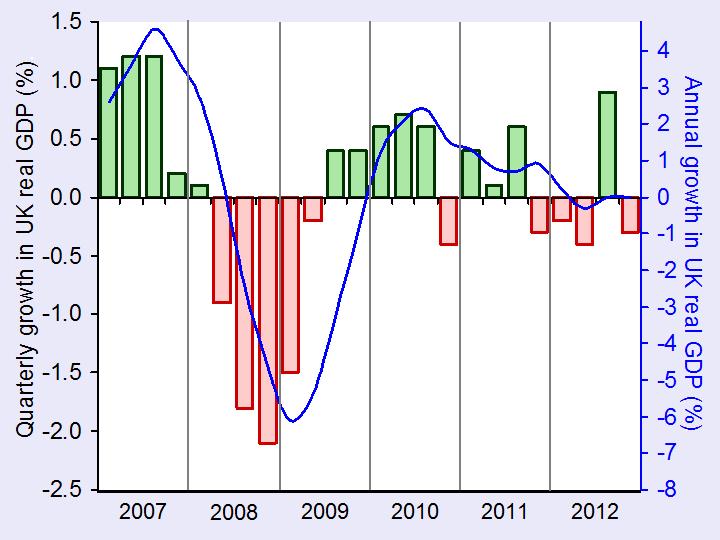 Not surprisingly politicians have interpreted the statistics very differently, as have economists. The government, while recognising that the UK faces a ‘very difficult economic situation’, argues that now is not the time to change course and that by continuing with policies to reduce the deficit the economy will be placed on a firmer footing for sustained long-term growth
The opposition claims that the latest figures prove that the government’s policies are not working and that continuing attempts to bear down on the deficit are depressing aggregate demand and thereby keeping the economy depressed.
The following webcasts, podcasts and articles expand on these arguments. Try to be dispassionate in using economic analysis and evidence to assess the arguments.
Webcasts and podcasts
Video Summary: Gross Domestic Product Preliminary Estimate, Q4 2012 Media Briefing (Click here for the following Q&A) ONS (25/1/13)
Triple dip on the menu? Channel 4 News, Siobhan Kennedy and Faisal Islam (25/1/13)
Getting and spending – the key to recovery Channel 4 News, Cathy Newman (25/1/13)
UK economy shrinks by 0.3% in the last three months of 2012 BBC News, Hugh Pym (25/1/13)
Danny Alexander on GDP figures and economic plans BBC Daily Politics (25/1/13)
Osborne defends government’s deficit reduction plan BBC News (25/1/13)
Ed Balls: UK economy urgently needs a ‘Plan B’ BBC News (25/1/13)
UK heads for triple dip as GDP contracts 0.3pc The Telegraph, Philip Aldrick (25/1/13)
Economist: Government may need to rethink its fiscal policy The Telegraph, Jim O’Neill (25/1/13)
Has austerity really been tried in Britain? BBC Today Programme, Jonathan Portes and Andrew Lilico (29/1/13)
Articles
UK GDP: Economy shrank at end of 2012 BBC News (25/1/13)
UK GDP shrinks by 0.3% in fourth quarter: what the economists say The Guardian (25/1/13)
New Bank of England head Mark Carney hints at big shift in policy The Guardian (26/1/13)
The Bank of England, the chancellor, and the target BBC News. Stephanie Flanders (29/1/13)
The Entire World Of Economics Is Secretly Thankful To The UK Right Now Business Insider, Joe Weisenthal (26/1/13)
Data
Gross Domestic Product: Preliminary Estimate, Q4 2012 ONS (25/1/13)
Video Summary: Gross Domestic Product Preliminary Estimate, Q4 2012 ONS (25/1/13)
Preliminary Estimate of GDP – Time Series Dataset 2012 Q4 ONS (25/1/13)
Business and Consumer Surveys DG ECFIN
Questions
- What are the reasons for the decline in GDP in 2012 Q4??
- Examine how likely it is that the UK will experience a triple-dip recession.
- What measures could be adopted to increase consumer and business confidence?
- If there is substantial spare capacity, is expansionary fiscal policy the best means of achieving economic growth?
- What additional monetary policy measures could be adopted to stimulate economic growth?
- Find out what has happened to the UK’s public-sector deficit and debt over the past three years. Explain what has happened.
 The Autumn Statement, delivered annually by the Chancellor of the Exchequer in late November or early December, is rather like a second Budget. In his statement, the Chancellor presents new forecasts for the UK economy by the Office for Budget Responsibility (OBR) and announces various policy changes in the light of the forecasts.
So what does this OBR say? Its headline reads, “Government borrowing revised higher as weaker economy hits revenues” and this is followed by the statement:
The OBR has revised up its forecasts for public-sector borrowing over the next five years, as a weaker outlook for the economy reduces tax revenues. As a result, the Government no longer seems likely to achieve its target of reducing public-sector net debt in 2015–16.
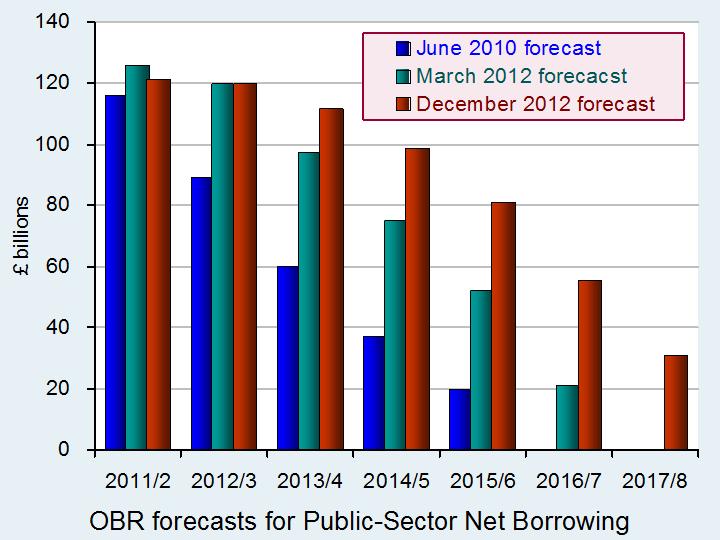 The chart shows OBR forecasts for public-sector net borrowing made in June 2010 (its first forecast after the OBR was formed by the Coalition government), in March 2012 and in December 2012. The current forecast clearly shows borrowing set to decline more slowly than in the earlier forecasts. Click here for a PowerPoint of the chart. (Note that the effects of transferring the pension assets of the Royal Mail to the Treasury and the effects of not paying interest to the Bank of England on government bonds purchased under quantitative easing programmes have not been included in order to make the three forecasts consistent.)
So with a weaker economy and slower recovery than previously forecast, what are George Osborne’s options? He and his colleagues, along with various economists, argue for sticking to Plan A. This means continuing with austerity measures in order to get the public-sector deficit down. But with government borrowing having fallen more slowly than forecast, this means further government expenditure cuts, such as reductions in benefits, cuts in grants to local authorities and reductions in pensions relief. Even so, achieving his two targets – (1) eliminating the cyclically adjusted current (as opposed to capital) budget deficit by 2015/16 (the so-called ‘fiscal mandate’), and (2) public-sector debt falling as a proportion of GDP by 2015/16 – will both be missed. They were extended by a year in the Budget last March. They have now been extended by a further year to 2017/18.
The opposition and many other economists argue that Plan A has failed. Austerity has prevented the economy from growing and has thus meant a slower reduction in the deficit as tax revenues have not grown nearly as much as hoped for. A more expansionary policy would allow the deficit to be reduced more quickly, especially if extra government expenditure were focused on infrastructure and other capital spending.
 It could be argued that George Osborne’s Autumn Statement moves some way in this direction – a Plan A+. He is making deeper cuts in welfare and government departmental spending in order to divert monies into capital spending. For example, there will be £1bn of extra expenditure on roads; £1bn extra on schools; £270m on FE colleges; and £600m extra for scientific research. Also, by extending the period of austerity to 2017/18, this has meant that he has not had to make even deeper cuts. What is more, he is increasing income tax allowances and cutting the rate of corporation tax by 1% more than originally planned and scrapping the planned 3p per litre rise in road fuel duty. He hopes to make up any lost tax revenue from these measures by HMRC clamping down on tax evasion.
But by sticking to his broad austerity strategy, and with many parts of the global economy having weakened, it looks as if the UK economy is in for several more years of sluggish growth. Winter is going to be long.
Webcasts and Podcasts
Autumn Statement: George Osborne scraps 3p fuel duty rise BBC News, Carole Walker (5/12/12)
Autumn Statement: OBR says deficit ‘shrinking more slowly’ BBC News, Robert Chote (5/12/12)
Autumn Statement: Headlines from George Osborne’s speech BBC News, Andrew Neil (5/12/12)
Autumn Statement: Flanders, Robinson and Peston reactio BBC News, Stephanie Flanders, Nick Robinson and Robert Peston (5/12/12)
Boosting the British Budget CNN, Jim Boulden (5/12/12)
Autumn statement 2012: key points – video analysis The Guardian, Larry Elliott, Jill Treanor, Patrick Collinson and Damian Carrington (5/12/12)
Articles
Autumn Statement 2012: the full speech The Telegraph (5/12/12)
Autumn Statement: Benefit squeeze as economy slows BBC News (5/12/12)
Autumn Statement: At-a-glance summary of key points BBC News (5/12/12/)
Austerity to last until 2018, admits George Osborne Independent, Oliver Wright
Autumn statement: George Osborne reveals benefits cut Channel 4 News (5/12/12/)
Autumn Statement 2012: Cut welfare, create jobs – a very Tory statement The Telegraph, Damian Reece (5/12/12)
Autumn statement 2012: economy weaker than expected, Osborne says The Guardian, Heather Stewart (5/12/12)
Analysis: Even the ‘autumn’ bit seemed optimistic BBC News, Chris Mason (5/12/12)
George Osborne’s autumn statement 2012: reaction The Guardian, Julia Kollewe (5/12/12)
Candid Osborne avoids political risk Financial Times, Janan Ganesh (5/12/12)
Autumn statement: Why George Osborne’s Budget won’t be a game changer The Telegraph, Allister Heath (4/12/12/)
Autumn statement 2012: expert verdict The Guardian, Richard Murphy, Dominic Raab, Ann Pettifor, Gavin Kelly, Prateek Buch and Mark Serwotka (5/12/12/)
The alternative autumn statement Channel 4 News (5/12/12)
Autumn Statement 2012: man cannot live by deficit reduction alone The Telegraph, Roger Bootle (5/12/12)
Autumn statement: cuts are just a sideshow The Guardian, John Redwood (5/12/12)
What does the Autumn Statement mean for business? Economia, David Mellor (5/12/12)
Autumn Statement Reaction: UK AAA ‘safe for today’ Investment Week (5/12/12)
Autumn Statement: A wintry statement of reality BBC News, Stephanie Flanders (4/12/12)
What has changed? BBC News, Stephanie Flanders (6/12/12)
UK warned on debt ‘credibility’ over AAA rating BBC News (5/12/12)
Data
Autumn statement 2012 in charts The Guardian, Simon Rogers (5/12/12/)
Who suffers most from Britain’s austerity? How the figures stack up The Guardian, Tom Clark (5/12/12)
Economic and fiscal outlook charts and tables – December 2012 OBR (5/12/12)
Economic and fiscal outlook supplementary economy tables – December 2012 OBR (5/12/12)
Forecasts for the UK economy HM-Treasury
OBR, Treasury and IFS links
Economic and fiscal outlook – December 2012 OBR (5/12/12)
Autumn Statement 2012 HM Treasury (5/12/12)
Autumn Statement 2012 IFS
Questions
- Distinguish between ‘stocks’ and ‘flows’. Define (a) public-sector net borrowing (PSNB) and (b) the public-sector net debt (PSND) and explain whether each one is a stock or a flow.
- Summarise the measures announced by George Osborne in his Autumn Statement.
- What are his arguments for not adopting a more expansionary fiscal policy?
- Assess his arguments.
- What is meant by the ‘output gap’? What are the OBR’s forecasts about the output gap and what are the implications?
- How has quantitative easing affected PSNB and PSND?
- Distinguish between the cyclical and structural deficit. What implications does this distinction have for fiscal policy?
 The proposal was that people with up €99,999 in their bank accounts (of any type) would face a one-off tax of 6.75%. The rate for those with €100,000 or more would be 9.9%, including on the first €99,999. This would raise around €5.8 billion of the €10 billion.