 In 2009, the European Commission investigated Microsoft’s practice of bundling its own browser, Internet Explorer, with new copies of Windows. It found that this was an abuse of market power and created an unfair barrier to entry of other browsers, such as Firefox.
An agreement was reached that Microsoft would include a ‘choice screen’ in which users in the EU would be given a full list of alternative browsers and asked which they would like to install. On making their selection, a link would take them to the browser site to download the installation program. This screen would be available until 2014. Between March 2010, when the choice screen was first provided and November of the same year, 84 million browsers were downloaded through it.
In May 2011, however, the screen was no longer present on new Windows 7 purchases. The Commission took some time to realise this: indeed it was Microsoft’s rivals that pointed it out. The screen reappeared some 13 months later, after some 15m copies of Windows software had been sold.
 For this lapse, the Commission has just fined Microsoft €561m. Commission Vice President in charge of competition policy, Joaquín Almunia, said:
In 2009, we closed our investigation about a suspected abuse of dominant position by Microsoft due to the tying of Internet Explorer to Windows by accepting commitments offered by the company. Legally binding commitments reached in antitrust decisions play a very important role in our enforcement policy because they allow for rapid solutions to competition problems. Of course, such decisions require strict compliance. A failure to comply is a very serious infringement that must be sanctioned accordingly.
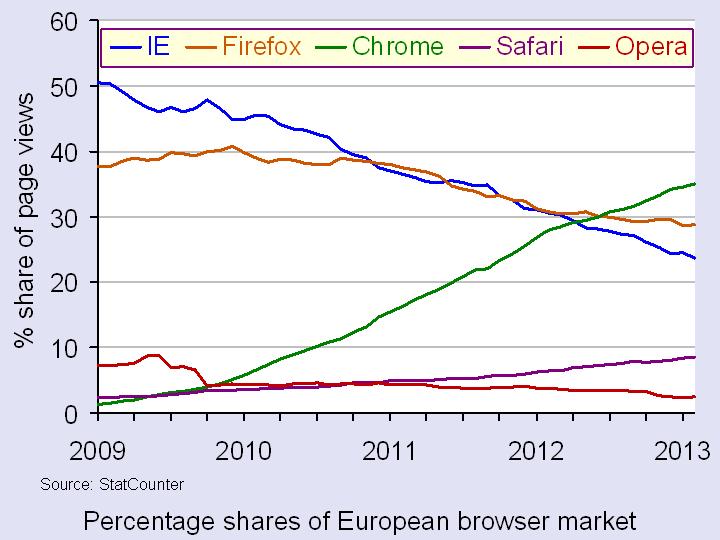 This may seem unduly harsh, given that Internet Explorer’s share of the browser market has fallen dramatically. In 2009, it had around 50% of the European market, with its main rival at the time, Mozilla’s Firefox, having just under 40%. By 2013, Internet Explorer’s share has fallen to around 24% and Firefox’s to around 29%. Google’s Chrome, which was just starting up in 2009, has seen its share of the European market rise to around 35% and is now the market leader. Partly this is due to the rise in tablets and smartphones, a large proportion of which use Google’s Android operating system and the Chrome browser.
Not surprisingly, the European Commission is investigating Google to see whether it is abusing a dominant position. Is Google’s case, it’s not just about its share of the browser market, it’s more about its share of the search market, which in the EU is around 90% (compared with around 65% in the USA). As The Economist article below states:
The Commissioner believes that Google may be favouring its own specialised services (eg, for flights or hotels) at rivals’ expense; that its deals with publishers may unfairly exclude competitors; and that it prevents advertisers from taking their data elsewhere.
Joaquín Almunia asked Google to respond to these concerns by January 31. Google delivered its suggestions on the deadline, but we await to hear precisely what it said and how the Commission will respond. It is understood that Google’s proposal is for clearly labelling its own products on its search engine.
Articles
Microsoft Fined $732 Million By EU Over Browser eWeek, Michelle Maisto (6/3/13)
Microsoft faces hefty EU fine The Guardian (6/3/13)
Sin of omission The Economist (9/3/13)
Microsoft fined by European Commission over web browser BBC News (6/3/13)
 EU commissioner Joaquin Almunia announces Microsoft fine BBC News (6/3/13)
Microsoft’s European Fine Comes in an Era of Browser Diversity Forbes, J.P. Gownder (6/3/13)
Life after Firefox: Can Mozilla regain its mojo? BBC News, Dave Lee (11/4/12)
Google responds to European commission’s antitrust chief The Guardian, Charles Arthur (31/1/13)
Google May Clinch EU Settlement After ‘Summer,’ Almunia Says Bloomberg Businessweek, Stephanie Bodoni and Aoife White (22/2/13)
European Commission Press Release
Antitrust: Commission fines Microsoft for non-compliance with browser choice commitments Europa (6/3/13)
Questions
- Why did Microsoft’s share of the browser market continue to decline between May 2011 and June 2012?
- Why would it matter if Microsoft had market power in the browser market, given that it’s free for anyone to download a browser?
- In what ways might Google be abusing a dominant position in the market?
- Can Mozilla regain its mojo?
- According to the second Guardian article, the Microsoft-backed lobby group Icomp said “To be seen as a success, any settlement must … include specific measures to restore competition and allow other parties to compete effectively on a level playing field with Google in the key markets of search and search advertising.” Give examples of such measures and assess how successful they might be.
- Would “clearly labelling its own products on its search engine” be enough to ensure adequate competition?
 As part of the Basel III round of banking regulations, representatives of the EU Parliament and member governments have agreed with the European Commission that bankers’ bonuses should be capped. The proposal is to cap them at 100% of annual salary, or 200% with the agreement of shareholders. The full Parliament will vote in May and then it will go to officials from the 27 Member States. Under a system of qualified majority voting, it is expected to be accepted, despite UK resistance.
The main arguments in favour of a cap are that it will reduce the focus of bankers on short-term gains and reduce the incentive to take excessive risks. It will also appease the anger of electorates throughout the EU over bankers getting huge bonuses, especially in the light of the recession, caused in major part by the excesses of bankers.
 The main argument against is that it will drive talented top bankers to countries outside the EU. This is a particular worry of the UK government, fearful of the effect on the City of London. There is also the criticism that it will simply drive banks into increasing basic salaries of senior executives to compensate for lower bonuses.
But it is not just the EU considering curbing bankers’ pay. The Swiss have just voted in a referendum to give shareholders the right to veto salaries and bonuses of executives of major companies. Many of these companies are banks or other financial sector organisations.
So just what will be the effect on incentives, banks’ performance and the movement of top bankers to countries without such caps? The following videos and articles explore these issues. As you will see, the topic is highly controversial and politically charged.
 Meanwhile, HSBC has revealed its 2012 results. It paid out $1.9bn in fines for money laundering and set aside a further $2.3bn for mis-selling financial products in the UK. But its underlying profits were up 18%. Bonuses were up too. The 16 top executives received an average of $4.9m each. The Chief Executive, Stuart Gulliver, received $14.1m in 2012, 33% up on 2011 (see final article below).
Webcasts and podcasts
EU moves to cap bankers bonuses Euronews on Yahoo News (1/3/13)
EU to Curb Bank Bonuses WSJ Live (28/2/13)
Inside Story – Curbing Europe’s bank bonuses AlJazeera on YouTube (1/3/13)
Will EU bonus cap ‘damage economy’? BBC Radio 4 Today Programme (28/2/13)
Swiss back curbs on executive pay in referendum BBC News (3/3/13)
Has the HSBC scandal impacted on business? BBC News, Jeremy Howell (4/3/13)
Articles
Bonuses: the essential guide The Guardian, Simon Bowers, Jill Treanor, Fiona Walsh, Julia Finch, Patrick Collinson and Ian Traynor (28/2/13)
Q&A: EU banker bonus cap plan BBC News (28/2/13)
Outcry, and a Little Cunning, From Euro Bankers The New York Times, Landon Thomas Jr. (28/2/13)
Bank bonuses may shrink – but watch as the salaries rise The Observer, Rob Taylor (3/3/13)
Don’t cap bank bonuses, scrap them The Guardian, Deborah Hargreaves (28/2/13)
Capping banker bonuses simply avoids facing real bank problems The Telegraph, Mats Persson (2/3/13)
Pro bonus The Economist, Schumpeter column (28/2/13)
‘The most deluded measure to come from Europe since fixing the price of groceries in the Roman Empire’: Boris Johnson attacks EU banker bonus cap Independent, Gavin Cordon , Geoff Meade (28/2/13)
EU agrees to cap bankers’ bonuses BBC News (28/2/13)
Viewpoints: EU banker bonus cap BBC News (28/2/13)
Voters crack down on corporate pay packages swissinfo.ch , Urs Geiser (3/3/13)
Swiss voters seen backing executive pay curbs Reuters, Emma Thomasson (3/3/13)
Swiss referendum backs executive pay curbs BBC News (3/3/13)
Voters in Swiss referendum back curbs on executives’ pay and bonuses The Guardian, Kim Willsher and Phillip Inman (3/3/13)
Swiss vote for corporate pay curbs Financial Times, James Shotter and Alex Barker (3/3/13)
HSBC pays $4.2bn for fines and mis-selling in 2012 BBC News (4/3/13)
Questions
- How does competition, or a lack of it, in the banking industry affect senior bankers’ remuneration?
- What incentives are created by the bonus structure as it is now? Do these incentives result in desirable outcomes?
- How would you redesign the bonus system so that the incentives resulted in beneficial outcomes?
- If bonuses are capped as proposed by the EU, how would you assess the balance of advantages and disadvantages? What additional information would you need to know to make such an assessment?
- How has the relationship between banks and central banks over the past few years created a moral hazard? How could such a moral hazard be eliminated?
 The Big Four are well known: Deloitte, Ernst and Young, KPMG and PWC. They act as auditors for 90% of the UK’s stock-market listed companies. They have a very close relationship with the companies that they audit and because of this have faced criticism of not warning of the financial crisis. A further accusation is that the relationship between auditors and managers has become blurred.
In some sense, there is a problem of divorce of ownership from control. The companies that are audited by the Big Four have shareholders who are interested in profits and their dividends. But they employ managers who are responsible for the day-to-day running of the business. However, there are concerns that the auditors have become more concerned with meeting the interests of the managers and not of the shareholders. It has been suggested that the company’s management tend to ‘present their accounts in the most favourable light, whereas shareholder interests can be quite different.’ Laura Carstensen, the chair of the Audit Investigation Group said:
It is clear that there is significant dissatisfaction amongst some institutional investors with the relevance and extent of reporting in audited financial reports … management may have incentives to present their accounts in the most favourable light, whereas shareholder interests can be quite different.
 The Big Four have been criticised for limiting competition in the industry. The Competition Commission has said that companies typically stay with the same auditing firm and this acts to limit competition. One suggestion to encourage competition is to enforce rotation of Auditors. However, the Big Four have said that the market remains competitive, ‘healthy and robust’ and that any enforcement as noted above would not be in the public interest. Other, smaller auditing companies have praised the preliminary report of the Competition Commission. One firm said:
No one solution will achieve market correction, but rather a combination of tendering requirements, encouragement of transparency and dialogue between auditors, companies and investors, and reform of outdated exclusionary practices should provide a backdrop for a healthier FTSE 350 audit market.
The report is not yet final, but the future of the Big Four is somewhat uncertain, especially with the European Commission’s desire to break them up. The following articles look at this industry.
Big Four accountants reject claims over high prices and poor competition The Guardian, Josephine Moulds and David Feeney (22/2/13)
Competition Commission raps Big Four accountants BBC News (22/2/13)
Big Four’s rivals welcome audit shake-up Financial Times, Adam Jones (22/2/13)
UK’s “Big Four” accountants under fire from watchdog Reuters, Huw Jones (22/2/13)
Big Four chastised by Competition Commission The Telegraph, Helia Ebrahimi (22/2/13)
The uncompetitive culture of auditing’s big four remains undented The Guardian, Prem Sikka (23/2/13)
Big Four accountants ‘in closed club on audits’ Independent, Mark Leftly (23/2/13)
Questions
- What is the role of the Competition Commission?
- Explain with other examples the problem of the divorce of ownership from control. How might the interest of shareholders and managers differ? Can they ever be aligned?
- Is market share a good measure of the competitiveness of an industry?
- What are the benefits of competition?
- Why has the regulator suggested that the Big Four are limiting competition?
- What solutions have been proposed by the Competition Commission? Explain how they are likely to stimulate competition in this market.
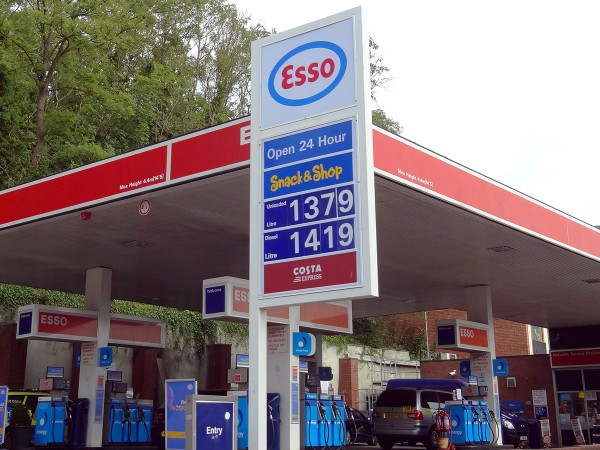 From early January to late February 2013, the average pump price of petrol in the UK rose by over 6p per litre – a rise of 4.7% in just seven weeks. There have also been substantial rises in the price of diesel.
The higher prices reflect a rise in the dollar wholesale price of oil and a depreciation in the pound. From 2 January to 21 February the pound fell from $1.63 to $1.53 – a depreciation of 6.1% (see). Crude oil prices (in dollars) rose by just under 7% over this period. With oil imports priced in dollars, a weaker pound pushes up the price of oil in the UK. The price has then been pushed up even higher by speculation, fuelled by the belief that prices have further to rise.
 The higher price of road fuel, plus the general squeeze on living standards from the recession, with prices rising faster than wages, has caused a reduction in the consumption of road fuel. Petrol sales have fallen to their lowest level for 23 years. Sales in January 2013 were 99m litres down on the previous month’s sales of 1564m litres (a fall of 6.3%).
Not surprisingly motorists’ groups have called for a reduction in fuel taxes to ease the burden on motorists. They also argue that this will help to drive recovery in the economy by leaving people with more money in their pockets.
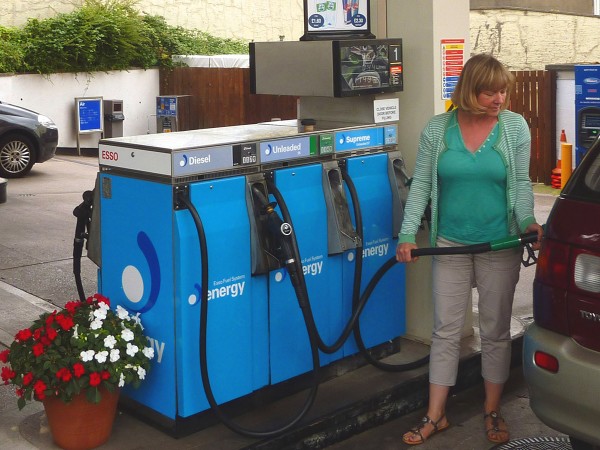
Equally not surprisingly, those concerned about the environment have welcomed the reduction in traffic, as have some motorists who like the quieter roads, allowing journey times to be cut, with resulting reductions in fuel consumption per mile.
The following videos and articles discuss the causes of the most recent fuel price rises and also examine the responsiveness of demand to these higher prices and to the reductions in real incomes.
Webcasts
Rising petrol prices are ‘forcing drivers off the road’ BBC News, Richard Westcott (22/2/13)
Fuel prices ‘forcing drivers off road’ – AA BBC News (22/2/13)
Fuel Prices Head For Highest Level Ever Sky News (22/2/13)
Commodities Next Week: Fuel Prices Hit Fresh 2013 Highs CNBC (22/2/13)
Ministers to blame for high fuel prices, says competition watchdog The Telegraph, Peter Dominiczak (30/1/13)
Articles
Petrol price surge adds 6.24p to a litre in a month The Guardian (22/2/13)
Petrol prices set for record highs as speculators and weak pound drive up pump costs again This is Money (22/2/13)
How are motorists saving fuel? NNC Magazine, Tom Geoghegan (9/3/11)
AA Report
Fuel Price Report (February 2013)
Data
Weekly road fuel prices Department of Energy and Climate Change
Energy consumption in the UK Department of Energy and Climate Change
Oil and oil products: section 3, Energy Trends Department of Energy and Climate Change
Europe Brent Spot Price FOB (Dollars per Barrel) US Energy Information Administration
Crude Oil (petroleum), Price index Monthly Price – Index Number Index Mundi
Questions
- Is it possible to calculate the price elasticity of demand for petrol from the data given? Try making the calculation.
- How important is the ceteris paribus (other things being equal) assumption when calculating the price elasticity of demand for petrol?
- Why is the long-run price elasticity of demand for road fuel likely to different from the short-run price elasticity?
- If wholesale oil prices go up by x%, will prices at the pumps go up by approximately x% or by more or less then x%? Similarly, if the pound depreciates by y% would you expect prices at the pumps go up by approximately y% or by more or less then y%? Explain.
- How has speculation affected fuel prices? Is this effect likely to persist? Explain.
- Under what circumstances would a reduction in road fuel taxes help to drive the recovery? Are such circumstances likely?
- Which groups in society suffer most from higher fuel prices? Is this reflected in their price elasticity of demand and if so why?
- Is a rise in fuel prices above inflation likely to increase or decrease inequality in living standards? Explain.
- Should externalities from fuel consumption and production be taken into account when setting the duty on petrol and diesel and, if so, what would be the implication for prices?
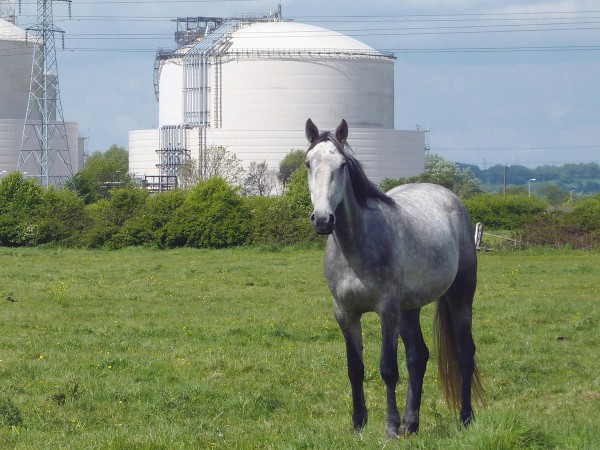 The news in many European countries has been dominated in February by the ‘horse meat scandal’. Small traces of horse meat may be the result of faulty quality control. But the significant amount of horse found in several processed meat products suggest fraud at one or more points in the supply chain from farm to supermarket or other outlet. Indeed several specific suppliers, from abattoirs to processors are facing criminal investigation.
The scandal has put the supply chain under intense scrutiny. Part of the problem is that the supply chain is often very long and complex. As the Guardian article states:
The food and retail industries have become highly concentrated and globalised in recent decades. A handful of key players dominate the beef processing and supermarket sectors across Europe. They have developed very long supply chains, particularly for their economy lines, which enable them to buy the ingredients for processed foods from wherever they are cheapest at any point, depending on exchange rates and prices on the global commodity markets. Networks of brokers, cold stores operators and subcontracted meat cutting plants have emerged to supply rapidly fluctuating orders “just in time”. Management consultants KPMG estimate there are around 450 points at which the integrity of the chain can break down.
Then there is the huge pressure on all parts of the supply chain to reduce costs.
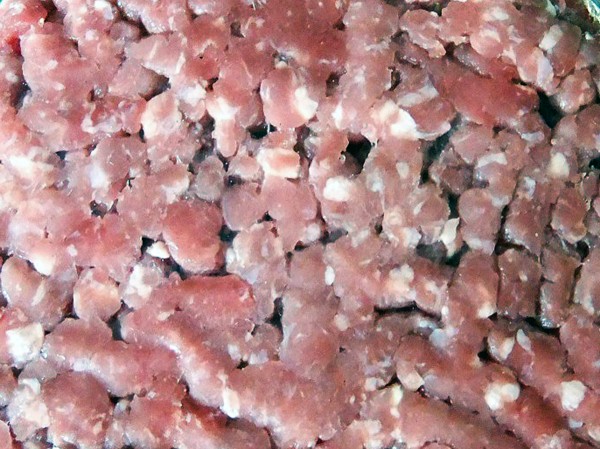 Supermarkets use their market power to drive down the prices of the products they buy from their suppliers and this has a knock-on effect backwards down the supply chain. This pressure has intensified as real wages have fallen and consumers have found their budgets squeezed.
At the same time, beef and other meat prices have been rising as the costs of animal feed have soared. This all puts tremendous pressure on suppliers to add cheaper ingredients. Again to quote the Guardian article:
Manufacturers add other cheap ingredients including water and fat, and use concentrated proteins to bind the water and fat in. They may appear on labels as ‘seasoning’. One of the cheapest sources of these protein additives is pork rind. It is possible that horse hide is now also being used. The widespread adulteration of cheap chicken breast with pig and beef proteins and water has been uncovered in previous scandals. The beef proteins were derived from hydrolysed cattle hides. It is not illegal to use these protein concentrates so long as they are identified correctly to the manufacturer.
It is not surprising that if cheap horse meat becomes available to suppliers, such as from old horses towards the end of their working lives, some processing companies may be tempted to add it fraudulently, stating that it is beef.
The articles look at the issues of long and complex supply chains in the processed food industry and assess why they have evolved into their current form and the difficulties in regulating them.
Horsegate: heed economics of the cold chain The Grocer, Andrew Godley (16/2/13)
Horsemeat scandal: the essential guide The Guardian, Felicity Lawrence (15/2/13)
After the horse has been bolted The Economist (16/2/13)
Slavery, not horse meat, is the real scandal on our doorstep The Telegraph, Fraser Nelson (14/2/13)
Industry must take the reins on food safety Globe and Mail (Canada)Sylvain Charlebois (15/2/13)
Supply chains changed the growth model The Economist, Richard Baldwin (15/8/12)
Supply-chain management The Economist (6/4/09)
Tesco pledges to open up supply chain after horse meat scandal The Telegraph (16/2/13)
Horse meat scandal: Shoppers who buy ‘cheapest food’ at risk The Telegraph, James Quinn, Jason Lewis and Patrick Sawer (16/2/13)
Let Them Eat Horse Bloomberg, Marc Champion (15/2/13)
Scandal shows meat supply chain must be policed heraldscotland (14/2/13)
MPs push for new powers for FSA as officials seize yet more suspect meat Independent, Martin Hickman (13/2/13)
Questions
- Why do supermarkets and their suppliers use long supply chains?
- Explain the concepts of ‘countervailing power’ and ‘monopsony or oligopsony power’? How do they apply in the processed meat supply chain?
- Identify the types of transactions costs in the processed meat industry.
- In what ways do consumers (a) gain and (b) lose from such supply chains?
- Why is the problem of fraud in processed food supply chains likely to have intensified in recent years?
- How have supermarkets reacted to the horse meat scandal? Why has it taken the scandal to make them react in this way?
- To what extent is the problem simply one of inaccurate labelling?
- To what extent is there a principal–agent problem in the processed meat supply chain?
 In 2009, the European Commission investigated Microsoft’s practice of bundling its own browser, Internet Explorer, with new copies of Windows. It found that this was an abuse of market power and created an unfair barrier to entry of other browsers, such as Firefox.