 When you hear about China, it’s often regarding their huge population, their strong growth or their dominance in exports. But, when it comes to baby milk, China is certainly an importer – and a big one at that. For many new parents, getting the ‘real thing’ when it comes to baby formula is absolutely essential.
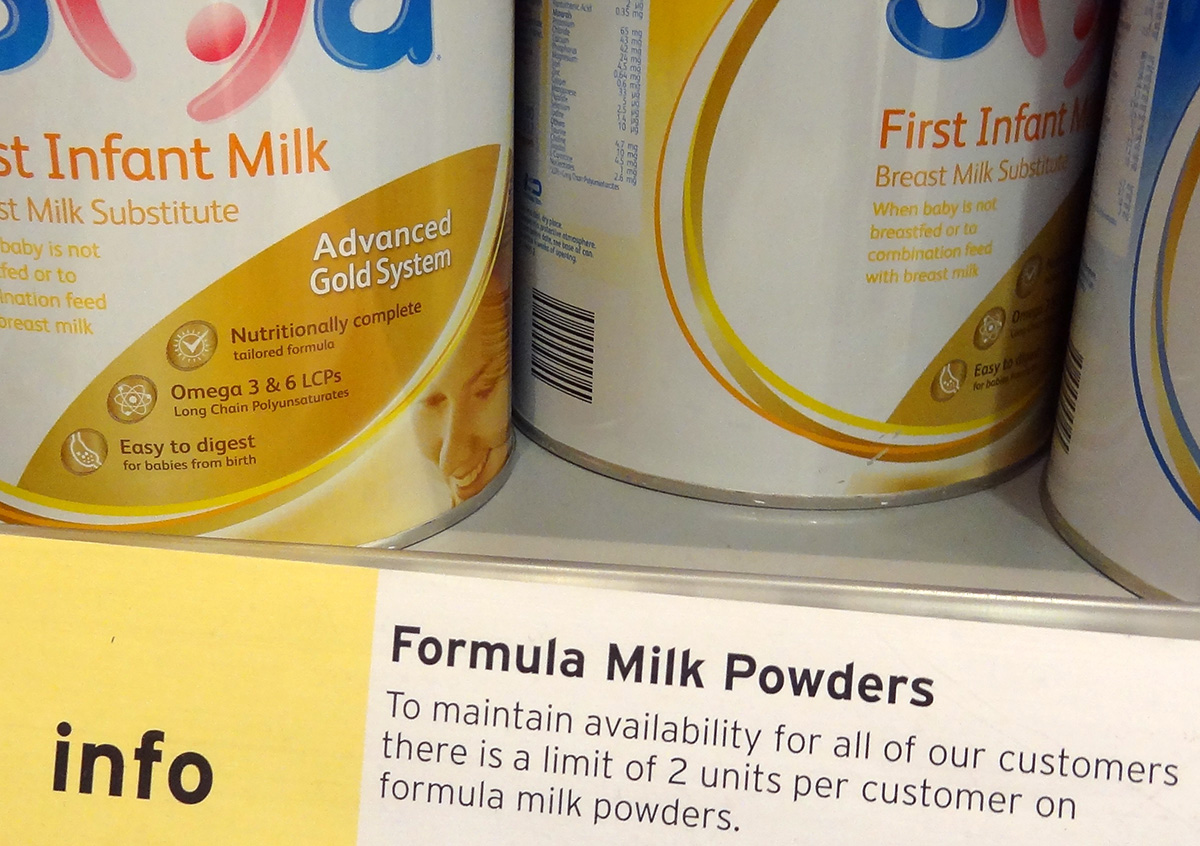
Chinese baby formula is feared by many new parents, due to the potential for it to contain hormones and dangerous chemicals. This has led them to go to great lengths to ensure they have sufficient supplies of imported baby formula, often only trusting it if it has been hand carried from overseas. However, such is the demand for this safe version of baby milk that the global response has been to place restrictions on it. Essentially, we are seeing a system of rationing emerging.
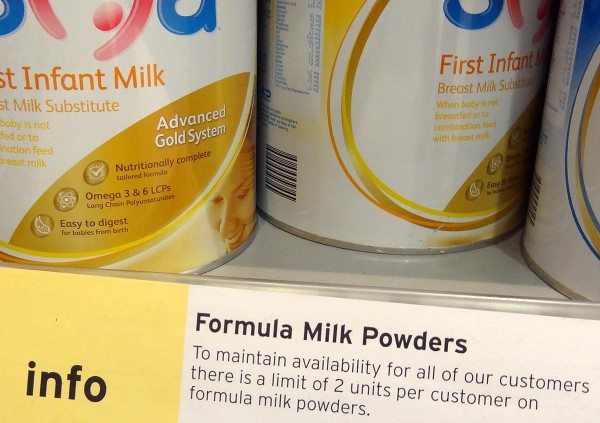
Hong Kong was the first government to limit the amount bought to two cans of formula per day, with the potential for a fine of over $64,000 and up to two years in prison for those who do not abide by the rules. The UK has now also responded with restrictions on the quantity that can be purchased and other countries may follow suit if the excess demand continues.
According to Sainsburys:
As a short-term measure, retailers including Sainsbury’s are limiting the amount of baby milk powder that people can buy. In this way we aim to ensure a constant supply for our customers and we therefore hope they won’t be inconvenienced.
The Chinese government has reacted to this and is aiming to restore confidence in the food industry, but as yet there has been little positive effect and until there are 100% guarantees of food safety the surge in demand for baby formula from abroad is likely to continue.
This policy of rationing is clearly not only going to affect Chinese parents looking to import baby formula, but is already having an impact on domestic residents. Parents living in the UK are feeling the rationing effects and are also being restricted in terms of how many cans of formula they can buy per day. For many families this isn’t a problem, but for those with multiple children and for whom a trip to the supermarket is not a simple task, the restrictions on baby milk purchases is likely to become a problem. The following articles consider this topic.
Baby milk rationing: Chinese fears spark global restrictions BBC News, Celia Hatton (10/4/13)
Stop rationing information about baby formula milk The Telegraph, Rosie Murray-West (9/4/13)
Baby milk rationed in UK over China export fear BBC News (8/4/13)
Baby Formula rationed in UK over China demand Sky News (9/4/13)
Supermarkets limit sales of baby milk to stop bulk buying to feed China market Independent, Emma Bamford (8/4/13)
Cahinese thirst for formula spurs rationing Financial Times, Amie Tsang and Louise Lucas (7/4/13)
Entrepreneurs milk Chinese thirst for formula Financial Times, Amie Tsang and Louise Lucas (7/4/13)
Baby milk powder rationing introduced by supermarkets The Guardian, Rebecca Smithers (8/4/13)
Questions
- Using a diagram of demand and supply, illustrate how a shortage for a product can emerge. How does the price mechanism usually work to eliminate a shortage?
- What actions can be taken to deal with a shortage?
- How will more stringent regulations by the Chinese government help to restore confidence in Chinese baby milk formula?
- What impact will the imports of baby milk formula into China have on China’s exchange rate and its balance of payments?
- How could this situation be taken advantage of by entrepreneurs? Could it be used as a viable business opportunity?
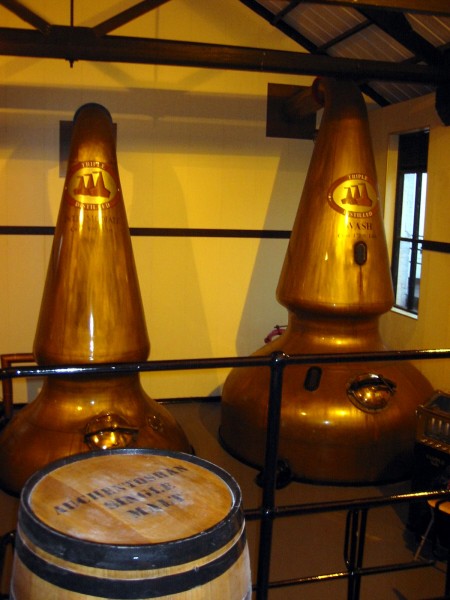 In the blog No accounting for trade, the rise in the UK’s balance of trade deficit was discussed. Many factors have contributed to this weakening position and no one market is to blame. But, by analysing one product and thinking about the factors that have caused its export volumes to decline, we can begin to create a picture not just of the UK economy (or more particularly Scotland!), but of the wider global economy.
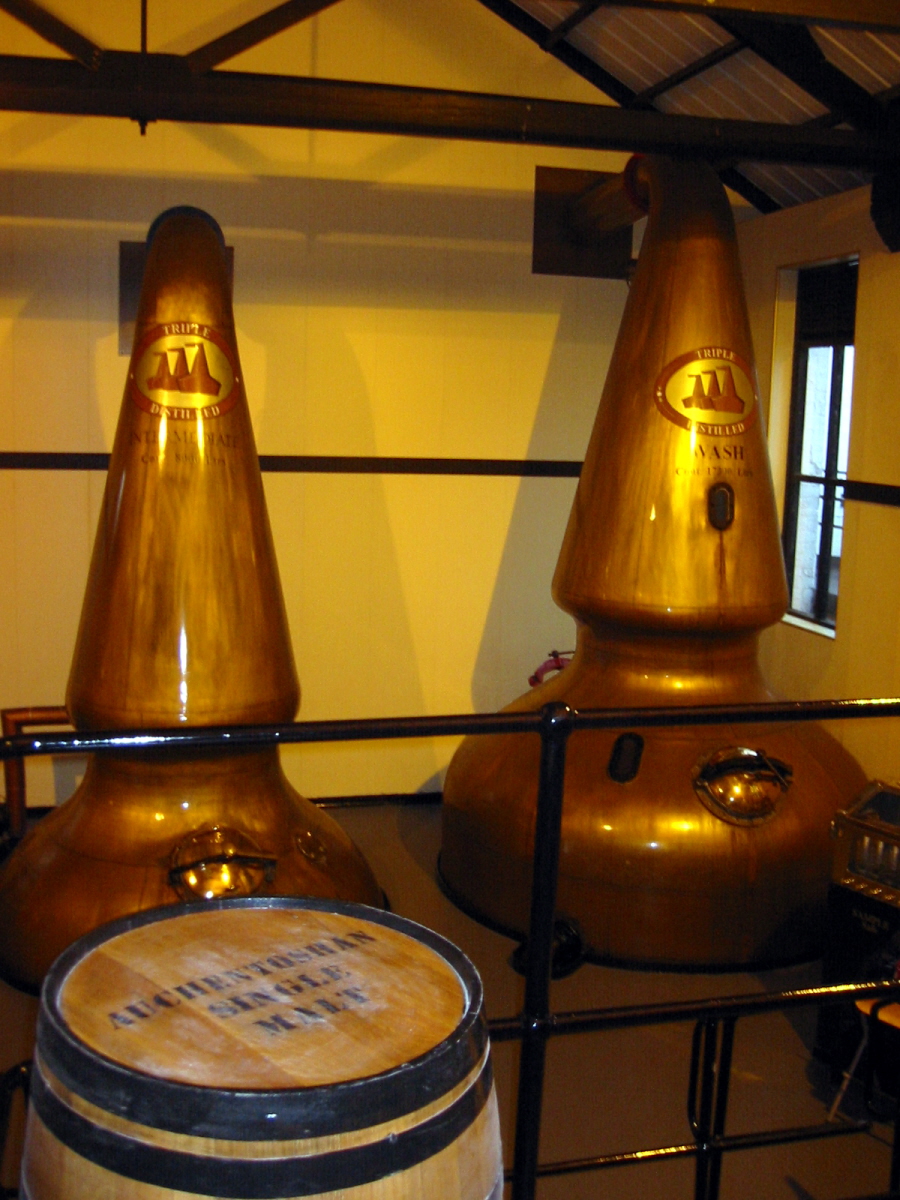
Scotch whisky may not have been the drink of choice for many British adults, but look outside Great Britain and the volume consumed is quite staggering. For example, French consumers drink more Scotch whisky in one month than they drink cognac in one year. The volume of Scotch whisky exported from our shores was £4.23 billion for 2011, accounting for 90% of all sales and making its way into 200 markets. However, one problem with this product is that it is highly susceptible to the business cycle. Add to this the time required to produce the perfect Scotch (in particular the fact that it must be left to mature) and we have a market where forecasting is a nightmare.
Producers typically look to forecast demand some 10 years ahead and so getting it right is not always easy, especially when the global economy declines following a financial crisis! So what has been the impact on exports of this luxurious drink? In the past few years, it has been as key growth market for UK exports rising by 190% in value over the past decade. But in 2012 the volume of Scotch whisky exports fell by 5% to 1.19 billion bottles. What explains the decline in sales?
The biggest importer of Scotch whisky is France and its volumes were down by 25%. Part of this decline is undoubtedly the economic situation. When incomes decline, demand for normal goods also falls. Many would suggest Scotch whisky is a luxury and thus we would expect to see a relatively large decline following any given fall in income. However, another factor adding to this decline in 2012 is the increased whisky tax imposed by the French government. Rising by 15% in 2012, commentators suggest that this caused imports of Scotch whisky to rise in 2011 to avoid this tax, thus imports in 2012 took a dive. Spain is another key export market and its economic troubles are clearly a crucial factor in explaining their 20% drop in volume of Scotch whisky imported.
But, it’s not all bad news: sales to Western Europe may be down, but Eastern Europe and other growth countries/continents, such as the BRICs and Africa have developed a taste for this iconic product. Latvia and Estonia’s value of Scotch whisky imports were up by 48% and 28% respectively, as Russian demand rises and China, still growing, is another key market. Gavin Hewitt, chief executive of the Scotch Whisky Association said:
A combination of successful trade negotations, excellent marketing by producers, growing demand from mature markets, particularly the USA, and the growing middle class in emerging economies helped exports hit a record £4.3bn last year.
Furthermore, while the volume of exports worldwide did fall, the value of these exports rose to £4.27 billion, a growth of 1%. This suggests that although we are exporting fewer bottles, the bottles that we are exporting are more expensive ones. Clearly some people have not felt the impact of the recession. For Scotland and the wider UK, these declining figures are concerning, but given the cyclical nature of the demand, as the world economy slowly begins to recover, sales are likely to follow suit. Gavin Hewitt continued his comments above, saying:
We are contributing massively to the Government’s wish for an export-led recovery. There is confidence in the future of the industry, illustrated by the £2bn capital investment that Scotch whisky producers have committed over the next three to four years.
The following articles consider the rise and fall of this drink and its role as a key export market across the world.
 Scottish whisky industry puts export hope in new market BBC News (2/4/13)
Scotch whisky sales on the slide The Guardian, Simon Neville (2/4/13)
Growth stalls for Scotch whisky exports BBC News (2/4/13)
Scotch whisky accounts for 25pc of UK’s food and drink exports The Telegraph, Auslan Cramb (2/4/13)
Whisky sales fall but value of exports hits new high Herald Scotland (3/4/13)
Scotch whisky exports rise to record value The Telegraph, Auslan Cramb (2/4/13)
Scotch whisky exports hit by falling demand in France The Grocer, Vince Bamford (2/4/13)
New markets save Scotch from impact of austerity Independent, Tom Bawden (2/4/13)
Scotch exports hit by falling demand Financial Times, Hannah Kichler (2/4/13)
Questions
- Which is the better measure of an industry’s performance: the value or the volume of goods sold?
- Why would you expect volumes of Scotch sold to decline during an economic downturn?
- When a higher tax was imposed on Scotch whisky in France, why did volumes fall? Use a demand and supply diagram to illustrate the impact of the tax.
- What type of figure would you expect Scotch whisky to have for income elasticity of demand? Does it vary for different people?
- Why is forecasting demand for Scotch so difficult? What techniques might be used?
- Why does demand for Scotch whisky remain high and even rising in many emerging markets?
- Is the market for Scotch whisky exports a good indication of the interdependence of countries across the world?
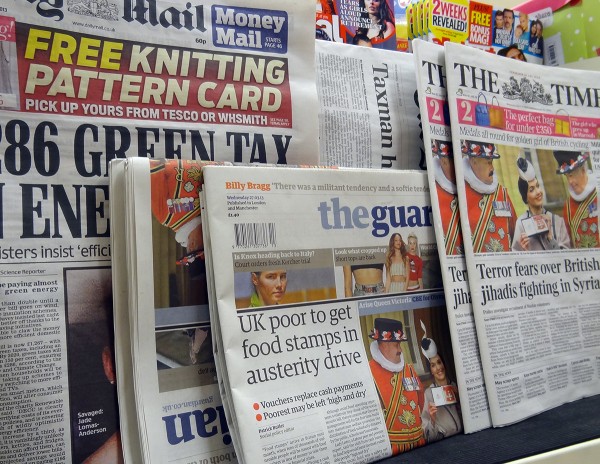 Technology and the Internet have both good and bad sides, whether it’s for businesses or consumers. Many opportunities have been created, such as access to global markets, cheaper and easier transport and communication and better sources of supply. But with this opportunity comes threats, especially for businesses. We’ve seen the emergence of new online-based companies and in some cases these have contributed to the demise of other firms. In this News Item we look at the impact on the newspaper industry.
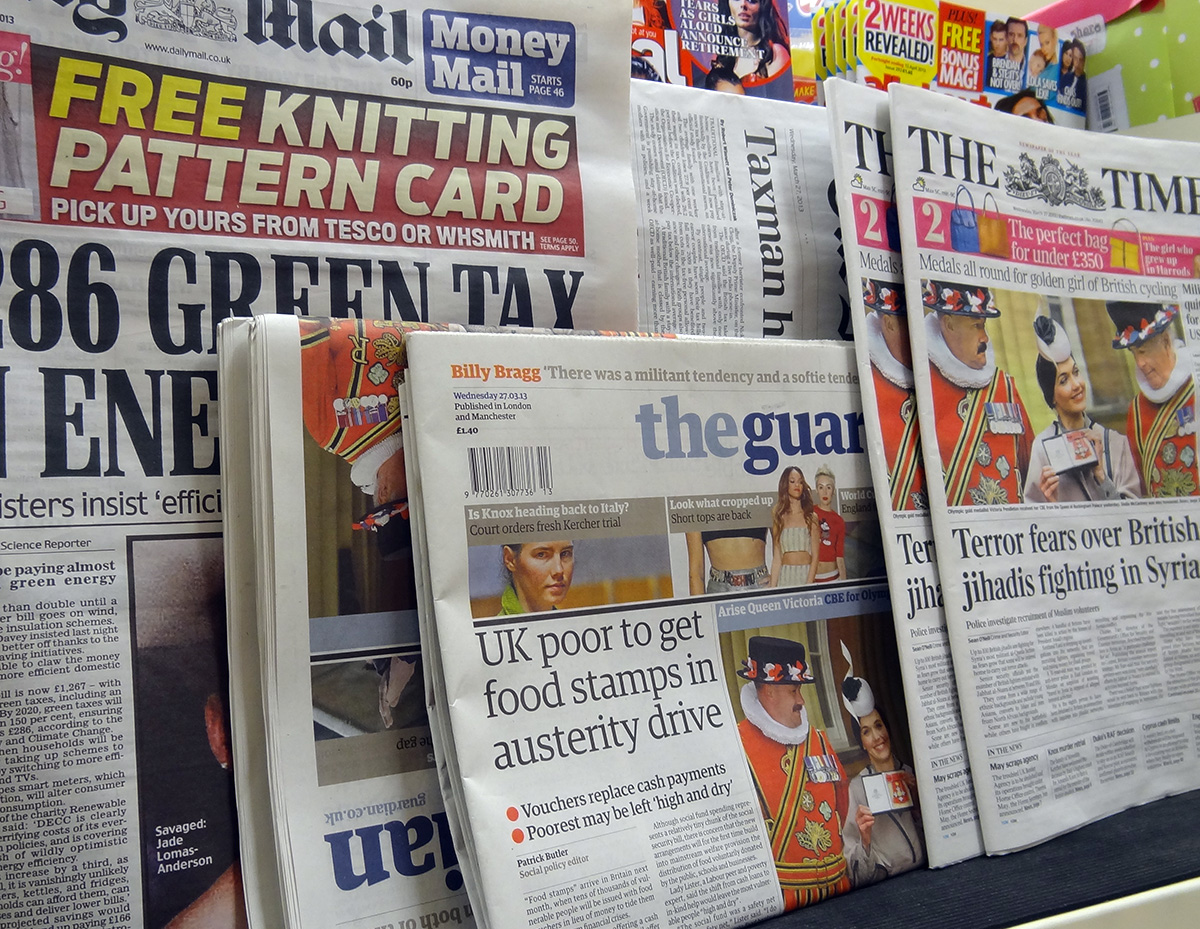
Media is one industry that has been significantly affected by technological developments. Newspaper readership has been in decline for many years and this is even the case for the most widely read UK paper – The Daily Telegraph. However, according to Seamus Dooley, Irish secretary of the National Union of Journalists, it’s not the end of the industry:
It is an industry in crisis, but I don’t accept it is an industry in terminal decline.
More and more information has become freely available online and just as we would expect in any other sector, the newspaper industry has had to respond. To keep their readers, newspapers across the world provide thousands of articles on all topics on their websites. But if news can be accessed freely, why bother purchasing a newspaper? This is the problem facing the Daily Telegraph, the Independent, the Daily Mail etc – the number of newspapers sold has declined and thus so have revenues and profits.
 One option is to charge consumers for reading the news by introducing a subscription to the online articles. The Financial Times already charges a fee to view articles online beyond a certain number and The Telegraph is soon to follow suit. Back in 2010, The Times and Sunday Times launched their new websites, which charged readers for viewing articles. The model being adopted by The Telegraph is a little different, as a certain number of articles can be viewed for free before a price must be paid. International readers are already charged to view online material, but these new charges will apply to UK readers. With so much competition facing newspapers, the number of readers for The Telegraph will undoubtedly decline, but with newspaper readership falling, revenues must come from somewhere. Tony Gallagher has said:
We want to develop a closer rapport with our digital audience in the UK, and we intend to unveil a number of compelling digital products for our loyal subscribers in the months ahead.
Differentiating the product is going to be essential for any newspaper that begins charging, as with so much information available online for free, they have to ensure they keep their readers. Establishing loyalty will be crucial. The following articles consider this change.
Telegraph extends paywall to UK readers BBC News (26/3/13)
The Telegraph: subscribe to Britain’s finest journalism The Telegraph (26/3/13)
Telegraph to put up metered paywall Guardian, Roy Greenslade (26/3/13)
The sun joins Telegraph in charging website users The Guardian, Lisa O’Carroll and Roy Greenslade (26/3/13)
Oh how Times are charging Sloman News Site March 2010
Telegraph introduces UK paywall Marketing Week, Lara O’Reilly (26/3/13)
Washington Post announces porous paywall Journalism.co.uk, Sarah Marshall (19/3/13)
Washington Post latest newspaper to put faith in paywalls The Guardian, Dominic Rushe (19/3/13)
Ireland’s newspapers suffer hard times Financial Times, Jamie Smythe (24/3/13)
Washington Post to start charging for website Wall Street Journal, Keach Hagey (18/3/13)
Questions
- Where would you put newspapers on the product life cycle? Explain your answer.
- How would you assess the effect of the development of technology and the internet for newspapers?
- Have readers of newspapers benefited from the internet?
- How might estimates of elasticity have been used to make the decision to charge to view online articles?
- Which consumers will be affected most by this new strategy?
- How might companies that don’t charge for online access benefit from this new strategy?
- Would you continue to read articles from The Times, the Financial Times, The Telegraph, etc. linked from this site if you had to pay to access them? If so, why? If not, why not?
- How much would you be prepared to pay to access online articles? How are the concepts of utility and consumer surplus relevant here?
- What effect will the paywall have on The Telegraph’s revenues and profits? Use a diagram to illustrate your answer.
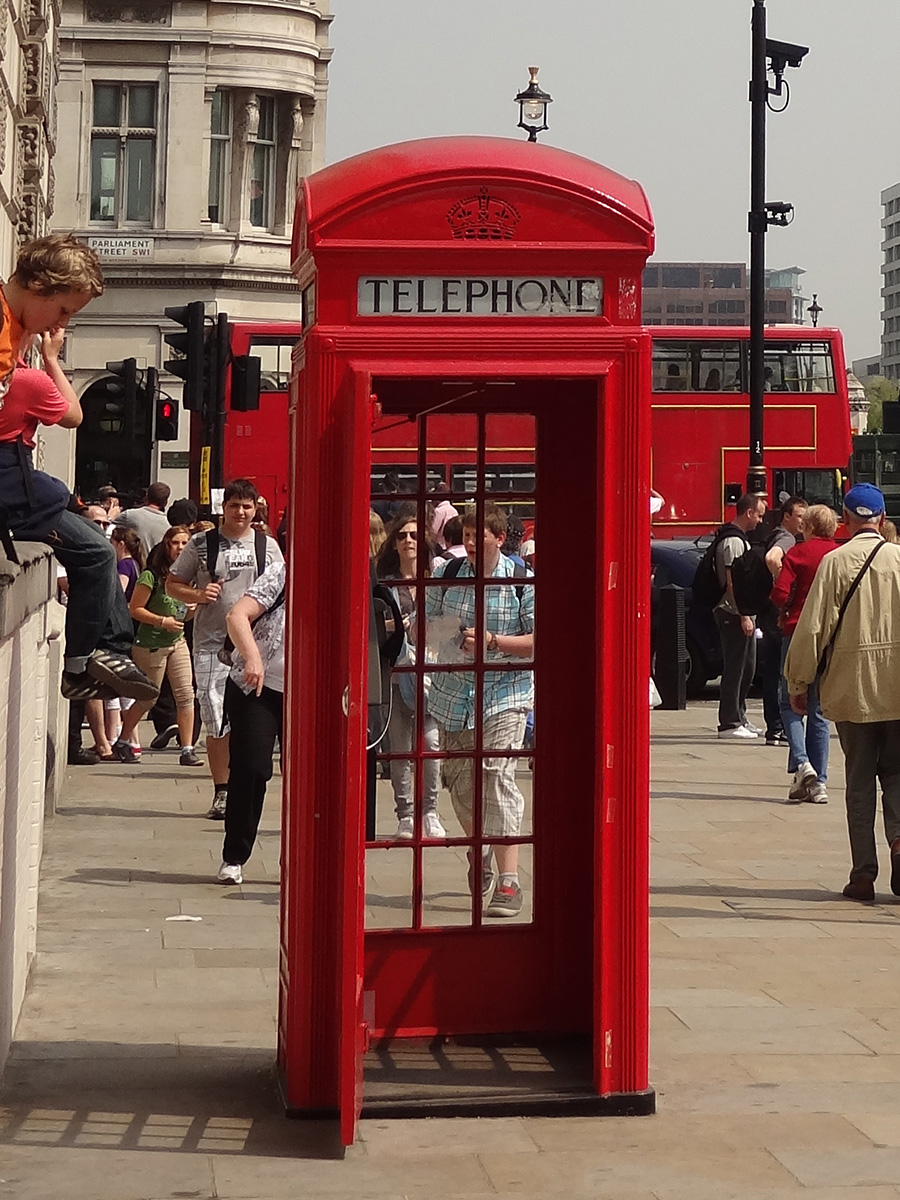
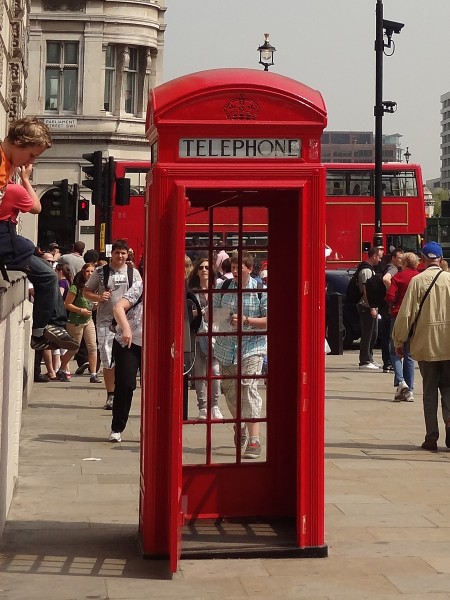 The high street has changed significantly over the past 50 years and is likely to continue to do so over the next 50 years. Much of these changes have occurred as a result of technological developments. However, one thing that has remained largely unchanged is the telephone box. Although there are fewer of them, with the majority of people owning a mobile phone, city centre high streets still have their fair share of phone boxes.
With tastes constantly changing, products and services come in and out of fashion. But with technology constantly developing, products and services that were once needed have become obsolete, replaced by their more advanced substitutes. We’ve seen e-commerce develop, such that long-standing high street retailers have faced closure and the development of mobile phones and other communication devices have meant that the once essential phone box is now rather redundant. At least, in its traditional function. The Mayor of New York, Michael Bloomberg said:
New York is the most dynamic city in the world, and while technology has changed all around us, the city’s payphones have remained mostly the same for decades.
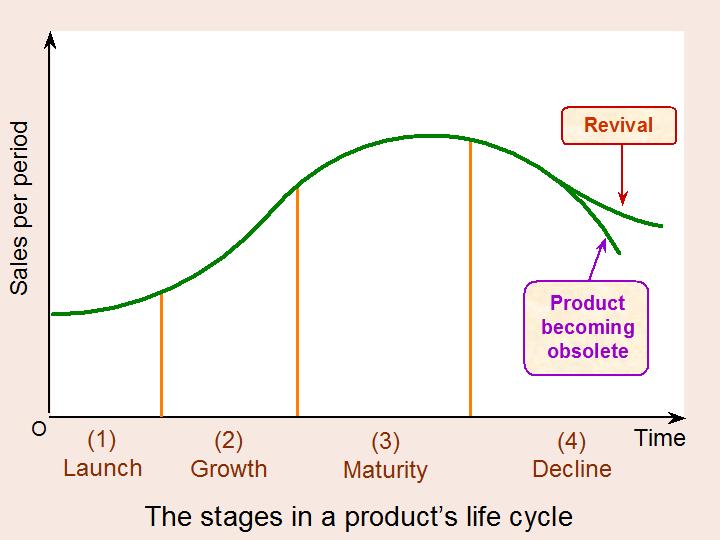 If we were to place the phone box on the product life cycle, it has certainly reached maturity and in many developed countries, even decline. But can extension strategies be used to create a new function for the phone box?
This is certainly happening in New York, where a reinvent challenge has been launched to help phone boxes adapt to technological innovation. Suggestions include using them as information sources, phone chargers, weather monitors and advertising boards. In the UK, phone boxes have even been fitted with defibrillators and are the first port of call for saving lives. But would this be enough to reinvent the phone box, whose numbers have fallen in New York from 35,000 to only 11,000?
Some say that the phone box is no longer relevant and while the idea of a ‘community hub’ remains appealing, the cost of maintaining them can be rather high. For others, the phone box is still essential, especially for those on lower incomes, who perhaps cannot afford what some people see as a necessity: a mobile phone. Are phone boxes, therefore, a means of ensuring access to communication for all socioeconomic groups? Also, perhaps for all age groups? As technology and tastes continue to change over the coming decades, the phone box will go in one of two directions: a revival or obsolescence. The following articles consider this.
New York phone boxes get new lease of life BBC News, Michael Millar (22/3/13)
Phone box in Ashwell is fitted with defibrillator to help save lives Rutland and Stamford Mercury (23/3/13)
Red Rutland phone box becomes 2000th life-saving hub ITV News, Pete Bearn (20/3/13)
The trashing of the iconic red phone box is one bad call Telegraph, Cristina Odone (11/3/13)
Questions
- Draw out the product life cycle. What examples of products and services can you find that fit in each stage?
- What are extension strategies? How do they help products that are in decline?
- When deciding whether or not to keep a phone box, what factors will be considered?
- How can phone boxes help to tackle inequality, especially of access?
- Are there any other products or services that fit into the decline stage? Which ones have had extension strategies applied and which have not?
- Do all products and services eventually enter the decline stage of the product life cycle? Can you think of any that haven’t? What has enabled them to survive?
 Inflation is measured as the percentage increase in the Consumer Prices Index (CPI) over the previous 12 months. The index is constructed from a basket of goods that is supposed to represent the buying habits of an average UK household. This basket is updated each year as tastes change and as technology moves forward. The basket contains approximately 700 items, with 180,000 individual prices collected each month.
As certain goods become more popular and trends change, the ONS have the responsibility of identifying these changes and updating the basket of goods. The CPI then looks at how the weighted average price of this basket of goods changes from one month to the next. As the CPI gives us the main measure of UK inflation, it is essential that the basket of goods used does represent current consumer demands. If the basket of goods used 20 years ago was still in place, we wouldn’t see thing like mobile phones and ipads being included. This is one sector that has seen significant growth in recent years and the basket of goods has been adapted in response. A new addition to the measure is e-books, which have seen a significant growth in popularity.
 However, just as new products have been added to the CPI measure, other goods have been removed. In the most recent update, we’ve seen the removal of champagne and Freeview boxes from the basket of goods. With rapid changes in technological products, such as the ipad, kindle and e-books, products that were new additions only a few years ago are now old news, being replaced by the latest gadgets. Other changes to the basket of goods are less about reflecting consumer trends and more about making certain categories more representative, such as fruits and hot drinks.
So, can the changes in the basket of goods tell us anything about the impact of the recession on buying habits? One notable exclusion from the basket of goods is champagne sold in restaurants and bars. In an economic downturn, you’d expect luxury products to see a decline in consumption and the trend in champagne consumption certainly seems to support the theory. The trends suggest that consumers have instead switched to cheaper alternatives, with things like white rum bought from shops increasing.
Many people may look at the basket of goods and think that it doesn’t reflect what you buy in your average shop. But, the purpose of the CPI is to try to reflect the average consumer and the different items in the basket are given different weightings to give some indication of the amount spent on each good. The articles below look at the changes in the CPI basket of goods and what, if anything, we can take from it.
Inflation basket: E-books added by ONS BBC News (12/3/13)
Inflation basket – what does it say about you? Channel 4 News (12/3/13)
The fizz has fallen flat – champagne cut from inflation basket Independent, Martin Hickman (13/3/13)
E-books added to inflation basket, as champagne dropped The Telegraph, Philip Aldrick (13/3/13)
UK inflation basket: e-books in, champagne out The Guardian, Marking King (13/3/13)
Champagne tipped out of inflation basket Financial Times, Hannah Kuchler (13/3/13)
Champagne out, ebooks in as inflation basket updated Reuters (13/3/13)
Questions
- What is inflation and why is it such an important variable?
- How is the CPI calculated? Is it different from the RPI?
- What impact has technological change had on the basket of goods used to calculate the CPI?
- Can you identify any other economic or business trends from the products that are in and out of the CPI basket of goods?
- Given the importance of technology and the speed of change, do you think the review of the basket of goods should become more or less frequent?
- Has the economic downturn had any effect on the basket of goods used to calculate the CPI?