 The model of demand and supply is one of the first diagrams that any student of Economics will see and it’s a very important model. We can apply it to a multitude of markets and understand how market prices for products and services are determined. One such market is that of wine, where a recent report suggests that wine is in short supply. Bad news for everyone!
The price of wine is set by the interact of demand and supply. As with any market, numerous factors will affect how much wine is demanded at any price. Since 1996, global consumption of wine has been on the increase: for many, wine is a luxury good and thus as income rises, so does consumption. With the emergence of markets, such as China and subsequent income growth, consumption has risen. Furthermore, tastes have changed such that wine is becoming an increasingly desirable drink. So, this has all led to the demand curve shifting to the right.
 However, at the same time, the supply of wine has been falling, largely the result of ‘ongoing vine pull and poor weather’ across Europe. European production has fallen by around 10% over the past year and although production in other countries has been rising, overall production is still not sufficient to match the growth in demand.
So, what’s the result of this high growth in demand combined with the decline in supply? A shortage of wine. A report by analysts at Morgan Stanley suggests that the global wine shortage was some 300m cases in 2012. But, more importantly what is the effect of this shortage? When demand for a product exceeds the supply, the market mechanism will push up the price. As stocks of wine continue to be depleted and consumption of wine keeps rising, the only outcome is a rise in the price of a bottle and a crate of wine.
Concerns are also being raised about the future of prices of some of our other favourite luxury products, such as chocolate, goats cheese and olives. In each case, it’s all about demand and supply and how these curves interact with each other. The following articles consider the prices of some of these products.
Wine shortage: the top five wines to drink – before they run out The Telegraph, Susy Atkins (30/10/13)
World faces global wine shortage – report BBC News (30/10/13)
Luxury food shortage scares – should we believe the warnings? The Guardian, Emine Saner (5/11/13)
The global wine ‘shortage’ Napa Valley, Dan Berger (8/11/13)
Global Shortage of wine beckons Independent, Felicitiy Morse (30/10/13)
The global wine shortage is about to get worse (if you like Bordeaux) TIME World, David Stout (6/11/13)
Have no fears about a world wine shortage – the glass is still half fulll The Telegraph, Victoria Moore (31/10/13)
Drink it while you can, as study points to looming wine shortage Associated Press (31/10/13)
Don’t waste a drop! Wine prices to rise as demand grows Mail Online, Amie Keeley (31/10/13)
Questions
- Use a demand and supply diagram to illustrate how the market price for wine (or any other product) is determined.
- Why does the demand curve for wine slope downwards and the supply curve of wine slope upwards?
- Which factors will affect (a) the demand and (b) the supply of wine?
- One the diagram you drew in question, illustrate a shortage of wine. How will the price mechanism work to restore equilibrium?
- Why does the Morgan Stanley report suggest that a wine shortage might emerge?
- What suggestions are there that there is no wine shortage?
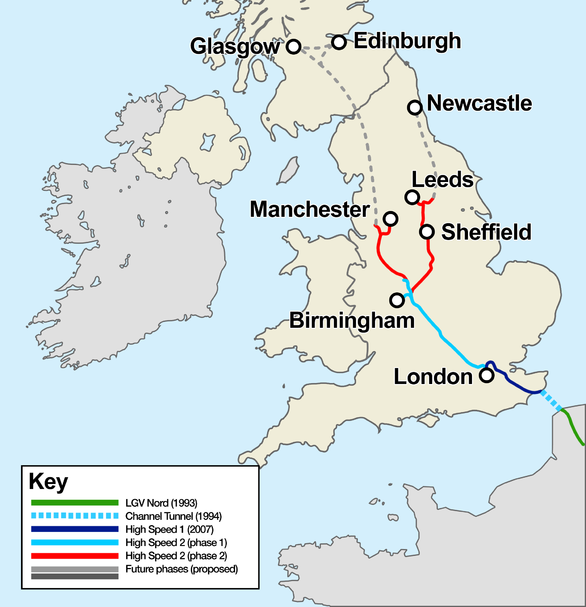
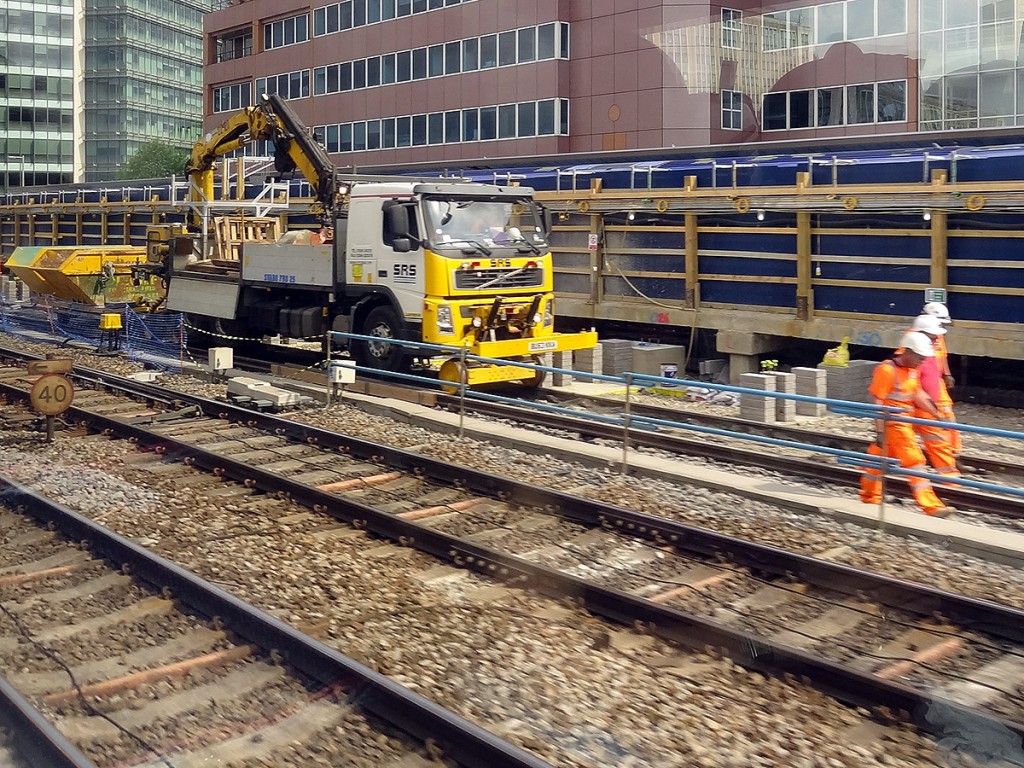 HS2 has been a controversial topic for some time now. Between the disruption it would cause to countless neighbourhoods and the protests that have emerged and the debate about the cost effectiveness of the project, it’s been in the news a fair amount. The transport network in the UK needs improving, not only for businesses located here, but also to encourage more investment into the country. HS2 is one of the solutions offered.
The latest estimate for the cost of HS2 is over £40 billion. However, many suggest that the benefits HS2 will bring do not cover the full costs. Furthermore, as noted above, other concerns include the disruption that it will bring to countless households who will be living along the proposed routes. Cost benefit analysis have been carried out to determine the viability of the project, but they are invariably difficult to do. As they involve determining all of the private and social costs and benefits and putting a monetary estimate onto them, there will inevitably be factors that are over-looked, under-estimated or over-estimated. The suggestions here are that the costs have been under-estimated and the benefits over-estimated.
 In September, KPMG produced a report that estimated the overall benefit to the UK economy would be a boost to growth of 0.8%, which would benefit many businesses and communities. The British Chambers of Commerce said:
Business communities in dozens of cities and towns, from many parts of the UK, remain strongly supportive of HS2.
The railway network is also approaching full capacity and this is one of the reasons why HS2 has been proposed. A government source said:
We need to do something because our railways are nearly full, but the alternative to HS2 is a patch and mend job that would cause 14 years of gridlock, hellish journeys and rail replacement buses … The three main routes to the north would be crippled and the economy would be damaged.
However, this report has faced criticism, in particular because it ignored a variety of supply-side constraints and because they argue it would be more effective to simply update the existing network. 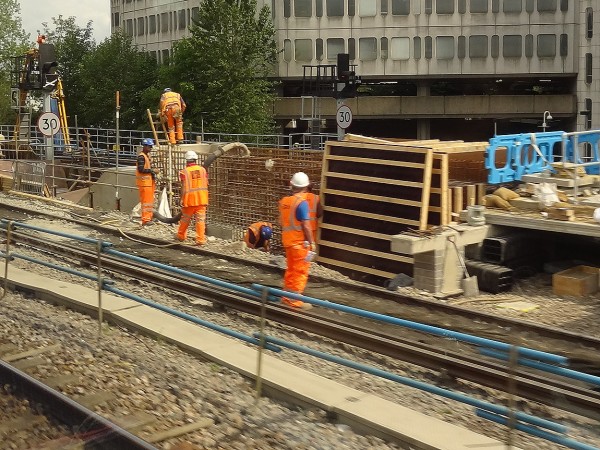 However, a new government-commissioned report has suggested that this alternative to HS2 would involve 14 years of weekend route closures and much longer journey times. However, those in favour of updating existing routes have said that this new report commissioned by the government is ‘a complete fabrication’. Hilary Wharf of the HS2 Action Alliance commented:
This government-funded report is a complete fabrication. The main alternative to HS2 involves longer trains and reduced first-class capacity to provide more standard class seats…No work is required at Euston to deliver the necessary capacity increase. Work is only required at three locations on the WCML [West Coast Main Line], and this is comparable to the work being carried out on the route at present.
The debate regarding HS2 will continue for the time being and it is just another area that is fuelling the political playing field. Whatever is done, the rail network certainly requires investment, whether it is through HS2 or upgrades to the existing routes. The following reports and articles consider the latest developments and controversy regarding HS2.
Reports
HS2 Cost and Risk model Report: A report to Government by HS2 ltd HS2 Ltd March 2012
High Speed 2 (HS2) Limited: HS2 Regional Economic Impacts KPMG September 2013
Draft Environmental Statement: Phase One: Engine for Growth HS2 May 2013
Updated Economic Case for HS2 HS2 August 2012
Articles
HS2 alternative ‘would mean years of rail disruption’ BBC News (28/10/13)
Alternative to HS2 would see Britain suffer 14 years of rail misery, says Coalition Independent, Nigel Morris (28/10/13)
HS2 alternatives could require 14 years of weekend rail closures The Guardian, Rajeev Syal (28/10/13)
Passengers ‘face 14 years of chaos if HS2 is derailed’: ‘Unattractive’ package of closures would be needed to expand capacity if Labour withdraws support Mail Online, Jason Groves (28/10/13)
HS2: Labour to examine cheaper rival plan The Telegraph, Tim Ross and Andrew Gilligan (27/10/13)
Britain’s railways have become mere outposts of other nations’ empires The Guardian, John Harris (28/10/13)
’Years of delays’ if government backs down on HS2 rail project Financial Times, Kiran Stacey and Brian Gloom (28/10/13)
Questions
- What is a cost-benefit analysis? Explain the steps that are involved in any cost-benefit analysis.
- Conduct a cost-benefit analysis for HS2. Ensure that you differentiate between costs and benefits and between private and social concepts.
- How can we measure the costs and benefits of HS2?
- Explain how HS2 is expected to boost economic growth. Use the AD/AS model to illustrate this.
- To what extent is there likely to be a multiplier effect from HS2? Is it likely to benefit the whole economy or just those areas where the route lies?
- Conduct a cost-benefit analysis for the alternative suggestion. Which do you think is likely to be more feasible? Explain your answer.
- How will improvements to the rail network or the investment of HS2 benefit businesses in the UK economy?
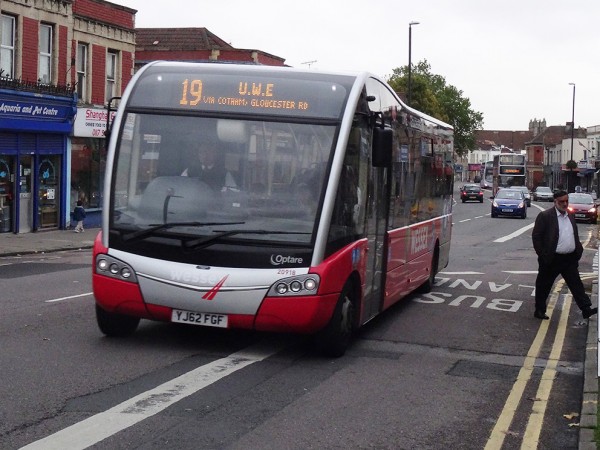 Demand and supply analysis can be applied to a multitude of markets. When there is a disequilibrium in a market, prices will tend to adjust to eliminate any shortage or surplus. But, what of road space? There is a demand and a supply of road space and when there are too many cars for the road space available, congestion is the consequence.
When an additional car enters the road network, there is a cost and a benefit to the driver. However, there are not only costs/benefits to the driver, but there are also costs/benefits to other road-users. When one car drives on the M25 it adds to the number of cars on the road. Once we reach the point where there are too many cars given the road space and thus the flow of cars per minute begins to fall, congestion starts to build up. There is a negative externality involved here – the actions of one person (the driver) impose an additional cost on other drivers (the congestion). It takes every other road user a little bit of extra time to get from A to B the more cars there are on the road.
Congestion is a problem in many parts of the country and various solutions have been suggested. Policies to reduce demand will help the congestion problem by reducing the number of cars on the road. Numerous strategies have been tried, such as restrictions on parking; improvements in public transport; an integrated transport policy; higher parking charges; work place parking levies; higher taxes on petrol, higher car taxes and congestion charging schemes.
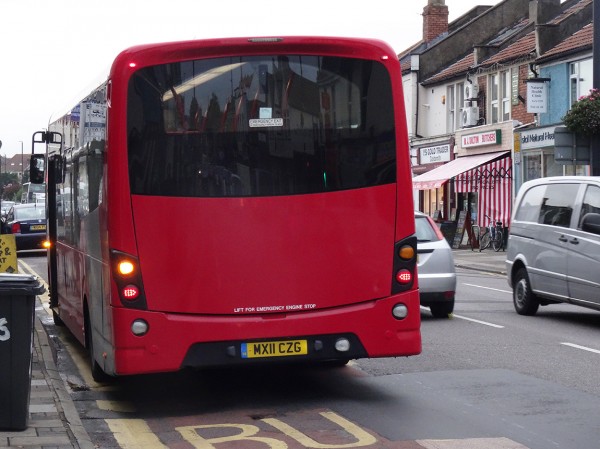 Alternatively, building more roads will directly increase the supply of road space, but this can (and has) simply led to more cars using the additional road space and thus the problem of congestion remains. Bus/taxi lanes are in use across the country and allow the users of public transport to benefit from faster journey times, thus encouraging them to forgo their cars and use buses. However, does this add to the congestion for other people?
In Liverpool, a nine month trial is taking place, where bus lanes will be removed to find out if they have a positive effect on reducing congestion. By increasing the amount of road space available to all road users, Liverpool City Council will be able to see if directly increasing the supply of road space will help to meet the existing demand. The possibility, however, is that by increasing the supply of road space, more individuals will choose to use their cars, thus fuelling demand. Many argue that this trial is a step backwards and will add to congestion, reduce the appeal of travelling by bus and impose further costs on the environment. The following articles consider the debate surrounding congestion.
Liverpool City Council will scrap bus lanes for nine months BBC News (27/9/13)
Liverpool bus lanes plan criticised by government Liverpool Daily Post (9/10/13)
Calls for single 30% income tax rate BBC News (21/5/12)
Liverpool scraps bus lanes in trial BBC News (including video) (21/10/13)
Government warning over Liverpool council plans to axe bus lanes in the city Liverpool Echo (9/10/13)
Questions
- Explain why congestion is a negative externality. What other externalities exist with regard to car usage?
- Using a diagram, show the point at which congestion occurs and explain why there is a difference between the marginal private and marginal social cost.
- What will happen to the difference between the marginal private and social cost curves before and after congestion sets in?
- Think about the different solutions to the problem of congestion. In each case, explain whether it is a demand-side or supply-side solution and how it will aim to combat congestion. You should also consider whether it is a short or long term solution and how feasible it actually is.
- How will the abolition of bus lanes aim to reduce congestion?
- There are supporters for bus lanes and supporters for the abolition of them. Justify the arguments on each side of the debate. You should consider the wider implications as well as the impact on congestion.
 Investment is essential for the growth of any economy, but none more so for an economy recovering from a severe downturn, such as the UK. Not only will it bring in much needed money and then create jobs for UK residents, but it will also continue to build ties between the UK and the world’s fastest growing economy.
George Osborne has been in China promoting business opportunities for investment in the UK and one such investment is into Manchester Airport. The ‘Airport City’ Project will be a combined effort, or a Joint Venture, between the Greater Manchester Pension Fund, the UK’s Carillion Plc and Beijing Construction Engineering Group. The plan is to create offices, hotels, warehouses and manufacturing firms, bringing in thousands of jobs in the process, thus providing a much needed boost to the British economy. Britain is already one of the top nations attracting Chinese investment, with more than double the amount of any other European nation. George Osborne is clearly in favour of further improving business ties with China, saying:
I think it shows that our economic plan of doing more business with China and also making sure more economic activity in Britain happens outside the City of London is working…That’s good for Britain and good for British people.
 However, the benefit of such investment from China into the UK, is not just of benefit to our domestic economy. China will also reap benefits from its involvement in projects, such as the development of Manchester’s airport. The Managing Director of BCEG, Mr Xing Yan, said:
To be included in such an interesting and unique development is a real honour…We see our involvement in Airport City as an extension of the memorandum of understanding between China and the UK, where we have been looking to further explore joint infrastructure opportunities for some time.
The airport investment by China is only one of many of its recent forays into the UK economy. Other investments include plans to rebuild London’s Crystal Palace and plans to create a third financial district near London’s City Airport.
Some may see more Chinese involvement in UK business as a threat, but for most it is viewed as an opportunity. An opportunity that both Boris Johnson and George Osborne will undoubtedly exploit as far as possible, with the hope that it will generate income, employment and growth. The following articles consider this investment opportunity.
Manchester Airport Group announces jobs boost The Telegraph, David Millward (13/10/13)
China’s BCEG joins UK Manchester airport joint venture Reuters (13/10/13)
Manchester Airport to receive investment from China BBC News (13/10/13)
George Osborne hails China’s airport investment The Telegraph (13/10/13)
Chinese group in $1.2bn British airport development deal The Economic Times (13/10/13)
China in £800m Manchester airport deal Financial Times, Elizabeth Rigby and Lucy Hornby (13/10/13)
Boris and Osborne in China to push trade Sky News, Mark Stone (13/10/13)
What does China own in Britain? BBC News (14/10/13)
Questions
- What is a joint venture? What are the advantages and disadvantages of a joint venture relative to other business structures?
- How important are political ties with China?
- Do you view Chinese investment in the UK as an opportunity or a threat? Make a list for each side of the argument, ensuring you offer explanations for each reason.
- What macroeconomic benefits will the development of the Manchester Airport bring to the city?
- Will there be wider economic benefits to the rest of the UK, despite the investment being located in Manchester?
- Using the AD/AS model, illustrate and explain why investment is so important to the recovery of the UK economy.
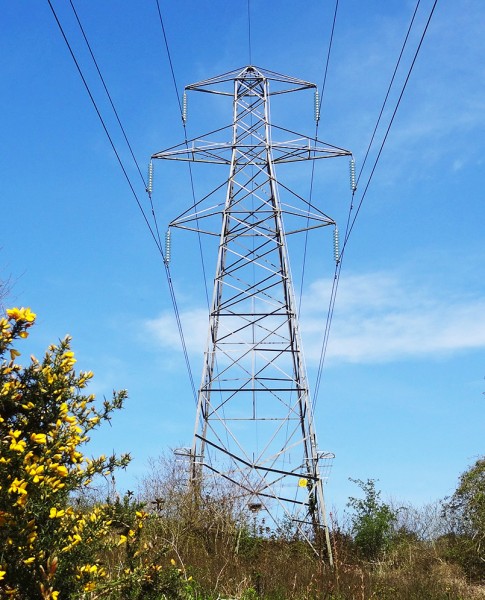 The cost of living is a contentious issue and is likely to form a key part of the political debate for the next few years. This debate has been fuelled by the latest announcement by SSE of an average rise in consumer energy bills of 8.2%, meaning that an average dual-fuel customer would see its bill rise by £106. With this increase, the expectation is that the other big energy companies will follow suit with their own price rises.
Energy prices are made up of numerous factors, including wholesale prices, investment in infrastructure and innovation, together with government green energy taxes. SSE has put their price hike down to an increase in wholesale prices, but has also passed part of the blame onto the government by suggesting that the price hikes are required to offset the government’s energy taxes. Will Morris, from SSE said:
We’re sorry we have to do this…We’ve done as much as we could to keep prices down, but the reality is that buying wholesale energy in global markets, delivering it to customers’ homes, and government-imposed levies collected through bills – endorsed by all the major parties – all cost more than they did last year.
The price hike has been met with outrage from customers and the government and has provided Ed Miliband with further ammunition against the Coalition’s policies. However, even this announcement has yet to provide the support for Labour’s plans to freeze energy prices, as discussed in the blog Miliband’s freeze.  Customers with other energy companies are likely to see similar price rises in the coming months, as SSE’s announcement is only the first of many. A key question is how will the country provide the funding for much needed investment in the energy sector? The funds of the government are certainly not going to be available to provide investment, so the job must pass to the energy companies and in turn the consumers. It is this that is given as a key reason for the price rises.
Investment in the energy infrastructure is essential for the British economy, especially given the lack of investment that we have seen over successive governments – both Labour and Conservative. Furthermore, the government’s green targets are essential and taxation is a key mechanism to meet them. Labour has been criticized for its plans to freeze energy prices, which may jeopardise these targets. The political playing field is always fraught with controversy and it seems that energy prices and thus the cost of living will remain at the centre of it for many months.
 More energy price rises expected after SSE increase BBC News (10/10/13)
SSE retail boss blames government for energy price rise The Telegraph, Rebecca Clancy (10/10/13)
A better way to take the heat out of energy prices The Telegraph (11/10/13)
SSE energy price rise stokes political row Financial Times, John Aglionby and Guy Chazan (10/10/13)
Ed Miliband condemns ‘rip-off’ energy firms after SSE 8% price rise The Guardian, Terry Macalister, Angela Monaghan and Rowena Mason (28/9/12)
Coalition parties split over energy companies’ green obligations Independent, Nigel Morris (11/10/13)
Energy price rise: David Cameron defends green subsidies The Guardian, Rowena Mason (10/10/13)
‘Find better deals’ users urged as energy bills soar Daily Echo (11/10/13)
Energy Minister in row over cost of taxes Sky News (10/10/13)
SSE energy price rise ‘a bitter pill for customers’ The Guardian, Angela Monaghan (10/10/13)
Energy firm hikes prices, fuels political row Associated Press (10/10/13)
Only full-scale reform of our energy market will prevent endless price rises The Observer, Phillip Lee (27/10/13)
Questions
- In what market structure would you place the energy sector?
- Explain how green taxes push up energy bills? Use a diagram to support your answer.
- Consider the energy bill of an average household. Using your knowledge and the articles above, allocate the percentage of that bill that is derived from wholesale prices, green taxes, investment in infrastructure and any other factors. Which are the key factors that have risen, which has forced SSE (and others) to push up prices?
- Why is investment in energy infrastructure and new forms of fuel essential? How might such investment affect future prices?
- Why has Labour’s proposed 20-month price freeze been criticised?
- What has happened to energy prices over the past 20 years?
- Is there now a call for more government regulation in the energy sector to allay fears of rises in the cost of living adversely affecting the poorest households?
 The model of demand and supply is one of the first diagrams that any student of Economics will see and it’s a very important model. We can apply it to a multitude of markets and understand how market prices for products and services are determined. One such market is that of wine, where a recent report suggests that wine is in short supply. Bad news for everyone!
 However, at the same time, the supply of wine has been falling, largely the result of ‘ongoing vine pull and poor weather’ across Europe. European production has fallen by around 10% over the past year and although production in other countries has been rising, overall production is still not sufficient to match the growth in demand.