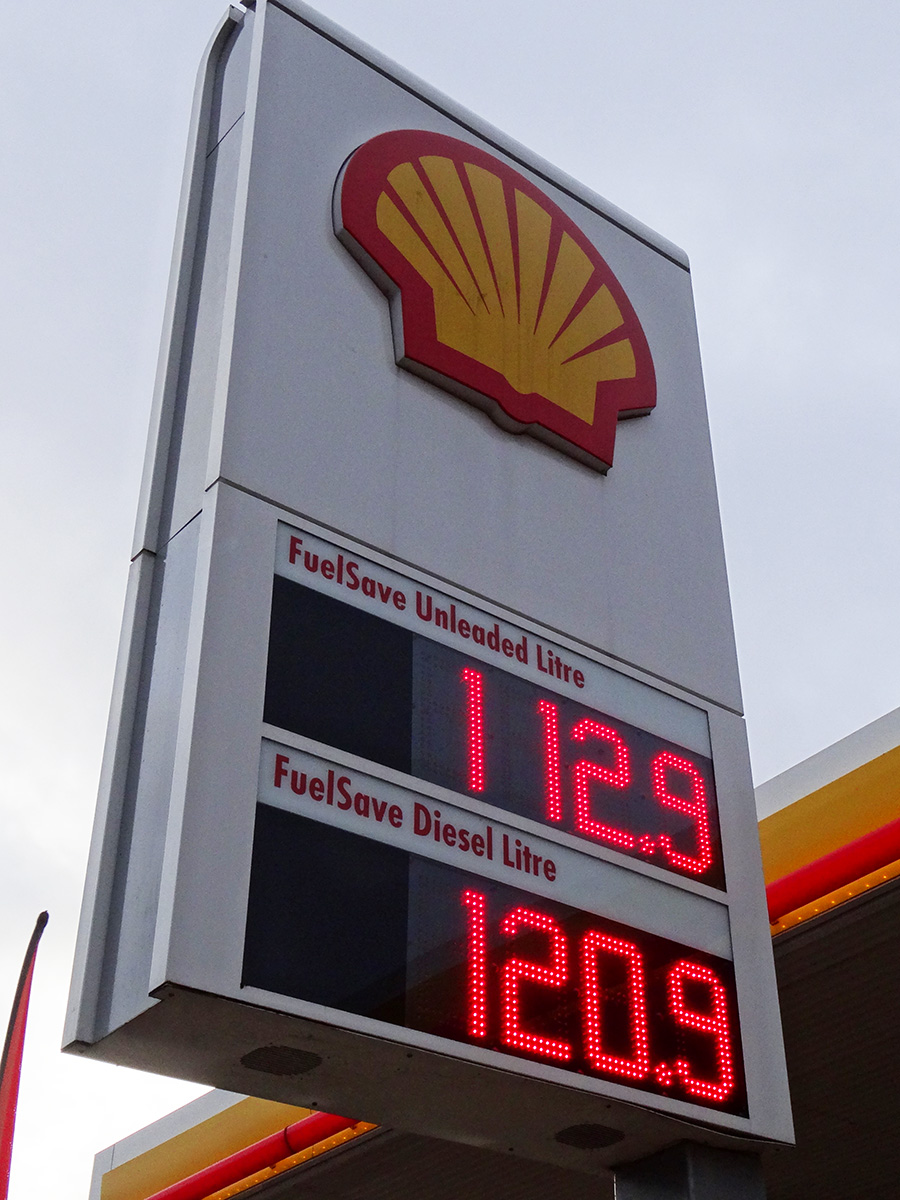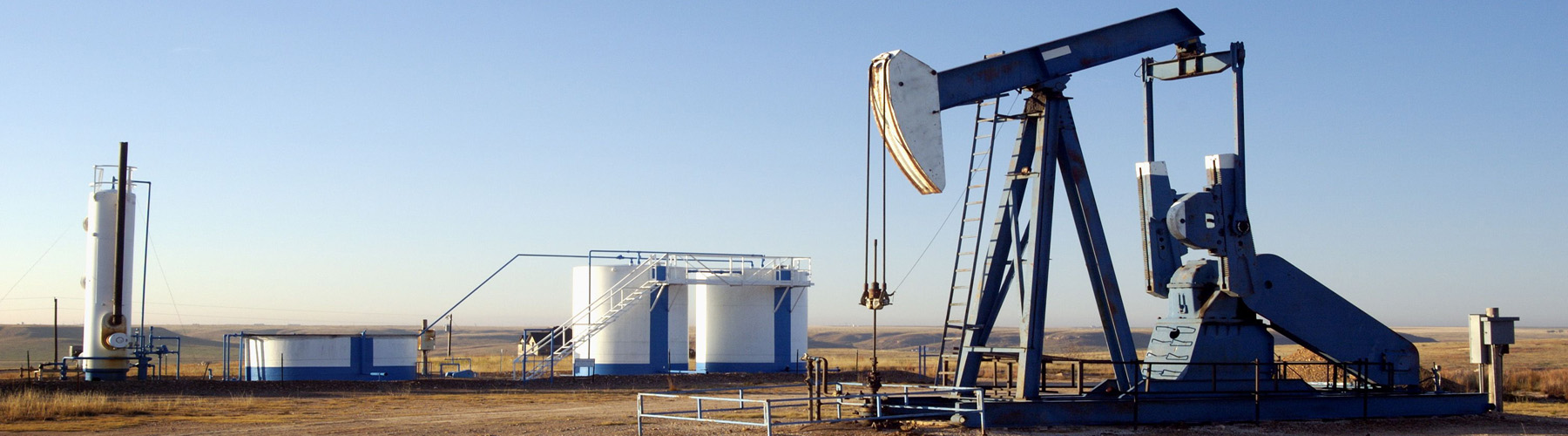
As we saw in a recent post, Why have diesel prices risen more than petrol prices?, diesel prices have soared since the outbreak of the Iran war at the end of February this year. In the UK, they rose from around 142p just before the US/Israeli attack on Iran to over 200p by the start of October – a rise of around 42%. The rise has been aggravated by threats of Houthi attacks on oil tankers in the Red Sea, Ukrainian attacks on Russian refineries leading to a Russian diesel export ban, a Chinese diesel export ban, refinery shortages in several countries and buoyant industrial, transport and agricultural demand.
 The hope was that the gradual reopening of the Strait of Hormuz would ease oil prices. But despite oil flows increasing from the Gulf, prices have not eased. And with the November mid-term elections approaching in the USA, the Trump administration has been threatening to cut off US diesel exports and divert diesel supplies to the domestic market, thereby reducing diesel prices in the USA. The threats were to put pressure on European countries to tap into their own emergency stocks to ease global diesel prices. By the beginning of October, diesel futures were at record prices.
Then on Friday 2 October, the Group of Seven (G7) nations gave in to pressure from the USA (one of the G7). Co-ordinated by the International Energy Agency (IEA), the G7 announced the release over the next four months of 100 million barrels from reserves, partly of diesel and partly of crude oil. The release would be front loaded to put immediate downward pressure on diesel prices. President Trump stated that a major proportion would be from European stockpiles.
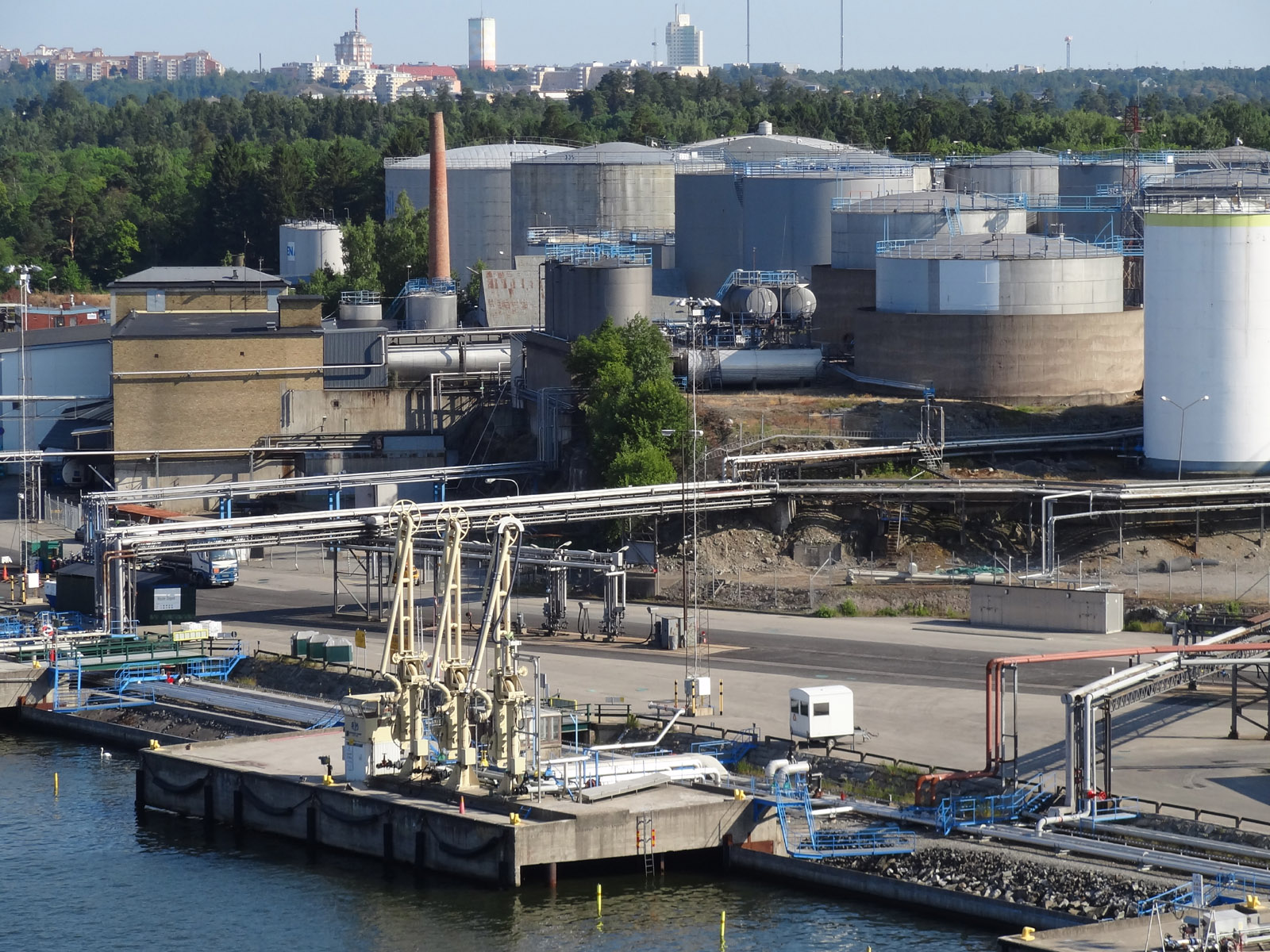 The IEA had already organised the release of 400 million barrels from stockpiles back in March. However, not all were released because, at the time, the USA was flooding the market with its own diesel to keep the market price down. By the beginning of October, 75 million barrels had yet to be released, but were still considered ‘available’. The new G7 announcement did not make clear whether the 100 million barrels would be in addition to the March agreement or would involve only an additional 25 million barrels.
This promise of an increase in supply had an immediate effect, with US diesel futures falling by around 4.5% and European diesel futures by around 6.5%. But, within a week futures prices were rising again. The extra diesel promised was seen as too little.
Then, on Friday 9 October, in an attempt to drive down diesel prices in the USA, President Trump announced a deal with President Putin. Russia would immediately supply 300,000 tonnes of diesel to the American and global markets, followed by 500,000 tonnes by the end of the month, followed by 1 million and then 3 million more tonnes shortly thereafter. To achieve this, US sanctions against Russian oil exports would be suspended until 7 April 2027.
 This was widely condemned by US Democrats and US allies as providing financial support to Russia for its war against Ukraine. But it was also criticised for being unlikely to bring diesel prices down.
First, there were the logistical difficulties of shipping the Russian oil, let alone Russia’s depleted stocks. In fact, Russia had already instituted a total domestic export ban on diesel to protect its own supplies. There are serious doubts, therefore, as to whether Russia can deliver these additional volumes.
Then there was the size of the deal. The world consumes roughly 840 million to 900 million barrels of diesel per month. In the US context, the initial 300,000 tonnes represents just three-quarters of a single day’s US consumption.
Unless the conflicts and other causes of the underlying shortage of diesel are resolved, the extra diesel will provide only a temporary relief from high prices. Indeed, when markets opened on Monday 12 October, diesel futures prices did not fall but edged upwards and then rose more rapidly the next day.
Articles
 UK diesel prices top £2 a litre for first time, RAC says
BBC News, Lucy Hooker and Archie Mitchell (2/10/26)
- G7 to release millions of barrels of oil and diesel after Trump threat
BBC News, Archie Mitchell and Lucy Hooker (3/10/26)
- Will diesel prices go down? Trump says Europe to draw on reserves
USA Today, Miles J Herszenhorn (2/10/26)
- G7 countries agree on release of diesel and oil stocks after US pressure
Reuters, Kate Abnett and Jarrett Renshaw (2/10/26)
- IEA says 325 million barrels of emergency oil released, with 75 million still to come
Euronews, Simon Ormiston (3/10/26)
- Europe to release ‘massive amount of diesel’ after Trump’s supply threat
Independent, Athena Stavrou (3/10/26)
- Diesel price set to fall after Europe releases supplies
Daily Business, Terry Murden (3/10/26)
- Exclusive: Trump’s Diesel Price Dilemma Isn’t About Supply — Expert Says It’s Because ‘Fuel is in the Wrong Place’
Trading View (3/10/26)
- Trump-Putin Diesel Deal Unlikely To Reduce Prices
Forbes, Ariel Cohen (12/10/26)
- Trump turns to Russian diesel ahead of midterms, but analysts see little price relief
CNBC, Mike Sheen (12/10/26)
- Diesel futures jump, signaling higher prices to come despite Trump’s Russia deal
NBC News, Steve Kopack (13/10/26)
Videos
Data
Questions
- What will determine the size of the effect of the G7’s decision to release stocks of diesel and crude oil?
- How do expectations affect diesel prices – both spot and future prices?
- Why would a diesel export ban by the Trump administration have only a minimal effect on diesel prices in much of the USA?
- Why is lifting sanctions against Russian diesel exports likely to have only a minimal effect on diesel prices?
- What determines the price elasticity of demand for diesel in (a) the short run; (b) over a few years?
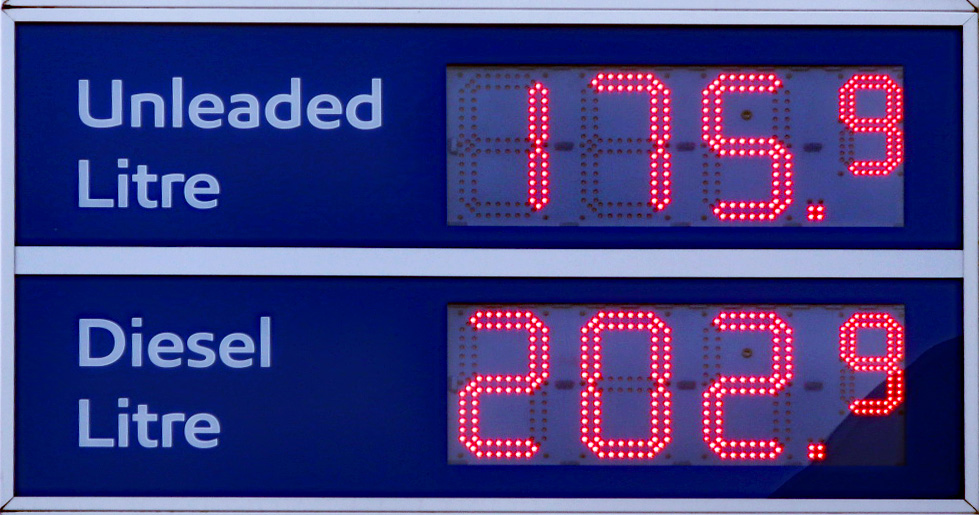
From the start of the American and Israeli war with Iran on 28 February 2026 to 30 September – a period of just seven months – the retail price of petrol in the UK has risen by approximately 43p, from around 132p to 175p per litre – a rise of 33%. In contrast, the price of diesel has risen by approximately 59p, from around 142p to 201p per litre – a rise of 42%. (See also the October 12 post, Diesel prices: an update)
In several other countries the percentage difference is greater still, particularly in countries where fuel taxes are lower and thus the wholesale cost of the fuel is a larger percentage of the pump price. In the USA, for example, petrol (gasoline) prices have risen by around 38%, whereas diesel prices have risen by around 73%.
But why have diesel prices risen by more than petrol prices? The answer has to do with supply and demand.
Supply
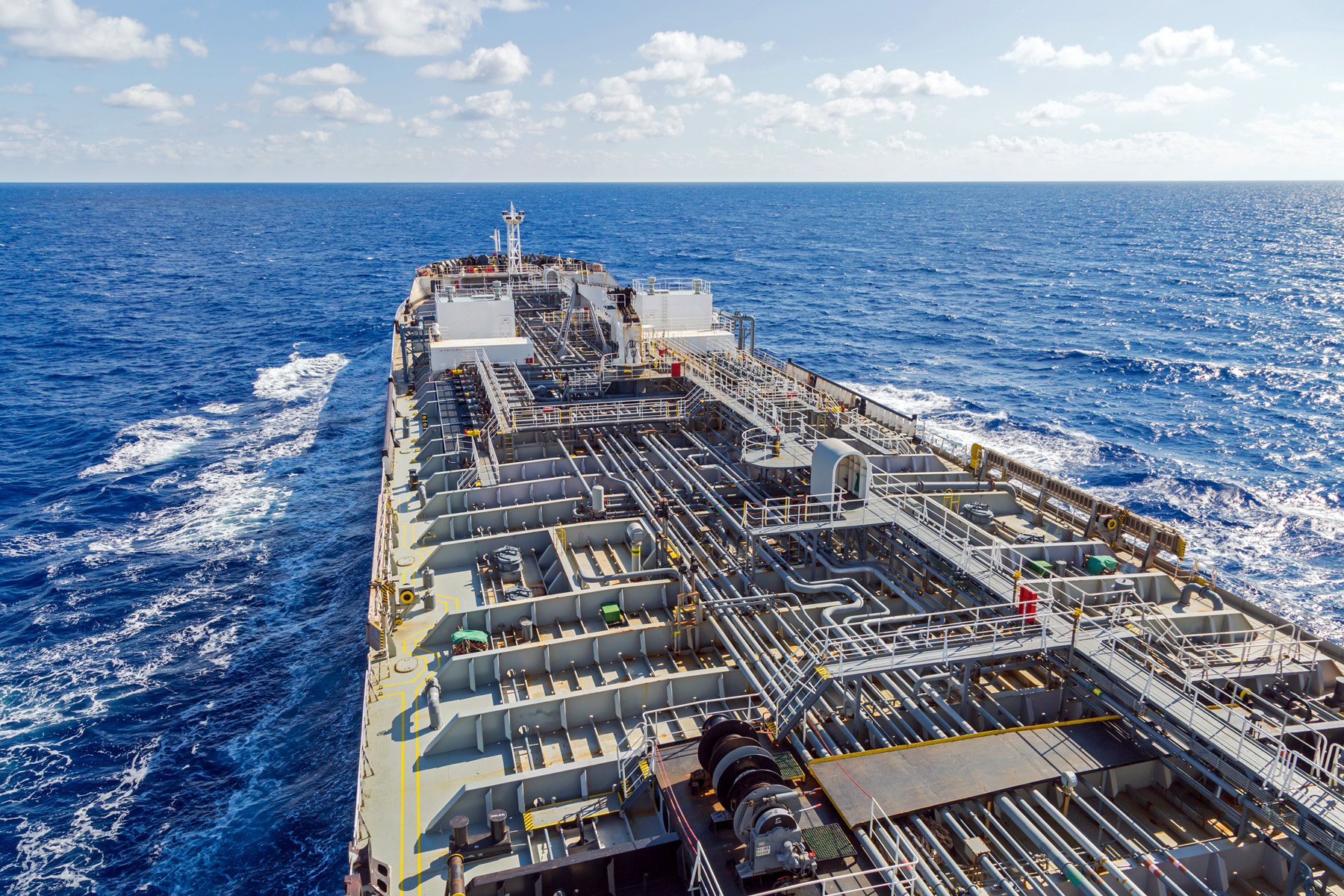 Greater effect of the Iran war on diesel supplies. The closing of the Strait of Hormuz has drastically cut the supply of oil from the Gulf states. This is being compounded by the Houthi attacks on Saudi shipping in the Red Sea. This has forced Saudi oil that is transported by pipeline to the Red Sea and destined for countries east of Saudi Arabia to be transported north via the Suez canal rather than south through the Bab al-Mandab Strait. This has been made worse by attacks launched from Iraq on the Saudi oil pipeline.
Middle Eastern crude oil’s composition is the most efficient for refining high-quality diesel. The restriction on exports, both of crude oil and of diesel from Gulf refineries, has thus affected diesel supplies more than petrol supplies.
Effect of Ukraine war. Ukraine has been launching drone attacks on Russian refineries, mainly producing diesel. The resulting shortage of diesel within Russia has led it to impose a ban on diesel exports, extended at least to the end of 2026, to limit the effects on supplies for the military and for domestic users. Russia has historically been the world’s second-largest diesel exporter and the ban has reduced the world’s supply of seaborne diesel by around 12%.
Low diesel stocks. Stocks of diesel have been run down and this has meant that there is little flexibility to draw them down further.
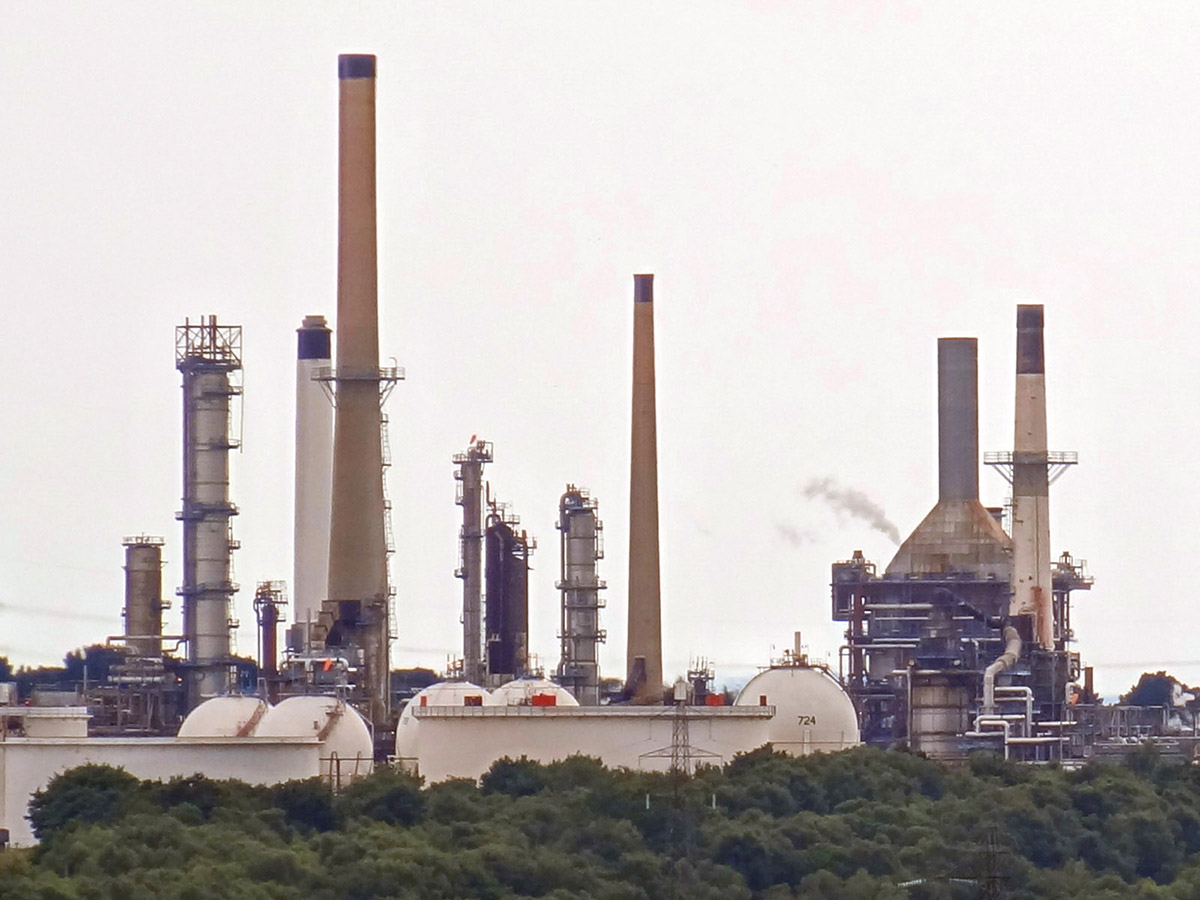 Refinery constraints. Refineries cannot instantly alter their output to produce more diesel. Furthermore, diesel has become more expensive to produce in recent years due to the transition to ultra-low sulphur diesel to meet stricter environmental standards. This makes the supply of diesel relatively price inelastic, exaggerating the effect on price.
UK refineries produce more petrol than the domestic market requires, making the UK a net exporter of petrol. This higher self-sufficiency partially shields domestic petrol prices from global shocks. However, the UK does not refine enough diesel to meet domestic demand. It relies heavily on foreign imports to cover the shortfall. Thus diesel prices in the UK are more subject to global price increases.
Demand
Seasonal demand spikes. The demand for diesel tends to rise in late summer due to extra agricultural demand for autumn crop harvests.
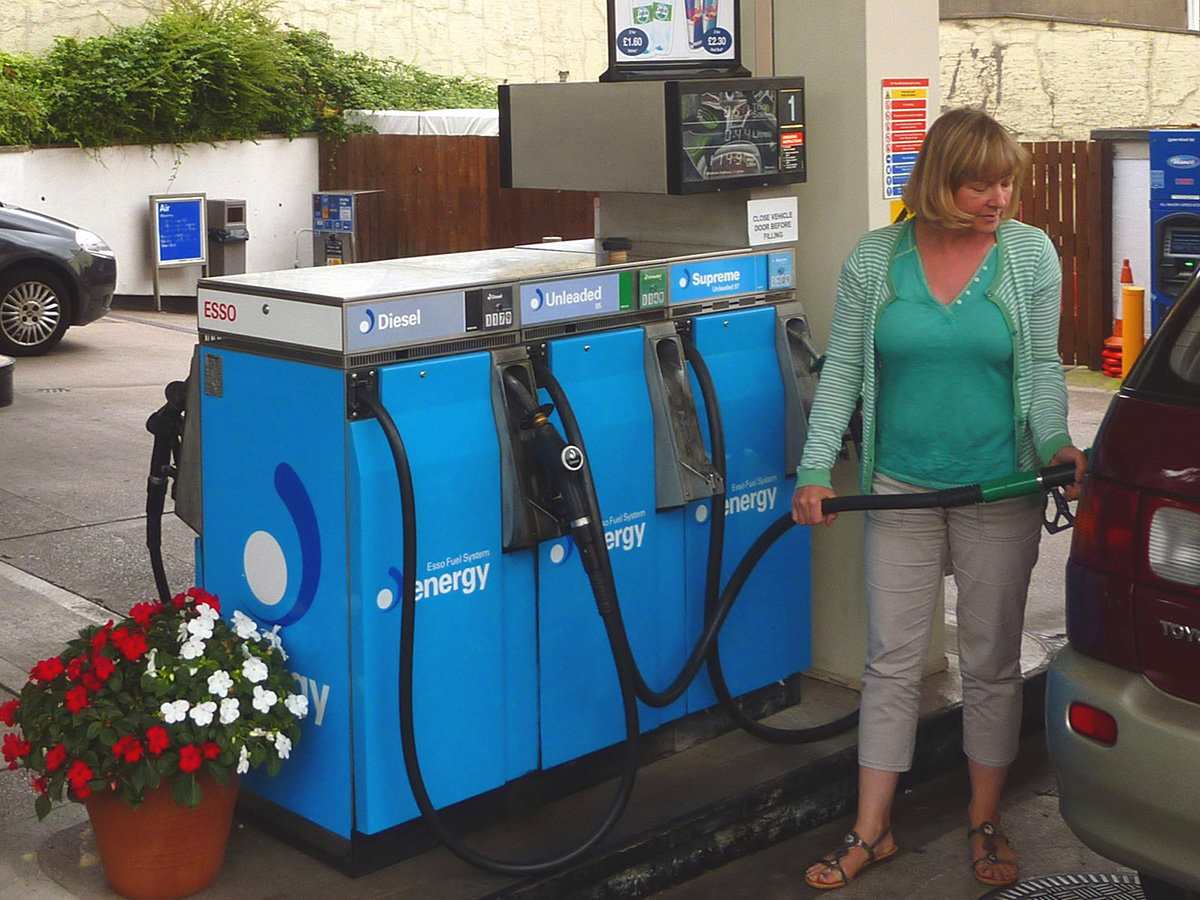 Low price elasticity of demand. Unlike petrol, which is primarily consumed by individuals who can choose to drive less when prices rise, diesel is essential to industrial economies. It powers lorries, ships, buses, trains, agricultural machinery, mining equipment and many industrial machines. Because businesses must keep moving goods, farming crops and running machines, global demand for diesel is little affected by rising prices. This low price elasticity of demand results in a bigger price rise for every reduction in supply than is the case for petrol.
What is more, the transition to EVs has been greater for cars than for lorries, although many buses and vans are now electric. The electrification of the railways, however, is too long-term a project to affect short-term diesel prices and electric lorries are still in their infancy. But with rapid development of electric alternatives underway in the haulage and industrial machinery sectors, they may become less reliant on diesel in the relatively near future.
Articles
- Petrol and diesel prices hit highest since 2022
BBC News (14/9/26)
- Diesel prices hit new record in September 2026: What that means for inflation, shipping costs and your portfolio
J.P.Morgan, Sergei Klebnikov (15/9/26)
- Iran war pushes diesel – the economy’s lifeblood – to record high prices, with no relief on the horizon
The Conversation, Morgan Bazilian and Jamie Webster (18/9/26)
- Diesel costs more than $6 a gallon for the first time. Here’s how that affects you
CNN, Chris Isidore and Matt Egan (12/9/26)
- Why is diesel more expensive than petrol in Australia?
NRMA, Sam Charlwood (9/4/26)
- Diesel Prices Surge as Global Supplies Tighten
Farm Bureau Intel, Faith Parum (17/9/26)
- Why has diesel increased so much more than unleaded?
PetrolPrices (11/3/26)
- Disparity between diesel and petrol prices reaches record-breaking levels
FleetNews, Gareth Roberts (30/3/26)
- Diesel and petrol hit four-year high fuelling inflation concerns
FleetNews, Gareth Roberts (15/9/26)
- EU says Trump plan to ban US diesel exports would ‘negatively impact both sides’
The Guardian, Jillian Ambrose (25/9/26)
Videos
Questions
- Draw a demand and supply diagram for diesel and petrol to illustrate the effects discussed in this blog.
- Is the demand for diesel likely to be more elastic over the longer term? Explain.
- Compare the effects on diesel prices in the UK with one other country of your choice. How similar are the factors affecting the relative price increases in diesel and petrol in the two countries?
- Would cutting taxes on diesel solve the problem of higher prices for diesel users?
- How has the cost of heating oil and aircraft fuel changed compared to that of petrol and diesel? Explain.
- What would be the effects on diesel prices in the UK and the USA if Donald Trump carried out his potential plan to ban US exports of diesel?
 So here we are, summer is over (or almost over if you’re an optimist) and we are sitting in front of our screens reminiscing about hot sunny days (at least I do)! There is no doubt, however: a lot happened in the world of politics and economics in the past three months. The escalation of the US-China trade war, the run on the Turkish lira, the (successful?) conclusion of the Greek bailout – these are all examples of major economic developments that took place during the summer months, and which we will be sure to discuss in some detail in future blogs. Today, however, I will introduce a topic that I am very interested in as a researcher: the liberalisation of energy markets in developing countries and, in particular, Mexico.
Why Mexico? Well, because it is a great example of a large developing economy that has been attempting to liberalise its energy market and reverse price setting and monopolistic practices that go back several decades. Until very recently, the price of petrol in Mexico was set and controlled by Pemex, a state monopolist. This put Pemex under pressure since, as a sole operator, it was responsible for balancing growing demand and costs, even to the detriment of its own finances.
The petrol (or ‘gasoline’) price liberalisation started in May 2017 and took place in stages – starting in the North part of Mexico and ending in November of the same year in the central and southern regions of the country. The main objective was to address the notable decrease in domestic oil production that put at risk the ability of the country to meet demand; as well as Mexico’s increasing dependency on foreign markets affected by the surge of the international oil price. The government has spent the past five years trying to create a stronger regulatory framework, while easing the financial burden on the state and halting the decline in oil reserves and production. Unsurprisingly, opening up a monopolistic market turns out to be a complex and bumpy process.
 Source: Author’s calculations using data from the Energy Information Bank, Ministry of Energy, Mexico
Despite all the reforms, retail petrol prices have kept rising. Although part of this price rise is demand-driven, an increasing number of researchers highlight the significance of the distribution of oil-related infrastructure in determining price outcomes at the federal and regional (state) level. Saturation and scarcity of both distribution and storage infrastructure are probably the two most significant impediments to opening the sector up to competition (Mexico Institute, 2018). You see, the original design of these networks and the deployment of the infrastructure was not aimed at maximising efficiency of distribution – the price was set by the monopolist and, in a way that was compliant with government policy (Mexico Institute, 2018). Economic efficiency was not always part of this equation. As a result, consumers located in better-deployed areas were subsidising the inherent logistics costs of less ‘well endowed’ regions by facing an artificially higher price than they would have in a competitive market.
But what about now? Do such differences in the allocation of infrastructure between regions lead to location-related differences in the price of petrol? If so, by how much? And, what policies should the government pursue to address such imbalances? These are all questions that I explore in one of my recent working papers titled ‘Widening the Gap: Lessons from the aftermath of the energy market reform in Mexico’ (with Hugo Vallarta) and I will be sharing some of the answers with you in a future blog.
Articles
Data
Questions
- Are state-owned monopolies effective in delivering successful market outcomes? Why yes, why no?
- In the case of Mexico, are you surprised about the complexities that were involved with opening up markets to competition? Explain why.
- Use Google to identify countries in which energy markets are controlled by state-owned monopolies.
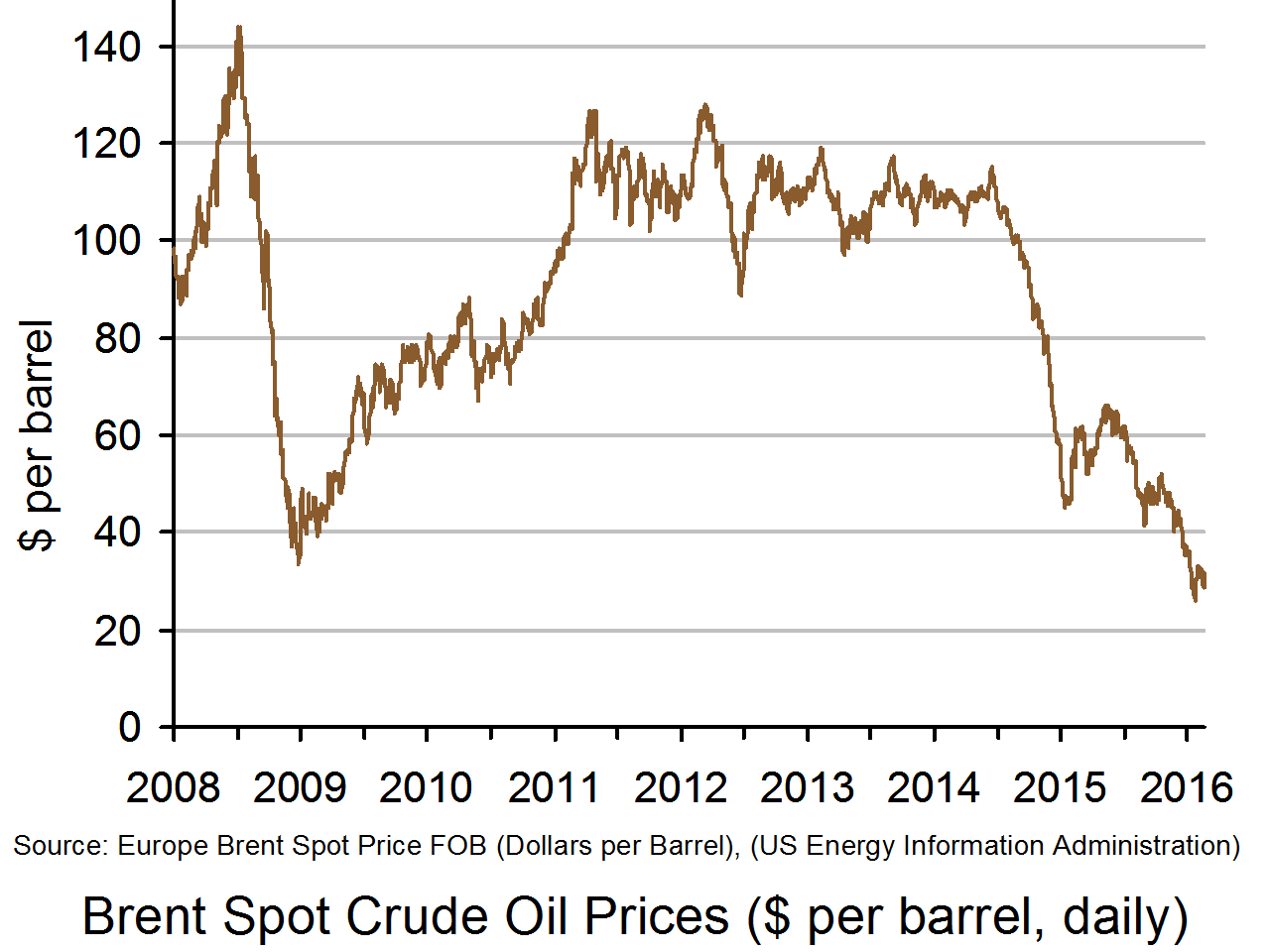
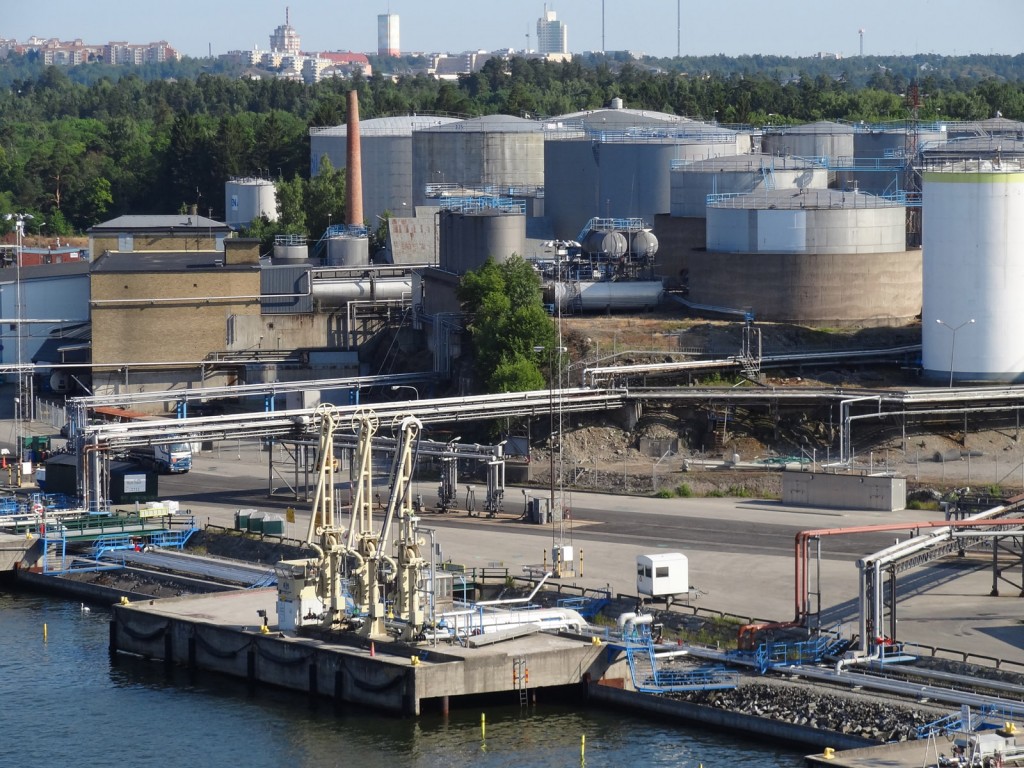 In the UK, petrol prices have fallen significantly over the past couple of years and currently stand in some places at below £1 per litre. For UK residents, this price is seen as being cheap, but if we compare it to prices in Venezuela, we get quite a different picture. Prices are increasing here for the first time in 20 years from $0.01 per litre to $0.60 per litre – around 40 pence, while lower grade petrol increases to $0.10 per litre.
Venezuela has oil fields in abundance, but has not used this natural resource to its full potential to bolster the struggling economy. The price of petrol has been heavily subsidised for decades and the removal of this subsidy is expected to save around $800 million per year.
 This will be important for the economy, given its poor economic growth, high inflation and shortages of some basic products. Venezuela relies on oil as the main component of its export revenues and so it has been hit very badly, by such low oil prices. The money from this reduced subsidy will be used to help social programmes across the country, which over time should help the economy.
In addition to this reduced subsidy on petrol prices, Venezuela’s President has also taken steps to devalue the exchange rate. This will help to boost the economy’s competitiveness and so is another policy being implemented to help the economy. However, some analysts have said that these changes don’t go far enough, calling them ‘small steps’, ‘nowhere near what is required’ and ‘late and insufficient’. The following articles consider the Venezuelan crisis and policies.
Venezuela raises petrol price for first time in 20 years BBC News (18/02/16)
Venezuela president raises fuel price by 6,000% and devalues bolivar to tackle crisis The Guardian, Sibylla Brodzinsky (18/02/16)
Venezuela’s Maduro devalues currency and raises gasoline prices Financial Times, Andres Schipani (18/02/16)
Venezuela hikes gasoline price for first time in 20 years The Economic Times (18/02/16)
Venezuela hikes fuel prices by 6000%, devalues currency to tackle economic crisis International Business Times, Avaneesh Pandey (18/02/16)
Market dislikes Venezuela reforms but debt rallies again Reuters (18/02/16)
Questions
- Why are oil prices so important for the Venezuelan economy?
- How will they affect the country’s export revenues and hence aggregate demand?
- Inflation in Venezuela has been very high recently. What is the cause of such high inflation? Illustrate this using an aggregate demand/aggregate supply diagram.
- How will a devaluation of the currency help Venezuela? How does this differ from a depreciation?
- Petrol prices have been subsidised in Venezuela for 20 years. Show how this government subsidy has affected petrol prices. Now that this subsidy is being reduced, how will this affect prices – show this on your diagram.
- Why are many analysts suggesting that these policies are insufficient to help the Venezuelan economy?
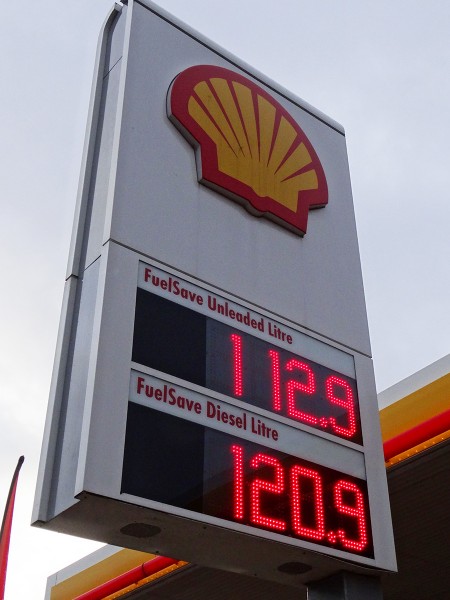 Oil prices have been plummeting in recent months. Indeed, many commentators are saying that this is the major economics news story of 2014. In June 2014 Brent crude was around $112 per barrel. By December the price has fallen to around $60 – a fall of 46%. But what are the implications for fuel prices?
Just because the crude oil price has fallen by 46%, this does not mean that prices at the pump should do the same. Oil is priced in dollars and the pound has depreciated against the dollar by just over 7% since June, from around £1 = $1.69 to around £1 = $1.57. Thus in sterling terms, crude oil has fallen by only 42%.
More significantly, the cost of crude is a relatively small percentage of the price of a litre of petrol. At a price of 132p per litre (the July average price), crude accounted for around 27% of the price, or around 36p per litre. At a price of 114p per litre, the price in late December, crude accounts for around 19% of the price, or around 21.5p per litre. The largest element of price is fuel duty, which is charged at a flat rate of 57.95p per litre. In addition there is VAT at 20% of the pre-VAT price (or 16.67% of the retail price). Finally there are the refining, distribution and retail costs and margins, but these together account for only around 16p per litre.
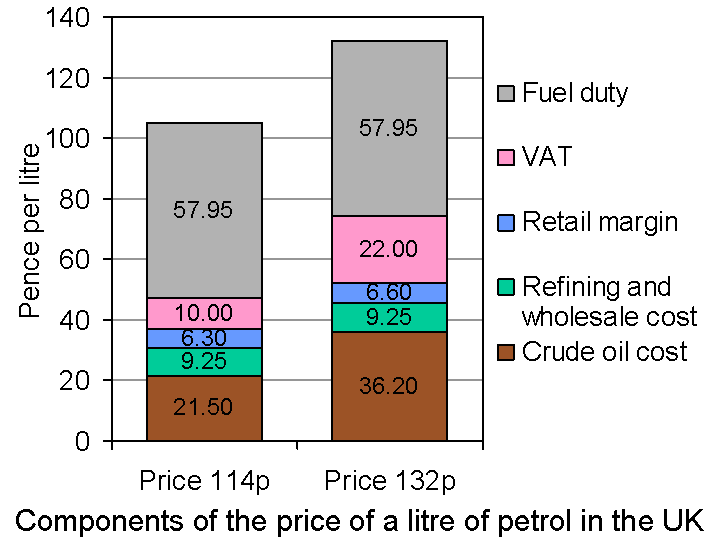 What this means is that the 46% cut in oil prices has led to a cut in petrol prices of only around 14%. If petrol prices were to reach £1 per litre, as some commentators have forecast, crude oil prices would have to fall to under $40 per barrel.
Although petrol and diesel prices have fallen by a smaller percentage than oil prices, this still represents a significant cut in motoring and transport costs. It also represents a significant cut in costs for the petrochemical industry and other industries using large amounts of oil.
For oil-importing countries this is good news as the fall in the oil price represents an increase in real incomes. For oil importing countries, and especially those such as Russia and some OPEC countries where oil constitutes a large proportion of their exports, it is bad news. We explore these effects in Part 2.
Videos
UK petrol prices hit four-year low BBC News, John Moyland (10/12/14)
Petrol prices plunge ahead of Christmas holidays Belfast Telegraph (19/12/14)
Petrol price plummet – could fuel drop to below a pound a litre in the New Year? Channel 5 News on YouTube (17/12/14)
Articles
UK motorists benefit from petrol price drop Financial Times, Michael Kavanagh (23/12/14)
Petrol to drop to £1 a litre, says Goldman Sachs The Telegraph, Szu Ping Chan (9/12/14)
Oil prices: How low will they go in 2015? International Business Times, Shane Croucher (22/12/14)
Plummeting oil price may lead to petrol falling below £1 a litre RAC news (17/12/14)
Pump Prices: Cheap Petrol Comes With A Warning Sky News (19/12/14)
Data and information
Fuel prices in Europe Drive Alive (20/12/14)
Weekly road fuel prices Department of Energy & Climate Change (23/12/14)
Prices at the pump – why are they falling and will this continue? ONS (18/12/14)
Fuel Prices Explained RAC
UKPIA Statistical Review 2014 United Kingdom Petroleum Industry Association
Questions
- Why does the price of petrol fluctuate less in percentage terms than the price of crude oil?
- What factors will affect whether UK petrol prices fall to £1 per litre?
- If crude oil prices fell by 20%, in which of these two cases would there be a bigger percentage fall in petrol prices: (a) petrol price currently 140p; (b) petrol price currently 110p? Explain.
- Distinguish between a specific tax and an ad valorem tax. Which of these is (a) fuel duty; (b) VAT? Illustrate your answer with a supply and demand diagram.
- What determines the price elasticity of demand for petrol and diesel? Is the long-run elasticity likely to be higher or lower than the short-run elasticity? Explain.
- Distinguish between demand-pull and cost-push inflation. Given that oil price changes are correlated to inflation, would you characterise recent falls in inflation as reductions in demand-pull or cost-push pressures, or both: (a) in a specific oil-importing country; (b) globally?