 At the start of 2013, the USA faces a ‘fiscal cliff’. By this is meant that, without agreement by Congress on new fiscal measures, the USA will be forced into tax rises and expenditure cuts of around $650 billion (over 4% of GDP). This would probably push the economy straight back into recession. This in turn would have a serious dampening effect on the global economy.
But why would fiscal policy be automatically tightened? The first reason is that tax cuts given under the George W. Bush administration during 2001–3 (largely to the rich) are due to expire. Also a temporary cut in payroll taxes and an increase in tax credits given by President Obama are also due to end. These tax increases would form the bulk of the tightening. The average US household would pay an extra $3500 in taxes, reducing after-tax income by around 6%.
The second reason is that various government expenditure programmes are scheduled to be reduced. These reductions in expenditure amount to around $110 billion.
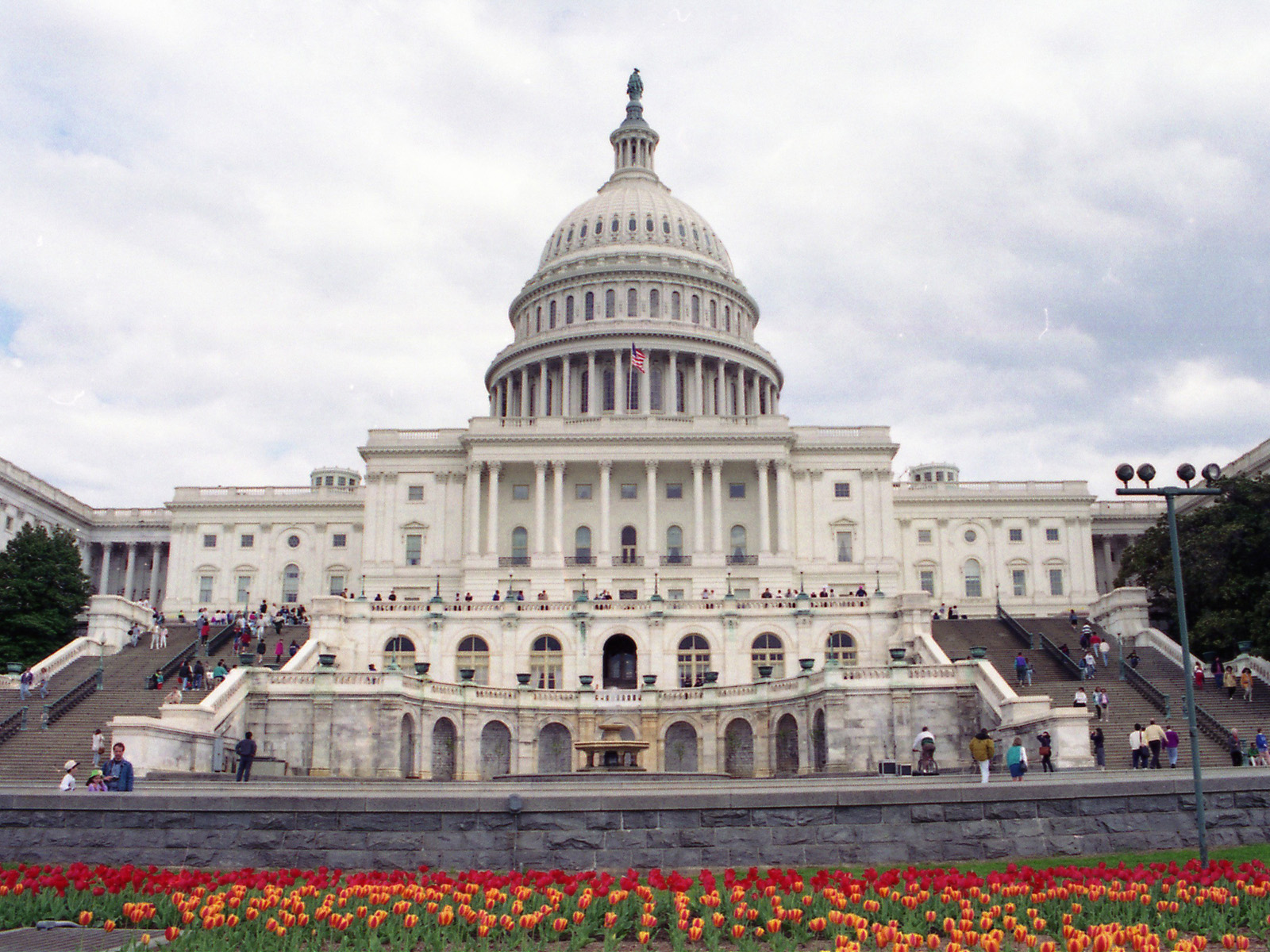
 It is likely, however, that Congress will agree to delay or limit the tax increases or expenditure cuts; politicians on both sides want to avoid sending the economy back into recession. But what the agreement will be is not at all clear at this stage.
Republicans are taking a tougher line than Democrats on cutting the budget deficit; they are calling for considerably less restraint in implementing the government expenditure cuts. On the other hand, they are likely to be less willing to raise taxes.
But unless something is done, the consequences for 2013 could be dire. The fiscal cliff edge rapidly approaches.
Articles
Nearly 90 percent of Americans would see taxes rise if ‘fiscal cliff’ hits Washington Post, Lori Montgomery (1/10/12)
Fiscal cliff a serious threat, but unlikely CNN Money, Chris Isidore (1/10/12)
“Fiscal cliff” fears may impede faster job growth Chicago Tribute, Lucia Mutikani (1/10/12)
Avert Fiscal Cliff With Entitlement Cuts, Tax Increases Bloomberg (2/10/12)
‘Fiscal cliff’ to hit 90% of US families Financial Times, James Politi (1/10/12)
Investors don’t want the US to fall off the fiscal cliff The Telegraph, Tom Stevenson (22/9/12)
Gauging the fiscal cliff BBC News, Stephanie Flanders (27/9/12)
The US fiscal cliff – and the fiscal chasm BBC News, Stephanie Flanders (2/10/12)
US fiscal cliff threat fails to galvanise policymakers Guardian Economics blog, Mohamed el-Erian (1/10/12)
Multiplying Europe’s fiscal suicide (technical) The Telegraph, Ambrose Evans-Pritchard (1/10/12)
Q&A: The US fiscal cliff BBC News (7/11/12)
US election: Four more years… of what? BBC News, Stephanie Flanders (7/11/12)
Background
United States fiscal cliff Wikipedia
Questions
- Explain what is meant by the ‘fiscal cliff’ and what is its magnitude.
- What would be the multiplier implications of the USA ‘falling off the cliff’ both for the USA and for the rest of the world?
- What factors determine the size of the government expenditure and tax multipliers? What would be the problems of (a) underestimating and (b) overestimating the size of these multipliers?
- How can a fiscal stimulus be reconciled with a policy of reducing the size of the budget deficit as a proportion of GDP over the longer term?
- In what ways can the actions of Democrats and Republicans be seen as game playing? What are the possible payoffs and risks to both sides?
- Is relying on export growth to bring the world economy out of recession a zero sum game?
- Explain which is likely to be more effective in stimulating short- and medium-term economic growth in the USA: fiscal policy or monetary policy.
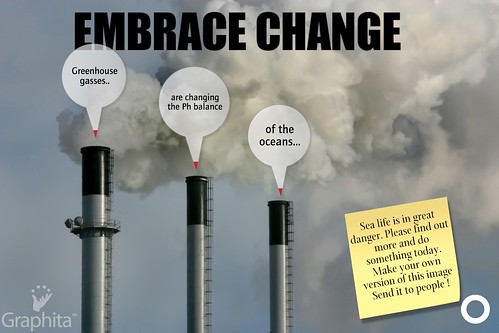 No market is perfect and when the market mechanism fails to deliver an efficient allocation of resources, we say the market fails and hence there is justification for some government intervention. From a monopolist dominating an industry to a manufacturing firm pumping out pollution, there are countless examples of market failure.
The Guardian is creating a guide to climate change, covering areas from politics to economics. The problem of climate change has been well documented and this blog considers a particular issue – the case for climate change or the environment as a market failure. In many cases just one market failure can be identified, for example an externality or a missing market. However, one of the key problems with climate change is that there are several market failures: externalities in the form of pollution from greenhouse gases; poor information; minimal incentives; the problem of the environment as a common resource and the immobility of factors of production, to name a few. Each contributes towards a misallocation of resources and prevents the welfare of society from being maximised.
 When a market fails, intervention is justified and economists argue for a variety of policies to tackle the above failures. In a first-best world, there is only one market failure to tackle, but in the case of the environment, policy must be designed carefully to take into account the fact that there are numerous failings of the free market. Second-best solutions are needed. Furthermore, as the problem of climate change will be felt by everyone, whether in a developed or a developing country, international attention is needed. The two articles below are part of the Guardian’s ultimate climate change guide and consider a huge range of economic issues relating to the problem of environmental market failure.
Why do economists describe climate change as a ‘market failure’? Guardian, Grantham Research Institute and Dunca Clark (21/5/12)
What is the economic cost of climate change? Guardian (16/2/11)
Questions
- What is meant by market failure?
- What are the market failures associated with the environment and climate change? In each case, explain how the issue causes an inefficient allocation of resources and thus causes the market to fail? You may find diagrams useful!
- What is meant by the first-best and second-best world?
- What does a second-best solution aim to do?
- Using diagrams to help your explanation, show how a tax on pollution will have an effect in a first best world, where the only market failure is a negative externality and in a second best world, where the firm in question is also a monopolist.
- What solutions are there to the problem of climate change? How effective are they likely to be?
- Does the need to tackle climate change require international co-operation? Can you use game theory to help your explanation?!
 Paul Volcker was Chair of the US Federal Reserve from 1979 to 1987. He was also Chair of the Economic Recovery Advisory Board under President Barack Obama from February 2009 to January 2011. In the webcast and articles below, he reflects on the current state of the world financial system – from regulation, to the euro crisis, to world imbalances, to the system of floating exchange rates.
He argues that global financial systems are vulnerable to breakdowns. What is needed is reform to the system, and for that there needs to be consensus by politicians, regulators and central banks.
But, in the absence of international consensus on some key points, reform will be greatly weakened, if not aborted. The freedom of money, financial markets and people to move – and thus to escape regulation and taxation – might be an acceptable, even constructive, brake on excessive official intervention, but not if a deregulatory race to the bottom prevents adoption of needed ethical and prudential standards.
Perhaps most important is a coherent, consistent approach to dealing with the imminent failure of “systemically important” institutions. Taxpayers and governments alike are tired of bailing out creditors for fear of the destructive contagious effects of failure – even as bailouts encourage excessive risk-taking.
According to Volcker, countries must be prepared to surrender some sovereignty. Policies must be co-ordinated internationally and there must be stronger regulation by international bodies, such as the IMF and stronger concerted action by global organisations, such as the G20.
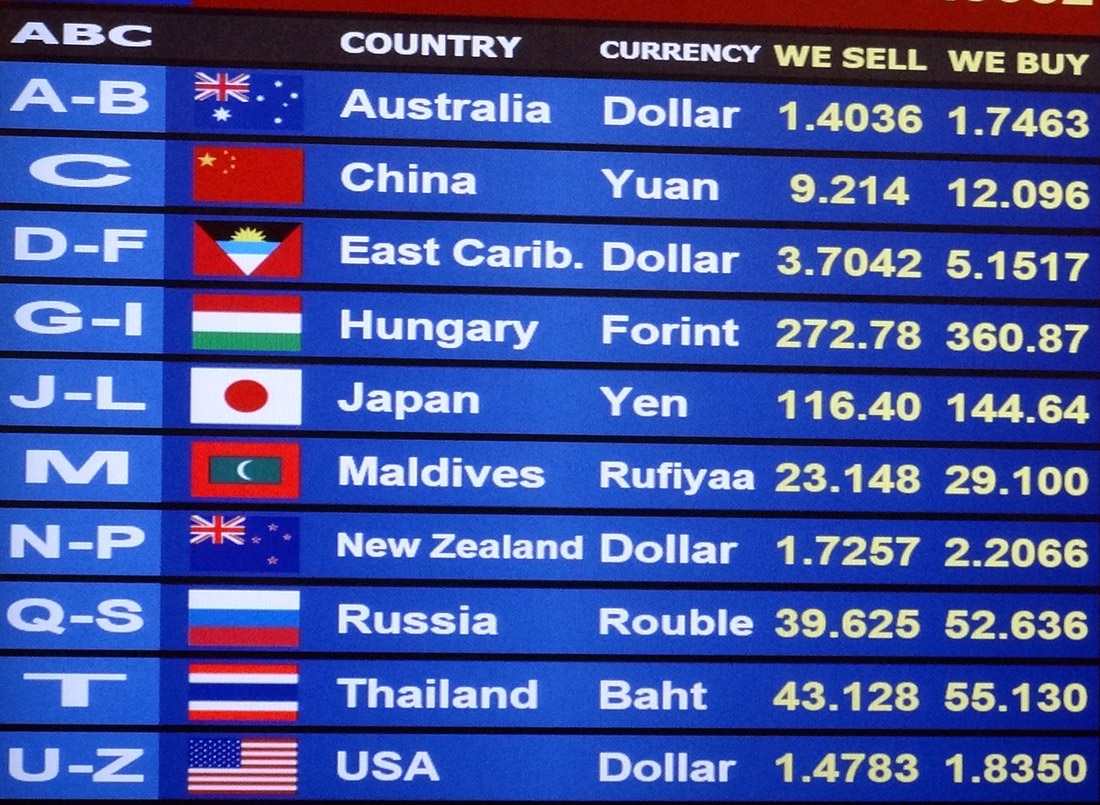 Left to their own devices, in an era of floating exchange rates, countries may pursue policies that exacerbate global imbalances.
Not so long ago, we were comforted by theorising that floating exchange rates would mediate international adjustments in a timely and orderly way. But, in the real world, many countries, particularly but not limited to small, open economies, simply find it impractical or undesirable to permit their currency to float.
We are left with the certainty, however awkward, that active participation in an open world economy requires some surrender of economic sovereignty. Or, to put the point more positively, it requires a willingness to co-ordinate policies more effectively.
Webcast
 Volcker Urges Global Monetary System Overhaul BloombergBusinessweek (31/5/12)
Articles
Is global financial reform possible? Guardian, Paul Volcker (6/6/12)
Volcker Urges Global Financial System Overhaul After Crisis BloombergBusinessweek, Robyn Meredith and Shamim Adam (31/5/12)
Questions
- What reforms, according to Volcker, need to be implemented in order for the euro to function effectively without crises?
- What can the USA do to ease the euro crisis?
- What are Volcker’s views on the regulation of the US banking system?
- How are incentive structures in banks related to speculative activities?
- Should banks be allowed to fail?
- What financial imbalances exist between countries?
- What international monetary reforms are required?
- What light can game theory shed on the difficulty of achieving global policy co-ordination?
- Is an international system of floating exchange rates appropriate given the size of international financial flows?
 John Von Neumann was a mathematician and one of his many accolades was applying mathematics and his observations of traditional games to create a new discipline – Game Theory. This involves a mathematical approach to decision making whereby different strategies can be assessed. It a tool that not only can be used in Economics, but also can be applied to a broad range of areas and fields of study.
Just as I arrived at work, I was listening to Radio 4 and heard the introduction to the programme In our Time. This one in particular caught my attention because of the name mentioned – Von Neumann, and after arriving in my office I then listened to the discussions surrounding game theory.
The main link is to the discussion from BBC Radio 4, led by Melvyn Bragg, with guests: Ian Stewart, a Professor of Mathematics from the University of Warwick; Andrew Colman, a Professor of Psychology at the University of Leicester and Richard Bradley, a Professor of Philosophy from the LSE. I’ll keep it brief and simply say enjoy!
Podcast
Game Theory (also at) BBC Radio 4, In our Time, Melvyn Bragg (10/5/12) (Programme details)
Articles
Game Theory cannot predict broadcasting future Financial Times, Andrew Edgecliffe-Johnson (4/5/12)
Game Theory, in the real world Phys Org (2/5/12)
Questions
- What is game theory? How is mathematics relevant here?
- The discussion talks about co-operative and non co-operative games. What is the difference between them?
- In the game – walking down the street – draw out the matrix and show whether a Nash equilibrium exists.
- Draw out the matrix for the game ‘Rock, Paper, Scissors’. How can game theory be applied to this game? What is the best strategy to win this game? Can there be a winner?
- Draw out the matrix for the problem of littering when it is non co-operative. Is there a Nash equilibrium?
- What is the Prisoner’s Dilemma? Give some examples of it. Explain why it is an example of a dominant strategy game.
- How is game theory relevant to broadcasting? Think about the role of auctions and also the information given in the Financial Times article.
- Explain how game theory is relevant to the Cold War.
Ministers from around the world met in Durban in the first two weeks of December 2011 to hammer out a deal on tackling climate change. The aim was that this would replace the Kyoto Treaty, due to expire at the end of 2012.
International climate change agreements are particularly difficult to achieve, as there are several market failures involved. Also, there is considerable ‘gaming’, as each country seeks to negotiate a deal that benefits the world as a whole but which minimises the disadvantages to their own particular country.
The conference ended on the 11 December with a last-minute deal. Both developed and developing countries would for the first time work on a legally binding agreement to limit emissions. This would be drawn up by 2015 and to come into force after 2020. The following articles assess the significance of the agreement and whether it represents real progress or little more than a deal to work on a deal.
Articles
‘Modest’ gains as UN climate deal struck Independent (11/12/11)
Landmark deal saves climate talks Irish Examiner (11/12/11)
Durban climate change: the agreement explained The Telegraph, Louise Gray (11/12/11)
Durban climate conference agrees deal to do a deal – now comes the hard part Guardian, Fiona Harvey and Damian Carrington (13/12/11)
Climate deal: A guarantee our children will be worse off than us Guardian, Damian Carrington (11/12/11)
Durban climate deal: the verdict Guardian, Damian Carrington (12/12/11)
Australia hails Cop 17 agreement News 24 Australia (11/12/11)
Climate talks reach new global accord Financial Times, Andrew England and Pilita Clark (11/12/11)
Durban Climate Talks Produce Imperfect Deals Voice of America, Gabe Joselow (11/12/11)
Critics slam climate agreement t Sydney Morning Herald, Arthur Max (11/12/11)
Deal at last at UN climate change talks Euronews on YouTube (11/12/11)
World still in arrears on climate change pledges Reuters Africa, Barbara Lewis (11/12/11)
New UN climate deal struck, critics say gains modest Hindustan Times (11/12/11)
Climate change: ambition gap Guardian (12/12/11)
Canada leaves Kyoto to avoid heavy penalties Financial Times, Bernard Simon (13/12/11)
Durban Platform Leaves World Sleepwalking Towards Four Degrees Warming Middle East North Africa Financial Network, Ben Grossman-Cohen and Georgette Thomas (Oxfam) (13/12/11)
A deal in Durban The Economist (11/12/11)
Assessing the Climate Talks — Did Durban Succeed? Harvard University – Belfer Center for Science and International Affairs – An Economic View of the Environment, Robert Stavins (12/12/11)
Questions
- What was agreed at the Durban Climate Change Conference?
- Why is it difficult to get agreement on measures to tackle climate change? How is game theory relevant to explaining the difficulties in reaching an agreement?
- How would you set about establishing the ‘optimal’ amount of emissions reductions?
- Why will the market fail to provide the optimal amount of emissions reductions?
- Why was it felt not possible for a legally binding international agreement to come into force before 2020?
 It is likely, however, that Congress will agree to delay or limit the tax increases or expenditure cuts; politicians on both sides want to avoid sending the economy back into recession. But what the agreement will be is not at all clear at this stage.