 Economic forecasting came in for much criticism at the time of the financial crisis and credit crunch. Few economists had predicted the crisis and its consequences. Even Queen Elizabeth II, on a visit to the London School of Economics in November 2008, asked why economists had got it so wrong. Similar criticisms have emerged since the Brexit vote, with economic forecasters being accused of being excessively pessimistic about the outcome.
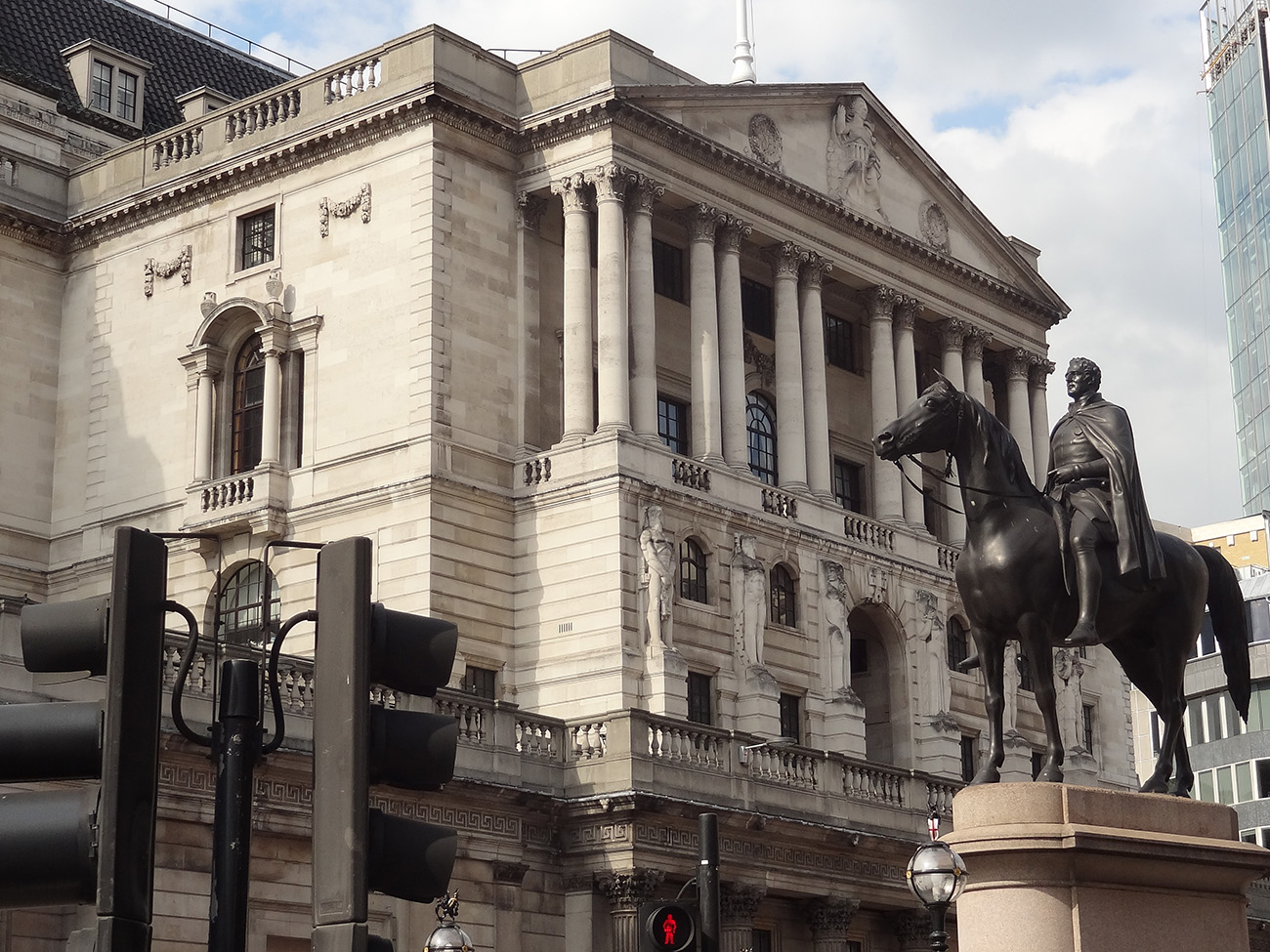
The accuracy of economic forecasts was one of the topics discussed by Andy Haldane, Chief Economist at the Bank of England. Speaking at the Institute for Government in London, he compared economic forecasting to weather forecasting (see section from 15’20” in the webcast):
“Remember that? Michael Fish getting up: ‘There’s no hurricane coming but it will be very windy in Spain.’ Very similar to the sort of reports central banks – naming no names – issued pre-crisis, ‘There is no hurricane coming but it might be very windy in the sub-prime sector.” (18’40”)
The problem with the standard economic models which were used for forecasting is that they were essentially equilibrium models which work reasonably well in ‘normal’ times. But when there is a large shock to the economic system, they work much less well. First, the shocks themselves are hard to predict. For example, the sub-prime crisis in 2007/8 was not foreseen by most economists.
Then there is the effect of the shocks. Large shocks are much harder to model as they can trigger strong reactions by consumers and firms, and governments too. These reactions are often hugely affected by sentiment. Bouts of pessimism or even panic can grip markets, as happened in late 2008 with the collapse of Lehman Brothers. Markets can tumble way beyond what would be expected by a calm adjustment to a shock.
It can work the other way too. Economists generally predicted that the Brexit vote would lead to a fall in GDP. However, despite a large depreciation of sterling, consumer sentiment held up better than was expected and the economy kept growing.
 But is it fair to compare economic forecasting with weather forecasting? Weather forecasting is concerned with natural phenomena and only seeks to forecast with any accuracy a few days ahead. Economic forecasting, if used correctly, highlights the drivers of economic change, such as government policy or the Brexit vote, and their likely consequences, other things being equal. Given that economies are constantly being affected by economic shocks, including government or central bank actions, it is impossible to forecast the state of the macroeconomy with any accuracy.
This does not mean that forecasting is useless, as it can highlight the likely effects of policies and take into account the latest surveys of, say, consumer and business confidence. It can also give the most likely central forecast of the economy and the likely probabilities of variance from this central forecast. This is why many forecasts use ‘fan charts’: see, for example, Bank of England forecasts.
What economic forecasts cannot do is to predict the precise state of the economy in the future. However, they can be refined to take into account more realistic modelling, including the modelling of human behaviour, and more accurate data, including survey data. But, however refined they become, they can only ever give likely values for various economic variables or likely effects of policy measures.
Webcast
 Andy Haldane in Conversation Institute for Government (5/1/17)
Articles
‘Michael Fish’ Comments From Andy Haldane Pounced Upon By Brexit Supporters Huffington Post, Chris York (6/1/17)
Crash was economists’ ‘Michael Fish’ moment, says Andy Haldane BBC News (6/1/17)
The Bank’s ‘Michael Fish’ moment BBC News, Kamal Ahmed (6/1/17)
Bank of England’s Haldane admits crisis in economic forecasting Financial Times, Chris Giles (6/1/17)
Chief economist of Bank of England admits errors in Brexit forecasting BBC News, Phillip Inman (5/1/17)
Economists have completely failed us. They’re no better than Mystic Meg The Guardian, Simon Jenkins (6/1/17)
Five things economists can do to regain trust The Guardian, Katie Allen and Phillip Inman (6/1/17)
Andy Haldane: Bank of England has not changed view on negative impact of Brexit Independent, Ben Chu (5/1/17)
Big data could help economists avoid any more embarrassing Michael Fish moments Independent, Hamish McRae (7/1/17)
Questions
- In what ways does economic forecasting differ from weather forecasting?
- How might economic forecasting be improved?
- To what extent were the warnings of the Bank of England made before the Brexit vote justified? Did such warnings take into account actions that the Bank of England was likely to take?
- How is the UK economy likely to perform over the coming months? What assumptions are you making here?
- Brexit hasn’t happened yet. Why is it extremely difficult to forecast today what the effects of actually leaving the EU will be on the UK economy once it has happened?
- If economic forecasting is difficult and often inaccurate, should it be abandoned?
- The Bank of England is forecasting that inflation will rise in the coming months. Discuss reasons why this forecast is likely to prove correct and reasons why it may prove incorrect.
- How could economic forecasters take the possibility of a Trump victory into account when making forecasts six months ago of the state of the global economy a year or two ahead?
- How might the use of big data transform economic forecasting?
 As the Chancellor of the Exchequer, Philip Hammond, delivers his first Autumn statement, both the Office for Budget Responsibility (OBR) and the National Institute for Economic and Social Research (NIESR) have published updated forecasts for government borrowing and government debt.
They show a rise in government borrowing compared with previous forecasts. The main reason for this is a likely slowdown in the rate of economic growth and hence in tax revenues, especially in 2017. Last March, the OBR forecast GDP growth of 2.2% for 2017; it has now revised this down to 1.4%.
This forecast slowdown is because of a likely decline in the growth of aggregate demand caused by a decline in investment as businesses become more cautious given the uncertainty about the UK’s relationships with the rest of the world post Brexit. There is also likely to be a slowdown in real consumer expenditure as inflation rises following the fall in the pound of around 15%.
But what might be more surprising is that the public finances are not forecast to deteriorate even further. The OBR forecasts that the deficit will increase by a total of £122bn to £216bn over the period from 2016/17 to 2020/21. The NIESR predicts that it will rise by only £50bn to £187bn – but this is before the additional infrastructure spending and other measures announced in the Autumn Statement.
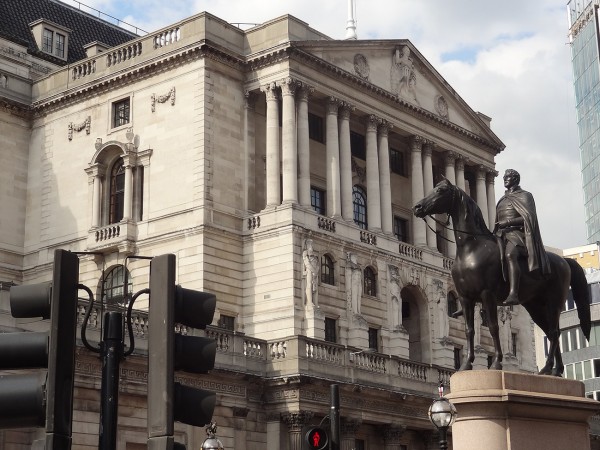 One reason is looser monetary policy. Following the Brexit vote, the Bank of England cut Bank Rate from 0.5% to 0.25% and introduced further quantitative easing. This makes it cheaper to finance government borrowing. What is more, the additional holdings of bonds by the Bank mean that the Bank returns to the government much of the interest (coupon payments) that would otherwise have been paid to the private sector.
Then, depending on the nature of the UK’s post-Brexit relationships with the EU, there could be savings in contributions to the EU budget – but just how much, no-one knows at this stage.
Finally, it depends on just what effects the measures announced in the Autumn Statement will have on tax revenues and government spending. We will examine this in a separate blog.
But even though public-sector borrowing is likely to fall more slowly than before the Brexit vote, the trajectory is still downward. Indeed, the previous Chancellor, George Osborne, had set a target of achieving a public-sector surplus by 2019/20.
But, would eventually bringing the public finances into surplus be desirable? Apart from the dampening effect on aggregate demand, such a policy could lead to underinvestment in infrastructure and other public-sector capital. There is thus a strong argument for continuing to run a deficit on the public-sector capital account to fund public-sector investment – such investment will increase incomes and social wellbeing in the future. It makes sense for the government to borrow for investment, just as it makes sense for the private sector to do so.
Articles
Autumn Statement: Why the damage to the public finances from Brexit might not be as bad as some think Independent, Simon Kirby (22/11/16)
Three Facts about Debt and Deficits NIESR blogs, R Farmer (21/11/16)
Autumn Statement: Big increase in borrowing predicted BBC News, Anthony Reuben (23/11/16)
Data
Economic and fiscal outlook – November 2016 Office for Budget Responsibility (23/11/16)
Questions
- Why have the public finances deteriorated?
- How much have they deteriorated?
- What is likely to happen to economic growth over the next couple of years? Explain why.
- How has the cut in Bank Rate and additional quantitative easing introduced after the Brexit vote affected government borrowing?
- What is likely to happen to (a) public-sector borrowing; (b) public-sector debt as a proportion of GDP over the next few years?
- Why is a running a Budget surplus neither a necessary nor a sufficient condition for reducing the government debt to GDP ratio.
- What are the arguments for (a) having a positive public-sector debt; (b) increasing public-sector debt as a result of increased spending on infrastructure and other forms of public-sector capital?
 A paper by three University of Sussex academics has just been published by the university’s UK Trade Policy Observatory (UKTPO). It looks at possible trade relations between the UK and the EU post Brexit. It identifies four key government objectives or constraints – what the authors call ‘red lines’ – and five possible types of trade arrangement with the EU.
The four red lines the authors identify are:
|
|
| • |
Limitations on the movement of people/labour; |
| • |
An independent trade policy; |
| • |
No compulsory budgetary contribution to the EU; |
| • |
Legal oversight by UK courts only and not by the European Court of Justice. |
Just how tight each of these four constraints should be is a matter for debate and political decision. For example, how extensive the limitations on the movement of labour should be and whether or not there should be any ‘voluntary’ budgetary contributions to the EU are issues where there is scope for negotiation.
Alongside these constraints is the objective of continuing to have as much access to and influence over the Single Market as possible.
The five possible types of trade arrangement with the EU identified in the paper are as follows:
|
|
| 1. |
Full Customs Union (CU) with the EU-27 |
| 2. |
Partial Customs Union with EU (based on EU-Turkey CU) |
| 3. |
Free Trade Area (FTA) with access to the Single Market (European Economic Area) |
| 4. |
Free Trade Area without automatic access to Single Market |
| 5. |
Reversion to World Trade Organisation (WTO) Most Favoured Nation (MFN) terms |
To clarify the terminology: a free trade area (FTA) is simply an agreement whereby member countries have no tariff barriers between themselves but individually can choose the tariffs they impose on imports from non-member countries; a customs union is a free trade area where all members impose common tariffs on imports from non-member countries and individual members are thus prevented from negotiating separate trade deals with non-member countries;  membership of the European Economic Area requires accepting freedom of movement of labour and compulsory contributions to the EU budget; WTO Most Favoured Nation rules would involve the UK trading with the EU but with tariffs equal to the most favourable ones granted to other countries outside the EU and EEA.
The red lines would rule out the UK being part of the customs union or the EEA. Although WTO membership would not breach any of the red lines, the imposition of tariffs against UK exports would be damaging. So the option that seems most appealing to many ‘Brexiteers’ is to have a free trade area agreement with the EU and negotiate separate trade deals with other countries.
But even if a tariff-free arrangement were negotiated with the EU, there would still be constraints imposed on UK companies exporting to the EU: goods exported to the EU would have to meet various standards. But this would constrain the UK’s ability to negotiate trade deals with other countries, which might demand separate standards.
The paper and The Economist article explore these constraints and policy alternatives and come to the conclusion that there is no easy solution. The option that looks the best “from the UK government’s point of view and given its red lines, would be an FTA with a variety of special sectoral arrangements”.
Article
Brexit means…a lot of complex trade decisions The Economist, Buttonwood’s notebook (15/11/16)
Paper
UK–EU Trade Relations post Brexit: Too Many Red Lines? UK Trade Policy observatory (UKTPO), Briefing Paper No. 5, Michael Gasiorek, Peter Holmes and Jim Rollo (November 2016)
Questions
- Explain the difference between a free trade area, a customs union and a single market.
- Go through each of the four red lines identified in the paper and consider what flexibility there might be in meeting them.
- What problems would there be in operating a free trade agreement with the EU while separately pursuing trade deals with other countries?
- What is meant by ‘mutual recognition’ and what is its significance in setting common standards in the Single Market?
- What problems are likely to arise in protecting the interests of the UK’s service-sector exports in a post-Brexit environment?
- What does the EU mean by ‘cherry picking’ in terms of trade arrangements? How might the EU’s attitudes in this regard constrain UK policy?
- Does the paper’s analysis suggest that a ‘hard Brexit’ is inevitable?
 Some commentators have seen the victory of Donald Trump and, prior to that, the Brexit vote as symptoms of a crisis in capitalism. Much of the campaigning in the US election, both by Donald Trump on the right and Bernie Sanders on the left focused on the plight of the poor. Whether the blame was put on immigration, big government, international organisations, the banks, cheap imports undercutting jobs or a lack of social protection, the message was clear: capitalism is failing to improve the lot of the majority. A small elite is getting significantly richer while the majority sees little or no gain in their living standards and a rise in uncertainty.
The articles below look at this crisis. They examine the causes, which they agree go back many years as capitalism has evolved. The financial crash of 2008 and the slow recovery since are symptomatic of the underlying changes in capitalism.
The Friedman article focuses on the slowing growth in technological advance and the problem of aging populations. What technological progress there is is not raising incomes generally, but is benefiting a few entrepreneurs and financiers. General rises in income may eventually come, but it may take decades before robotics, biotechnological advances, e-commerce and other breakthrough technologies filter through to higher incomes for everyone. In the meantime, increased competition through globalisation is depressing the incomes of the poor and economically immobile.
 All the articles look at the rise of the rich. The difference with the past is that the people who are gaining the most are not doing so from production but from financial dealing or rental income; they have gained while the real economy has stagnated.
The gains to the rich have come from the rise in the value of assets, such as equities (shares) and property, and from the growth in rental incomes. Only a small fraction of finance is used to fund business investment; the majority is used for lending against existing assets, which then inflates their prices and makes their owners richer. In other words, the capitalist system is moving from driving growth in production to driving the inflation of asset prices and rental incomes.
The process whereby financial markets grow and in turn drive up asset prices is known as ‘financialisation’. Not only is the process moving away from funding productive investment and towards speculative activity, it is leading to a growth in ‘short-termism’. The rewards of senior managers often depend on the price of their companies’ shares. This leads to a focus on short-term profit and a neglect of long-term growth and profitability – to a neglect of investment in R&D and physical capital.
The process of financialisation has been driven by deregulation, financial innovation, the growth in international financial flows and, more recently, by quantitative easing and low interest rates. It has led to a growth in private debt which, in turn, creates more financial instability. The finance industry has become so profitable that even manufacturing companies are moving into the business of finance themselves – often finding it more profitable than their core business. As the Foroohar article states, “the biggest unexplored reason for long-term slower growth is that the financial system has stopped serving the real economy and now serves mainly itself.”
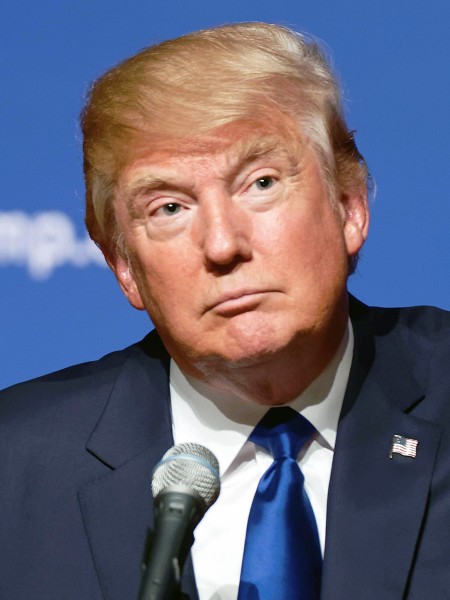 So will the election of Donald Trump, and pressure from populism in other countries too, mean that governments will focus more on production, job creation and poverty reduction? Will there be a movement towards fiscal policy to drive infrastructure spending? Will there be a reining in of loose monetary policy and easy credit?
Or will addressing the problem of financialisation and the crisis of capitalism result in the rich continuing to get richer at the expense of the poor, but this time through more conventional channels, such as increased production and monopoly profits and tax cuts for the rich? Trump supporters from among the poor hope the answer is no. Those who supported Bernie Sanders in the Democratic primaries think the answer will be yes and that the solution to over financialisation requires more, not less, regulation, a rise in minimum wages and fiscal policies aimed specifically at the poor.
Articles
Can Global Capitalism Be Saved? Project Syndicate, Alexander Friedman (11/11/16)
American Capitalism’s Great Crisis Time, Rana Foroohar (12/5/16)
The Corruption of Capitalism by Guy Standing review – work matters less than what you own The Guardian, Katrina Forrester (26/10/16)
Questions
- Do you agree that capitalism is in crisis? Explain.
- What is meant by financialisation? Why has it grown?
- Will the policies espoused by Donald Trump help to address the problems caused by financialisation?
- What alternative policies are there to those of Trump for addressing the crisis of capitalism?
- Explain Schumpeter’s analysis of creative destruction.
- What technological innovations that are currently taking place could eventually benefit the poor as well as the rich?
- What disincentives are there for companies investing in R&D and new equipment?
- What are the arguments for and against a substantial rise in the minimum wage?

The linked article below from The Economist looks at whether the election of Donald Trump, the effects of the Brexit vote and policies being pursued elsewhere in the world mark a new macroeconomic era. We may be about to witness rising inflation and the end of the era of tight fiscal policy and loose monetary policy. We might see a return of a more Keynesian approach to macreconomic policy.
According to the article, since the financial crisis of 2008, we have been witnessing economies stuck in a liquidity trap. In such cases, there is little scope for further reductions in interest rates. And increases in money supply, in the form of quantitative easing, tend to be held in idle balances, rather than being spent on goods and services. The idle balances take the form of increased bank reserves to rebuild their capital base and increased purchases of assets such as shares and property.
Even if people did believe that monetary policy would work to boost aggregate demand and result in higher inflation, then they would also believe that any such boost would be temporary as central banks would then have to tighten monetary policy to keep inflation within the target they had been set. This would limit spending increases, keeping the economy in the liquidity trap.
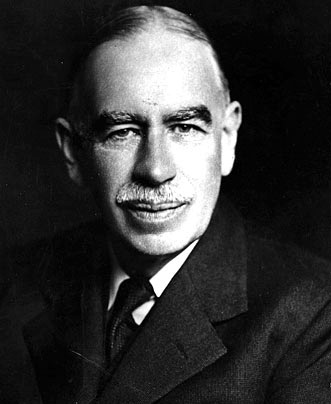 With a liquidity trap, fiscal policy is likely to be much more effective than monetary policy in boosting aggregate demand. However, its scope to pull an economy out of recession and create sustained higher growth depends on the extent to which governments, and markets, can tolerate higher budget deficits and growing debt. With governments seeking to claw down deficits and ultimately debt, this severely limits the potential for using fiscal policy.
With the election of Donald Trump, we might be entering a new era of fiscal policy. He has promised large-scale infrastructure spending and tax cuts. Although he has also promised to reduce the deficit, he is implying that this will only occur when the economy is growing more rapidly and hence tax revenues are increasing.
Is Donald Trump a Keynesian? Or are such promises merely part of campaigning – promises that will be watered down when he takes office in January? We shall have to wait and see whether we are about to enter a new era of macroeconomic policy – an era that has been increasingly advocated by international bodies, such as the IMF and the OECD (see the blog post, OECD goes public).
Article
Slumponomics: Trump and the political economy of liquidity traps The Economist (10/11/16)
Questions
- Explain what is meant by ‘the liquidity trap’.
- Why is monetary policy relatively ineffective in a liquidity trap? Use a diagram to support your argument.
- Why is fiscal policy (in the absence of public-sector deficit targets) relatively effective in a liquidity trap? Again, use a diagram to support your argument.
- Examine how the Japanese government attempted to escape the liquidity trap? (Search this site for ‘Abenomics’.)
- In what ways may the depreciation of the pound since the Brexit vote help the UK to escape the liquidity trap?
- Could a different form of quantitative easing, known as ‘helicopter money’, whereby government or private spending is financed directly by new money, allow countries to escape the liquidity trap? (Search this site for ‘helicopter money’.)
- Why may a political upheaval be necessary for a country to escape the liquidity trap?