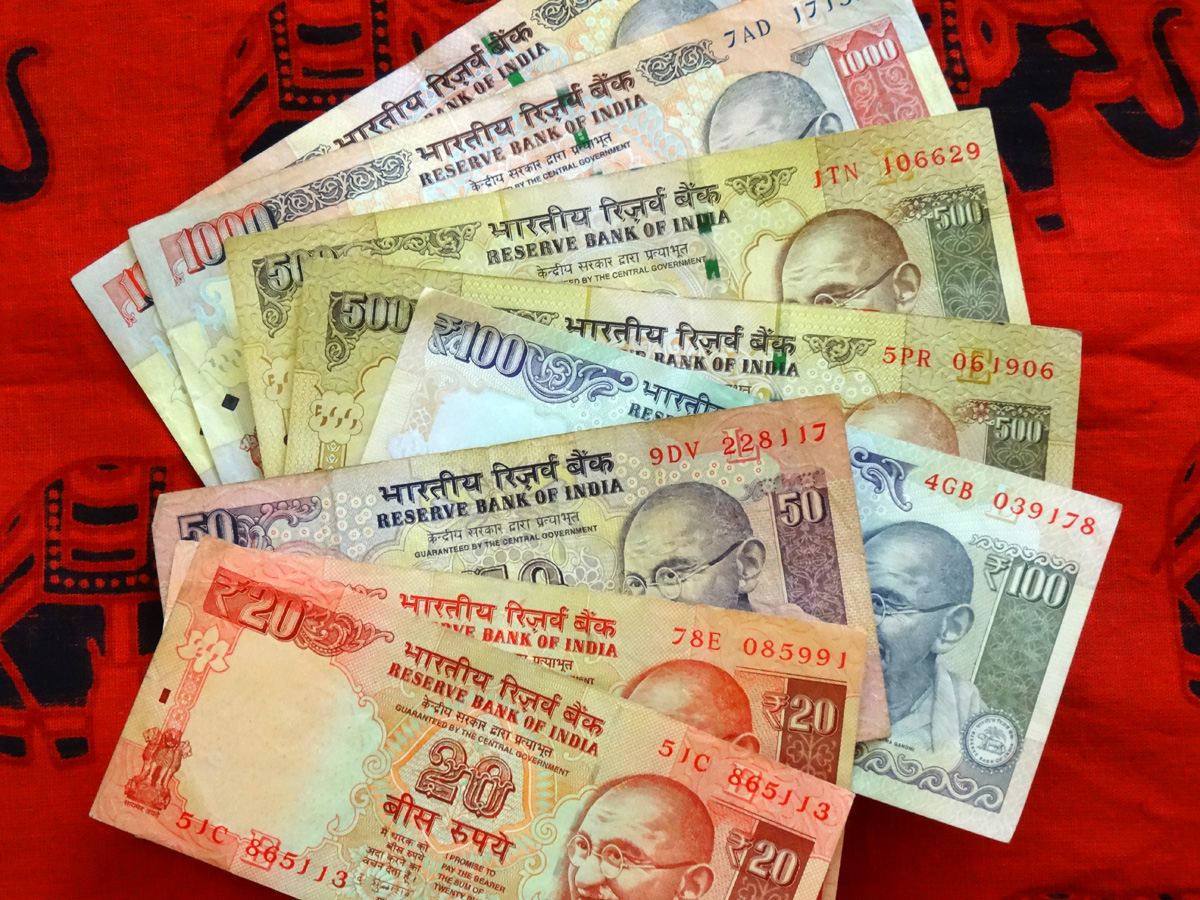
 The expansion of the BRIC economies has both advantages and disadvantages for Western countries. Their consistently high growth rates have created a much wider market place for Western firms and a much needed additional source of consumer demand, especially in times of recession. Countries such as China have had double digit growth rates, with others like India experiencing growth rates of just under 10%. But are these impressive growth rates now beginning to fall?
For the last 2 years, the growth rate in the Indian economy has been sub-5%, with growth in the 2013-14 financial year at 4.7%. Though some sectors, including agriculture have experienced buoyant growth, it is other sectors that have been holding this economy back. Manufacturing contracted at an annualised rate of 1.4% over the quarter, while mining contracted by 0.4%. With a growth rate of just under 5%, one might think that this was good – after all many Western economies have only recently entered positive growth. However, the Indian economy has a rapidly growing population and it is estimated that 10 million additional jobs each year must be created. It is this figure that requires such a high growth rate – estimated at around 8%. Thus, the sub-5% growth recorded for 2 years is insufficient to sustain the required job creation.
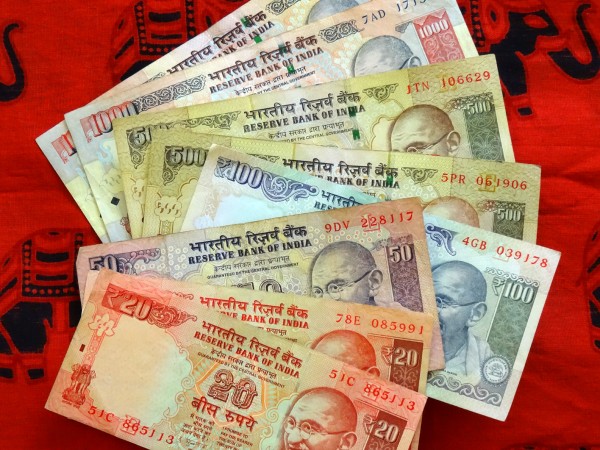
There are many factors that appear to be holding growth back. High inflation has been a problem for some years and the Indian currency has been relatively weak and volatile. Together, these issues have created an environment of uncertainty and if there’s one thing that investors don’t like, it’s uncertainty. This has therefore led to a lack of investment in the economy, which is a key component of aggregate demand and hence a key source of economic growth. Furthermore, interest rates rose last year, thereby pushing up the cost of borrowing and the rate of credit growth has also slowed. These factors collectively have led to lower foreign investment, domestic investment and spending, which have all contributed towards more subdued growth than in the past. Glenn Levine, a senior economist at Moody’s said:
India’s economy continues to grow well below potential as a combination of supply‐side constraints and the adverse effects of an underperforming government weigh on capital expenditure and hiring … It will be a while before the Indian economy is expanding above 6% again.
However, many economists remain optimistic about the prospects of Asia’s third-largest economy. Inflation appears to be under control and the currency has gained strength. Many believe that more investment supporting government policies will be the kick start the economy needs and this will in turn encourage firms to begin investment. It may be the new leader of this country, Narendra Modo, that will jump start the economy. The Prime Minister is expected to back policies to stimulate growth, who will direct more spending at infrastructure, simplify taxes and introduce policies to attract foreign investment. Adi Godrej, Chairman of the Godrej group said:
As soon as investors see the first signals of growth-supportive policies, you will see a definite turnaround on the ground.
The coming months will be crucial in determining how quickly the Indian economy is likely to see a return to near double digit growth. The new government has indeed promised policies to boost the economy, but the annual budget will confirm whether this promise is likely to be kept. Given the dependence of Indian jobs on a fast growth rate and the dependence of the Western world on the continued growth of the BRICs in creating a wider market for our exports, the fortunes of India are extremely important. The following articles consider this economy.
Indian economy grew at 4.7% in 2013-14 The Times of India (30/5/14)
India’s economic growth disappoints BBC News (30/5/14)
India’s GDP grows 4.7% in fiscal year, missing government forecast Wall Street Journal, Anant Vijay Kala (30/5/14)
India’s economy expands 4.7pct in fiscal year 2013/14 Reuters (30/5/14)
India’s economy still underwhelms CNN Money, Charles Riley, Alanna Petroff (30/5/14)
FY14 GDP growth at 4.7%; India sees worst slowdown in 25 years The Economic Times (30/5/14)
India growth below 5% adds pressure on Modi to spur investment Bloomberg, Unni Krishnan (30/5/14)
Jim Armitage: ‘Modinomics’ in India has helped growth, but not for all Independent, Jim Armitage (17/5/14)
Questions
- Using a diagram, explain how economic growth can be created through (a) demand-side measures and (b) supply-side measures.
- Why would higher interest rates reduce growth?
- Why does high inflation create uncertainty and what impact does this have on business investment?
- India has experienced a weak and volatile currency and this has contributed towards a lack of foreign investment and low growth. Using a diagram, explain why this could be the case.
- What sort of government policies would you recommend for the Indian economy if you had become the new Prime Minister and your primary objective was to boost economic growth?
- Why is the expansion of the BRIC economies, of which India is one, so important for Western economies?
 The latest preliminary GDP estimates for 2014 Q1 suggest that the economy’s output (real GDP) expanded by 0.8 per cent following on the back of a 0.7 per cent increase in 2013 Q4. Growth was observed in three of the four main industrial sectors: 0.9% in services, 0.8% in production and 0.3% in construction. In contrast, output decreased by 0.7% in agriculture. The total output of the economy is now just 0.6 per cent below its 2008 Q1 peak with the output of the service sector now 2.0 per cent higher.
Data on growth need to be set in the context of the inherent volatility of economies and in this case in the context of 2008/9 recession. Then, output fall by some 7.2 per cent. UK output peaked in 2008 Q1 (£392.786 billion at 2010 prices). There then followed 6 quarters during which output declined.
Output declined again in 2010 Q4 (-0.2% growth), in 2011 Q4 (-0.1% growth), in 2012 Q2 (-0.4%) and in 2012 Q4 (-0.2%). A double-dip recession was only narrowly avoided with growth recorded at zero on 2012 Q1. The latest ONS numbers show the economy grew by 0.8 per cent in 2013 Q2 (to £381.318 billion at 2010 prices), by 0.8 per cent in 2013 Q3 (to £384.533 billion at 2010 prices), by 0.7 per cent in 2013 Q4 (to £387.138 billion at 2010 prices) and by 0.8 per cent in 2014 Q1 (to £390.235 billion at 2010 prices). Compared with 2013 Q1, the output of the UK economy in 2014 Q1 is 3.1 per cent higher.
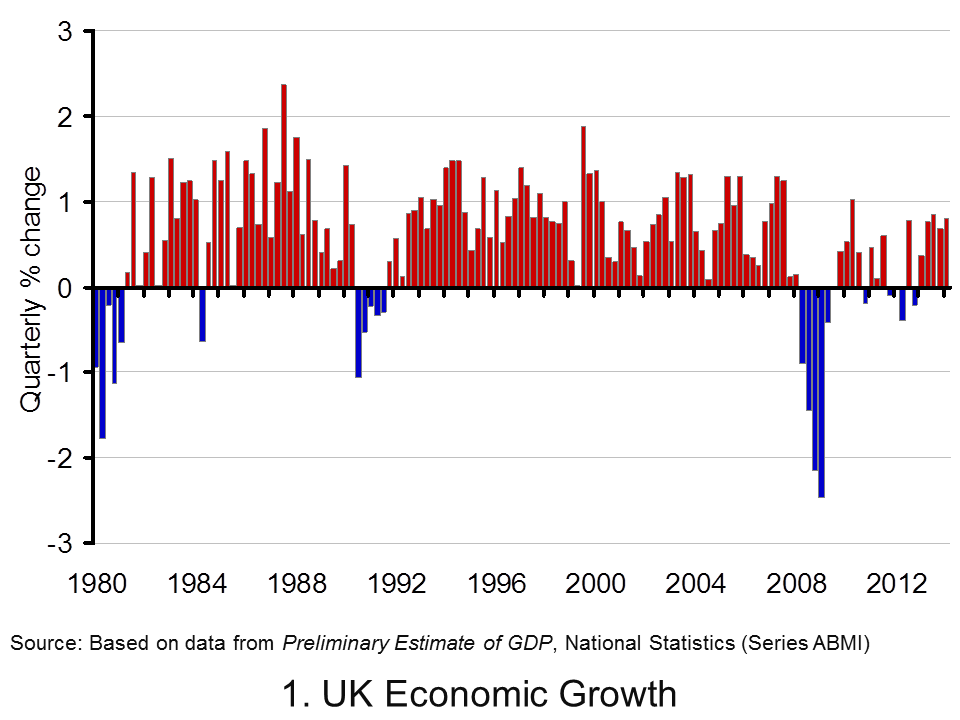 Chart 1 helps to put the recent growth numbers into an historical context. It shows the quarterly change in real GDP since the 1980s. We can see the 5-quarter recession that commenced in 1980 Q1 when output shrunk by 4.6 per cent, the 5-quarter recession that commenced in 1990 Q3 when output shrank by 2.4 per cent and the 6-quarter recession that commenced in 2008 Q2 when output shrank by 7.2 per cent. (Click here to download the chart to PowerPoint.)
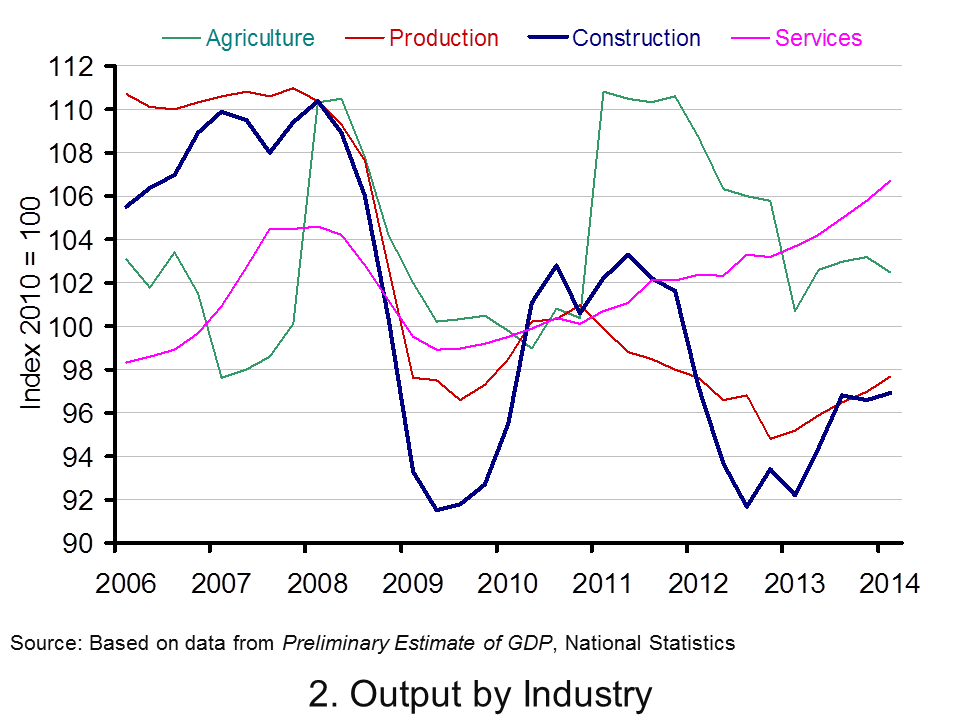 Chart 2 scratches a little below the surface by looking at output by the 4 principal industrial types. The interesting finding is that the output of the service sector has now risen above its 2008 Q1 peak. In 2014 Q1, service sector output was 2.0 per cent higher than 2008 Q1. The fact that total output remains 0.6 per cent lower can be explained by the lop-sided industrial recovery. Output in agriculture, forestry and fisheries remains 7.1 per cent lower, production (including manufacturing) 11.5 per cent lower and construction 12.2 per cent lower. (Click here to dowload the chart to Powerpoint.)
Data
Preliminary Estimate of GDP – Time Series Dataset Q1 2014 Office for National StatisticsGross Domestic Product Preliminary Estimate, Q1 2014 Office for National Statistics
Articles
UK GDP ‘close to pre-crisis level’ says NIESR BBC News (9/5/14)
UK ‘great recession’ almost over, says thinktank Guardian, Katie Allen (9/5/14)
UK economy tops its pre-crash high point, says NIESR Telegraph, Szu Ping Chan (9/5/14)
UK economy grew by 0.8% in first three months of 2014 Guardian, Katie Allen and Angela Monaghan (29/4/14)
Manufacturing is GDP star performer BBC News, Robert Peston (29/4/14).
Questions
- What is the difference between nominal and real GDP? Which of these helps to track changes in economic output?
- Looking at Chart 1 above, summarise the key patterns in real GDP since the 1980s.
- What is a recession? What is a double-dip recession?
- What are some of the problems with the traditional definition of a recession?
- Can a recession occur if nominal GDP is actually rising? Explain your answer.
- What factors lead to economic growth being so variable?
- What factors might explain the very different patterns seen since the late 2000s in the volume of output of the 4 main industrial sectors?
- Produce a short briefing paper exploring the prospects for economic growth in the UK over the next 12 to 18 months.
- Explain the arguments for and against using GDP as a measure of a country’s economic well-being.
- Analyse the role that the financial system might play in contributing to or alleviating the business cycle.
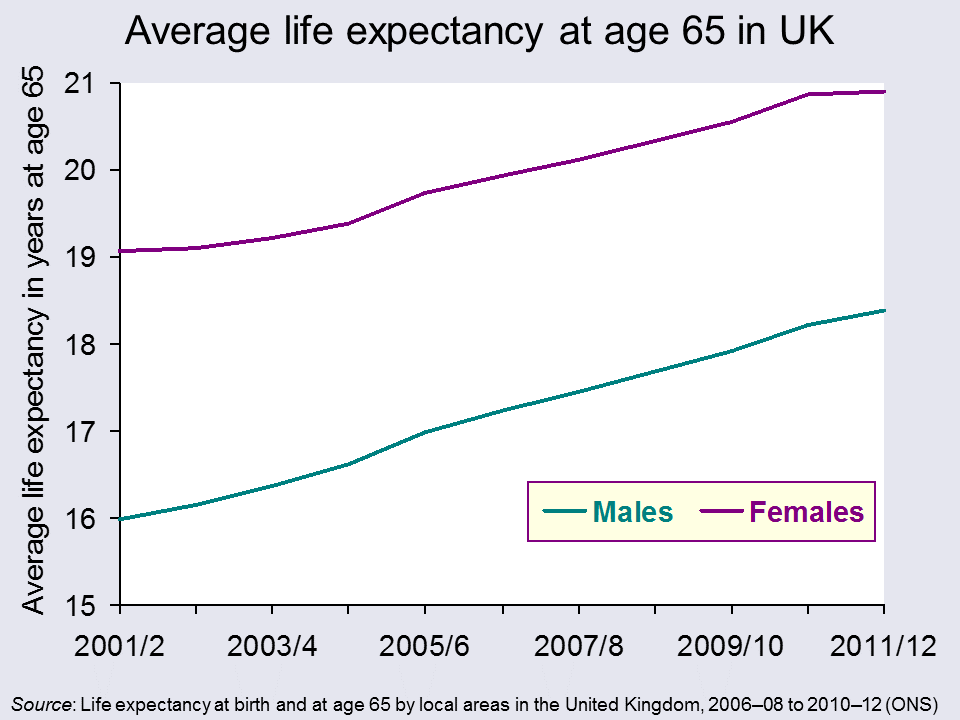
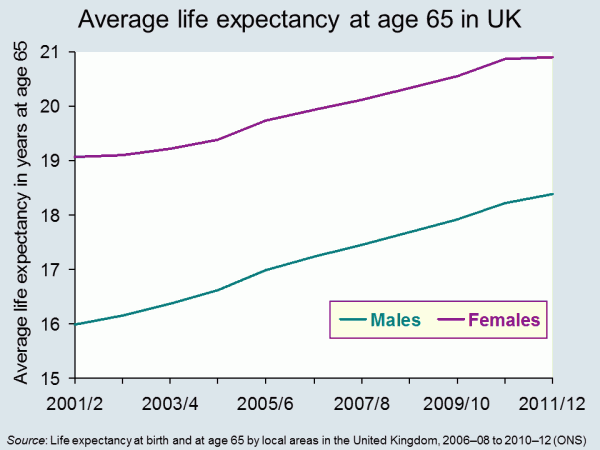 Life expectancy is increasing across the world and the latest set of figures from the Office for National Statistics show that in the UK it has passed 79 for boys born in 2010–12, and 82 for girls born then. In fact the prediction is that over a third of babies born in 2013 will live to more than 100. The data throws up some interesting questions. How well prepared are we for lives that last this long? And how evenly distributed is this increase in life expectancy? Pensions’ minister, Steve Webb, has called for better information on life expectancy to be shared. How would this impact on our decision making?
It seems reasonable to think that increasing life expectancy must be good news. And of course, for individuals it can be. In 1951 the average man retiring at 65, in England and Wales, could expect to live and draw a pension for another 12.1 years. By 2014 this had risen to 22 years.
 But while we can look forward to longer life, for the government, it presents some challenges The first is that we just don’t save enough for our old age. This seems to be partly because we find it hard to make decisions that will have an impact so far in the future. There are a number of measures that have been put in place to encourage us to save more, including auto-enrolment into company pension schemes. This is being rolled out across businesses over the next three years. In the 2014 Budget, the Chancellor announced that people reaching retirement age will be able to draw all their pension as a cash lump sum, rather than having to take it as a regular income.
Another concern for government is the variations that we find in life expectancy across the UK. The 2014 ONS data identified that life expectancy for men born in Glasgow in 2012 is 72.6, in East Dorset it is 82.9. 25% of those in Glasgow are not expected to live to 65. The gap in years of good health is even greater. This presents governments with a long-term problem. How do they achieve greater equality in this instance? Do they focus resources on the areas that need it most? Do they legislate to address behaviour? Or do they rely on the provision of good advice – on diet, exercise and other factors?
Information has a role to play in both areas identified above. In April 2014, Steve Webb, suggested that in order to make good decisions at the point of retirement, people need to understand more about what lies ahead. He said:
People tend to underestimate how long they’re likely to live, so we’re talking about averages, something very broad-brush. Based on your gender, based on your age, perhaps asking one or two basic questions, like whether you’ve smoked or not, you can tell somebody that they might, on average, live for another 20 years or so.
This suggestion has led to some concerns being expressed at what appears to be an over-simplistic approach. Estimates can only be based on a mix of averages modified by individual information. Would the projections be shared with pension providers? What would you do if you exceeded your forecast life expectancy – by a long way – and had spent all your money? Could you sue someone?
Will your pension pot last as long as you will? The Telegraph, Dan Hyde and Richard Dyson (23/4/2014)
Scientists invent death test that will tell us how long we have to live Metro (11/8/13)
Games host Glasgow has worst life expectancy in the UK The Guardian, Caroline Davies (16/4/2014)
Pensioners could get life expectancy guidance BBC News Politics (17/4/14)
ONS reveals gaps in life expectancy across the UK FT Adviser Pensions, Kevin White (23/4/14)
Health care aid for developing countries boosts life expectancy Health Canal, Ruth Ann Richter (22/4/14)
A third of babies born this year will live to 100 This is Money.co.uk, Adam Uren (11/12/13)
Questions
- Thinking about the UK, what are the factors that might explain variations in life expectancy across different regions? How might the government address these differences? Why would they want to do so?
- Do the same factors explain variations between countries? Who can address these differences? Who would want to do so?
- If you could have a reasonable prediction of your life expectancy at 65, would you want it? How would your behaviour change if you were predicted a longer than average life expectancy? How would it change if you were predicted a shorter than average life expectancy?
- If you could have an accurate prediction of your life expectancy at 18, how would your answers differ? If this were possible, would it present any problems?
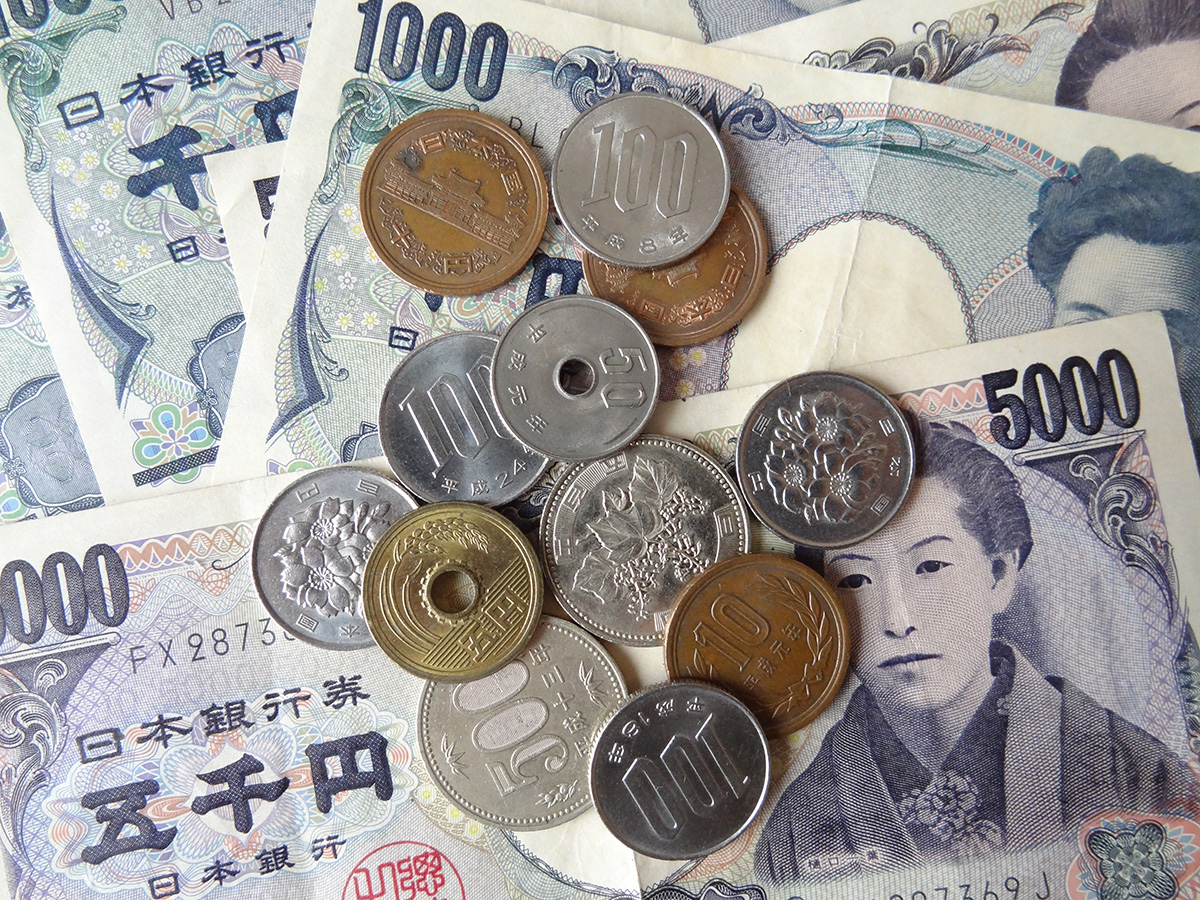
 Rising inflation: not normally a cause for celebration, but that’s not the case for Japan. Having been subject to the spectre of deflation for many years, the 22-year high for the CPI at 2.7% is a welcome figure, even it is slightly lower than expected. This surge in prices is partly the result of a growth in domestic demand and a sign, therefore, that output will expand in response to the rise in demand.
The Japanese economy has experienced largely stagnant growth for two decades and a key cause has been falling prices. Although consumers like bargains, this has been problematic for this large economy. Deflation creates continuously falling prices and this means consumers hold back from purchasing durable goods, preferring to wait until prices have fallen further.

In the blog, Japan’s recovery, we looked at inflation data showing Japanese consumer prices growing at a faster rate than expected. This ‘positive’ trend has continued.
When it comes to inflation, expectations are crucial. If people think prices will rise in the future, they are more likely to buy now to get the lower price. This can therefore help to stimulate aggregate demand and it is this that has been the target for Japan. Part of the growth in the CPI is down to the sales tax rise from 5% to 8%. This was the first time in 17 years that the sales tax had increased. Further increases in it are expected in 2015. There were concerns about the impact of this rise, based on the depression that followed the last rise back in 1997, but so far the signs seem good.
Monetary easing was a key component in ending the downward trajectory of the Japanese economy and, following the sales tax rise, many believe that another round of monetary easing may be needed to counter the effects and create further growth in the economy and in the CPI. As the Bank of Japan Governor said:
There are various ways to adjust policy. We will decide what among these measures is appropriate depending on economic and price developments at the time … For now, we can say Japan is making steady progress toward achieving 2 per cent inflation.
One of the ‘three arrows‘ of the government’s policy has been to boost government spending, which should directly increase aggregate demand. Furthermore, with signs of the CPI rising, consumers may be encouraged to spend more, giving a much needed boost to consumption. The economy is certainly not out of the woods, but appears to be on the right path. The following articles consider the Japanese economy.
Japan CPI rises less than expected Wall Street Journal, Takashi Nakamichi (25/4/14)
Japan inflation may beat BOJ forecast Reuters, Leika Kihara (22/4/14)
Tokyo consumer price growth at 22-year high BBC News (25/4/14)
Japan inflation quickens to over 5-year high, output rebounds Reuters, Leika Kihara and Stanley White (31/1/14)
Japan’s consumer inflation set to reach five-year high Guardian (18/4/14)
Tokyo inflation hits 22-year high, inching toward BOJ goal Reuters, Tetsushi Kajimoto and Leika Kihara (25/4/14)
Tokyo’s core CPI got 2.7% lift in April from tax hike The Japan Times (25/4/14)
Is Japan winning the war against deflation? CNBC, Ansuya Harjani (25/4/14)
Questions
- Why is deflation a problem?
- Using an AD/AS diagram, illustrate the problem of expectations and how this contributes to stagnant growth.
- Use the same diagram to explain how expectations of rising prices can help to boost AD.
- Why is the sales tax expected to reduce growth?
- Why is another round of monetary easing expected?
- What government policies would you recommend to a government faced with stagnant growth and falling prices?
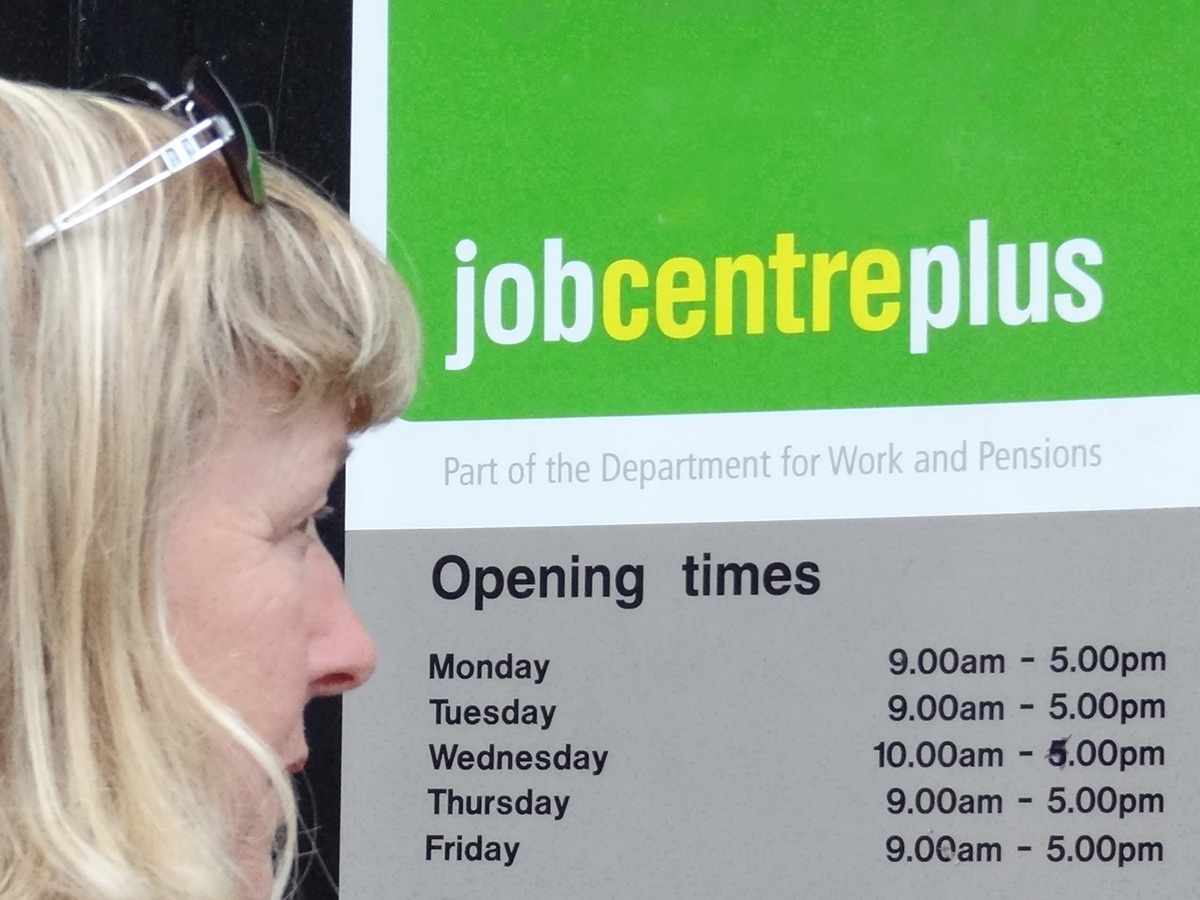
 Unemployment and employment are concepts that are often talked about in the media. Indeed, the 7% unemployment target referred to by the Governor of the Bank of England has been a constant feature of recent headlines. However, rather than targeting an unemployment rate of 7%, George Osborne has now called for ‘full employment’ and believes that tax and welfare changes are key to meeting this objective.
Reducing the unemployment rate is a key macroeconomic objective and the costs of unemployment are well-documented. There are obviously big costs to the individual and his/her family, including lower income, dependency, stress and potential health effects. There are also costs to the government: lower income tax revenues, potentially lower revenues from VAT through reduced consumer expenditure and the possibility of higher benefit payments. There are other more ‘economic’ costs, namely an inefficient use of resources. Unemployment represents a cost to the economy, as we are operating below full capacity and we therefore see a waste of resources. It is for this reason that ‘full employment’ is being targeted.
Traditional economic theory suggests that there is a trade-off between unemployment and inflation, illustrated by the well-known Phillips curve. In the past, governments have been willing to sacrifice unemployment for the purpose of reducing inflation. There have also been attempts to boost the economy and create jobs through increased borrowing. However, George Osborne has said:
Unemployment is never a price worth paying, but artificial jobs paid for with borrowed money doesn’t work either.
A figure representing full employment hasn’t been mentioned, so it remains unclear what level of unemployment would be acceptable, as despite the name ‘full employment’, this doesn’t mean that everyone has a job. There are several definitions of full employment, in both an economic and political context. In the period of reconstruction after the Second World War, William Beveridge, architect of the welfare state, defined full employment as where 3% of people would be unemployed.
In more recent times, other definitions have been given. In the era of monetarism in the 1970s, the term ‘natural rate of unemployment’ was used to define the unemployment rate to which economies tend in the long run – after inflationary expectations have adjusted. Keynesians use the term the ‘non-accelerating-inflation rate of unemployment (NAIRU)’, where unemployment is confined to equilibrium unemployment and where there is no excess or deficiency of aggregate demand. Both the natural rate and the NAIRU relate to the rate of unemployment at which the long-run Phillips curve is vertical.
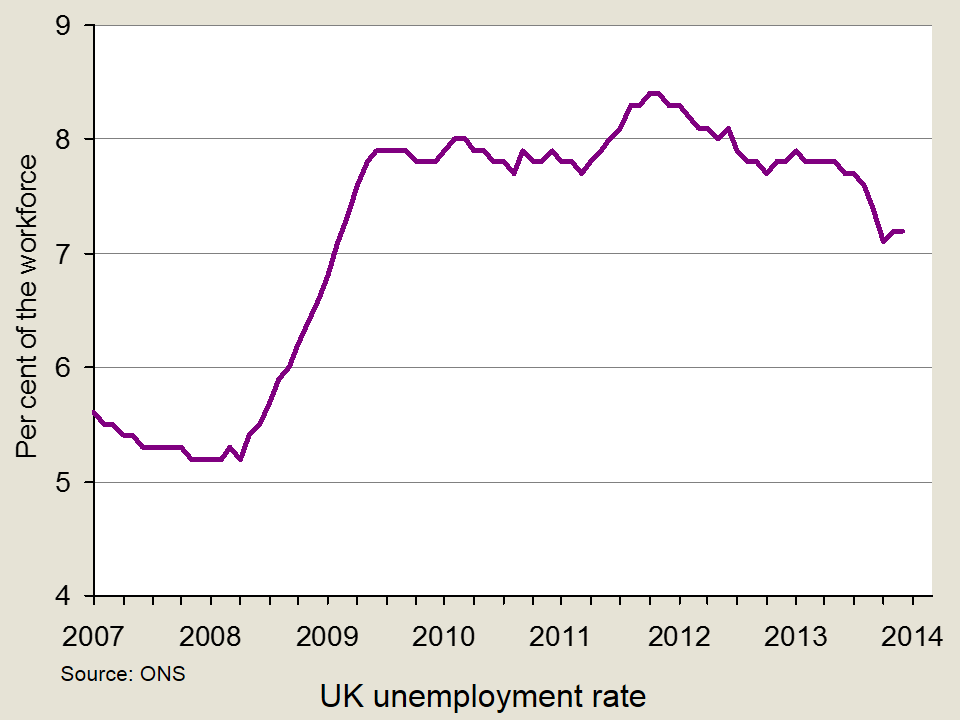
In its Economic and Fiscal Outlook of March 2013, the Office for Budget Responsibility estimated the UK’s NAIRU to be 5.4%. George Osborne has not specified a particular rate. Rather, his speech refers to creating the ‘highest employment rate of any of the world’s leading economies’. He said the ambition was to make the UK:
…the best place in the world to create a job; to get a job; to keep a job; to be helped to look for another job if you lose one…A modern approach to full employment means backing business. It means cutting the tax on jobs and reforming welfare.
Therefore, while it appears that there is no target figure for unemployment, it seems that a new Conservative objective will be to focus on sustainable job creation and eliminate disequilibrium unemployment. This represents a move very much into Labour territory. Meeting the objective will be no easy task, given the past few years and such high levels of youth unemployment, as Labour were quick to point out, but the unemployment figures are certainly moving in the right direction. The following articles consider the objective of full employment.
Articles
Britain’s Osborne changes tone on economy with “full employment” target Reuters, William James (31/3/14)
George Osborne commits to ‘fight for full employment’ BBC News (including video) (1/4/14)
What does full employment mean? The Guardian (1/4/14)
What is full employment? The Telegraph, Peter Dominiczak (31/3/14)
’Jobs matter’, says George Osborne as he aims for full employment Independent, Andrew Grice (31/3/14)
Liam Bynre: Labour would aim for ‘full employment’ BBC News (17/5/13)
Osborne pledges full employment for UK Sky News (31/3/14)
Osborne commits to full employment as election looms Bloomberg, Svenja O’Donnell (31/3/14)
Whatever happened to full employment? BBC News, Tom de Castella and Caroline McClatchey (13/10/11)
Questions
- What is meant by full employment?
- Is it a good idea to target zero unemployment?
- Using a diagram, illustrate the difference between disequilibrium and equilibrium unemployment?
- How can full employment be achieved?
- What are the costs of unemployment?
- Use a diagram to illustrate the natural rate of unemployment and explain what it means in terms of the relationship between unemployment and inflation.
 The expansion of the BRIC economies has both advantages and disadvantages for Western countries. Their consistently high growth rates have created a much wider market place for Western firms and a much needed additional source of consumer demand, especially in times of recession. Countries such as China have had double digit growth rates, with others like India experiencing growth rates of just under 10%. But are these impressive growth rates now beginning to fall?