 Many important economic changes have occurred over the past two years and many have occurred in the past two months. Almost all economic events create winners and losers and that is no different for the Russian economy and the Russian population.
There is an interesting article plus videos on the BBC News website (see link below), which consider some of the economic events that, directly or indirectly, have had an impact on Russia: the fall in oil prices; the conflict between Russia and the Ukraine; the fall in the value of the rouble (see chart); the sanctions imposed by the West.
Clearly there are some very large links between events, but an interesting question concerns the impact they have had on the everyday Russian consumer and business. Economic growth in 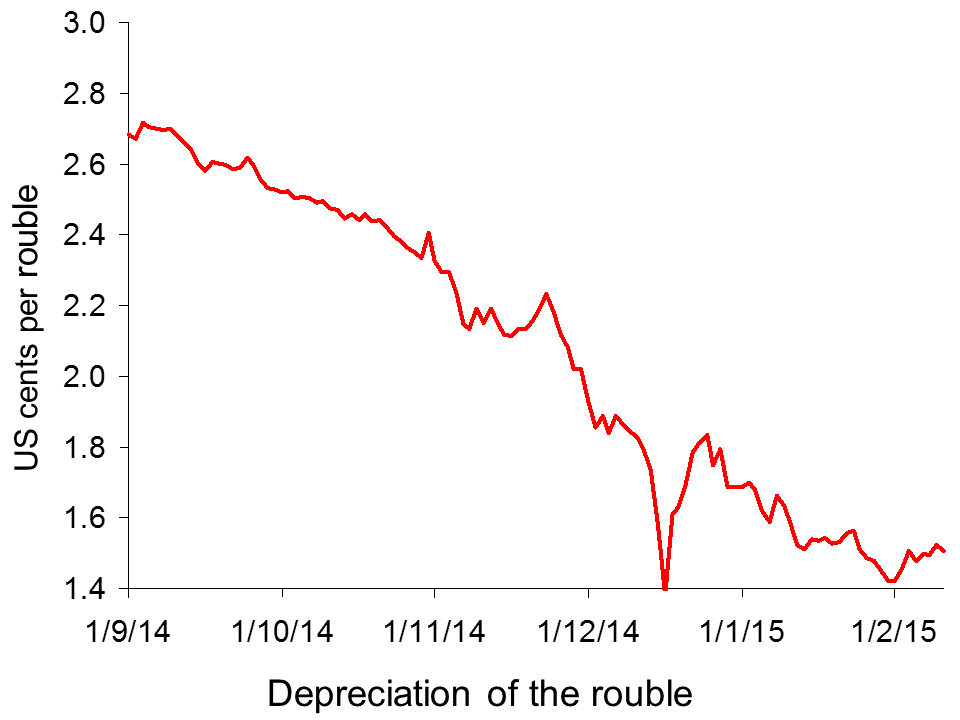 Russia has been adversely affected and estimates suggest that the economy will shrink further over the coming year. Oil and gas prices have declined significantly and while this is good news for many consumers across the world, it brings much sadder tidings for an economy, such as Russia, that is so dependent on oil exports.
However, is there a bright side to the sanctions or the falling currency? The BBC News article considers the winners and losers in Russia, including families struggling to feed their families following spending cuts and businesses benefiting from less competition.
 Russia’s economic turmoil: nightmare or opportunity? BBC News, Olga Ivshina and Oleg Bodyrev (5/2/15)
Questions
- Why has the rouble fallen in value? Use a demand and supply diagram to illustrate this.
- What does a cheap rouble mean for exporters and importers within Russia and within countries such as the UK or US?
- One of the businesses described in the article explain how the sanctions have helped. What is the explanation and can the effects be seen as being in the consumer’s interest?
- Oil prices have fallen significantly over the past few months. Why is this so detrimental to Russia?
- What is the link between the exchange rate and inflation?
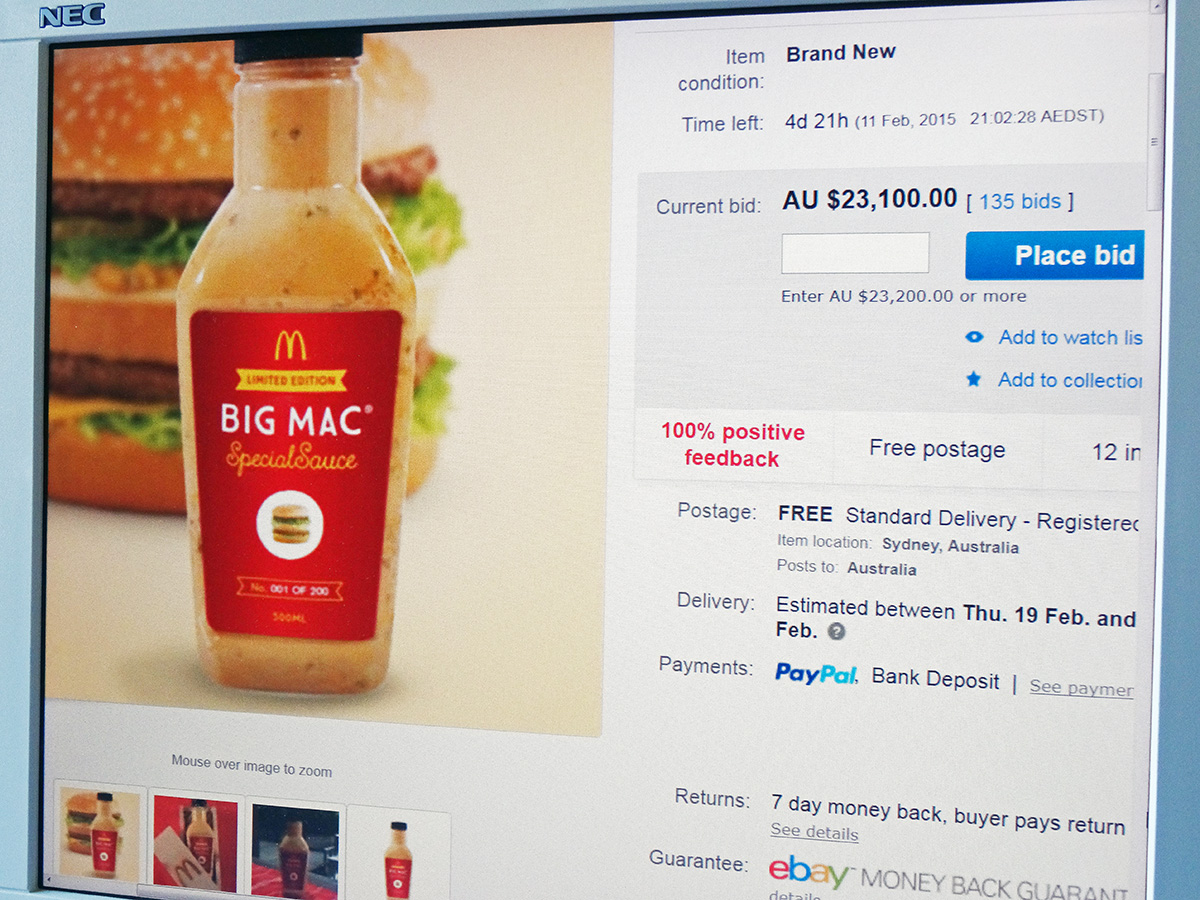
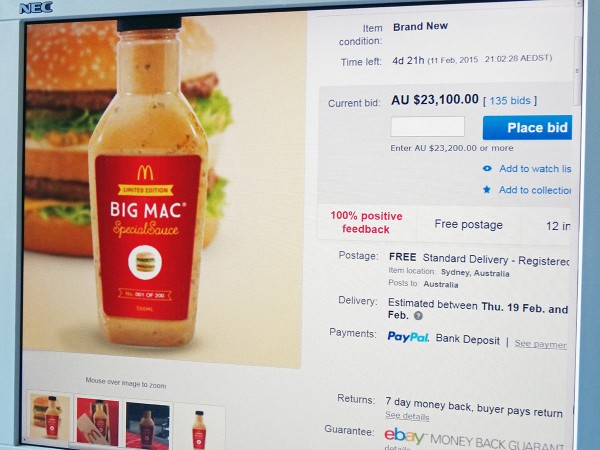 McDonalds is one of the most recognised names in the world and its iconic product, the Big Mac, is an obsession for many people – though I have to confess that I have never had one. McDonalds is taking advantage of this fact by auctioning off a bottle of its secret Big Mac sauce. The proceeds will go to charity.
McDonalds has around 36 000 stores around the world, located in over 100 countries. The Big Mac is sold in all of these stores and the famous sauce is available there for a pretty small price. However, on eBay, this bottle of sauce has already reached a bid of AU$23 100 (£11 800)! The 500m bottle is only being auctioned in Australia and with a few days before the auction finishes, the price may get still higher.
So, why are people prepared to pay such a high price for a bottle of sauce that is readily available on a Big Mac and which, in Australia, will be sold in small tubs throughout this month?
The advert on eBay suggests that the bottle is being set free and is ‘rarer than a spot on Bondi beach on New Years Day’. As we know, when products become scarce their price tends to rise. This auction will be the first time that this sauce is available, as normally the sauce is dispensed straight onto the burger. The ingredients of this famous sauce are known, but the recipe for making it is not. Perhaps it represents an opportunity for someone to try to re-create it!
An auction is an interesting mechanism to receive the highest price for any product. Most people have a maximum willingness to pay for something and if they pay less than that, they will receive some consumer surplus. However, with an auction, it can be a good way for the seller to force consumers to bid their maximum price and hence this can reduce the consumer surplus.
Of course, in this auction only the highest bidder will actually pay and so it will only be their consumer surplus that is affected. However, other auction designs, such as an ‘All-pay’ auction can extract the full consumer surplus from bidders. Mr Lollback, the Chief Marketing Officer said:
‘We’re excited to be auctioning off the first-ever bottle of Big Mac sauce for a cause we are passionate about… It’s going to be interesting to see just how much people are prepared to pay for such a sought after commodity.’
The final price will certainly be interesting and, with other bottles of this sauce available, we will have to wait and see whether or not further auctions take place or if other mechanisms of delivering the sauce to the public appear. The following articles consider the Big Mac sauce auction.
McDonald’s Big Mac sauce auction attracts $18,000 bid BBC News (3/2/15)
Liquid Gold! Macca’s auction off the only bottle of its trademark Big Mac special sauce in Australia … and bids have already reached $23,000 Mail Online, Leesa Smith (3/2/15)
Bottle of McDonald’s secret Big Mac sauce up for auction USA Today, Jessica Durando (3/2/15)
McDonald’s Big Mac special sauce yours to own from today The Telegraph, Richard Noone (29/1/15)
Questions
- Why does the price of a product rise when it is scarce? Use a diagram to explain this.
- What is consumer surplus and how can a firm aim to extract as much of this as possible? Why would a firm want to do this? Use a diagram to illustrate the concept of consumer surplus and how it can change.
- Why can an auction push up the market price of a product?/li>
- Given that the Big Mac sauce is available on all Big Macs, which can be purchased for a very low price, what explanation can be given for people being prepared to pay over £10,000?
- When are auctions a good mechanism to sell a product?
- What are the different types of auctions that can occur? How do they vary in terms of the price that can be achieved?
 The eurozone is certainly in trouble and, despite the efforts of world leaders to create confidence, it appears that most announcements are having the opposite effect. The risk of deflation has now emerged to be very true; the powerhouse of Europe ‘needs to do more’ and the euro has fallen following Mario Draghi’s recent comments. So, just how bad are things in the eurozone?
Mario Draghi suggested that as a means of stimulating the eurozone economies, a process of quantitative easing may soon need to begin. However, rather than reassuring investors that action was being taken to improve the economic performance in the region, it appears to have had the opposite effect. Following his comments, the euro fell to its lowest level since the middle of 2010.
Quantitative easing has seen much use in the aftermath of the financial crisis and the aim in the eurozone would be to put a stop to the continuing price decreases. The eurozone has now entered deflation and, while the aim of this economic area has always been low prices, deflation is not good news. The downward pressure on prices has been largely driven by oil prices falling and prices in other areas remaining relatively stable.
Quantitative easing would inject money into the eurozone, thus creating growth (or at least that’s the idea) and pushing up prices. One of Mario Draghi’s comments was:
‘We are making technical preparations to alter the size, pace and composition of our measures in early 2015.’
 So, while it’s not certain that the QE policy will be used, it seems pretty likely, especially as this policy has been floating around for almost a year.
A key question is, will it work? The quantity theory of money does suggest that an increase in the money supply will lead to inflationary pressures, unless its velocity of circulation falls. But will it actually stimulate aggregate demand and economic growth? If there is more money in the banking system and hence more money available for lending then it may well stimulate investment and consumption. However, if consumers and firms are not confident about the effectiveness of the policy or about the future of the economy, then will the fact that more money is available for lending actually encourage them to borrow? In this case will there merely be a fall in the velocity of circulation?
The comments by Mario Draghi have also caused the euro to fall to its lowest level since 2010. The graph included in the CNBC article provides an interesting view of the path of the euro. Marc Chandler, from Brown Brothers Harriman said:
‘I’d say there’s a good chance it [the euro] gets there [parity with the dollar] before the election next November (2016) … We know the Fed’s going to be raising rates sooner or later, and the ECB is going to be easing sooner or later. I just see a steady grind lower.’
The outlook of the euro therefore doesn’t look too good by all accounts. It is now a waiting game to see if the policy of quantitative easing is implemented and whether or not it has the desired effect. The following articles consider this topic.
Eurozone economy slows further BBC News (6/1/15)
Eurozone falls into deflation for first time since October 2009 Financial Times, Claire Jones (7/1/15)
Eurozone officially falls into deflation, piling pressure on ECB The Telegraph, Marion Dakers (7/1/15)
Eurozone consumer prices fall for first time in five years Nasdaq, Brian Blackstone and Paul Hannon (7/1/15)
Draghi comments send euro to lowest level since 2010 BBC News (2/1/15)
Oil slump drags Eurozone into deflation The Guardian, Graeme Wearden (7/1/15)
Eurozone prices fall more than expected in December Reuters (7/1/15)
Eurozone lurches into deflation after oil price crashes Independent, Russell Lynch (7/1/15)
German inflation hits five-year low as Eurozone prepares for QE The Telegraph, Mehreen Khan (5/1/15)
Euro slide could take it to parity with dollar CNBC, Patti Domm (7/1/15)
Questions
- Why is deflation a cause for concern when normally the main problem is inflation that is too high?
- What is the quantity theory of money and how does it suggest an increase in the money supply will affect prices?
- If quantitative easing is implemented, is it likely to have the desired effect? Explain why or why not.
- Why has the euro been affected by Mario Draghi’s comments? Use a diagram to help your explanation.
- How will quantitative easing help to stimulate economic growth across the Eurozone? Are there any other policies that would be effective?
- Oil prices have had a big influence on the deflationary pressures in the Eurozone. If oil prices increased again, would this be sufficient to create inflation?
 One thing that economists often argue for is free trade. It promotes competition, allows greater choice and generates efficiency gains through specialisation to name a few of the advantages. Barriers to trade have gradually been brought down across the global economy, but some do still exist.
Although free trade does have many advantages, there are also arguments for barriers to trade, especially for developing or emerging economies. In some cases, barriers to trade can help a country to develop a particular industry or offer protection to a new sector from the giants of the world. In the case of China, it had a quota system in place since 2009 to restrict exports of ‘rare earth materials’, such as Tungsten and Molybdenum. Many of the hi-tech products that China specialises in require these rare minerals during production and, as the dominant producer of these minerals, Beijing had imposed restrictions on exporting them in an attempt to develop these industries.
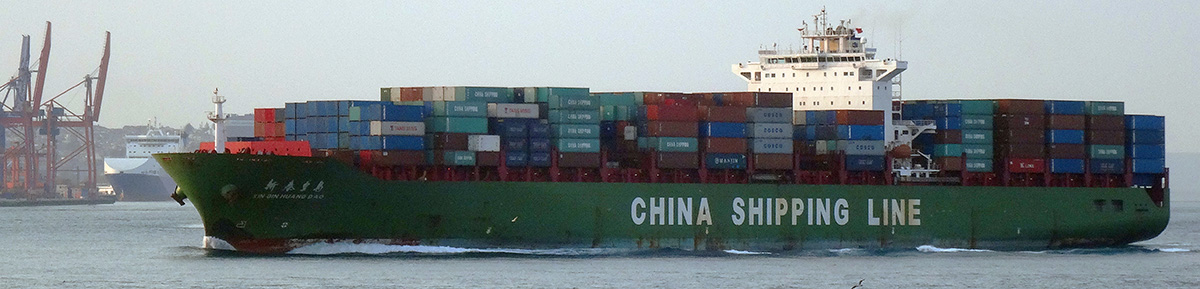 However, other countries had raised concerns about the quota system being used, suggesting that by restricting exports of rare earth minerals, China was driving up their price. It was also suggested that the restrictions benefited domestic producers, at the expense of foreign competitors, given that domestic producers were able to access the raw materials at cheaper prices.
A complaint was made to the World Trade Organization in March 2014 by the USA, supported by the EU, Canada and Japan. Following an investigation by a WTO panel, the panel found that China had failed to show sufficiently that the quotas were justified. After an appeal by China, the panel’s findings were upheld in August by the WTO.
In response to the failure of its appeal, China has just announced that it is removing the quotas on exports of rare earth materials. However, this is unlikely to be the end of the story, as other policies may well be imposed, including a resources tax; and an export licence is still required. The following articles consider this battle.
China axes rare earth export quotas Financial Times, Lucy Hornby (5/1/15)
China scraps quotas on rare earths after WTO complaint BBC News (5/1/15)
China ends rare-earth minerals export quotas Wall Street Journal, Chuin-Wei Yap (5/1/15)
China scraps rare earth export controls after losing WTO appeal Bloomberg (6/1/15)
China abolishes rare earth export quotas: state media Reuters (4/1/15)
Questions
- What are the benefits of free trade?
- Why do some countries choose to impose protectionist measures and what type of measures can be put in place?
- Using a diagram, explain the impact that export quotas would have on Chinese firms using these rare minerals and also on foreign firms.
- Why have other countries argued that export quotas push up prices of these minerals?
- What other policies might China put in place in order to protect its industries?
The eurozone is made up of 18 countries (19 in January) and, besides sharing a common currency, they also seem to be sharing the trait of weak economic performance. The key macroeconomic variables across the eurozone nations have all seemingly been moving in the wrong direction and this is causing a lot of concern for policy-makers.
Some of the biggest players in the eurozone have seen economic growth on the down-turn, unemployment rising and consumer and business confidence falling once again. Germany’s economic growth has been revised down and in Italy, unemployment rose to a record of 13.2% in September and around 25% of the workforce remains out of work in Spain and Greece. A significant consequence of the sluggish growth across this 18-nation bloc of countries is the growing risk of deflation.
Whilst low and stable inflation is a macroeconomic objective across nations, there is such a thing as inflation that is too low. When inflation approaches 0%, the spectre of deflation looms large (see the blog post Deflation danger). The problem of deflation is that when people expect prices to fall, they stop spending. As such, consumption falls and this puts downward pressure on aggregate demand. After all, if you think prices will be lower next week, then you are likely to wait until next week. This decision by consumers will cause aggregate demand to shift to the left, thus pushing national income down, creating higher unemployment. If this expectation continues, then so will the inward shifts in AD. This is the problem facing the eurozone. In November, the inflation rate fell to 0.3%. One of the key causes is falling energy prices – normally good news, but not if inflation is already too low.
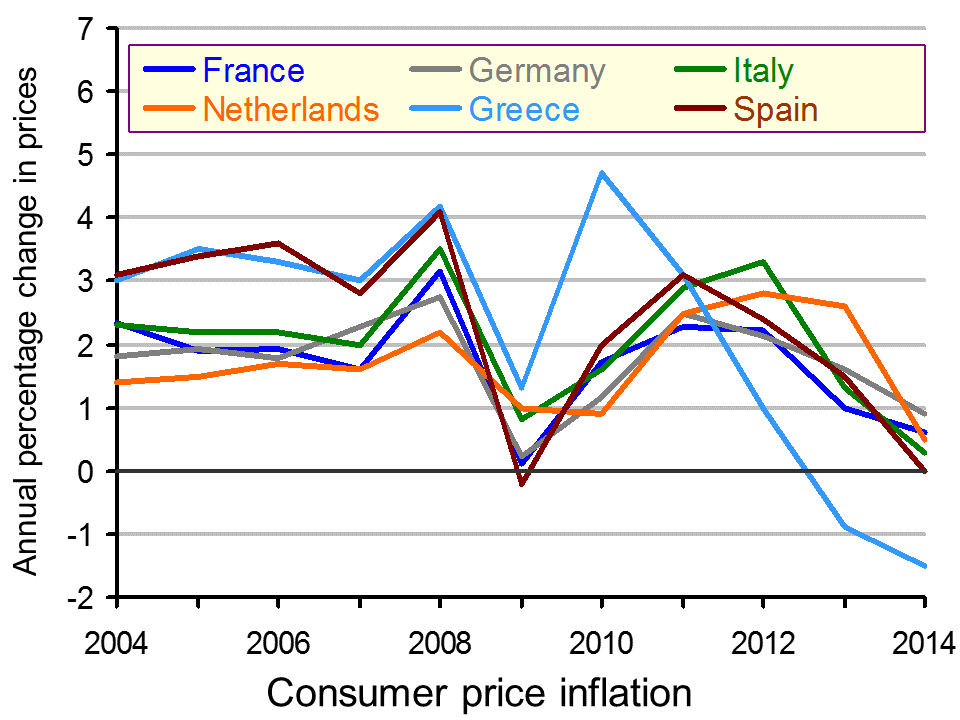 Jonathan Loynes, Chief European Economist at Capital Economics said:
“[the inflation and jobless data] gives the ECB yet another nudge to take urgent further action to revive the recovery and tackle the threat of deflation…We now expect the headline inflation rate to drop below zero at least briefly over the next six months and there is a clear danger of a more prolonged bout of falling prices.”
Some may see the lower prices as a positive change, with less household income being needed to buy the same basket of goods. However, the key question will be whether such low prices are seen as a temporary change or an indication of a longer-term trend. The answer to the question will have a significant effect on business decisions about investment and on the next steps to be taken by the ECB. It also has big consequences for other countries, in particular the UK. The data over the coming months across a range of macroeconomic variables may tell us a lot about what is to come throughout 2015. The following articles consider the eurozone data.
Euro area annual inflation down to 0.3% EuroStat News Release (28/11/14)
Eurozone inflation weakens again, adding pressure on ECB Nasdaq, Brian Blackstone (28/11/14)
Eurozone inflation rate falls in October BBC News (28/11/14)
Eurozone recovery fears weigh on UK plc, says report Financial Times, Alison Smith (30/11/14)
€300bn Jean-Claude Juncker Eurozone kickstarter sounds too good to be true The Guardian, Larry Elliott (26/11/14)
Eurozone area may be in ‘persistent stagnation trap’ says OECD BBC News (25/11/14)
Euro area ‘major risk to world growth’: OECD CNBC, Katy Barnato (25/11/14)
OECD sees gradual world recovery, urges ECB to do more Reuters, Ingrid Melander (25/11/14)
Questions
- What is deflation and why is it such a concern?
- Illustrate the impact of falling consumer demand in an AD/AS diagram.
- What policies are available to the ECB to tackle the problem of deflation? How successful are they likely to be and which factors will determine this?
- To what extent is the economic stagnation in the Eurozone a cause for concern to countries such as the UK and US? Explain your answer.
- How effective would quantitative easing be in combating the problem of deflation?
 Many important economic changes have occurred over the past two years and many have occurred in the past two months. Almost all economic events create winners and losers and that is no different for the Russian economy and the Russian population.