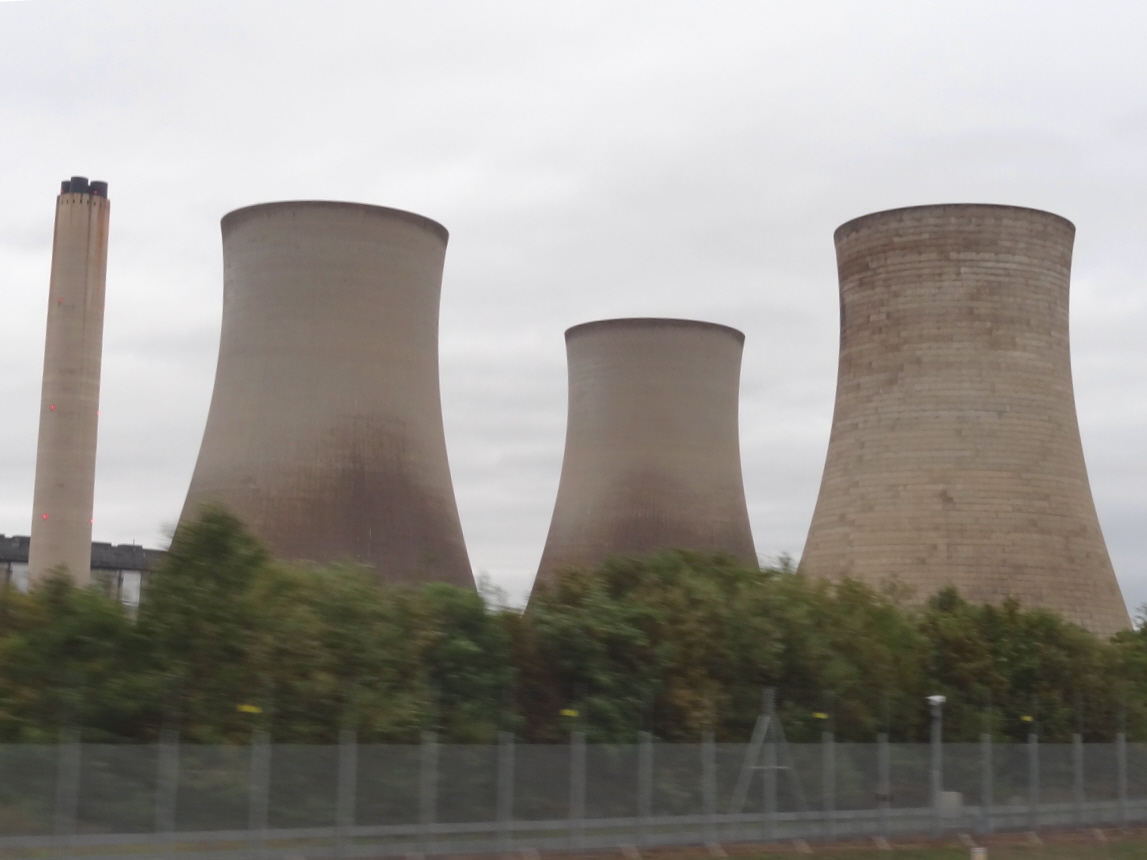
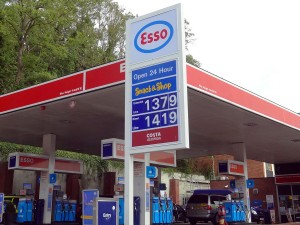
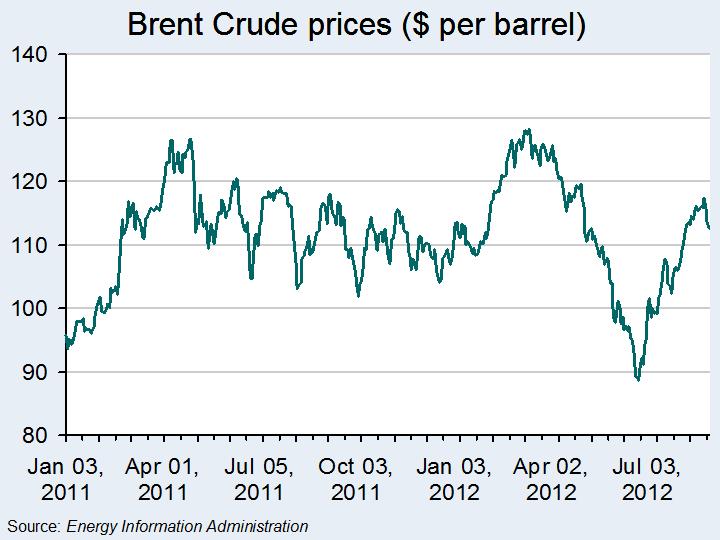
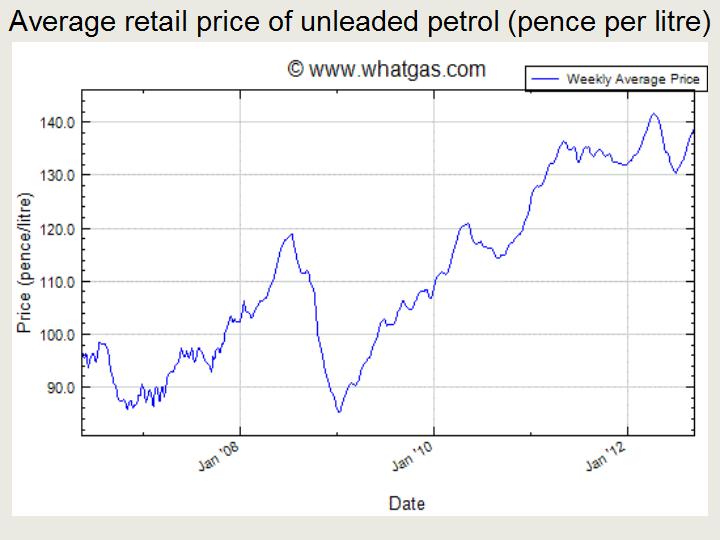
 When crude oil prices go up, the prices of petrol and diesel go up pretty well straight away and by the full amount, or more, of the crude price rise. When crude prices go down, however, road fuel prices are often slow to fall; and when they do, the fall is less than the full fall in crude prices.
Click on charts below for a larger version. Click here for a PowerPoint of the left-hand chart.
In response to complaints of motorists and haulage companies, the Office of Fair Trading has announced that it will investigate the link between crude prices and prices at the pump. It will report in January 2013.
The review will consider questions of competition and market power. In particular, it will look at the power of the oil companies in determining the wholesale price of road fuel.
It will also examine the retail fuel sector and whether supermarkets are driving out independent retailers. The claim of many independent petrol stations is that supermarkets are selling below cost as a lost leader to encourage people to shop in their stores. They also claim that supermarkets use their buying power to obtain fuel more cheaply.
What is more, most of the petrol stations that are not part of supermarkets are owned by the oil companies. Again, independents claim that oil companies supply fuel more cheaply to their own stations than to independents.
As a result of what many independents see as unfair competition, many are driven out of business. Today there some 9000 petrol stations in the UK; 20 years ago there were twice as many.
The following articles look at the remit of the OFT investigation and at the competition issues in the road fuel market.
Articles
 Formal inquiry tries to ease motorist pain at the pumps ITV News, Laura Kuenssberg (5/9/12)
OFT to scrutinise retail petrol market Financial Times, Caroline Binham (5/9/12)
OFT launches probe into pump prices Channel 4 News (5/9/12)
Petrol and diesel prices: Office of Fair Trading launches competition inquiry Guardian, Terry Macalister (5/9/12)
Petrol and diesel price review is launched by OFT BBC News (5/9/12)
Are supermarkets to blame for the devastation of independent petrol retailers by deliberately selling at a loss? This is Money, Tom Mcghie and Neil Craven (8/9/12)
OFT petrol pricing probe welcomed The Grocer, Beth Phillips (7/9/12)
Private businesses welcome OFT’s fuel price investigation Talking Retail (6/9/12)
10 charges that make consumers scratch their heads BBC News Magazine, Lucy Townsend (6/9/12)
Data
Crude Oil Price Index Index Mundi
Daily Brent Crude Spot Price, 1987 to present day US Energy Information Administration
Current UK Petrol Pump Prices What Pric£?
Fuel Prices WhatGas.com
Questions
- Describe the structure of the road fuel market, from oil production through to the retailing of petrol and diesel.
- What is meant by the terms ‘monosony’ and ‘oligopsony’? Which companies in the road fuel market have significant monopsony/oligopsony power?
- What determines the price elasticity of demand for road fuel in (a) the short run; (b) the long run? What implications does this have for the value of the short-run and long-run price elasticities?
- Where is the abuse of market power likely to occour in the road fuel market?
- To what extent is it in the consumers’ interests for supermarkets to sell road fuel below average cost?
- Examine the data for pump prices and crude oil prices and establish whether there is any truth in the claim that pump prices adjust rapidly to a rise in crude prices and slowly to a fall in crude prices.
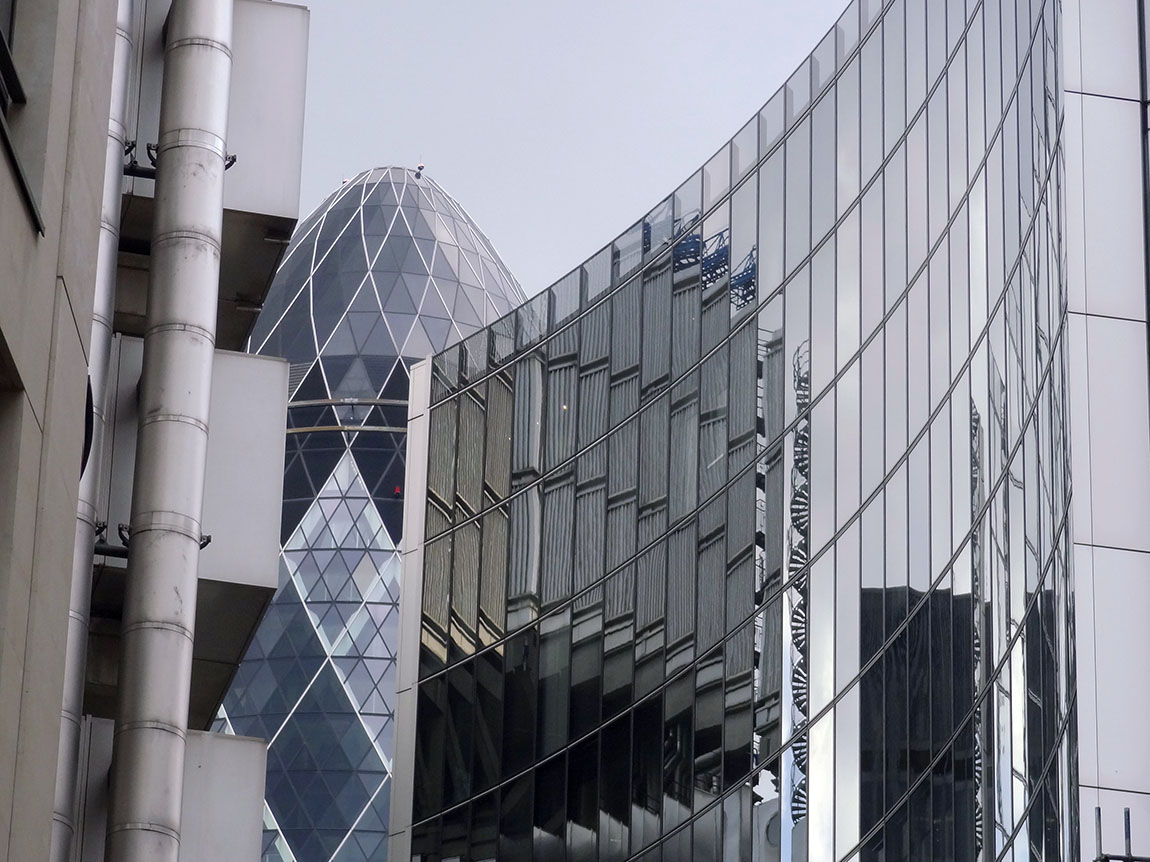 Barclays’ Chief Executive, Bob Diamond, has resigned following revelations that Barclays staff had been involved in rigging the LIBOR in the period 2005–9, including the financial crisis of 2007–9.
So what is the LIBOR; how is it set; what were the reasons for Barclays (and other banks, as will soon be revealed) attempting to manipulate the rate; and what were the consequences?
The LIBOR, or London interbank offered rate, is the average of what banks report that they would have to pay to borrow from one another in the inter-bank market. Separate LIBORs are calculated for 15 different lending periods: overnight, one week, one month, two months, three months, six months, etc. The rates are set daily as the average of submissions made to Thomson Reuters by some 15 to 20 banks (a poll overseen by the British Bankers’ Association). Thomson Reuters then publishes the LIBORs, along with all of the submissions from individual banks which are used to calculate it.
Many interest rates around the world are based on LIBORs, or their European counterpart, EURIBORs. They include bond rates, mortgage rates, overdraft rates, etc. Trillions of dollars worth of such assets are benchmarked to the LIBORs. Thus manipulating LIBORs by even 1 basis point (0.01%) can result in millions of dollars worth of gains (or losses) to banks.
 The charge, made by the Financial Services Authority, is that Barclays staff deliberately under- or overstated the rate at which the bank would have to borrow. For example, when interbank loans were drying up in the autumn of 2008, Barclays staff were accused of deliberately understating the rate at which they would have to borrow in order to persuade markets that the bank was facing less difficulty than it really was and thereby boost confidence in the bank. In other words they were accused of trying to manipulate LIBORs down by lying.
As it was the LIBORs were rising well above bank rate. The spread for the one-month LIBOR was around 1 to 1.2% above Bank Rate. Today it is around 0.1 to 0.15% above Bank Rate. Without lying by staff in Barclays, RBS and probably other banks too, the spread in 2008 may have been quite a bit higher still.
The following articles look at the issue, its impact at the time and the aftermath today.
Articles
A Libor primer The Globe and Mail, Kevin Carmichael (3/7/12)
60 second guide to Libor Which? (3/7/12)
Explaining the Libor interest rate mess CNN Money (3/7/12)
Fixing Libor Financial Times (27/6/12)
LIBOR in the News: What it is, Why it’s Important Technorati, John Sollars (2/7/12)
Libor rigging ‘was institutionalised at major UK bank’ The Telegraph, Philip Aldrick (1/7/12)
Barclays ‘attempted to manipulate interest rates’ BBC News, Robert Peston (27/6/12)
The Libor Conspiracy: Were the Bank of England and Whitehall in on it? Independent, Oliver Wright, James Moore , Nigel Morris (4/7/12)
Fixing LIBOR The Economist (10/3/12)
Cleaning up LIBOR? The Economist (14/5/12)
Eagle fried The Economist, Schumpeter (27/6/12)
Barclays looks like the victim Financial Post, Terence Corcoran (3/7/12)
Inconvenient truths about Libor BBC News, Stephanie Flanders (4/7/12)
Timeline: Barclays’ widening Libor-fixing scandal BBC News (5/7/12)
The elusive truth about Barclays’ lie BBC News, Robert Peston (4/7/12)
Rate Fixing Scandal Is International: EU’s Almunia CNBC, Shai Ahmed (4/7/12)
Bank-Bonus Culture to Blame for Barclays Scandal The Daily Beast, Alex Klein (3/7/12)
Libor scandal ‘damaging’ for City BBC Today Programme, Andrew Lilico and Mark Boleat (5/7/12)
Data
Libor rate fixing: see each bank’s submissions Guardian Data Blog, Simon Rogers (3/7/12)
Sterling interbank rates Bank of England
Questions
- Using data from the Bank of England (see link above), chart two or three LIBOR rates against Bank rate from 2007 to the present day.
- For what reason would individuals and firms lose from banks manipulating LIBOR rates?
- Why would LIBOR manipulation be more ‘effective’ if banks colluded in their submissions about their interest rates?
- Why might the Bank of England and the government have been quite keen for the LIBOR to have been manipulated downwards in 2008?
- To what extent was the LIBOR rigging scandal an example of the problem of asymmetric information?
- In the light of the LIBOR rigging scandal, should universal banks be split into separate investment and retail banks, rather than erecting some firewall around their retail banking arm?
- What are the arguments for and against making attempts to manipulate LIBOR rates a criminal offences?
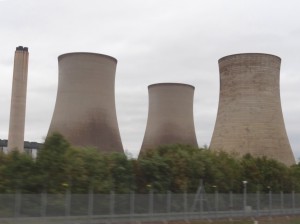 Centrica, owners of British Gas, has warned that electricity and gas prices in the UK are set to rise in the autumn. Centrica blames this on the expected rise in the costs of wholesale gas and other non-energy inputs.
One of the other ‘big six’ energy suppliers, E.On, has responded by saying that it will not raise energy prices this year. Whether it will raise prices after 1 Jan next year remains to be seen.
Last autumn, household energy prices rose substantially: between 15.4% and 18% for gas and between 4.5% and 16% for electricity. This spring, in response to lower wholesale energy prices, suppliers cut prices for either electricity or gas (but not both) by around 5%.
The government and various pressure groups are encouraging consumers to use price comparison sites to switch to a cheaper supplier. The problem with this is that supplier A may be cheaper than supplier B one month, but B cheaper than A the next. Nevertheless, switching does impose some degree of additional competitive pressure on suppliers.
More powerful pressure could be applied by ‘collective switching’. This is where a lot of people switch via an intermediary company, which sources a deal from an energy supplier. This collective buying is a form of countervailing power to offset the oligopoly power of the suppliers. Such schemes are being encouraged by the Energy Minister, Ed Davey.
The other approach, apart from doing nothing, is for Ofgem, the energy regulator, to impose tough conditions on pricing. But at present, Ofgem’s approach has been to try to make the market more competitive (see also), rather than regulating prices.
British Gas owner Centrica warns of higher energy bills BBC News (11/5/12)
E.ON to keep residential energy prices unchanged in 2012 Reuters, Adveith Nair (14/5/12)
E.ON promises to hold energy prices for 5million customers in 2012 This is Money, Tara Evans (14/5/12)
British Gas owner Centrica feels cold blast from critics ShareCast, John Harrington (11/5/12)
Gas and electricity price battle lines drawn BBC News (14/5/12)
Taking on the energy giants: The co-operative insurgency gains ground Left Foot Forward, Daniel Elton (11/5/12)
Group Energy Buying hits the UK Headlines Spend Matters UK/Europe, Peter Smith (11/5/12)
Think tank calls for competition to break Big Six rip-off Energy Live News, Tom Gibson (30/4/12)
Collective switching will not fix the UK’s broken energy market Guardian, Reg Platt (27/4/12)
Make your own small switch for cheaper energy The Telegraph, Rosie Murray-West (14/5/12)
Questions
- What are the barriers to entry in the electricity supply market?
- How competitive is the retail energy market at present?
- To what extent do price comparison sites put pressure on energy companies to reeduce prices or limit price increases?
- What scope is there for collective buying of gas and electricity from the six energy suppliers by (a) households; (b) firms?
- Assess Ofgem’s package of proposals for a simpler and more competitive energy market.
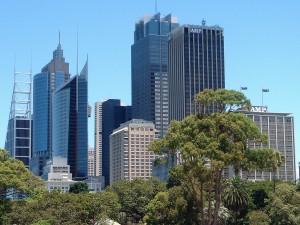 Oligopoly: it’s a complex market structure and although closer to the monopoly end of the ‘Market Structure Spectrum’, it can still be a highly competitive market. The characteristics are well-documented and key to the degree of competition within any oligopoly is the number of competitors and extent to which there are barriers to entry.
The greater the barriers and the fewer the competitors the greater the power the established firms have. This can then spell trouble for pricing and hence for consumers. The following articles are just some examples of the oligopolies that exist around the world and some of the benefits and problems that accompany them.
Articles
Oligopoly of PSU oil cos reason for high ATF prices The Indian Express, Smita Aggarwal (30/4/12)
Group energy buying hits the UK headlines Spend Matters UK/Europe(18/1/11)
German cartel office probes petrol companies on pricing Fox Business (4/4/12)
Gov’t unveils steps to lower fuel prices Yonhap News (19/4/12)
How big banks threaten our economy Wall Street Journal, Warren Stephens (29/4/12)
UK Governance: Call for Whitehall to simplify the landscape for SME suppliers to win more government contracts The Information Daily (26/4/12)
Other blogs
Pumping up the price: fuel cartels in Germany April 2012
Energy profit margins up by over 700% October 2011
Every basket helps October 2011
The art of oligopoly December 2010
Questions
- What are the assumptions of an oligopolistic market structure?
- Consider (a) the energy sector and (b) the banking sector. To what extent does each market conform with the assumptions of an oligopoly?
- In the ‘Spend Matters’ article, a group of people in a Lincolnshire village formed a local buying consortium to negotiate deals for heating oil. What could we refer to this as?
- To what extent is an oligopoly in the public interest?
- Explain how barriers to entry in oligopolies affect the competitiveness and efficiency of a market.
- Illustrate how an oligopolistic market structure can fix prices and hence exploit consumers.
- How have the actions of the big oil companies in both the UK and Germany been against independent retailers and the consumer interest?
- What action can governments take to break up oligopolies? Will it always be effective?
 EDF, one of the big six energy retailers in the UK, has agreed to pay out a record £4.5m. £1m of this will go to funding an energy advice centre; the rest will go to providing £50 each to 70,000 ‘vulnerable customers’ who struggle to pay their bills and who receive the government’s warm home discount.
The agreement was made with Ofgem after an investigation into mis-selling, both on the doorstep and over the phone. Customers were persuaded to switch energy suppliers with the promise of savings on their bills. As the FT articles states:
Ofgem found that EDF’s sales force did not always provide complete information to customers on some contract terms, or on the way in which their monthly direct debits had been calculated. In some cases, telesales agents claimed savings without knowing whether they were accurate for the specific customer on the call, the regulator said.
Ofgem did not accuse the company of directly sanctioning such practices, but rather of weak monitoring and control of its sales force’s actions.
The £4.5m payment is in lieu of a fine. Consumer groups have welcomed this, preferring the company to pay compensation to a fine, which would have simply increased Treasury funding.
It is the first settlement in a broader investigation into mis-selling, involving four of the six major suppliers.
Articles
EDF to pay out £4.5m in mis-selling case Financial Times, Guy Chazan and Hannah Kuchler (9/3/12)
EDF agrees to pay £4.5m misleading sales ‘fine’ Guardian, Lisa Bachelor (9/3/12)
Is it a fine? Is it a penalty? No, it’s EDF’s mystery Ofgem payment Management Today, Rebecca Burn-Callander (9/3/12)
‘Misleading claims’ cost EDF a £4.5m payout from watchdog , Independent, Tom Bawden (10/3/12)
EDF Energy agrees to pay a £4.5m ‘fine’ BBC News (9/3/12)
EDF Energy agrees to pay a £4.5m ‘fine’ BBC News, John Moylan (9/3/12)
More energy payouts could follow EDF’s £4.5m The Telegraph, Kara Gammell (9/3/12)
Ofgem ruling
EDF energy agrees to invest £4.5 million to help vulnerable customers following Ofgem investigation Ofgem
Questions
- What types of market failure are present in the energy supply industry?
- What are the arguments for and against fines being paid directly to victims of crime rather than to the government?
- In what ways could the energy industry be made more competitive?
- Why do the utilities, such as gas, electricity and water, require their own regulator rather than simply being subject to competition law?
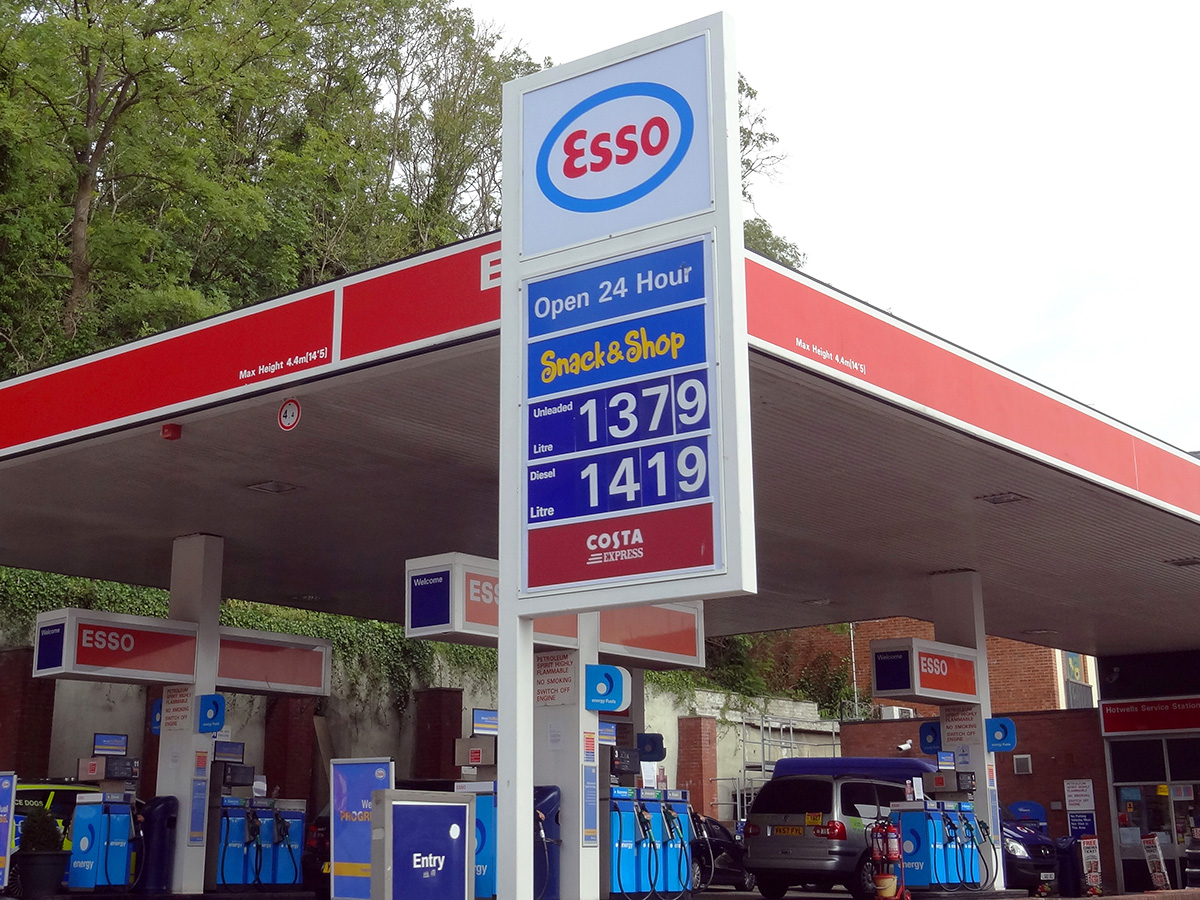 When crude oil prices go up, the prices of petrol and diesel go up pretty well straight away and by the full amount, or more, of the crude price rise. When crude prices go down, however, road fuel prices are often slow to fall; and when they do, the fall is less than the full fall in crude prices.