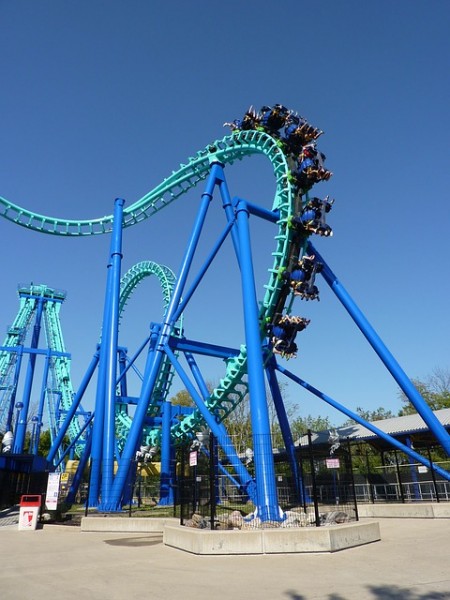
 Merlin Entertainments PLC is one of the largest operator of visitor attractions in the world and owns over a third of the most popular theme parks in Europe. It runs the four most visited parks in England – Alton Towers, Legoland Windsor, Thorpe Park and Chessington World of Adventures as well as the most popular theme park in Italy – Gardaland. Alton Towers alone had 2.5 million visitors in 2013. Anybody thinking of going to one of these attractions is faced with a wide range of different entry fees .
Theme parks and tourist attractions have market power so their owners have to make some interesting pricing decisions. They have to tackle the same dilemma that confronts any seller that faces a downward sloping demand curve for its goods/services.
One option for the firm would be to increase the entry fee. This would produce higher profits per visitor as some of the surplus from the transaction previously enjoyed by the consumer will be extracted by the seller and converted into producer surplus. Unfortunately for the business the higher price, all other things equal, will also result in fewer visitors. Some people will be deterred from visiting because of the higher price and the seller will lose out on potential revenue.
An alternative strategy would be for the theme park to reduce its entry fee. All other things equal, this will increase the number of visitors. However, it would also mean that the profit per customer would fall. The frustrating issue for the seller is that some of its customers, who would still have visited the attraction at the higher price, are now able to get a better deal.
This dilemma exists if the seller has to charge all of its different customers the same entry fee. If it could charge a higher entry fee to those customers who would be willing to pay more and a lower entry fee to those who would be willing to pay less then it could make more money. Extra revenue could be obtained from those additional sales that take place at the lower price while more consumer surplus could be extracted from those still paying the higher price.
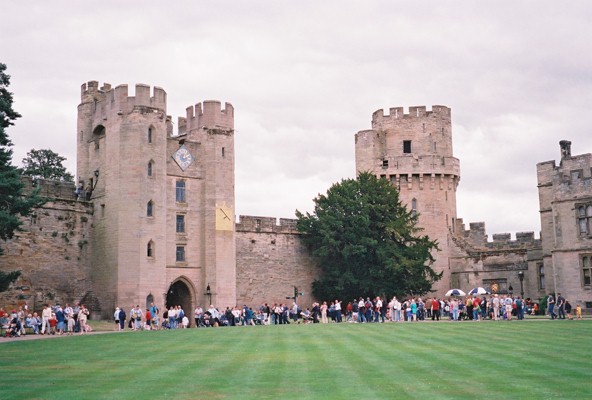
Is it possible for a firm to charge different prices to different customers for the same or a similar good or service? Table 1 below shows the entry fees for Warwick Castle, another tourist attraction owned by Merlin Entertainments PLC.
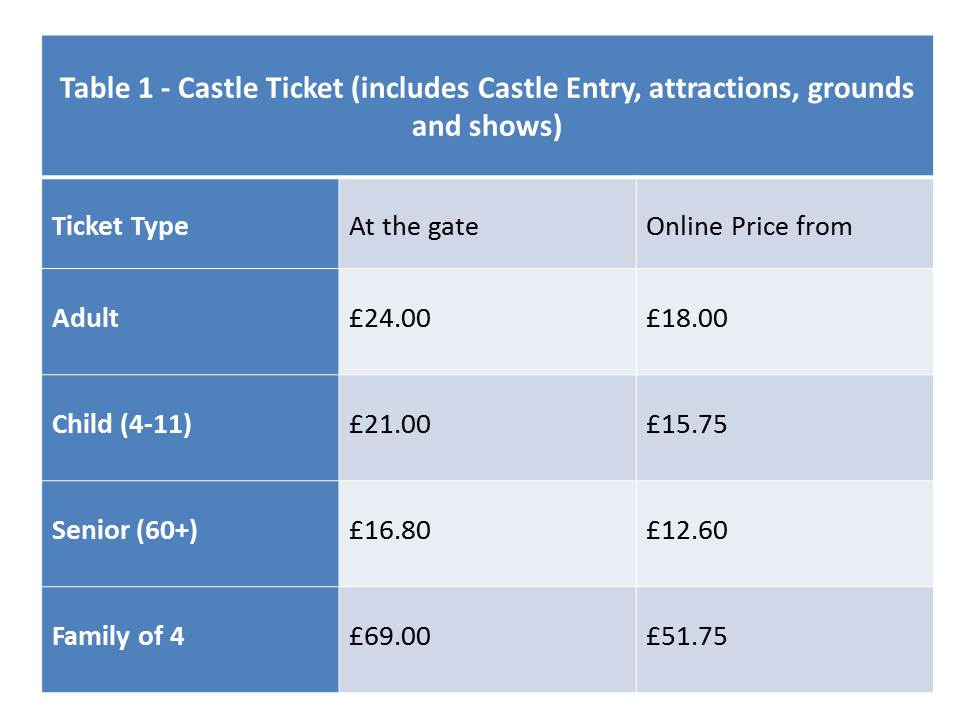
It can immediately be seen from this table that some groups of customers pay a different entry fee from others. For example adults have to pay £24 to enter on the day while people aged 60 and over pay a lower price £16.80. The entry fee for children aged between 4 and 11 is £21.00 while those aged 3 and under go for free. Students aged 16-18 can gain entry for a price of £13.50 if they can provide valid ID and purchase the tickets from the visitbritainshop website.
In this example, the company has allocated people into different categories by age (i.e. senior, adult, student, older children and younger children) and has set the entry fee that customers in each group have to pay.
The table also shows that if customers purchase on- line then they can get the tickets more cheaply. The entry fee for each category is 25% lower if the ticket is booked seven days in advance i.e. the prices shown in the last column in the table. If the booking is made between 2-6 days in advance then the discount is only 10% i.e. an adult ticket would cost £21.60. The on-line discounts are open to everyone. People are given the choice to either book on-line in advance or pay on the day. This is different from a situation where you are placed into a category by the firm. For example the customer cannot choose whether they are over 60!
If people are prepared to spend more time searching on the internet then other cheaper prices can also be obtained. Once again these offers are open to anyone willing to spend the time and effort in order to find them.
All the ticket prices above give people access to exactly the same attractions on the day. They do not give the visitor access to two of the attractions at the castle – the Dragon Tower and Castle Dungeon. Entry to the Dragon Tower would cost an adult on the day an extra £1.80 while entry to the Castle Dungeon would cost an extra £5.40.
Warwick Castle Ticket Prices Warwick Castle (accessed on 04/09/14)
Alton Towers Alton Towers (accessed on 08/09/14)
Warwick Castle Tickets visitbritainshop (accessed on 02/09/14)
Global Attractions Attendance Report teaconnect (accessed on 05/09/14)
Merlin Entertainments Merlin Entertainments (accessed on 08/09/14)
Questions
- What pricing decisions do firms have to make if they operate in a perfectly competitive market?
- Explain why an individual tourist attraction will have a downward sloping demand curve
- Paying an entry fee and an extra payment per attraction is known as what type of pricing? What advantages does this type of price strategy have for the seller?
- How would you calculate the profit per customer? What factors other than the entrance fee would determine the profit made per customer in a theme park or tourist attractions?
- Paying a different price depending on which category you have been assigned to by the seller is known as what type of pricing strategy? Can this type of pricing strategy ever be in the interests of society?
- In the example used in the case, customers are assigned to different categories by age. Can you think of any other ways that firms could categorise their customers?
- Given the category customers have been assigned to they can pay different prices depending on whether they buy the tickets on line. What is the price strategy called when customers can choose from a variety of pricing options for the same or similar product? Can you think of any different methods that could be used by the seller to carry out this type of pricing strategy?
 The draw for the lucrative group stages of the Champions League was made on Thursday 28th August. The 32 remaining clubs in the competition were allocated into eight groups of four teams. 74% percent of the respondents to a BBC survey thought that Manchester City had the toughest draw, while only 3.7% thought that Chelsea had the hardest draw. How did the Premier League champions end up in a much tougher group than the teams that finished in 3rd and 4th place? Was it purely by chance?
The unpredictability of a sporting contest depends not only on differences in the talent/motivation of the participants involved, but also on how the contest is designed and structured. The Champions League is an interesting case. The title of the competition would suggest that the participating clubs are all league champions from the 54 football associations spread across Europe. However, out of the 32 clubs which made it to the group stage, only 18 were actually the champions of their own domestic league.
22 teams automatically qualify for the group stages, while the other ten qualify via a knock-out stage of the competition. Of the 22 teams which gain automatic qualification only thirteen are league champions. The other nine places are allocated to teams which finished either 2nd or 3rd in their domestic leagues.
The inclusion of teams which did not win their domestic league occurs because UEFA allocates places in the Champions League by ranking the sporting performance of the 54 different football associations in Europe. This measure of performance, known as a Country’s Coefficient, is based on the results of the teams from each football association in both the Champions League and Europa League over the previous five years. If UEFA ranks a football association in one of the top three positions, then the teams that finish 1st , 2nd and 3rd in those leagues automatically qualify for the group stage of the Champions League. England is currently ranked in 2nd place behind Spain, which explains why Chelsea, which finished 3rd in the Premier League, obtained automatic qualification. The teams that finished 4th in these three top ranked leagues also gain entry to the final knock-out round of the competition. This is how Arsenal gained qualification for the group stage by narrowly defeating Besiktas from the Turkish League.
Teams from the lower ranked football associations have to win through more knock-out games in order to reach the lucrative group stage. For example the league champions from the bottom six countries (Faroe Islands, Wales, Armenia, Andorra, San Marino and Gibraltar) would have to win through four two-leg knock-out games. The league champions from Scotland would have to win through three as their football association is ranked in 24th place.
A draw takes place in order to allocate the remaining 32 teams to the leagues in the group stages. It is interesting how this allocation occurs because it is not a completely random process. UEFA ranks individual teams as well as countries. Real Madrid is currently ranked in 1st place while Port Talbot Town from the Welsh league is in 449th place. The top eight ranked teams still left in the competition are placed in pot 1, the 9th to 16th ranked clubs are placed in pot 2 and so on. One team from each pot is then drawn out at random and placed in a group. Therefore each group contains one club from pot 1, 1 club from pot 2, 1 club from pot 3 and 1 from pot 4.
The problem for Manchester City is that the seeding of each team is predominately determined by its performance in the Champions and Europa league over the previous five years. Once a team has made it to the group stages, its performance in its own domestic league has no impact on how it is seeded. This means that although Arsenal only finished 4th in the Premier League, it is placed in pot 1 for the draw because of its results in the Champions League over the previous five years. It therefore avoids the other top seeded clubs such as Real Madrid, Barcelona and Bayern Munich. Chelsea is also in pot 1, so was also more likely to get a favourable draw. Manchester City was seeded in pot 2 because it had only been in the Champions League for the last three years, so had not accumulated as many points as the teams who have been in the competition for longer.
Unfortunately for Manchester City, it was drawn in the same group as one of the strongest pot 1 teams – Bayern Munich. It was also unlucky to end up with one of the strongest teams in pot 4. Roma was runners up in the Italian league so was given an automatic place in the group stage. However it received a relatively low seeding as it is the first time it has been in the Champions league since 2010–11.
How much does the seeding matter? Since 1999–2000, when the group stage was expanded to 32 clubs, 86% of the top seeded teams have successfully qualified from the group stage into the last 16. Eleven of the last 16 winners were also from pot 1.
Articles
UEFA Rankings – Club coefficients 2014/15 UEFA (29/8/14)
UEFA Rankings – Country coefficients 2014/15 UEFA (29/8/14)
UEFA Rankings – Coefficients Overview UEFA (29/8/14)
Explained: The UEFA Champions League draw The Indian Empress (28/8/14)
Questions
- Uefa awards ranking points to teams based on their sporting performance. For example teams receive two ranking points for a victory against any team. This is different from the system used to rank national teams where the quality of the team defeated also influences the number of points awarded. What impact would it have if more ranking points were awarded in the Champions League for victories against higher ranked clubs?
- The Uefa system for ranking countries and teams is based on performance in European competitions over the previous 5 years. The performance in each year is weighted equally. What impact might it have if victories from the previous year were more heavily weighted than those from 4 or 5 years ago?
- The draw for the group stages of the Champions League could be made using a completely random process without any seeding. What impact might this have on the amount of money that firms in England, Spain and Italy would be willing to pay to secure the media rights?
- Can you think of any other elements of the design of the tournament that might have an impact on the predictability of the outcome?
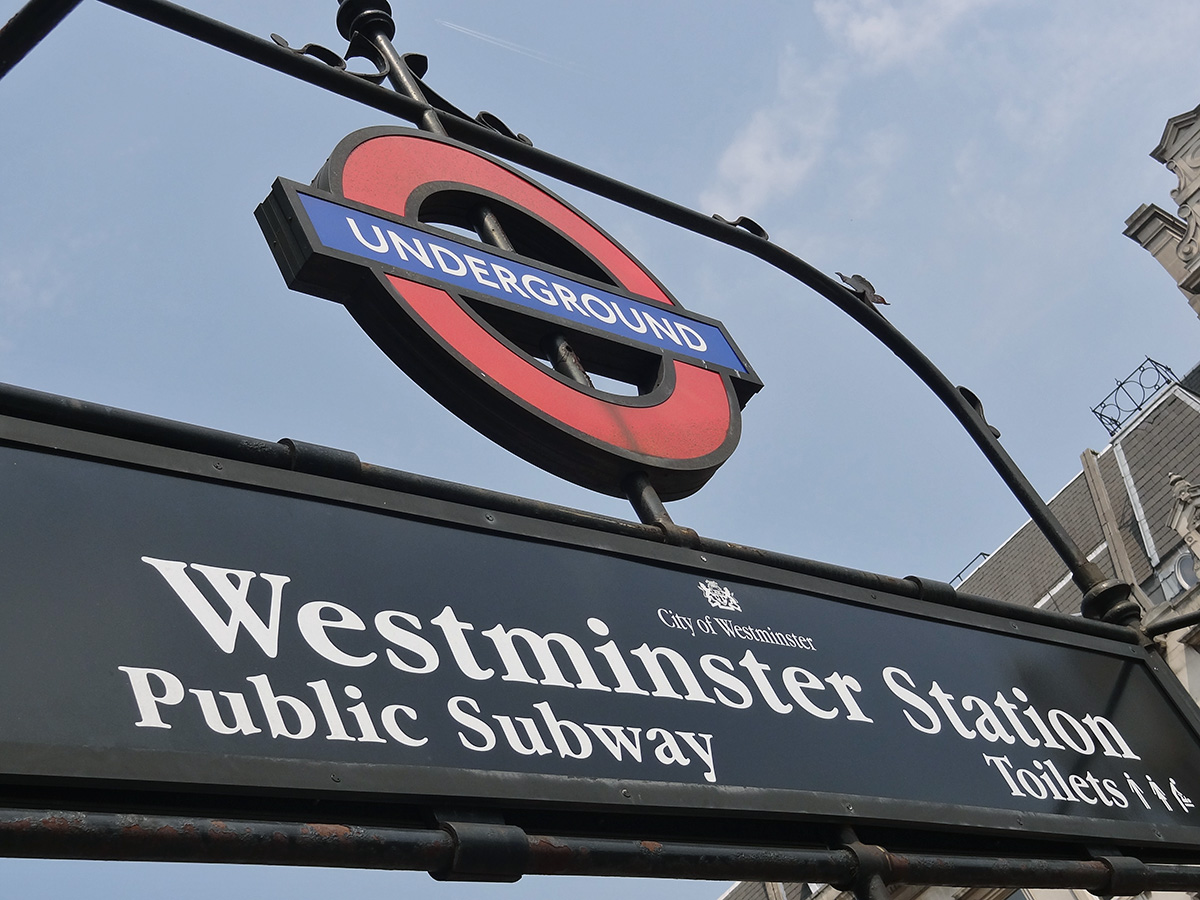
 Getting around London is pretty easy to do. Transport, though often criticized, is very effective in and around London – at least when the Underground is running uninterrupted. However, since 9pm on Tuesday 4th February until the morning of 7th February, the underground will be operating well below full capacity, as strike action affects many workers.
Transport for London has plans to cut many jobs, in particular through the closure of ticket office at all stations. Modernisation to the network is said to be essential, not just to improve the existing system, but also as it is predicted to save £50 million per year. Data suggests that only 3% of transactions involve people using ticket offices and thus the argument is that having offices manned is a waste of money and these workers would be better allocated to manning stations. David Cameron said:
I unreservedly condemn this strike. There is absolutely no justification for a strike. We need a modernised tube line working for the millions of Londoners who use it every day.
Workers on London Underground are naturally concerned about the impact this will have, in particular on their jobs, despite assurances that there will be no compulsory redundancies.
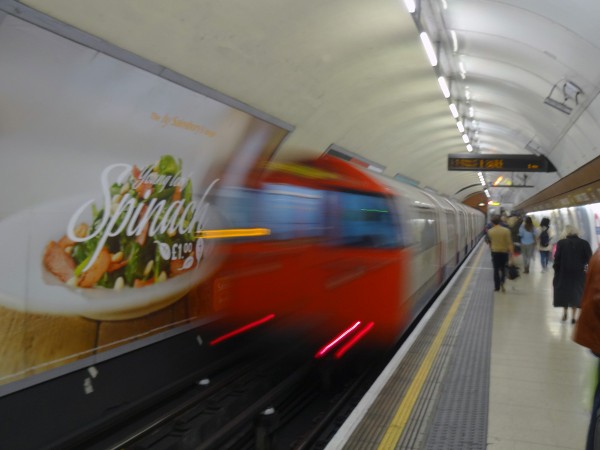 The impact of these strikes on workers in London is clearly evident by any pictures you look at. Buses were over-crowded, despite more than 100 extra being provided, pavements were packed with pedestrians and the roads were full of cyclists. At least the strike action has led to a little more exercise for many people! The disruption to business in London is likely to be relatively large and the loss in revenue due to the action will also be high, estimated by Business leaders to be tens of millions of pounds. It is perhaps for this reason that there is discussion as to whether the underground should be declared an ‘essential service’ as a means of minimising future disruptions.
Discussions have been ongoing between both sides to try to prevent this action and talks are likely to continue in the future. Boris Johnson has declared the strikes as ‘completely pointless’ and both sides have argued that the other has been unwilling to negotiate and discuss the ticket office closures. Boris Johnson said:
A deal is there to be done. I am more than happy to talk to Bob Crow if he calls off the pointless and unnecessary strike.
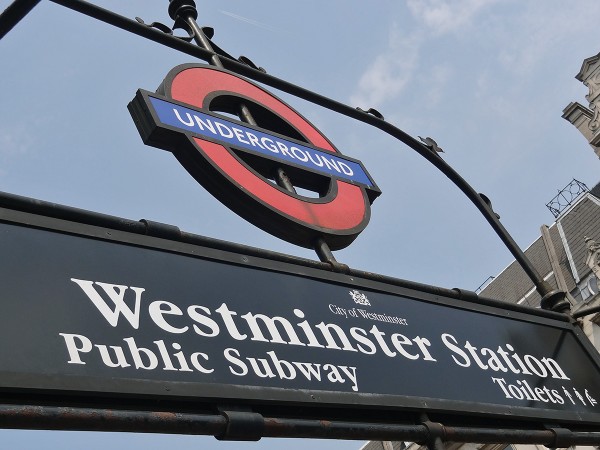 The impact on London and the economy will only be fully known after the strike action is over, but there are plans for further strikes next week. The greater the disruption the bigger the calls for further strikes on key services, such as the tube, to be prevented. In particular, this may mean new powers to curtail the rights of unions in these types of areas, which will require a minimum service to be provided. The following articles consider the strike action on the London Underground.
Articles
Questions
- If there is strike action in a labour market, what can we conclude about the market in question in terms of how competitive it is?
- If only 3% of transactions take place via ticket offices, is it an efficient use of resources to maintain the presence of ticket offices at every station?
- Is industrial action ‘completely pointless’?
- What other solutions are there besides strike action to problems of industrial dispute?
- What is the role of ACAS in negotiations?
- What is the economic impact of the strike on the London Underground? Think about the impact on businesses, revenues, sales and both micro and macro consequences.
- Should the tube be seen as an essential service such that strike action by its workers would be restricted?
 Microsoft’s Office suite is the market leader in the multi-billion dollar office software market. Although an oligopoly, thanks to strong network economies Microsoft has a virtual monopoly in many parts of the market. Network economies occur when it saves money and/or time for people to use the same product (software, in this case), especially within an organisation, such as a company or a government.
Despite the rise of open-source software, such as Apache’s OpenOffice and Google Docs, Microsoft’s Office products, such as Word, Excel and PowerPoint, still dominate the market. But are things about to change?
The UK government has announced that it will seek to abandon reliance on Microsoft Office in the public sector. Provided there are common standards within and across departments, it will encourage departments to use a range of software products, using free or low-cost alternatives to Microsoft products where possible. This should save hundreds of millions of pounds.
Will other governments around the world and other organisations follow suit? There is a lot of money to be saved on software costs. But will switching to alternatives impose costs of its own and will these outweigh the costs saved?
UK government to abandon Microsoft “oligopoly” for open source software Digital Spy, Mayer Nissim (29/1/14)
No, the government isn’t dumping Office, but it does want to start seeing other people ZDNet, Nick Heath (29/1/14)
UK government once again threatens to ditch Microsoft Office The Verge, Tom Warren (29/1/14)
UK government to abandon Microsoft Office in favour of open-source software PCR, Matthew Jarvis (29/1/14)
UK government plans switch from Microsoft Office to open source The Guardian (29/1/14)
Open source push ‘could save taxpayer millions’ The Telegraph, Matthew Sparkes (30/1/14)
Will Google Docs kill off Microsoft Office? CNN Money, Adrian Covert (13/11/13)
Questions
- Why has Microsoft retained a virtual monopoly of the office software market? How relevant are network economies to the decision of organisations and individuals not to switch?
- Identify other examples of network economies and how they impact on competition.
- How do competitors to Microsoft attempt to overcome the resistance of people to switching to their office software?
- What methods does Microsoft use to try to retain its position of market dominance?
- How does Apple compete with Microsoft in the office software market?
- What factors are likely to determine the success of Google Docs in capturing significant market share from Microsoft Office?
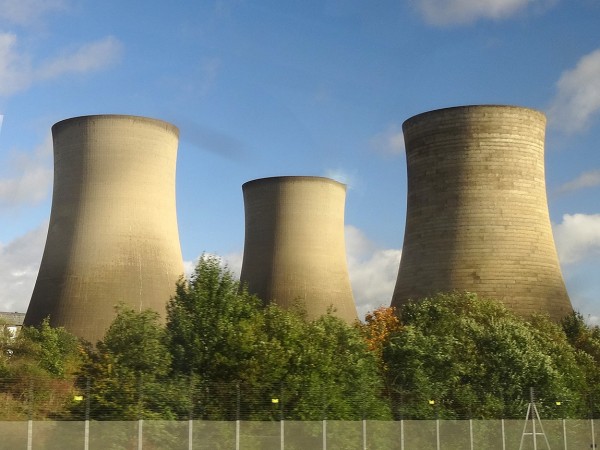
As Elizabeth noted in Fuelling the Political Playing Field, there has been much debate recently about energy prices in the UK. Four of the ‘Big Six’ energy companies have now announced price rises. They average 9.1% – way above the rate of consumer price inflation and even further above the average rate of wage increases. What is more, they are considerably above the rate of increase in wholesale energy prices, which, according to Ofgem, have risen by just 1.7% in the past year.
The bosses of the energy companies have appeared before the House of Commons Energy and Climate Change Select Committee to answer for their large price increases. The energy companies claim that the increases are necessary to cover not only rising wholesale prices, but also green levies by the government and ‘network charges’ for investments in infrastructure. 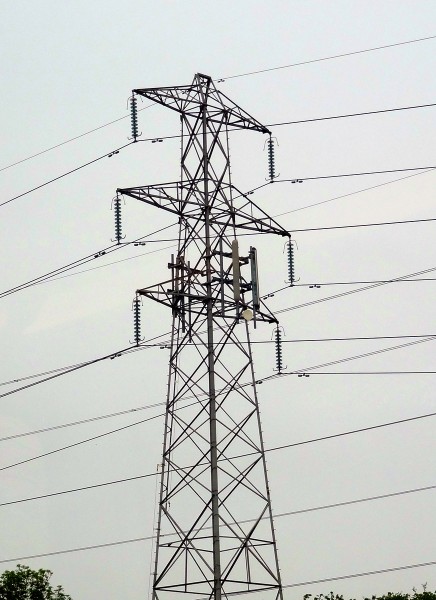 However, it is hard to see how, even taking into account all three of these possible sources of cost increases, the scale of price increases can be justified.
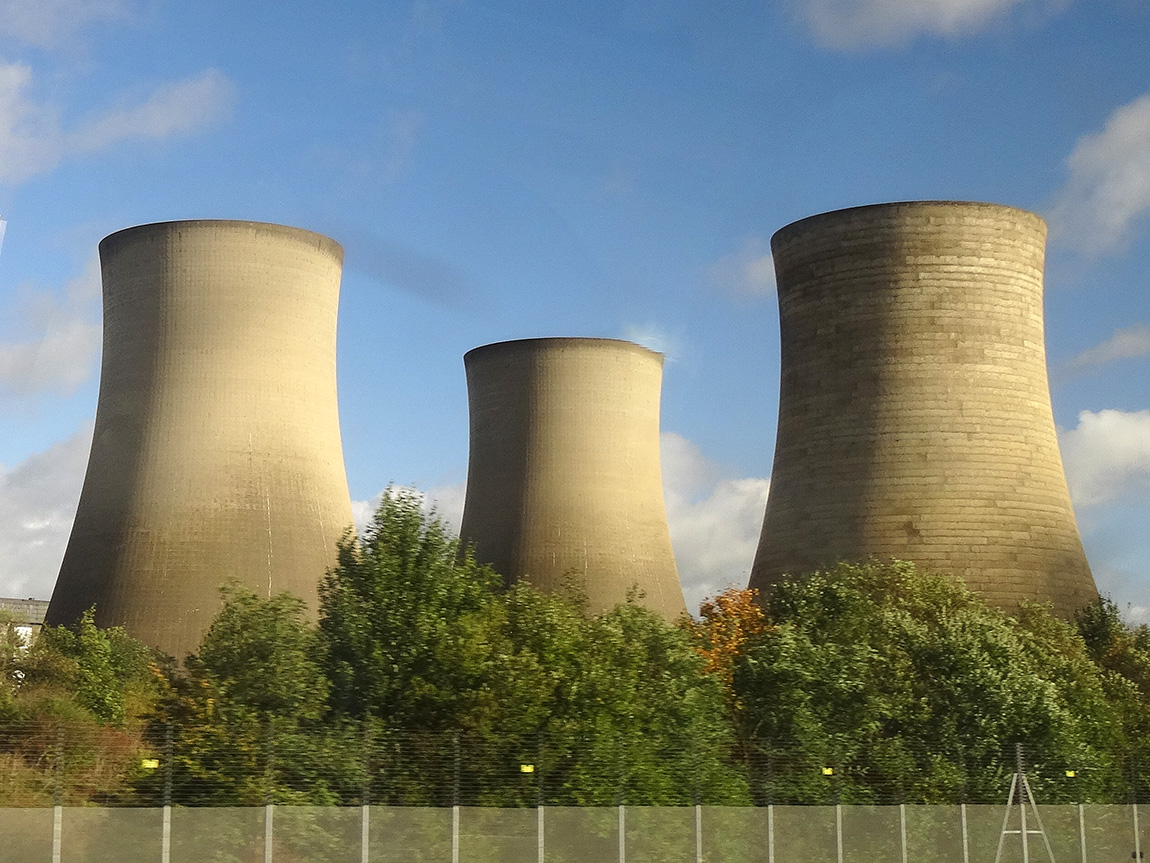
Another possible explanation for the price hikes is that they are partly the result of a system of transfer pricing (see). The energy industry is vertically integrated. Energy companies are not only retailers to customers, but also generators of electricity and wholesale shippers of gas. It is possible that, by the producing/shipping arms of these companies charging higher prices to their retailing arms, the retailers’ costs do indeed go up more than the wholesale market cost. The result, however, is higher profits for the producing arms of these businesses. In other words, a higher transfer price allows profits to be diverted from each company’s retailing arm to its producing arm.
 This is an argument for making the wholesale market more competitive and for stopping the by-passing of this market by producing arms of companies selling directly to their retailing arms. What the companies are being accused of is an abuse of market power and possibly of colluding with each other, at least tacitly, to support the continuation of such a practice.
So is the answer a price freeze, as proposed by the Labour Party? Is it an investigation of the energy market by the Competition Commission? Or is it, at least as a first step, much more openness by the energy companies and transparency about their pricing practices? Or is it to encourage consumers to switch between energy companies, including the smaller ones, which at present account for less than 5% of energy supply? The videos, podcasts and articles consider these issues.
Webcasts and Podcasts
 Energy bosses blame high bills on wholesale prices Channel 4 News, Gary Gibbon (29/10/13)
Why are energy bosses being questioned? BBC News, Stephanie McGovern (29/10/13)
Key questions Big Six energy companies must answer The Telegraph, Ann Robinson (29/10/13)
Energy bosses offer excuses for prices rises The Telegraph (29/10/13)
Energy bosses face MPs over price rises BBC News, John Moylan (29/10/13)
Energy boss ‘can’t explain’ competitors’ price hikes The Telegraph (29/10/13)
Ovo boss: Competition Commission would take too long BBC News (30/10/13)
Dale Vince: Energy market is ‘dysfunctional’ BBC Today Programme (30/10/13)
Tony Cocker: Public mistrust energy industry BBC Today Programme (30/10/13)
Ed Davey: Energy deals not just for ‘internet savvy’ BBC Today Programme (31/10/13)
Articles
Energy giants ‘charge as much as they can get away with’ The Telegraph, Peter Dominiczak (29/10/13)
UK energy markets need perestroika Financial Times (27/10/13)
Britain’s energy utilities must embrace glasnost Reuters, John Kemp (29/10/13)
Small energy firms ‘escape levies’ BBC News (30/10/13)
Is the energy market structurally flawed? BBC news, Robert Peston (30/10/13)
The energy market needs a Competition Commission investigation Fingleton Associates, John Fingleton (12/10/13)
Energy firms raised prices despite drop in wholesale costs The Guardian, Rowena Mason (29/10/13)
Only full-scale reform of our energy market will prevent endless price rises The Observer, Phillip Lee (26/10/13)
Energy Giants Blame Rising Bills On Green ‘Stealth Taxes’ Huffington Post, Asa Bennett (29/10/13)
Big Six energy firms ‘like cartel’ Belfast Telegraph (30/10/13)
Energy boss says he hasn’t done sums on green levies The Telegraph, Georgia Graham (30/10/13)
Graphic: How your energy bills have soared in ten years The Telegraph, Matthew Holehouse (30/10/13)
British energy suppliers’ explanations for price hikes just don’t add up The Guardian, Larry Elliott (31/10/13)
The 18th energy market investigation since 2001: Will this one be different? The Carbon Brief, Ros Donald (31/10/13)
Energy: Is there enough competition in the market? BBC News, Hugh Pym (26/11/13)
Information and Reports
Wholesale [electricity] market Ofgem
Wholesale [gas] market Ofgem
Response on wholesale energy costs Ofgem Press Release (29/10/13)
Response to Government’s Annual Energy Statement Ofgem Press Release (31/10/13)
Real Energy Market Reform The Labour Party
Questions
- Why may the costs of energy paid by the energy retailers to energy producers/shippers have risen more than the wholesale price?
- Explain what is meant by transfer pricing. How could transfer pricing be used to divert profits between the different divisions of a business?
- How can transfer pricing be designed by multinational companies to help them minimise their tax bills?
- Why is policing transfer pricing arrangements notoriously difficult?
- What evidence is there to show that switching between retailers by customers can help to drive retail energy prices down?
- How did the old electricity pool system differ from the current wholesale system?
- Should electricity companies be forced to pool the electricity they generate and not sell it to themselves through bilateral deals?
- Comment on the following: “The current electricity trading arrangements ‘create the very special incentive for the oligopolists. …The best of all possible worlds is where nobody invests. As supply and demand close up, the price spikes upwards, and supernormal profits result.'”
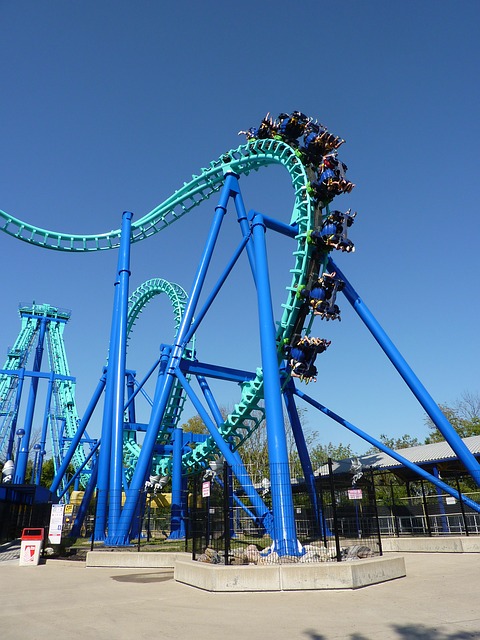 Merlin Entertainments PLC is one of the largest operator of visitor attractions in the world and owns over a third of the most popular theme parks in Europe. It runs the four most visited parks in England – Alton Towers, Legoland Windsor, Thorpe Park and Chessington World of Adventures as well as the most popular theme park in Italy – Gardaland. Alton Towers alone had 2.5 million visitors in 2013. Anybody thinking of going to one of these attractions is faced with a wide range of different entry fees .